
Most gallery wall tutorials obsess over spacing and symmetry, and honestly, that’s the easy part. The harder question is how you make a wall that actually looks like your family lives there instead of a showroom you’re renting by the hour.
If you’ve got a stack of your kid’s crayon drawings, a few thrifted frames, and zero idea how to make them work together, you’re in the right place. This isn’t about perfection. It’s about building something that tells your story, without spending an entire weekend chasing a Pinterest photo that never quite matches your actual living room.
Why One Statement Piece Changes Everything
A wall built entirely from DIY prints and family photos can start to feel a little flat, no matter how carefully you space everything out. There’s often nothing for the eye to land on.
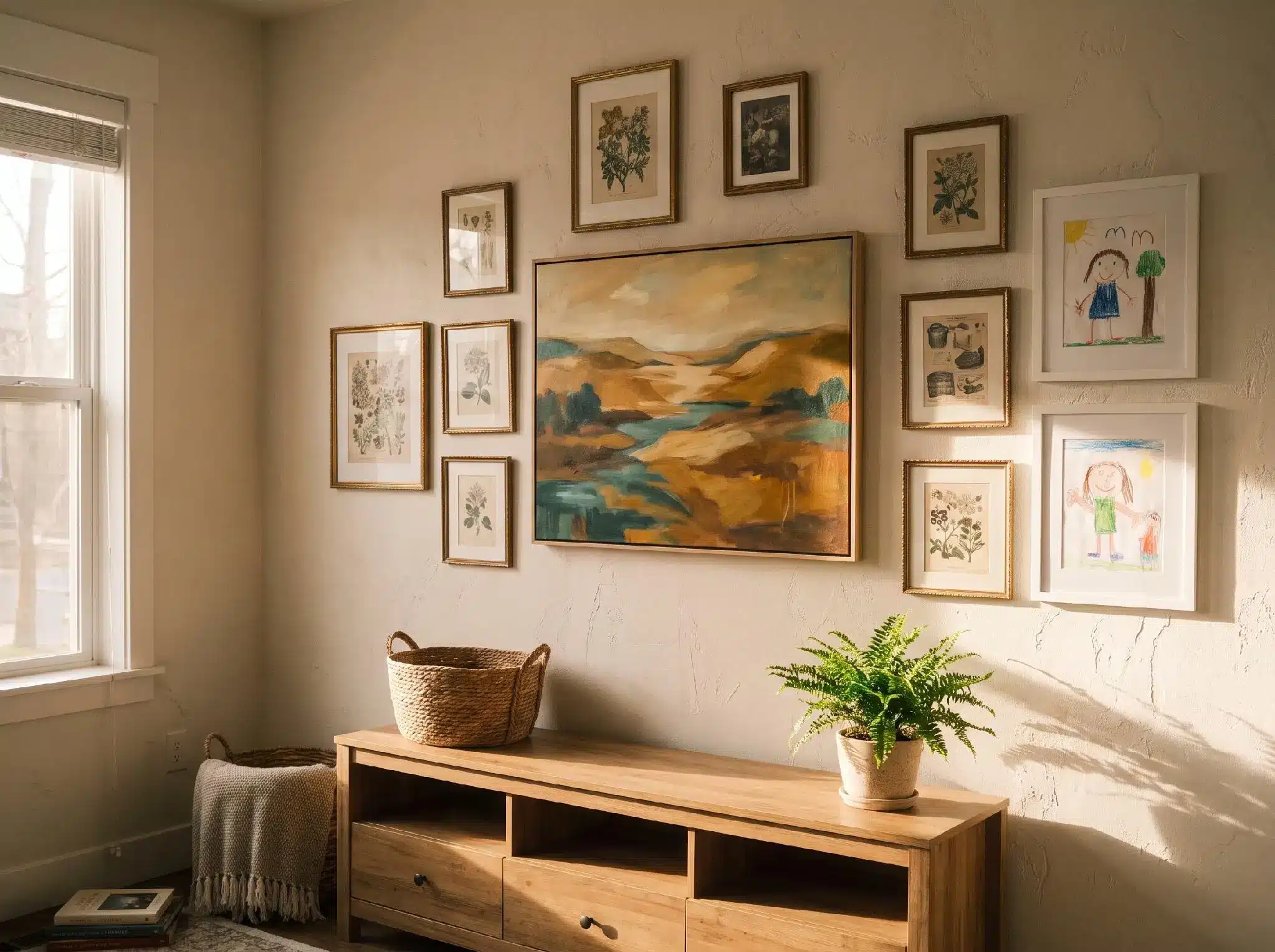
So what does that look like in a real house? Picture a console table wall with a rotating cast of your kids’ art and a couple of framed prints, and right in the middle, one painting that actually means something. Many families are turning to an original or curated oil painting as that anchor piece because it brings warmth and texture that a printed poster just can’t match.
Browsing a collection like Art by Maudsch is a good way to see how one well-chosen painting can give an entire mixed wall somewhere to rest visually, without erasing the personality of everything around it. You don’t need five statement pieces. You need one, and then you build the rest of the wall around it.
The Case for Real Art on Your Walls (Not Just Decor)
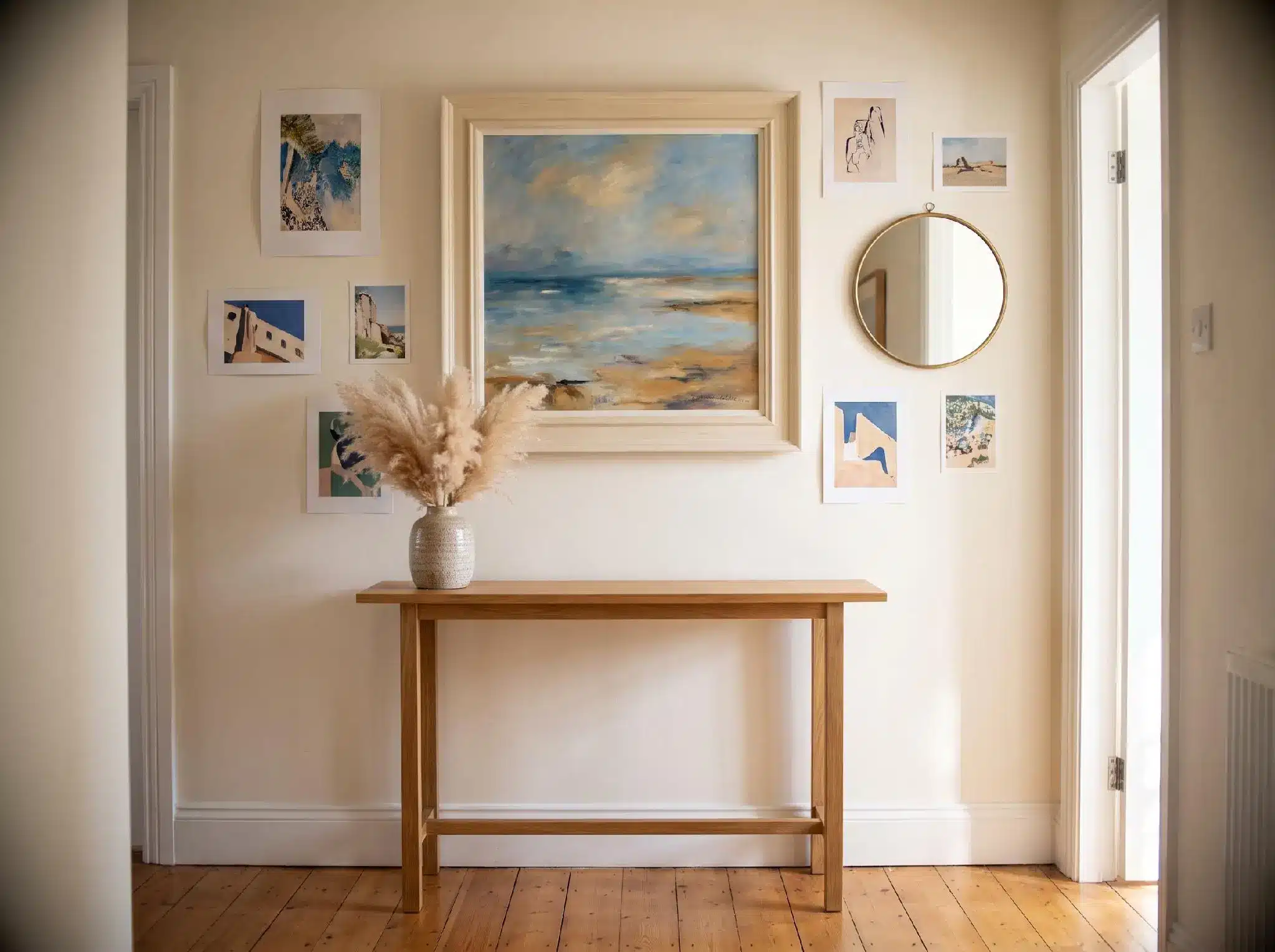
A single statement painting can anchor an entire gallery wall arrangement
There’s a reason wall art keeps claiming such a large share of the home decor market. It accounts for 75% of the entire US wall decor market, and that segment is projected to grow by $12.6 billion between 2024 and 2029, according to Market.us’s 2026 home decor data. Homeowners aren’t just filling blank space anymore; they’re investing.
There’s also a wellbeing case that rarely comes up in gallery wall guides. Peer-reviewed research published in 2026 by the National Institutes of Health found that viewing art at home is linked to feelings of awe, which researchers connected to lower proinflammatory cytokine levels and reduced self-reported physical stress symptoms.
In plain terms, hanging real art isn’t just decorative filler. It seems to do something for you on a physical level, not just an aesthetic one. That’s worth remembering the next time you’re tempted to fill a wall with whatever’s cheapest at a big-box store instead of something you’ll actually want to look at every day.
Planning Your Layout Before You Commit to Nail Holes
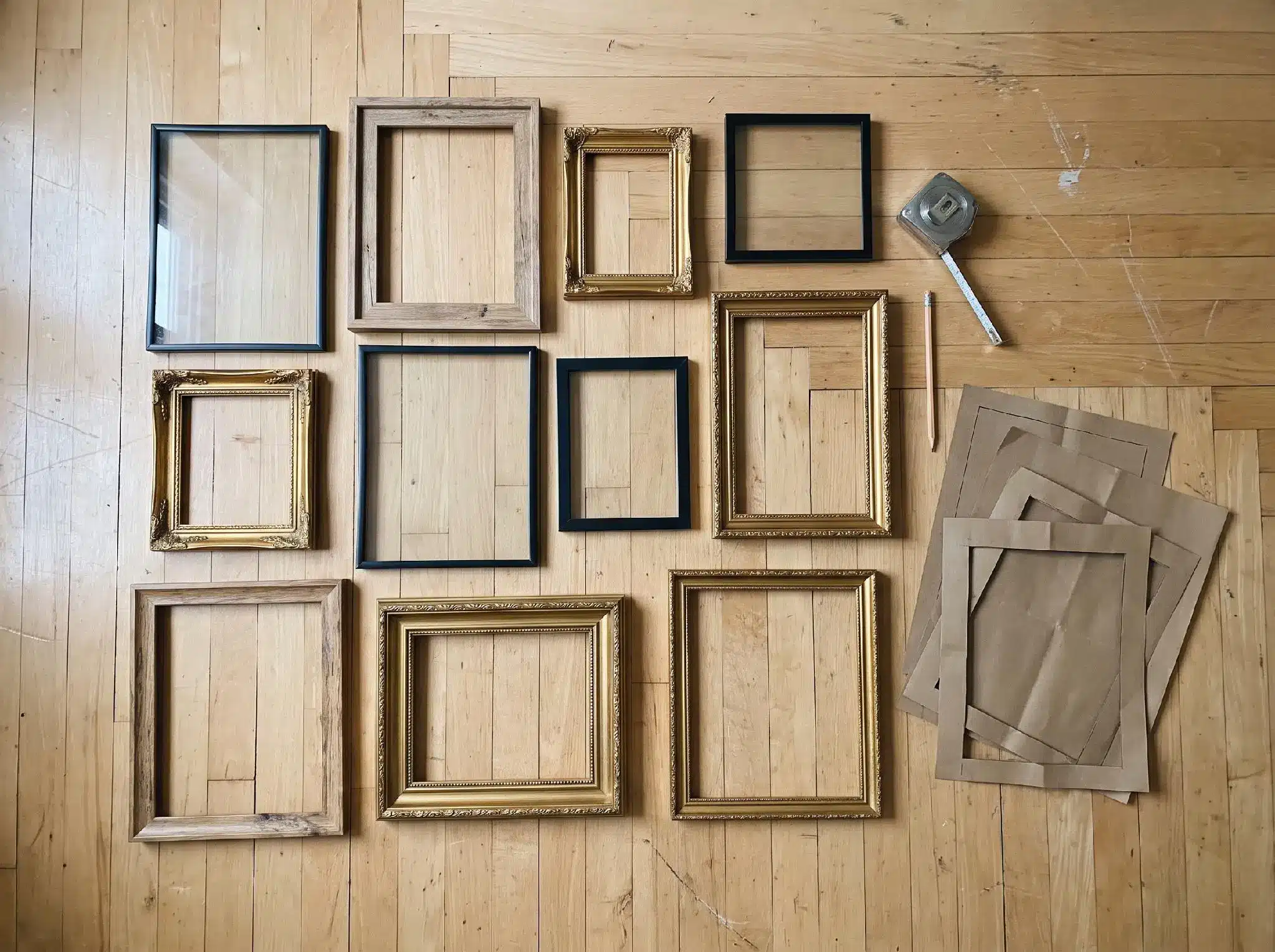
Laying out frames on the floor first helps you plan spacing before committing to nail holes
Lay Everything on the Floor First
Before a single nail goes in the wall, lay every piece out on the floor in the arrangement you’re considering. Move things around until the spacing feels right and the sizes balance out. This step alone will save you a dozen unnecessary holes.
Mixing Sizes and Orientations
Don’t force every frame to match. A wall made of identical frames in a perfect grid can look sterile pretty fast. Let a large horizontal painting sit next to a stack of small square prints, and let a vertical frame break up a row of matching ones. The variation is what makes it feel collected rather than bought as a set.
Leaving Room to Grow
Kids make more art. Families take more photos. Leave a little breathing room at the edges of your layout so you can add pieces later without tearing the whole thing down. For more layout inspiration across different wall styles, our roundup of wall decoration ideas has dozens of approaches worth stealing pieces from.
Mixing DIY, Kids’ Art, and Curated Pieces
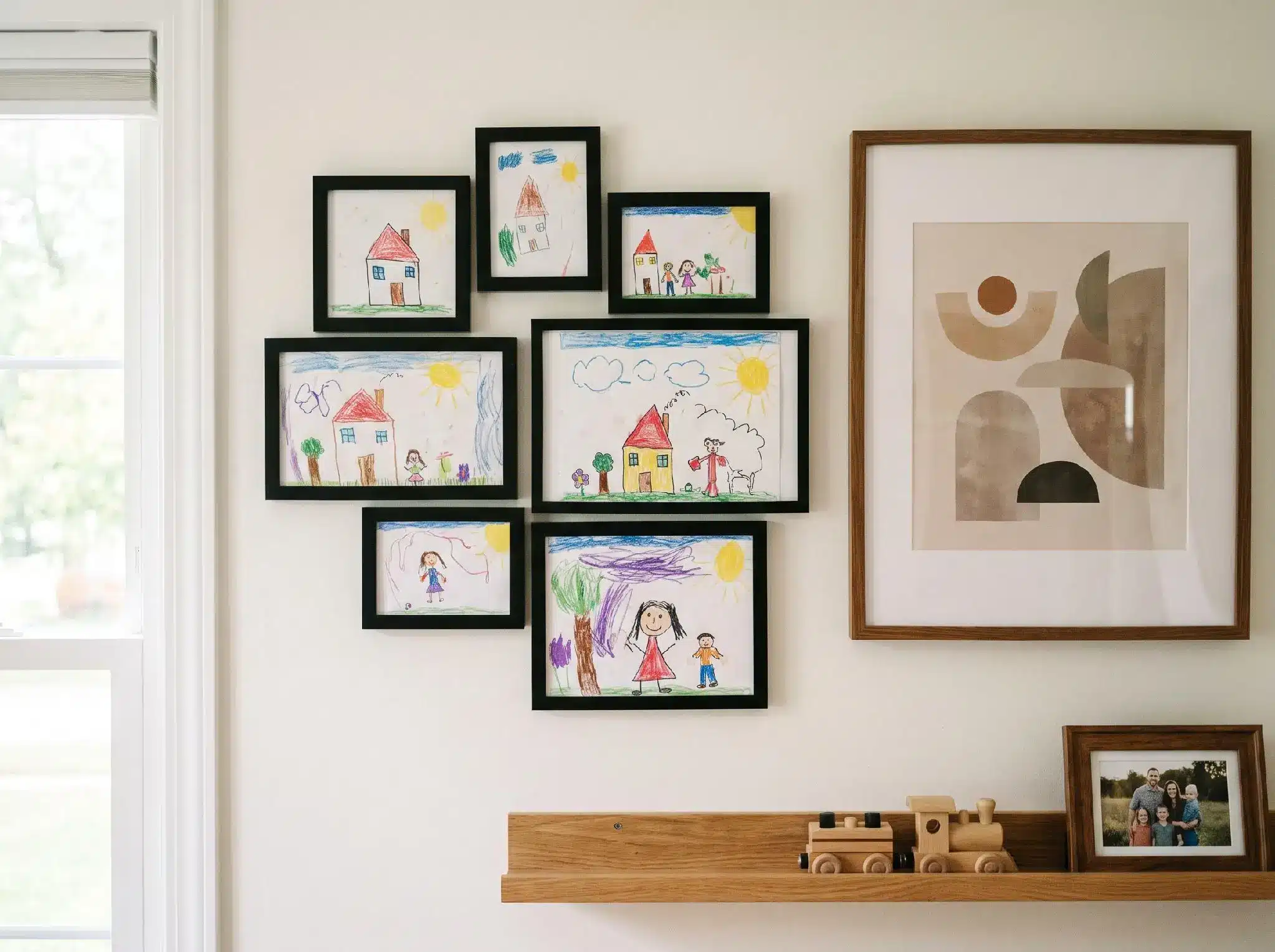
Blending kids’ artwork with more refined pieces keeps a gallery wall playful and personal
Blending your child’s finger-painting with a framed print and a real painting sounds risky, but it works better than you’d expect when you approach it with a little intention. Group pieces by color palette rather than subject matter, and use mats or simple frames to give scrappier pieces a bit more visual weight. The goal isn’t to hide the kids’ art. It’s to give it a frame, literally, that lets it sit comfortably next to more polished work.
This kind of layered, personally curated mix isn’t just a home-decor blogger’s opinion either. Matched decor sets are losing ground to rooms that look like they were built over time by an actual person, not picked off a single showroom floor.
If you’re already working on other rooms in the house, our guide to refreshing your living room on a budget pairs well with this same mixed, personal approach.
Budget-Friendly Ways to Pull the Whole Wall Together
You don’t need to spend a fortune to make a gallery wall look intentional. A can of spray paint can unify a pile of mismatched thrifted frames in an afternoon. Cheap picture lights or even a single well-placed sconce can make the whole arrangement feel finished rather than accidental. Save your budget for the one piece that matters most, your anchor painting, and cut costs everywhere else: frames, mats, and hanging hardware are all easy places to economize without anyone noticing.
If your home leans more toward a pared-back aesthetic, you don’t have to skip a gallery wall altogether. Our piece on keeping a minimalist space intentional covers how to edit a display down to just a few meaningful pieces, which works surprisingly well even with just three or four frames and one strong central painting.
Bringing It All Together
A gallery wall doesn’t need to be perfectly matched to feel like it belongs in your home. It needs one piece that gives it weight, and a mix of everything else that reflects who actually lives there. Start with the anchor, plan your layout on the floor before you touch a hammer, and let your kids’ art sit proudly next to something more polished. That contrast is the whole point.
Give yourself permission to let it evolve. The best gallery walls aren’t finished projects; they’re living ones that pick up a new piece every year or two. Start with what you have, add the one piece that matters, and let the rest fill in over time.