




Kids talk to themselves more than most people realize. Sometimes those thoughts are kind and encouraging, but other times they can be negative or doubtful. That’s where positive self-talk becomes important.
When kids learn to replace negative thoughts with supportive ones, they start to feel stronger and more capable. Parents can guide this process with simple habits and examples.
In this guide, you’ll learn what positive self-talk means, why it matters for children, and easy ways to help kids practice it in everyday life.
What is Positive Self-Talk?
Positive self-talk refers to the practice of speaking kindly and encouragingly to oneself. It’s the opposite of negative self-talk, where children might doubt their abilities or speak harshly about themselves.
Positive self-talk includes affirmations like “I can do this!” or “I’m good at learning new things.” By focusing on positive thoughts, children develop a more optimistic outlook and begin to believe in their abilities.
Benefits for Kids
Positive self-talk for kids offers several key benefits that can help children thrive emotionally and mentally. Here are some ways it can make a positive impact on their well-being:
- Boosts Self-Esteem and Confidence
- Reduces Anxiety and Stress
- Promotes a Positive Mindset and Resilience.
- Improves Focus and Problem-Solving Skills
How Positive Self-Talk Impacts Children’s Mental Health
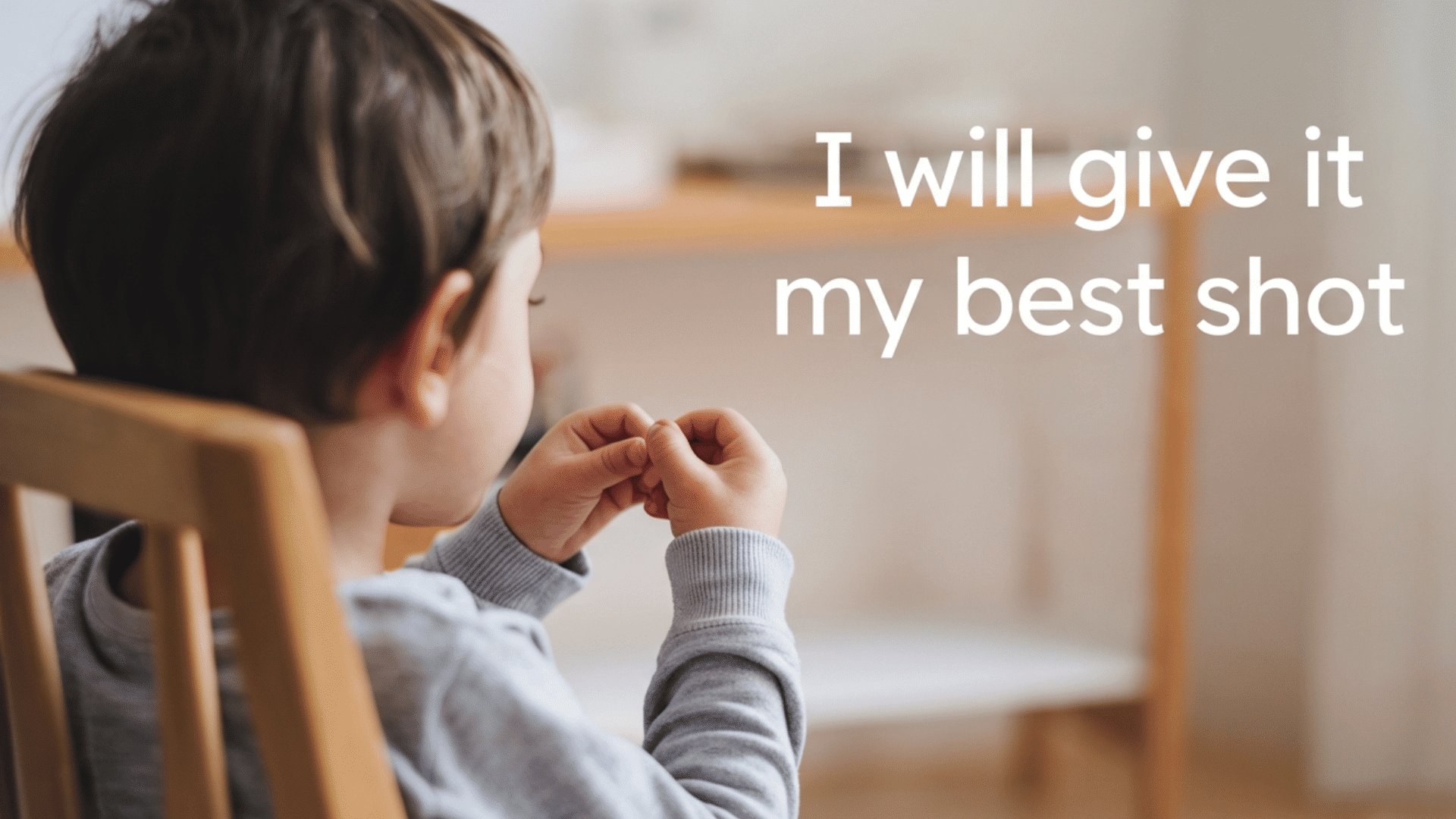
Positive self-talk doesn’t just boost a child’s confidence—it also helps their mental health in several important ways:
1. Emotional Regulation and Coping Skills
Positive self-talk teaches kids how to manage their emotions effectively. Instead of becoming overwhelmed by negative feelings, children can use affirmations like “I can handle this” or “I will stay calm” to stay focused.
This shift in mindset helps them stay composed and focused on finding solutions, even in stressful situations. By practicing positive self-talk, children develop emotional regulation skills, which are essential for navigating challenges with a clear and resilient mindset.
2. Healthy Self-Image and Self-Compassion
Encouraging your child to practice positive self-talk helps them build a healthy self-image. It teaches them to accept themselves, including their flaws, and embrace imperfections.
Instead of being harsh on themselves, they learn to be kind and forgiving when they make mistakes. This positive approach fosters self-compassion, helping children develop confidence and a balanced sense of self-worth, which is essential for their emotional well-being and overall growth.
3. Growth Mindset
Positive self-talk fosters a growth mindset in children. When kids speak kindly to themselves, they believe that their abilities can improve with effort and practice. This belief encourages them to embrace challenges, stay curious, and keep trying, even when things get tough.
By using positive affirmations, children understand that mistakes are part of learning and growth, which helps them approach new tasks with perseverance and resilience.
Examples of Positive Self Talk for Kids
Children often repeat the words they hear around them. Teaching simple, encouraging phrases can help them build a positive inner voice.
These statements remind kids that mistakes are normal and that they can keep trying. Encourage children to use these phrases during schoolwork, sports, or everyday challenges. Over time, these positive thoughts become a habit.
Here are some examples of positive self-talk kids can practice:
- “I can try again.”
- “Mistakes help me learn.”
- “I am getting better with practice.”
- “I can solve this step by step.”
- “I am proud of myself for trying.”
- “I can ask for help if I need it.”
- “I am capable of learning new things.”
- “It’s okay if something feels hard.”
Signs a Child May Struggle With Negative Self-Talk
Sometimes children develop a pattern of negative thinking about themselves. Recognizing the signs early can help parents support their child in building a healthier mindset.
These behaviors don’t mean a child lacks ability. Often, it simply means they need guidance in learning how to speak kindly to themselves. With patience and encouragement, children can gradually replace negative thoughts with more supportive ones.
Some common signs include:
- Frequently saying things like “I can’t do this” or “I’m not good at anything.”
- Giving up quickly when something feels difficult.
- Being overly critical of themselves after small mistakes.
- Comparing themselves negatively to other children.
- Avoiding new activities because they fear failure.
Ways to Encourage Positive Self-Talk in Children

Here are some practical tips for parents and caregivers to help children practice positive self-talk:
1. Model Positive Self-Talk
Children often learn by observing their parents or caregivers, so it’s important to model positive self-talk in your own life. When you face challenges or setbacks, demonstrate how to approach them with a positive mindset.
For example, say things like, “I’ll figure this out” or “I can handle this” instead of focusing on the difficulty. Your child will see how you handle obstacles with confidence and may begin to adopt these helpful phrases themselves.
Modeling positive self-talk not only encourages a growth mindset but also teaches your child how to stay calm and positive in the face of challenges.
2. Create a Positive Affirmation Routine
Incorporating positive affirmations into your child’s daily routine can make a big difference in their mindset. Encourage them to say affirmations such as “I am smart,” “I am capable,” or “I can learn from my mistakes.” Make this practice fun by turning it into a daily ritual, whether it’s something they do every morning to start the day or at night before bed.
By consistently repeating positive statements, your child will internalize them and begin to believe in their strengths and abilities. This routine fosters self-love, confidence, and resilience, helping them face each day with a positive attitude.
3. Use Visual Reminders
Visual reminders are a simple yet effective way to encourage positive self-talk throughout the day. Write affirmations like “I am brave” or “I can do hard things” on sticky notes and place them around your home—on mirrors, in the kitchen, or by your child’s study area.
These visual cues will serve as constant reminders to your child, helping them refocus and reinforce positive thinking when they need it most.
By surrounding your child with these affirmations, you create an environment that supports their emotional well-being and encourages them to embrace positivity, even during tough moments.
4. Praise Effort, Not Just Results
It’s essential to praise your child’s effort rather than just their outcomes. This reinforces the idea that growth and improvement are more important than perfection.
For example, instead of only saying, “You did great on your test,” try acknowledging the work they put in by saying, “You worked hard, and that effort really paid off.” This shift in focus helps children value persistence and hard work, not just the end result.
When effort is praised, children feel motivated to keep trying, even if they don’t achieve immediate success, because they understand that effort leads to progress and growth.
5. Practice Self-Talk During Difficult Situations
Help your child practice positive self-talk during challenging situations to encourage resilience. When they’re struggling with homework or a difficult task, guide them to use phrases like “I will take it one step at a time” or “I can ask for help if I need it.”
By reframing the situation in a positive light, your child will learn to approach obstacles with patience and problem-solving skills. This practice not only builds emotional resilience but also empowers them to tackle challenges with a sense of control and confidence, knowing they can overcome difficulties with the right mindset.
Conclusion
Positive self-talk is a powerful tool for building children’s confidence, improving mental health, and fostering resilience.
By practicing positive self-talk, kids not only develop a healthy relationship with themselves, but they also improve their ability to handle life’s challenges.
As parents and caregivers, it’s important to encourage this practice, so children grow up with a strong sense of self-worth and the tools to navigate their world confidently.