




Ten thousand dollars!! It sounds like a lot until you start pricing out cabinets. Kitchen renovations have a reputation for running deep into the tens of thousands, and for good reason.
But a $10,000 budget is not a dead end. It is just a different conversation, one shaped by priorities, trade-offs, and even modern kitchen trends. Knowing exactly where to spend and where to pull back makes all the difference.
The results will not always look like a magazine spread, but they can absolutely look like a kitchen you are proud of. The key is going in with a plan, not just a number.
Can I Renovate My Kitchen for $10,000: The Straight Answer
Yes, you can renovate your kitchen for $10,000, but it will be a minor remodel rather than a full upgrade.
This budget works best if your existing layout stays the same and you focus on cosmetic upgrades instead of structural changes.
You can refresh cabinets with paint or refacing, install budget-friendly countertops, and upgrade a few key appliances while searching for smart kitchen renovation ideas that maximize impact.
Small improvements like new lighting, hardware, and a backsplash can significantly improve the overall look. Careful planning and a mix of DIY and professional work can help you stay within limits.
With the right approach, you can achieve a modern, updated kitchen without overspending.
Kitchen Remodel Cost Breakdown
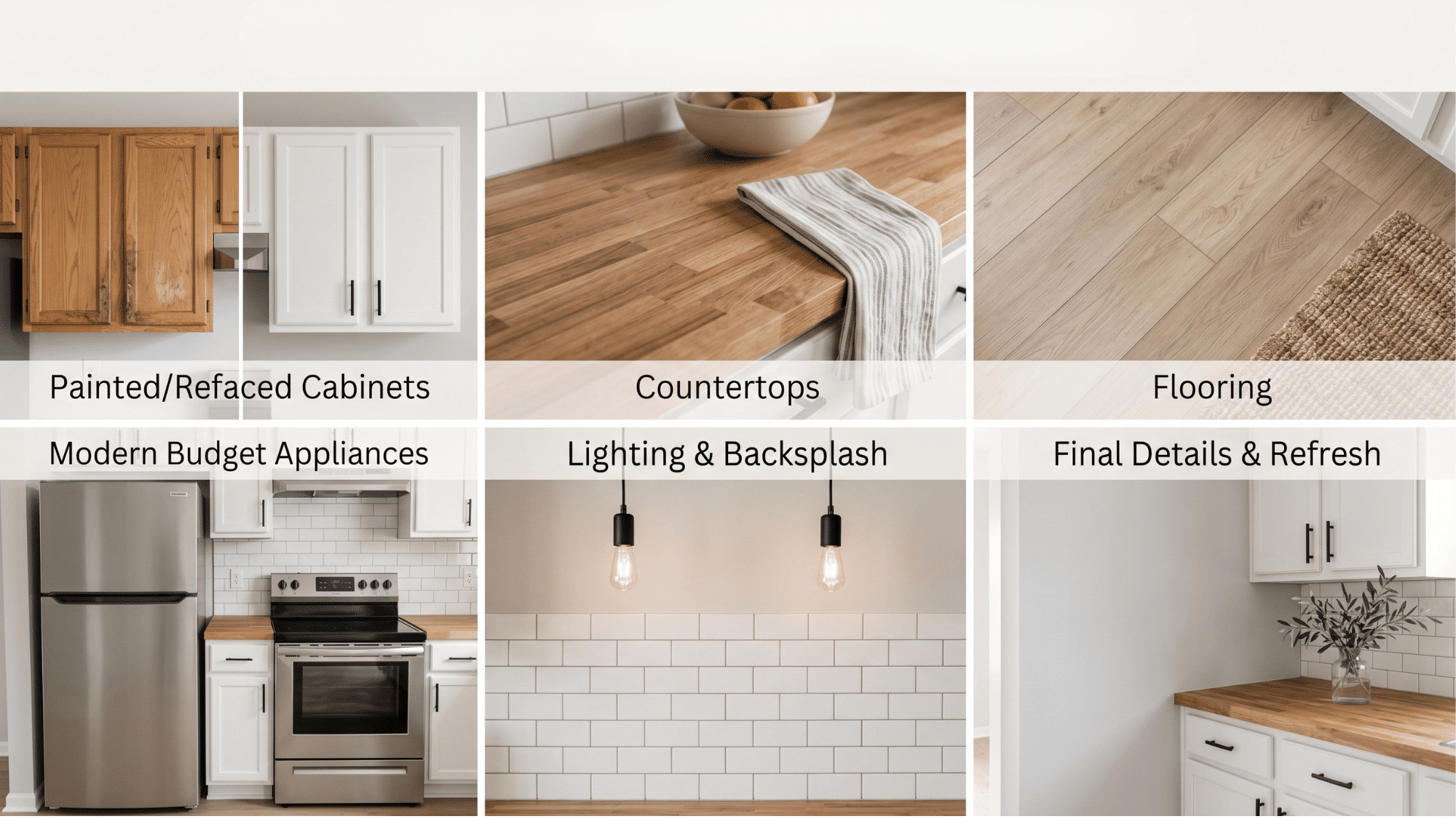
Learning where your money goes is key to successfully renovating a kitchen on a $10,000 budget.
Below is a realistic cost distribution, including what each category covers and how much of your budget it typically consumes.
1. Cabinets ($2,500–$4,000)
Cabinets take up the largest share of your budget because they define the kitchen’s overall look. At this price point, replacing cabinets isn’t feasible, so repainting or refacing is the best approach.
You can also find ready-to-assemble (RTA) cabinets for a partial upgrade. This category includes paint, materials, and basic hardware changes. Investing here delivers the biggest visual upgrade.
2. Countertops ($1,000–$1,500)
Countertops are a key visual and functional element, but budget limits material choices. Laminate is the most affordable and widely used option for cost-conscious remodels.
Butcher block offers a slightly upgraded, stylish alternative within range. This cost includes materials and basic installation.
Avoid premium stones like quartz or granite as they can quickly exceed your budget. Choosing the right finish can still give a modern look without overspending.
3. Appliances ($1,500–$2,000)
Appliances can easily consume a large portion of your budget if not planned carefully. Instead of replacing everything, focus on upgrading one or two essential appliances, such as a stove or refrigerator.
This cost range includes entry-level or discounted appliances. Shopping during sales or opting for scratch-and-dent models can save money.
Prioritizing functionality over brand names helps stretch your budget further.
4. Flooring ($500–$1,000)
Flooring is important for durability and aesthetics, but should remain budget-friendly. Vinyl and laminate flooring are the most practical choices within this range.
These materials mimic expensive finishes like wood or tile at a fraction of the cost.
The budget typically covers both materials and basic installation. Avoid ceramic tiles or hardwood due to higher labor and material costs. A simple flooring upgrade can still refresh the entire kitchen look.
5. Lighting, Paint & Backsplash ($500–$1,500)
This category offers the highest return on investment for visual upgrades. It includes wall paint, backsplash materials, light fixtures, and cabinet hardware.
These upgrades are relatively low-cost but high-impact. DIY can further reduce expenses in this category. Together, these elements create a fresh, cohesive kitchen design.
6. Labor & Installation ($1,000–$2,000)
Labor costs vary depending on how much work you outsource versus DIY. This includes installation, minor plumbing, and basic electrical work if needed.
Hiring professionals ensures quality but can quickly increase expenses. Doing simple tasks like painting or demolition yourself can significantly reduce costs. It’s best to reserve professional help for technical tasks.
Balancing DIY and expert work is key to staying within budget.
7. Miscellaneous & Contingency ($500–$1,000)
Unexpected expenses are common in any renovation, making this category essential. It covers small repairs, additional materials, tools, or last-minute changes.
Setting aside 5–10% of your budget now prevents financial stress later. Many people underestimate this portion and end up exceeding their budget.
Having a contingency ensures smoother project execution. It acts as a safety net for unforeseen costs.
DIY Vs Hiring a Contractor
Deciding between DIY and hiring a contractor is one of the most important choices in a kitchen remodel, as it directly impacts your budget, timeline, and overall quality of work.
| Factor | DIY | Hiring a Contractor |
|---|---|---|
| Cost | Lower overall cost; saves on labor | Higher cost due to labor charges |
| Control | Full control over design and decisions | depends on contractor execution |
| Time | Takes longer, especially without experience | Faster completion with a professional team |
| Skill Level | Requires skills depending on the task | No skill is required from you |
| Quality of Work | Can vary; risk of mistakes | Typically higher, more consistent quality |
| Best For | Painting, hardware installation, backsplash | Plumbing, electrical, and countertop installation |
| Risk | Higher risk of errors and rework costs | Lower risk; professionals handle complexities |
| Flexibility | Work at your own pace | Fixed timelines and schedules |
Smart Ways to Stay Within a $10,000 Budget
Staying within a $10,000 kitchen remodel budget requires careful planning, smart choices, and a clear focus on high-impact upgrades rather than expensive overhauls.
- Keep the existing layout to avoid costly plumbing or electrical changes
- Repaint or reface cabinets instead of replacing them
- Choose budget materials like laminate and vinyl
- Do simple DIY tasks to save on labor
- Shop sales, clearance, or second-hand items
- Set aside 5–10% for unexpected costs
Wrapping It Up
Renovating a kitchen for $10,000 is not about settling. It is about being smart with every decision you make. The people who pull it off successfully are not the ones with the biggest budgets.
They are the ones who know what matters most to them, research before they commit, and resist the urge to do everything at once. A fresh kitchen does not always require a fresh start.
Sometimes it just takes the right changes in the right places. Ten thousand dollars, spent well, can go further than you think.