
Most people don’t realize their brush is working against them. You grab whatever brushes are nearby and then wonder why their strokes look uneven or muddy.
The wrong brush can hold back a painting before it even gets going. That’s a frustrating problem, and it happens more often than people realize.
But here’s something interesting: the brush matters just as much as the paint itself. Beginners, hobbyists, and seasoned artists all perform better when they use the right tools.
This guide lists the best acrylic paint brushes across every skill level, so any artist can pick up the right one and start creating with confidence.
Why is Choosing the Right Acrylic Paint Brush Significant?
Choosing the right acrylic paintbrush can make a big difference in how your artwork turns out.
The brush you use affects how smoothly the paint spreads, how much control you have, and the overall finish of your painting.
Acrylic paints dry quickly, so using the right brush helps you work efficiently without struggling with uneven strokes or harsh lines.
Different brushes are designed for different techniques. For example, flat brushes are great for bold strokes, while round brushes are great for fine details.
Using the wrong brush can make your work look messy or harder to control.
In simple terms, a good brush not only improves your results but also makes the entire painting process smoother and more enjoyable
Synthetic Vs Natural Bristles: Which is Better for Acrylics
Most beginners don’t know this distinction exists, but it directly affects how your paint behaves, how long your brushes last, and how much control you have on the canvas. Here’s a clear breakdown:
| Factor | Synthetic Bristles | Natural Bristles |
|---|---|---|
| Best For | Acrylic and water-based paints | Oil paints primarily |
| Water Resistance | Excellent, holds shape even when wet | Absorbs water, bristles can go limp |
| Shape Retention | Strong, snaps back after each stroke | Weaker, loses shape over time with acrylics |
| Paint Release | Smooth and consistent | Can feel uneven with thicker acrylics |
| Texture on Canvas | Smoother, more controlled strokes | More textured, expressive marks |
| Beginner Friendly | Yes, highly recommended | Not ideal for acrylic beginners |
| When to Use with Acrylics | Always, for all techniques | Only for dry brush texture effects, where stiffness helps |
Best Acrylic Paint Brushes You Need to Know
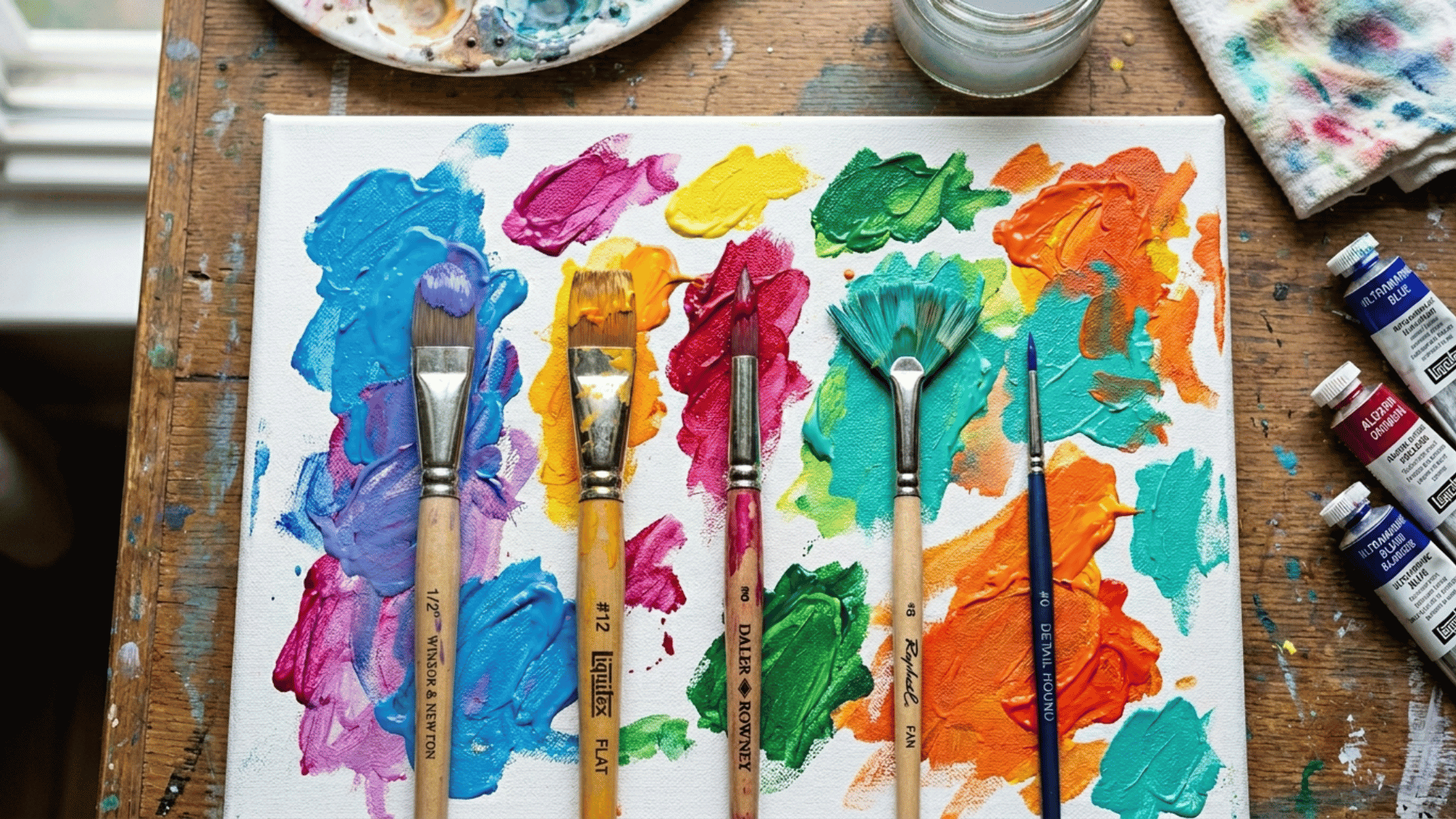
The best paint brushes are not all made for the same job. Each brush shape gives you a different kind of stroke, so knowing where to use them can save time and help you paint with more control.
1. Flat Brushes
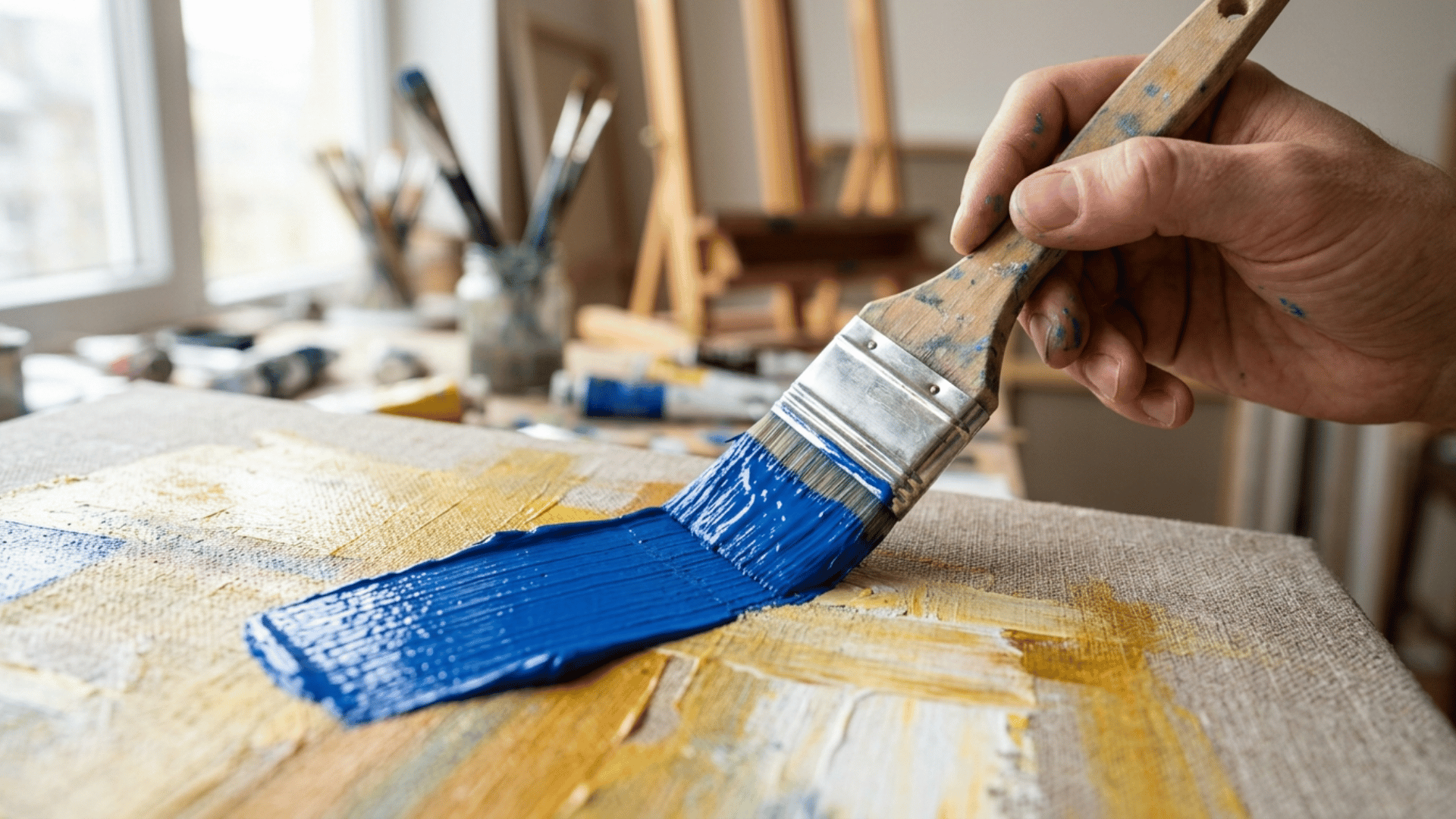
Flat brushes have a square edge and a wider shape, making them among the most useful acrylic paint brushes for canvas work.
They hold a good amount of paint and are easy to control, especially when you need clean, strong strokes.
Uses
- Ideal for covering backgrounds and larger sections of the canvas
- Works well for strong, expressive strokes in abstract pieces
- Helps create clean edges, solid color blocks, and crisp lines
- The narrow edge can be used for thinner, more controlled strokes
Recommended Products
- Princeton Catalyst Polytip Flat Brush, Long Handle: Synthetic Polytip bristles with excellent paint retention, ideal for bold flat strokes on canvas.
- Winsor & Newton Galeria Flat Long Handle Brush: Good shape retention and smooth paint release, designed specifically for acrylic work.
2. Round Brushes
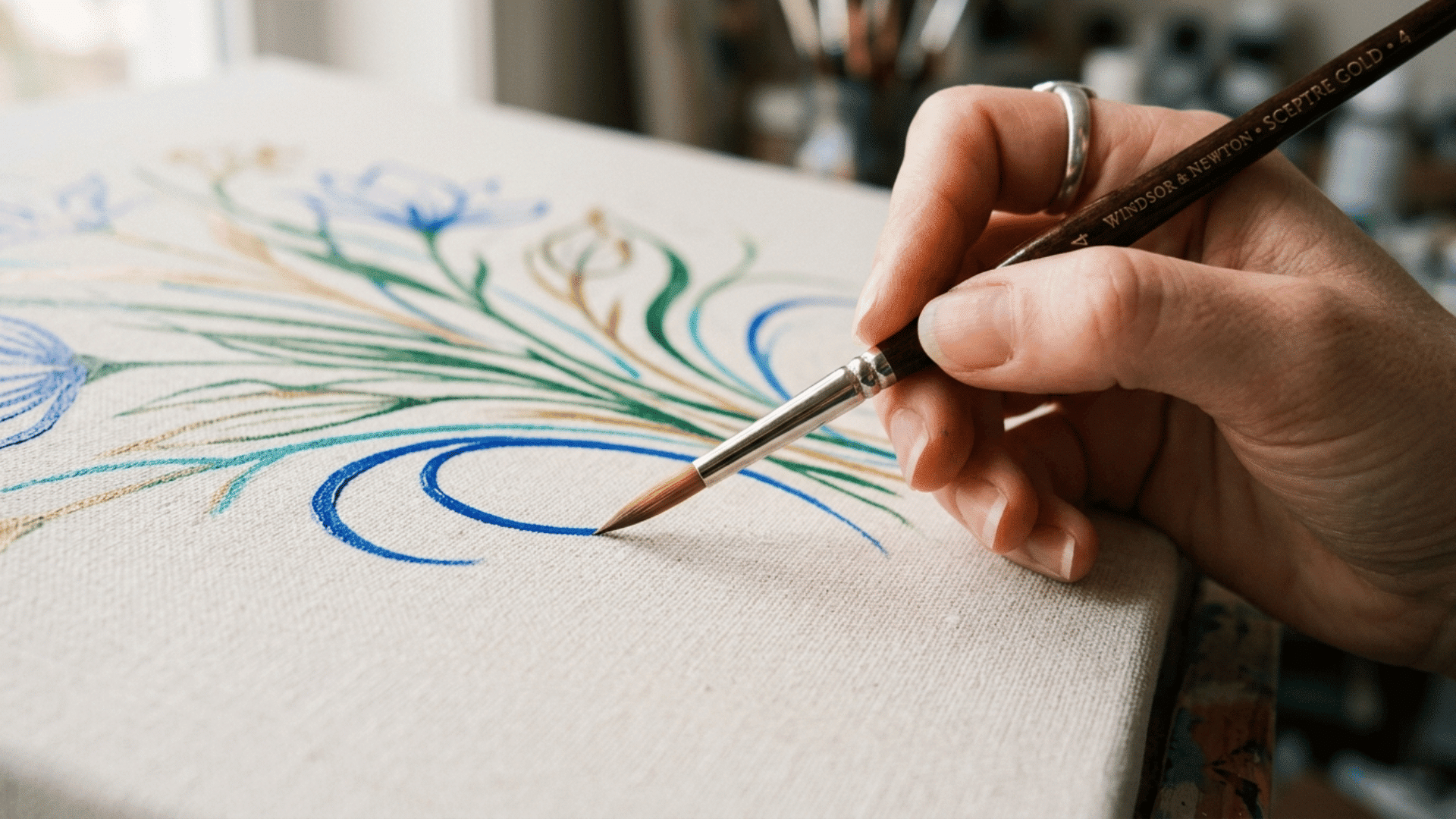
Round brushes have a pointed tip, making them well-suited for both broad strokes and small details. They are a solid choice when you want more control without switching brushes too often.
Uses
- Great for outlining and adding small details
- Works well for smooth curves and freeform shapes
- Useful for filling smaller sections with paint
- Offers better control when working in tight or precise areas
Recommended Products
- Winsor & Newton Galeria Round Short Handle Brush: Soft synthetic filaments with a good point for delicate linear work and detail painting.
- Princeton Select Artiste Round Brush: Synthetic round brush ideal for both broad strokes and fine detail in acrylics.
3. Filbert Brushes
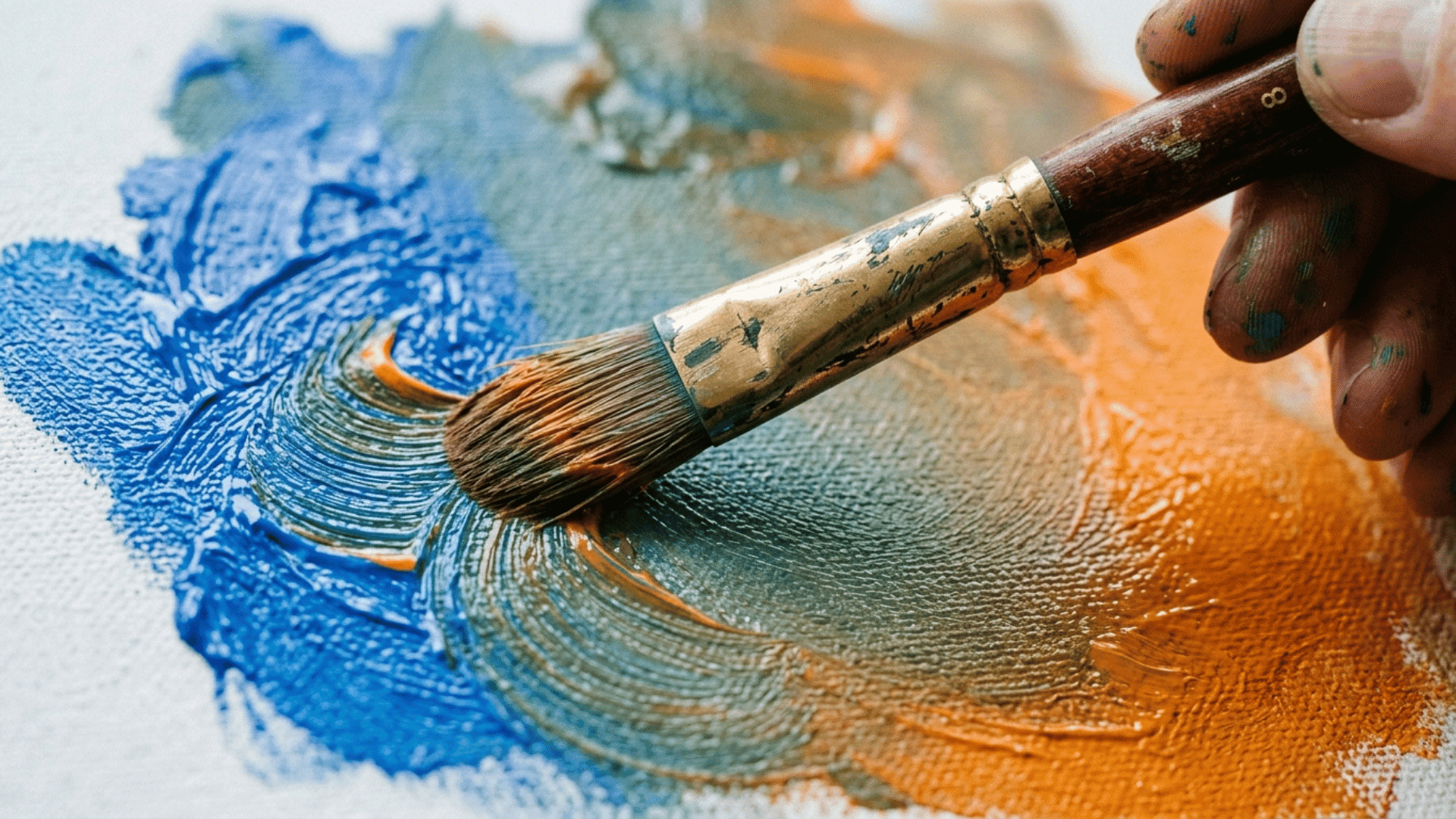
Filbert brushes have a flat body with a rounded tip. This shape helps create softer marks, which makes them great for blending and smoother transitions.
Uses
- Helps blend two colors smoothly on the canvas
- Creates soft edges instead of sharp lines
- Works well for painting petals, leaves, and curved shapes
- Useful for adding a smooth, natural look to forms
Recommended Products
- Princeton Select Artiste Filbert Brush: Soft synthetic hair with great flexibility and a well-shaped tip for smooth blending transitions.
- Royal & Langnickel Zen Series 73 Filbert Brush: Multi-diameter synthetic filaments that simulate natural hair, ideal for organic forms and soft edges.
4. Fan Brushes
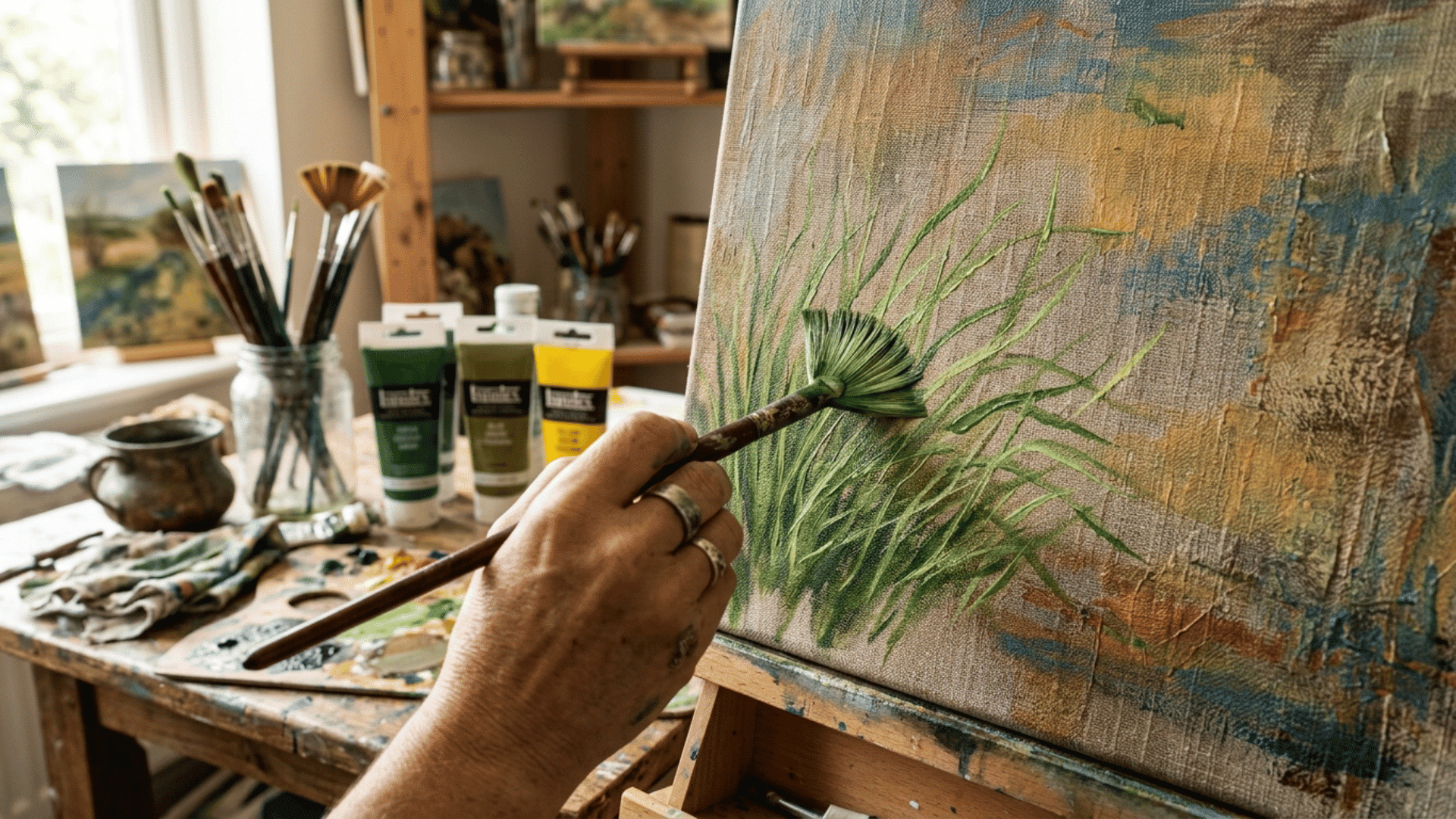
Fan brushes are spread out like a fan, and they are mainly used to add texture. They are not the best choice for every part of a painting, but they can create effects that are hard to get with other brush shapes.
Uses
- Best for creating grass with light, quick strokes
- Adds texture to elements like clouds, trees, and hair
- Helps soften areas using a dry brush technique
- Works best with a small amount of paint for cleaner texture effects
Recommended Products
- Winsor & Newton Winton Hog Fan Brush: Well-spread bristles that create consistent, natural-looking texture strokes in acrylics and oils.
- Princeton Select Artiste Bristle Fan Brush: Synthetic bristle fan brush ideal for dry brush texturing on grass, foliage, and soft backgrounds.
5. Detail/Liner Brushes
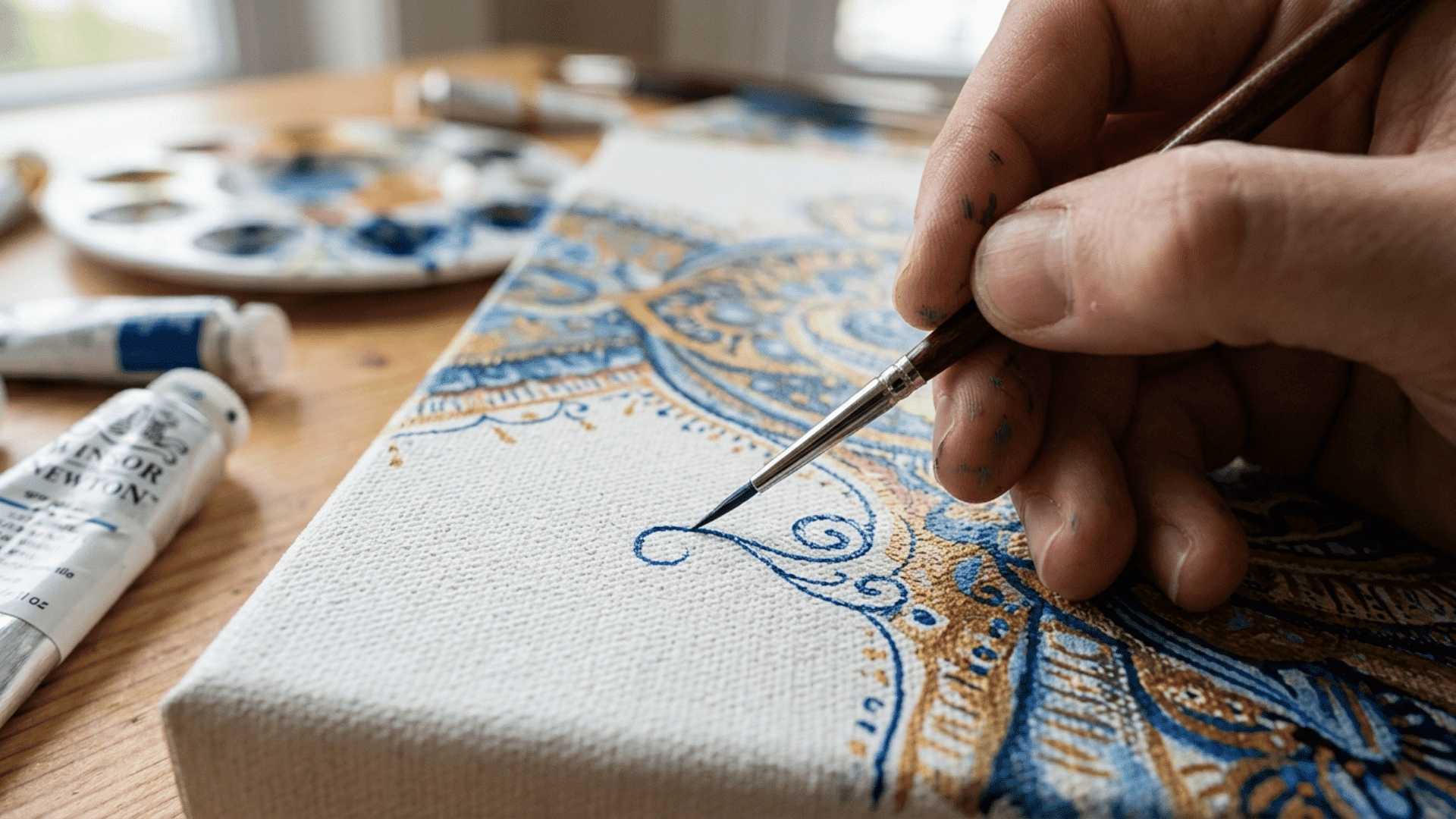
Detail and liner brushes are small, thin, and made for precise work. These paint brushes are helpful when your painting needs neat finishing touches.
Uses
- Perfect for creating fine lines and small details
- Useful for highlights, lettering, and clean outlines
- Works well for painting thin elements like branches and whiskers
- Ideal for adding small patterns and intricate designs
- Best used with a steady hand and minimal paint for precise results
Recommended Products
- Princeton Select Artiste Liner Brush, Size 2: Fine synthetic tip with excellent line consistency, ideal for detailed finishing work in acrylics.
- Princeton Select Artiste Script Liner Brush: Extra-fine script liner for continuous thin lines, lettering, and intricate pattern work.
Best Acrylic Paint and Brush Combinations by Technique
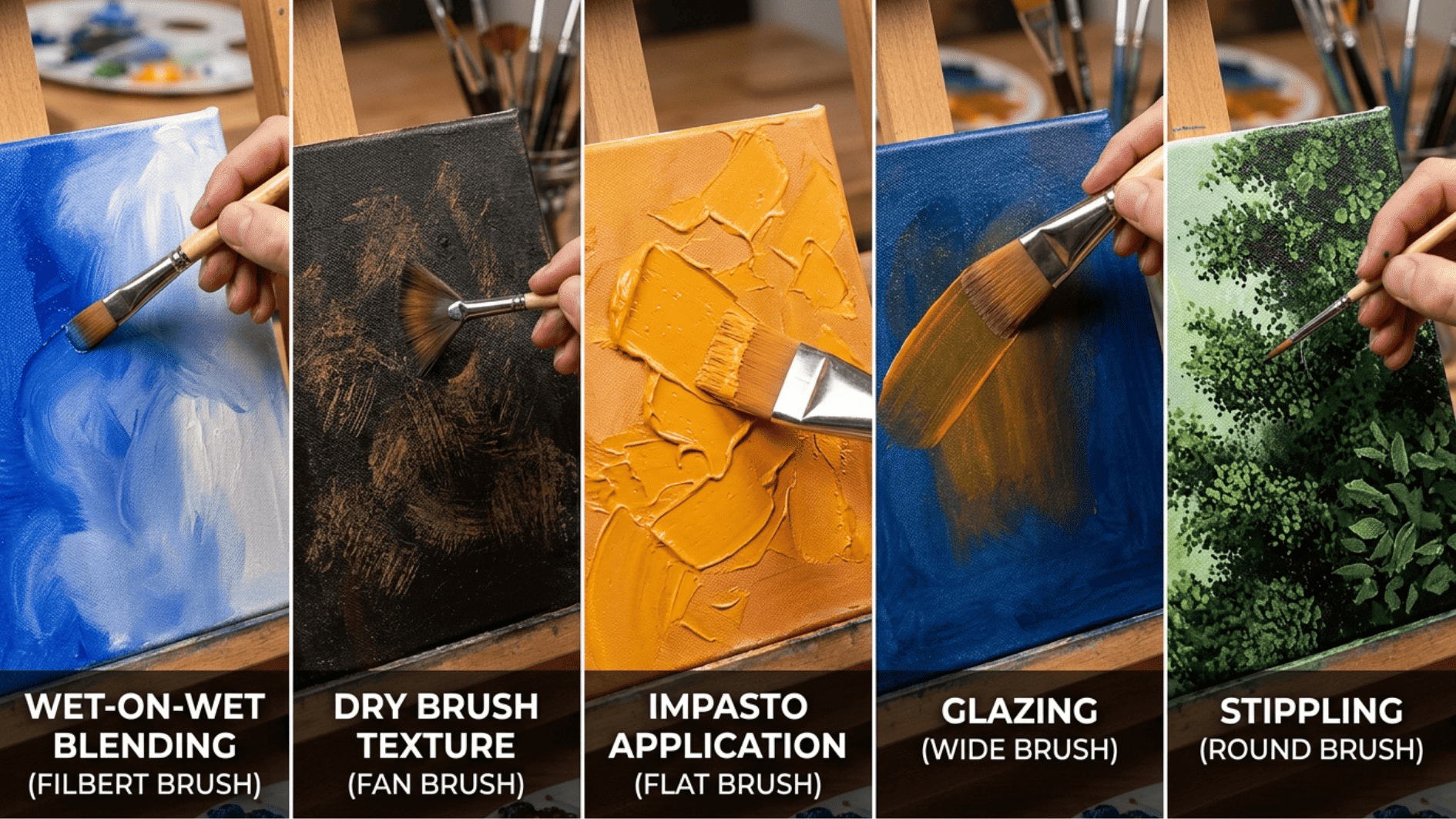
When it comes to painting with acrylics, knowing which brush to pair with each technique saves time, reduces frustration, and gets you the result you’re actually after.
Here’s exactly what to reach for based on what you’re trying to achieve.
1. Wet-on-Wet Blending
Wet-on-wet blending means working wet paint directly onto the canvas to create smooth color transitions.
- The filbert brush is your best tool here; its rounded tip and flat body let you work between two colors without creating a hard edge.
- Use a medium to fluid consistency acrylic and keep your strokes soft and circular. A stay-wet palette helps keep your paint workable longer during this technique.
Recommended Paints:Liquitex Professional Soft Body Acrylic, 12-piece Essentials Set, and Liquitex Slow-Dri Blending Medium
2. Dry Brushing
Dry brushing uses a brush with very little paint on stiff, spread-out bristles to create a broken, textured stroke.
- A fan brush or a worn flat brush works best; the spread bristles deposit paint unevenly, which is exactly the effect you want.
- Use thick, heavy-body acrylic straight from the tube with no water added. Wipe most of the paint off on a paper towel before touching the canvas.
Recommended Paints:Liquitex Professional Heavy Body Acrylic, Classic 12-piece Set, and Golden Heavy Body Acrylics, 12 Color Mixing Set
3. Impasto
Impasto involves applying thick, heavy paint directly onto the canvas to create raised, three-dimensional texture that holds visible brush or palette knife marks.
- A large flat brush or a palette knife works best here; the stiff, wide surface pushes thick paint across the canvas without it collapsing.
- Use heavy-body or extra-heavy acrylic straight from the tube, or mix in an impasto medium to add even more body.
Recommended Paints:Liquitex Professional Heavy Body Acrylic
4. Glazing
Glazing means applying a thin, transparent layer of paint over a dried layer to adjust color, add depth, or create a luminous effect.
- A soft flat wash brush or a wide round brush works best; you need something that spreads thin paint evenly without dragging or disturbing the layer beneath.
- Thin your acrylic significantly with a glazing medium rather than water, which keeps the paint transparent without weakening the binders.
Recommended Medium:Liquitex Professional Glazing Medium, 237ml, and Winsor & Newton Professional Acrylic Glazing Medium, 250ml
5. Stippling
Stippling creates texture and tone by applying small dots or dabs of paint vertically on the canvas surface.
- A round brush or a stiff-bristled brush held perpendicular to the surface works best, as you’re pressing the tip straight down rather than dragging it across.
- Use a medium consistency acrylic and vary the pressure and spacing to control how dense or open the stippled area appears.
Recommended Paints:Liquitex BASICS Acrylic Paint Set, 24 tubes, and Winsor & Newton Artists’ Acrylic Color
How to Choose the Right Acrylic Paint Brushes?
Choosing the right acrylic paint brush depends on your painting style and the results you want. Here are some simple points to help you decide:
- Choose brush shape based on your need: flat for bold strokes, round for details, and filbert for blending
- Pick the right size depending on your canvas and level of detail
- Go for synthetic bristles as they work best with acrylic paints
- Select a comfortable handle that gives you good control while painting
- Check the brush quality to ensure it holds shape and does not shed
- Consider your technique, such as blending, layering, or detailing, before choosing
- Start with a basic set if you are a beginner, then expand as needed
It’s a Wrap
Picking the best acrylic paint brushes and the right acrylic paint for canvas comes down to understanding what works for your style and skill level.
The right brushes give you better control, cleaner strokes, and more confidence while painting. Start with a few simple tools, practice regularly, and upgrade only when needed.
Small changes in your brush and paint choices can make a clear difference over time. Keep things simple, stay consistent, and your results will improve naturally.
Frequently Asked Questions
What Brushes Do Professional Artists Use?
Most professionals prefer well-made synthetic brushes with strong shape retention, often from trusted artist-grade brands.
What is the Highest Quality Acrylic?
Golden Paints is known for its high-quality, professional-grade acrylic paints. They are highly regarded in the art community for their consistency, pigmentation, and color accuracy.
Who Makes the Best Acrylic Paint Brushes?
Popular brands for acrylic paint brushes include Princeton, Rosemary & Co, Winsor & Newton, and Silver Brush. High-quality synthetic brushes are ideal because they are durable and hold their shape well.