


1-year-olds move fast and stay curious about everything within reach. They’ll pull open a cabinet to see what’s inside, then lose interest the second something more exciting catches their eye.
At this age, a new skill shows up almost every week, from dancing to pointing at things they want.
Sitting still for long stretches isn’t part of the deal yet, and most toys lose their charm within minutes. Keeping them busy without a screen takes a bit of planning.
Activities for 1-year-olds don’t need to be complicated to hold their attention. In this blog, you’ll learn simple activities that support movement, creativity, sensory play, and early development.
How Does Play Build Development?
Play is how a 1-year-old makes sense of the world. Every block tower or dropped spoon is a small experiment in cause and effect, and their brain wires itself a little more with each try.
This is also when language starts to click, along with balance, grip, and the first flashes of problem-solving. You don’t need a structured lesson for any of it.
Growth happens through touch, repetition, and your willingness to hand over the same measuring cup for the tenth time.
The right activities for 1-year-olds support development at this stage more than any flashcard ever could.
Sensory Play Activities for 1-Year-Olds
Sensory play lets a toddler explore texture, sound, and smell through hands-on activities.
These ideas use simple materials and build curiosity while keeping messes manageable and safe, much like the setups in these sensory activities for preschoolers once your toddler is ready for a bit more complexity.
1. Rice or Pasta Sensory Bin
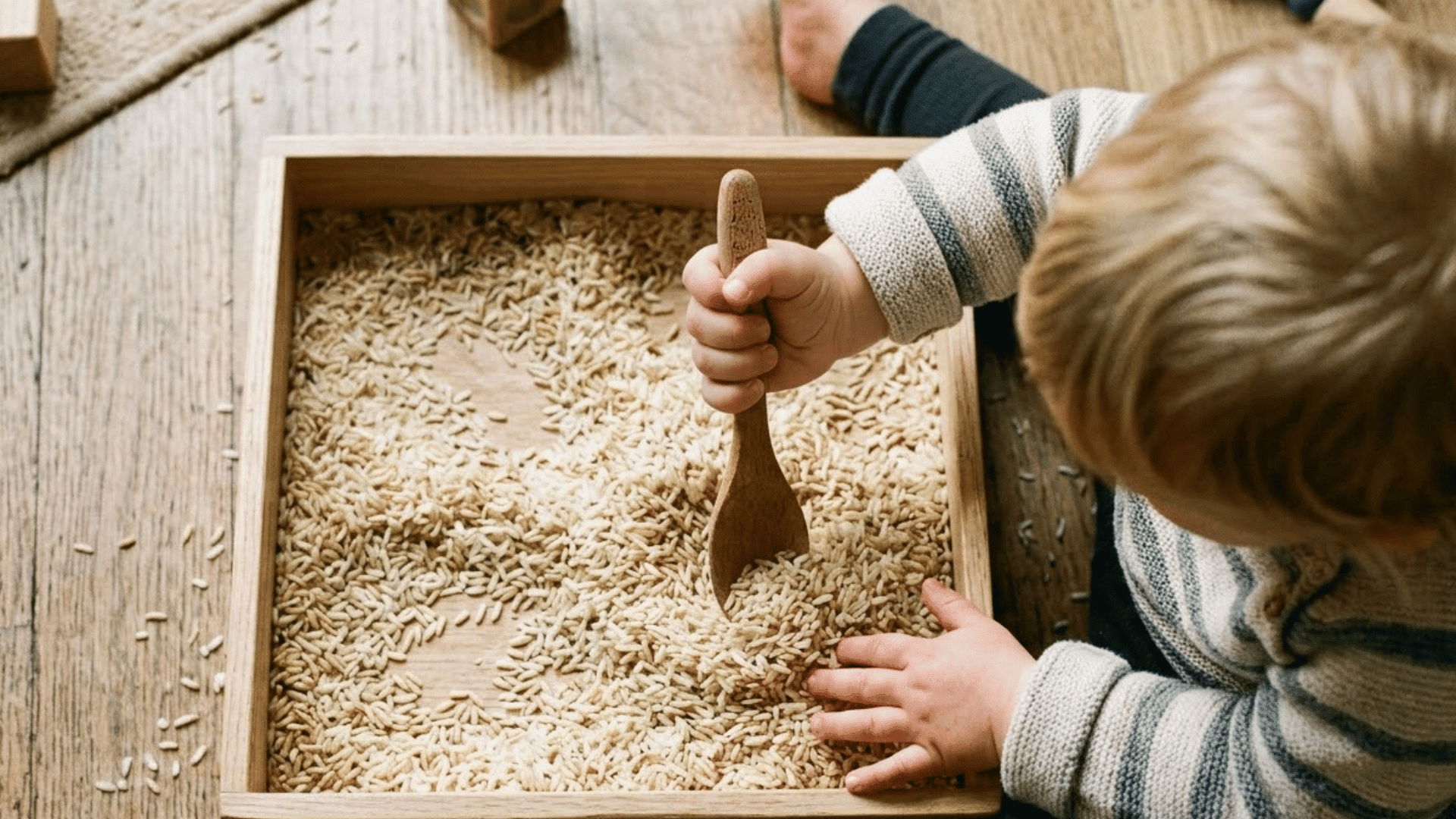
Fill a shallow bin with dry rice or pasta and toss in a few cups and spoons. Your toddler will spend long stretches scooping, pouring, and dumping it all out again.
This one buys you real time, especially during a busy afternoon. Just stay close by, since rice is still small enough to end up in a curious mouth.
2. Edible Finger Paint
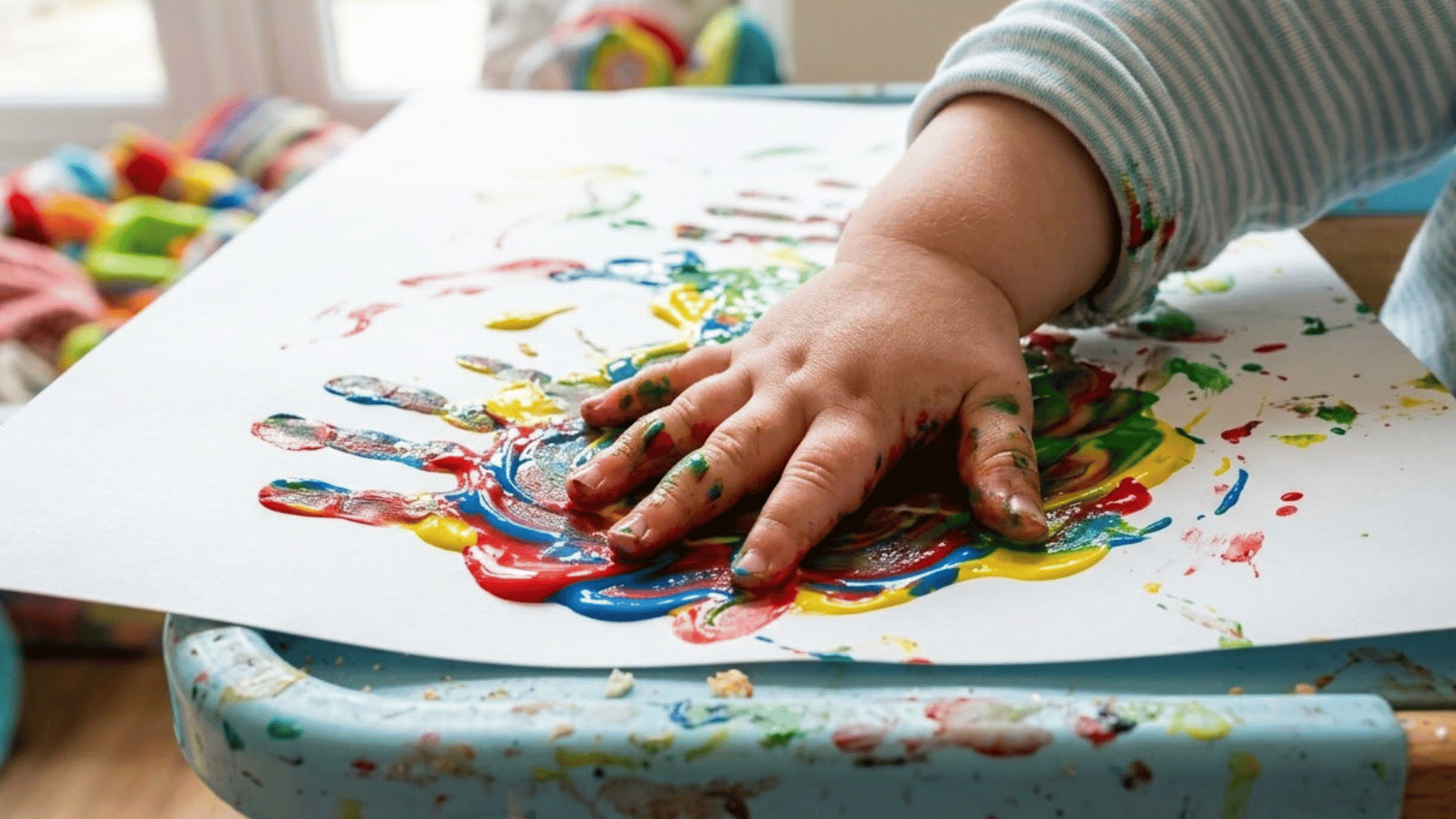
Mix flour, water, and a drop of food coloring to make paint that’s safe even if your toddler decides to taste it. Spread it on a tray or big sheet of paper and let them go at it with their whole hand.
The mess is part of the fun here, not something to avoid.
3. Mess-Free Painting in a Sealed Bag
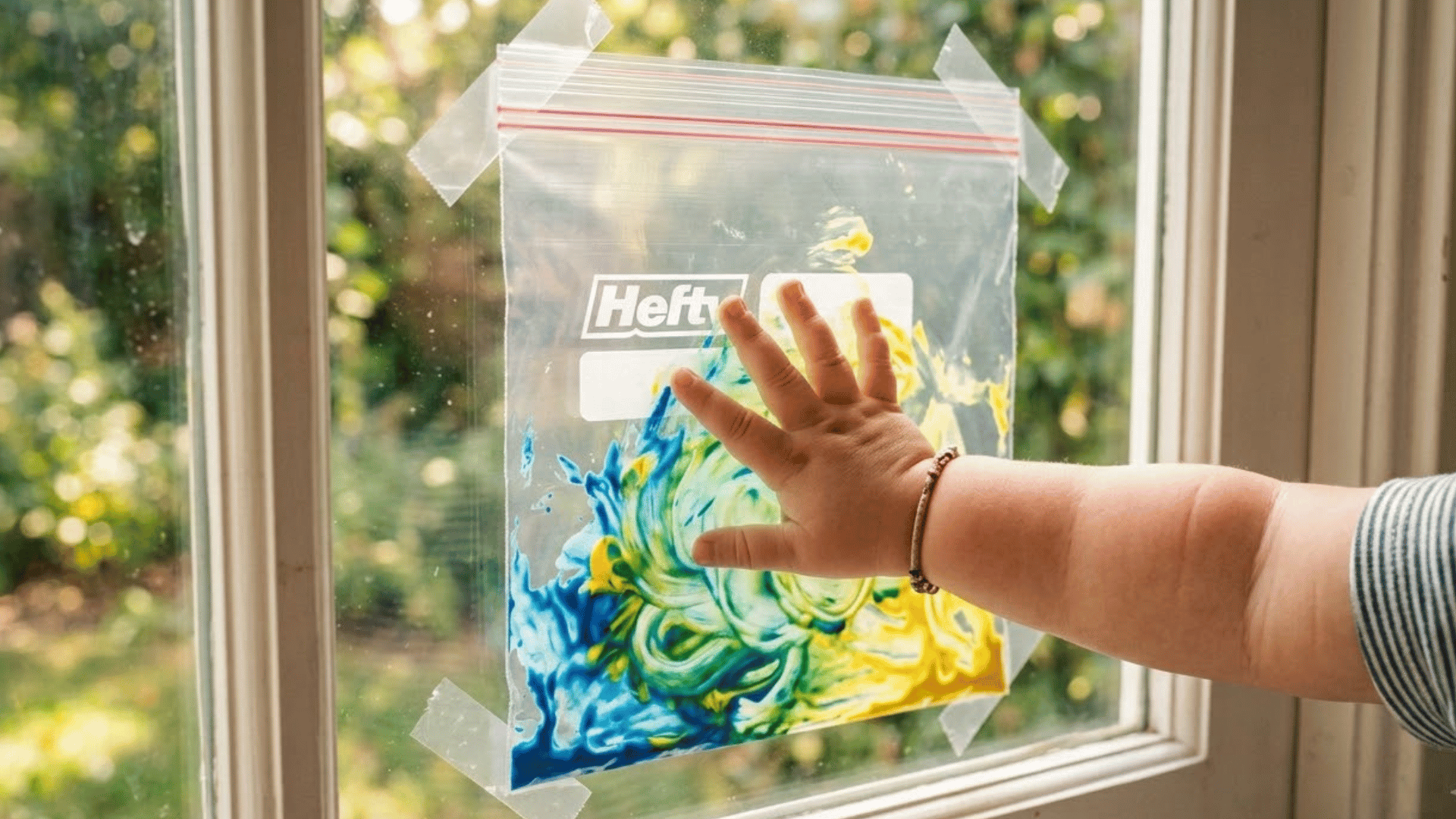
Squeeze a few blobs of paint into a zip-top bag, seal it tight, and tape it to a table or window.
Your toddler can press, poke, and swirl the colors around without a single stain to clean up.
It’s a good option for smaller spaces or days when you just don’t have the energy for cleanup.
4. Textured Touch Board
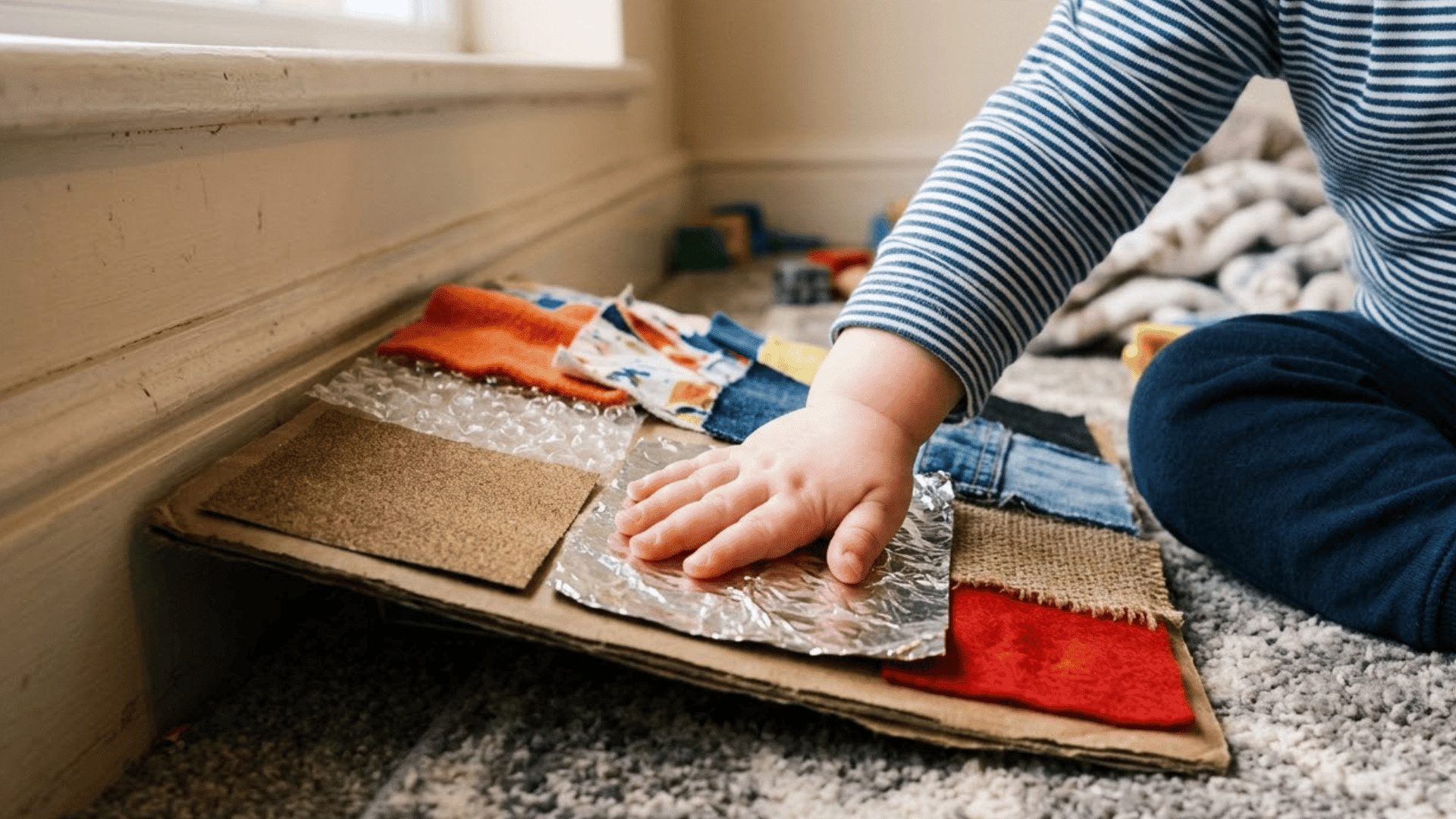
Glue different materials- fabric scraps, foil, bubble wrap, sandpaper- onto a flat board or piece of cardboard. Your toddler gets to run their hands across each patch and feel how different textures respond to touch.
This one holds up well over time, since new textures can be swapped in whenever interest fades.
Keep it low to the ground so they can explore it while sitting or crawling by.
5. Water Play in a Shallow Bin
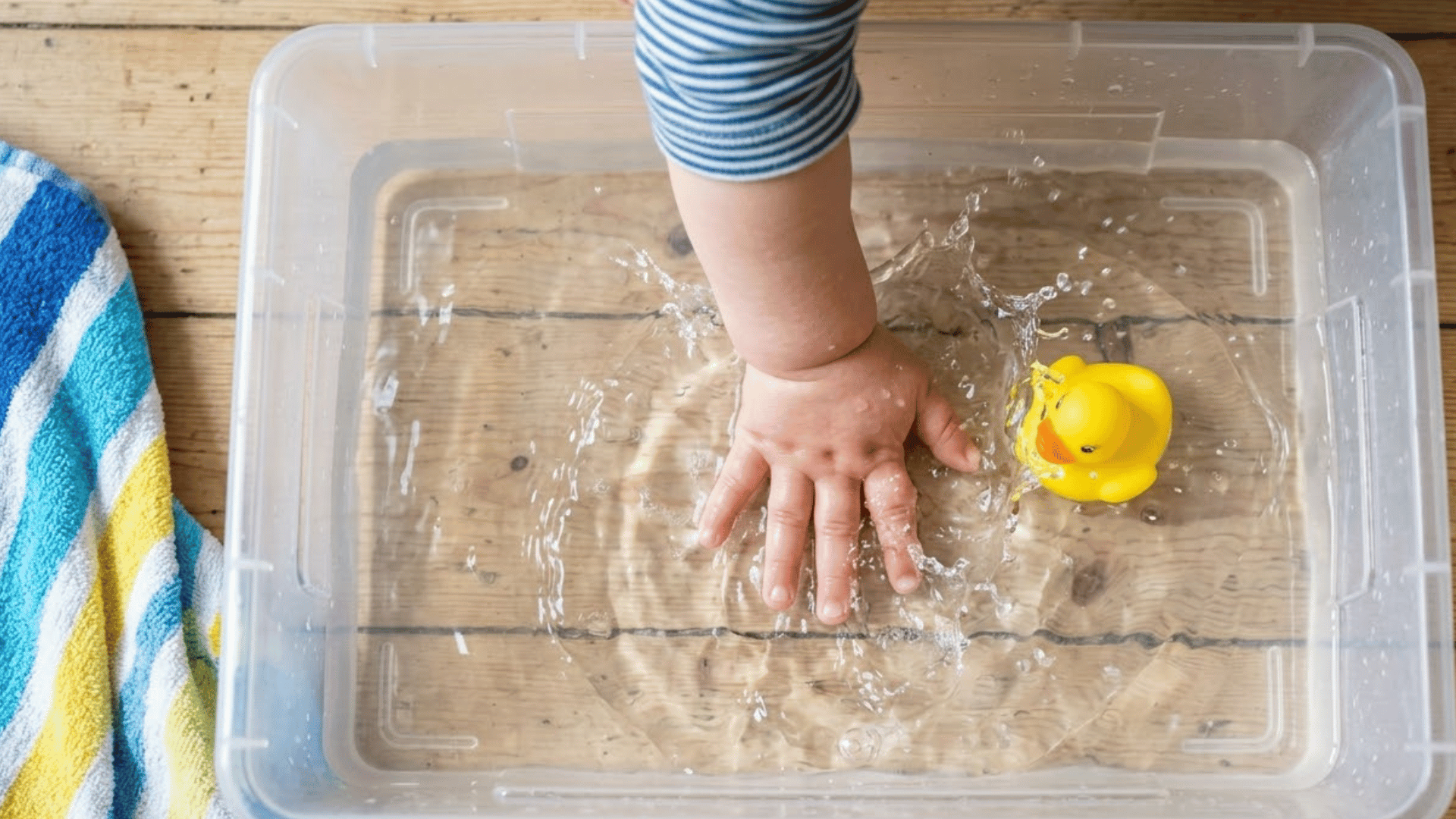
Set out a low bin with an inch or two of water, then add a few cups and a small toy or two.
Splashing, pouring, and watching things float keeps a toddler occupied far longer than most people expect. Towels nearby make cleanup painless.
6. Frozen Toy Dig
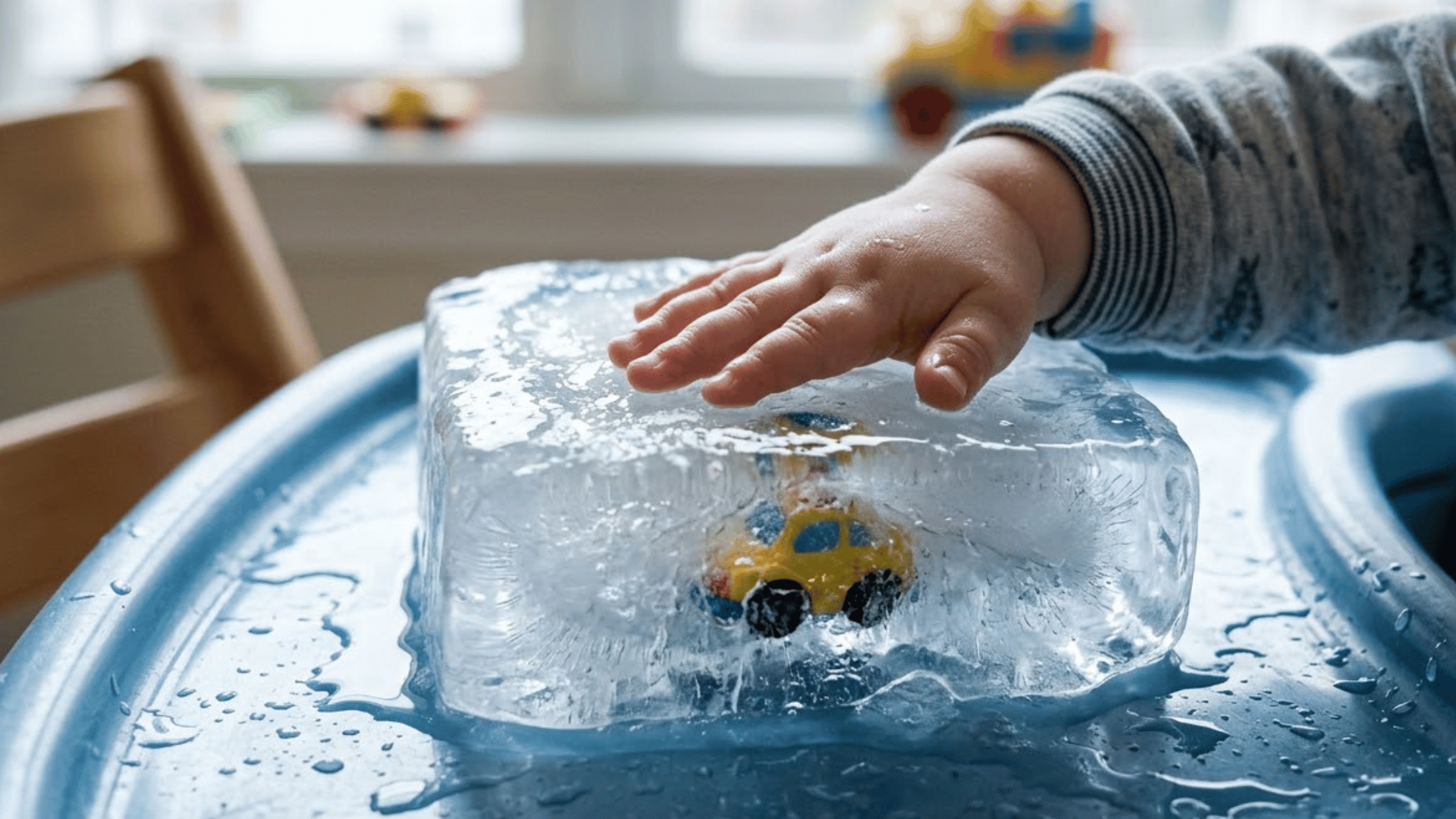
Freeze a few small toys inside ice cubes or a bigger block of ice, then hand your toddler the whole frozen chunk in a bin.
Watching the ice melt and the toy slowly appear keeps their attention locked in.
It also introduces the idea of things changing, which is a small but real cognitive win. Add a spoon so they can help chip away at the ice themselves.
Safety Note: Stay within arm’s reach; prolonged contact with ice can cause a cold burn, and small chunks are a choking and slip hazard.
7. Sound Shakers
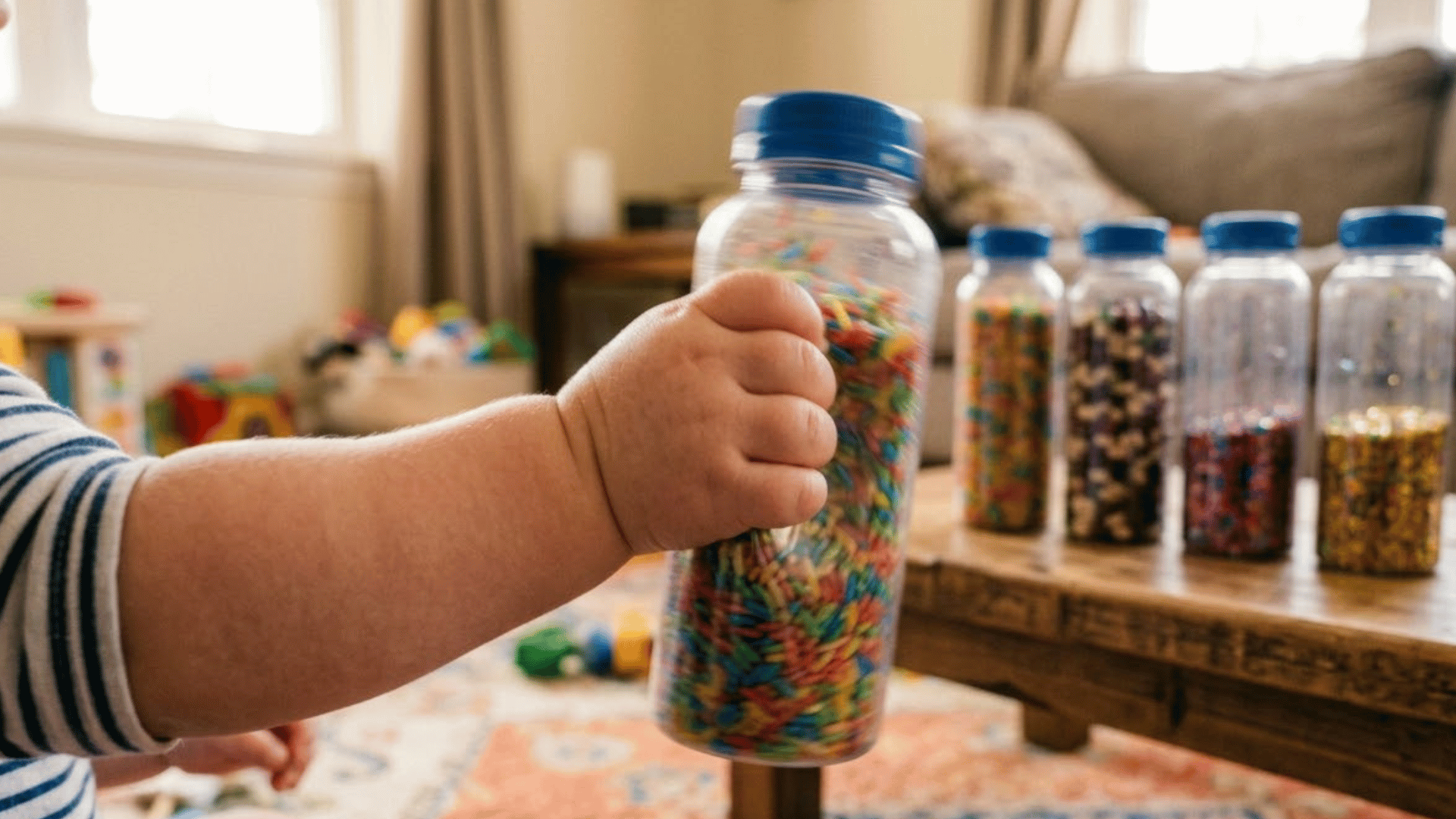
Fill a few small, sealed bottles with rice, beans, or bells and let your toddler shake them to hear the difference. Bright colors and varied sounds make this one easy to turn into a quick game of matching or guessing.
It’s also one of the simplest DIY toys to make with things already in your kitchen.
Fine Motor Skill Activities for 1-Year-Olds
Fine motor play strengthens the small muscles in a toddler’s hands and fingers. These activities support grip, coordination, and the pincer grasp needed for later skills.
8. Muffin Tin Transfer Game
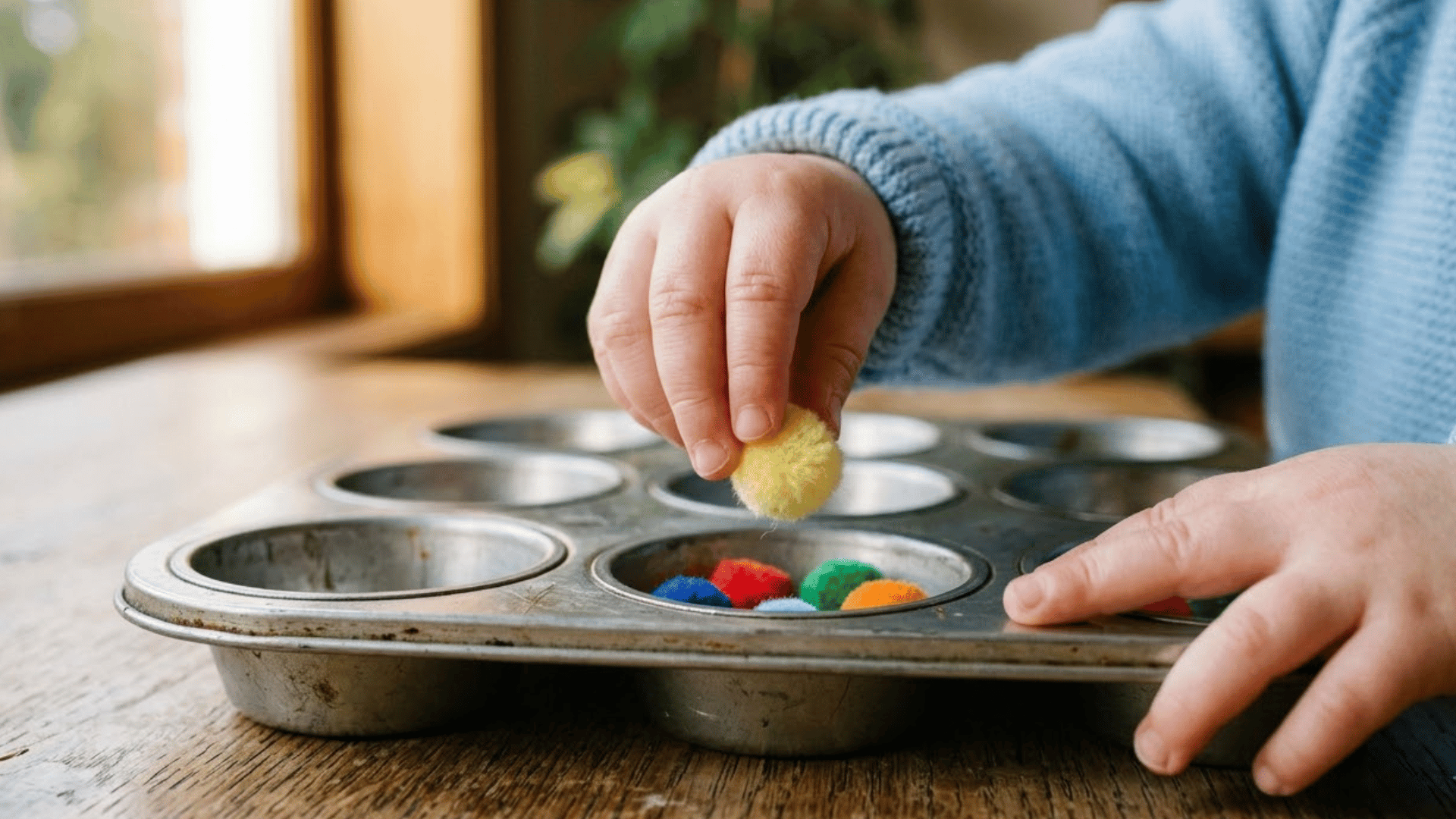
Hand your toddler a muffin tin, a few pom poms or small blocks, and a spoon.
Moving items from one cup to the next takes real concentration at this age, and it’s a workout for tiny fingers, similar to the fine motor practice behind these creative activities at home.
Swap in different objects once the game gets too easy.
9. DIY Shape Sorter
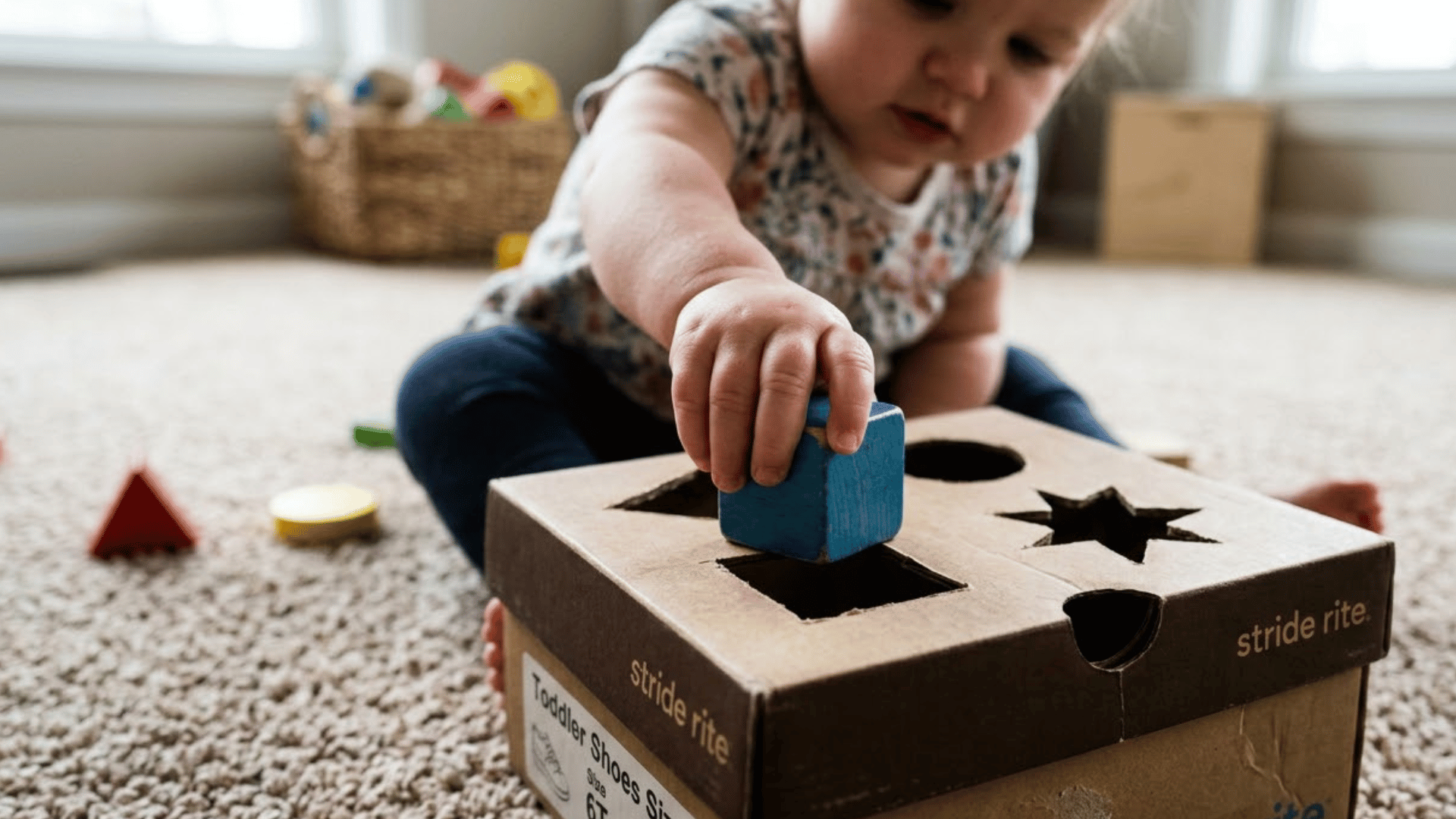
Cut a few shapes into the lid of a shoebox and let your toddler match blocks to the right opening. It takes some trial and error at first, which is exactly the point.
This one also builds patience, since the shapes won’t always drop in on the first try. A shoebox works just as well as anything store-bought.
10. Stacking Cups or Blocks
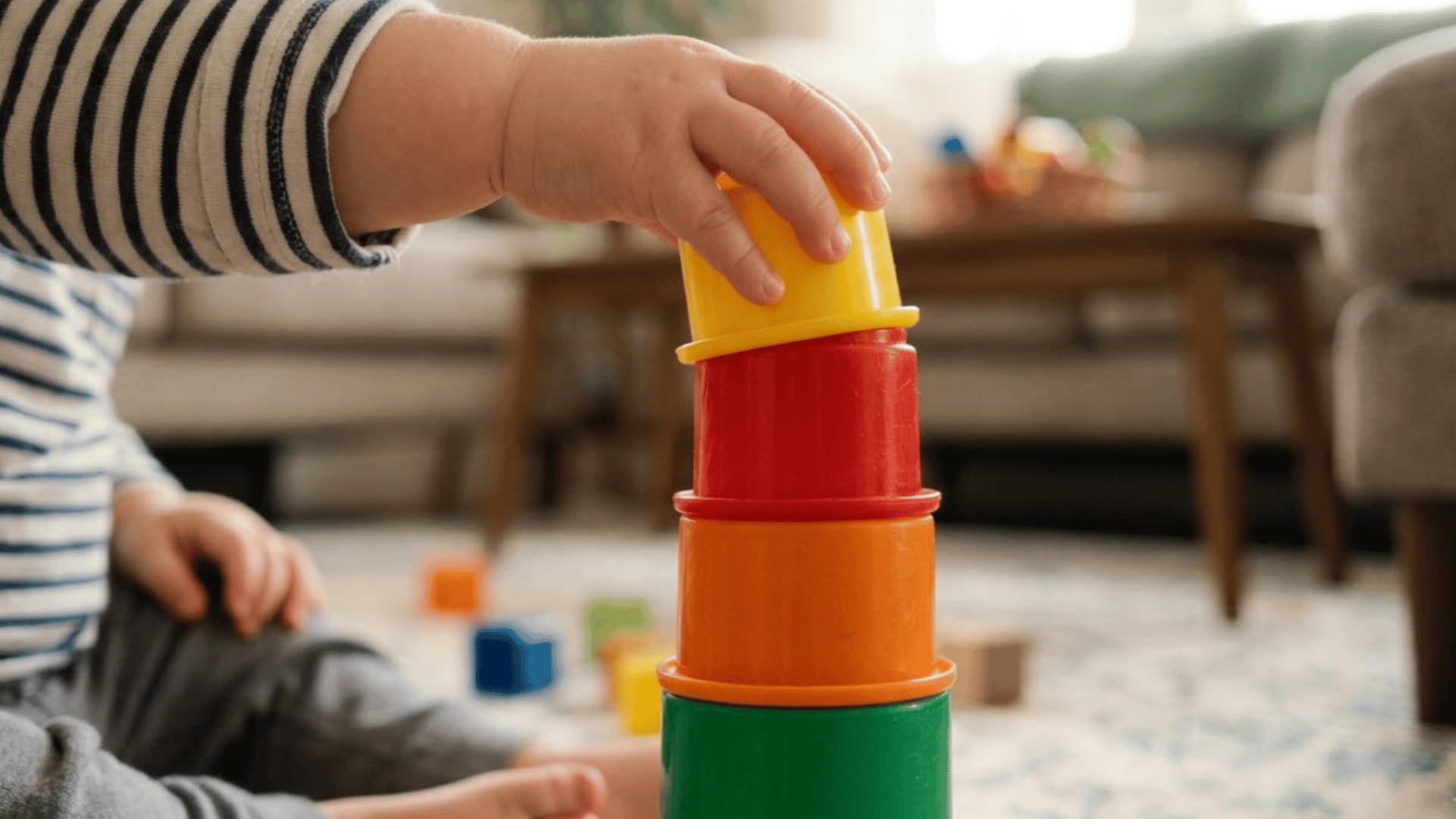
Stacking cups or wooden blocks gives your toddler a simple, repeatable challenge: build it up, watch it fall, and start again.
The activity strengthens grip and hand-eye coordination with almost no setup required.
Most toddlers will return to this one on their own without much encouragement.
11. Board Books
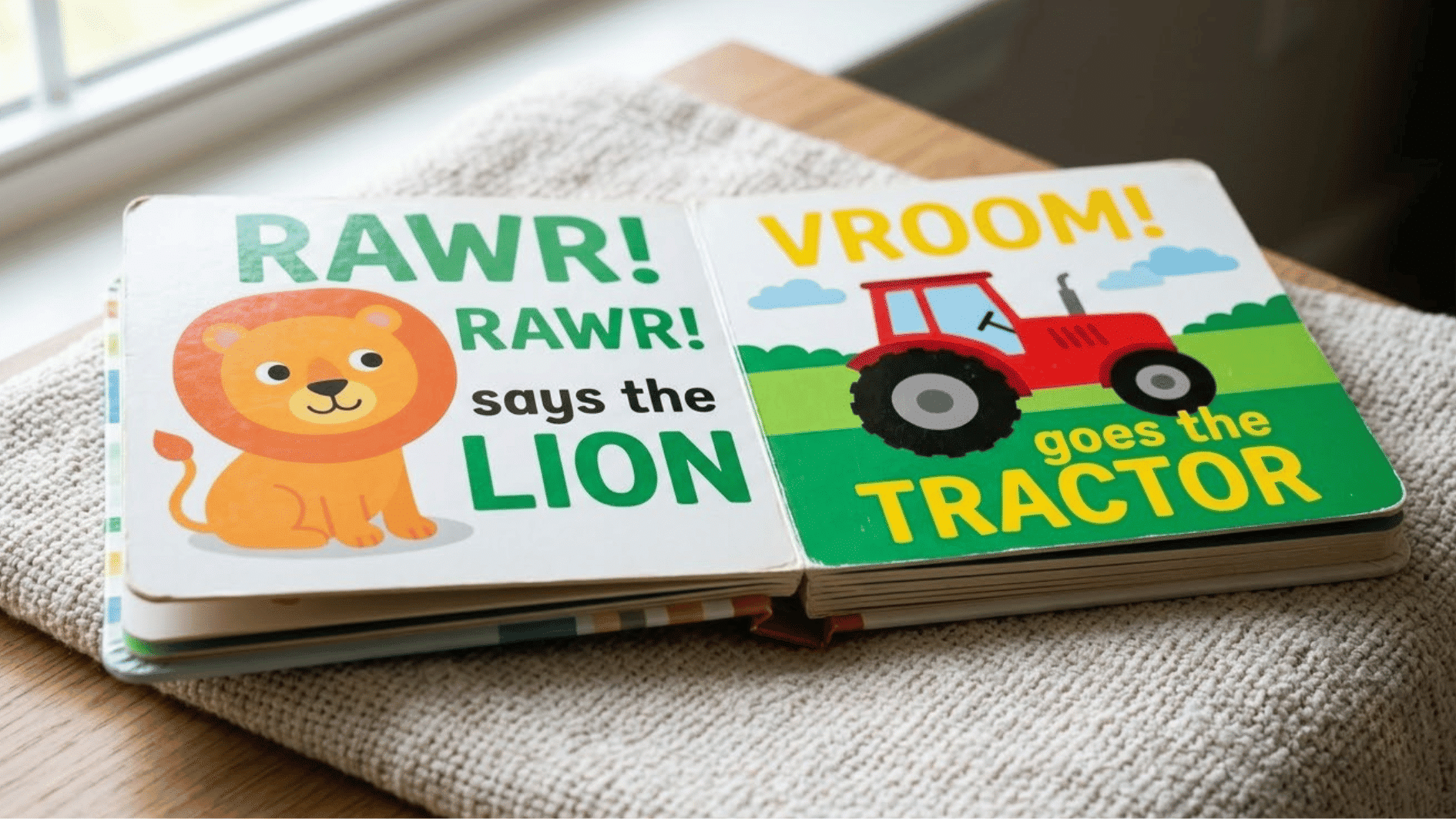
Board books with thick, sturdy pages let your toddler practice turning pages on their own. Fumbling with a page and finally getting it to flip is a small motor milestone worth celebrating.
Choose books with big, simple pictures so there’s something to look at between page turns. This is also a low-key way to build in reading time without it feeling like a task.
Parenting tip: Reading the same book on repeat isn’t a sign you’re out of ideas. It’s how routines get built.
12. Squishing and Rolling
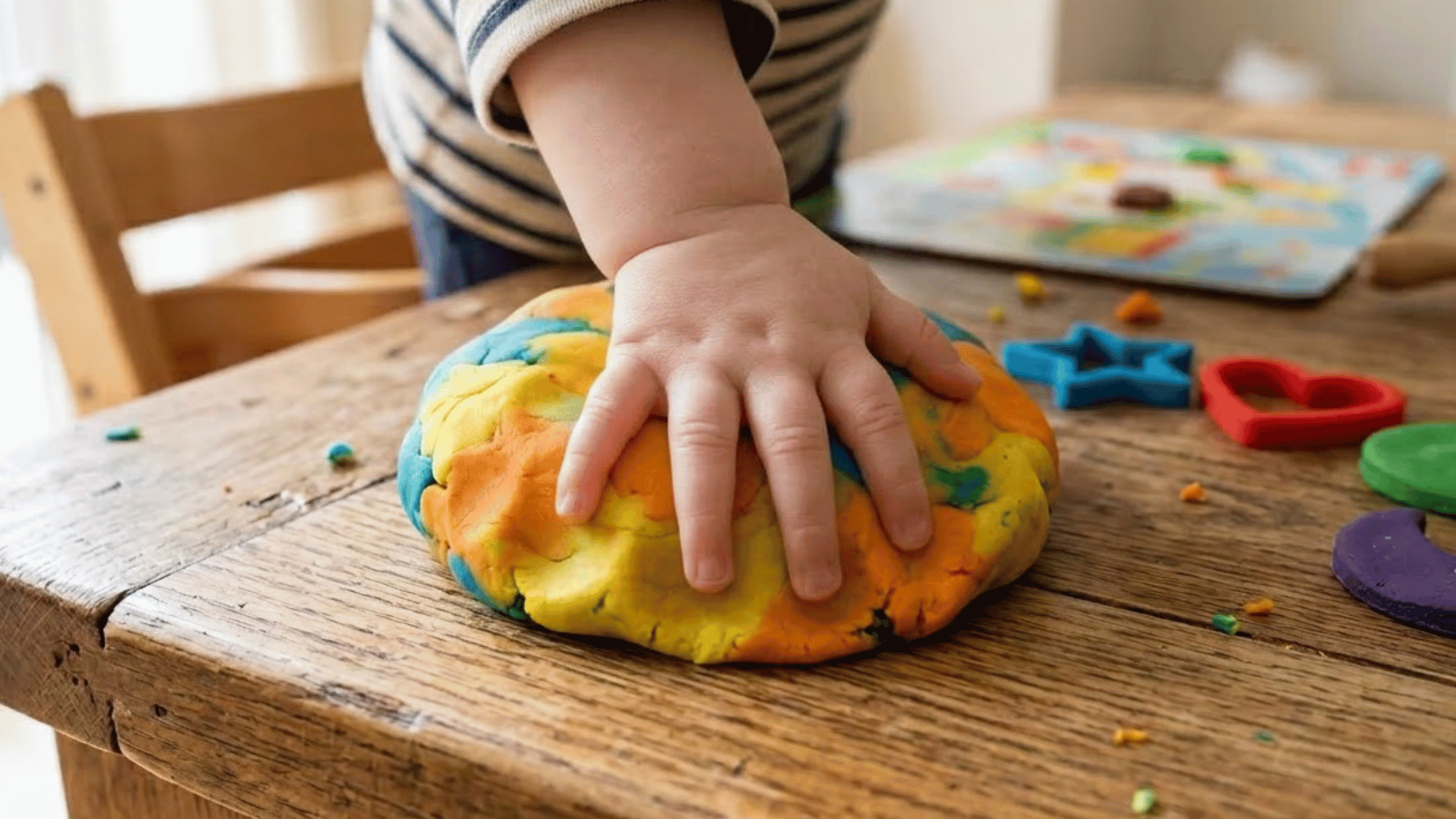
Soft, squishy dough gives a toddler’s hands a real movement.
Squeezing, rolling, and flattening it strengthens the same muscles they’ll later use for holding a pencil.
Make your own with flour, water, and salt if you’d rather skip anything store-bought.
Parenting tip: Let the mess sit for a few extra minutes before cleanup. Rushing to tidy up cuts the activity short.
13. Straw Drop Into a Bottle
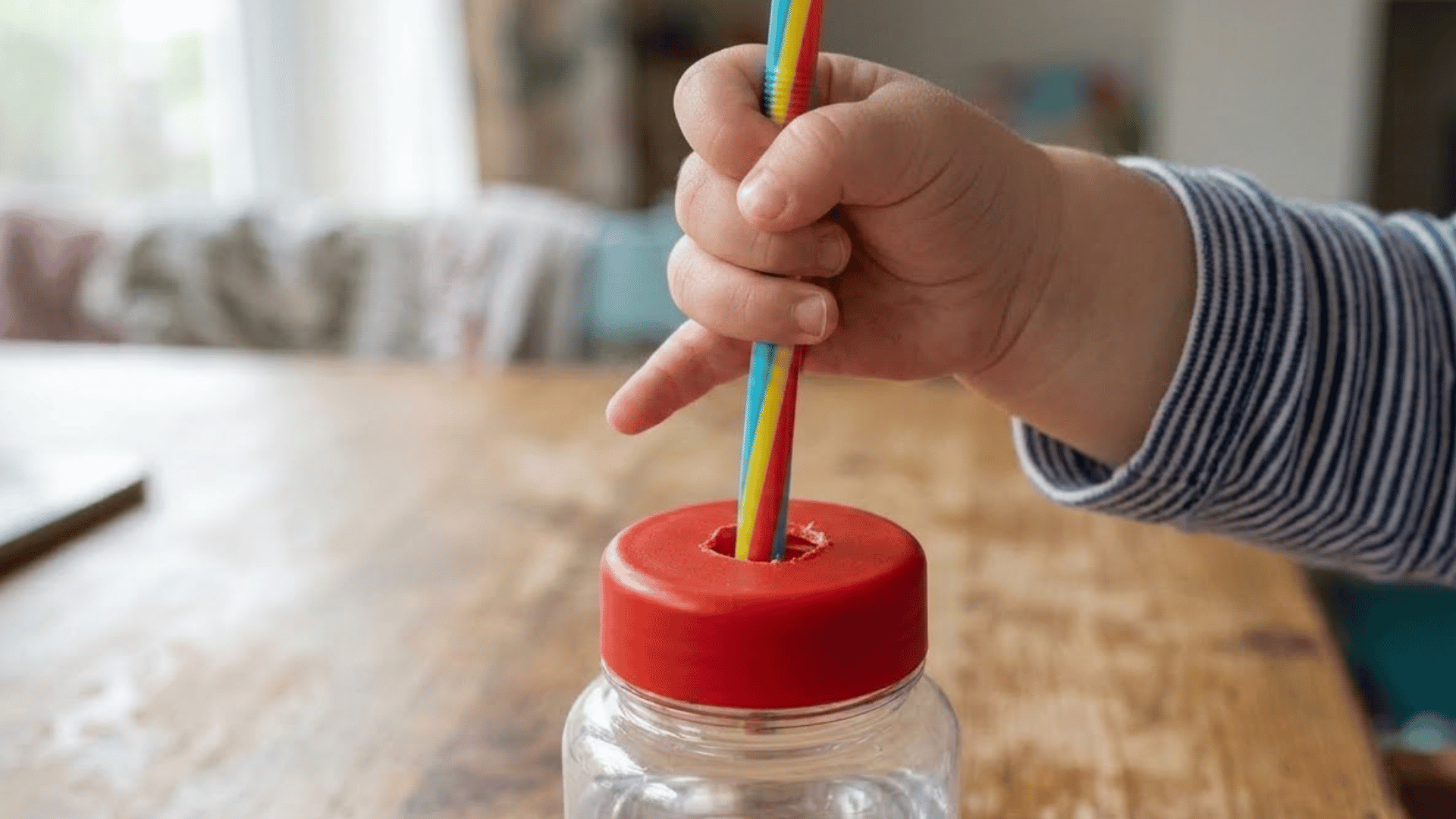
Poke a hole in a plastic bottle lid and hand your toddler a few thick straws or sticks to drop through the opening. Lining up the straw with the hole takes focus and a steady hand.
It’s a quiet activity, too, which makes it a good pick for car rides or waiting rooms.
14. Sticker Peeling and Placing
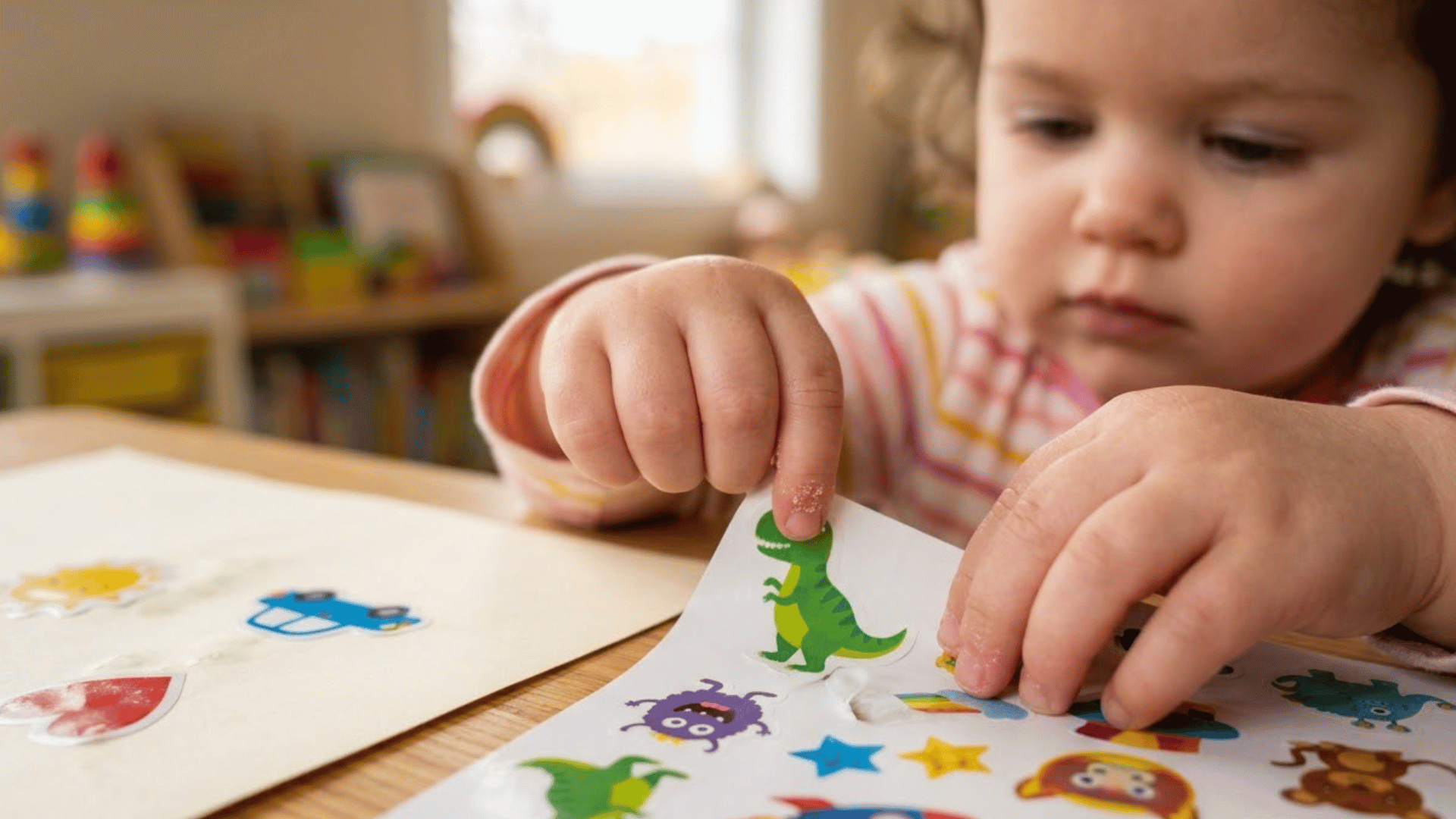
Peeling a sticker off its backing and pressing it onto paper sounds simple, but it’s genuinely tricky for small fingers to manage.
Your toddler will likely need a few tries before it sticks where they want.
Big, chunky stickers work better than small ones at this stage.
Gross Motor & Movement Activities for 1-Year-Olds
Gross motor play works the large muscles used for walking, climbing, and balance.
These activities burn energy while building coordination and confidence in movement.
15. Simple Obstacle Course
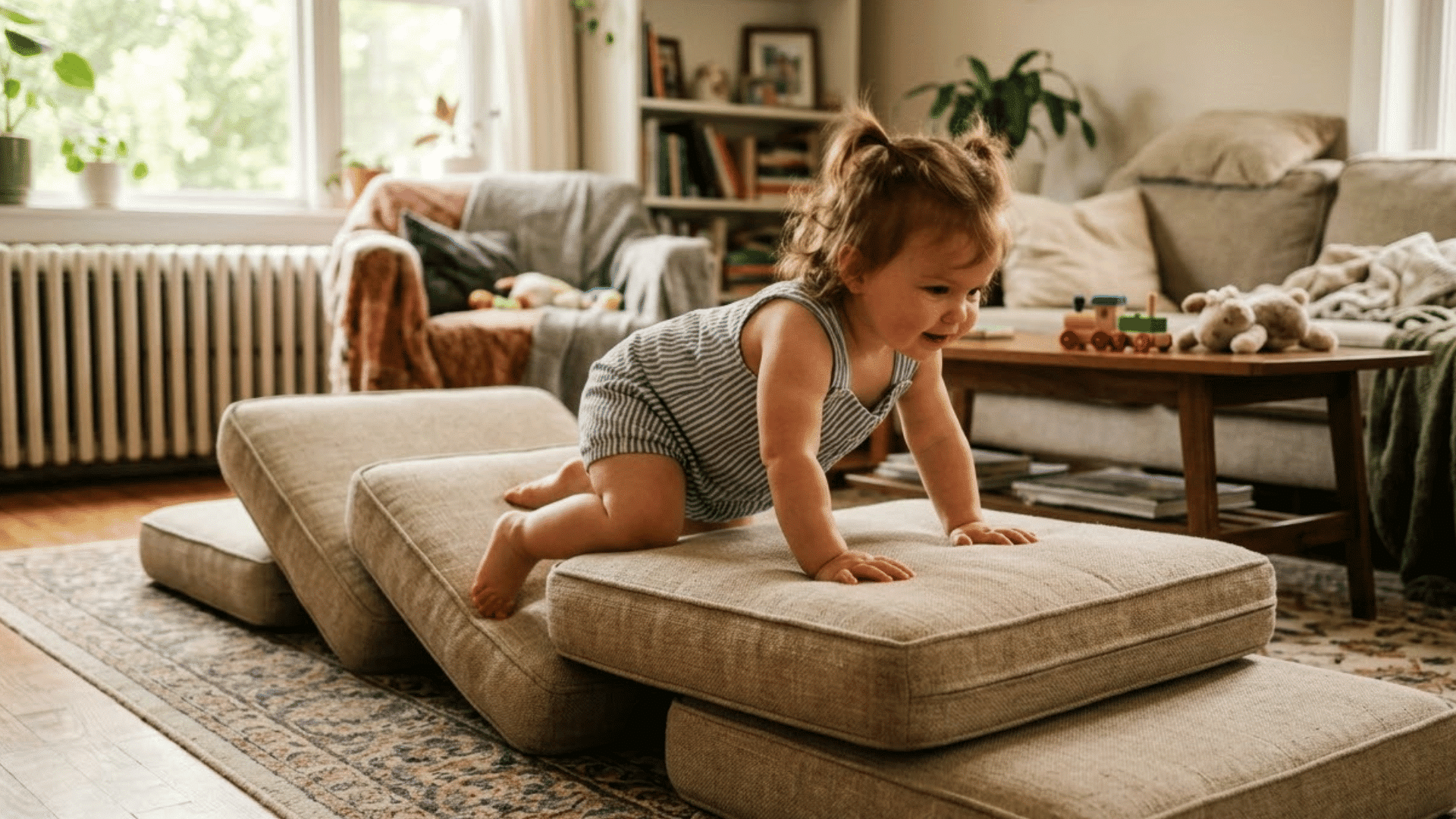
Line up couch cushions, pillows, and low furniture to create a path your toddler can crawl over, climb through, or walk around.
Finding each obstacle builds balance and problem-solving at the same time, and rearranging the same few items keeps the course feeling new without buying anything extra.
16. Push-and-Pull Walker Toy
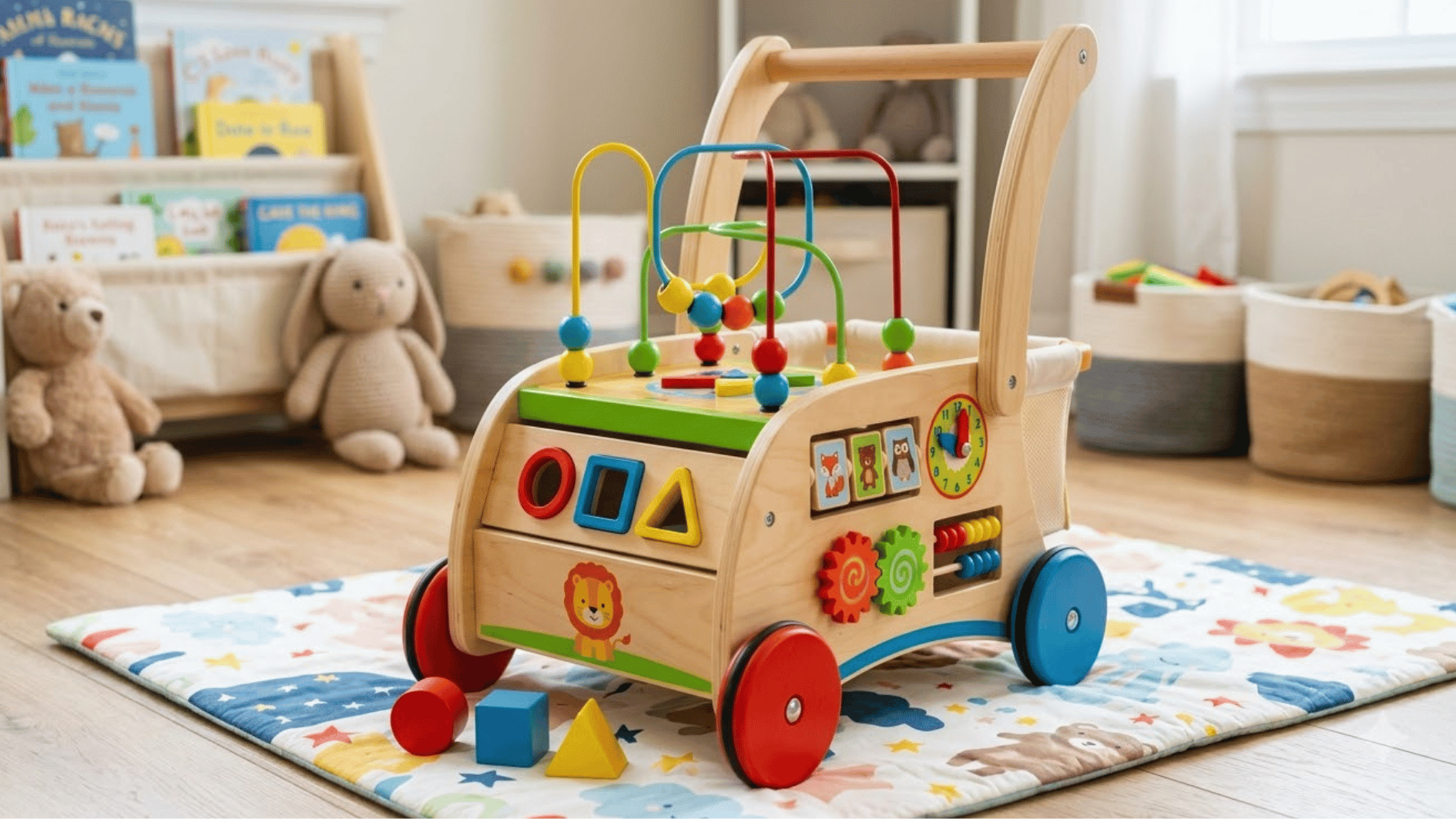
A sturdy push toy, or even a weighted cardboard box, gives a wobbly walker something to lean on while they build confidence.
The resistance also works their legs harder than walking with just your hands to hold.
Keep the path clear of anything that could tip over if they lose balance.
17. Balloon Batting
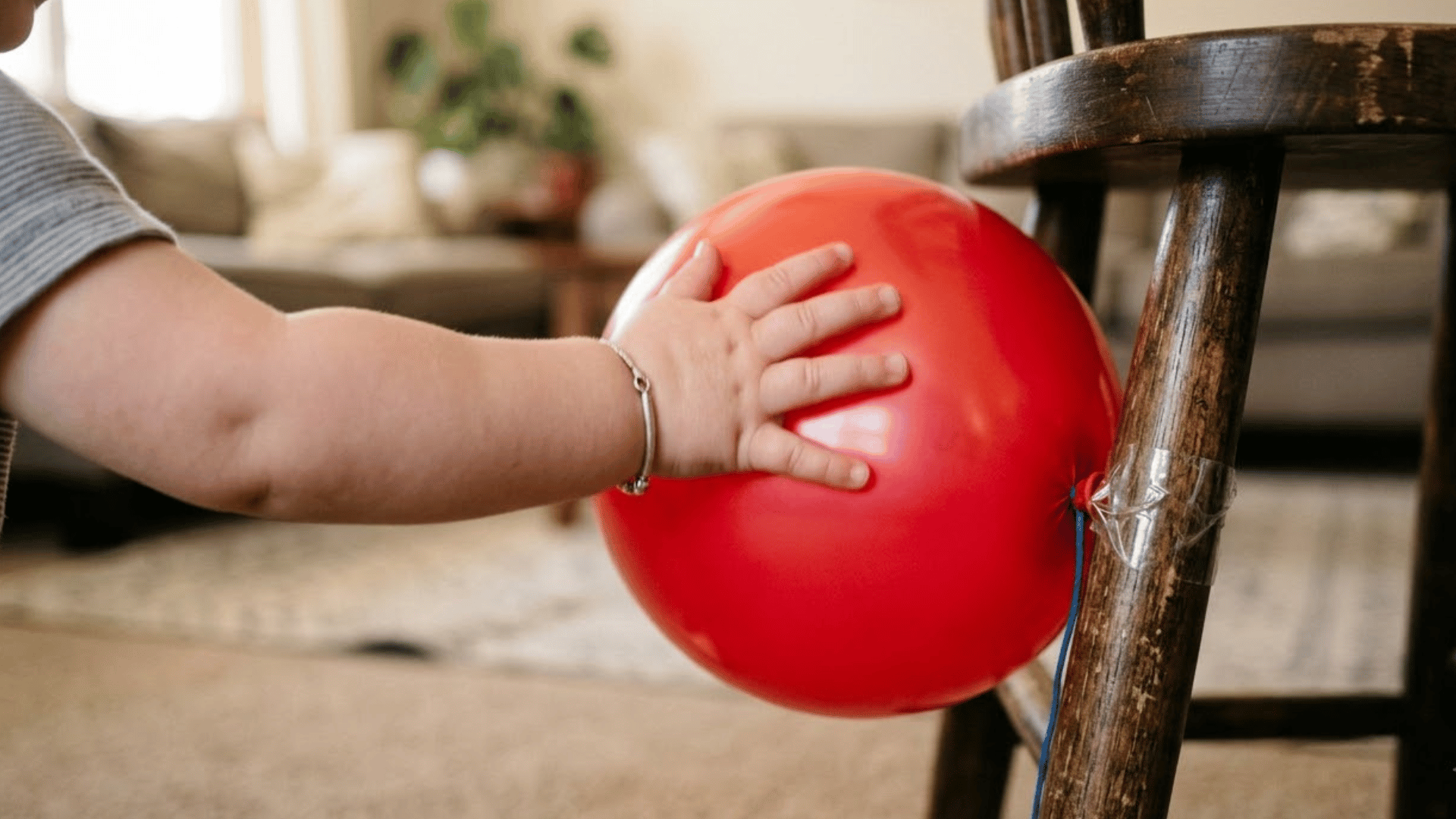
Tape a balloon to the back of a chair or the bottom of a table at your toddler’s height. Batting it around works on hand-eye coordination and gives them a soft, safe target to hit.
Always supervise closely, since a popped balloon is a choking risk.
Safety note: Keep popped balloon pieces out of reach immediately; latex fragments are a serious choking hazard.
18. Dance Time With Freeze-and-Go
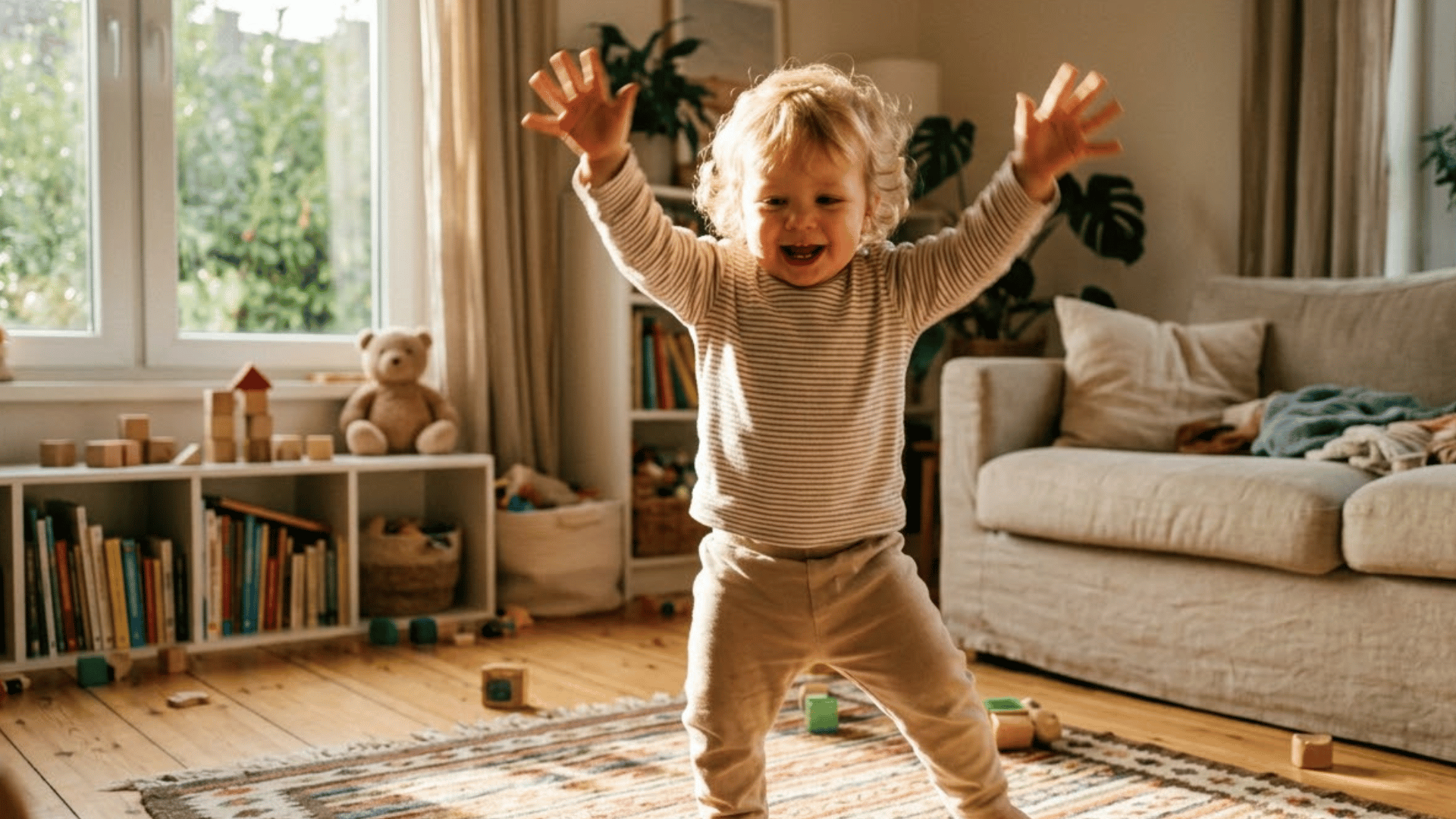
Put on music and let your toddler move however they want, then pause the song every so often for a quick freeze.
Starting and stopping on cue takes more control than it sounds like for a 1-year-old. It’s also a good way to get some movement in on days stuck indoors.
Toddlers tend to find the sudden stops funny, which makes them want to play again.
19. Crawling Tunnel
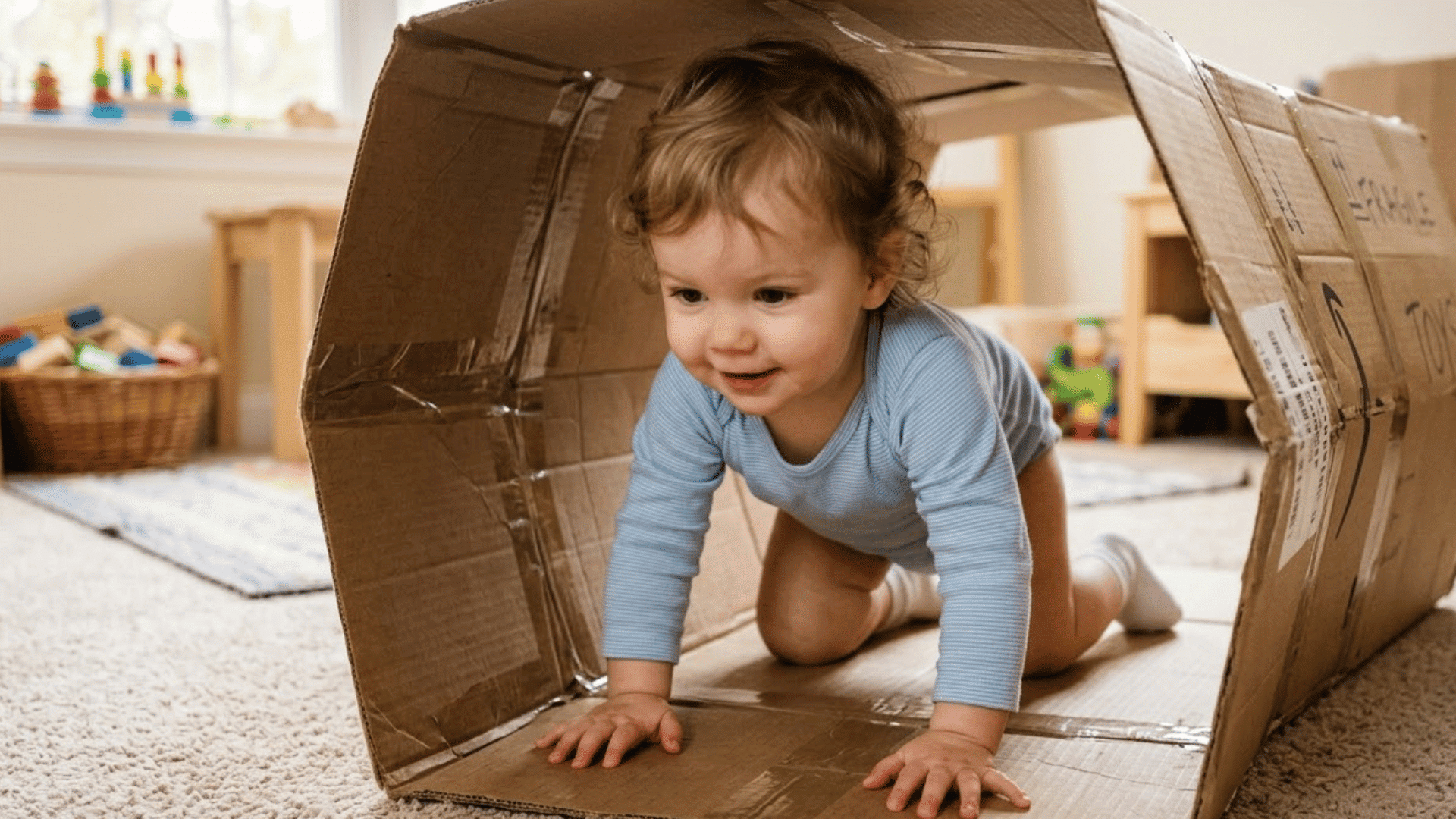
Tape a few large cardboard boxes end to end, or drape a blanket over some chairs, to make a simple tunnel. Crawling through tight spaces builds spatial awareness and gives your toddler a new way to move.
A flashlight inside adds a bit of extra intrigue.
20. Ball Rolling Game
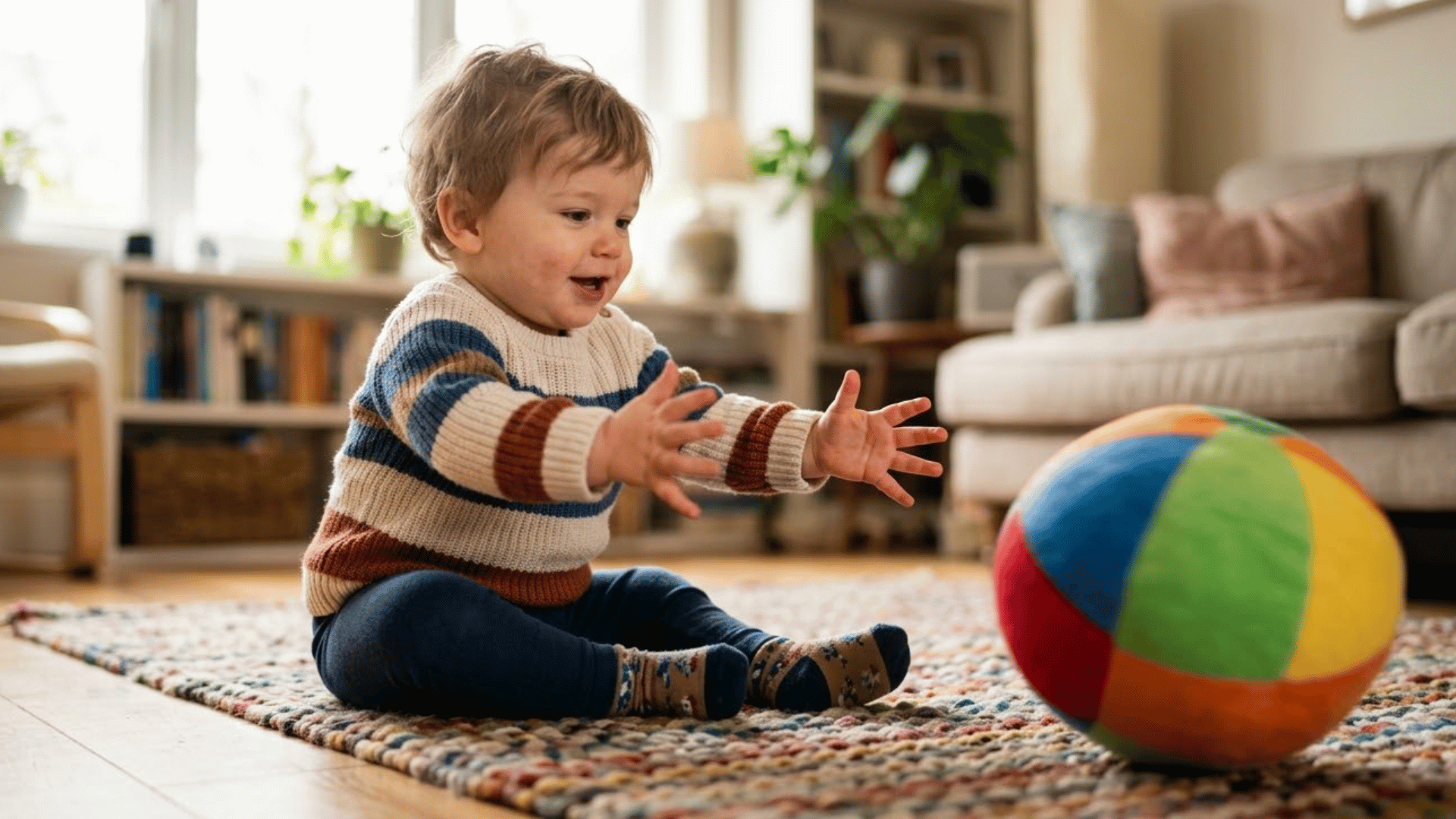
Sit a short distance apart and roll a ball back and forth. Catching, chasing, and rolling it back works on coordination and gives your toddler practice with the give-and-take of a simple game.
Soft, larger balls are easier for small hands to manage than smaller ones.
21. Climbing Steps With a Step Stool
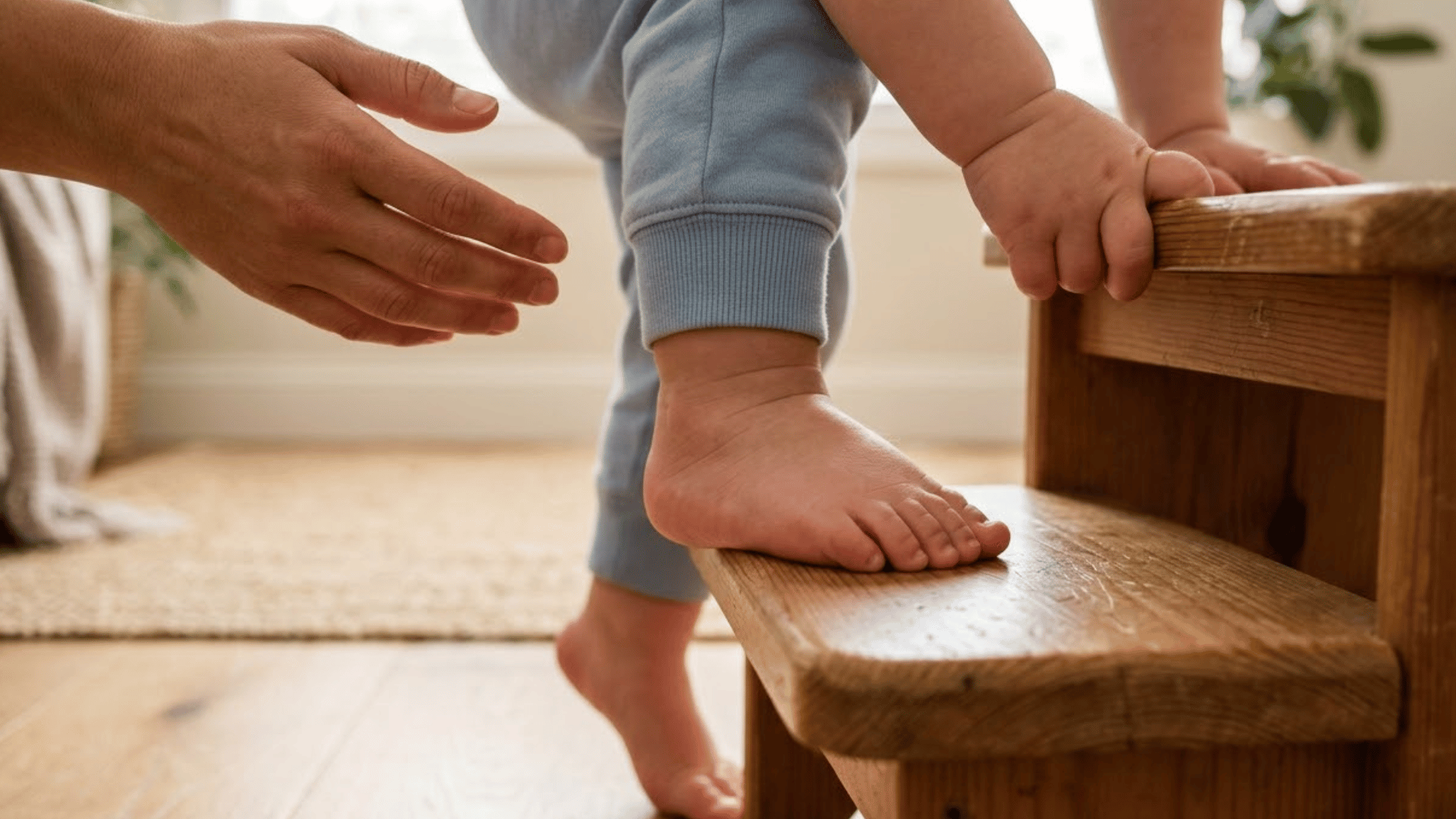
A short, stable step stool lets your toddler practice lifting their legs and finding balance while going up and down.
Climbing is a skill they’re already drawn to, so this gives them a safer place to test it.
Stay within arm’s reach the whole time, since balance is still a work in progress at this age.
Learning & Cognitive Activities for 1-Year-Olds
Cognitive play builds early problem-solving, memory, and language skills. These activities turn everyday moments into small lessons without any flashcards or screens involved.
22. Peekaboo With a Twist
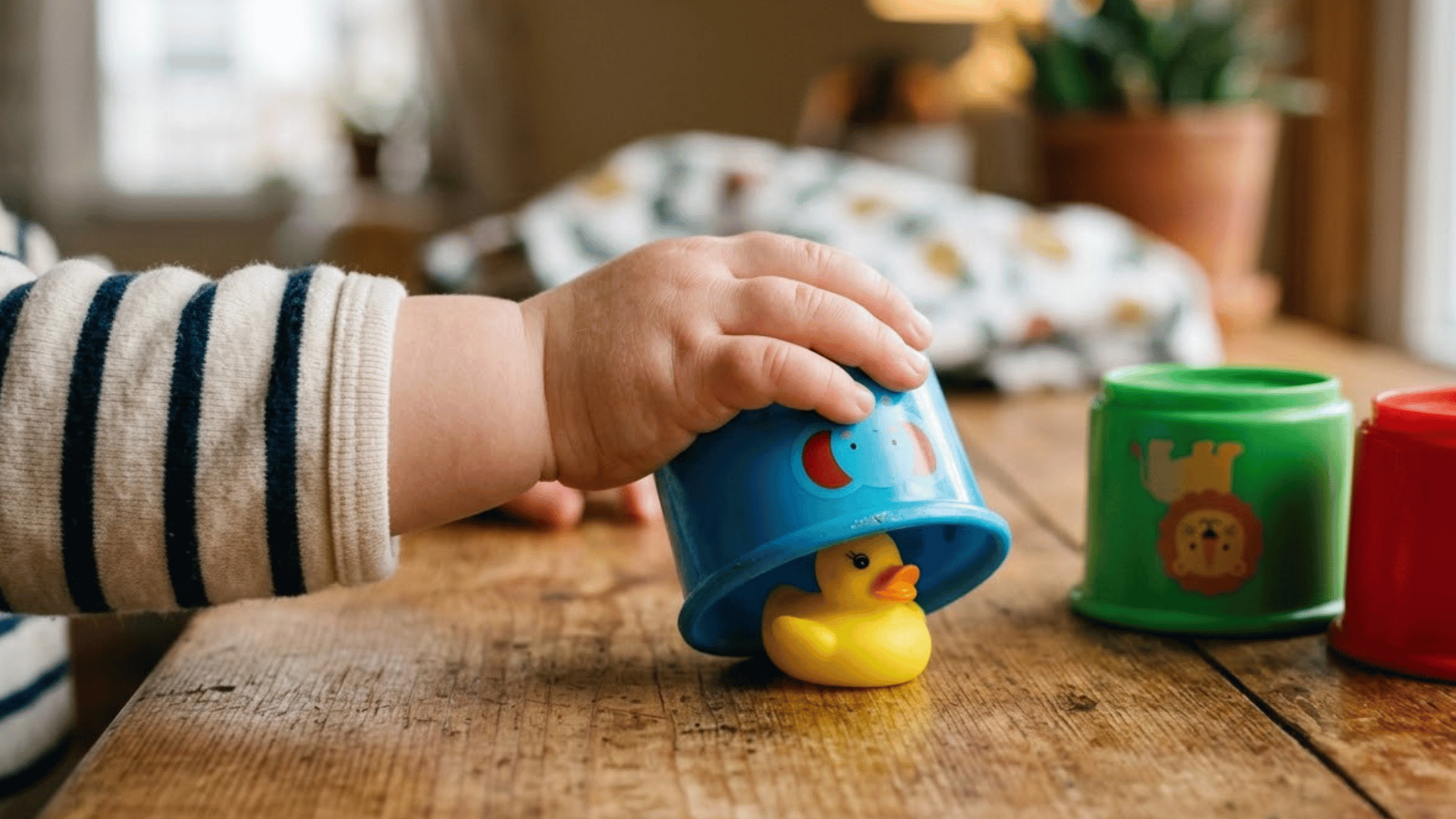
Hide a small toy under one of two or three cups and ask your toddler to find it. This version of peekaboo introduces object permanence, the idea that something still exists even when it’s out of sight.
Switch up the cup each round to keep it from becoming too predictable.
Parenting tip: Resist the urge to point at the right cup. Watching them work it out builds more than getting the answer fast.
23. Picture-Matching Cards
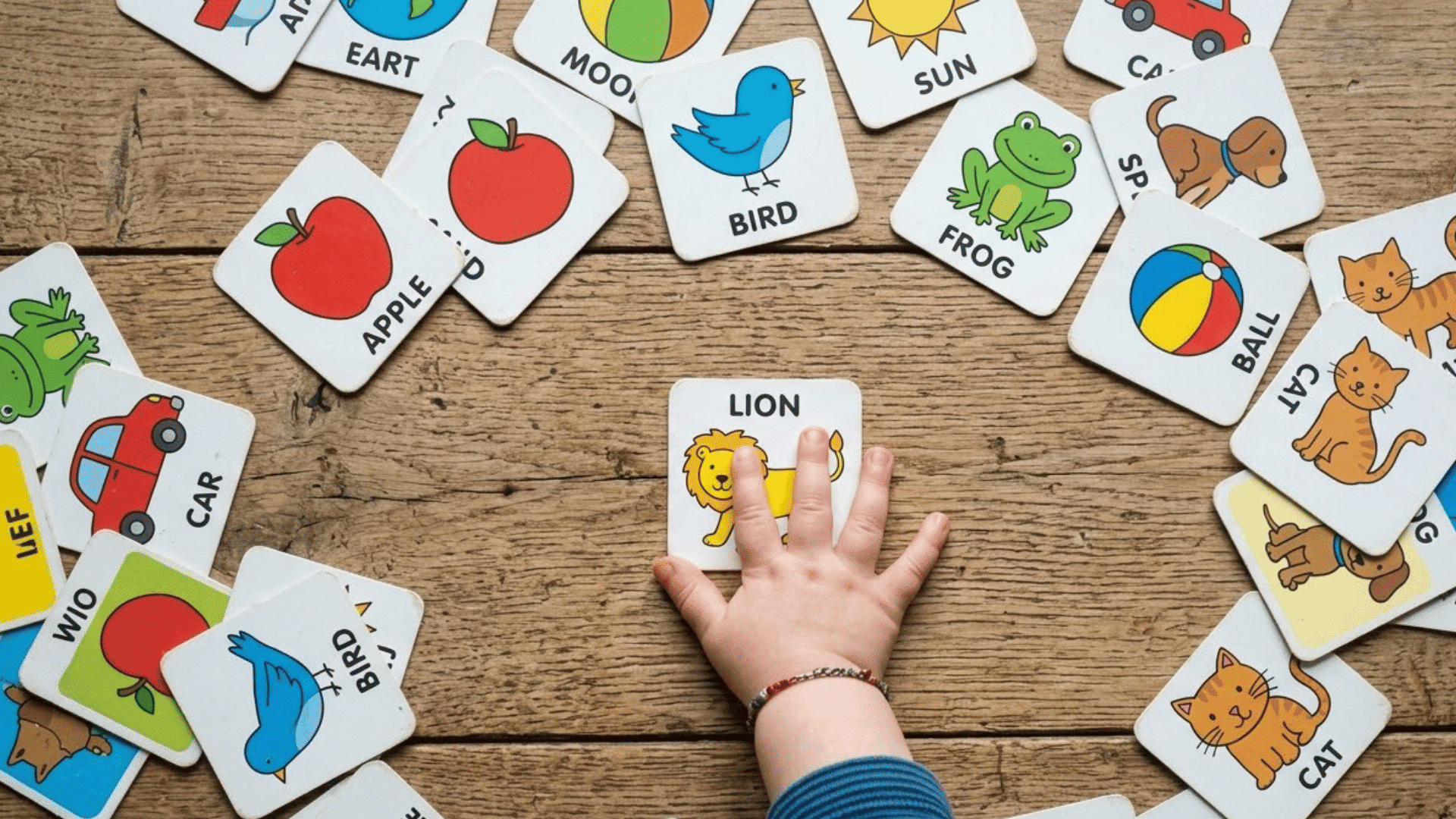
Simple cards with matching pairs- animals, shapes, or household items- give your toddler an early memory challenge. Pointing out the match, even without fully sorting them, builds recognition skills.
Keep the set small at first. Too many options at once can turn the game frustrating instead of fun.
24. Naming Game During Routines
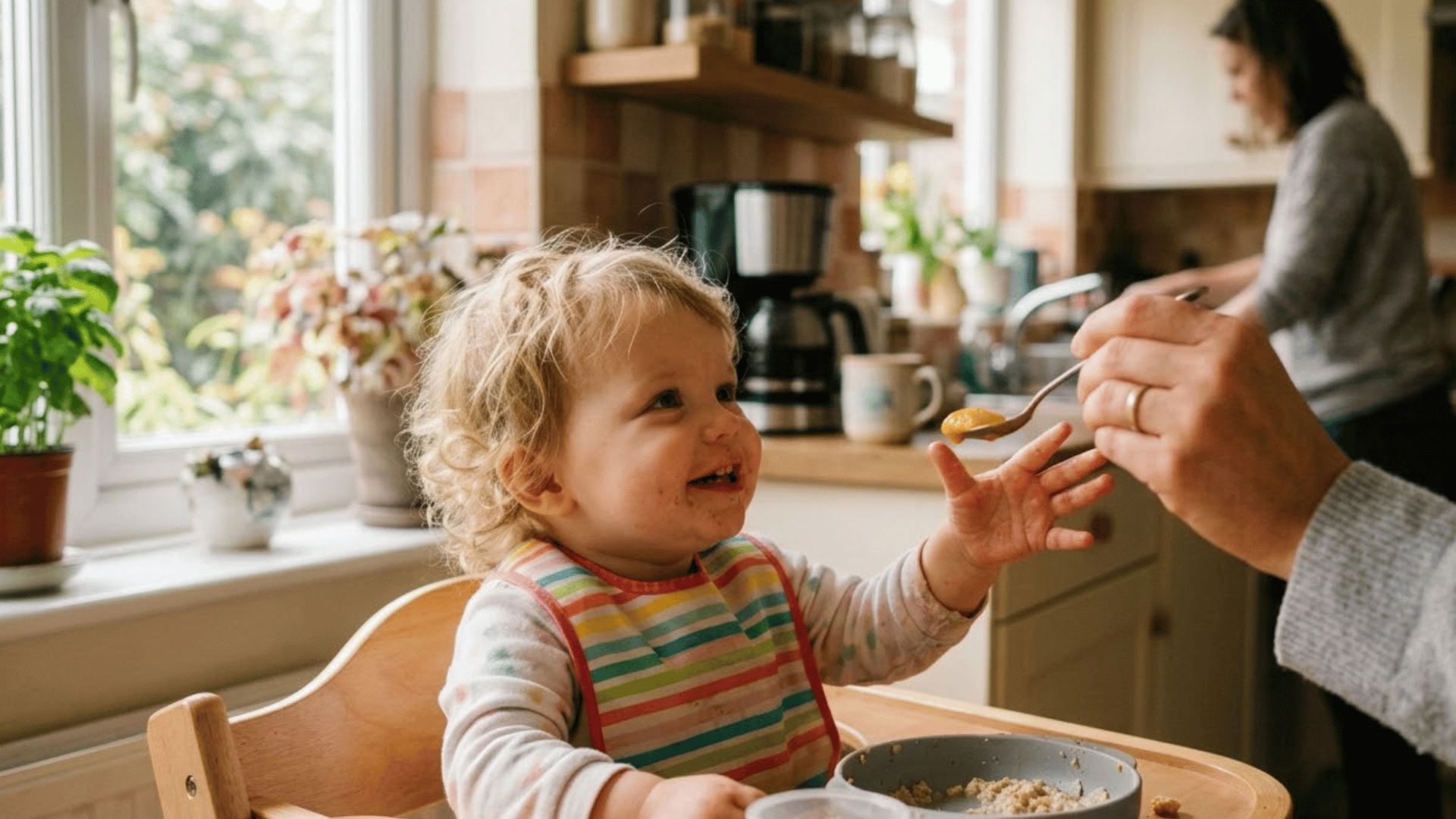
Narrate what you’re doing during everyday moments, naming the spoon at breakfast or the socks while getting dressed.
Hearing words tied directly to what they’re seeing helps a toddler connect language to the world around them.
No extra setup is needed here, since it happens during things you’re already doing.
Parenting tip: Narrating out loud can feel unnatural at first, but it costs nothing and fits into a routine you’re already running.
25. Box Pretend Play
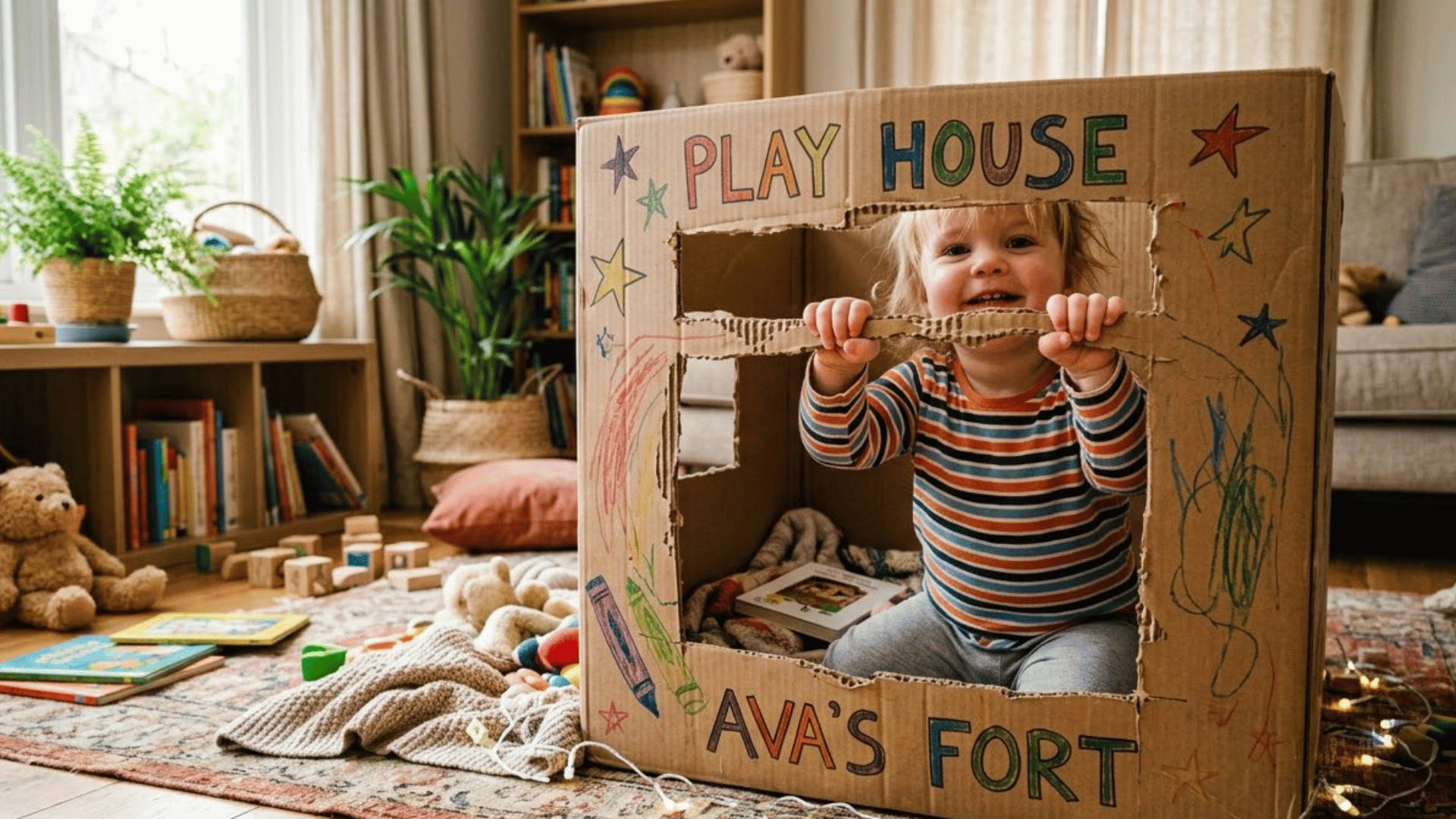
An empty box becomes a car, a house, or anything else your toddler decides it is. Pretend play at this age is still simple, but it’s the earliest form of imagination and role play.
Cut a window or door into the box to give it a bit more shape.
Let your toddler lead here rather than directing what the box should be.
Parenting tip: Let your toddler decide what the box becomes. Stepping back builds their confidence more than directing the play.
26. Cause-and-Effect Toys
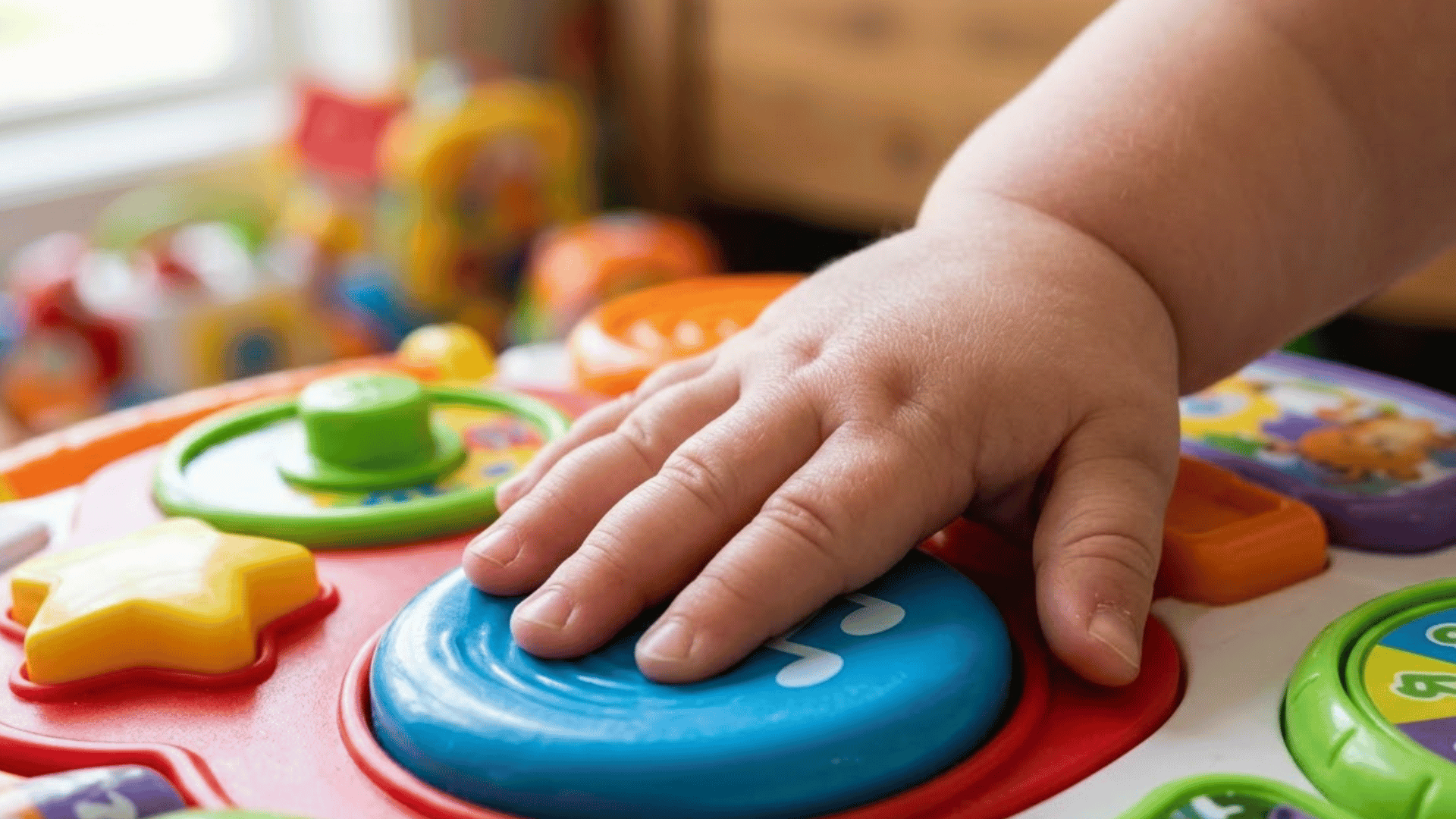
Toys with buttons, switches, or lids that pop open teach a toddler that their actions lead to a result. Pressing a button and watching something happen is a small but real lesson in logic.
Rotate a few different toys so the novelty doesn’t wear off too fast.
27. Copy-Me Game
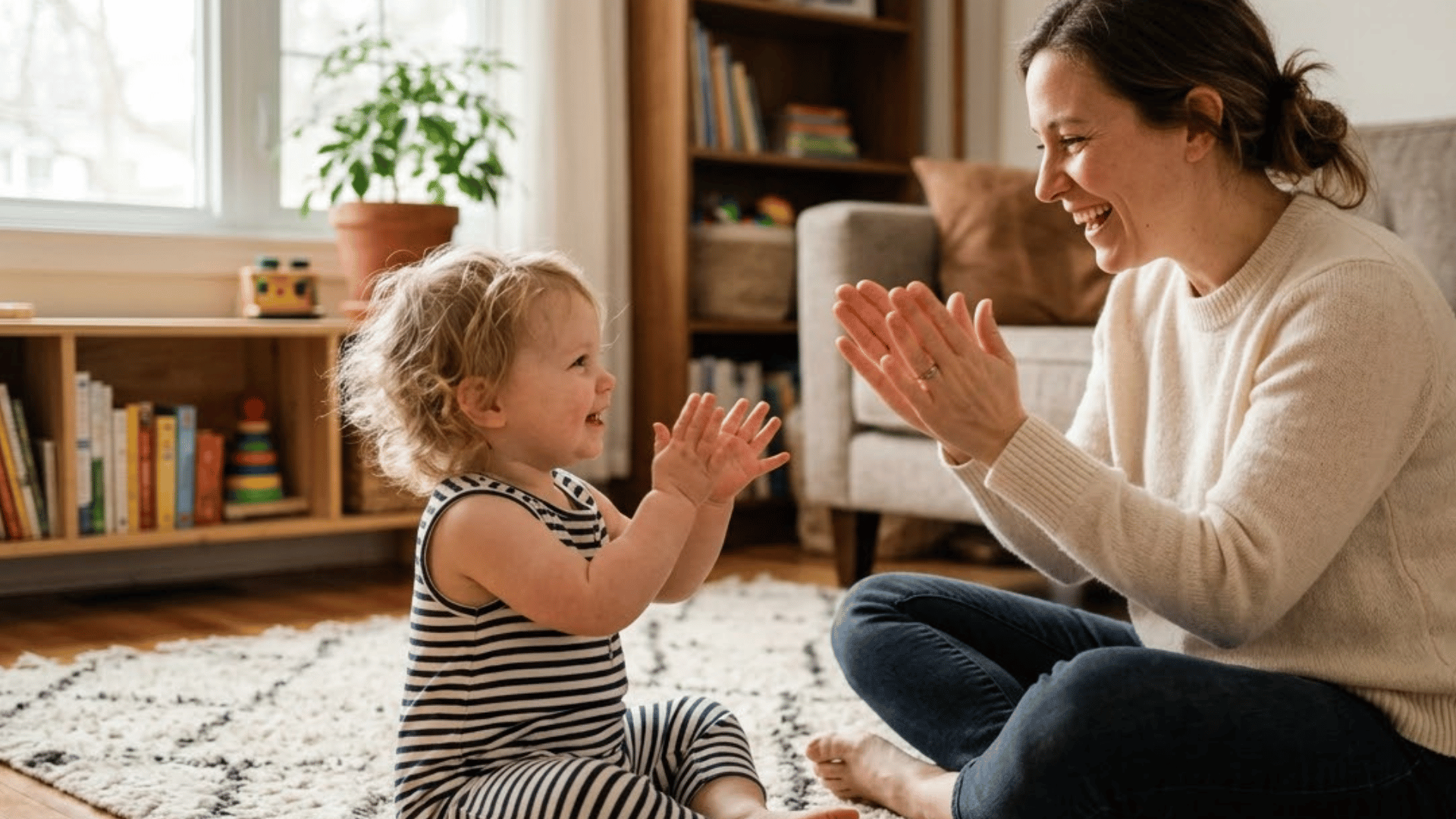
Clap, wave, or make a simple gesture and see if your toddler copies you back. Imitation is one of the earliest ways toddlers learn new skills, and this turns that instinct into a quick game.
Keep the gestures easy at first, then build up to slightly trickier ones as they catch on.
Parenting tip: Repeat the same gesture a few times before switching. Toddlers learn better from repetition than from constant new moves.
Common Tips to Keep Toddler Play Safe
A few precautions make every activity on this list safer to try. These tips cover the common risks that come up most with sensory bins, small parts, and active play.
- Stay Within Arm’s Reach: Sensory bins, balloons, and small objects all carry choking risk, so supervision should never be optional.
- Choose Larger Pieces: If your toddler still mouths objects, skip anything smaller than a golf ball, including rice bins and pom poms.
- Check for Tears and Cracks: Balloons, ice bins, and homemade toys should be inspected before every use, not just the first time.
- Keep Cleanup Tools Nearby: Towels, wipes, and a trash bag close by make it easier to stay present instead of stepping away mid-activity.
- Test Playdough and Paint First: Homemade recipes should be free of anything your toddler is allergic to, especially with edible finger paint.
- Set a Stable Base: Step stools, walker toys, and climbing activities need a non-slip surface and a nearby adult for balance support.
Conclusion
A 1-year-old doesn’t need an elaborate toy collection to stay engaged. A muffin tin, a few cups of rice, or a cardboard box can hold their attention just as well, often longer.
What matters more is variety. Mixing sensory, motor, and cognitive play across the day gives a toddler’s brain and body exactly what they need at this stage, without turning playtime into a project.
Try the activities this week and watch which one your toddler returns to on their own. That’s usually the clearest sign of what’s actually working.