






Every parent has moments when they wonder, “Am I doing this the right way?”
The question itself is a good sign; it means you’re paying attention. From setting boundaries to handling tantrums, the choices you make day to day quietly shape the emotional climate of your home.
One of the most useful frameworks I return to, both professionally and personally, is the parenting styles chart a research-backed way to compare different approaches side by side and recognize patterns in your own behavior.
Knowing where your natural tendencies fall on a parenting styles chart can help you make more intentional choices and recognize what’s already working.
How Do Parenting Styles Differ?
Every parent has their own way of handling rules, discipline, emotions, and everyday decisions. Some focus on structure and clear expectations, while others give children more freedom to make choices.
The biggest differences between parenting styles come down to two things:
How much control parents use and how much support they provide.
Looking at these points can make it easier to understand the common approaches before comparing them side by side.
No two families follow the exact same parenting style. Parents often adjust their methods based on their child’s age, personality, and daily situations.
A quick comparison can help you see the key differences and understand which style best fits your family’s habits.
Parenting Styles Chart: The Baumrind Framework
The most widely used parenting styles chart comes from psychologist Diana Baumrind, whose landmark research in the 1960s identified three core parenting patterns by observing preschool children and their parents.
Later, Maccoby and Martin (1983) added a fourth uninvolved parenting style to complete the framework most researchers use today.
The chart is built around two axes: demandingness (how much structure, rules, and expectations a parent sets) and responsiveness (how warmly and sensitively a parent responds to a child’s emotional needs). Every major parenting style falls somewhere on this grid.
|
Parenting Style |
Demandingness | Responsiveness | Main Approach |
|---|---|---|---|
|
Authoritative |
Moderate to high | High | Sets rules while encouraging communication |
|
Authoritarian |
High | Lower | Focuses on obedience and strict expectations |
|
Permissive |
Low | High | Provides warmth with fewer limits |
|
Uninvolved |
Low | Low | Offers limited guidance and involvement |
Note: Child outcome data is drawn from peer-reviewed research including Baumrind’s observational studies and subsequent meta-analyses. Outcomes describe general trends across populations individual results vary widely based on temperament, culture, and context.
Different Types of Parenting Styles Explained
There are several common types of parenting styles that describe how parents set rules, communicate, and support their children.
While every family has its own approach, these styles can help you compare different ways of raising children.
1. Authoritative Parenting
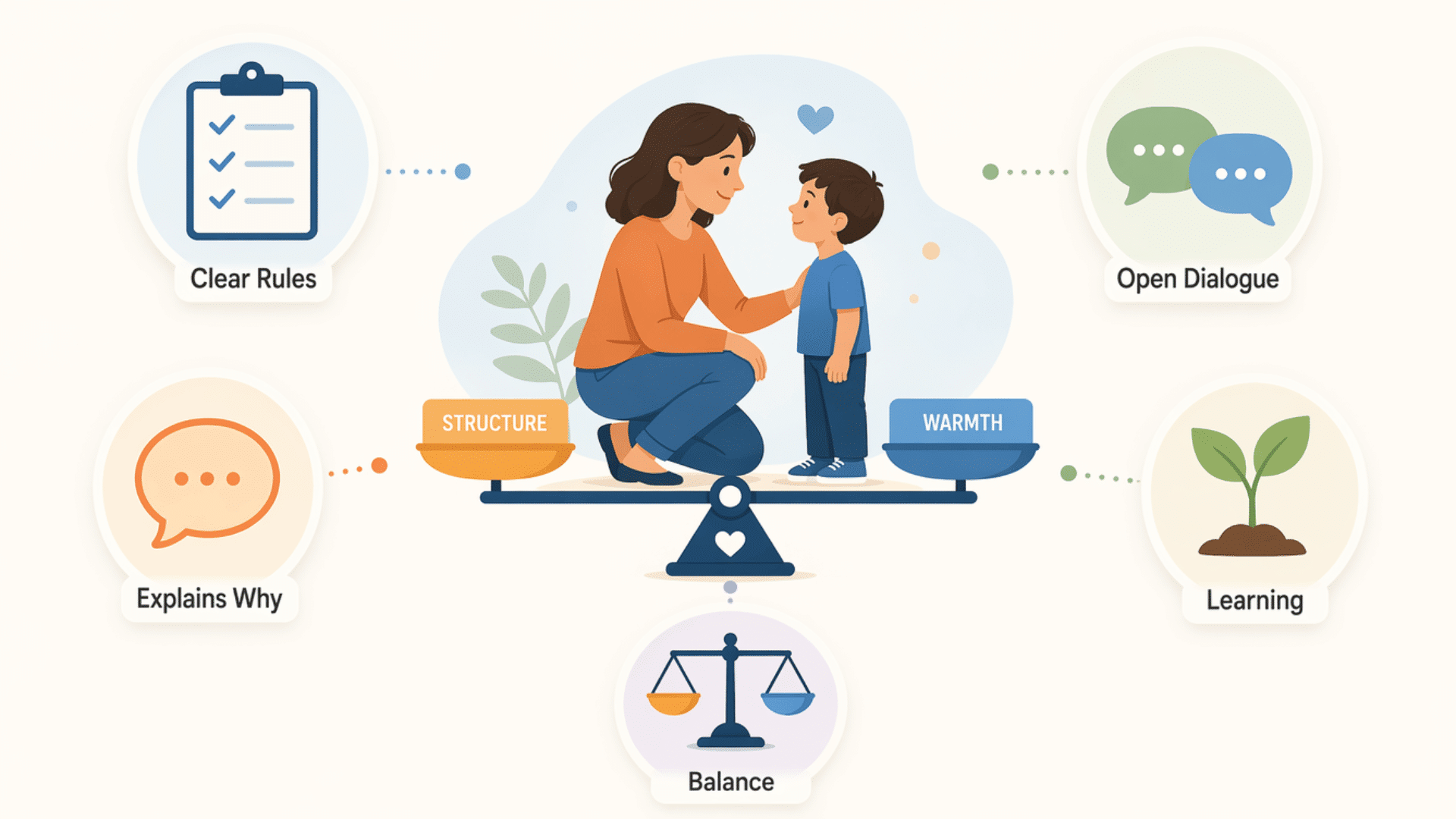
Authoritative parenting focuses on balancing clear expectations with emotional support.
Parents set boundaries but also encourage conversations, allowing children to share their thoughts and understand the reasons behind decisions.
Key characteristics:
- Rules are clear and consistent
- Parents explain the reasons behind their decisions
- Children are encouraged to share their opinions
- Discipline focuses on learning
- Support and guidance are balanced
2. Authoritarian Parenting
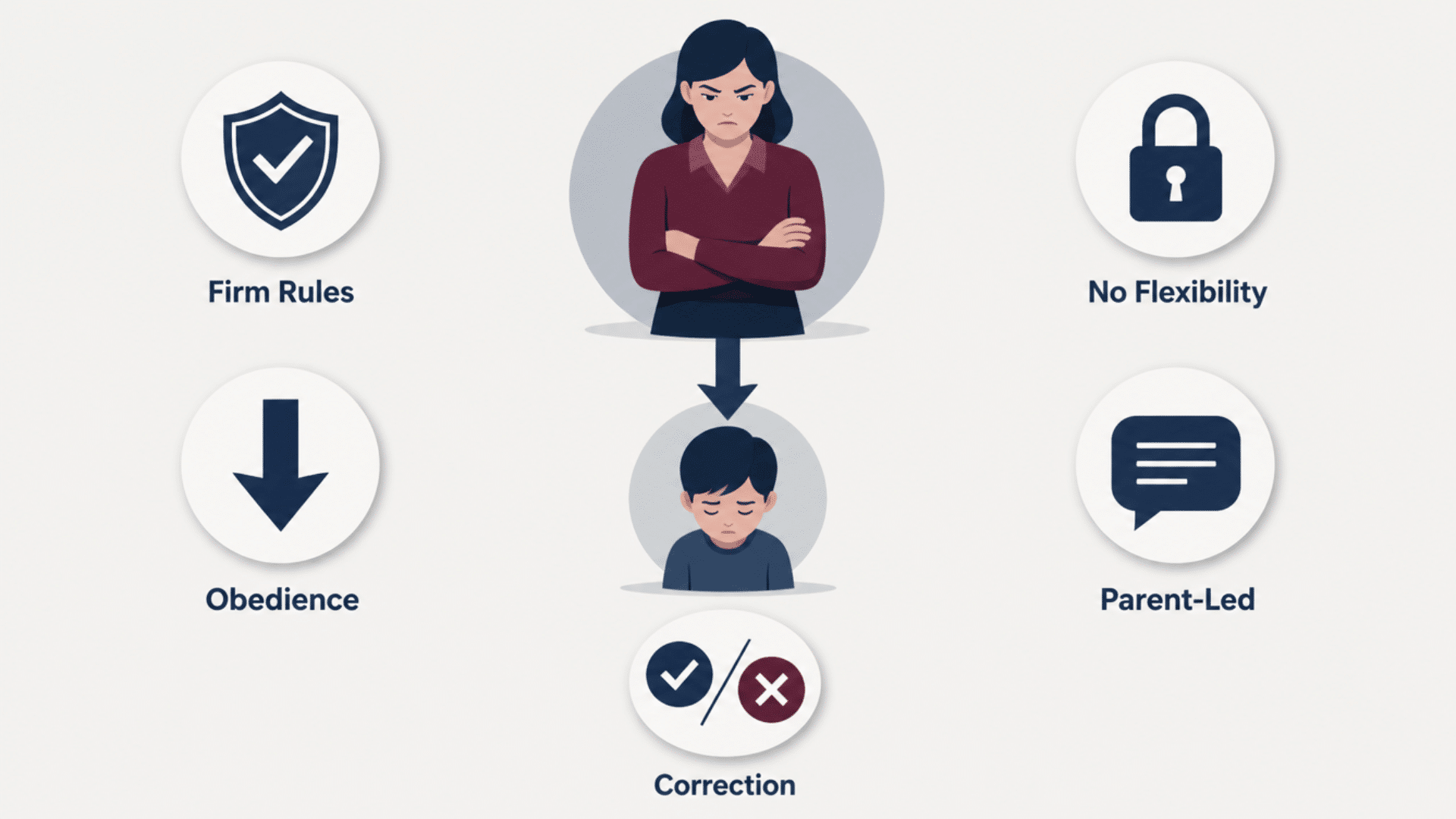
Authoritarian parenting focuses on strict rules, strong control, and clear expectations. Parents usually make decisions for their children and expect them to follow instructions with limited discussion or flexibility.
The key distinction from authoritative parenting: authoritarian parents say “because I said so.” Rules are enforced through consequences and control rather than explanation. There’s often less room for a child’s voice.
Key characteristics:
- Parents set firm expectations
- Obedience is strongly valued
- Rules are rarely changed
- Communication is more parent-led
- Discipline focuses on correcting actions
3. Permissive Parenting
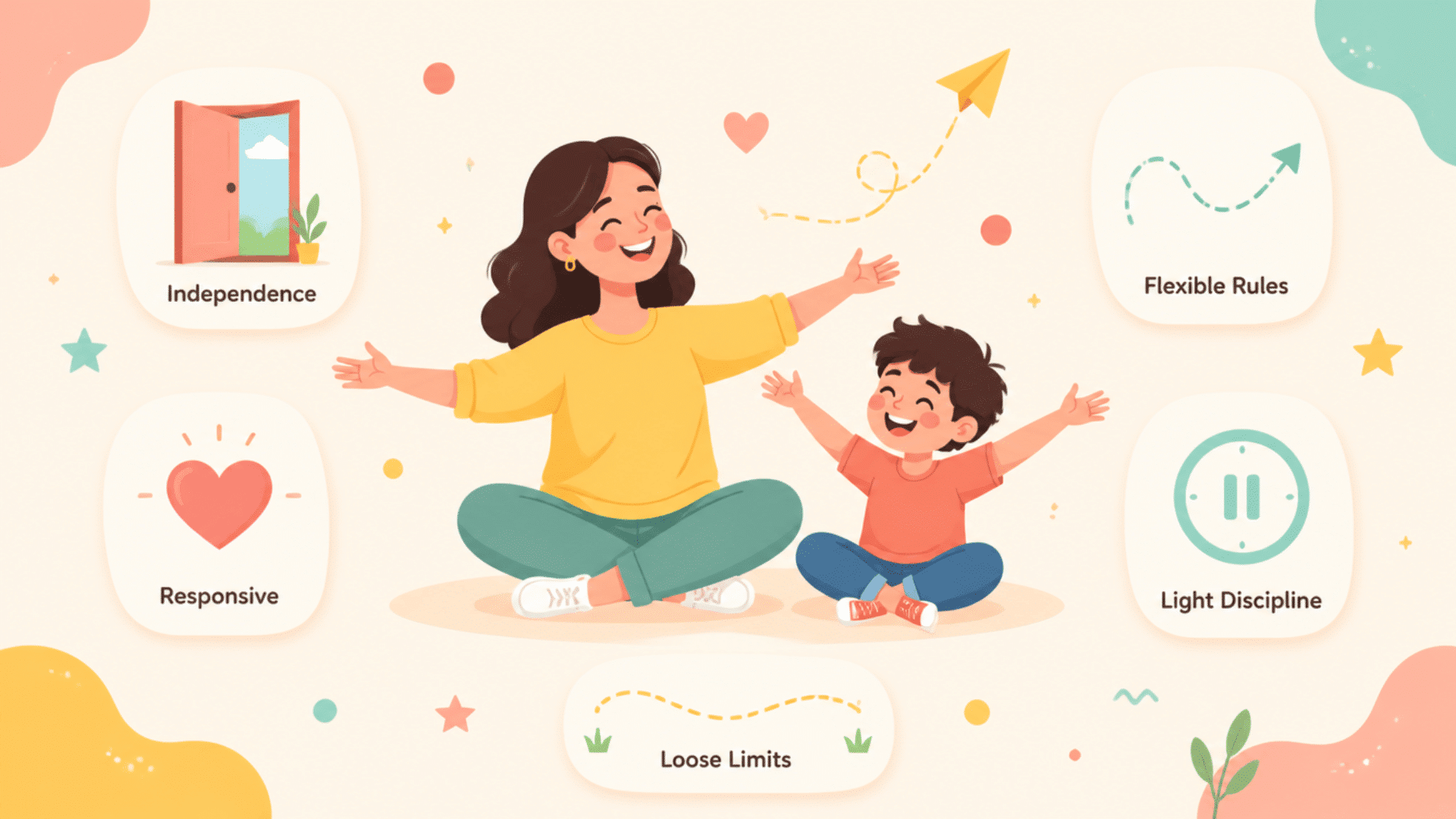
Permissive parenting focuses on warmth, freedom, and fewer restrictions. Parents often allow children to make many choices while offering support, but they may set fewer rules or limits.
The warmth is real: permissive parents are often deeply loving and emotionally tuned-in. The gap tends to show up later, when children haven’t had enough practice navigating limits, disappointment, or accountability.
Key characteristics:
- Children have more independence
- Rules may be flexible
- Parents are highly responsive
- Discipline may be less frequent
- Boundaries may need more consistency
The distinction between gentle parenting and permissive parenting is one of the most commonly misunderstood in this space, and it matters for how you set limits with your child.
4. Uninvolved Parenting
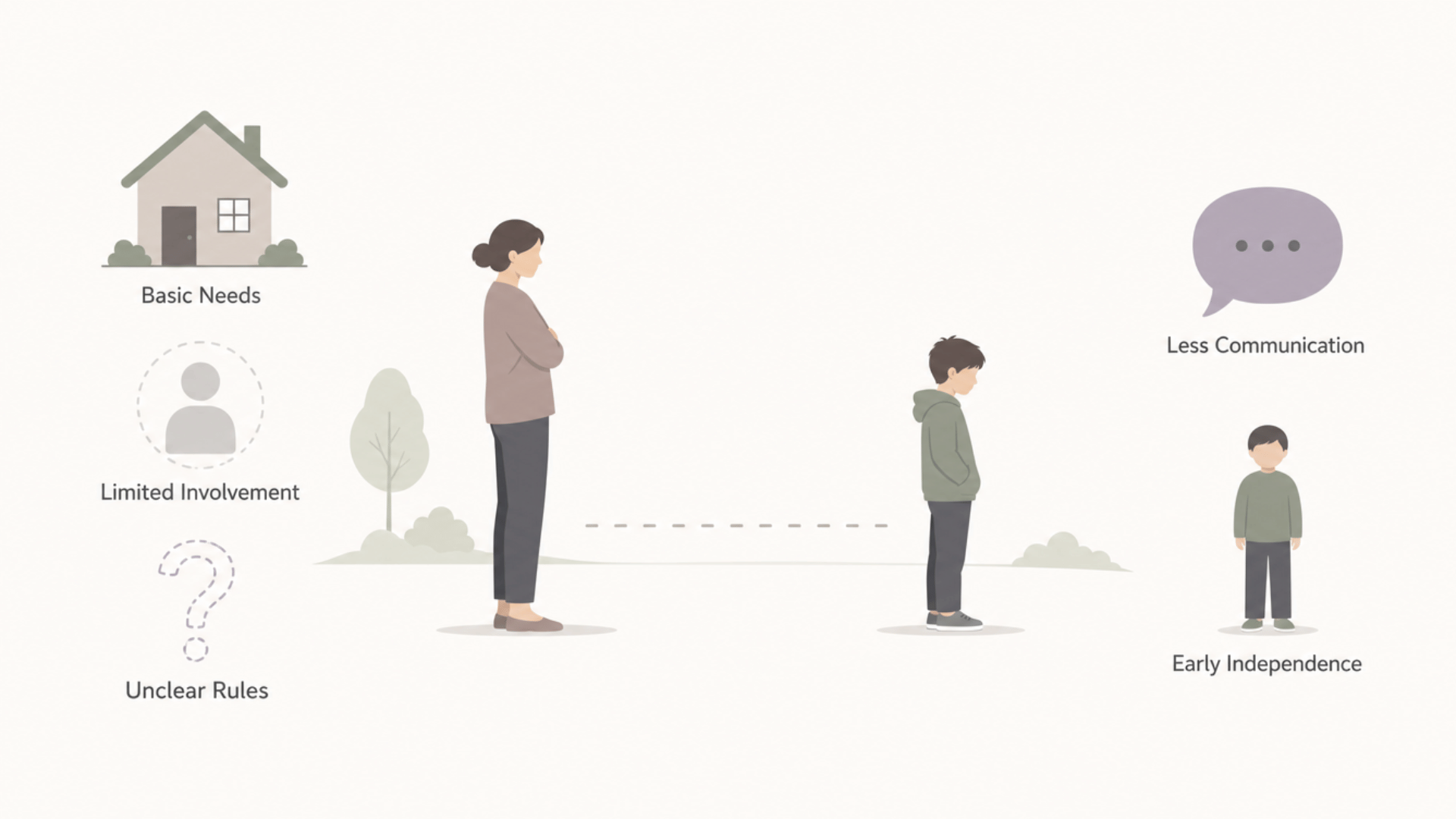
Uninvolved parenting focuses on providing basic care with limited guidance and communication. Parents may be less involved in daily decisions, leaving children to handle more responsibilities on their own.
It’s worth noting that uninvolved parenting isn’t always a choice. Parental stress, mental health challenges, or difficult circumstances can pull a parent toward disengagement even when the intention is to be present.
Key characteristics:
- Basic needs are provided
- Parent involvement is limited
- Rules may be unclear
- Communication may happen less often
- Children may become independent early
5. Gentle Parenting
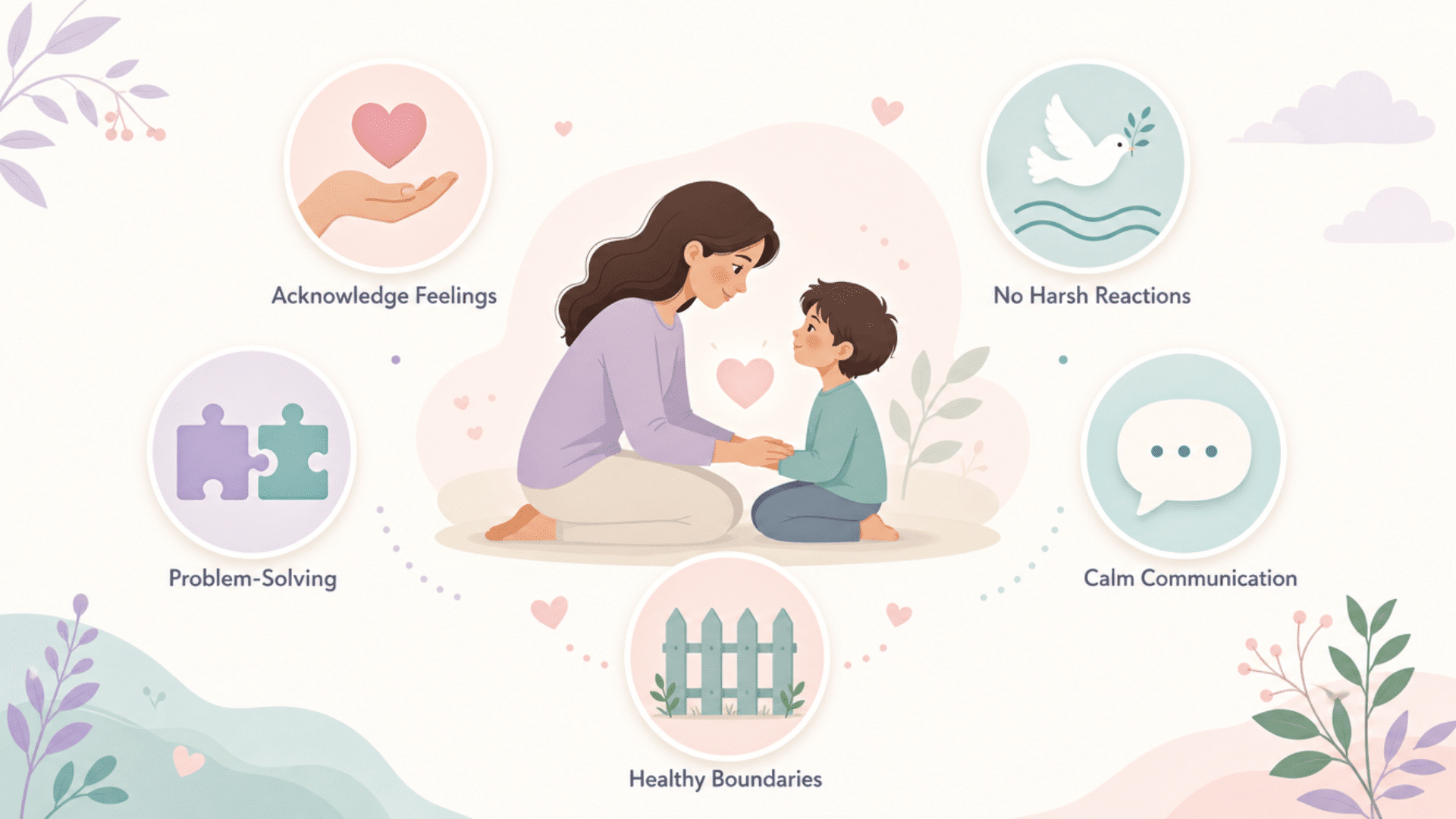
Gentle parenting focuses on patience, respect, and calm communication. Parents aim to understand their child’s feelings while setting healthy boundaries and encouraging positive behavior.
I’ve noticed this style resonates strongly with parents who felt dismissed or punished harshly in their own childhoods. The intention to do something different is powerful; the practical challenge is holding the boundary while still acknowledging the feeling.
Key characteristics:
- Feelings are acknowledged
- Discipline avoids harsh reactions
- Parents encourage problem-solving
- Communication stays calm
- Boundaries are still important
6. Attachment Parenting
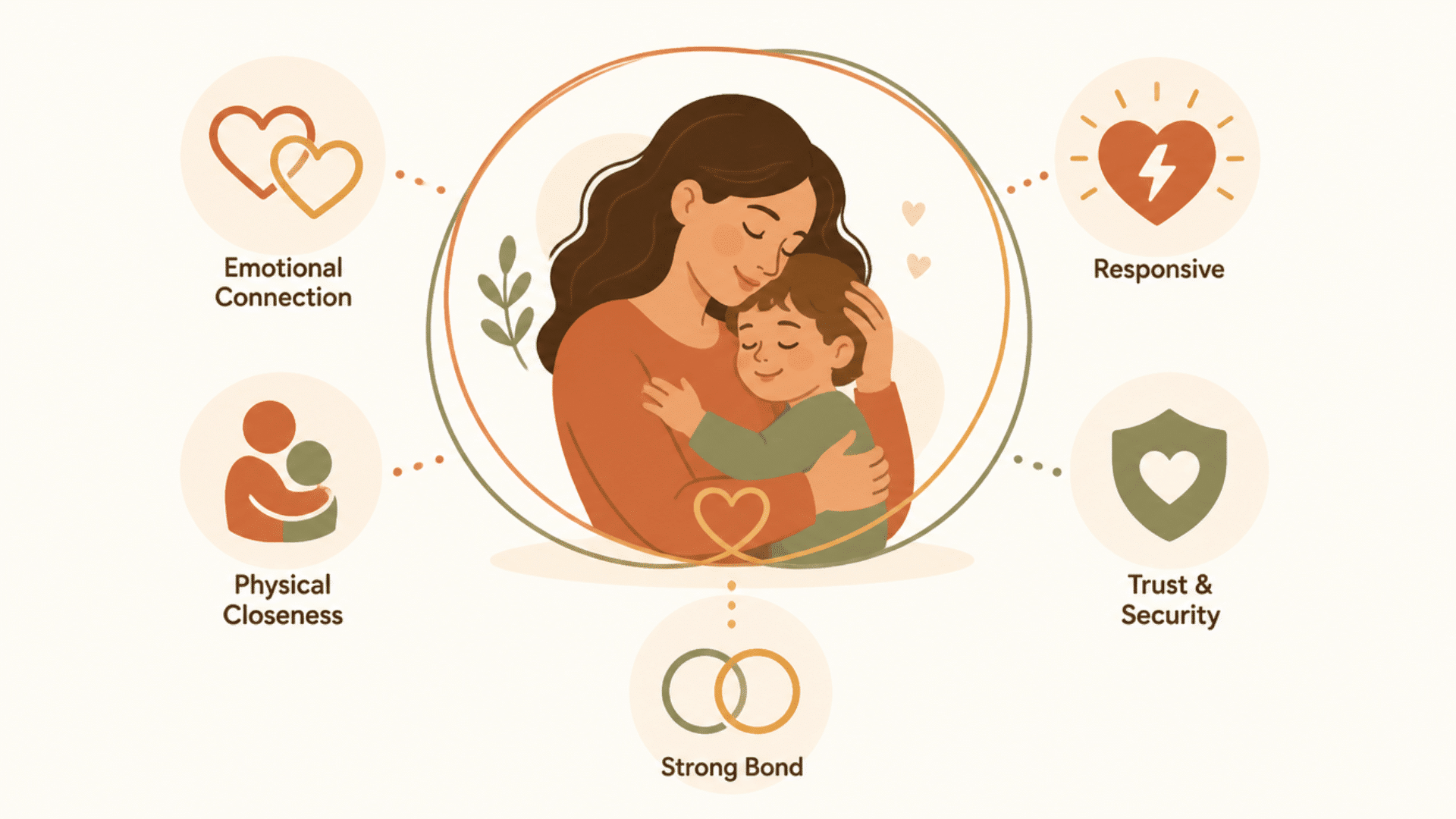
Attachment parenting focuses on building a close emotional connection between parents and children. Parents respond to their child’s needs and prioritize trust, comfort, and a strong bond.
Key characteristics:
- Emotional connection is a priority
- Parents respond quickly to needs
- Physical closeness may be encouraged
- Trust and security are emphasized
- Parent-child bonding is valued
7. Free-Range Parenting
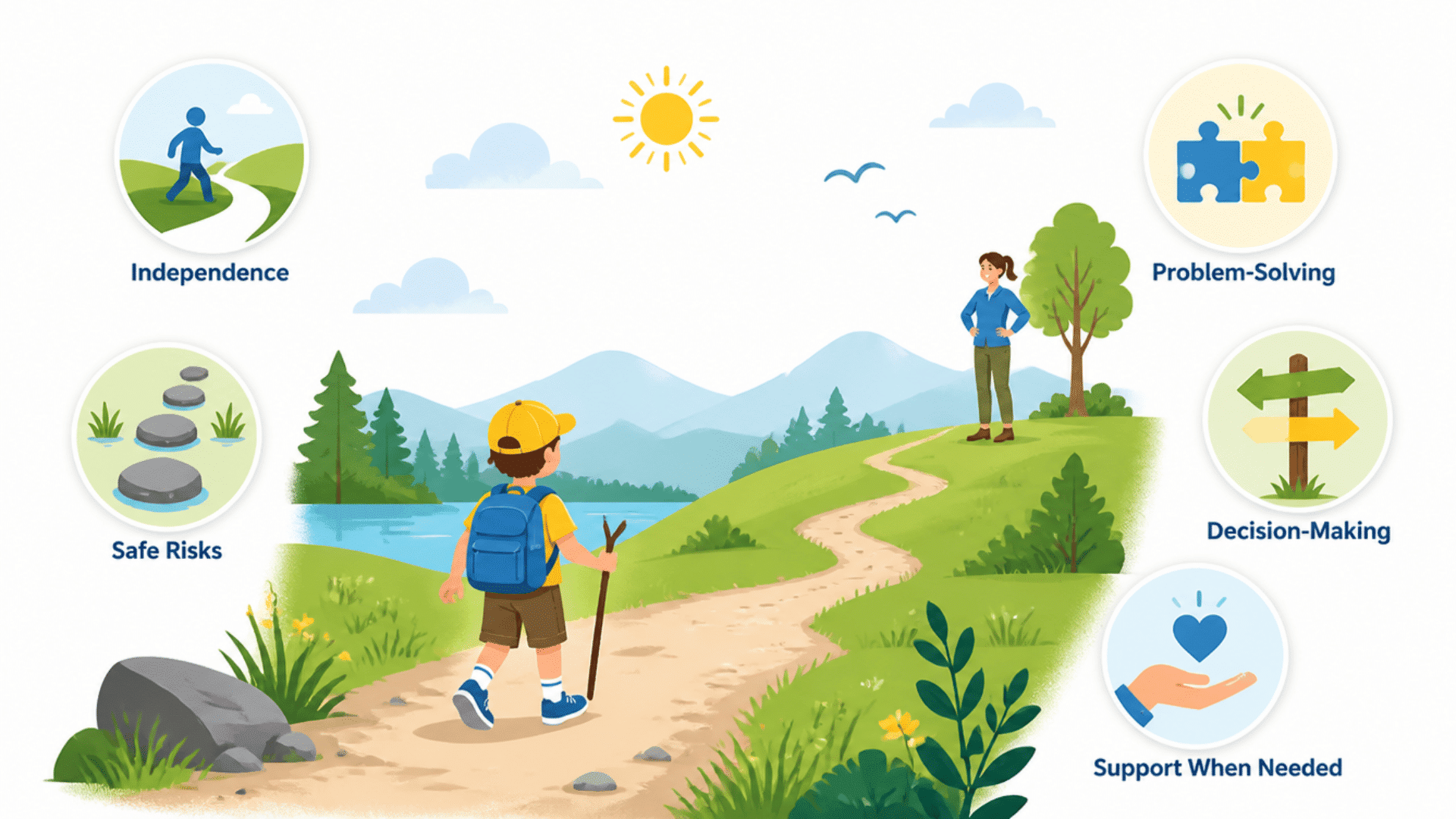
Free-range parenting focuses on encouraging independence through age-appropriate freedom and responsibilities. Parents provide guidance while allowing children to make choices and learn from experiences.
Key characteristics:
- Children get more independence
- Parents allow safe risks
- Problem-solving skills are encouraged
- Children practice decision-making
- Parents provide support when needed
Why Most Parents Don’t Fit Neatly Into One Category
One of the most common reactions when people first encounter a parenting styles chart is: “I do some of all of these.” That response is accurate, and it’s important to say clearly: most parents blend styles, often without realizing it.
Baumrind’s framework describes patterns, not personality types. A parent might be highly authoritative with a teenager during a conflict but shift toward a more permissive approach when a younger child is overwhelmed after a long school day.
That context-sensitivity isn’t inconsistency it can actually reflect good attunement to what a child needs in a given moment.
What the chart helps you identify is your default setting: the approach you tend to fall back on when you’re tired, stressed, or reactive. That default is worth knowing, because it’s the one that shapes your child’s day-to-day experience of home life the most.
How to Use a Parenting Styles Chart in Real Life
A parenting styles chart can help you compare different approaches, but its real value comes from using it to reflect on everyday parenting choices.
In my experience looking at how families structure their daily routines, the chart is most useful as a mirror, not a manual. It doesn’t tell you what to do; it helps you notice what you’re already doing, and whether that aligns with the kind of relationship you want with your child.
- Understand your current approach: Notice how you usually handle rules, communication, and discipline in daily situations.
- Recognize patterns: Pay attention to repeated habits, such as how you respond to mistakes, emotions, or requests for independence.
- Find areas for change: Identify parts of your approach that may need more balance based on your child’s needs.
- Improve communication: Use the comparison to think about how you listen, explain decisions, and respond to your child.
- Adjust as your child grows: Remember that your approach may change as your child develops new skills and needs different support.
- Avoid strict labels: Use the chart as a helpful reference rather than trying to fit your family into one category.
The way you respond to small daily moments a mistake, a setback, a win is one of the most direct ways you shape how your child sees themselves. Building confidence in kids often starts with those micro-interactions, not the big parenting decisions.
How These Approaches Compare in Daily Family Situations
Daily moments reveal the most about your parenting style, not the big decisions, but the small, repeated ones. This comparison shows how different approaches balance guidance, support, and freedom in everyday family life.
|
Situation |
More Structured Approach | More Flexible Approach |
|---|---|---|
|
Setting Rules |
Parents create clear expectations and routines | Parents adjust limits based on situations |
|
Handling Mistakes |
Focuses on guidance, correction, and learning | Focuses on discussion and understanding |
|
Child’s Voice |
Parents take the lead in most decisions | Children have more chances to share their opinions |
|
Daily Communication |
Conversations often focus on rules and responsibilities | Conversations often focus on feelings and choices |
|
Independence |
Children gain freedom with parent support | Children practice making choices more often |
|
Emotional Support |
Parents provide direction and protection | Parents focus on listening and responding |
Which Approach Matches Your Family?
Every family has its own way of handling rules, emotions, and everyday situations. You may notice that your approach does not fit perfectly into one category, and that is common for many parents.
The way you respond to your child’s behavior, set boundaries, and offer support can change as your child grows. Some parents may be firm in certain situations but more flexible in others, depending on what their child needs at that moment.
Think about your everyday interactions. How do you react when your child makes a mistake? Do you prefer explaining the rules, giving more freedom, or finding a balance between the two?
These small moments can help you understand the approach that best fits your family’s needs and values.
Final Thoughts
Parenting looks different in every home, and that is what makes each family unique. Looking at different approaches can give you a clearer view of your own habits, choices, and priorities as a parent.
The most important part is building a relationship where your child feels supported, respected, and cared for. Small changes in the way you communicate or respond can make a meaningful difference over time.
There is no single way to raise a child. In my opinion, the best choice is the one that fits your family, your child’s needs, and your everyday life, and that’s exactly what I hope this comparison helps you find.
The best choice is the one that fits your family, your child’s needs, and your everyday life.
Frequently Asked Questions
Can Siblings Raised by the Same Parents Have Different Experiences?
Yes, siblings may experience the same home differently based on their personalities and individual needs.
Do Parenting Approaches Change as Children Grow?
Yes, parents often adjust their approach as children develop new skills and responsibilities.
Can Family Background Influence Parenting Choices?
Yes, personal experiences, culture, and family values can shape how parents raise children.
How Can a Parenting Styles Chart Help Parents?
A parenting styles chart helps parents compare different approaches and reflect on their own parenting habits.