

If your home feels messy no matter how much you clean, you’re not alone – most people struggle with clutter every single day.
The good news is that a few smart changes can make a huge difference without spending a lot of money.
These house organizer hacks are designed for real life – not a Pinterest board that nobody actually lives in. Each tip in this guide is practical, easy to follow, and built around how people actually use their homes.
Think of this as your go-to blog for getting every room under control. With the right systems in place, you’ll stop losing things, save time, and actually enjoy the spaces you live in.
How an Organized Home Affects Your Daily Life
When your home has a system, mornings run smoother, things are easier to find, and daily stress drops before the day even starts. You stop wasting time looking for things you own and start moving through your routine without the usual friction.
Clutter makes rooms feel smaller and heavier than they actually are. Clear surfaces and working storage change how a space feels to live in – the same square footage genuinely feels more open.
A cluttered space also creates mental noise that runs quietly in the background all day. An organized home reduces that, which means more energy for things that actually matter.
And cleaning gets faster too – quick daily resets replace full weekend cleanouts entirely.
Home Organization Hacks for Every Space in Your House
Every room collects clutter differently. These hacks give each space its own practical, easy-to-follow system that actually sticks.
Kitchen Organization Hacks & Tips That Save Time Every Day

The kitchen is the most-used room in the house, which means it also gets disorganized the fastest. A few smart systems can turn a chaotic kitchen into one that actually works for you.
Thinking like a house organizer in this space pays off big – you’ll cook faster, clean up more easily, and find things without digging through three wrong drawers first.
- Use drawer dividers for utensils. A divided drawer takes ten minutes to set up and saves you time every single day. No more rummaging through a tangled mess of spatulas and tongs.
- Stack pots and pans with cabinet dividers. Vertical dividers let you pull out one pan without an entire avalanche following it. Pot rack inserts work great, too, if you have overhead space.
- Label your pantry shelves and use clear bins. When you can see what you have, you stop buying duplicates. Group items by category – baking supplies, snacks, canned goods – so restocking is automatic.
- Hang a magnetic strip on the wall for knives. It frees up counter space and keeps blades sharper since they’re not rattling around in a drawer.
- Use the inside of cabinet doors. A small spice rack, hooks, or adhesive baskets on the inside of a door add storage you didn’t even know you had.
- Keep a donation box near the kitchen. If you haven’t used a gadget or dish in six months, it goes in the box. Unused items are the fastest way for clutter to build back up.
- Use a lazy Susan in deep corner cabinets. Everything rotates into reach with one spin. No more unpacking half the cabinet to find one item buried in the back.
- Clip a notepad to the fridge. Write items down the moment you run out – not when you’re already at the store. Your grocery trips get faster, and you stop buying duplicates.
- Use binder clips to keep trash bags in place. Fold the bag edge over the rim and clamp each side. The bag stays put even when the bin is full.
- Keep a small tray on the counter for daily staples. Cooking oils, salt, and pepper on a tray look intentional and take two seconds to wipe around.
- Use clear stackable containers in the fridge. Group similar items together – deli meats, condiments, leftovers – so you see everything at a glance, and nothing gets forgotten at the back.
- Install a tension rod under the sink. Hang spray bottle handles over it so bottles stand upright and the cabinet floor stays completely clear for other storage.
- Store cutting boards vertically. A small file organizer or a narrow cabinet slot keeps cutting boards standing upright and out of the way, rather than stacked flat and hard to grab.
- Use a wall-mounted paper towel holder. Moving it off the counter frees up more surface space than you’d expect and keeps the kitchen looking cleaner day-to-day.
- Keep one junk drawer – but organize it. Every home has one. Use a simple insert to give each category its own section: batteries, rubber bands, twist ties, takeout menus. One organized junk drawer beats five disorganized ones.
Bedroom Organization Hacks for a Calmer Space
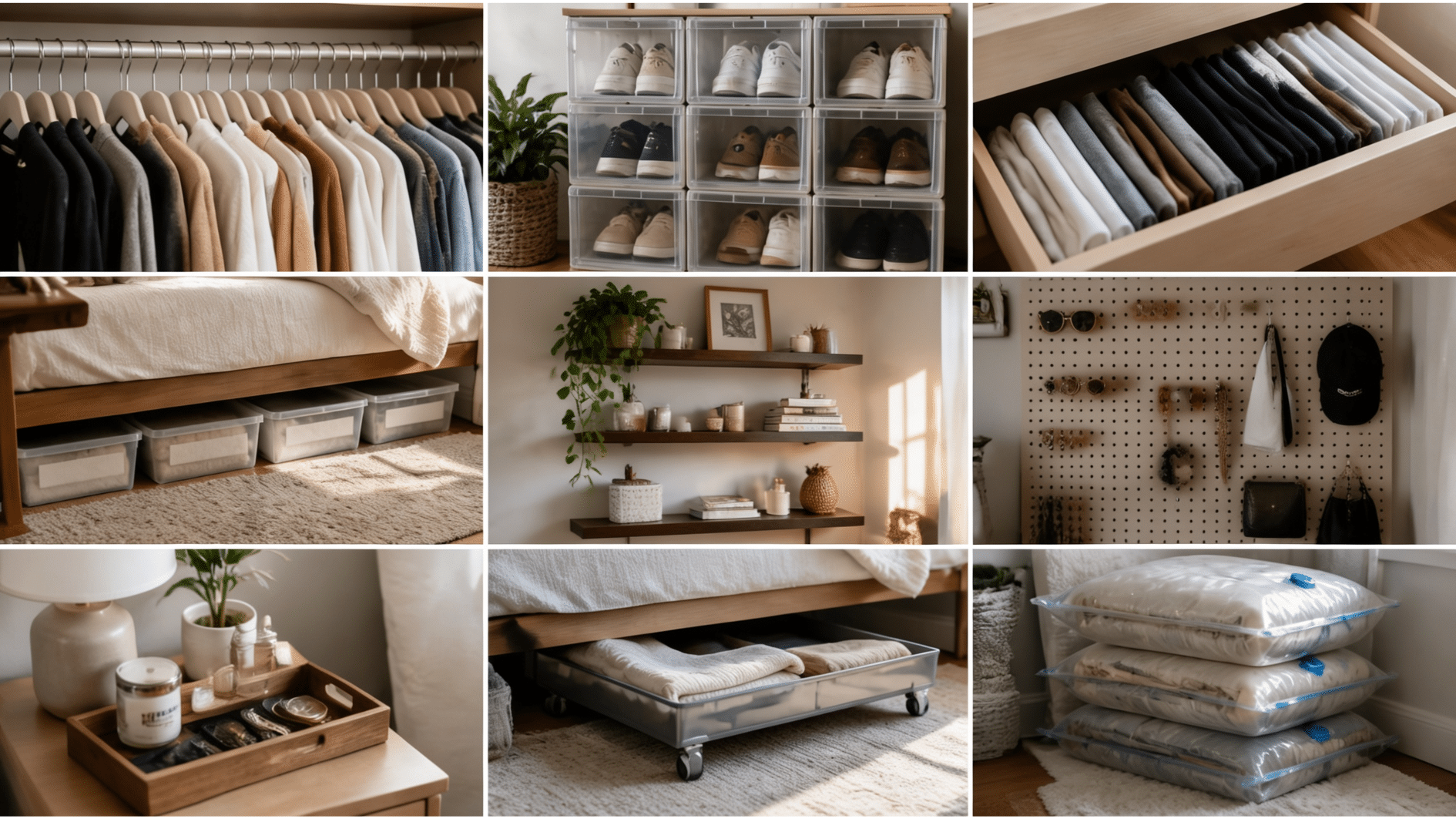
Your bedroom should be the most relaxing room in your home – but clutter makes that nearly impossible. Small, consistent habits combined with smart storage solutions keep your bedroom tidy without a ton of effort.
You don’t need a custom closet system or a renovation budget to get there.
- Add a second hanging rod in your closet. Put it below shorter items like shirts and jackets. The bottom half of most closets is completely wasted vertical space.
- Switch to slim velvet hangers. Bulky plastic hangers eat up rod space fast. Velvet ones are thinner, so clothes don’t slide off, and the closet instantly looks more put-together.
- Store shoes in clear boxes. Seeing what you own means you’ll actually wear it – and stop buying the same style again without realizing it.
- Use shelf dividers for folded clothing. One small divider keeps sweaters, jeans, and towels from tipping into each other and undoing a whole shelf in one pull.
- Move seasonal items off the main shelves. Off-season clothes go into vacuum storage bags on high shelves or under the bed, freeing up prime closet space for what you wear regularly.
- Use flat rolling bins under the bed. Perfect for extra linens, off-season clothing, or bulky items you don’t need often but don’t want to get rid of.
- Vacuum-seal bulky bedding. Winter comforters and heavy blankets compress down to a fraction of their original size. Store them under the bed or on a high shelf in a closet.
- Label everything stored under the bed. You won’t remember what’s in that bin six months from now. Unlabeled storage quietly turns into forgotten storage.
- Use bed risers for extra clearance. If your bed sits too low, risers give you several extra inches of under-bed space without buying a new frame.
- Fold your T-shirts vertically in drawers. Fold each shirt into a small rectangle and stand them upright side by side. You can see every single shirt at once without pulling anything out.
- Put a small tray on your nightstand. One tray, one rule – only what fits on it lives there. Phone, glasses, one book. It stops the nightstand from becoming a dumping surface.
- Hang a pegboard inside your closet door. Use it for belts, scarves, bags, and jewelry. Everything is visible, nothing gets tangled, and you free up shelf space for items that actually need it.
- Use drawer inserts for socks and underwear. Individual compartments keep everything separated and easy to find – especially on mornings when you’re already running late.
- Hook tomorrow’s outfit on the back of the bedroom door. Pick it the night before, hang it up, and walk out in the morning without standing in front of the closet for ten minutes.
- Keep a small basket on the dresser for pocket items. Wallet, watch, coins, and keys go in the basket the moment you walk in. They’re always in one place and never lost on a busy morning.
Bathroom Organization Hacks for Small Spaces
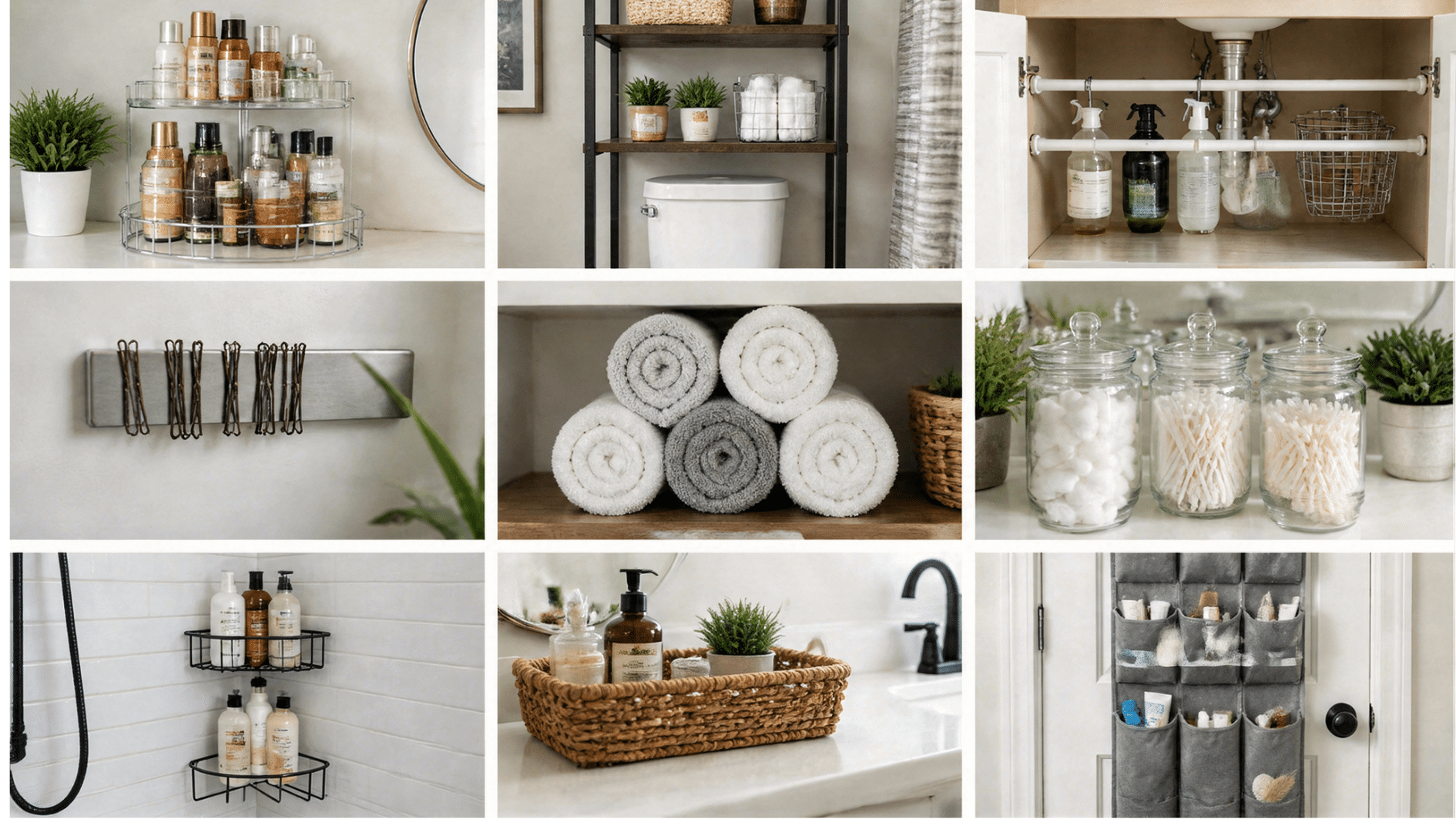
Bathrooms are usually the smallest rooms in the house, yet they hold some of the most items – from skincare to hair tools to cleaning supplies.
Getting this space under control doesn’t require a remodel or a bigger vanity. Approaching it like a house organizer means using every available inch smartly, not just the obvious shelves.
- Use a tiered shelf organizer on the counter. Stacking items vertically keeps the counter clear while keeping everything within easy reach during your morning routine.
- Add an over-the-toilet shelving unit. That vertical space above the toilet is almost always empty. A simple shelving unit there adds real storage for toiletries, towels, and extra supplies.
- Hang tension rods under the sink. Loop the spray bottle handles over the rod so they hang upright, and keep the entire cabinet floor open for other storage.
- Use a drawer organizer for small items. Hair ties, nail clippers, bobby pins, and lip balm take over every surface fast. One organizer keeps them in a single spot.
- Install a magnetic strip inside a cabinet door. Bobby pins, nail files, and small metal grooming tools stick right to it – completely out of sight and always findable.
- Keep a daily-use basket on the counter. The five or six items you reach for every morning belong in one easy-to-grab spot. Everything else goes inside a cabinet or drawer.
- Switch to a suction-cup shower caddy. It attaches directly to the tile, holds everything off the floor, and doesn’t rust or slip as hanging caddies do.
- Roll towels instead of folding them flat. Rolled towels take up less shelf space, stay in place better, and look intentional on any open shelf or in a basket.
- Store cotton products in glass jars with lids. Cotton balls and Q-tips stored in their original bags get damp and spill constantly. A small glass jar keeps them dry and easy to grab.
- Hook the hairdryer inside the vanity cabinet. A single Command hook on the inside door keeps the dryer off the counter and out of sight without damaging the cabinet.
- Use a squeegee after every shower. Thirty seconds of wiping down the walls after each use prevents the soap buildup that turns into a deep-cleaning project by the weekend.
- Add a small shelf above the bathroom door. The wall space above a door is almost always ignored. A narrow shelf is perfect for extra toilet paper, towels, or backup toiletries.
- Use a hanging organizer on the back of the bathroom door. Clear pockets hold everything from hair products to medicines to skincare extras – all visible and off the shelves entirely.
- Group skincare products on a small rotating organizer. A countertop spinning organizer keeps your routine products in one spot and makes it easy to find the right product without moving everything else first.
- Keep a small trash can inside every cabinet. One under the sink, one in a drawer if space allows. Easy trash access means wrappers and empty bottles are thrown away immediately rather than piling up on the counter.
Entryway Organization Hacks to Stop Clutter at the Door
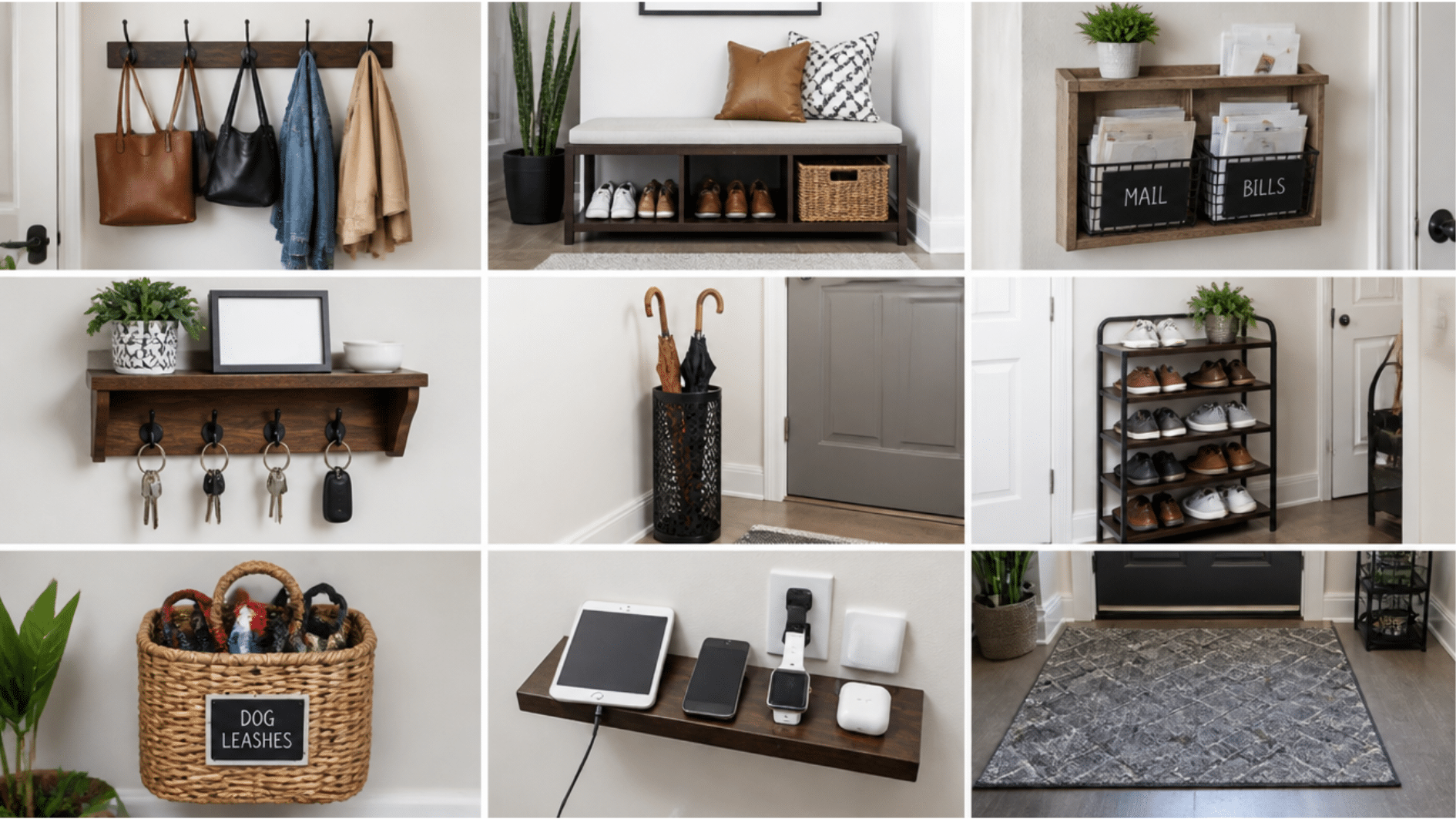
The entryway is the first thing you and your guests see when the door opens – and it’s usually where clutter piles up the fastest. A few targeted systems here stop the mess before it ever reaches the rest of the house.
- Install hooks near the door for bags, coats, and keys. When items have an assigned spot right at the entry, they no longer end up on the couch or the floor.
- Add a small bench with built-in shoe storage. It solves two problems at once: a place to sit and take off shoes, and a place to store them immediately.
- Use a console table with a drawer for daily items. Mail, sunglasses, and everyday items that pile up on flat surfaces near the door finally have a home.
- Give every family member their own hook or basket. Shared spaces stay cleaner when each person has ownership of one spot. It also ends the daily argument about whose stuff is where.
- Use a mail sorter with labeled slots. Bills, action needed, recycling – paper stops piling up on any flat surface the moment it has a sorted home.
- Add a shoe tray with raised edges. Muddy shoes and wet boots stay contained in one spot. The floor around it stays clean without constant mopping.
- Keep a slim umbrella stand at the door. Wet umbrellas dripping through the house or propped against walls cause floor damage over time. A stand gives them a proper place to dry.
- Use a wall-mounted key holder with a small shelf. Keys get hung immediately, and the shelf holds sunglasses, a transit card, or anything else you grab on the way out every morning.
- Put a mirror near the door with side hooks. One piece does two jobs – a last-look check before you leave and extra hanging space for light jackets or bags.
- Add a small basket for dog leashes and pet items. If you have a pet, leashes, waste bags, and toys end up all over the place near the door. One basket keeps it contained and easy to grab on the way out.
- Use a narrow shoe rack instead of leaving shoes loose. Even a two-tier rack keeps the floor clear and holds far more shoes than a pile ever could.
- Put a small rug with a non-slip base at the entry. It catches dirt and moisture right at the door and reduces how much gets tracked into the rest of the house.
- Keep a reusable bag hook near the door. Tote bags and grocery bags live on the hook, so they’re always grabbed on the way out instead of forgotten on the counter.
- Use a small charging station in the entryway. If your household tends to leave phones and tablets everywhere, one charging spot near the door keeps devices in one place and always ready to go.
- Add a small notepad or whiteboard near the exit. A quick-glance reminder spot for things to grab – permission slips, packages to mail, items to return – means nothing important gets left behind on a busy morning.
Living Room Organization Hacks for a Tidier Space
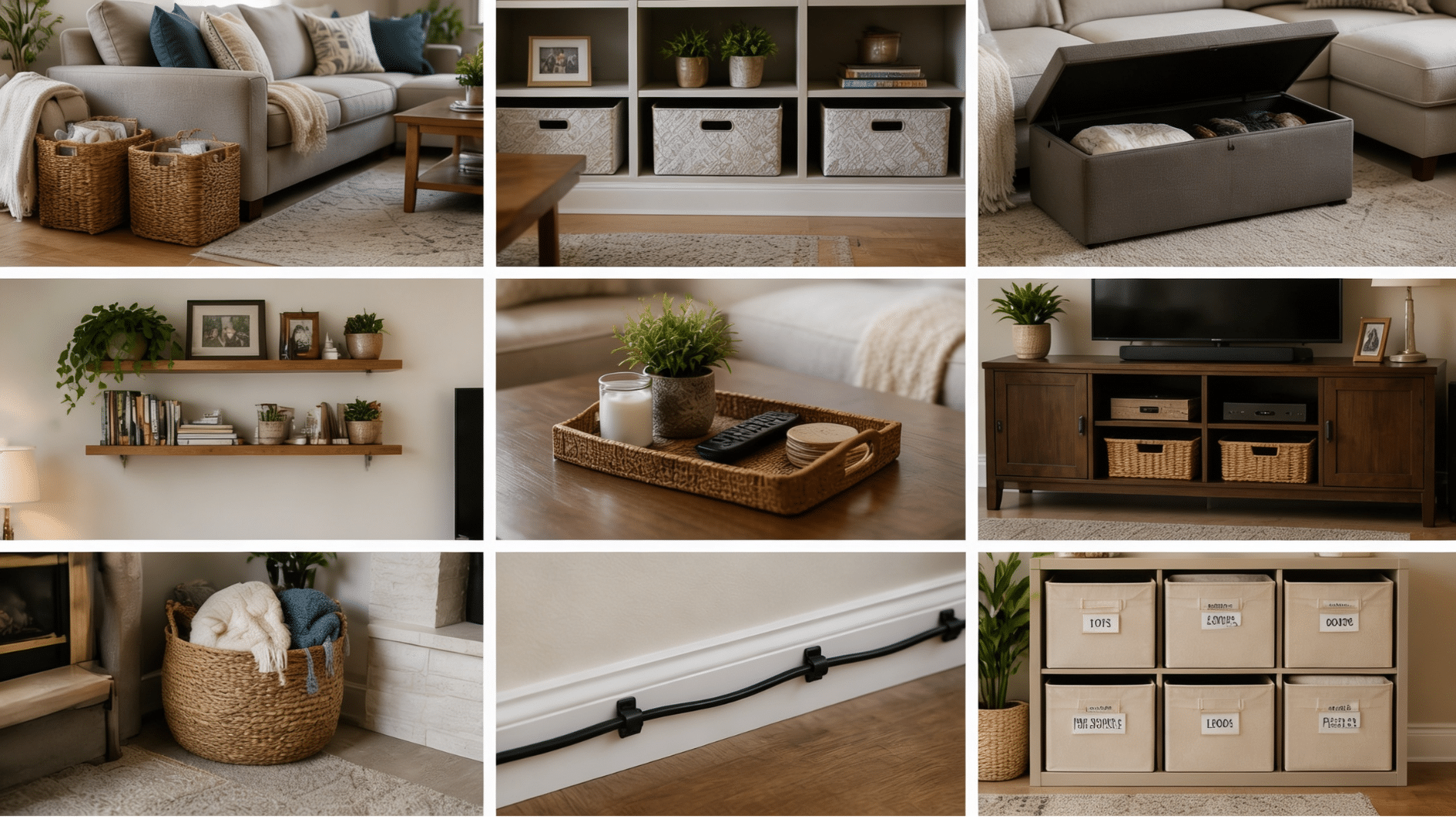
The living room is where the whole household lands at the end of the day – and it shows. Without a system, it becomes a catch-all for everything from shoes to snack wrappers to charging cables. These hacks keep it functional without making it feel rigid or off-limits.
- Keep a woven basket near the couch. Remotes, chargers, books, and small daily items quickly collect on the coffee table. A basket right there keeps them contained and easy to grab.
- Use decorative bins on open shelves. Open shelving looks great until it becomes a dumping ground. Bins give it structure while keeping things accessible.
- Do a 10-minute reset at the end of each day. Before bed, put things back where they belong. This one habit prevents the slow pile-up that feels impossible to tackle by the weekend.
- Swap a solid coffee table for a storage ottoman. Same footprint, with a hidden compartment inside for blankets, board games, or anything that usually ends up in a nearby pile.
- Run cords along baseboards with adhesive cable clips. Cords across the floor are both a hazard and an eyesore. Clips keep them flat against the wall at floor level – nearly invisible.
- Label the back of every remote. A small strip of tape that says what each remote control ends the daily guessing game. Sounds minor, saves real frustration.
- Add floating shelves above the sofa. Blank wall space above a couch is almost always ignored. Two or three shelves there hold books, small plants, and framed photos – all off the floor.
- Keep a blanket basket beside the couch. Throw blankets draped over furniture look cozy for a day, then become a pile. A basket keeps them folded, accessible, and intentional.
- Use a media console with closed storage. Open TV units put everything on display. A console with doors keeps gaming controllers, cables, and extra devices completely out of sight.
- Assign one drawer or shelf for each family member. In shared living rooms, clutter often builds because nobody knows where their things belong. One dedicated spot per person fixes that fast.
- Use a tray on the coffee table to corral small items. A tray creates a visual boundary on the table – items stay on the tray rather than spreading across the entire surface.
- Store books spine-out on shelves consistently. Mixing spine directions makes shelves look chaotic. Keeping spines facing out makes the same number of books look organized and intentional.
- Keep a small recycling bin near the seating area. Snack wrappers, junk mail, and packaging that gets opened in the living room often sit on the coffee table for days. A small bin nearby solves it immediately.
- Use furniture with built-in storage wherever possible. Side tables with drawers, sofas with under-seat storage, and ottomans with lids all do double duty – less furniture needed, more storage available.
- Do a toy or item rotation if you have kids. Keep half the toys stored away and swap them out every few weeks. The living room stays cleaner, and kids stay more engaged with what’s out.
Easy Daily Habits That Keep Your Home Organized Long-Term
Organizing your home is one thing – keeping it that way is a completely different challenge. Being your own house organizer day to day is what makes the results actually stick.
| Daily Habit | What It Helps With | Quick Example |
|---|---|---|
| Follow the “One In, One Out” Rule | Keeps clutter from quietly growing | Buy new shoes – donate an old pair |
| Put Things Away Immediately | Prevents piles from forming | Hang your bag instead of dropping it on a chair |
| Do a 5-Minute Tidy Before Bed | Makes mornings feel calmer | Clear counters, fold blankets, pick up loose items |
| Schedule a Weekly Home Reset | Stops mess from building up room by room | Spend 20 minutes every Sunday resetting spaces |
| Use the Same System as Everyone Else | Keeps the home consistently organized | Everyone knows where keys and mail belong |
| Avoid Buying Too Many Storage Bins | Solves clutter at the source instead of hiding it | Declutter first before buying organizers |
Conclusion
Getting your home organized doesn’t have to feel like a massive weekend project. Break it down room by room, start with what bothers you most, and the results will last longer than you’d expect.
Every tip in this guide is built around your real life – small and smart changes that genuinely add up over time. You don’t have to tackle it all at once. Start with one room and keep going from there.
As someone who has spent years thinking about how spaces work, the biggest thing I’ve learned is this – a home just has to be set up in a way that works for the people living in it.
Get the systems right, and everything else follows.