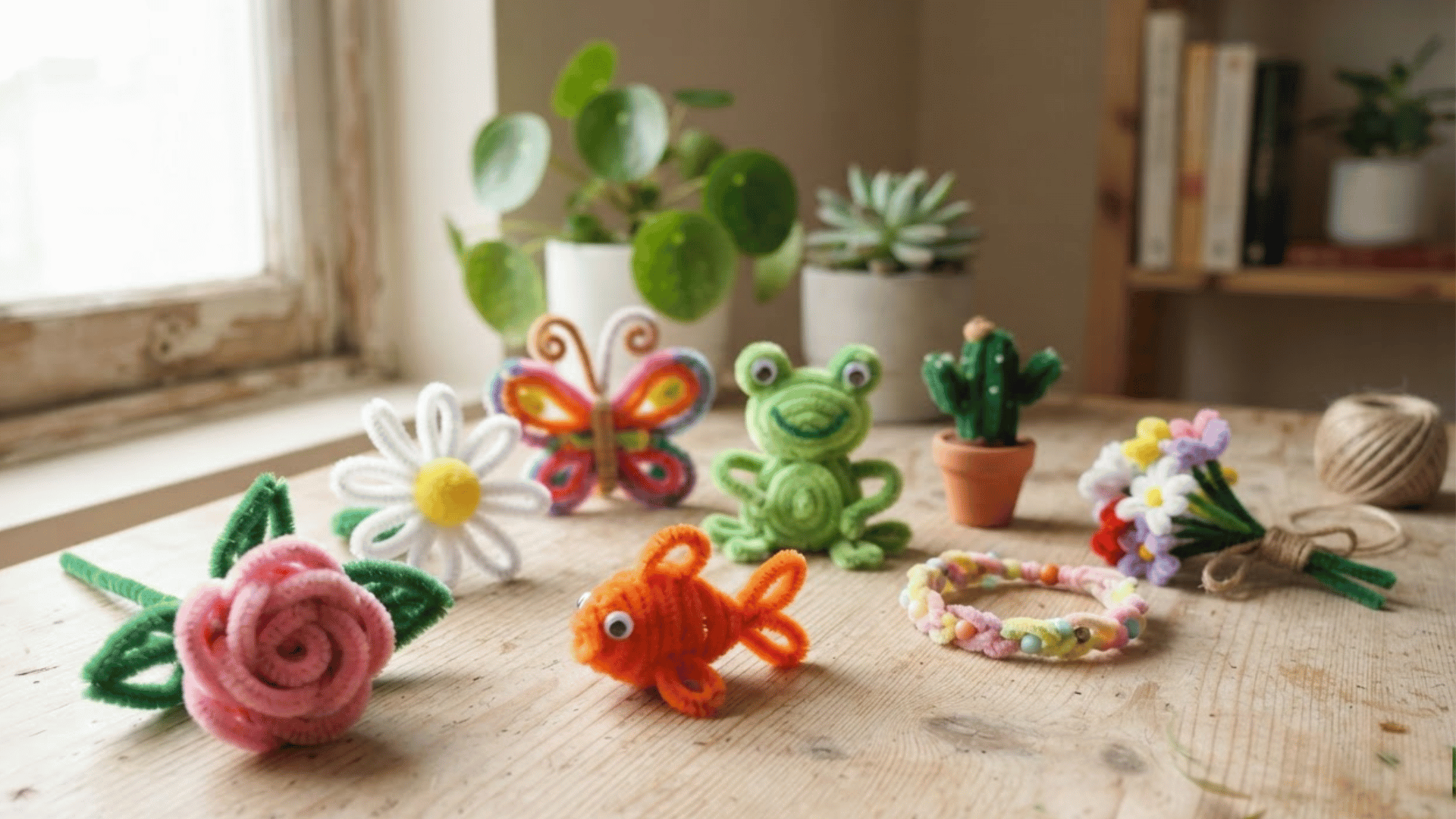

Rainy Saturday, bored kids, one drawer full of construction paper nobody’s touched since the last birthday party.
That’s really all you need. Paper crafts for kids don’t ask for a glitter budget or a Pinterest-worthy craft room, just scissors, glue, and twenty spare minutes.
Fold a fortune teller, roll a paper quill flower, or build a honeycomb mushroom that looks fancier than it actually is.
This list covers ten easy projects (plus one showstopper), ready whenever the “I’m bored” chorus starts.
Why is Doing Crafts at Home Worth Your Time?
Sitting down to craft at home is more than just a way for kids to kill time on a dull day. It teaches kids focus and patience, both of which can be transferred to other areas of their lives.
Adults benefit too; there are many proven ways to reduce stress from everyday activities. Crafting together allows parents and kids to naturally have a conversation.
When kids make a picture or poster to frame or hang it, they are proud of it. Everyone else doesn’t feel like they are missing out because they aren’t.
Crafting becomes an enjoyable habit and becomes easier and more enjoyable over time. The best part? Most projects are relatively inexpensive to make at home.
Common Supplies You Need Before You Start
You do not need a large collection of materials to get started. You only need a few simple supplies to make many fun paper projects at home or in the classroom.
- Colored paper: Great for making flowers, animals, cards, and decorative shapes.
- Construction paper: Thick and sturdy, making it ideal for crafts that need extra support.
- Origami paper: Lightweight square paper that folds easily into different origami designs.
- Scissors: Use child-safe scissors to cut paper into different shapes and patterns.
- Glue: A glue stick or liquid glue helps attach paper pieces neatly and securely.
- Tape: Useful for quick fixes, joining paper edges, or adding extra support.
- Markers: Add bright colors, outlines, faces, and small details to finished crafts.
- Stickers: Decorate projects quickly with stars, animals, letters, or fun themed designs.
- Ruler: Helps measure and create straight lines for neat folds and accurate cuts.
Easy Crafts to Do at Home with Paper
Paper is one of the most accessible materials you can craft with at any age, with plenty of creative paper craft ideas for adults to check out alongside beginner-friendly projects.
1. DIY Paper Photo Frames
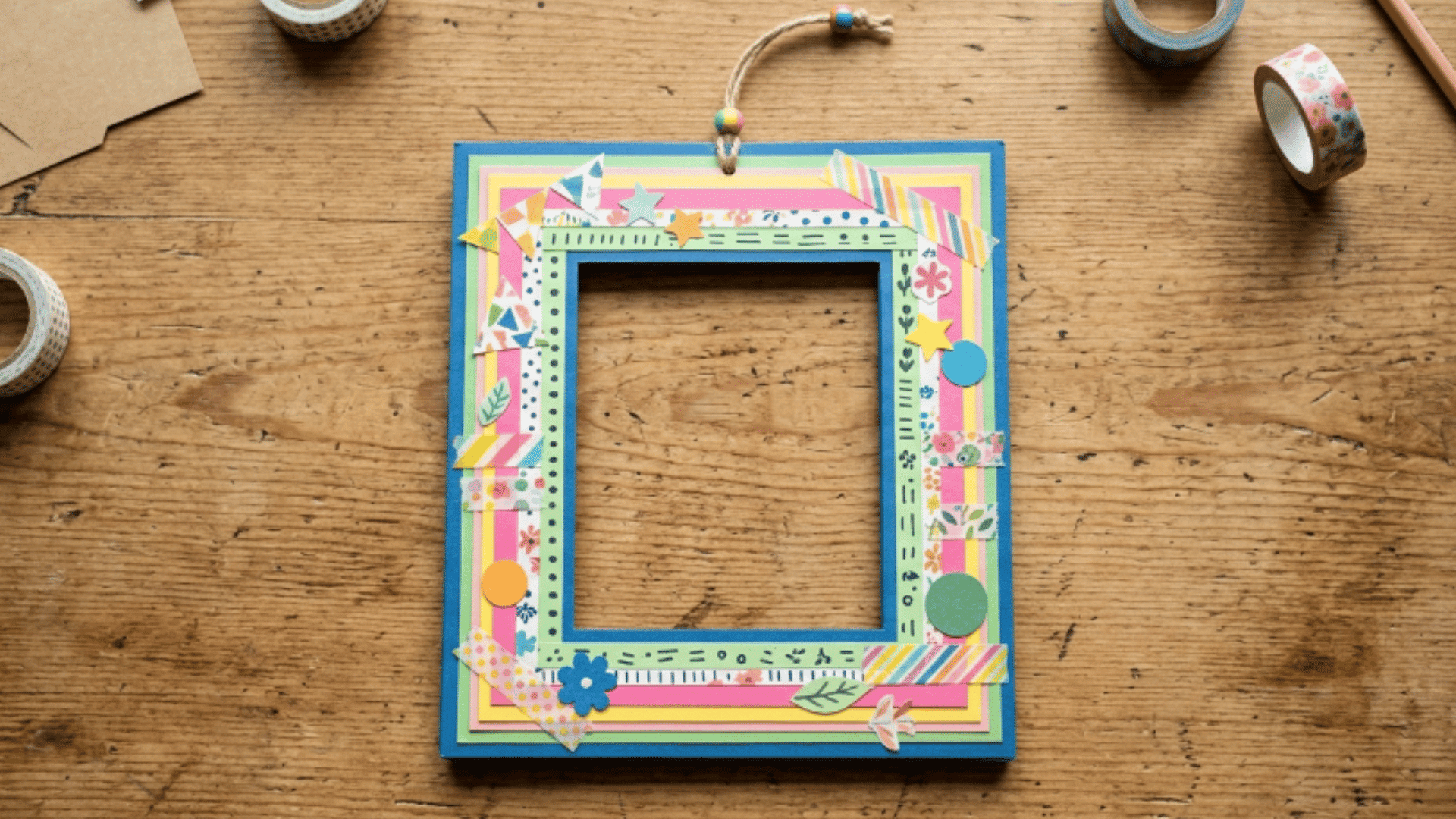
A handmade photo frame adds a personal touch to any wall or shelf without costing much. It is a great starter project that works well for both kids and adults using basic cardstock and a few simple supplies.
How to make it:
- Cut a rectangle from cardstock (A4 size works well) and repeat for a second identical piece
- On one rectangle, draw and cut out a smaller rectangle in the center to create the frame window
- Use markers, washi tape, or cut paper shapes to decorate the front frame piece
- Apply glue along the bottom and two side edges, then press both pieces together firmly
- Leave the top open so you can slide photos in and out whenever you like
Mistake to avoid: Do not glue the top edge closed, or the photo cannot be inserted or replaced easily.
2. Handmade Paper Gift Bags
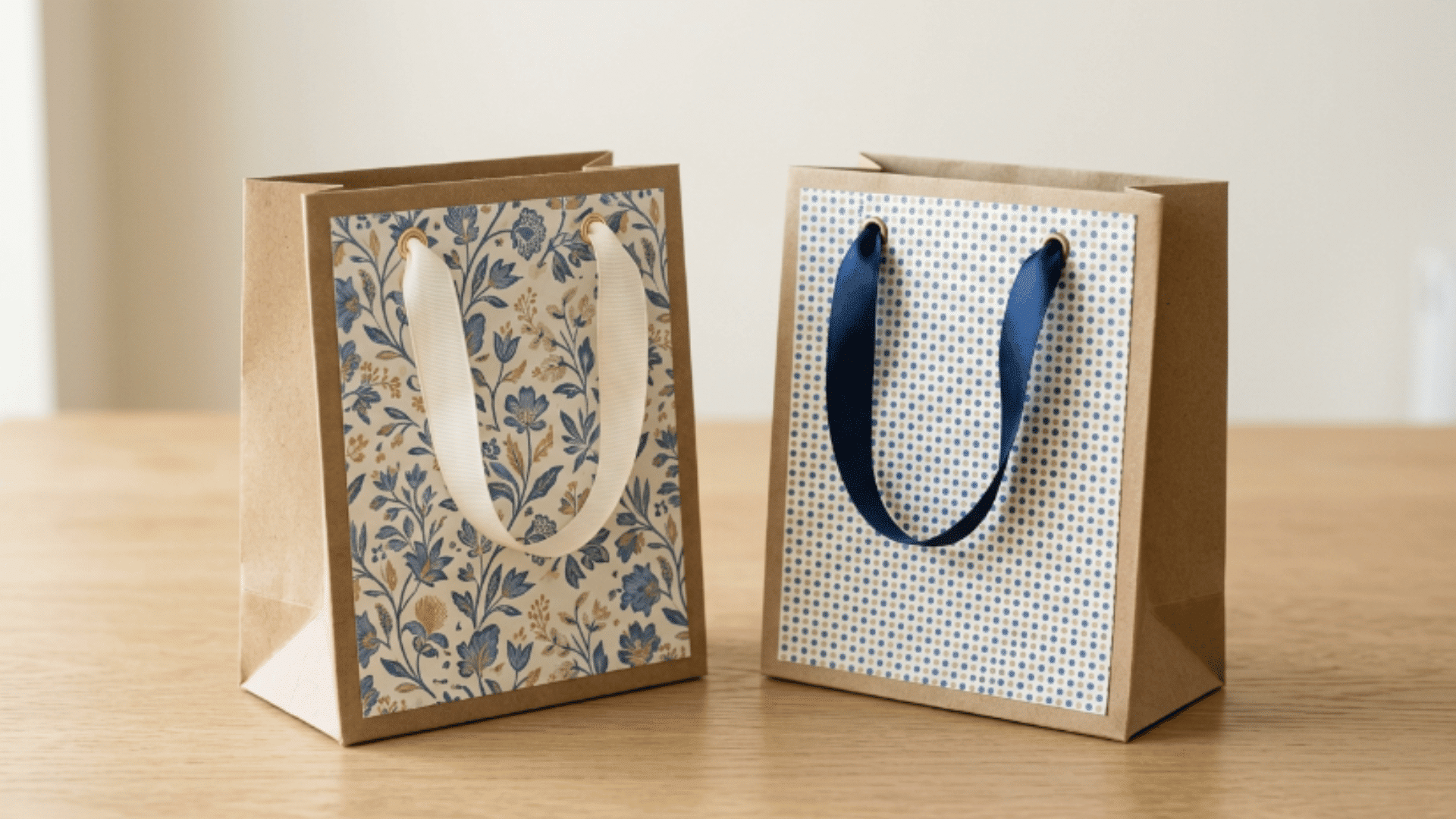
A handmade paper gift bag makes any present feel more thoughtful before it is even opened. It is one of those practicalpaper crafts for kids and adults that serves a real purpose once it is done.
How to make it:
- Start with a sheet of thick decorative paper or brown kraft paper, roughly A3 size
- Fold the paper in half lengthways and glue the open long edge to form a tube
- Flatten the bottom and fold it into a neat rectangular base, securing with glue
- Fold down the top edge by about 2 cm to reinforce the opening
- Punch two holes on each side of the top and thread ribbon through to make handles
Mistake to avoid: Avoid using thin paper for heavy gifts, as the base or handles may tear under the weight.
3. Paper Quilling Art Designs
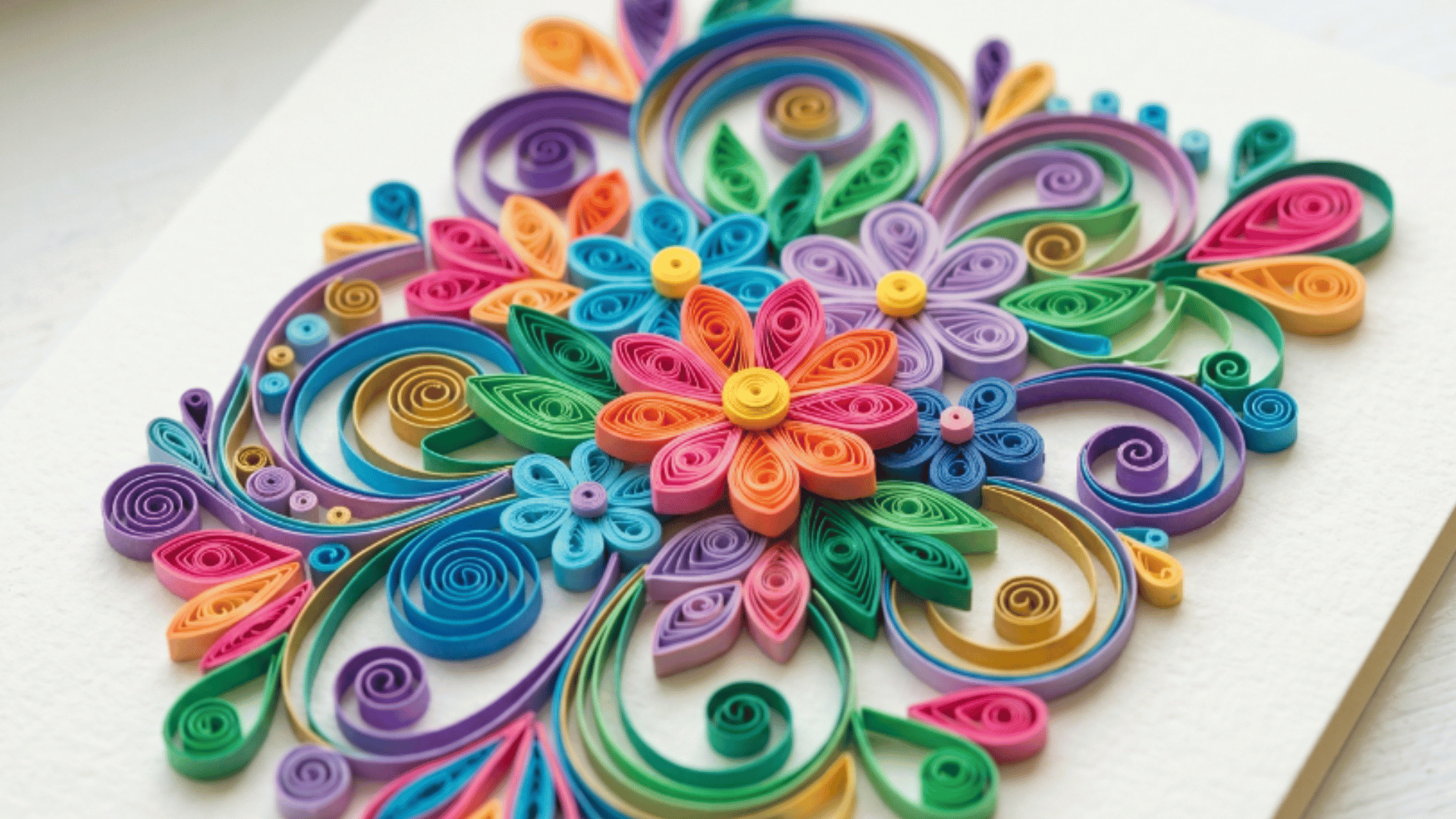
Quilling turns simple paper strips into detailed artwork that looks far more complex than it actually is.
It is one of those paper-based things to do that reward patience and suit anyone who enjoys working with color and detail.
How to make it:
- Cut or buy strips of paper about 3–5 mm wide in a range of colors
- Roll each strip tightly around a toothpick or quilling tool, then let it loosen slightly
- Pinch the coil into different shapes: teardrops, squares, triangles, or leaves
- Arrange the shapes on a piece of cardstock to form flowers, animals, or geometric patterns
- Glue each shape in place using a small dot of craft glue and allow it to dry flat
Mistake to avoid: Do not soak the coils with glue, since excess moisture can flatten their shape and leave visible marks.
4. Personalized Paper Bookmarks
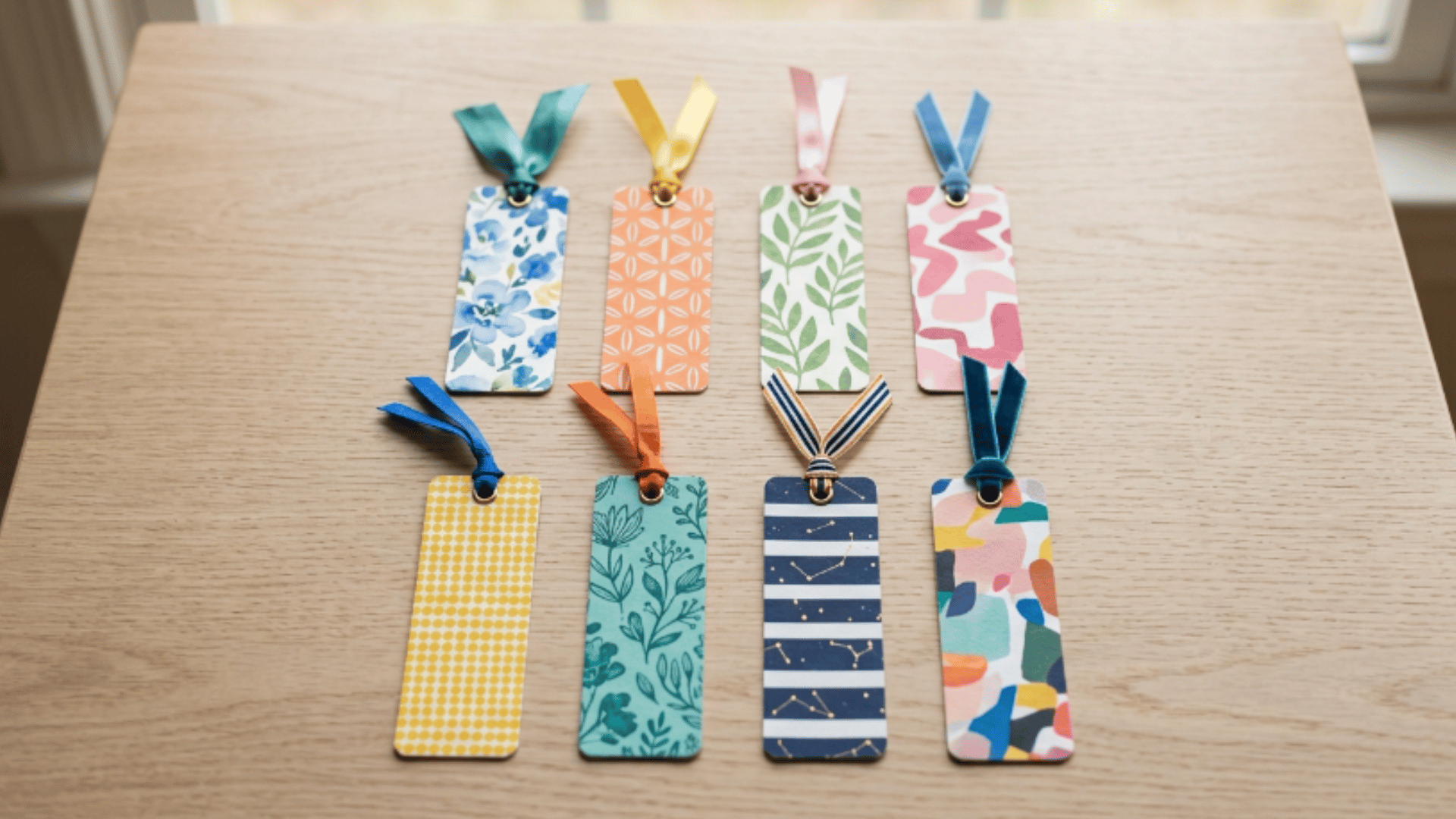
A bookmark made from cardstock is a small but lasting craft that people genuinely enjoy using every day. It is also one of the quickest things to do with paper, as it can be finished in well under half an hour with minimal materials.
How to make it:
- Cut cardstock into strips roughly 5 cm wide and 18 cm long, one per bookmark
- Let kids draw, paint, or stamp designs on each strip using whatever supplies you have on hand
- If you have a laminator, run it through for extra durability; otherwise, cover with clear tape
- Punch a hole at the top and loop a short piece of ribbon or yarn through it
Mistake to avoid: Keep ribbons and raised decorations small, as bulky details may damage the book’s pages or spine.
5. Paper Wall Hanging Decor
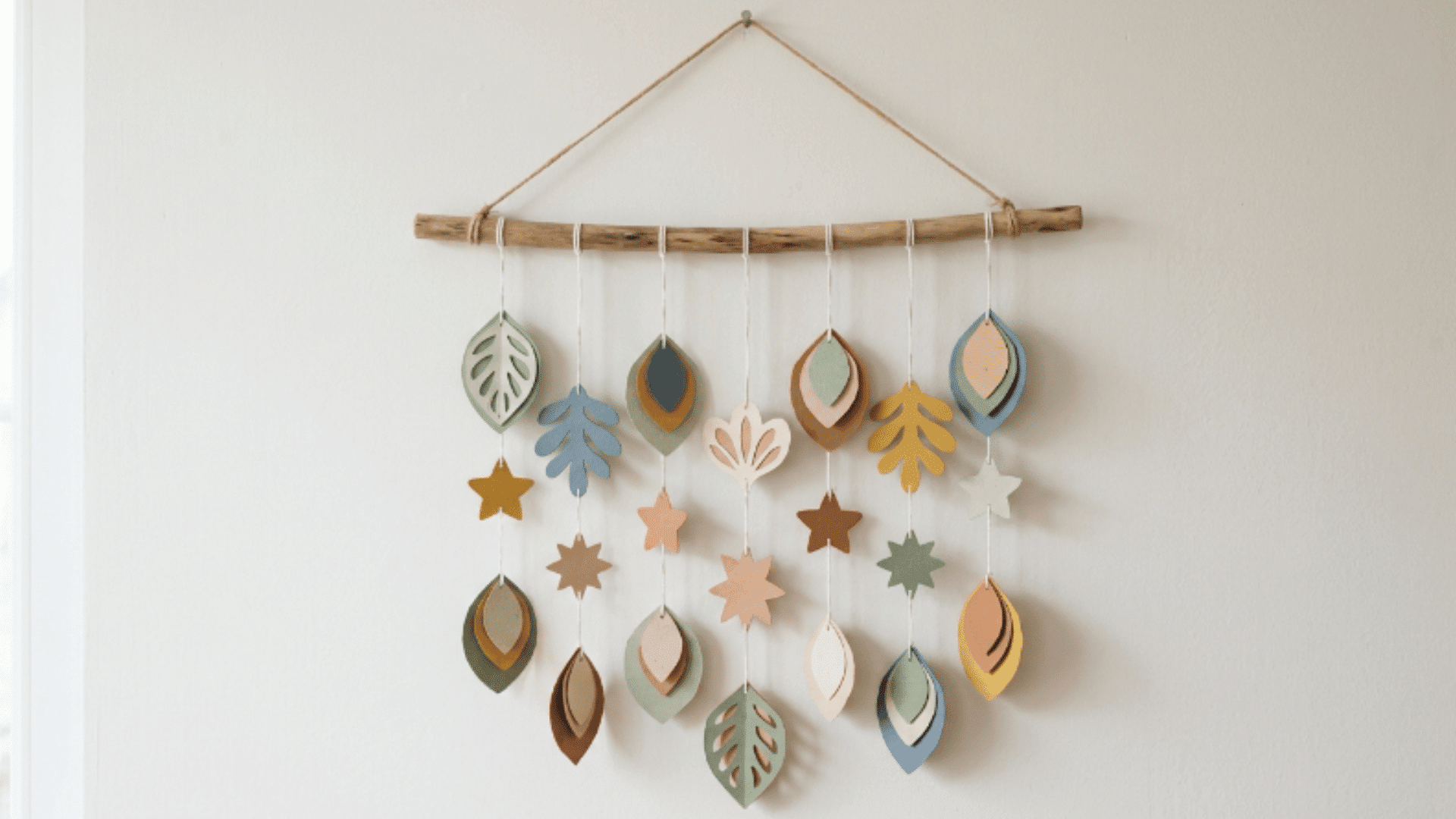
Paper wall-hanging decor is one of the most creative things to do with paper if you want to add a personal touch to your space.
If this sparks bigger ideas, these DIY wall decoration ideas pair perfectly with a paper hanging for a full feature wall.
How to make it:
- Fold sheets of paper in half repeatedly, then cut petal or diamond shapes along the folded edges
- Open each piece to reveal a symmetrical cut-out shape repeated in different colors and sizes
- Cut lengths of string or twine, each a slightly different length, and tape or tie a shape to each one
- Attach all the strings evenly across a wooden dowel, chopstick, or sturdy twig
- Tie a longer piece of string to both ends of the dowel so that the whole piece can hang flat against the wall
Mistake to avoid: Check the spacing before securing the strings, or the finished hanging may look uneven or tilt to one side.
6. Paper Fortune Teller
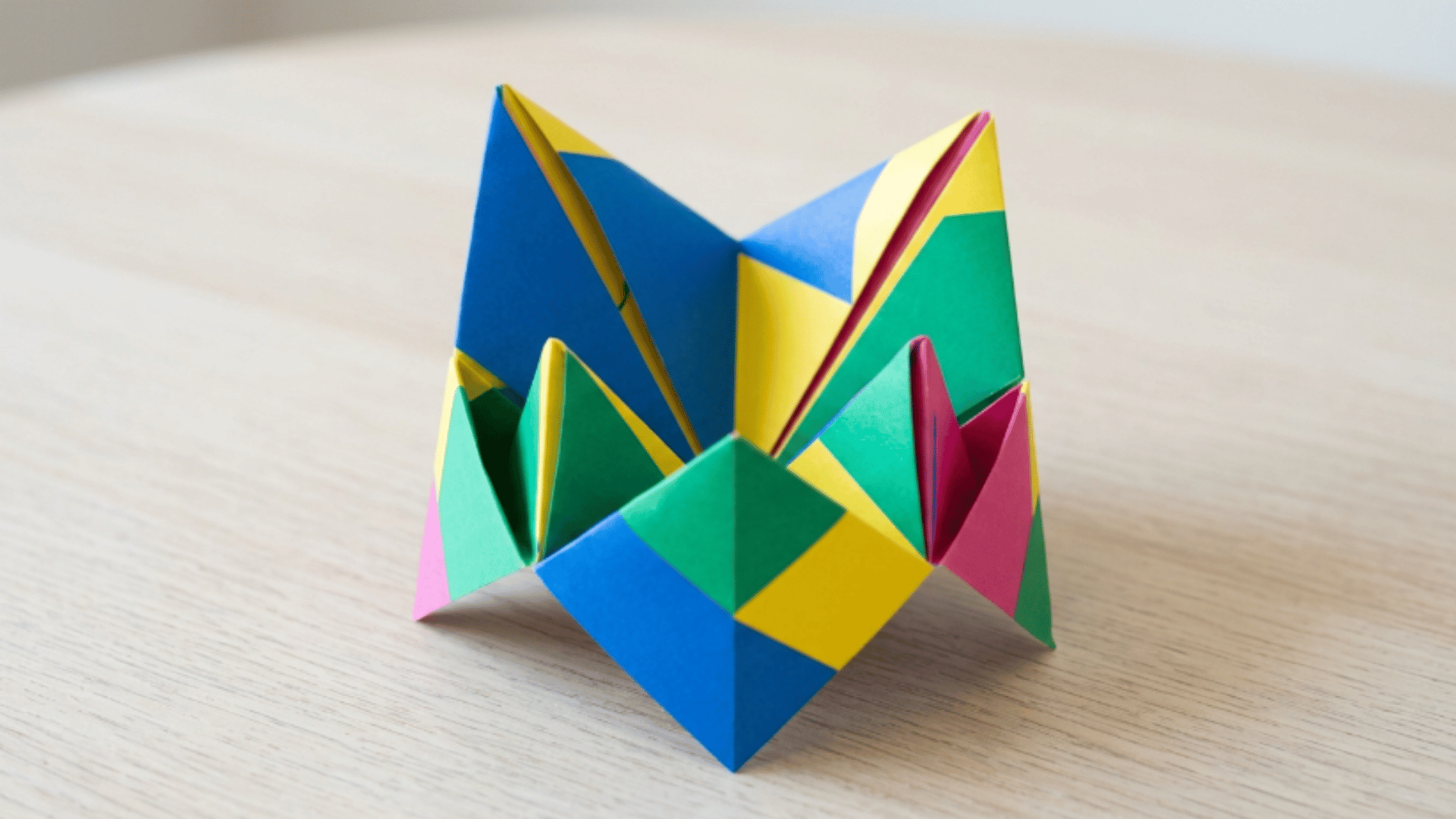
This classic folded-paper game is one of the most fun and interactive things to do with paper. It is simple to make and just as enjoyable to play once it is ready.
All you need is a single square sheet of paper and a few minutes to fold it into shape. You can personalize it by adding colors, numbers, or fun predictions inside, making it more engaging for kids and adults alike.
How to make it:
- Start with a square sheet of paper, and cut a rectangle down to a square size if needed
- Fold all four corners into the center point and press the creases flat
- Flip the paper over and fold all four corners into the center again
- Fold the whole thing in half, then open it and fold it in half the other way to create creases
- Slide your thumbs and forefingers under the four flaps on the bottom and push them together to open the fortune teller
Mistake to avoid: Press every crease firmly and accurately, because loose folds can make the fortune teller difficult to open and move.
7. DIY Paper Envelopes
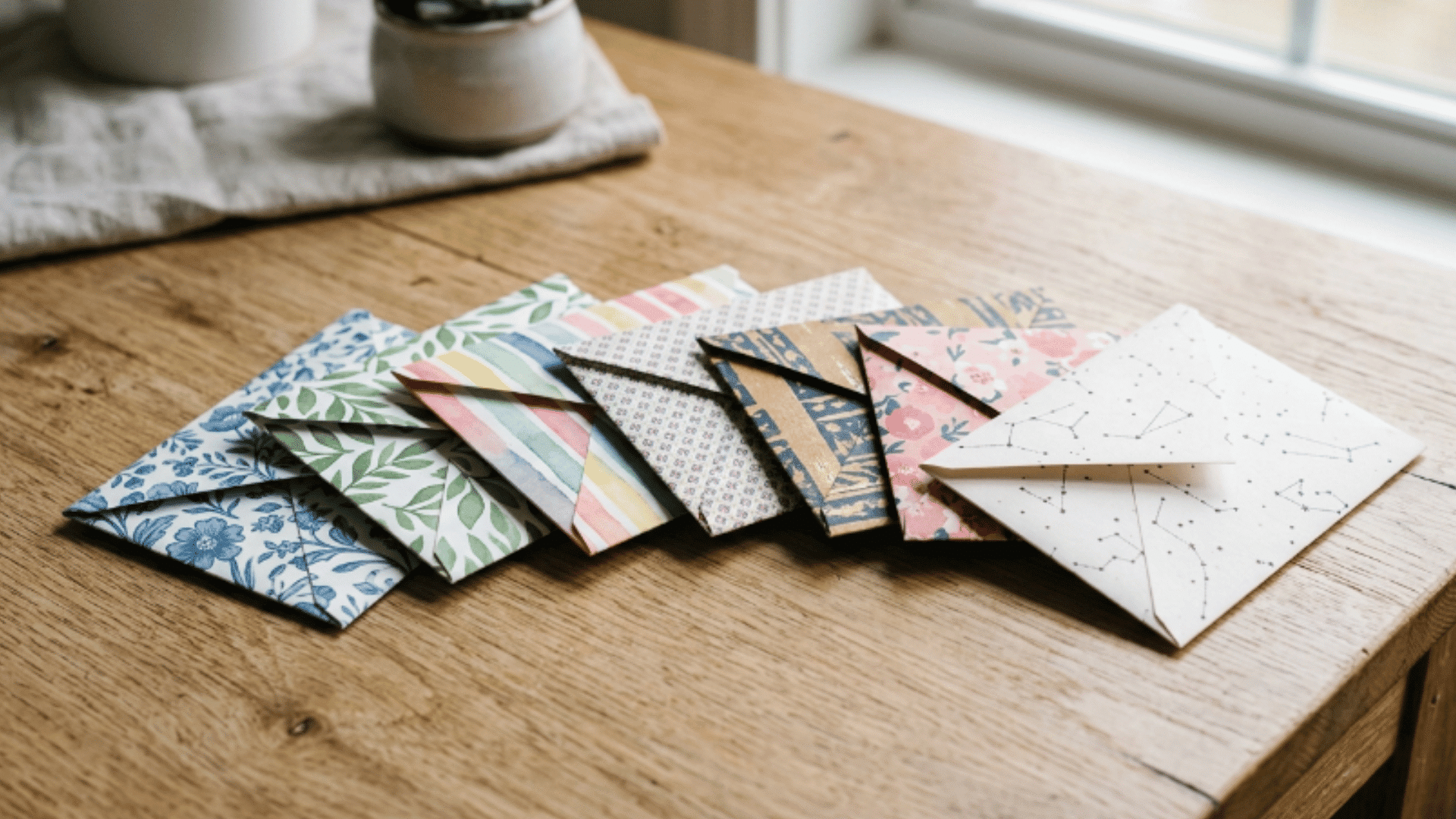
A hand-decorated envelope gives any letter or card a finished, considered look on the outside. Making envelopes from scratch is one of those underrated crafts that feel more useful than they look.
How to make it:
- Take any standard envelope and carefully open all the glued seams to flatten it out
- Place the flattened envelope onto your chosen patterned or colored paper and trace around it
- Cut out the traced shape and score along the fold lines using a ruler and an empty ballpoint pen
- Fold up the bottom flap, then fold in the two side flaps and glue them onto the bottom flap
- Leave the top flap unglued so you can seal it later with glue, washi tape, or a sticker
Mistake to avoid: Make sure glue stays away from the inner pocket, or the envelope may stick shut before anything is placed inside.
Follow our step-by-step guide to making a DIY envelope for two more fold styles.
8. Paper Collage Art Boards
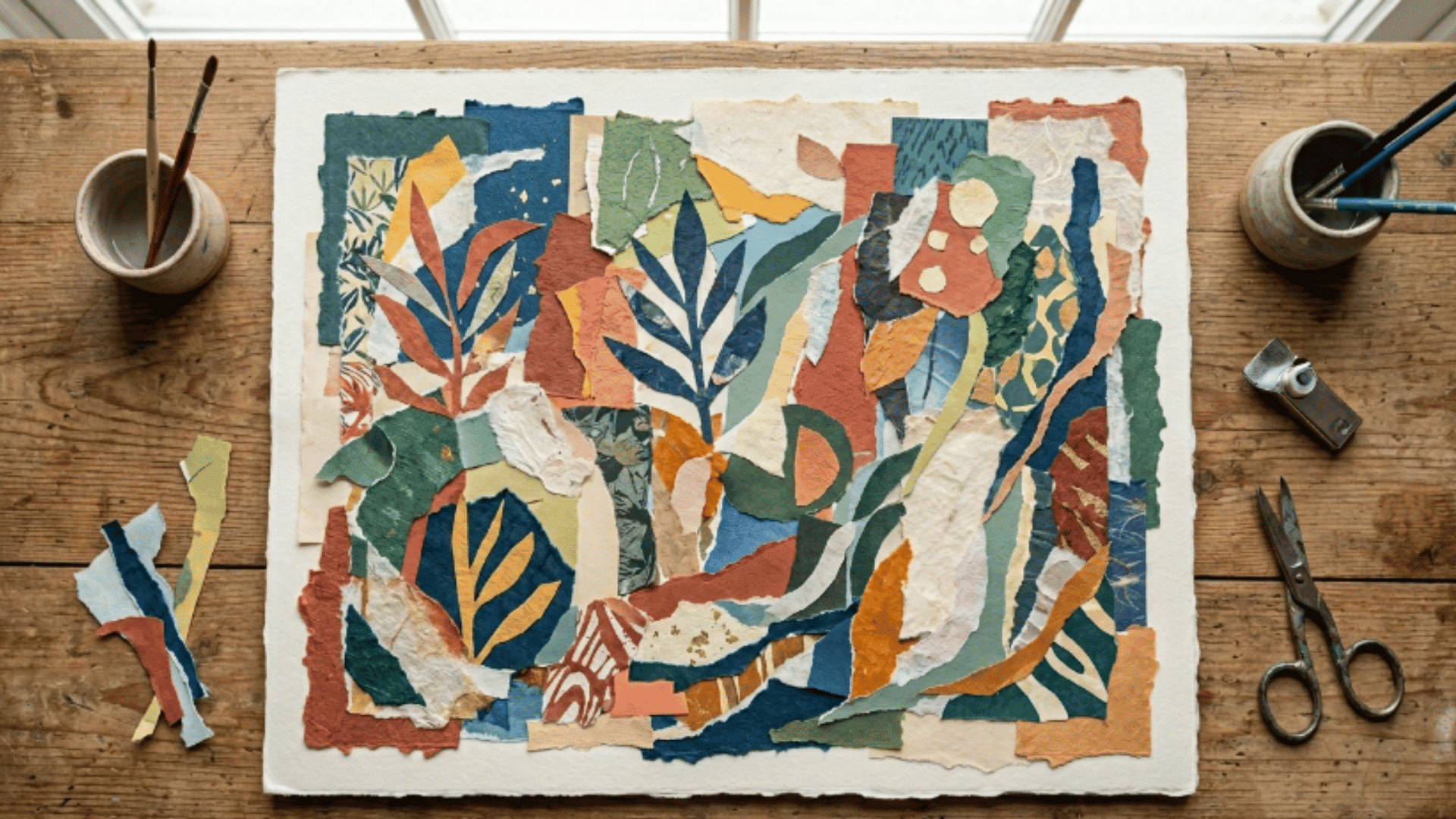
Collage is a great way to turn leftover paper scraps into a composed and colorful piece of artwork.
It allows you to mix textures, shapes, and colors freely, making it one of the most open-ended paper crafts for kids and a relaxing, creative activity for adults as well.
How to make it:
- Gather old magazines, wrapping paper, newspaper, tissue paper, and scrap cardstock
- Tear or cut the paper into pieces of varying sizes; irregular torn edges add character
- Sketch a loose outline of your design onto a piece of cardboard or thick paper
- Layer and overlap pieces of paper within the outline, playing with colors and textures
- Once happy with the arrangement, glue everything down and press under a heavy book to dry flat
Mistake to avoid: Plan the arrangement before gluing, as attaching pieces too early can make the design feel crowded or unbalanced.
9. Mini Paper Scrapbook Pages
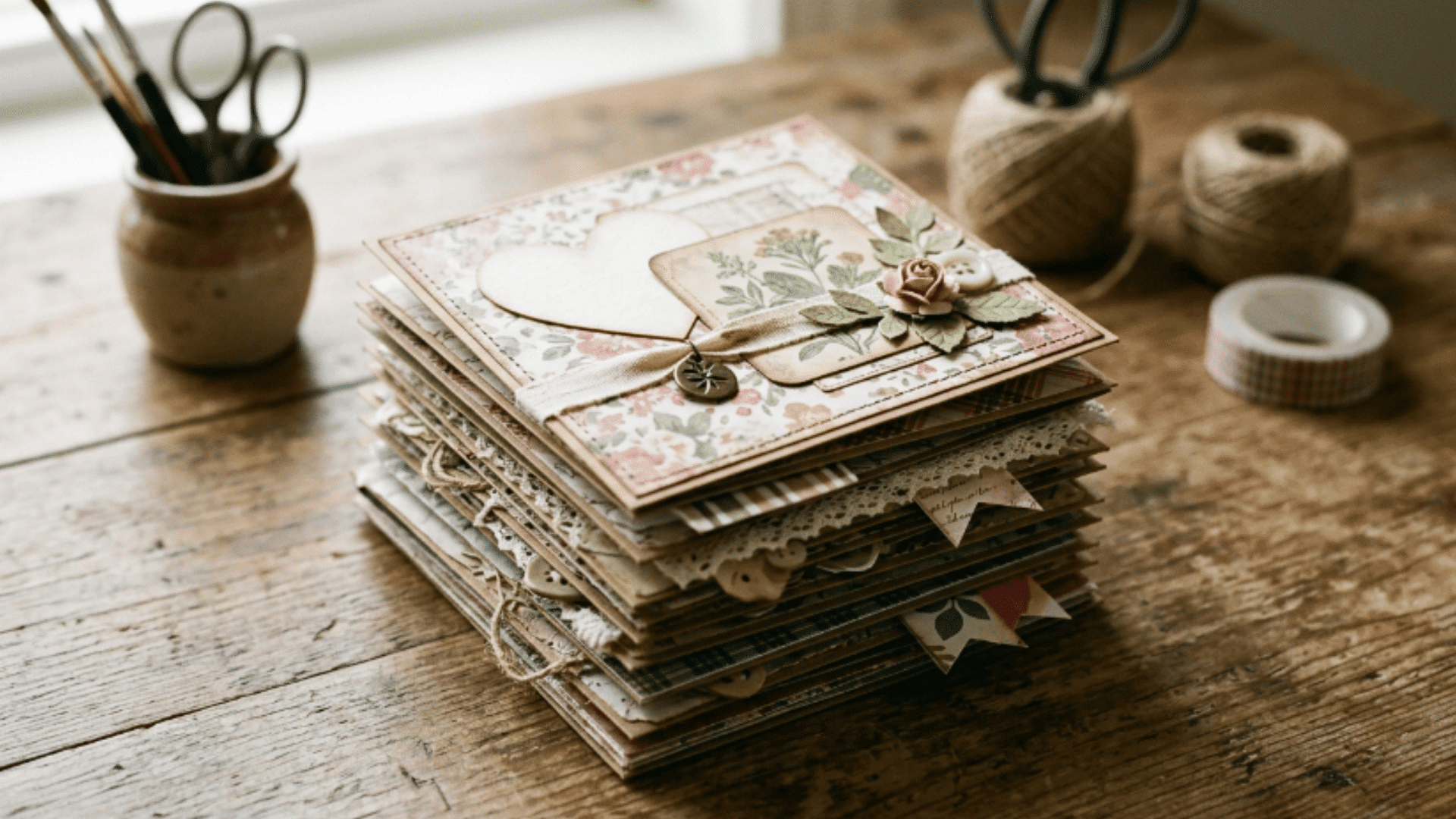
A mini scrapbook is a compact, creative way to preserve memories with nothing more than paper and glue. It is one of the most personal projects on this list and works well as a solo or group activity.
How to make it:
- Cut several pieces of cardstock to your chosen size; 15 x 15 cm is a popular mini format
- Print or draw small images and cut them to fit the pages
- Layer the images with strips of patterned paper, labels, and handwritten captions
- Add small details like paper stars, folded paper flowers, or cut-out frames between elements
- Stack the finished pages, punch two holes along one edge, and bind with binder rings or ribbon
Mistake to avoid: Leave enough space near the punched edge so photos and decorations do not interfere with the binding.
10. Paper Festival Decorations
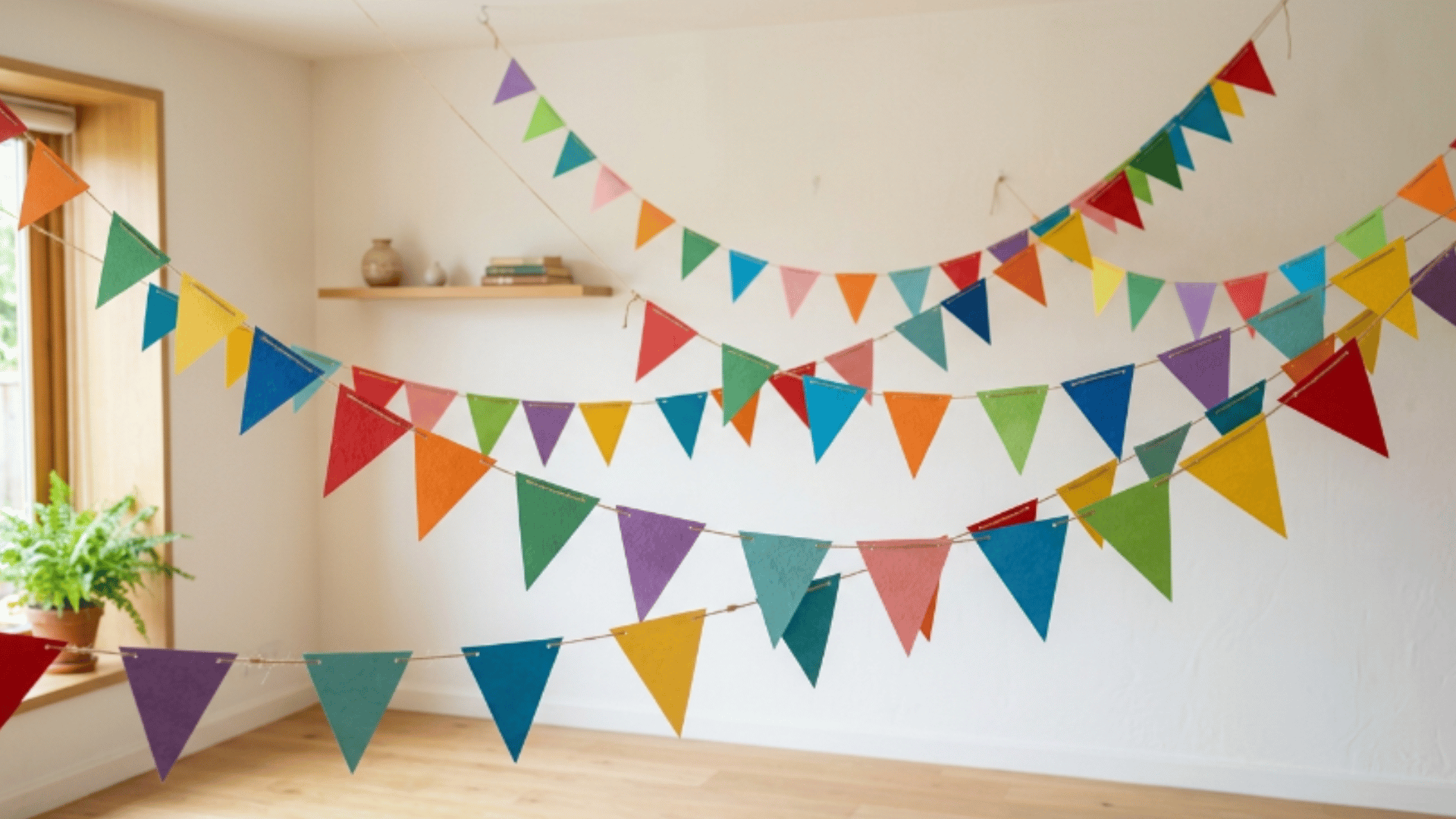
Paper garlands and buntings are a low-cost way to add color and life to any room or celebration. They are among the most satisfying paper crafts for kids on this list because the results are immediately visible once hung up.
How to make it:
- Cut sheets of paper or cardstock into triangles of equal size; roughly 12 cm wide and 15 cm tall works well
- Decorate each triangle with patterns, letters, or solid blocks of color on the front
- Fold about 1 cm of the wide top edge over a length of twine and glue it in place
- Space the triangles evenly along the string, leaving a few centimeters between each one
- Tie a loop at each end of the string so the garland can be hung easily across a room or doorway
Mistake to avoid: Measure the gaps between each triangle instead of estimating, or the bunting may appear uneven when displayed.
Tools and Materials Required to Make a Honeycomb Paper Craft
Gather these basic supplies before you begin so each step flows smoothly and is easy to follow.
| Item | Use |
|---|---|
| Cardstock paper | Used to make the mushroom layers |
| Precision craft glue | Used to glue the score lines and close the shape |
| Mini clips | Used to hold the mushroom shut while drying |
| Scissors | Used to cut the template by hand |
| Box or drawer with a 90-degree corner | Helps keep the stacked layers straight |
| Mushroom template file | Provides the correct shape and number of pieces |
How to Make a Honeycomb Paper Craft
This honeycomb paper mushroom is one of those easy crafts to do at home with paper, looking nice yet simple for kids and adults who enjoy paper crafts.
Step 1: Cut and Prepare All Pieces

Start by cutting out all the mushroom shapes from your cardstock using scissors or a cutting machine. Take your time while cutting so the edges stay neat and even.
Each piece will have score lines. Sort them into two piles based on where the score lines are placed. Keeping them organized at the start will make the next steps much easier to follow.
Step 2: Set up Your Work Area

Place a box, drawer, or any container with a firm 90° corner nearby. Make sure the surface is stable and easily accessible while working.
This helps keep the layers straight as you glue them together. Having this setup ready will help you avoid uneven stacking later on.
Step 3: Apply Glue to the First Piece

Take one piece from the first pile and apply a thin line of glue along the score lines. Follow the lines carefully so the glue is placed in the right spots. Keep the glue light to avoid wrinkles.
Too much glue can make the paper soft and harder to handle. Work on one piece at a time so the glue does not dry out before you layer the next piece.
Step 4: Layer the Second Piece

Pick a piece from the second pile and place it on top of the first one. Align the edges neatly so both pieces match as closely as possible.
Press it gently to help the glue stick without shifting the paper. Use the corner of your box to keep the layers even. Take a moment to check the alignment before pressing down fully.
Step 5: Repeat the Layering Process

Continue adding glue and alternating pieces from each pile. Stay consistent with the pattern so the structure builds correctly. Press each layer into the corner to keep the stack straight.
Keep going until all pieces are used. Try to maintain the same amount of glue on each piece so the layers bond evenly throughout.
Step 6: Shape the Honeycomb Structure

Once the glue has set, gently open the layers from the center. Move slowly so the paper spreads evenly without bending too much. Spread them evenly to form the honeycomb shape.
If any layers stick, carefully separate them without tearing. Hold the structure from both ends as you open it to keep the shape balanced.
Step 7: Secure the Mushroom

Apply glue along the outer edge of one side. Bring both ends together to form the full shape. Make sure the edges line up before pressing them together.
Use clips to hold it in place at the top, middle, and bottom. Let it dry for about 10 minutes, then remove the clips. Your mushroom is ready to display.
You can take a look at the full video below:
Why Paper Crafts are Great for Kids
Paper crafting offers children a way to learn, create, and stay busy using simple, easily found materials.
- Creativity: Children can choose colors, shapes, and designs to turn common paper into creative projects.
- Fine motor skills: Cutting, folding, drawing, and gluing all help develop hand control and finger movement.
- Promotes problem-solving: Kids learn how to put pieces together and how to fix small mistakes.
- Fun indoors: Paper crafts are a great activity for rainy days, quiet afternoons, and breaks in the classroom.
- Works as a low-cost hobby: Most projects only need paper, glue, scissors, and a few basic supplies.
Wrapping Up
These projects are proof that expensive materials or a fully stocked craft room are not needed to make something worth keeping.
A few sheets of paper and a bit of focused time are all it takes to create something that looks genuinely good.
Paper crafts for kids bring out a level of focus and creativity that is hard to find in other activities, and the finished results always give kids something to feel good about.
Every project on this list can be done at a comfortable pace, on any schedule, with materials already available at home. Loved this list? Save it and share it with someone who loves crafting.
Frequently Asked Questions
How Can Finished Paper Crafts Be Stored Safely?
Keep finished crafts in flat folders, clear boxes, or plastic sleeves. Delicate 3D crafts can be stored in separate containers to prevent crushing.
Can Old Newspapers and Magazines Be Used for Paper Crafts?
Yes, old newspapers, magazines, paper bags, and wrapping paper work well for collages, decorations, gift tags, and other recycled craft projects.
How Can Paper Crafts Be Made More Durable?
Use thicker paper, apply glue evenly, and cover flat crafts with clear contact paper. Laminating can also protect bookmarks, cards, and learning activities.