


If you’ve ever searched for Montessori tips online, you’ve probably seen the aesthetic. Neutral-toned playrooms, beige rugs, $200 wooden climbing arches, and shelves full of handcrafted toys that look like they belong in an art gallery.
It looks peaceful. But it also makes Montessori Schools feel like a rich parent’s club.
Here’s the ridiculous part: Maria Montessori started her first school back in 1907 in one of the poorest districts of Rome. She wasn’t shopping for designer toys. She built her whole approach around cheap, everyday items because she was working with working-class kids. The philosophy was never meant to be a high-end lifestyle brand. It was just a practical way to help kids figure things out for themselves.
You don’t need a massive budget to do this at home. You just need to look at your kitchen cabinets and laundry room from three feet off the ground.
1. Ditch the Toy Replicas for Real Stuff
Toddlers don’t actually care if something came from a toy store. If you put a noisy plastic toy vacuum next to a small real broom, nine times out of ten, your kid goes for the broom. They see you using real tools all day, and they want in on the action.
Instead of buying mini activity sets, just let them help with what you’re already doing:
- Laundry day is full of free puzzles. Dump your clean socks on the rug and let your toddler match the pairs. It forces them to look closely at patterns and colours, and it keeps them busy while you fold shirts.
- Set up a water station in the bath. Skip the fancy water tables. Hand them a small plastic measuring cup or a creamer pitcher with two cups while they’re in the tub. Let them pour back and forth. It keeps the mess contained and works on their hand-eye coordination.
- Make a “spill kit.” Put a cheap rag on a low hook where they can reach it. Next time they knock over a cup of milk, don’t jump in to fix it. Just point to the rag and let them wipe it up. It teaches them that mistakes aren’t a big deal—they’re just something you clean up and move on from.
2. Stop Being the Gatekeeper in Your Own House
The main goal of Montessori is pretty simple: make independence easy. When everything in your house is stored high up, you end up acting like a full-time doorman, opening cabinets and grabbing cups all day long.
A few small tweaks change that fast:
- Clear out one bottom shelf in your pantry. Put a low-profile water dispenser there along with a few small cups and healthy snacks. When your kid gets hungry, they don’t have to pull on your pant leg. They can just go get a snack.
- Move your hooks down. Stick a $3 Command hook at your toddler’s eye level by the front door. They can hang up their own jacket when you get back from the park. It might take them three minutes to hit the loop at first, but they’ll get it.
- Use a cheap step stool. You don’t need those giant $150 kitchen “towers” taking up half your walkway. A sturdy $10 plastic stool from the hardware store does the same job when they want to wash their hands or help wash apples.
3. Raid Your Kitchen Drawers for Motor Skill Games
Classroom materials are built to isolate one specific skill—like pinching, sorting, or balancing. You can set up the same physical challenges using stuff sitting in your kitchen right now.
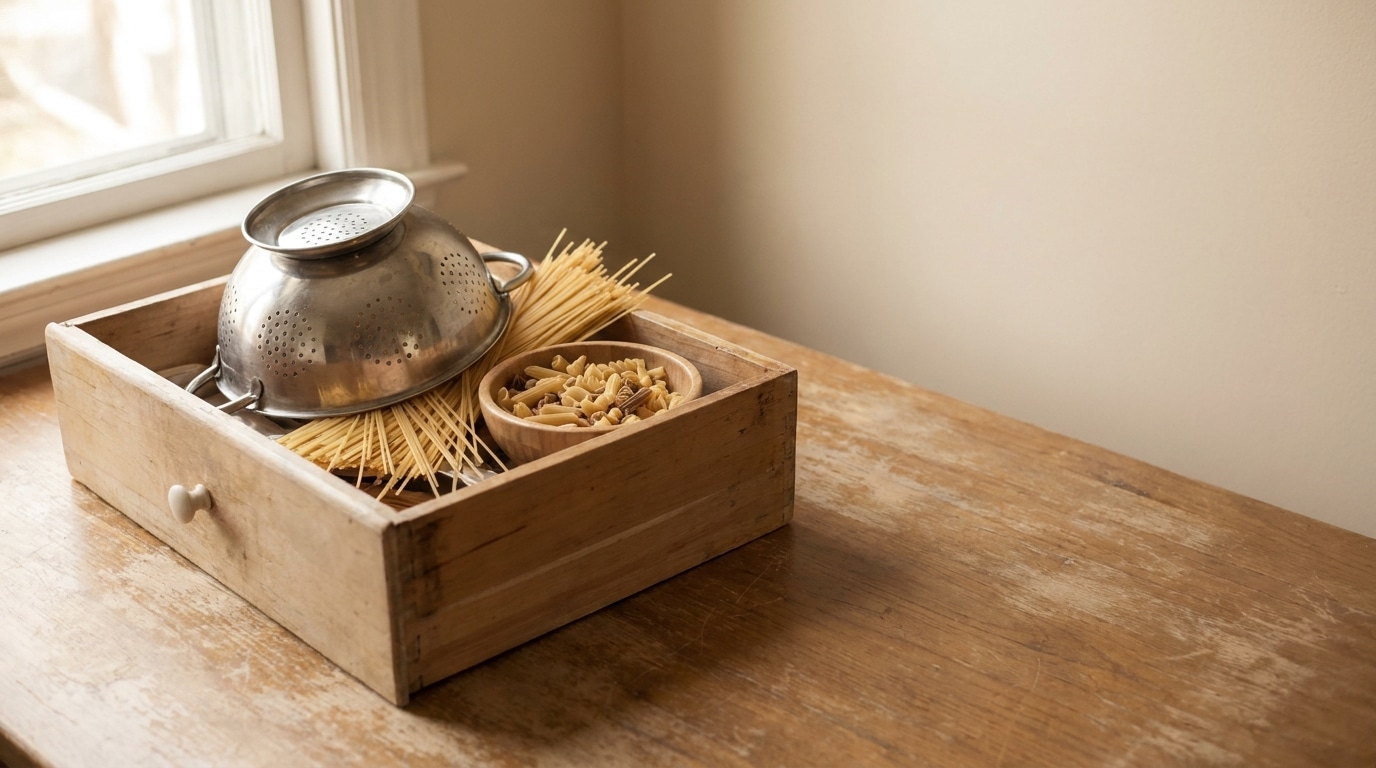
- Colander and dry spaghetti. Turn a metal strainer upside down on the table. Give your kid a handful of dry spaghetti or pipe cleaners and show them how to poke them through the little holes. It sounds basic, but it takes serious focus for a three-year-old.
- Tongs and ice cube trays. Put a pair of small kitchen tongs, an empty ice tray, and a bowl of pasta on a tray. Having them pick up pasta pieces with the tongs and drop them into the slots builds up the exact hand muscles they’ll need later to hold a pencil.
- The shoe box drop. Cut a few small slits in the cardboard lid of a shoe box. Give them jar lids, large buttons, or poker chips to push through the slots. Kids will sit there dropping things into that box twenty times in a row.
4. The Big Secret: Hide Half Your Toys
If your living room floor is covered in plastic blocks and cars, buying new wooden toys won’t fix the chaos. When kids have thirty choices staring at them, their brains get overloaded, and they end up wandering around bored.
The fix doesn’t cost a dime: rotate your stuff.
Put out four or five items on a low shelf. Box up everything else and throw it in a closet. Every two or three weeks, swap out two of the items on the shelf with things from the closet. When an old toy comes back out after a month in hiding, your kid will play with it like you just brought it home from the store today.
Wrapping Up
Montessori isn’t about buying an aesthetic. It’s about giving your kid the space and the trust to try things on their own.
If you want to see how these practical habits translate into a structured environment, look at how early childhood setups like the iLearn Montessori Pre-Casa program build real-world independence into their morning routines.
Start small. Clear out one low cabinet, hand your kid a rag, and let them take the lead. You’ll be surprised by how much they can do when you just get out of the way.