




A shower curtain can develop stains, soap marks, and odors sooner than expected because it is in constant contact with water and steam.
Knowing how to clean a shower curtain helps keep it in better condition without much effort. Different materials, like plastic and fabric, require slightly different care, but both can be cleaned at home with simple methods.
From machine washing to hand cleaning, a few easy steps are enough to handle most buildup. This blog shares practical ways to keep it fresh using everyday items.
Can You Clean Shower Curtains at Home?
Yes, most shower curtains can be cleaned at home, but the safest approach depends on the material, age, and condition of the curtain.
Before using any cleaning method, check the care label and look for signs of wear, such as cracking, peeling, weak seams, or heavy staining.
A curtain in good condition can usually handle gentle cleaning, while an older or damaged one may need extra care or replacement.
Learning how to clean plastic shower curtain materials correctly is especially important because excessive heat and rough handling can weaken them.
Start with mild cleaners and avoid strong heat or rough scrubbing, especially when the material is plastic or vinyl. If stains or odors return quickly after cleaning, it may mean the buildup is too deep to remove fully.
Before rehanging a freshly cleaned curtain, checking the shower curtain size and placement can also help prevent the bottom from sitting in excess water.
Identifying Your Shower Curtain Material
Checking the material first helps you avoid heat damage, shrinkage, cracking, or color fading during cleaning.
| Shower Curtain Material | How to Identify It | Cleaning Consideration |
|---|---|---|
|
Plastic |
Lightweight, smooth, waterproof, and slightly stiff with a crinkling sound |
Use mild cleaners, cool or warm water, and avoid high heat |
| Vinyl |
Thicker and softer than plastic with a flexible, waterproof surface |
Hand wash gently or use a delicate machine cycle if the label allows |
| Polyester |
Feels like fabric but dries quickly and resists water |
Usually machine washable on a gentle cycle with mild detergent |
| Cotton |
Soft, natural, and absorbent, often used with a separate liner |
Wash according to the label and avoid hot water to reduce shrinkage |
| Linen |
Textured, lightweight, and slightly rough with a natural fabric feel |
Use gentle washing and air-dry to limit shrinking and wrinkles |
How to Clean Shower Curtains Using Different Methods
Machine washing works well for many fabric curtains and some vinyl or plastic ones if the care label allows it. A gentle setup helps remove soap buildup and stains without damaging the material.
1. Machine Washing Method
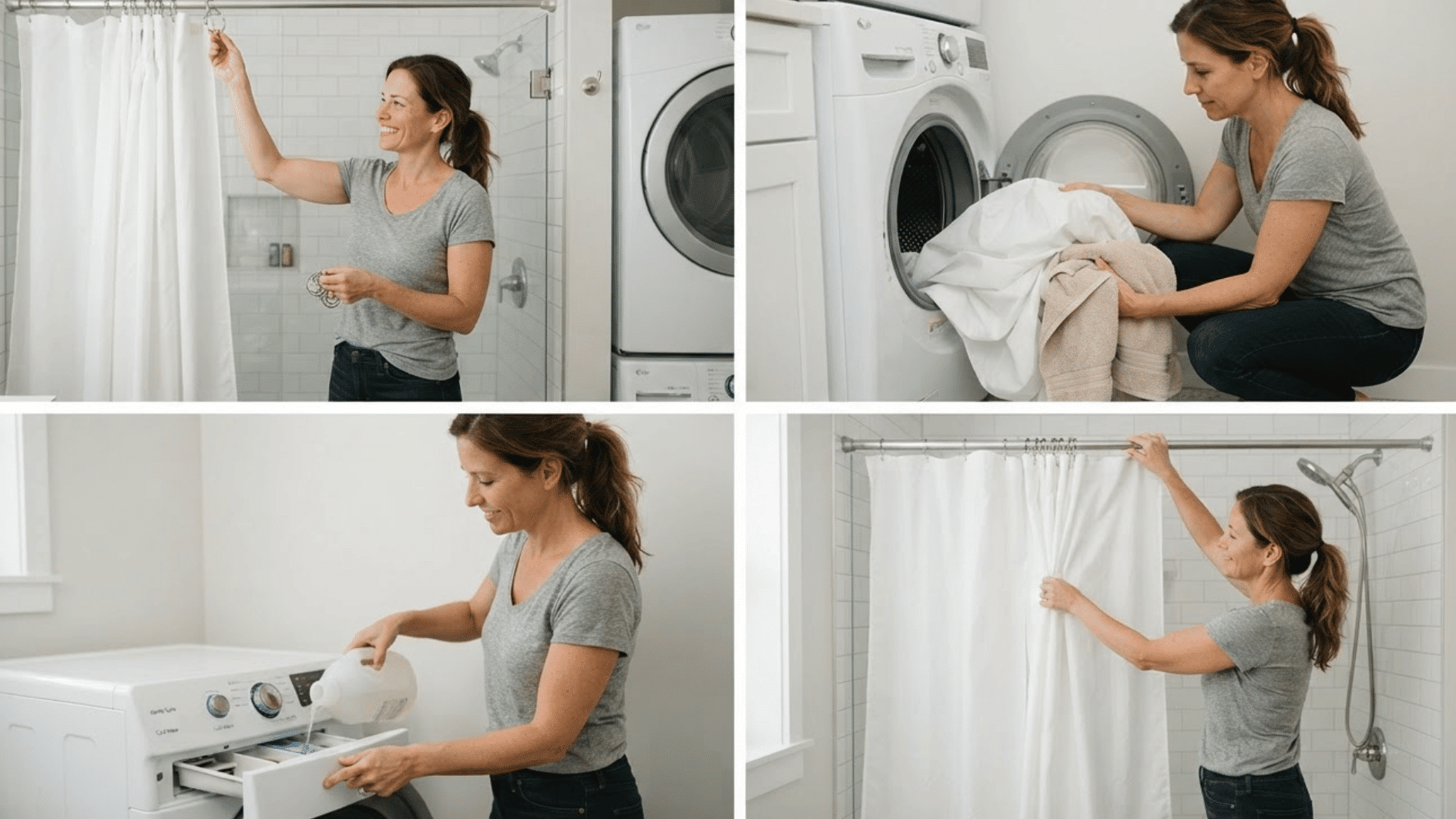
Machine washing suits fabric curtains and washable vinyl or plastic liners, clearing everyday grime, soap residue, and light stains. Always check the care label first, since some plastics need a gentler cycle to avoid warping or melting.
Materials required: Mild liquid detergent, 1–2 clean bath towels, and a washing machine with a gentle or delicate cycle setting.
Steps:
- Take the curtain down from the rod and remove all hooks, rings, or metal fittings.
- Load the curtain into the washer along with 1–2 bath towels, which help balance the load.
- Add a small amount of mild detergent, and use a gentle or delicate cycle with cold or warm water.
- After the cycle finishes, immediately shake out the curtain to release wrinkles and prevent it from sitting damp and folded.
- Rehang it on the rod right away, spreading it out fully so it air-dries evenly and doesn’t develop new mildew spots while still wet.
2. Hand Washing Method
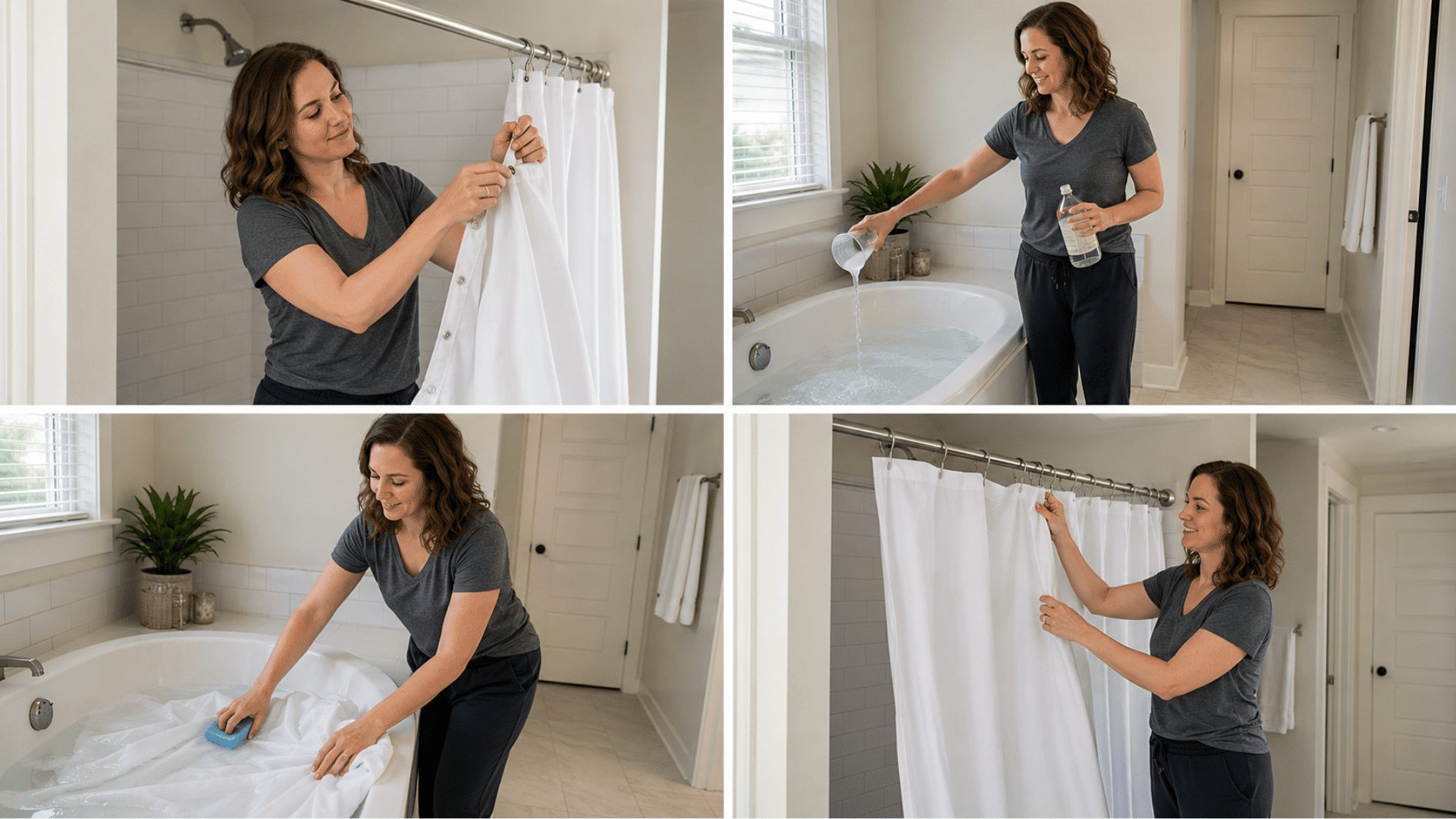
Hand washing is a safer choice for plastic or vinyl shower curtains that need extra care. It gives you better control while cleaning and helps remove soap buildup, stains, and mildew without stretching or damaging the material.
This method is particularly useful when learning how to clean plastic shower curtain surfaces that cannot safely go into a washing machine.
Materials required: Mild dish soap or white vinegar, warm water, a bathtub or large bucket, a soft sponge or microfiber cloth, and clean water for rinsing.
Steps:
- Take the curtain down from the rod and remove all hooks, rings, or metal fittings.
- Fill a bathtub or large bucket with warm water, then add a small amount of mild dish soap or white vinegar.
- Place the curtain in the water and gently wipe stained areas, folds, corners, and the lower section using a soft sponge or cloth.
- Drain the dirty water and rinse the curtain thoroughly with clean water until all soap, vinegar, and loosened residue are removed.
- Rehang the curtain on the rod immediately, spreading it out fully so it air-dries evenly and does not develop fresh mildew spots
3. Vinegar Cleaning Method
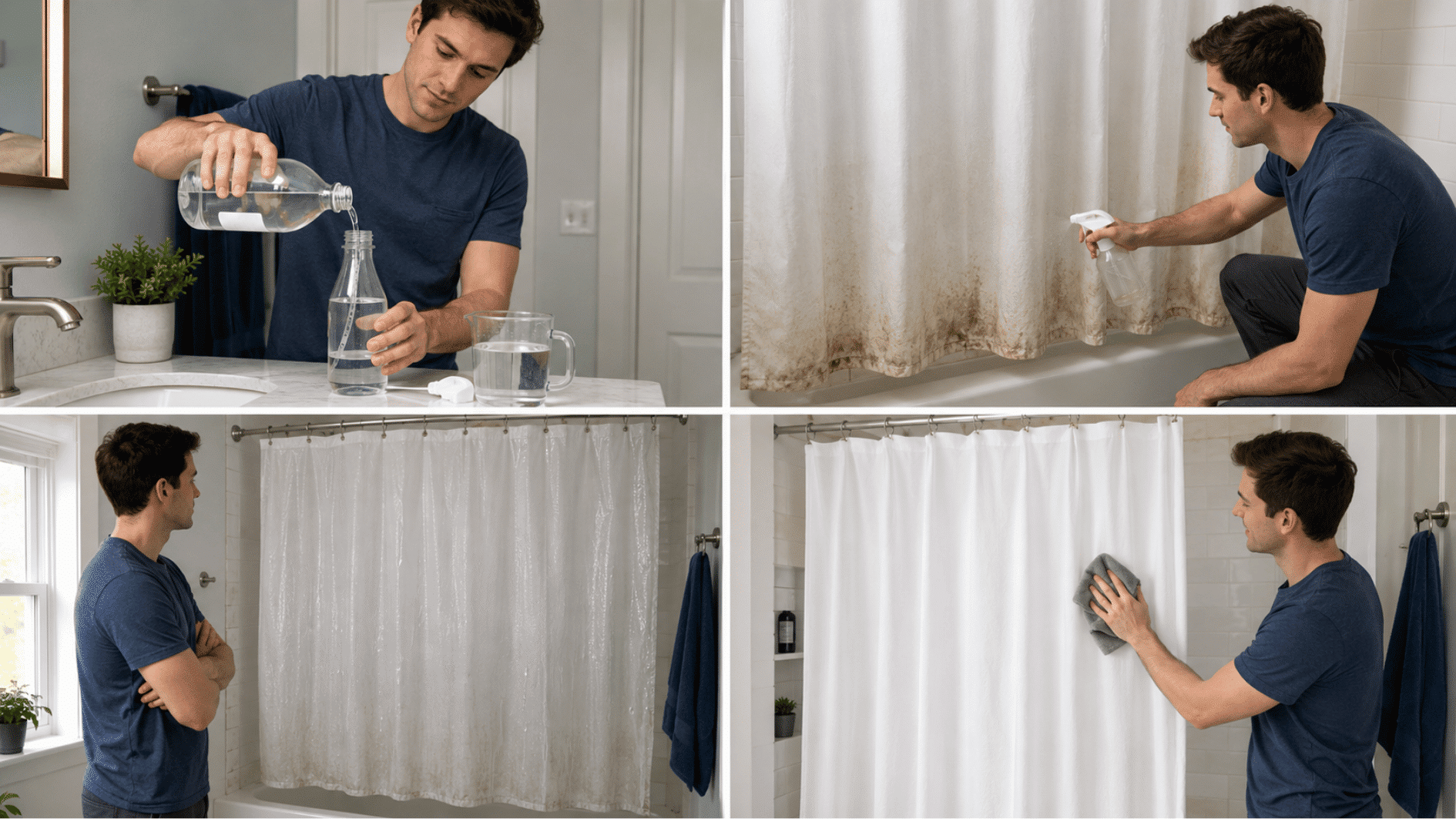
White vinegar is a simple cleaning option for removing soap scum, light stains, and mildew marks from plastic and fabric shower curtains. It helps soften buildup, making it easier to remove without using harsh cleaning products.
Materials required: White vinegar, warm water, a spray bottle, a soft cloth or sponge, and clean water for rinsing.
Steps:
- Mix equal parts white vinegar and warm water in a clean spray bottle.
- Spray the solution generously over stained areas, paying extra attention to folds, corners, seams, and the bottom section of the curtain.
- Leave the vinegar solution on the surface for 10–15 minutes so it has time to soften soap residue and mildew marks.
- Gently wipe the treated areas with a soft cloth or sponge, repeating the process on stubborn spots as needed.
- Rinse the curtain with clean water, then spread it fully open on the rod and allow it to air-dry completely.
4. Baking Soda Method
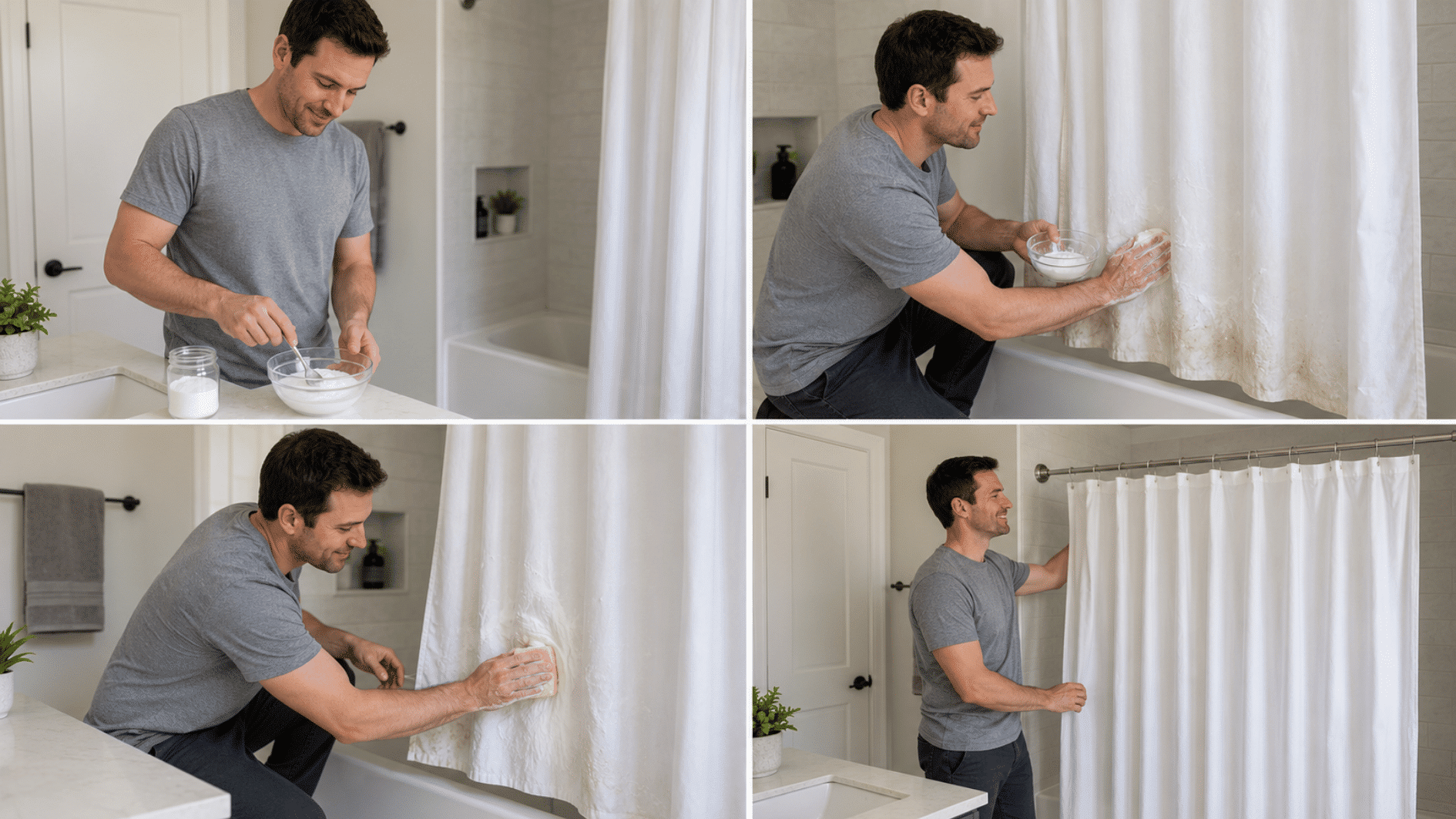
Baking soda works well for stubborn soap marks and deeper stains that may not come off during regular cleaning. Its mild scrubbing action helps loosen buildup while remaining gentle on most plastic, vinyl, and fabric curtain surfaces.
Materials required: Baking soda, water, a small bowl, a soft sponge or cloth, and clean water for rinsing.
Steps:
- Mix baking soda with a small amount of water in a bowl until it forms a smooth, spreadable paste.
- Apply the paste directly to stained areas, soap buildup, mildew marks, folds, and the lower edge of the curtain.
- Gently scrub the treated sections with a soft sponge or cloth, avoiding excessive pressure that could damage the material.
- Rinse the curtain thoroughly with clean water until all baking soda paste and loosened residue are removed.
- Spread the curtain out completely, and let it air-dry before closing or folding it.
What Causes Shower Curtain Stains and Odors?
Shower curtain stains and odors usually come from trapped moisture, soap residue, body oils, and poor airflow. Since the curtain stays close to water and steam, the lower section often remains damp longer than the rest.
Soap scum can leave cloudy marks, while minerals from hard water may create yellow or brown stains over time.
If the curtain stays folded or bunched up after a shower, moisture can collect in the creases, leading to mildew spots or a musty smell.
These issues are more common in bathrooms with weak ventilation. Opening the curtain after each shower and drying it properly can help slow buildup.
Bathrooms tend to accumulate the most grime in a home, and a deep-cleaning checklist helps ensure nothing gets missed during a thorough clean.
When to Replace Your Shower Curtain Instead of Cleaning It?
A shower curtain or liner does not always need another round of cleaning. Some signs show that replacing it is the better option for hygiene, function, and appearance.
| Sign | Clean or Replace? | Why |
|---|---|---|
| Light soap scum | Clean | Usually comes off with regular washing |
| Minor surface mildew | Clean first | May disappear with proper cleaning |
| Black, pink, or green spots remain | Replace | Growth may be deeply set |
| Persistent musty smell | Replace | Can signal trapped mold or bacteria |
| Pink-orange discoloration | Replace | Often linked to bacterial buildup |
| Rips or holes | Replace | Allows water to escape |
| Liner is 6–12 months old | Consider replacing | Humid conditions encourage buildup |
Drying and Maintenance Tips
Small habits after every shower can make a big difference in how long a curtain stays clean. These quick tips help reduce buildup, control moisture, and keep maintenance simple.
- Once a week, spray the bottom of the curtain with the vinegar mix and scrub lightly with a brush to remove buildup; don’t spray daily.
- Switch to body wash or a non-soap cleansing bar instead of bar soap, which reduces soap scum in the first place.
- Run the bathroom exhaust fan during and for about 30 minutes after every shower to clear excess moisture and keep mold from taking hold.
- Squeegee shower walls after each use, and fix any leaky faucets or showerheads promptly to prevent the standing water mold needs to grow.
- As a general rule: wash the curtain monthly, spot-clean or spray weekly, and give it a quick daily rinse-down for light upkeep.
Conclusion
Keeping your bathroom curtain in good condition does not take much effort once the right routine is in place.
Simple cleaning methods like machine washing, hand washing, and spot treatment can handle most stains and buildup at home.
Understanding how to clean a shower curtain helps make the process easier and more effective, no matter the material. Knowing how to clean plastic shower curtain surfaces gently can also reduce the risk of cracking, warping, or premature wear.
A few regular care habits also go a long way toward reducing the need for frequent deep cleaning. With consistent attention and the right steps, the curtain stays easier to maintain over time.
Try adding these methods to your routine and keep your bathroom space feeling fresher with less effort.
Frequently Asked Questions
How Long Does a Shower Curtain Take to Dry After Washing?
Most curtains take 2–6 hours to air dry, depending on ventilation and material thickness.
Can Hot Water Damage a Shower Curtain?
Yes, very hot water can weaken plastic or vinyl material over time. Cold or warm water is safer for regular cleaning.
Can You Iron a Fabric Shower Curtain?
Yes, but only on a low setting if the care label allows it, and never iron plastic or vinyl curtains.