

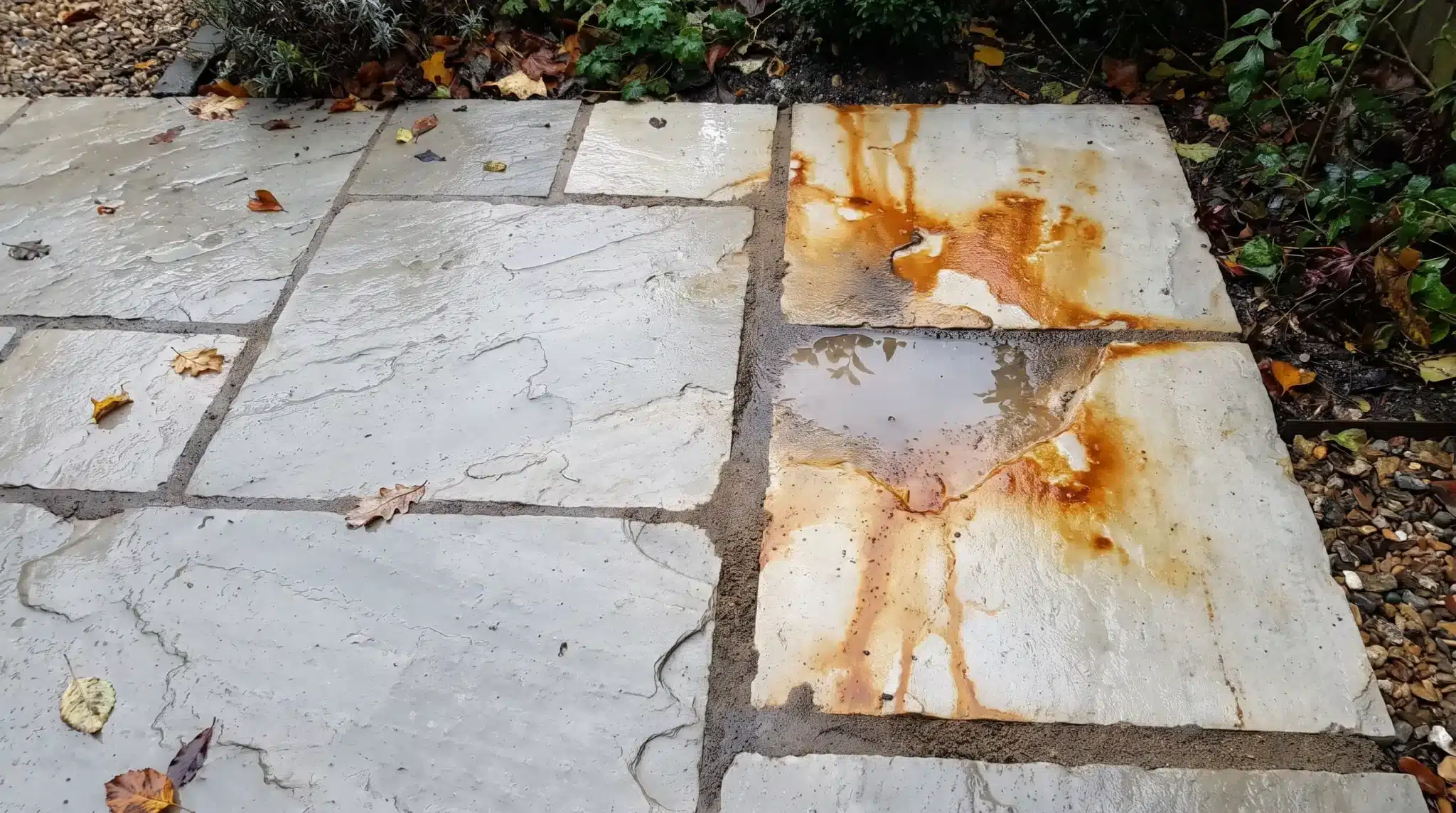
A newly installed stone patio can completely change the appearance of a backyard. The surface looks clean, the colours complement the surrounding garden, and everything seems ready for years of outdoor use. Then, after several rainstorms, strange orange or brown stains begin appearing across certain stones. The homeowner checks for rusty furniture, old tools, or metal planters but finds nothing that explains the discolouration.
These stains can be frustrating because their source is not always located where the marks appear. Rainwater may carry corrosion products from roofing components, gutters, or exterior metal fixtures before depositing them on the patio. Sometimes, the stone itself contains minerals that react with moisture and produce similar marks. Identifying the difference matters because cleaning the surface without correcting the actual cause may provide only temporary improvement.
Why Can Rust-Coloured Stains Appear Without Visible Metal Nearby?
Rust-coloured staining usually develops when iron-containing substances react with oxygen and moisture. The resulting deposits can appear orange, reddish-brown, or dark brown, depending on their composition and concentration.
However, the metal or mineral responsible for the staining does not have to be directly above the affected stone.
Rainwater Can Carry Staining Materials Across Surfaces
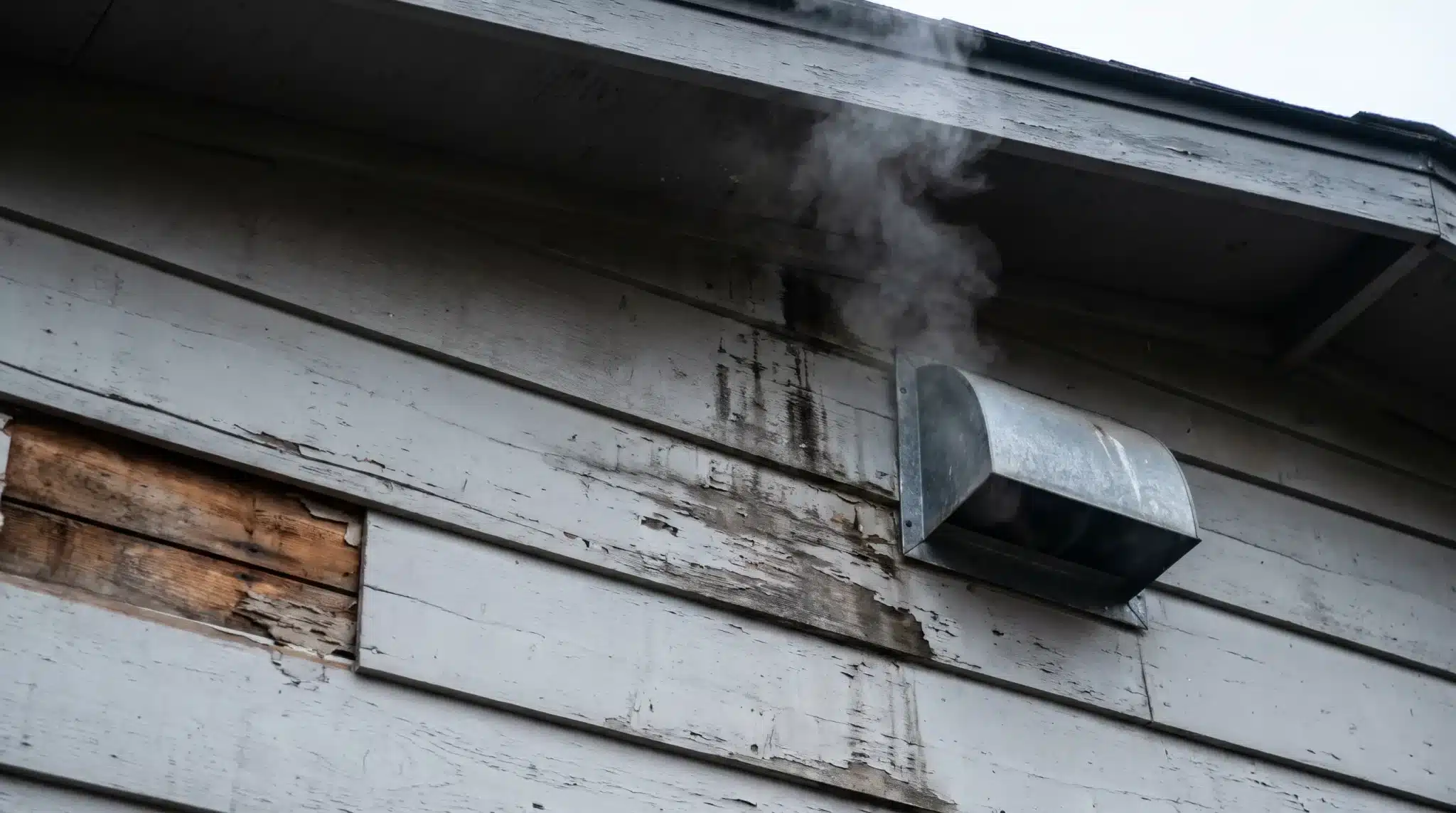
During rainfall, water travels across roofs, gutters, exterior walls, and other building components before reaching the ground.
Along the way, it can collect small particles or dissolved substances from materials exposed to the weather. If those substances contain iron, they may contribute to discolouration when deposited on a porous surface.
For example, water flowing past a corroded metal fastener may carry rust particles toward a drainage outlet. When that runoff reaches a light-coloured patio, the particles can settle in surface pores and joints.
Repeated rainfall may gradually make the staining more noticeable.
How Can Roofing Components Contribute to Patio Discolouration?
Roofing systems contain more than shingles or tiles. Flashing, fasteners, gutters, brackets, and other metal components help protect the building and manage rainwater.
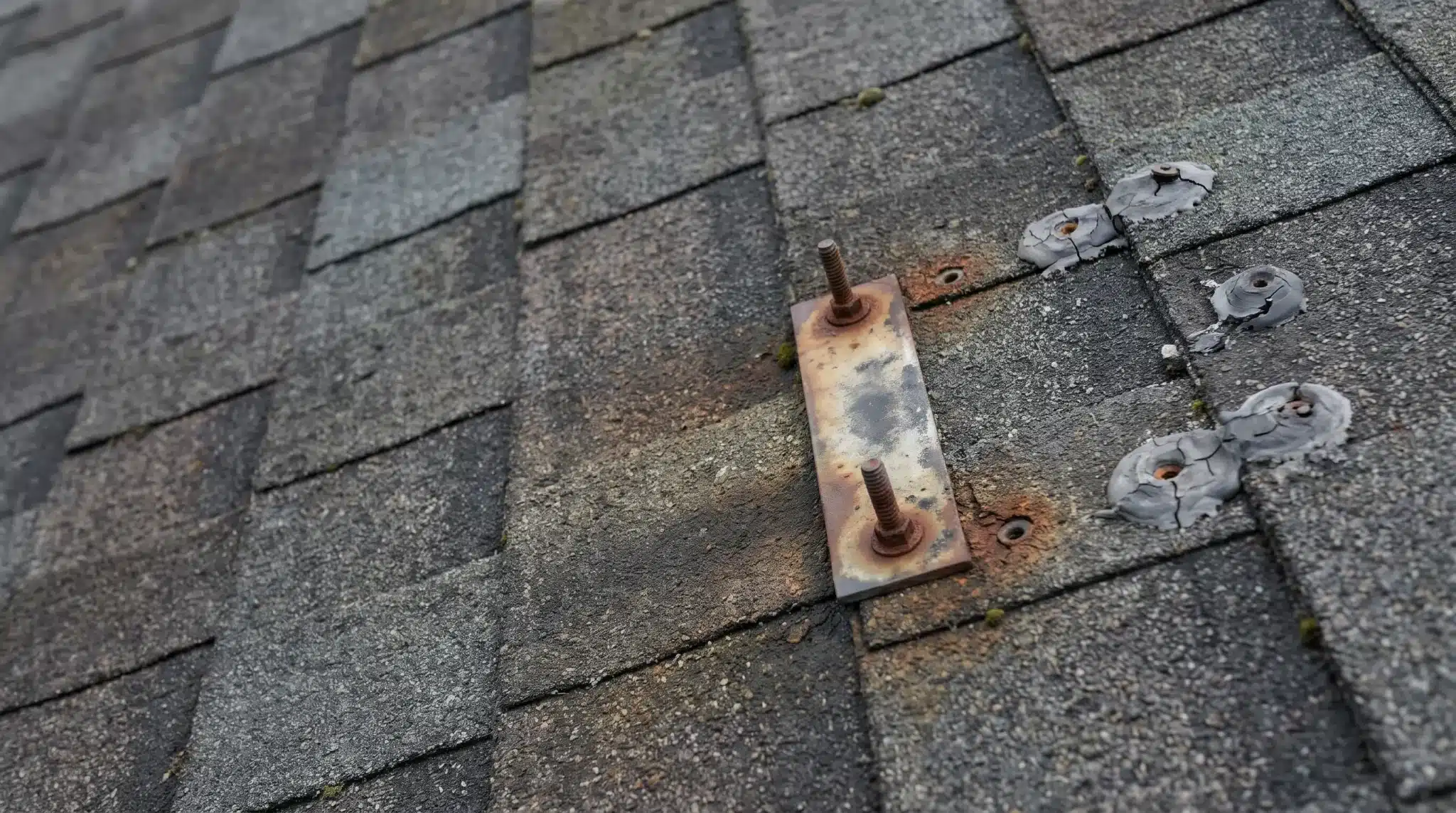
Many of these materials are manufactured with protective finishes, but exposed or damaged metal can corrode under suitable conditions.
Damaged Protective Coatings Can Expose Metal
Certain steel roofing accessories rely on protective coatings to limit corrosion.
If the coating becomes damaged during installation, maintenance, or prolonged exposure, the underlying metal may become vulnerable.
Corrosion around fastener heads, metal joints, or exposed edges can create rust-coloured deposits. Rainwater passing over these areas may carry some of the deposits toward lower surfaces.
The resulting stains might appear on a patio or walkway rather than directly beneath the corroded component.
Gutter Outlets Can Concentrate Contaminated Runoff
Gutters collect water from broad roof areas and channel it toward particular discharge points.
If rust particles or other staining substances enter the drainage system, they may become concentrated where water exits.
A downspout that empties near a stone patio can repeatedly expose the same area to these materials.
However, staining near a downspout does not prove that the gutter is corroding. The source could be another roofing component, sediment carried by runoff, or minerals already present in the stone.
Why Do Some Natural Stones Develop Orange Stains on Their Own?
Not every rust-coloured mark originates from roofing materials. Certain natural stones contain iron-bearing minerals that can contribute to staining when exposed to moisture and oxygen.
This can occur even when there are no corroding metal objects nearby.
Iron-Bearing Minerals Can React With Moisture
Natural stone forms through geological processes that can leave different minerals within the material.
Some sandstone, limestone, slate, and other stone varieties may contain iron-bearing minerals or inclusions.
Under suitable conditions, oxidation can produce orange or brown discolouration within or near the stone’s surface.
The appearance may be irregular, following natural mineral patterns rather than the direction of water runoff.
This distinction is useful because a cleaning treatment that removes deposits from outside the stone may not permanently eliminate staining caused by minerals within it.
Stone Porosity Can Influence Stain Visibility
Some stones absorb water more readily than others.
Porous surfaces may retain staining substances within small openings, making discolouration more difficult to remove.
A polished or densely textured surface may behave differently from rough, naturally split stone.
The specific material, finish, and exposure conditions influence how noticeable the staining becomes.
Can Patio Layout Make Rust-Coloured Staining More Noticeable?
The location of a patio affects where rainwater travels and how long moisture remains on the surface.
A well-chosen stone can still develop staining problems when runoff repeatedly concentrates in certain locations.
Low Spots Can Collect Staining Deposits
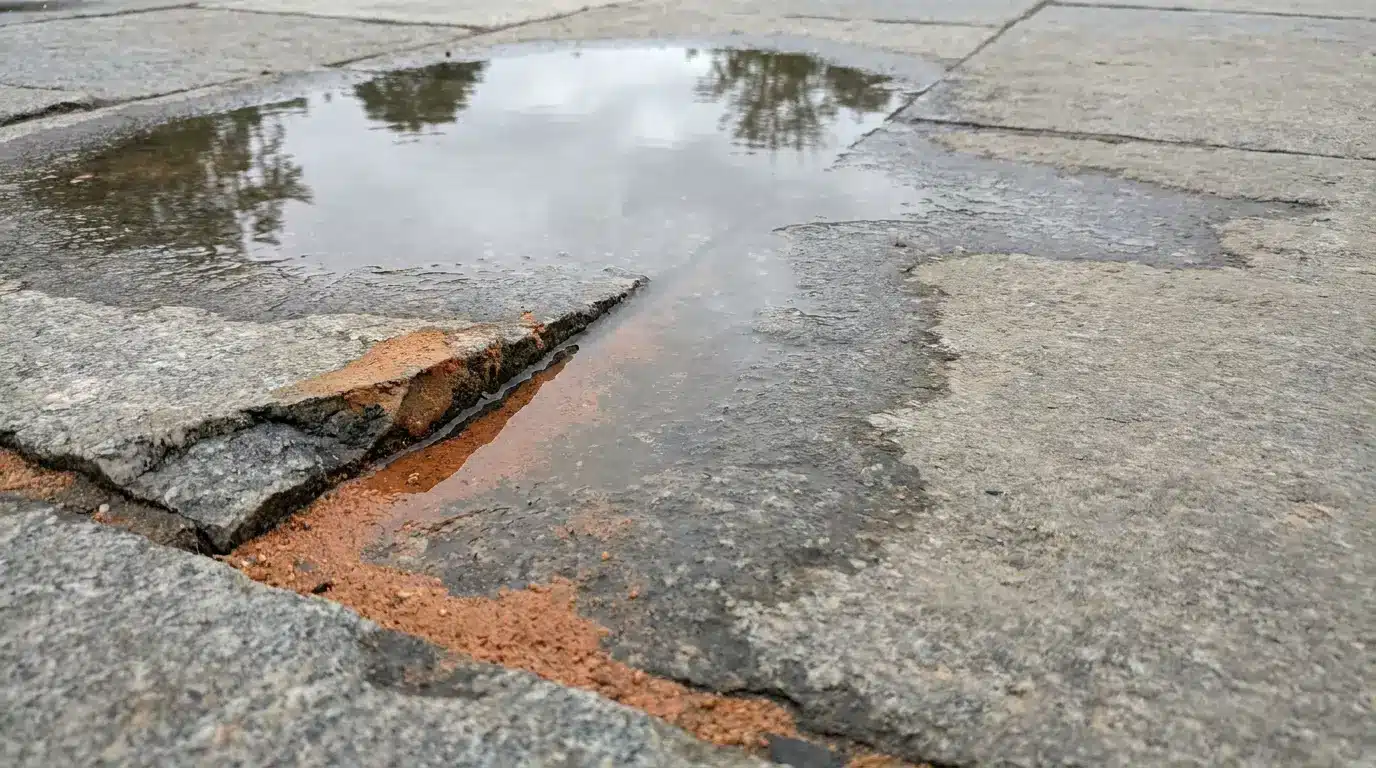
Water flowing across a patio may carry sediment and mineral particles toward shallow depressions.
As the water evaporates, some of these materials remain behind.
Over several rainfall events, deposits can accumulate in the same locations and create noticeable discolouration.
During landscaping projects, the relationship between finished surface levels, nearby drainage outlets, and surrounding ground conditions deserves attention. A patio’s grading should allow water to move toward suitable drainage areas without repeatedly collecting against the house or across vulnerable stone surfaces.
Joints and Textured Areas Can Hold Residue
The spaces between paving stones may collect particles carried by runoff.
Rough stone finishes can also trap fine deposits in small surface irregularities.
These conditions do not necessarily cause corrosion, but they can make existing staining substances more visible and difficult to remove.
Observing where deposits gather after rainfall may help identify the direction from which the water arrives.
Why Do Rust-Coloured Stains Return After Cleaning?
A homeowner might scrub a stained patio and notice an immediate improvement. However, the same marks may return after the next heavy rain.
This often happens because cleaning addresses the visible deposits without removing their source.
Surface Cleaning Does Not Stop New Deposits
If water continues passing over a corroded component, fresh particles may reach the patio whenever it rains.
Even a thoroughly cleaned surface can become discoloured again.
The pattern of recurring stains can provide useful evidence. Marks that repeatedly appear along the same runoff path may indicate a continuing external source.
By comparison, irregular discolouration within individual stones may suggest mineral activity inside the material.
Neither pattern provides a definitive diagnosis on its own, but both can guide further investigation.
How Can Roofing Material Selection Influence Runoff Staining?
Roofing accessories experience repeated exposure to rainwater, temperature changes, and environmental conditions.
Selecting appropriate materials can reduce the likelihood of premature corrosion and the deposits that sometimes accompany it.
Metal Compatibility Deserves Attention
Different metals can behave differently when used together, particularly in the presence of moisture.
Certain combinations can contribute to galvanic corrosion when the conditions for an electrochemical reaction are present.
Protective coatings, fastener materials, and manufacturer compatibility requirements should therefore be considered when replacing roof-edge components.
Contractors reviewing Roofing Supplier services may need product specifications for flashing, gutters, fasteners, and related accessories to confirm that selected materials suit the intended roofing assembly.
Product selection should account for compatibility and installation requirements rather than appearance or availability alone.
Protective Finishes Have Practical Limits
Coated metal components can provide good corrosion resistance when installed and maintained properly.
However, cutting, scratching, or using incompatible fasteners may create vulnerable areas.
Manufacturer instructions often describe suitable fastening methods, material combinations, and handling precautions.
Following those requirements can reduce avoidable deterioration that may otherwise affect both the roofing system and surrounding exterior surfaces.
How Can Homeowners Identify Where the Staining Comes From?
Finding the source requires examining how water moves around the property rather than focusing exclusively on the stained patio.
A useful starting point is observing the surface after rainfall.
Look for Patterns That Follow Water Movement
Stains appearing in narrow streaks beneath a drainage outlet may suggest that runoff carries the discolouring material.
Marks concentrated on isolated stones, particularly where no obvious runoff path exists, may point toward the stone’s mineral composition.
Homeowners can also look for visible corrosion on accessible metal features from ground level.
Climbing onto a roof or leaning over gutters to investigate staining is unnecessary and potentially dangerous. Suspected roof-related sources should be examined by an appropriately qualified professional.
Photographs taken after different rainfall events can help document whether the pattern is changing.
What Cleaning Methods Can Damage Natural Stone?
Rust-coloured stains may tempt homeowners to use strong household cleaners, but some cleaning products can permanently affect natural stone.
Acidic substances are particularly concerning for calcium-based stones such as limestone and marble.
These materials can react with acids, potentially causing etching, dullness, or surface damage.
Aggressive pressure washing can also disturb joints or damage softer stone finishes when excessive pressure or unsuitable equipment is used.
A cleaner marketed for rust removal is not automatically appropriate for every patio material.
Before applying a treatment, homeowners should identify the stone type, check the manufacturer’s care recommendations, and test an approved product in a small, inconspicuous area.
Persistent staining may require advice from a stone-care professional who understands the material and the likely source of discolouration.
What Changes Can Prevent the Stains From Returning?
The appropriate solution depends on whether the staining originates from exterior runoff or the stone itself.
If a corroded roof component is responsible, repairing or replacing the affected material may reduce further deposits.
A drainage outlet that repeatedly directs contaminated water across the patio may also require adjustment, provided the new discharge arrangement manages water safely.
Where the stone contains iron-bearing minerals, preventing all future discolouration may be more difficult.
Some stone-specific treatments may reduce moisture absorption or make cleaning easier, but sealers do not eliminate internal mineral reactions and may be unsuitable for certain materials.
Homeowners should avoid applying coatings without checking compatibility, surface preparation requirements, and potential changes to the stone’s appearance.
Conclusion
Rust-coloured stains on a stone patio do not always originate from an obvious rusty object. Rainwater can transport corrosion products from distant exterior components, while certain natural stones may develop similar discolouration through their own mineral composition.
The location and pattern of the marks can provide clues, but identifying the source is more useful than repeatedly cleaning the same surface.
Examining runoff routes, checking accessible exterior components, and choosing cleaning methods suited to the stone can prevent unnecessary damage. When the underlying cause is addressed, homeowners have a much better chance of preserving the appearance of their outdoor surfaces without relying on temporary fixes.