



The main difference is the supply voltage an appliance is designed to use. In U.S. homes, 120V powers most everyday electronics and many plug-in appliances, while 240V commonly supplies larger heating equipment and other demanding loads.
The advantage of 240V is that it can deliver the same power with less current. It does not automatically mean twice the performance, half the energy consumption, or compatibility with a standard household outlet. The appliance’s electrical rating determines the supply it needs.
Why Do Homes Use Both 120V and 240V?
A typical U.S. home receives 120/240V split-phase service. Each of the two hot conductors provides approximately 120V relative to neutral; the voltage between the two hot conductors is approximately 240V.
This arrangement supports different electrical demands within the same home.
Refrigerators, televisions, coffee makers, and many countertop appliances commonly use 120V. Conventional full-size electric dryers, electric ranges, and many electric water heaters commonly require 240V.
These are typical applications, not rules for every product. Appliance design matters: a gas dryer and an electric dryer can have different electrical requirements, despite performing the same household task.
A 120V appliance can also draw substantial power. A portable heater may place a significant load on its circuit, even though its plug fits a familiar household receptacle. Voltage alone does not tell you whether several appliances can safely share that circuit.
Does 240V Mean More Power or Lower Electricity Use?
Voltage, current, and power describe different things. For a simple resistive load, such as an electric heating element:
Power in watts = voltage × current
Consider two hypothetical heaters, each designed to produce 1,500W at its specified supply voltage:
- The 120V version draws approximately 12.5A.
- The 240V version draws approximately 6.25A.
Both deliver the same heating power. This comparison assumes two correctly rated heaters, each connected to its intended supply—not one heater being moved between incompatible voltages.
The lower current at 240V makes higher-power equipment more practical to supply. It can also reduce losses in wiring when other conditions are equal. However, circuit and wire sizing still depend on the actual load and installation requirements.
What Does That Mean for Your Electricity Bill?
Energy consumption depends on power over time.
If either 1,500W heater operates continuously for one hour, it uses 1.5kWh at the appliance. The 240V version does not consume half as much electricity simply because it draws half as many amps.
Actual appliance efficiency, controls, and operating time can change the comparison. A higher-powered heater may warm something faster, for example, but that advantage comes from its heating output. The voltage label by itself does not establish how much energy the appliance needs to complete a task.
How to Read an Appliance’s Voltage Rating
The electrical label and installation instructions are more useful than the appliance’s size or plug appearance. Look for the input rating, which identifies the supply the equipment accepts.
|
Example marking |
What it tells you |
|
120V AC, 60Hz |
The appliance is intended for a nominal 120V AC supply at the stated frequency. |
|
240V AC, 60Hz |
It requires a suitable 240V supply; a normal 120V outlet is insufficient. |
| Input: 100–240V AC, 50/60Hz |
The input accepts the stated voltage range and either listed frequency, subject to its other connection requirements. |
| 120/240V on a dryer or range |
It commonly indicates that different internal components require both voltages from the supply. It does not necessarily mean either voltage can be used independently. |
That last distinction is particularly useful. An electric dryer may use 240V for its heating element and 120V for its motor or controls. Its drum might turn when part of the supply is missing, while the heater remains off. Seeing the appliance turn on therefore does not prove that it has the correct supply.
A wide-range electronic power adapter works differently. An adapter labeled “100–240V” is designed to accept inputs throughout that range. Its separate output marking—perhaps a much lower DC voltage—describes what it sends to the connected device, not what the wall outlet should provide.
Can You Use an Adapter Between 120V and 240V?
A basic plug adapter changes the physical connection. It does not change the supply voltage.
Connecting a 120V-only appliance to 240V can damage it and create a fire hazard. Supplying 120V to a 240V-only appliance may prevent it from starting or operating correctly; it is not a reliable way to run the appliance at reduced power.
A voltage transformer can change voltage, but selecting one requires more than matching the two voltage numbers. Its capacity must suit the load, including starting demand where relevant. It also does not automatically change frequency or provide every connection a mixed 120/240V appliance needs.
For permanent household appliances, the appropriate solution is a circuit that meets the manufacturer’s installation requirements. Changing the receptacle face alone does not establish a suitable supply.
What This Means When Choosing Backup Power
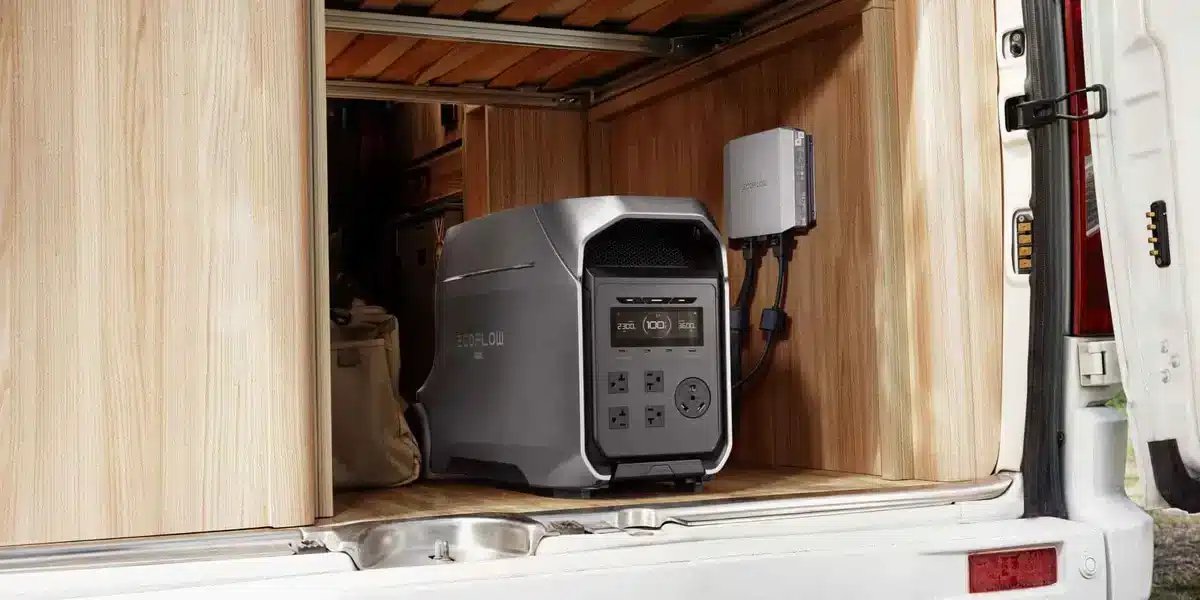
The same compatibility check applies when powering appliances from a power station. A high wattage rating does not guarantee 240V output. Voltage support and output capacity are separate specifications.
For a 240V appliance, confirm that the system provides the required voltage through an appropriate connection. For an appliance requiring both 120V and 240V, confirm the required split-phase supply and neutral arrangement as well.
Then check continuous power, starting demand, and the rating of the specific outlet. A system’s total output rating may exceed what one receptacle can provide.
Battery capacity answers a different question: how long the appliance can run. Adding stored energy will not correct an incompatible output voltage.
Conclusion
Choose an appliance and its power source as a compatible pair. When both 120V and 240V versions are available, compare their actual performance, energy use, and installation requirements. Higher voltage is useful for delivering substantial power at lower current, but it is not a general measure of appliance quality or efficiency.