
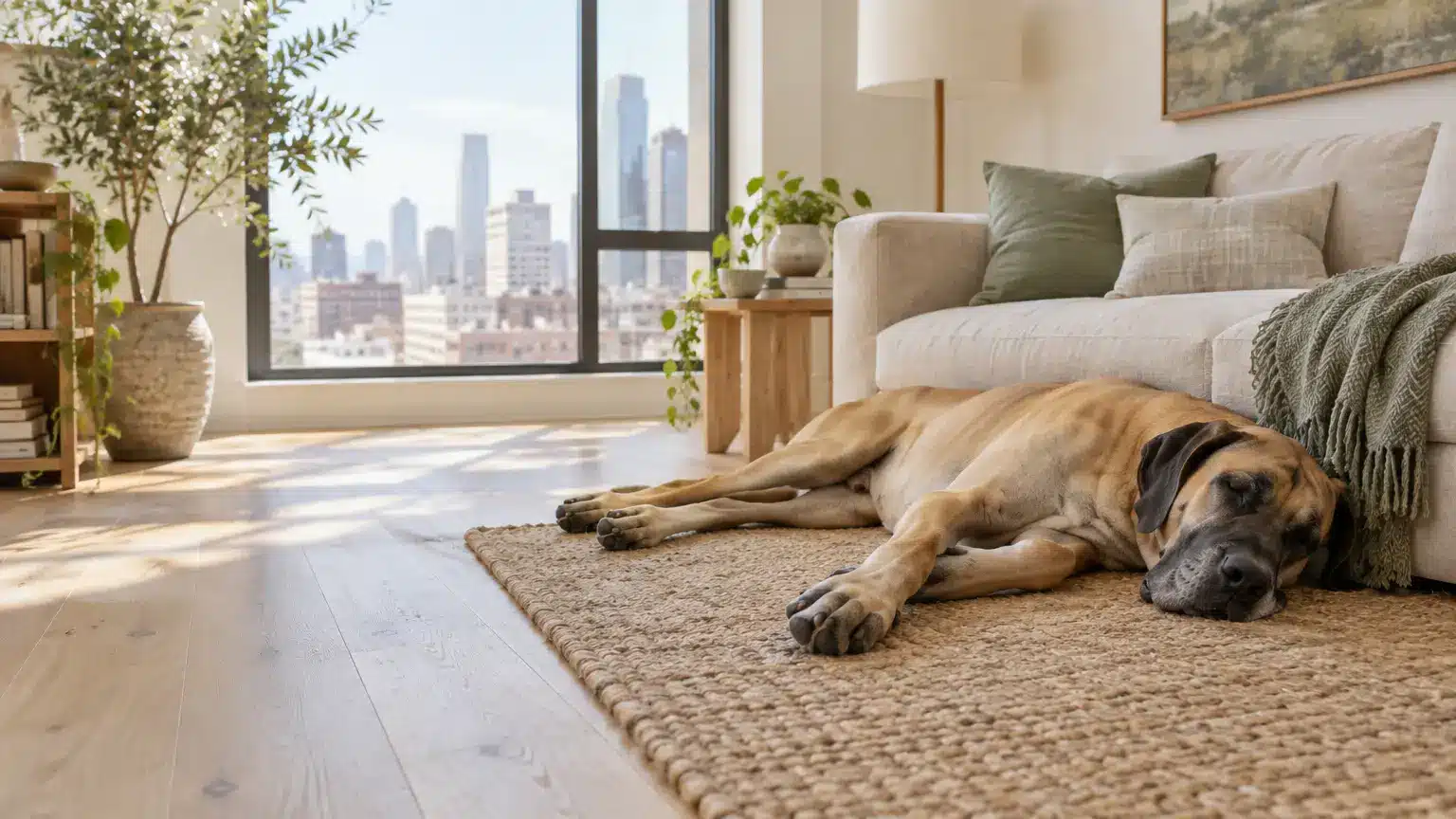
There’s a common myth that apartments are not suitable for larger dogs, but we’re here to clear the air about that. More than size, factors like temperament, noise tendencies, and energy of the dog play a bigger role.
Here’s a look at the best large dogs for apartments and why some of the biggest breeds out there are surprisingly easy roommates.
Why Size Isn’t the Real Issue
It’s natural to assume a larger dog means the problems associated with it would be equally large, but that could not be further from the truth.
Consider a hyper 25-pound terrier that barks at every hallway noise, versus a 90-pound dog that naps through most of the day, and you’d get a general idea of what we’re talking about.
The traits that matter for apartment life are:
- Low-to-moderate energy indoors: a dog that’s content to lounge once its exercise needs are met.
- Quiet or infrequent barking: thin walls and close neighbors don’t forgive vocal breeds.
- Good manners with strangers: hallways, elevators, and shared entryways mean frequent encounters with neighbors and their pets.
- Manageable exercise needs: large doesn’t have to mean high-maintenance, but you do need a realistic walking routine.
With those criteria in mind, here are the large breeds that consistently do well in apartments.
1. Greyhound
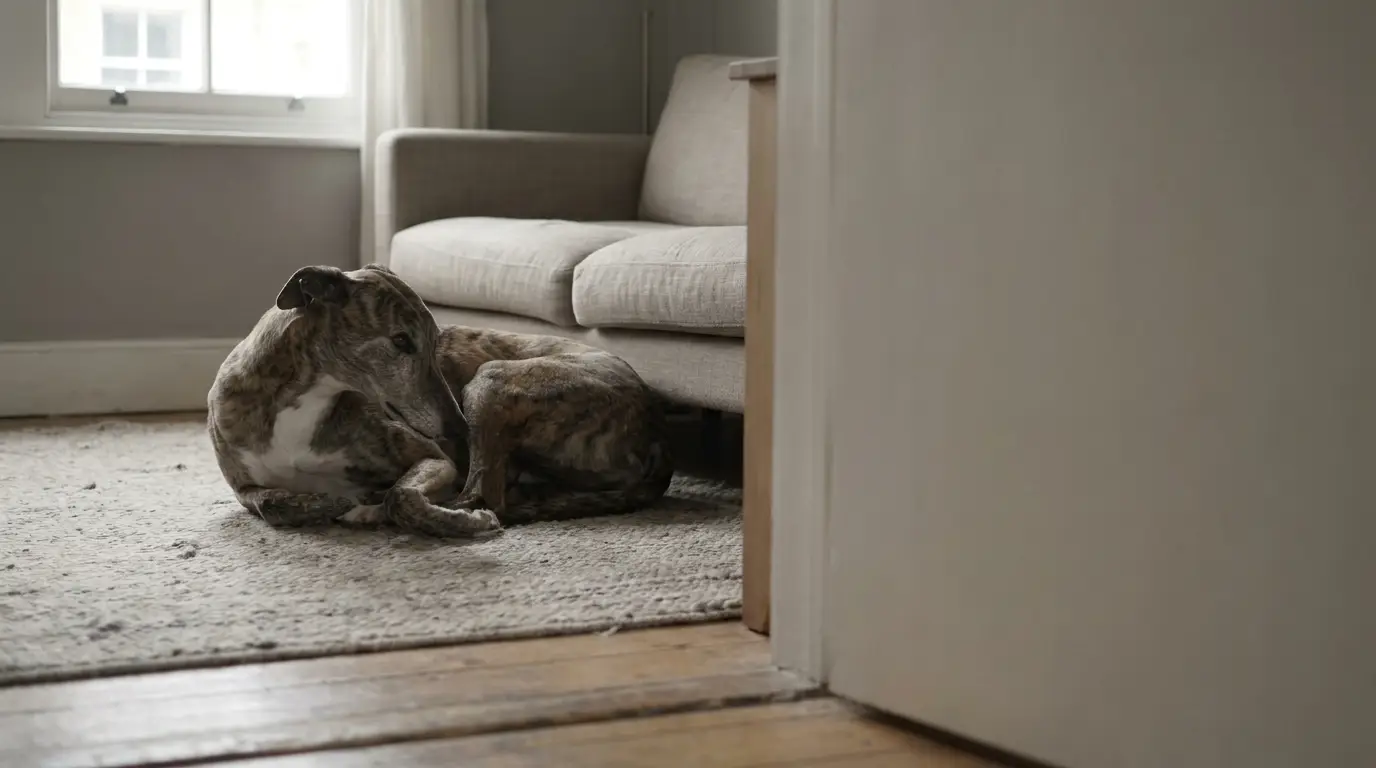
These “45 mph couch potatoes” have done enough (or not) to earn their nicknames, and it’s safe to say it is well deserved. Despite their racing pedigree, greyhounds are surprisingly low-energy indoors, needing only a couple of short walks or a brief sprint session to stay satisfied.
They’re quiet, clean, and generally indifferent to hallway noise, and are about as low-maintenance as a large breed gets.
2. Great Dane
Great Danes are often called “gentle giants” for good reason. While their size suggests otherwise, they are typically calm, affectionate, and do not need constant activity.
Their exercise requirements are moderate, and many owners find their dogs are perfectly happy curling up in a corner rather than needing room to run.
3. Basset Hound
Basset hounds are large-bodied dogs, but their laid-back, low-energy nature makes them well-suited to smaller living spaces.
They don’t bark too much under normal circumstances, but their distinctive bay when they get going is worth considering if you share thin walls.
4. Mastiff
Mastiffs are enormous, but their personality couldn’t be further from demanding. They’re calm, loyal, and content with modest daily walks.
Their biggest apartment consideration isn’t energy, but it’s making sure your space and lease can accommodate a dog that may weigh well over 150 pounds.
5. Bernese Mountain Dog
Bernese Mountain Dogs are affectionate, easygoing, and generally well-mannered indoors. They do best in climate-controlled environments (their thick coat is built for cold weather), which actually makes an air-conditioned apartment a comfortable fit. They need daily exercise but aren’t hyperactive by nature.
6. Irish Wolfhound
Similar in spirit to the greyhound, Irish wolfhounds are surprisingly gentle and low-key indoors despite their massive frame. They’re calm, quiet, and tend to bond closely with their family, making them better suited to apartment life than their size would suggest.
Best Large Dogs for Apartments: What to Consider Beyond Breed
Breed tendencies are a helpful starting point, but a few practical factors matter just as much:
- Check your lease’s weight and breed restrictions before falling in love with a specific dog, as many buildings cap weight regardless of temperament.
- Commit to daily walks, even with low-energy breeds. A short walk indoors isn’t a substitute for real time outside.
- Soundproof where you can. Rugs and furniture placement help muffle the sound of a large dog moving around for downstairs neighbors.
- Meet the individual dog, not just the breed. Temperament varies, and a calm parent often (though not always) means a calmer puppy.
Finding the Right Large Breed Puppy
If you’ve settled on a breed and you’re ready to start the search, working with a reputable, local source makes the process easier and gives you a better sense of the dog’s early temperament.
For anyone based in the city, Dog Academy’s New York puppy listings are a solid starting point for browsing available litters from breeders in the area.
Best Large Dogs for Apartments: Is It Really Possible?
The best large dogs for apartments aren’t defined by their size, but by temperament, noise level, and how much exercise actually keeps them content.
Greyhounds, Great Danes, mastiffs, and similarly easy-going giants prove that a small space and a big dog aren’t mutually exclusive. So long as you’re realistic about the commitment involved and choose a breed whose personality matches your lifestyle.