

Running out of black paint mid-painting is a frustration every artist knows too well. Knowing how to make black paint from an existing palette is a total game-changer.
Mixing black is far easier than it sounds, and any painter can do it. By understanding the color wheel, you can combine colors to create rich, deep blacks without ever running to the store.
And for those who have wondered what two colors make black, the answer might be surprising.
Why Black Paint is Not a Single Color
Most painters assume black is just black, but that thinking can hold your art back. True black is formed when all light is absorbed, meaning no single pigment can fully capture it.
This is exactly why learning how to make black paint opens up a whole new level of depth in your work. Store-bought black, by contrast, often looks flat and lifeless on the canvas.
Every mixed black carries an undertone. Some lean warm and brownish, others cool and blue, and a few edge toward green.
Those undertones are what give a painting life. Learning what two colors make black hands you real control over mood and depth.
How to Make Black Paint Using Primary Colors
Primary colors red, blue, and yellow are the building blocks of the color wheel and the simplest starting point for mixing black.
1. Red and Blue Mix
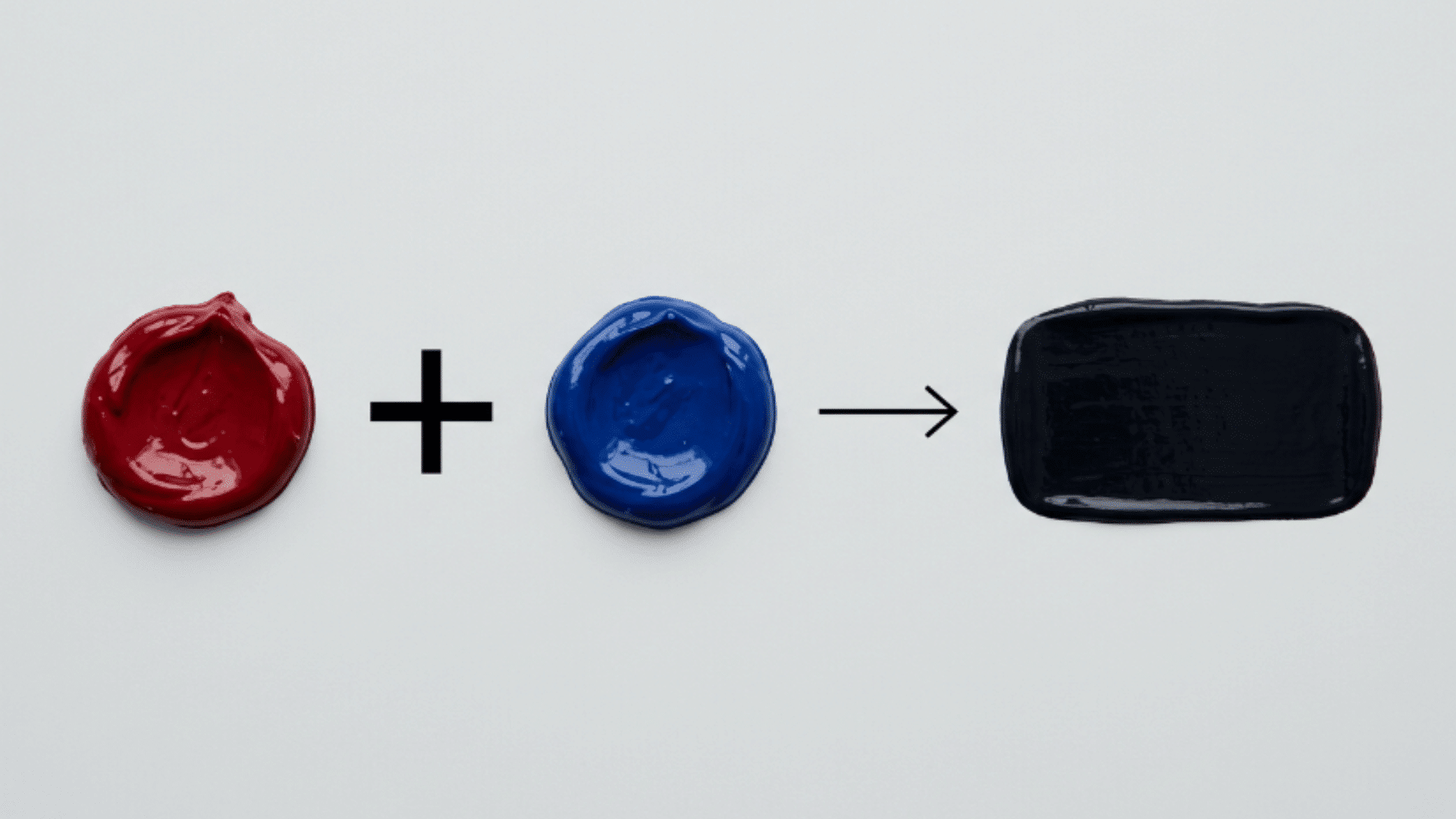
Red and blue together create a dark, dense tone that sits firmly in shadow territory. The mix produces a very deep shade that carries a subtle cool undertone throughout.
The more you increase the blue, the closer this combination gets to a true black. Reducing the brightness of your red helps push the final result even deeper.
- Color Combination Used: Red and Blue
- Mixing Result: Creates a deep, dark black with a subtle cool undertone
- Best Shade Tip: Increase the blue ratio to push the mix closer to true black
2. Blue and Yellow Mix
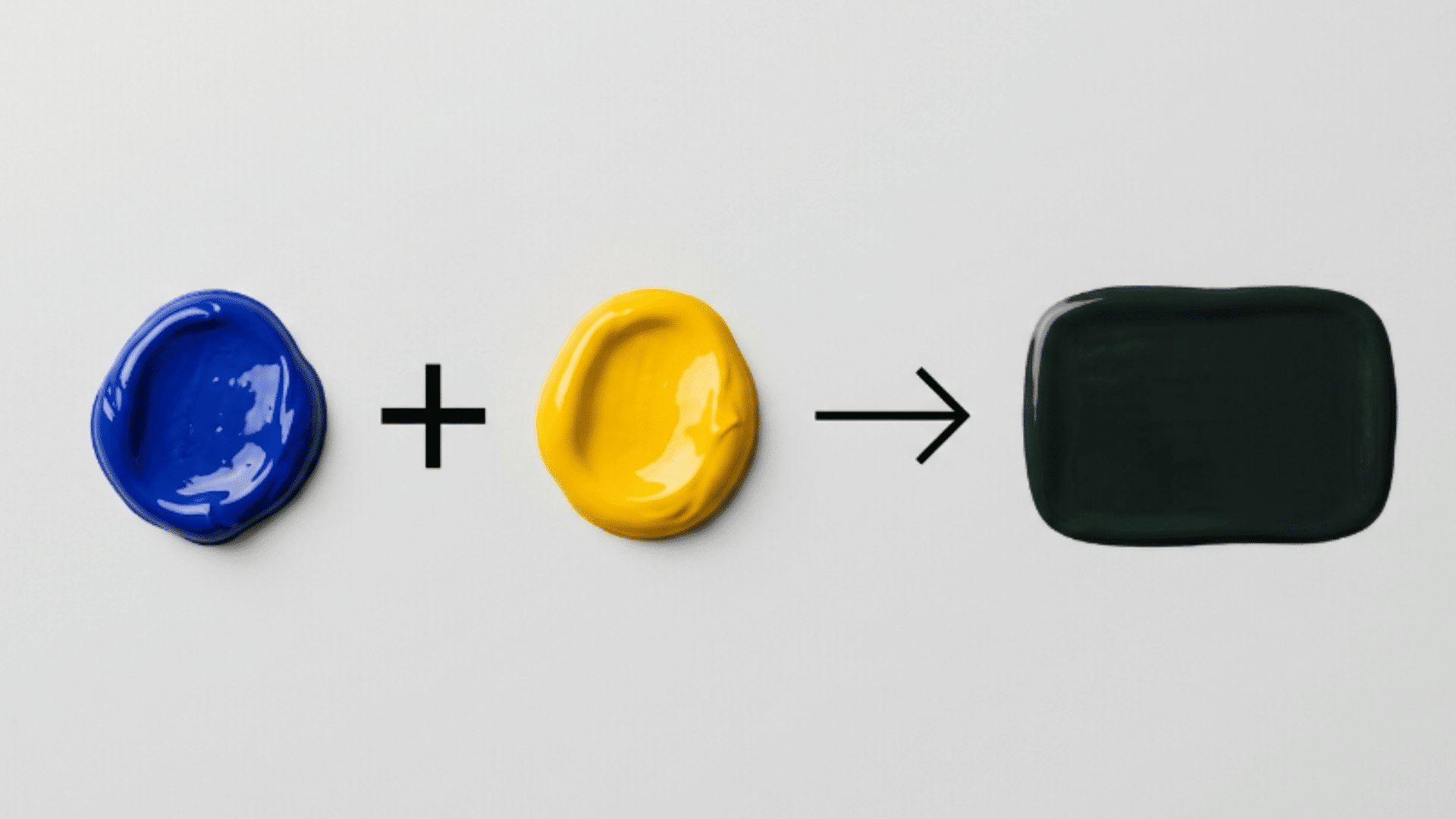
Blue and yellow can produce a very dark, near-black tone when the right pigments are chosen. A strong, dark blue paired with a small amount of yellow pulls the mix into deep territory.
The stronger and darker your blue pigment, the more convincingly this shifts toward black. Keeping yellow minimal is the key to stopping the mix from staying too light or bright.
- Color Combination Used: Blue and Yellow
- Mixing Result: Produces a deep, dark black with a slightly cool base
- Best Shade Tip: Use a heavy blue ratio with minimal yellow for maximum darkness
3. Red and Yellow Mix
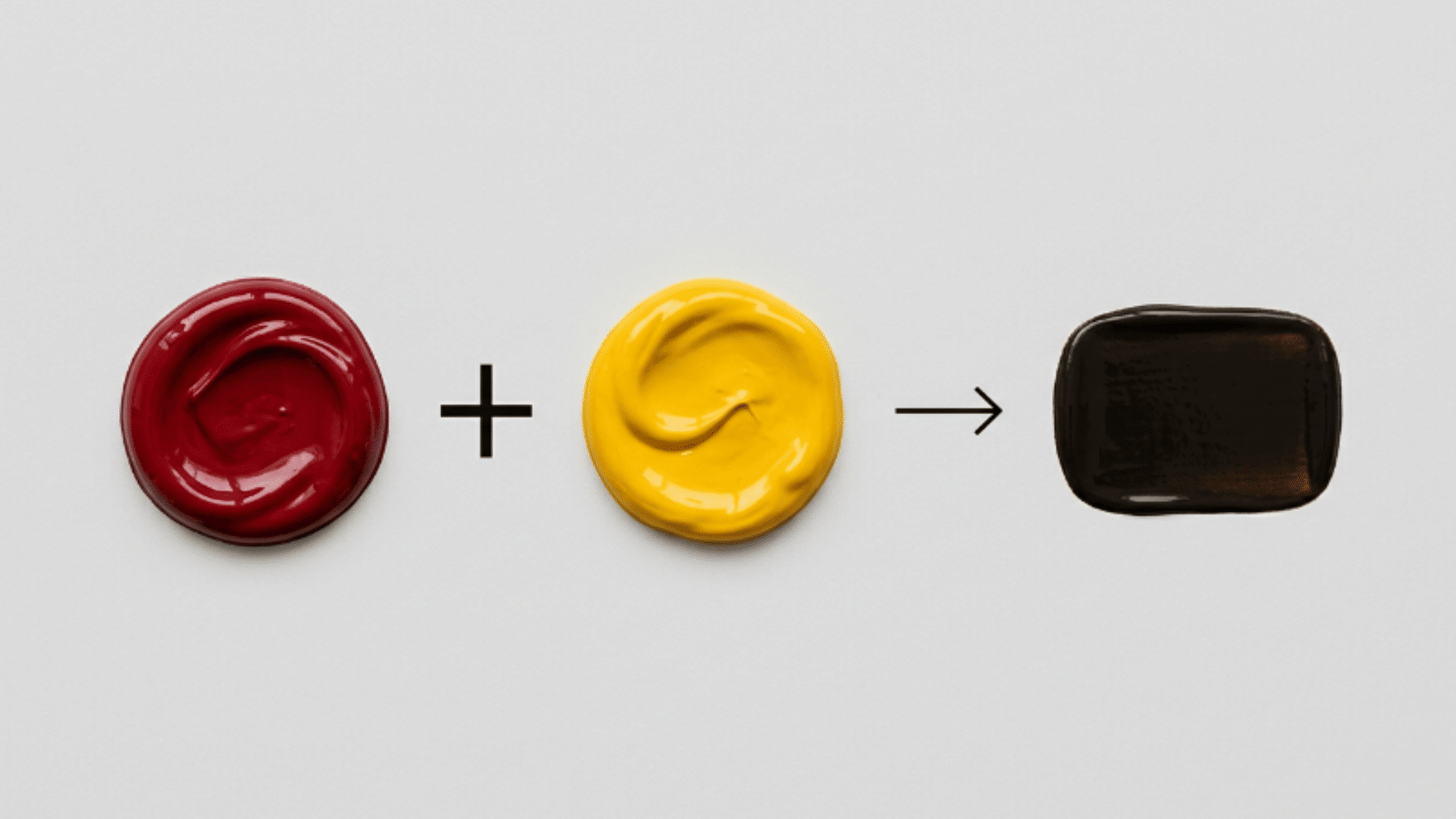
Red and yellow, when used as deep, unsaturated pigments, tend toward a near-black tone. A dark brick red combined with a small amount of yellow creates a very deep, warm-toned black.
The key is avoiding bright versions of either color or muted pigments that drive this toward black. This combination works best when both colors are as dark and low-saturation as possible.
- Color Combination Used: Red and Yellow
- Mixing Result: Produces a warm-toned deep black with earthy undertones
- Best Shade Tip: Use the darkest red available and keep yellow minimal
Using Complementary Colors
Complementary colors sit directly across from each other on thecolor wheel, and that opposition makes them one of the most reliable ways to figure out what two colors make black.
4. Red and Cyan Mix
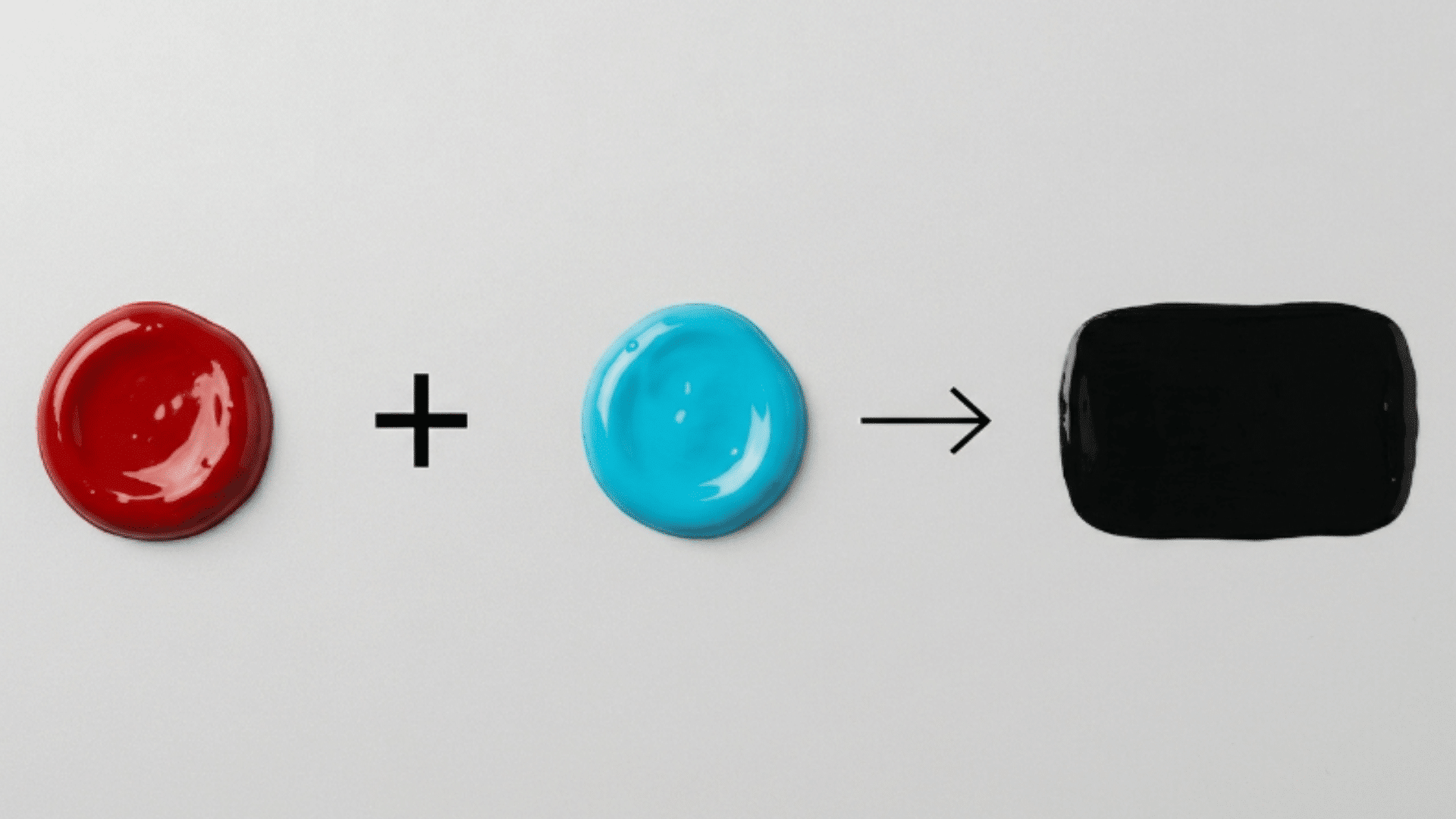
Red and cyan are strong opposites that cancel each other out when balanced correctly. The mix doesn’t lean warm or cool, making it one of the cleaner blacks from two colors.
For painters focused onwhat two colors make black, this is one of the most dependable pairings. Even small shifts in the ratio can adjust the undertone, so keeping balance is important here.
- Color Combination Used: Red and Cyan
- Mixing Result: Produces a balanced, neutral deep black
- Best Shade Tip: Keep both colors evenly balanced for the cleanest black result
5. Blue and Amber Mix
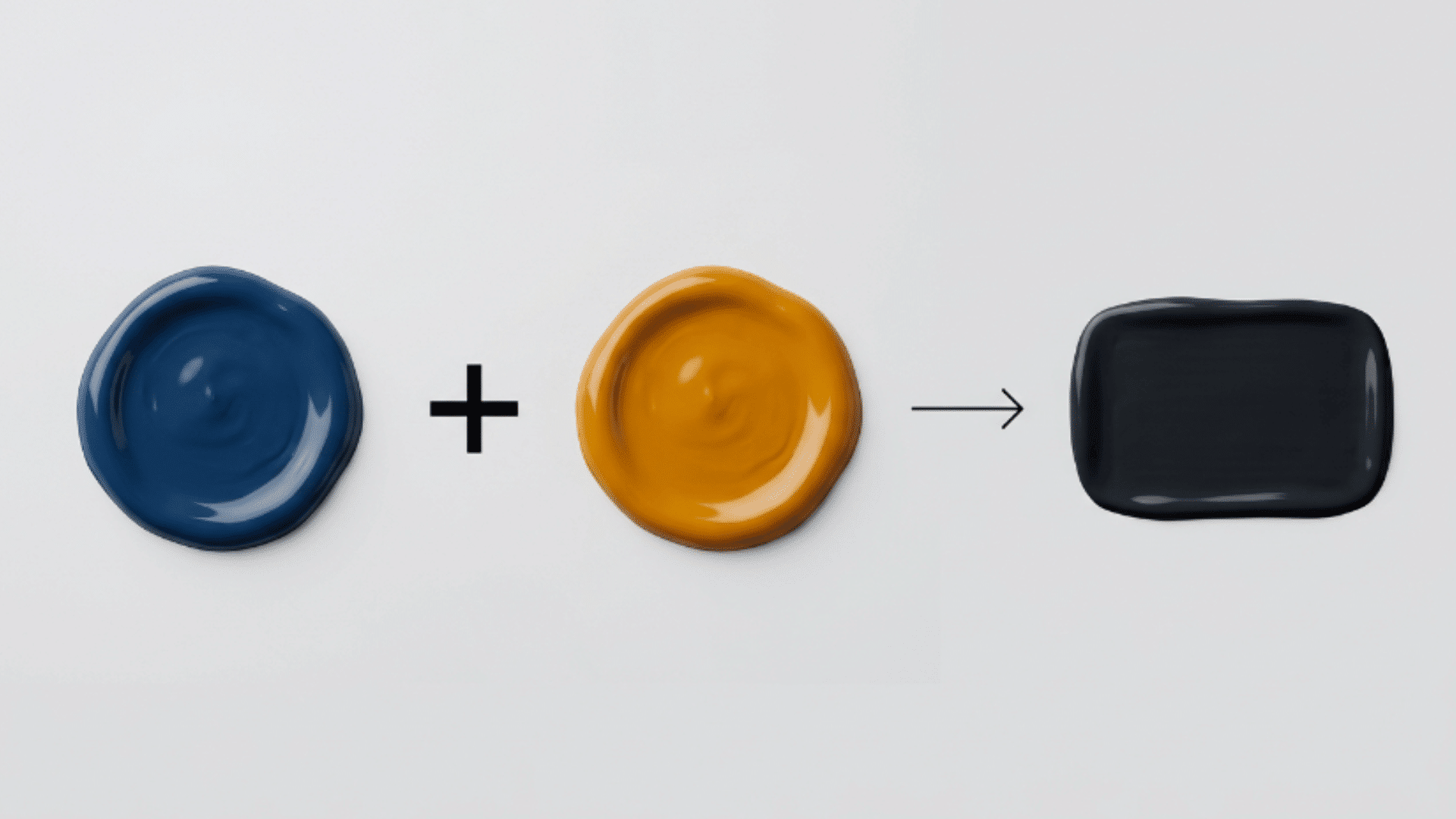
Blue and amber are the two colors that make black when combined correctly on canvas. Amber neutralizes the harshness of blue without pulling the final mix toward warmth.
The result is a full, dark black that feels grounded and dimensional in any painting. This pairing is a strong choice for shadow work where the black needs to feel rich and natural.
- Color Combination Used: Blue and Amber
- Mixing Result: Creates a rich, deep black with a cool undertone
- Best Shade Tip: Use a darker blue pigment to strengthen the black result
6. Yellow and Violet Mix
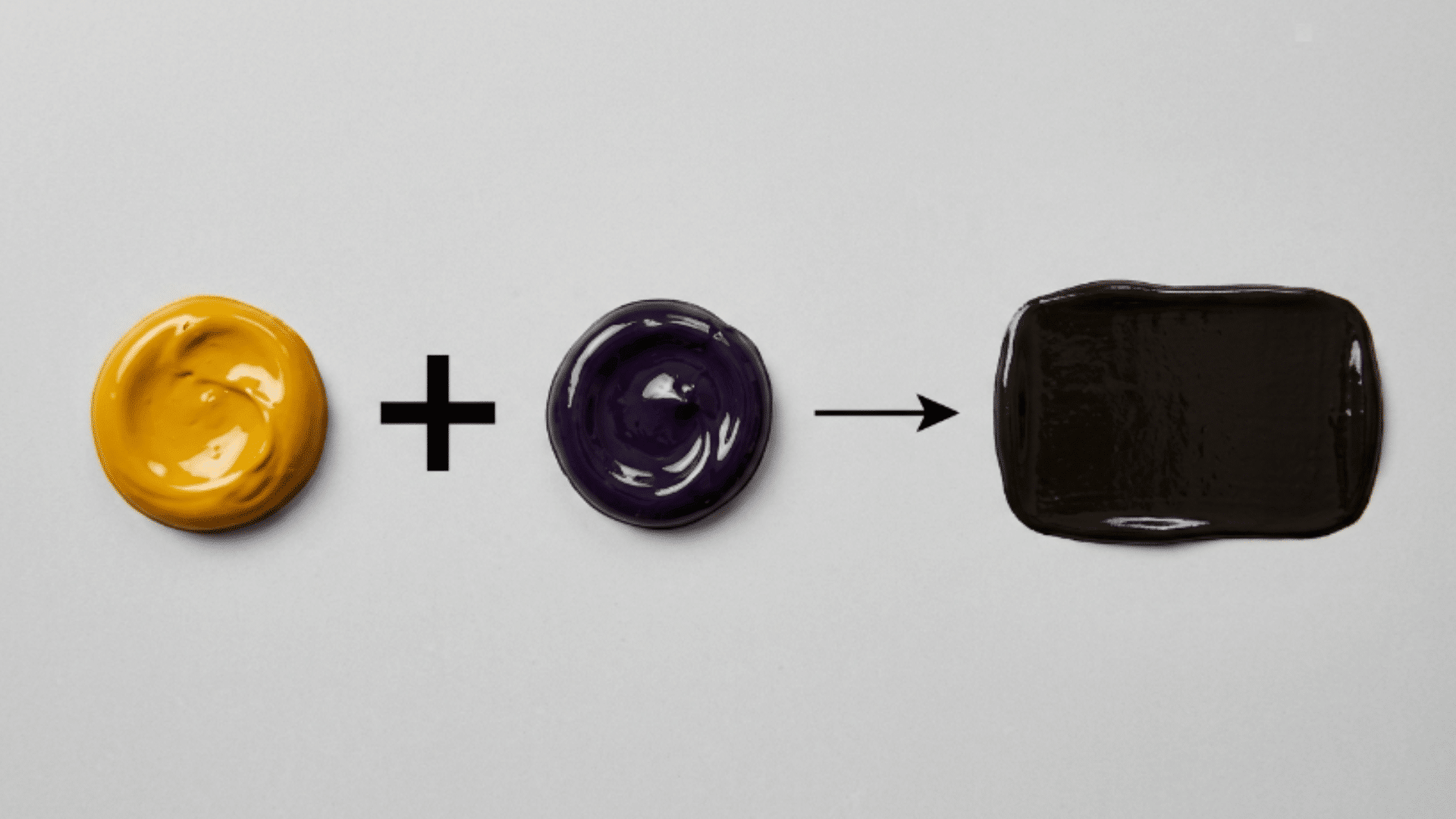
Yellow and violet are classic opposites on the color wheel that pull quickly toward black. The ratio matters more here; violet pushes the mix into a deep, dark, near-black zone.
The yellow component adds a faint warmth, keeping the black from looking too artificial. It performs well across both oil and acrylic mediums without losing depth or consistency.
- Color Combination Used: Yellow and Violet
- Mixing Result: Forms a deep black with a faintly warm undertone
- Best Shade Tip: Add more violet to push the mix into a true, dark black
Using Secondary Colors
Secondary colors already carry built-in complexity since each one is formed from two primary colors. When two of them are mixed together, the result is a more natural, earthy black tone.
7. Green and Purple Mix
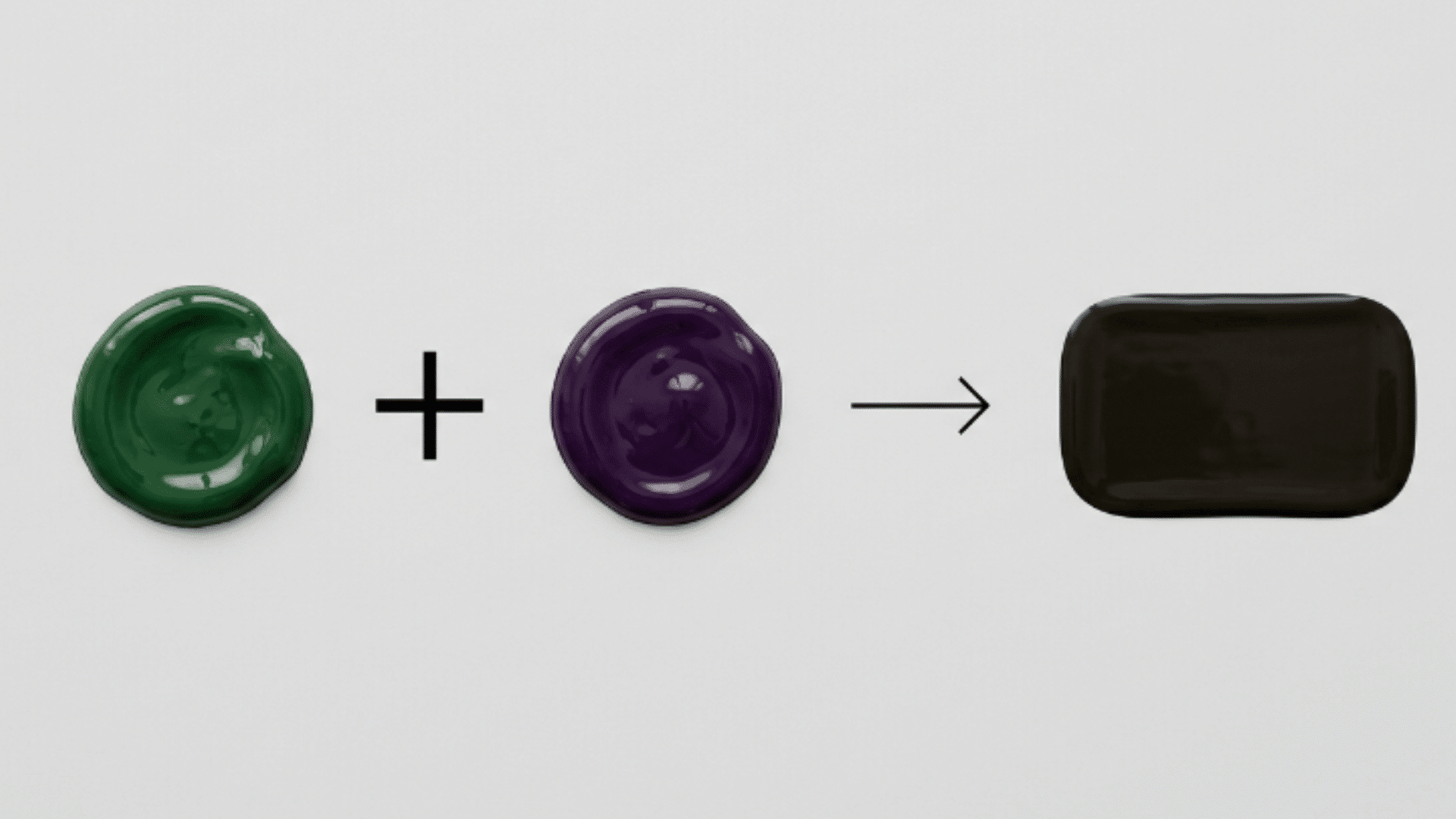
Green and purple bring together opposite ends of the warm-cool range on the color spectrum. The result is a balanced, deep black with a natural, earthy feel that avoids looking stark.
The depth increases noticeably when darker, less saturated versions of both colors are used. This mix works well in landscape painting, where a harsh black would feel out of place.
- Color Combination Used: Green and Purple
- Mixing Result: Creates a deep, earthy black with a natural tone
- Best Shade Tip: Use deeper, less saturated versions of both colors for a richer black
8. Orange and Teal Mix
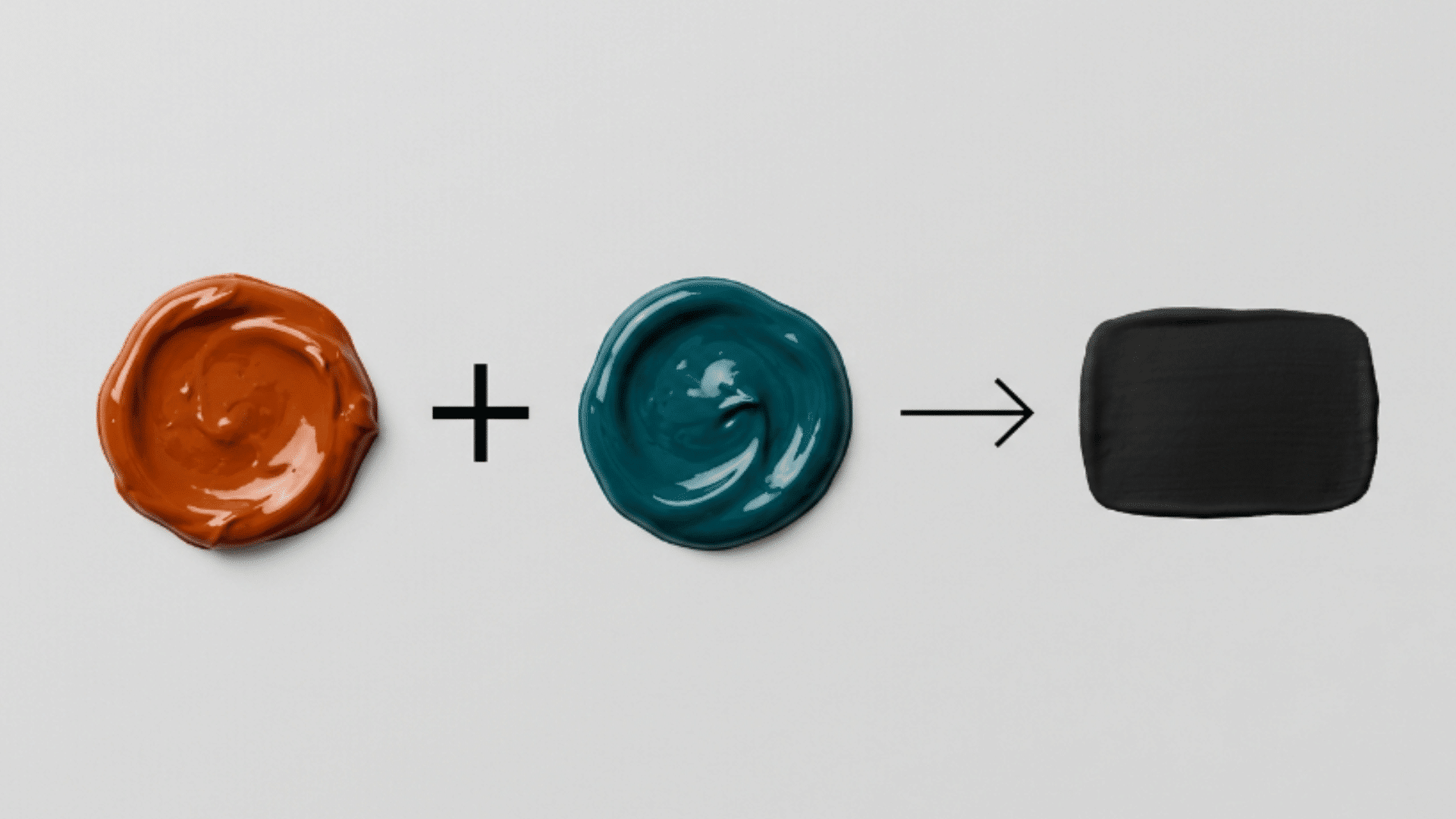
Orange and teal cancel each other out quickly, producing a deep and controllable black tone. The contrast between these two is strong enough to land solidly in black territory fast.
This is a reliable combination for painters who want a dark tone with quiet character. That flexibility makes it one of the more practical pairings across different painting styles.
- Color Combination Used: Orange and Teal
- Mixing Result: Produces a deep, balanced black with controllable undertones
- Best Shade Tip: Adjust the ratio to shift the black slightly warm or cool as needed
9. Magenta and Green Mix
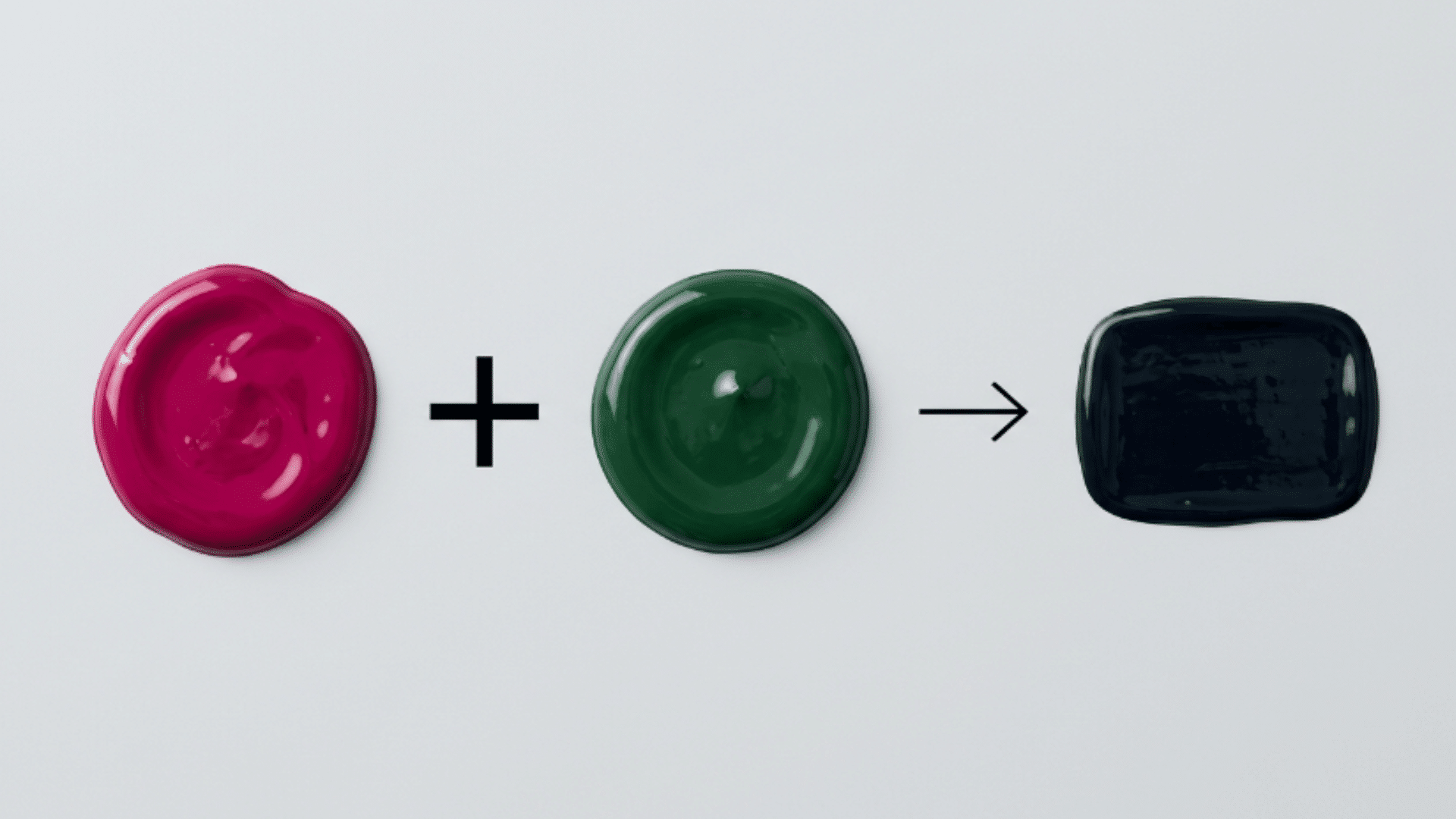
Magenta and green neutralize each other in balance, producing a rich, dark black with cool lean. The stronger the pigments used, the deeper and more convincing the final black becomes.
This pairing gives you a controlled dark that integrates well into the surrounding canvas colors. It works best when both pigments are strong and applied in roughly equal amounts.
The slightly cool character of this mix makes it a natural fit for portraits and cooler compositions.
- Color Combination Used: Magenta and Green
- Mixing Result: Forms a rich, cool-leaning, deep black
- Best Shade Tip: Use stronger pigments and add more green for a cooler, deeper black
Wrapping It Up
This blog breaks down how color pairing works and why it matters in painting. Once you understand the color wheel, mixing dark tones becomes second nature.
Every combination here gives a different black with its own character. Knowing which two colors make black hands you real control back.
I don’t keep a spare tube of black in my kit anymore, and I don’t miss it. The undertone, the depth, the warmth — all of it becomes a choice I make on purpose.
Mixing your own black is a skill worth building. Try one of these combinations on your next painting, and share this with a fellow painter who could use it.
Frequently Asked Questions
Why Does Black Look Different on Different Surfaces?
Black can appear different depending on the surface and lighting. Glossy surfaces reflect more light, while matte finishes absorb it, making the black look deeper or softer.
Can You Adjust the Black After Mixing It?
Yes, you can tweak black by adding small amounts of other colors. Blue makes it cooler, while red or yellow can make it warmer.
What is the Difference Between Cool Black and Warm Black?
Cool black has a slight blue tone, while warm black has hints of red or brown. The difference depends on the colors used in mixing.
Is Mixing Paint the Same as Mixing Light to Get Black?
No, paint mixing is subtractive; colors absorb light, so combining them gets darker. Mixing colored light is additive, and combining all colors of light actually creates white, not black.