



Saturday morning, coffee in hand, and a free afternoon stretching out ahead. That’s the sweet spot for a project you can actually finish before dinner. Medium density fiberboard, better known as MDF, is one of the friendliest materials for exactly that kind of weekend. It’s smooth, it’s flat, it takes paint beautifully, and it doesn’t have knots or grain that fight you at every turn.
The catch has always been cutting it. A full 4 x 8 foot panel is heavy, awkward, and won’t fit in most hatchbacks. Ordering pieces already trimmed to your measurements solves that problem completely. You skip the circular saw, skip the dust cloud in the garage, and get straight to the fun part.
Why MDF Works So Well for Home Crafters
Plywood has its place, but it can splinter along the edges and show grain through paint. MDF is made from fine wood fibers pressed together with resin, so the surface is uniform from one corner to the other. That makes it ideal for anything you plan to paint, stencil, or decoupage.
It’s also predictable. A 1/4 inch board (roughly 6mm) is light enough for signs and craft panels. Half inch, or 12mm, handles small shelves. For anything carrying real weight, like books or plants, step up to 3/4 inch (18mm).
A Few Honest Drawbacks
MDF hates water. Leave a raw edge exposed in a damp bathroom and it will swell like a sponge. It’s also heavier than pine of the same size, and the dust is very fine, so wear a mask whenever you sand. None of these are dealbreakers. They just mean sealing your project properly and keeping it indoors.
Project One: Painted Farmhouse Signs
Signs are the classic starter project, and for good reason. You need one flat panel, some paint, and a message worth hanging on the wall. A 12 x 24 inch piece of 1/4 inch board is a nice size for an entryway or above a kitchen doorway.
Prep and Paint
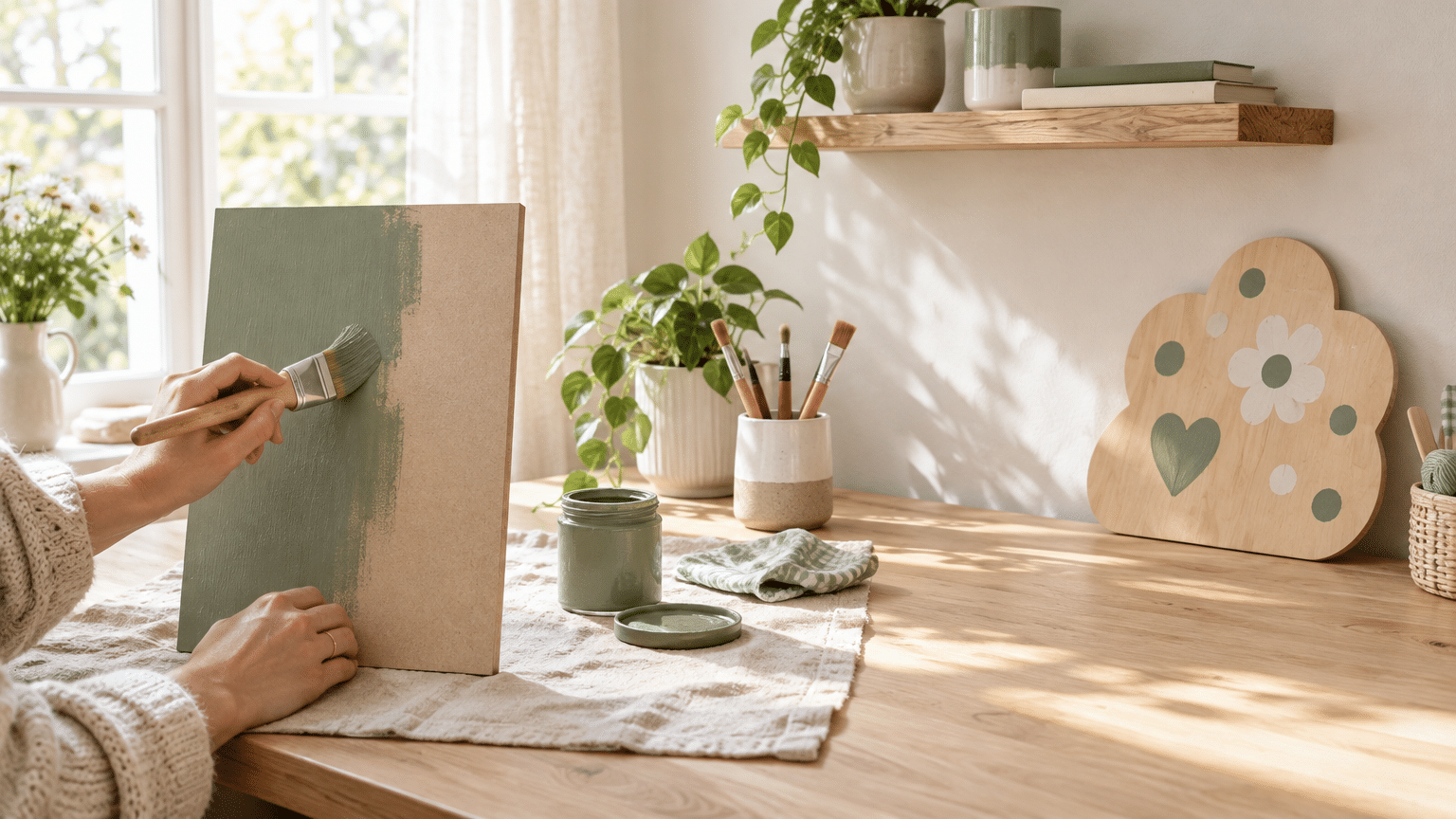
Lightly sand the face with 220 grit paper, then wipe it down with a damp cloth. Prime first. This step matters more on MDF than almost anything else, because the edges soak up paint fast. A shellac-based primer seals them well. Once dry, roll on two thin coats of chalk paint or acrylic in your base color.
Lettering Without Stress
Not confident with freehand script? Print your design, rub pencil over the back of the paper, tape it in place, and trace the letters. The graphite transfers onto the board as a guide. Fill it in with a paint pen or a small liner brush. Finish with a clear matte topcoat so the sign survives dusting.
Project Two: Simple Floating Wall Shelves
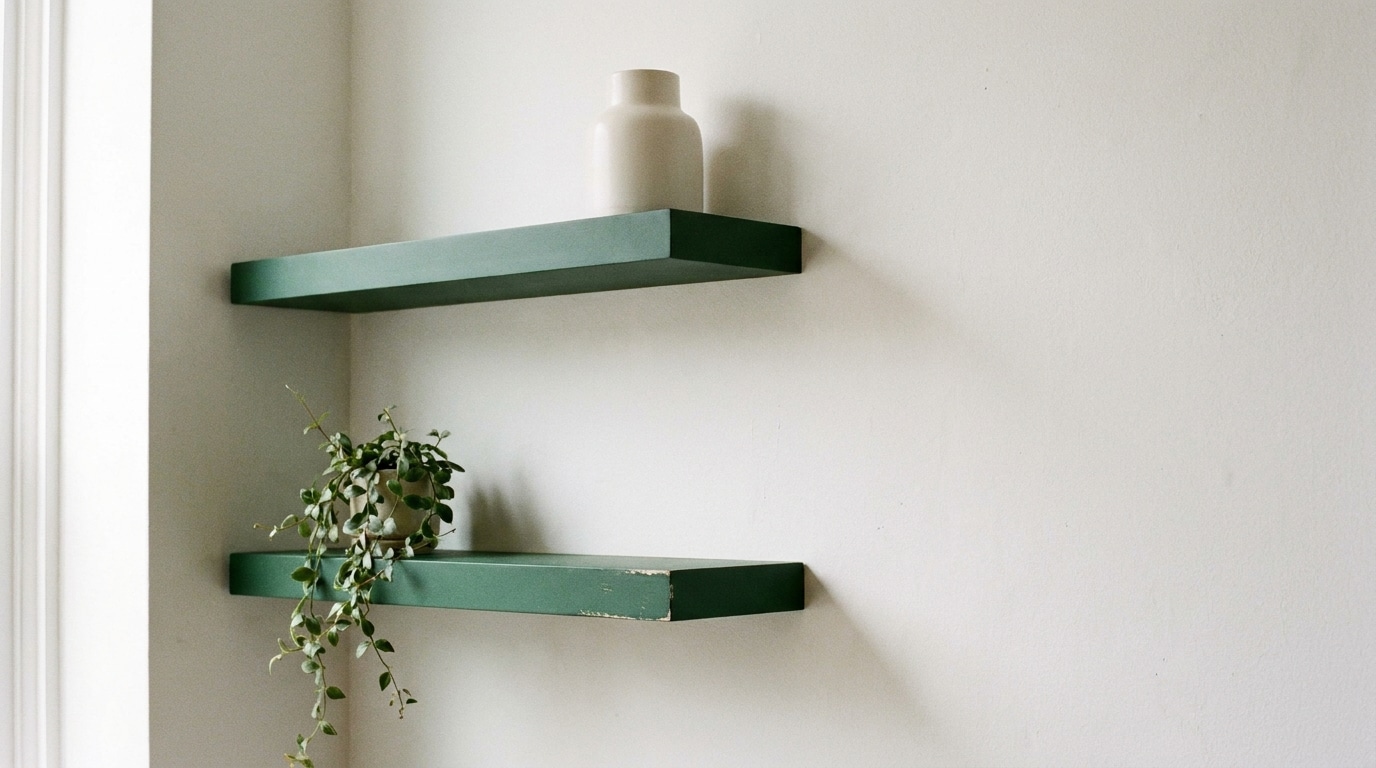
A pair of floating shelves can transform a bare wall in an afternoon. Order an MDF sheet in 3/4 inch thickness, cut to exact dimensions, and every piece will line up perfectly. A box-style shelf needs a top, bottom, front lip, and two end caps, all built around a hidden wooden cleat screwed into the wall studs.
Assembly Tips
Drill pilot holes before screwing into MDF edges, or the board may split.
Use wood glue on every joint for extra strength.
Fill seams with wood filler and sand smooth before painting.
Keep shelves under 36 inches long to avoid sagging.
Paint them the same color as the wall for a built-in look, or go bold with a contrasting shade. Deep green or navy looks striking against white walls.
Project Three: Kids’ Craft Boards
Here’s where MDF really earns its keep. Children need a sturdy, flat surface for painting, gluing, and playdough sculpting, and the kitchen table deserves a break. A 16 x 20 inch board in 1/4 inch thickness is light enough for small hands and easy to wipe clean.
Make It Multi-Purpose
Paint one side with chalkboard paint so it doubles as a drawing surface. Leave the other side sealed with a few coats of water-based polyurethane for messy work. Sand the corners into a gentle curve so nobody gets poked. You can even order a few smaller boards, around 8 x 10 inches, for travel or for siblings who refuse to share.
Some families turn these into magnetic boards by gluing a thin steel sheet to one face. Letters, numbers, and animal magnets suddenly have a home that isn’t the fridge.
Planning Your Weekend
Measure twice before ordering. Write down every piece with its length, width, and thickness, then double-check the list. Allow drying time between coats; most acrylics need about two hours, and primers vary. Starting Saturday morning usually means a finished project by Sunday evening.
Keep a stash of leftover offcuts too. Small pieces become coasters, ornament blanks, or test boards for trying new paint colors. Nothing goes to waste, and next weekend’s idea is already sitting on the shelf.