


Every artist wants to improve quickly, but the feeling of slow progress can often be frustrating.
The truth is that artistic improvement does not come from talent alone. It comes from deliberate practice, focused learning, and smart habits.
Many artists spend years practicing without seeing major improvements because they repeat the same mistakes.
This blog breaks down practical strategies that help artists improve their skills quickly and effectively.
Why It’s Important to Improve Your Art
Skill growth does more than make your artwork look better. It expands what you can express, deepens your confidence, and opens doors for those who are pursuing art professionally, building a portfolio, or creating just for yourself.
The longer you stay stuck at the same skill level, the more frustrating the creative process becomes.
Learning how to get better at art quickly means spending less time feeling blocked and more time actually enjoying your craft.
Why Most Artists Improve Slowly
Most artists hit a plateau because they practice comfort rather than growth. They draw the same subjects, use the same techniques, and avoid the areas where they struggle most.
This is sometimes called the “practice trap.” You are putting in hours, but not the right kind.
- Skipping fundamentals in favor of advanced styles too early
- Ignoring anatomy and proportion in favor of stylization
- Never studying from references or professional work
- Avoiding feedback out of fear of criticism
- Practicing without a clear goal or focus
- Copying a single artist’s style
- Not trying difficult subjects
Key Techniques to Improve Your Art Quickly
These are the strategies that separate artists who grow fast from those who stay stuck. Apply them consistently in your life, and you will start seeing real results in your work.
1. Master Core Fundamentals First
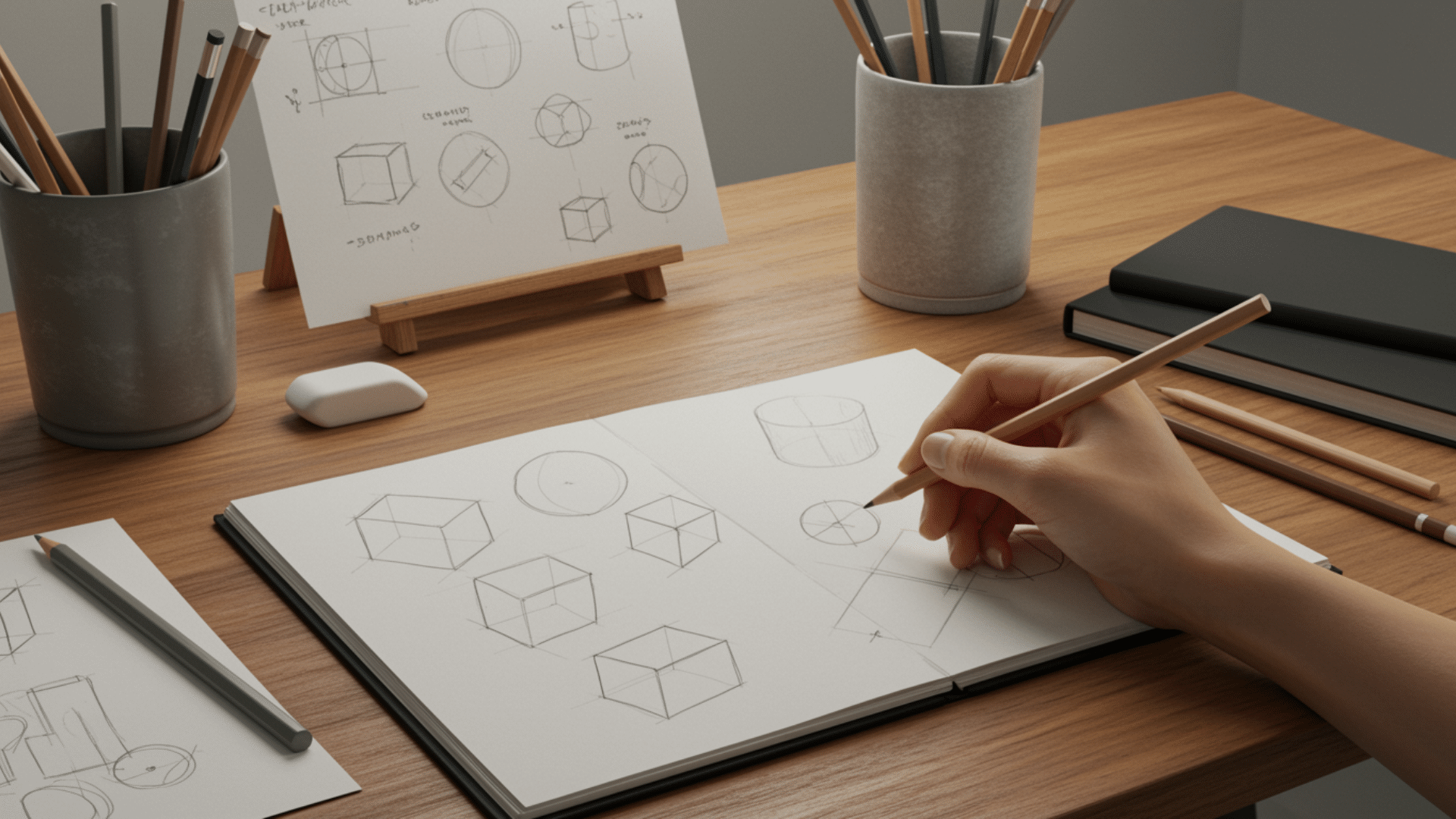
Fundamentals are the basic building blocks of art. Artists should focus on key areas such as anatomy, composition, shape, and form, as these help create balanced, believable artwork.
Artists who build a strong foundation in these basics find that all other skills, such as adding detail, painting, and developing a personal style, come much more easily.
2. Practice Daily with Focused Exercises
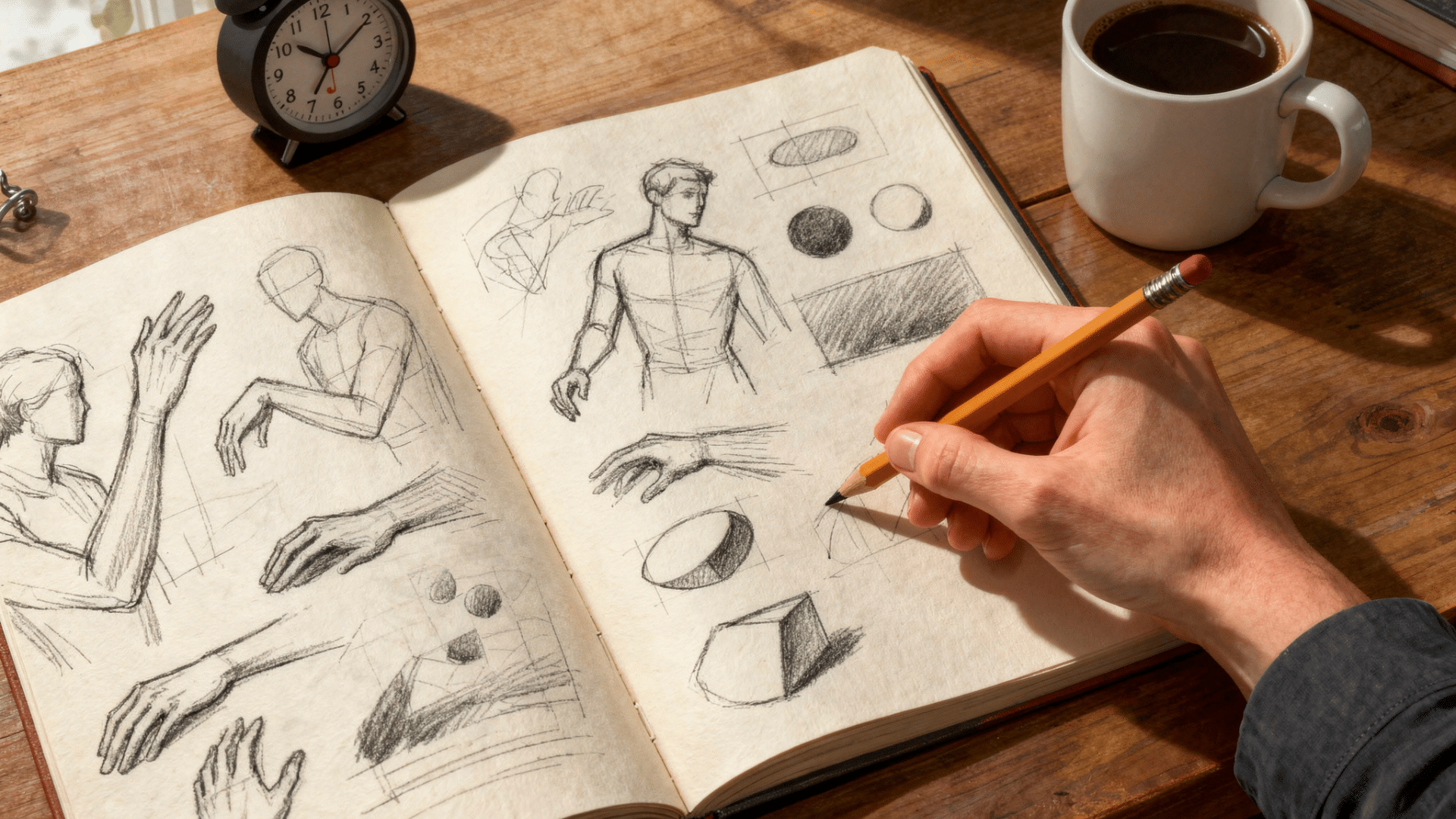
Practicing every day with a clear purpose is what actually moves you forward. Instead of sitting down and just drawing whatever comes to mind, set one specific goal for each session.
You might spend 20 minutes sketching loose poses to warm up, do 10 quick studies of hands or feet, draw simple shapes like spheres and cylinders to understand how objects look solid, or try recreating a piece by an artist you admire.
3. Use References Consistently
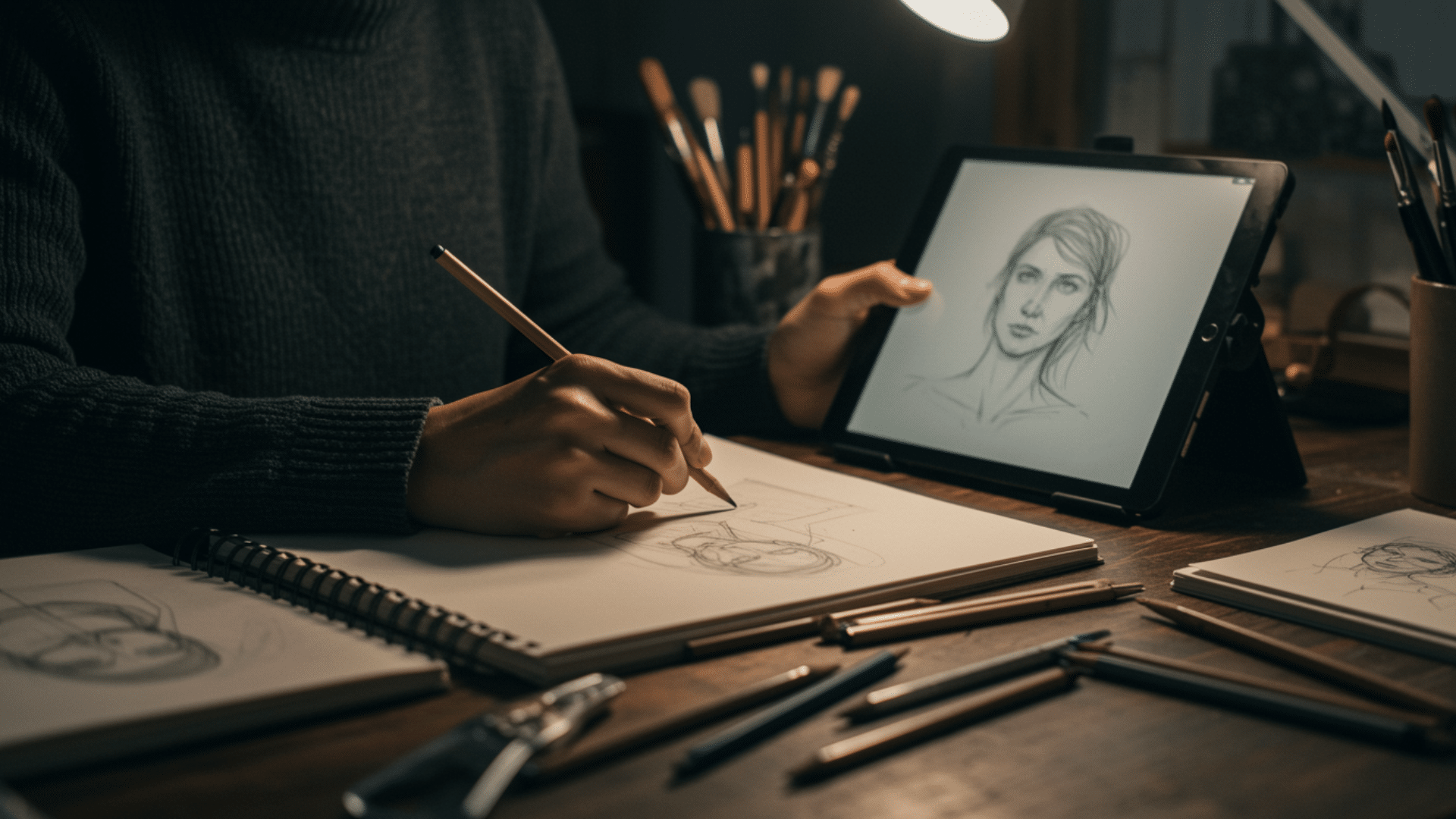
One of the fastest ways to improve your drawing is to work from references. Professional artists use references all the time. Looking at real images trains your eye to notice how things actually look, and over time, that builds a strong visual memory.
Draw from real life when you can, using objects, people, or places around you. For things you cannot observe in person, use photos. The goal is not to duplicate blindly but to understand the thinking and choices behind the work.
4. Study and Apply Color Theory
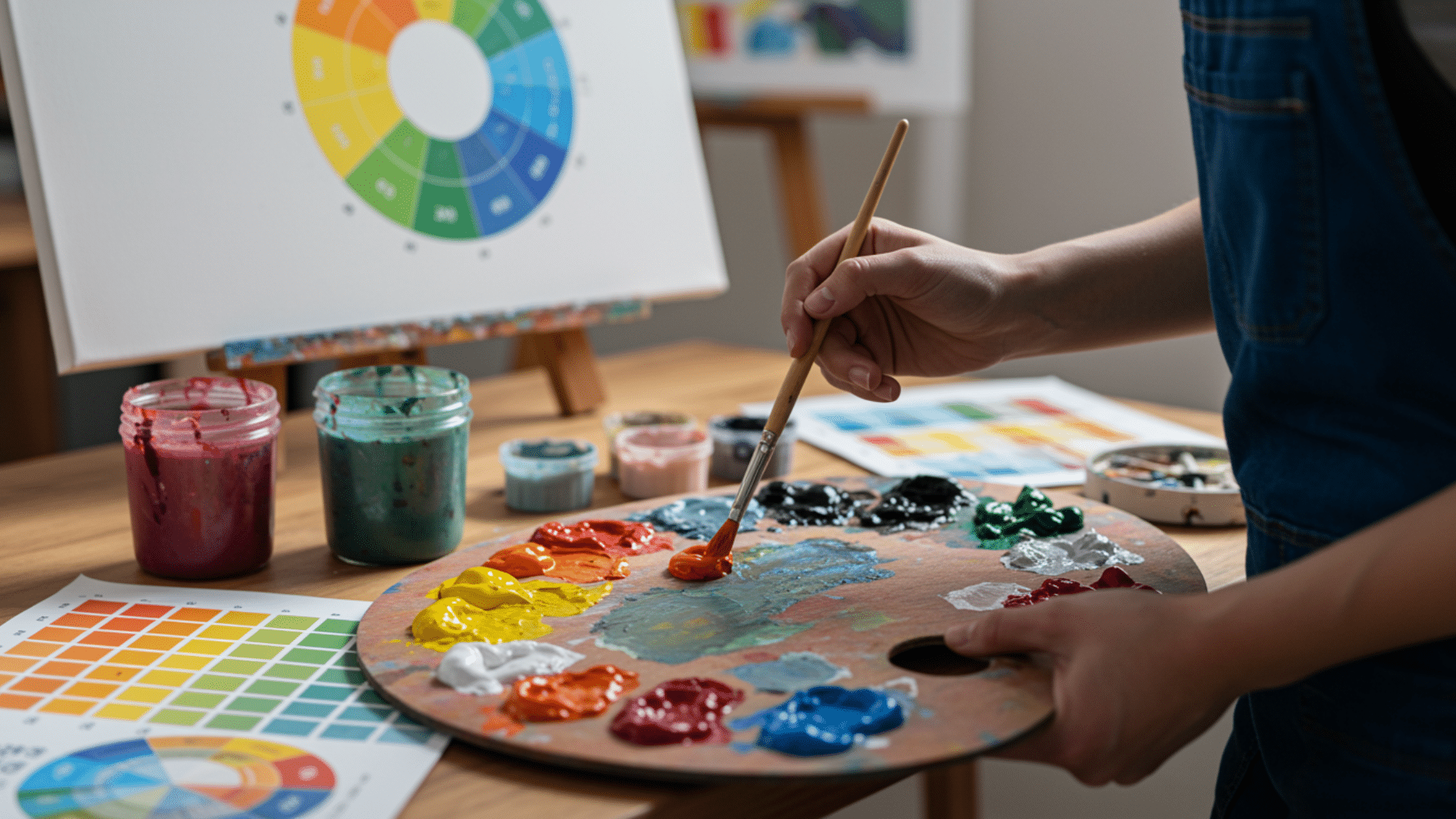
Learning how color works will improve your art faster. Start with color temperature, which is simply the difference between warm colors like red and yellow and cool colors like blue and purple, and how they affect each other in a painting.
A good way to start is by painting with only two or three colors. This helps you understand how colors mix and behave before using more colors
5. Seek Constructive Feedback Regularly
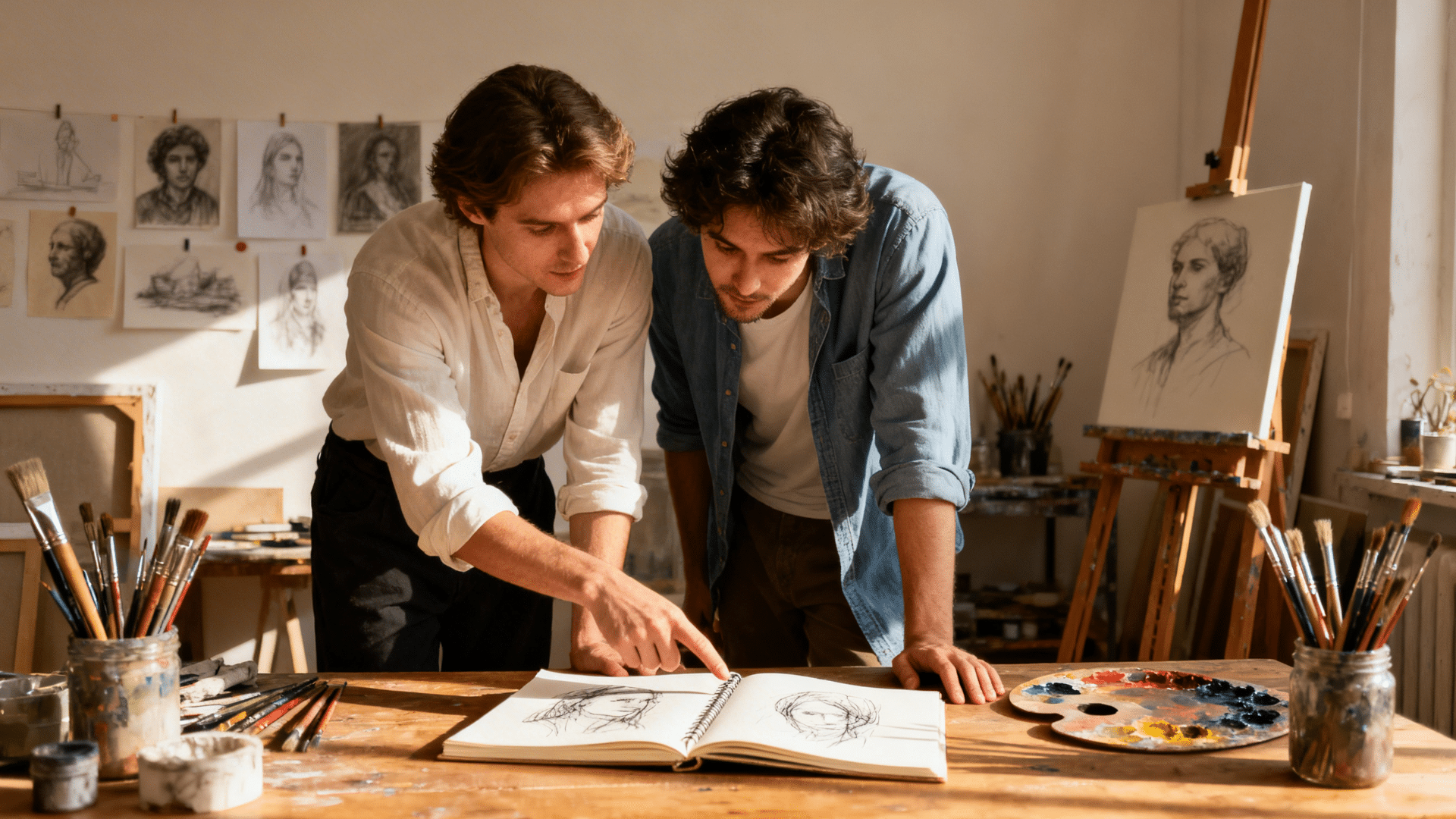
You need someone else to look at your work. People with more experience can spot problems in your art that you simply cannot see yourself because you are too close to it.
The point of feedback is not to hear praise. It is to find out what needs fixing.
Ask clear, specific questions. When someone gives you a critique, do not rush to explain your choices. Just listen, write down what was helpful, and try applying it in your next piece.
6. Make It Fun
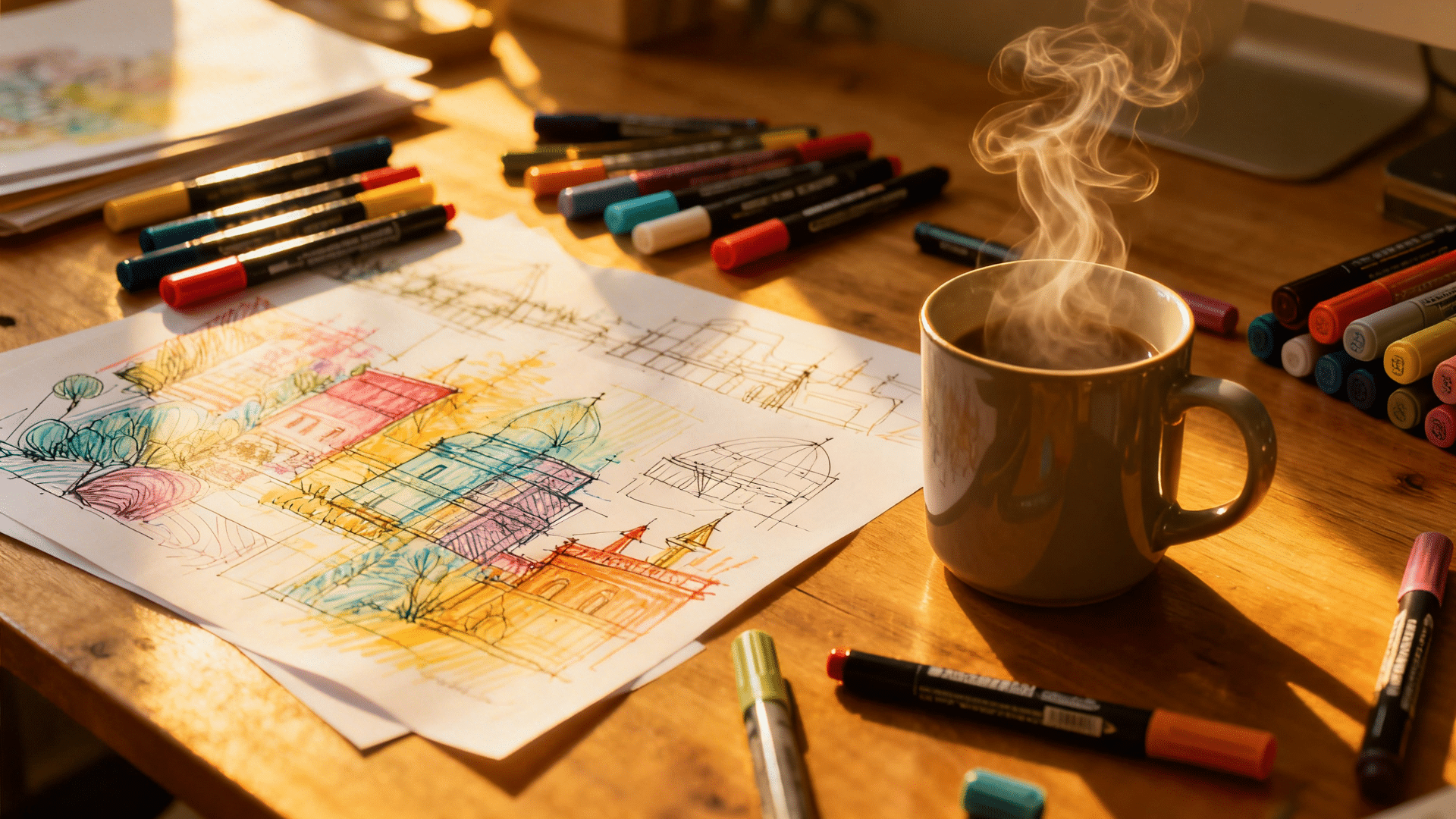
You can only improve consistently if you actually enjoy the process. If practice starts to feel like a chore, you will stop before you see real progress.
Try working with a different tool or trying a new style every once in a while to keep things interesting. When you enjoy what you are doing, you practice more often, and more practice means faster growth.
7. Track Your Progress
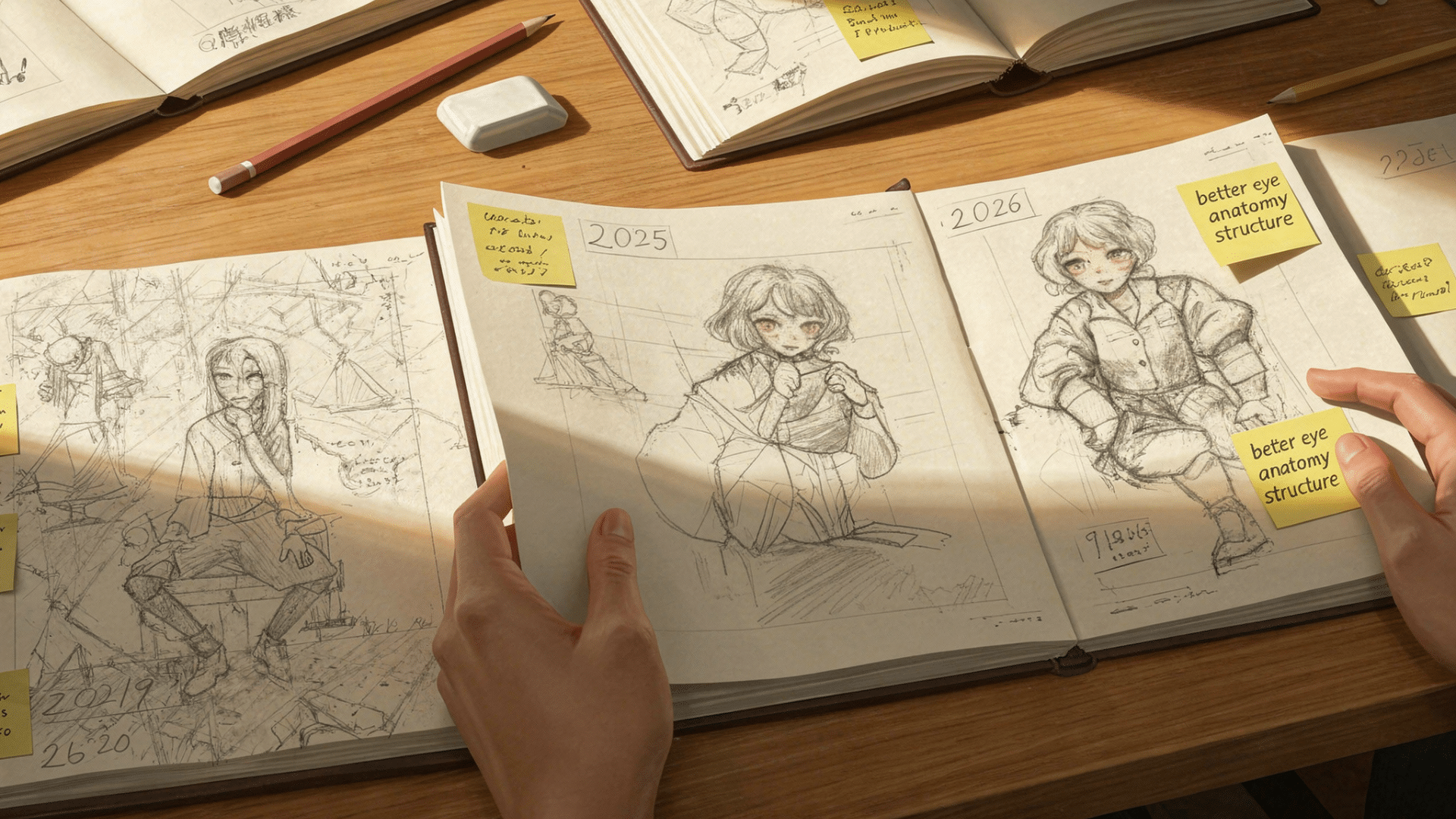
Keeping a record of your work over time can boost motivation. Date your sketches and compare new pieces with ones from a month or two ago to see your progress.
Many artists focus only on what they cannot do yet and forget how much they have already improved. Tracking your work also helps you notice patterns, so if the same weak spots appear, you will know what to improve next.
Daily Habits to Improve Your Art Faster
These tips focus on learning fundamentals, practicing intentionally, and building habits that accelerate artistic growth. Small, consistent habits compound into major skill gains over time. Try incorporating a few of these into your routine:
- Warm-up Exercises: Start with quick warm-ups to loosen your hand and improve line control before working on a full drawing. Simple lines, circles, or gesture sketches can help.
- Study Something Every Day: Spend a little time learning each day. This could include anatomy, perspective, lighting, or observing how other artists handle color and form.
- Daily Sketching: Try to sketch every day, even if it is only for a few minutes. Regular practice improves observation skills and builds drawing confidence.
- Review and Reflect: Look back at your recent work and identify what improved and what still needs practice. This helps guide what you should focus on next.
- Constructive Drawing: Focus on building drawings from basic shapes and forms rather than copying outlines. This strengthens your understanding of structure.
- Keep Tools Accessible: Keep your sketchbook and tools nearby so it is easy to practice whenever inspiration or free time appears.
- Take a Break: Taking breaks helps you see your work more clearly. When you return later, it becomes easier to notice mistakes and areas for improvement.
What to Remember
Improving your art quickly does not require special talent or expensive tools. What matters most is structured practice, focused learning, and consistent effort.
Artists who improve the fastest follow a clear approach. They study fundamentals, practice with purpose, use references, analyze professional artwork, and actively seek feedback.
By consistently applying these actionable strategies, you will begin to notice steady improvement in your drawing or painting skills. Every sketch becomes an opportunity to learn, refine techniques, and move one step closer to mastering your art.