





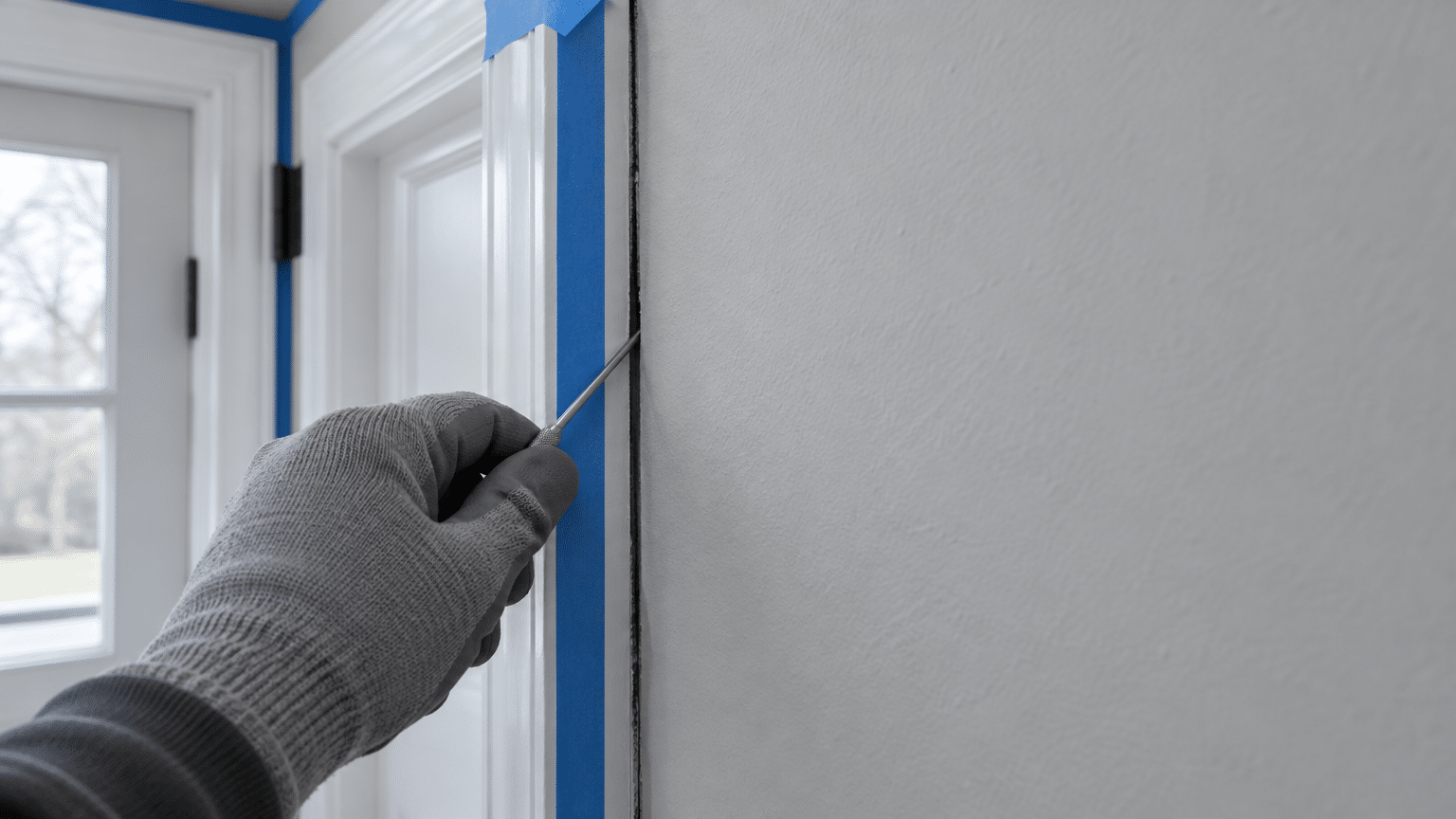
A freshly painted entryway can still feel unfinished when a dark line remains beside the door trim. It is tempting to fill it, paint over it, and move on to the new hooks and doormat. Before doing that, look at what the gap belongs to. A joint between fixed materials, a worn door seal, and a damp patch need different attention, even when they sit inches apart.
Find out Which Parts Are Meant to Move
Open and close the main door normally. The edge of the door moves against its frame; the trim surrounding the opening does not. Flexible weatherstripping belongs at appropriate moving edges. Caulk has a different purpose: sealing suitable stationary joints, such as certain connections between the frame, trim, and surrounding construction.
That distinction helps you plan the refresh without making the door harder to use. Do not run a bead along an opening simply because the line looks untidy. If it is part of the door’s movement, or a drainage opening in the assembly, filling it can interfere with the way the entry is supposed to work.
Take one photo showing the whole doorway and another showing the specific gap. A close-up alone can make a frame-to-wall joint look much like the edge of a door. The wider view helps you explain which part you want assessed before anyone chooses a material.
Deal With Damp or Damaged Areas Before Choosing a Paint Color
Look for peeling finishes, staining, and visibly deteriorated trim around the joint. Note whether the area becomes damp after rain or stays discolored when everything else has dried. These observations do not identify the cause, but they are a reason to pause the cosmetic work there.
A fresh finish cannot explain where recurring water is coming from. Nor should a bead of caulk be expected to repair damaged material beneath it. Ask for the moisture source and the condition of the frame or surrounding construction to be checked before treating the visible line as the entire job.
This is relevant during a rainy spell in a mild climate as well as during wet, windy weather in a colder one. Use what actually happens at your entrance to set the priorities. “This corner becomes wet after wind-driven rain” is more useful than assuming that every entryway in the region needs the same treatment.
Choose a Repair That Matches the Fixed Joint
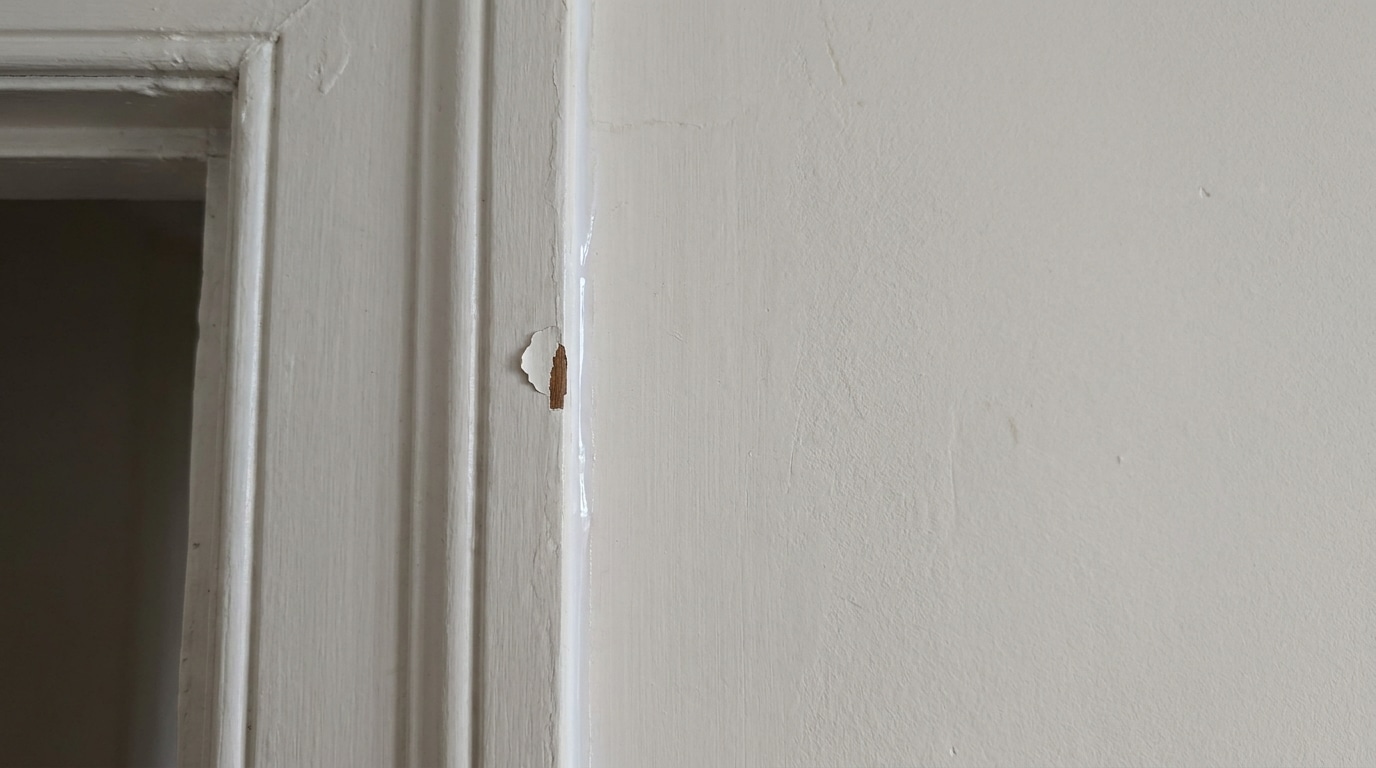
Once the area has been assessed, a suitable stationary gap may need preparation and resealing. The sealant must suit the materials, exposure, and intended finish. If you plan to paint it, ask about paint compatibility and the product’s timing requirements before arranging the decorating work.
For a Chicago service example, Capahome describes sealing gaps around a door frame as work on appropriate fixed joints around the opening. That is a useful way to frame the question for a local professional elsewhere: which joint needs sealing, what condition is it in, and what preparation does it need before painting?
Discuss the surrounding finish too. A repair may leave an area needing touch-up, while deteriorated trim may call for additional work before any finish is applied. Agreeing on that sequence helps avoid painting a surface that must immediately be disturbed again.
If the project will disturb old paint, address that before preparation begins. EPA recommends a lead-safe certified contractor for renovation work in homes built before 1978. Do not turn an uncertain old finish into a sanding project just to make a narrow joint look smoother.
Make Sure the Door Still Works Before Decorating Around It
A newly sealed fixed joint does not correct a door that catches on the threshold or needs a hard shove to latch. Tell the repair person about those symptoms separately. The door’s fit, hardware, and flexible seals may need their own assessment before the surrounding finish is treated as complete.
Keep drainage paths clear, including any openings identified by the door or sill manufacturer. Avoid using the visual goal of an unbroken painted line as the test of a good repair. Some openings and clearances have a purpose, even if they look less tidy than a fully filled edge.
Then return to the enjoyable part of the project. Check that the proposed mat, shoe storage, and hooks will not crowd the swing or closing path. Keep the paint information with your repair notes for later touch-ups. An entryway refresh works better when the finish follows the necessary repair and the door remains easy to use every day.