



If you’ve noticed your baby sneezing a lot, you’re not the only one. Many new parents notice their newborn sneezing frequently and immediately think something might be wrong.
It can feel confusing, especially when your baby is so small, and everything seems new. In most cases, frequent sneezing is completely normal.
Newborns are adjusting to the outside world, and their tiny noses are still developing. In this blog, you’ll understand why your baby is sneezing a lot, when it is normal, and when you should pay closer attention.
Disclaimer: This blog is for informational purposes only and is not a substitute for professional medical advice, diagnosis, or treatment. Always consult your pediatrician or a qualified healthcare provider if you have concerns about your baby’s health.
Is It Normal if Your Baby is Sneezing a Lot?
Yes, in most cases, a baby sneezing a lot is completely normal. It is actually a natural reflex that helps your baby clear their nasal passages.
When you notice a newborn sneezing a lot, it usually means their body is doing its job. Sneezing helps remove irritants and keeps the airways clear.
You’ll often see your baby sneeze multiple times a day, especially in the first few weeks.
As long as your baby is feeding well, breathing comfortably, and not showing other symptoms, frequent sneezing is generally nothing to worry about.
However, it is still important to observe your baby closely. If sneezing accompanies signs of congestion, fever, or difficulty breathing, it may need further attention.
Common Causes of Baby Sneezing
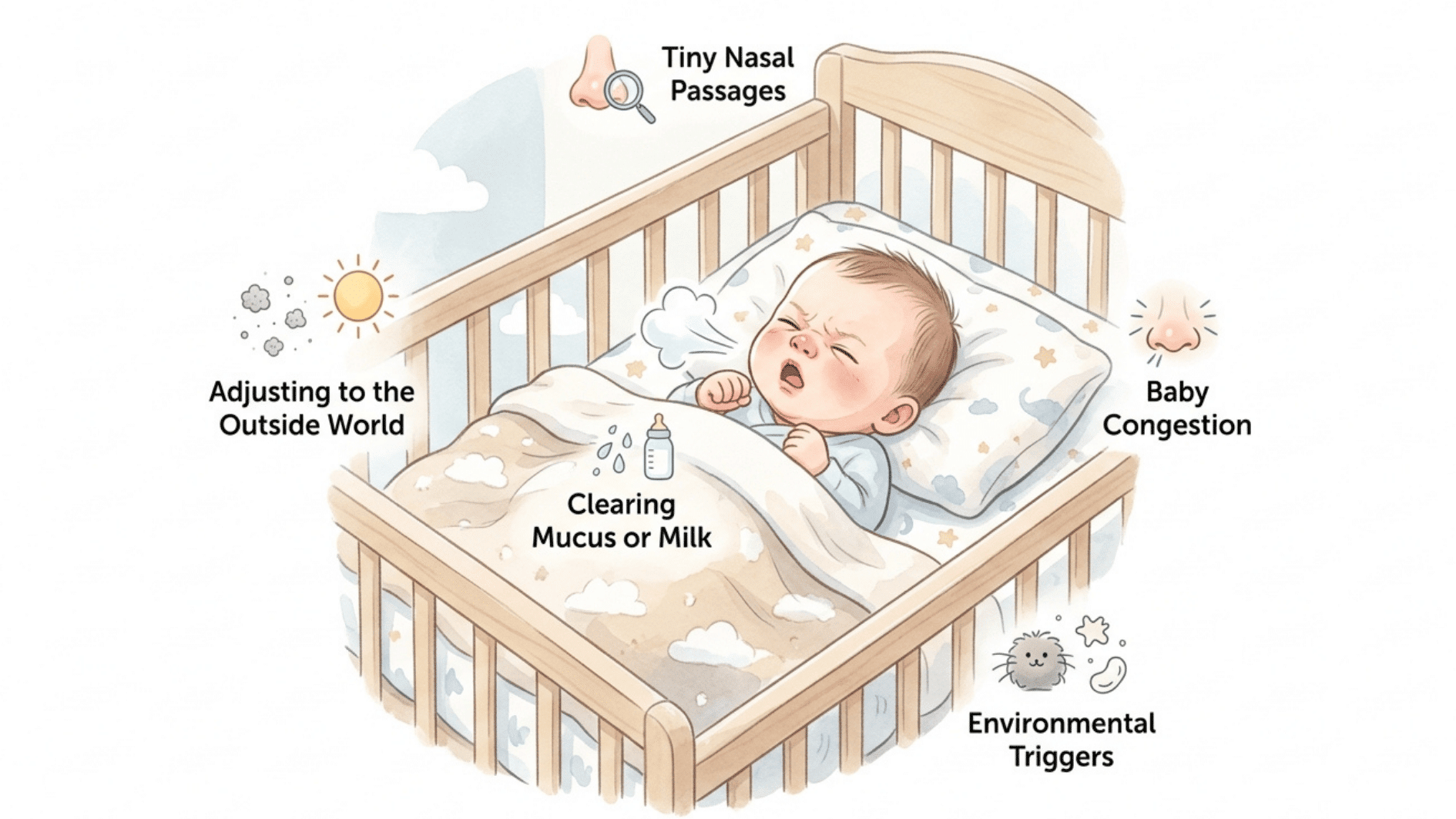
Your baby’s body is still developing, and sneezing is one of the ways it adjusts and protects itself in a new environment. Here, look at the most common causes in detail so you can better understand what’s happening.
1. Tiny Nasal Passages
Your baby’s nose is extremely small and delicate. Because of this, even the tiniest particles like dust, lint, or dried mucus can trigger sneezing.
Unlike adults, babies cannot clear their noses by blowing them. So, sneezing becomes their natural way of keeping their nasal passages clean.
You might notice your baby sneezing several times in a row, which is completely normal and simply their body doing its job.
2. Adjusting to the Outside World
When your baby is born, they move from a protected environment in the womb to a world filled with air, light, and different particles. This sudden change can be overwhelming for their sensitive system.
Sneezing helps your baby adjust to this new environment. It acts as a protective reflex, clearing out anything that feels unfamiliar or irritating.
This is why newborns sneezing a lot is especially common in the first few weeks after birth.
3. Clearing Mucus or Milk
It’s very common for a small amount of milk or spit-up to reach your baby’s nasal passages during or after feeding. When this happens, sneezing helps push it out.
You may notice that your baby sneezes more right after feeding, and this is usually nothing to worry about. It is simply their body clearing the airway to make breathing easier.
4. Environmental Triggers
Your baby is very sensitive to their surroundings. Common environmental factors can easily trigger sneezing, such as dust or pet dander, strong smells like perfumes or cleaning products, smoke or pollution, and dry indoor air.
Some babies may even sneeze when exposed to bright light, a condition known as the photic sneeze reflex. While it may seem unusual, it is harmless.
5. Developing the Immune System
Your newborn’s immune system is still developing. Sneezing is one of the ways the body reacts to minor irritants and begins building natural defenses.
At this stage, their body is learning how to respond to the outside world. Frequent sneezing does not necessarily mean illness; it often reflects normal growth and adjustment.
Newborn Sneezing Vs Baby Congestion
If your newborn’s frequent sneezing has you unsure whether it’s normal or related to congestion, this comparison can help you better understand the difference.
| Criteria | Normal Sneezing | Sneezing with Baby Congestion |
|---|---|---|
| Frequency | Frequent but random | Frequent and often continuous |
| Breathing | Normal and comfortable | It may sound noisy or slightly blocked |
| Nasal Condition | Clear nose | Stuffy or runny nose |
| Feeding Behavior | Feeds normally | May struggle while feeding |
| Sleep Pattern | Sleeps comfortably | May have disturbed sleep |
| Additional Symptoms | No fever or illness signs | May include mild cold symptoms |
| Overall Condition | Baby looks active and comfortable | Baby may seem slightly uncomfortable |
Signs Your Baby’s Sneezing Needs a Doctor’s Attention
In most cases, a baby sneezing is completely normal and nothing to worry about.
However, there are certain situations where sneezing may be a sign of an underlying issue. As a parent, it’s important to know when to stay calm and when to take action.
Warning Signs to Watch
You should pay closer attention if sneezing comes along with other symptoms. These may indicate that your baby is not just reacting to normal irritants.
- Fever (especially in babies under 3 months)
- Difficulty breathing or rapid breathing
- Persistent coughing
- Thick or colored nasal discharge
- Poor feeding or reduced appetite
- Unusual sleepiness or irritability
Suggested: If your child is older and experiences breathing discomfort, learning simple breathing techniques can help them better manage it.
When to Call a Doctor?
- Your baby is younger than 3 months and shows any symptoms along with sneezing
- Sneezing becomes more frequent over time instead of improving
- Baby’s congestion is severe and affecting feeding or sleep
- Your baby seems uncomfortable or in distress
It’s always better to trust your instincts. If something doesn’t feel right, getting medical advice can give you peace of mind.
Simple Ways to Soothe a Baby Sneezing a Lot
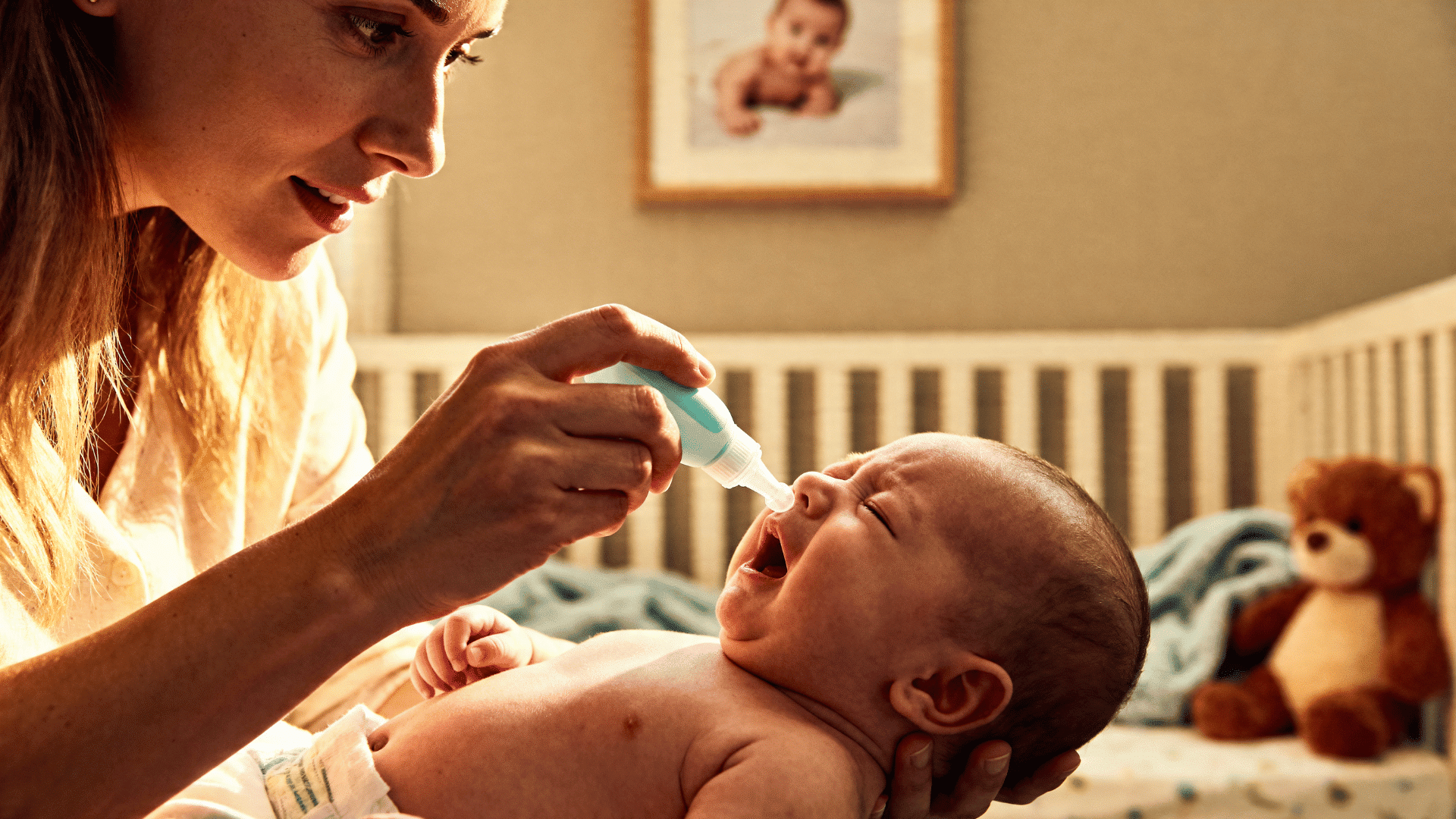
Watching your baby sneeze repeatedly can feel alarming, but most of the time, a few simple steps at home can make a real difference in keeping your newborn comfortable.
1. Keep the Air Clean and Moist
Dry indoor air is one of the most common triggers for frequent sneezing in babies. A cool-mist humidifier in the baby’s room can help keep the air moist and reduce nasal irritation.
Place it at a safe distance from the crib and clean it regularly to prevent mold buildup.
2. Use a Nasal Aspirator
When mucus builds up in your baby’s tiny nasal passages, sneezing becomes their only way to clear it out.
A nasal aspirator can gently remove the excess mucus and give your baby some relief. Use it sparingly, no more than 2 to 3 times a day, to avoid irritating the nasal lining.
3. Try a Saline Nasal Spray
A few drops of saline solution can loosen up dried or thick mucus, making it easier for your baby to clear their nose naturally.
It’s safe, gentle, and available over the counter without a prescription. Always use a saline spray made specifically for infants.
4. Remove Household Irritants
Strong perfumes, scented candles, pet dander, dust, and smoke can all trigger sneezing in newborns.
Their nasal passages are far more sensitive than those of adults, so even mild irritants can cause a reaction. Keep the baby’s space well-ventilated and free from strong chemical smells or sprays.
Real Parent Experiences
If your baby’s frequent sneezing is making you anxious, it helps to know that many parents have felt the same way. Reading real experiences can reassure you that this is a common phase and often completely normal.
Here are some real statements shared by parents online:
“My newborn sneezes like 5–6 times in a row multiple times a day. I was convinced she had a cold at first.”- r/NewParentsReddit
“Our pediatrician said newborns sneeze a lot because their noses are tiny and sensitive. Totally freaked me out before I knew that.”-r/beyondthebump Reddit
“I googled it at 3am thinking something was wrong… turns out it’s just how they clear their nose.”-r/newborns
“Newborn sneezes are so dramatic too, like a full body event. It worried me way more than it should have.”-r/NewParents Reddit
It’s a Wrap
Baby sneezing a lot is usually a normal part of development and not a cause for concern. It helps clear your baby’s tiny nasal passages and shows that their body is working as it should.
While occasional baby congestion can happen, it is mostly harmless. The key is to observe your baby’s overall health.
If they are feeding well, breathing comfortably, and active, there is usually nothing to worry about. However, if you notice additional symptoms, it is always best to consult a doctor for reassurance.
Frequently Asked Questions
Is It Normal for My Baby to Sneeze Every Day?
Yes, completely normal. Babies sneeze multiple times a day to clear their nasal passages of dust, mucus, or milk. Since they breathe through their nose, sneezing is just their natural way of keeping it clear.
What Are the First Signs of RSV in Newborns?
Early signs look like a common cold, runny nose, sneezing, cough, and mild fever. In newborns under 6 months, it can worsen quickly, causing wheezing, breathing pauses, and dehydration. Contact your doctor immediately if breathing changes.
What Does 7 Sneezes in a Row Mean?
It usually means the nose is working hard to clear a strong irritant, such as dust, cold air, or allergens. The body keeps sneezing until the irritation is gone. Rarely serious, but worth a doctor visit if it happens frequently.