
Helping kids manage big emotions isn’t always easy, especially in a fast-paced, distraction-filled world.
Many children struggle to slow down, stay focused, or calm themselves when they feel overwhelmed. That’s where simple, mindful practices can make a real difference.
This blog shares easy, engaging ways to introduce calming habits into your child’s routine. These ideas are designed to feel playful rather than forced, so kids can learn naturally while still enjoying the process.
Why Breathing Exercises for Kids are Essential
Breathing exercises are not only for adults – kids can benefit greatly from them too!
Breathing exercises are an essential tool for every child to have in their emotional toolkit. When children learn how to control their breath, it helps them:
- Reduce Stress: Simple breathing techniques can help lower anxiety and calm nerves during stressful situations like school tests or social events.
- Improve Focus: Deep breathing can help children concentrate better, making it easier for them to focus on tasks and activities.
- Regulate Emotions: When kids feel overwhelmed or upset, breathing exercises help them stay calm and in control of their feelings.
- Promote Physical Health: Proper breathing promotes better oxygen flow to the brain and body, supporting overall health.
Fun Breathing Techniques for Kids
Making breathing exercises fun is key to getting kids engaged. Here are some creative and playful breathing techniques that kids will enjoy:
1. Balloon Breathing
To start, have your child imagine they’re blowing up a balloon. Instruct them to take a slow, deep breath in through their nose, as if they’re inflating the balloon.
Encourage them to hold their breath for a brief moment, imagining the balloon growing bigger.
Then, have them slowly exhale through their mouth, as if they are letting the air out of the balloon. Repeat the process several times, helping your child to focus on the gentle, controlled movement of their breath, like a balloon slowly deflating.
2. Rainbow Breathing
Ask your child to imagine they are tracing a rainbow in the sky with their finger. As they breathe in, they “trace” the top of the rainbow with their finger, moving slowly from one end to the other.
Once they reach the top, they exhale while tracing the bottom of the rainbow, moving their finger from one end to the other. Encourage them to take their time, breathing deeply as they trace both the top and the bottom of the rainbow.
This exercise teaches children to slow their breath down and focus on rhythmic breathing. It also provides a visual element to make the experience more engaging.
3. Bee Breathing
To practice Bee Breathing, have your child inhale deeply through the nose, filling their belly with air. As they exhale, encourage them to make a gentle humming sound like a bee.
The exhale should be slow and steady, with the hum vibrating in their chest and head. Let them feel the vibrations as they hum. Repeat the process several times, focusing on slow, calming exhales.
Bee breathing helps children focus on their breath while producing calming sounds. It can be especially useful in quieting the mind and creating a peaceful moment.
4. Flower Breathing
Have your child imagine they are holding a beautiful flower in front of their face. As they inhale through their nose, encourage them to pretend they’re sniffing the flower, taking in a deep, slow breath.
Once they’ve inhaled, have them slowly exhale through their mouth, imagining they’re blowing the petals of the flower. Let them focus on making the exhale gentle, like blowing out soft petals.
5. Lazy Lion Breathing
Begin by having your child inhale deeply through their nose, filling their lungs with air. As they exhale, encourage them to make a loud, playful roar, just like a lazy lion stretching out in the sun.
While exhaling, have them stretch their arms wide to mimic the lion’s movement. Let them take a big, exaggerated breath and release it with a forceful, fun roar. Repeat this a few times to let the child release built-up energy and feel a sense of relaxation after each roar.
Breathing Games and Activities for Kids
Breathing exercises don’t have to be limited to traditional techniques. Turn them into games and activities that your child will look forward to!
1. Breathing Buddies
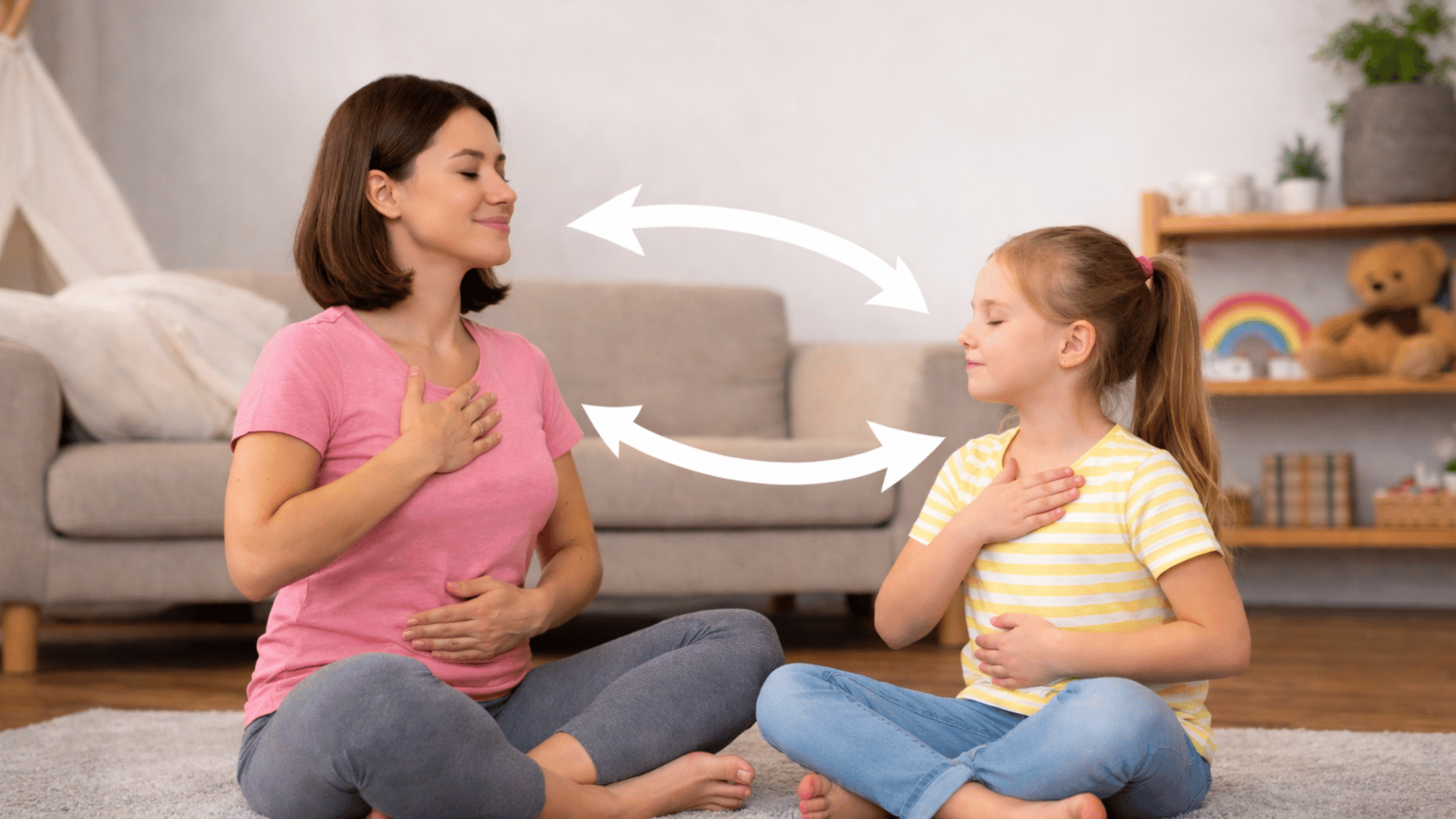
How to Play:
- Pair up with your child or another partner.
- One person takes a slow, deep breath, and the other mirrors their breath, inhaling and exhaling in sync.
- You can switch roles so both partners take turns guiding and mimicking each other’s breath.
- Encourage a slow and steady pace, focusing on breathing deeply through the nose and exhaling gently.
- This activity not only strengthens awareness of breath but also deepens the connection between the child and their partner as they synchronize their breathing.
Benefits: This activity helps build awareness of breath while fostering a sense of connection between the child and their partner.
2. Breathing with a Toy
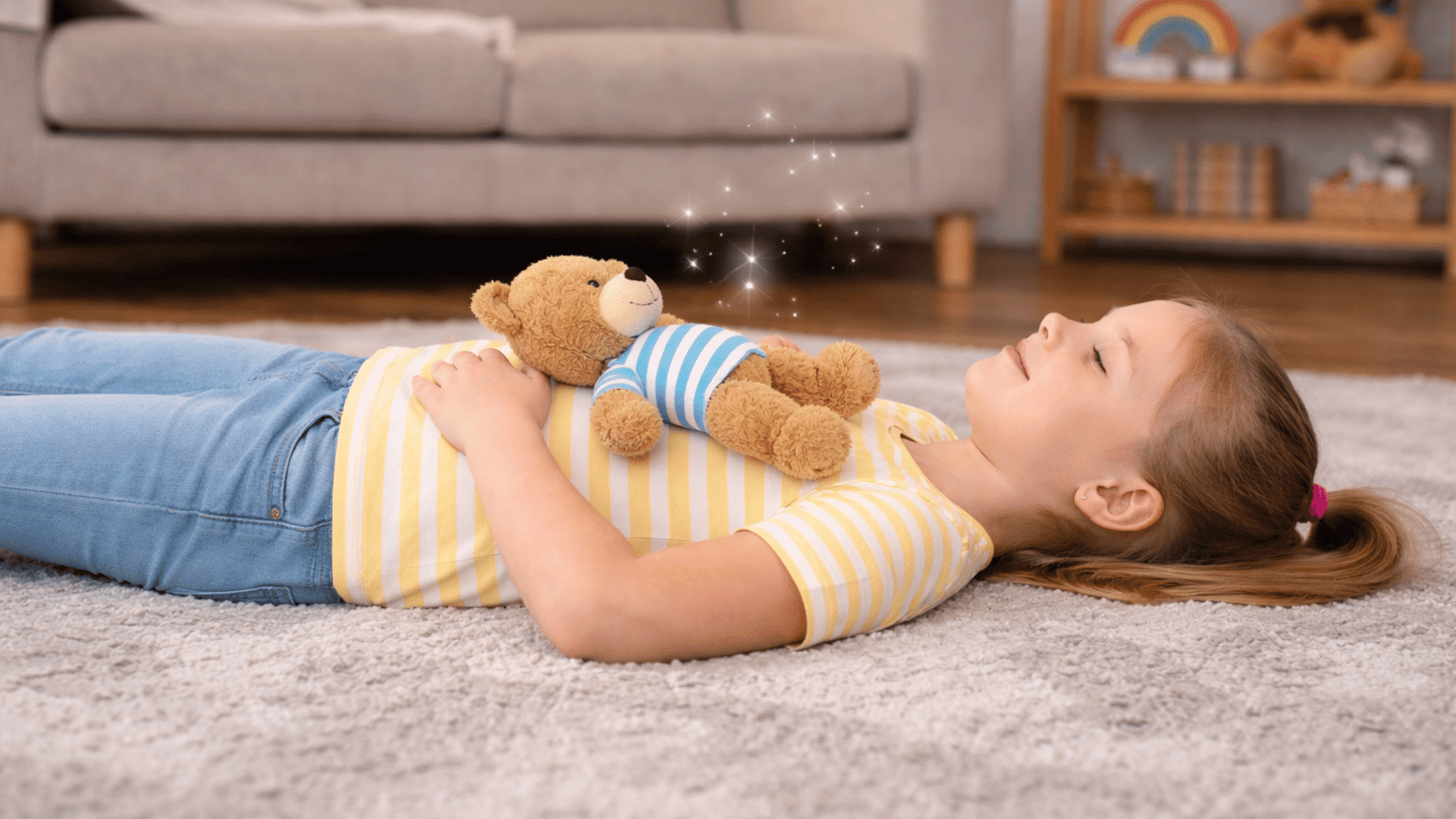
How to Play:
- Place a small toy or stuffed animal on your child’s belly, ensuring they are lying down comfortably.
- Ask your child to take a deep breath in, and then exhale slowly while watching the toy rise and fall with each breath.
- Encourage your child to take slow, controlled breaths, allowing the toy to move gently with each inhale and exhale.
- You can make this more fun by pretending the toy is “flying” or “sleeping” as the child practices slow breathing.
Benefits: This technique visualizes the concept of deep breathing and gives younger children something fun and tangible to focus on.
3. Breathing Patterns with Music
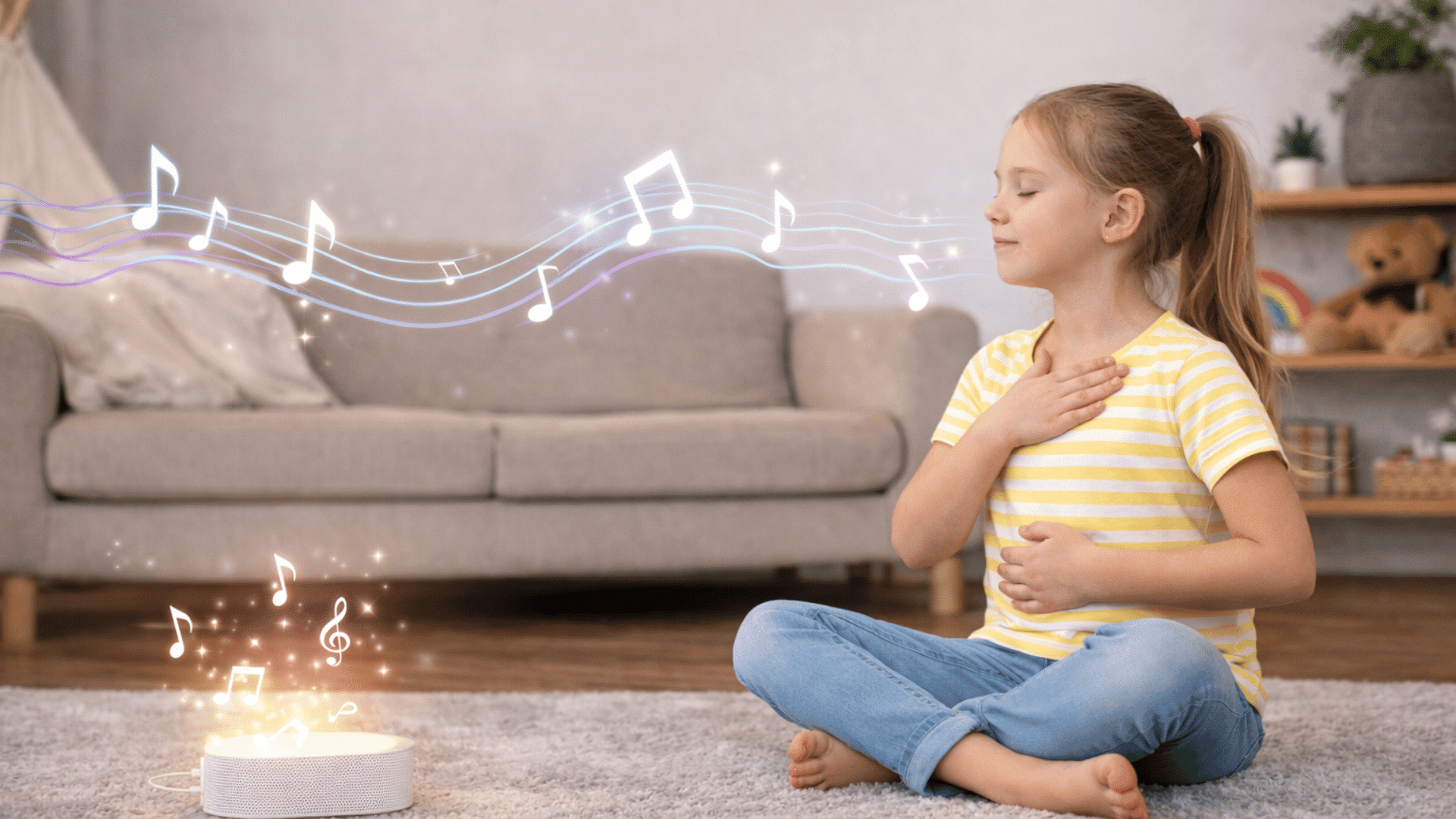
How to Play:
- Choose slow, calming music that has a steady beat. It could be instrumental or nature sounds.
- Play the music and guide your child to inhale deeply when the music’s rhythm picks up and exhale slowly when it slows down.
- Encourage them to focus on matching the breathing with the beat, making it feel like the music is guiding their breath.
- You can increase the challenge by using different types of music with varying rhythms, helping children adjust their breathing to new patterns.
Benefits: This activity helps children slow down their breath and develop a rhythmic pattern that promotes relaxation and mindfulness.
4. Starfish Breathing
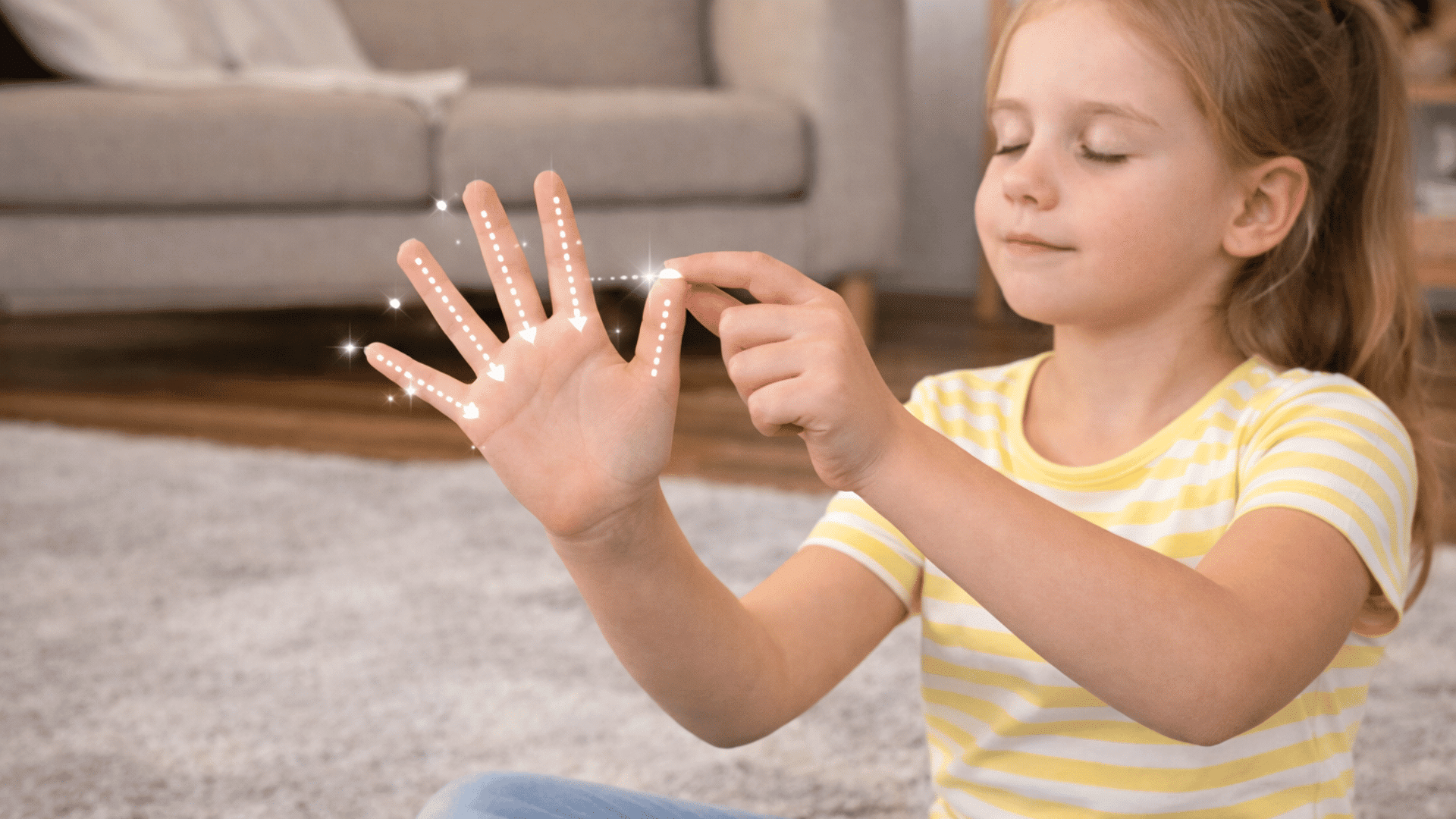
How to Play:
- Ask your child to spread out their hand in front of them like a starfish.
- Instruct them to slowly trace the outline of their hand with their finger as they breathe in, starting at the base of their palm and up each finger.
- As they trace, encourage them to breathe deeply and exhale slowly as they trace the fingers back down.
- Repeat this several times, focusing on making the breath slow and deep, letting the hand be a reminder to relax with each breath.
Benefits: Starfish breathing helps children focus on each part of their breath while tracing their hand, making it easier to slow down and relax.
5. Animal Breathing
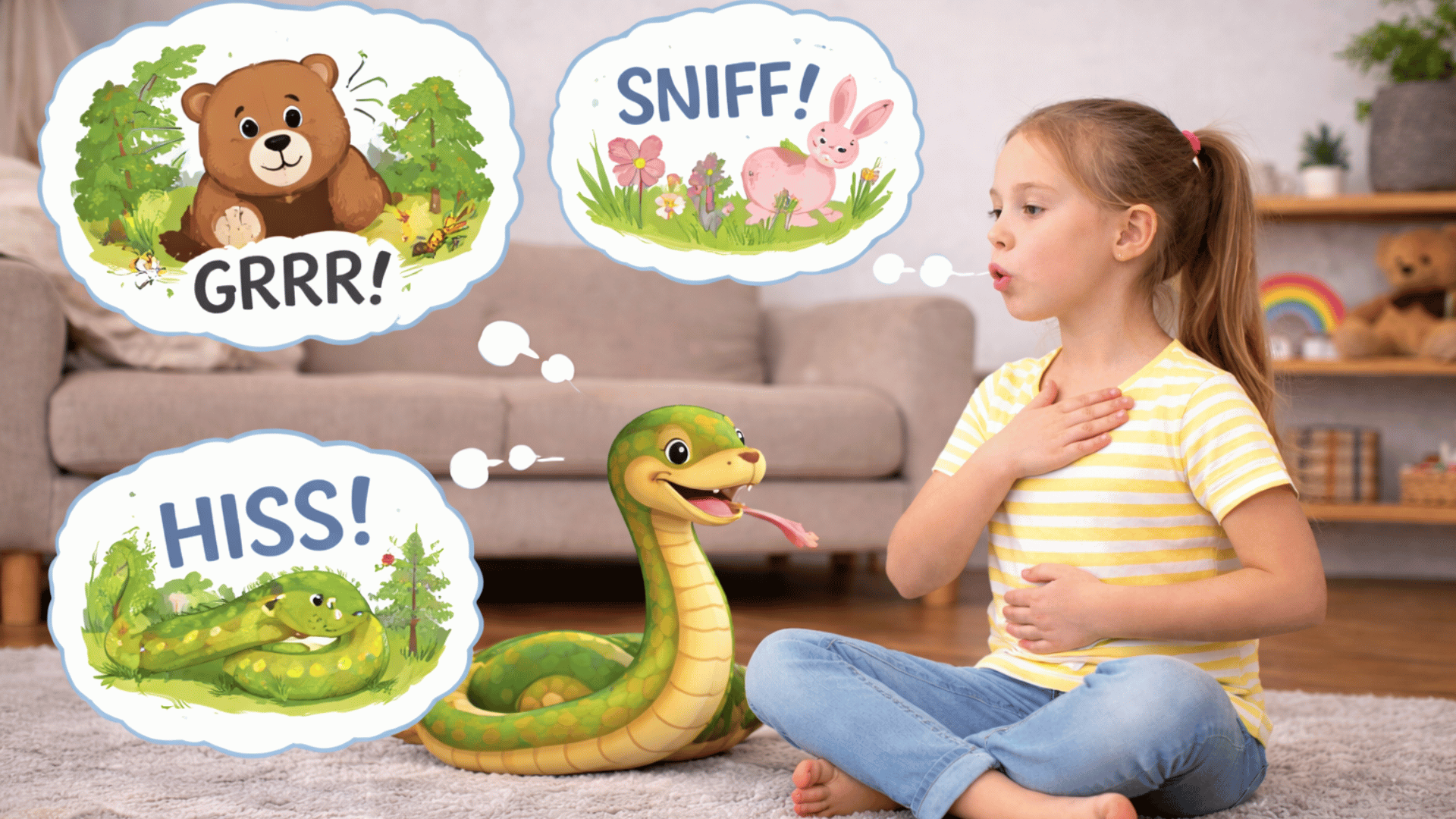
How to Play:
- Guide your child to pretend to be different animals as they breathe. For example, they can take a deep breath like a snake and slowly exhale through their mouth, making a “hiss” sound.
- Alternatively, they can practice deep, slow breaths like a bear, taking a big inhale and then letting out a slow, loud exhale.
- Encourage them to imagine the animal they’re pretending to be, making each breath fun and interactive.
- Switch between animals to keep the exercise engaging and playful.
Benefits: Animal breathing connects deep breathing to fun, imaginative play, helping children focus and engage while relaxing.
6. Bubble Breathing
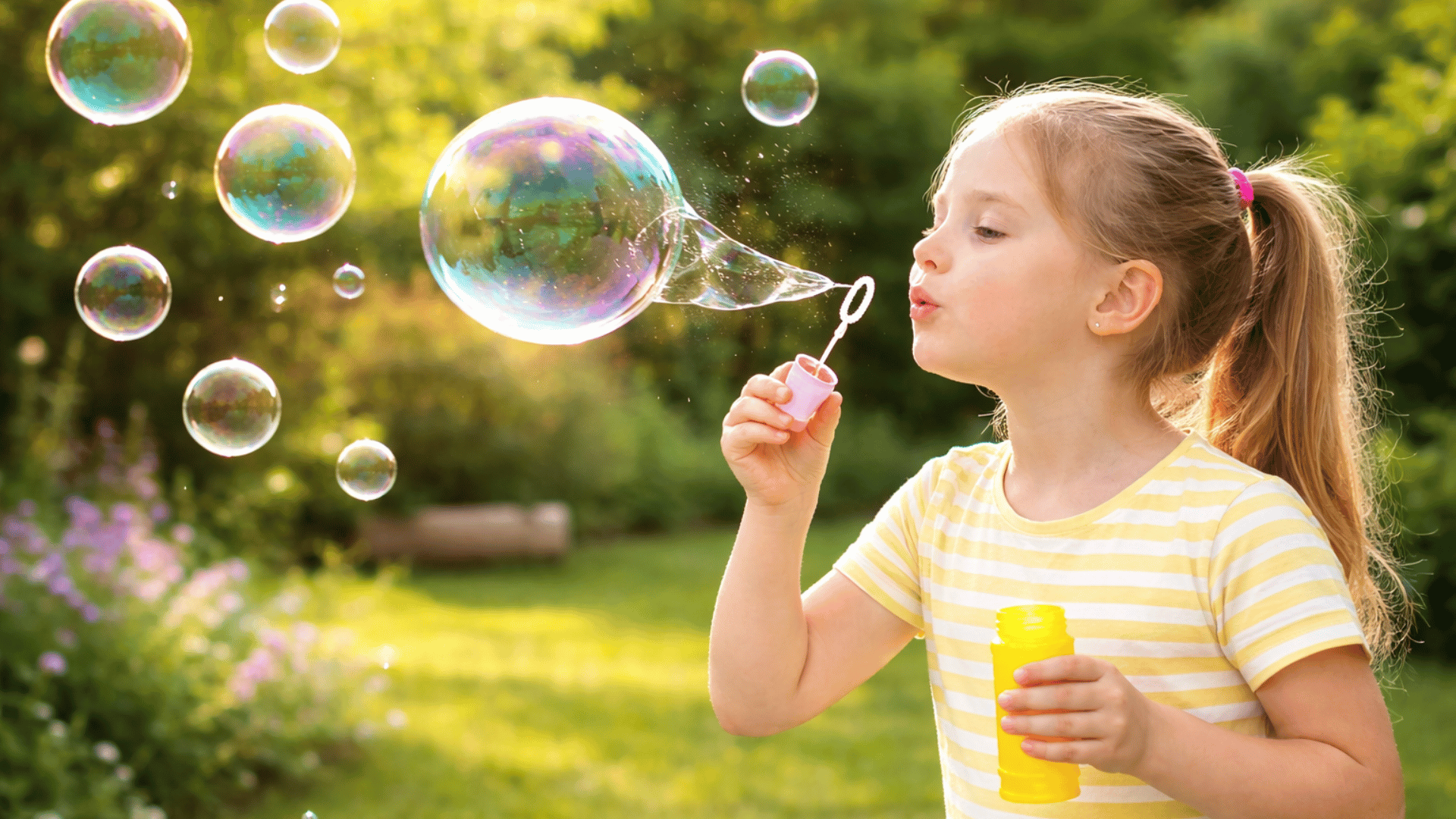
How to Play:
- Ask your child to imagine they are blowing bubbles.
- Inhale deeply through the nose, imagining they’re gathering air to blow a bubble.
- Then, slowly exhale, imagining the bubble growing larger and floating away as they blow out gently.
- You can add a fun element by actually blowing bubbles with a bubble wand after practicing the technique, making the process even more enjoyable.
- Encourage slow, steady breaths to create the “perfect bubble.”
Benefits: Bubble breathing helps children practice controlled breathing, and the act of blowing bubbles encourages slow, gentle exhales for relaxation.
Tips for Parents and Educators
Helping kids practice calming habits works best when it feels natural, not forced. A simple routine and a supportive approach can make these activities more effective and enjoyable.
| Tip | What to Do | Why It Works | When to Use |
|---|---|---|---|
| Create a Calm Space | Choose a quiet, comfortable area | Reduces distractions and improves focus | Before practice sessions |
| Stay Consistent | Practice daily at the same time | Builds routine and habit over time | Morning or bedtime |
| Keep It Fun | Use games, stories, or visuals | Keeps kids engaged and interested | During activities |
| Lead by Example | Practice alongside your child | Encourages learning through imitation | Anytime during practice |
Conclusion
Breathing exercises are a powerful tool for helping kids manage their emotions, focus their energy, and find calm in moments of stress.
With these fun and interactive breathing techniques, your child can learn to calm their mind and body in a playful, engaging way.
Practice these exercises together, and you’ll not only help your child build emotional resilience but also create meaningful moments of connection.
Frequently Asked Questions
At what age can kids start breathing exercises?
Kids as young as 3 years old can start simple breathing exercises. At this age, activities should be playful and easy to follow. As they grow older, you can introduce more structured techniques.
Can breathing exercises be used during tantrums?
It can be difficult during a full tantrum, but gentle guidance can help. It’s often better to introduce breathing when the child is calm so they can use it later.
What is the best time of day for breathing exercises?
There isn’t one perfect time, but mornings, transitions, and bedtime work well. Starting the day calmly or winding down at night helps build a routine.