



Starting solids is an exciting step, but I hear from parents all the time who aren’t sure when their baby is ready for that first spoonful.
Knowing the right age for baby cereal can help you know when cereal fits into your baby’s meals and what signs point to readiness.
In my work with child development, I’ve seen that age is only one part of the process; babies also need certain motor and oral skills before trying new textures.
I’ll break down when to start feeding baby cereal, how to introduce it safely, how much to offer, and how it fits into your baby’s overall diet.
When to Start Feeding Baby Cereal?
Most babies can begin trying solid foods around 6 months of age.
This is also the time when many parents consider adding infant cereal to their baby’s meals.
A baby should also show signs that their body is ready to handle solid foods, such as sitting with support, controlling their head, and showing interest in food.
During the first year, breast milk or formula continues to provide most of a baby’s nutrition. Solid foods help babies learn new tastes, textures, and eating skills.
Note: Age marks the earliest possible window, but readiness signs determine the right time to begin. Wait until both align, and confirm the timing with your pediatrician.
Signs Your Baby is Ready for Solids
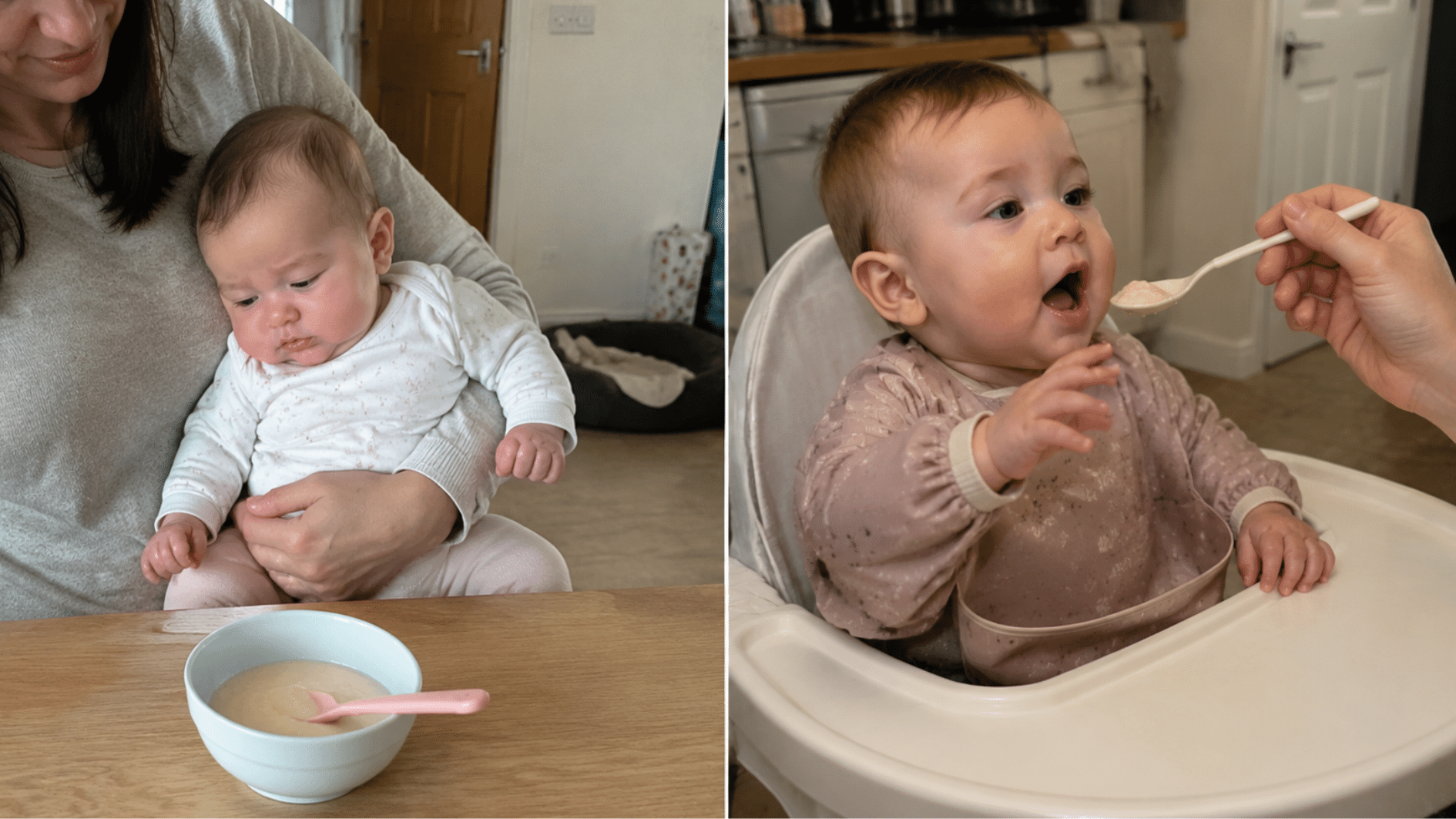
Baby cereal age gives a general idea of when solids may begin, but your baby’s development gives better clues. Look for these signs before introducing cereal or other foods.
1. Good Head and Neck Control
A baby should be able to hold their head steady and sit upright with support before starting solids. This helps them safely manage food while eating.
Poor head control can make it harder for babies to swallow properly. Waiting until they have better control can make the transition to solids smoother.
2. Sitting With Less Support
Many babies are ready for solids when they can sit with support and stay upright during feeding.
An upright position helps babies move food safely and reduces the chance of difficulty while swallowing.
3. Showing Interest in Food
Babies often show they are ready by watching others eat, reaching for food, opening their mouth when food comes near, or appearing curious during mealtimes.
Interest in food does not mean they are ready on its own, but it can be one sign along with other developmental skills.
4. Moving Food and Swallowing
Young babies naturally push food out of their mouth with their tongue.
As they become ready for solids, they learn to move food toward the back of their mouth and swallow.
This change helps them handle thicker textures like smooth cereal.
Types of Cereals Available
Once your baby is ready for solids, you may find several types of infant cereals. Most parents start with simple cereals and later add more variety as their baby becomes comfortable with new textures.
- Rice Cereal: A smooth, easy-to-prepare first food that is often fortified with iron.
- Oatmeal Cereal: A mild, smooth option that introduces babies to a different grain.
- Multigrain Cereal: A blend of grains usually offered after single-grain cereals are well tolerated.
- Whole-Grain Cereal: An oat- or barley-based choice that adds variety as eating skills develop.
Cereal, or Skip Straight to Solids?
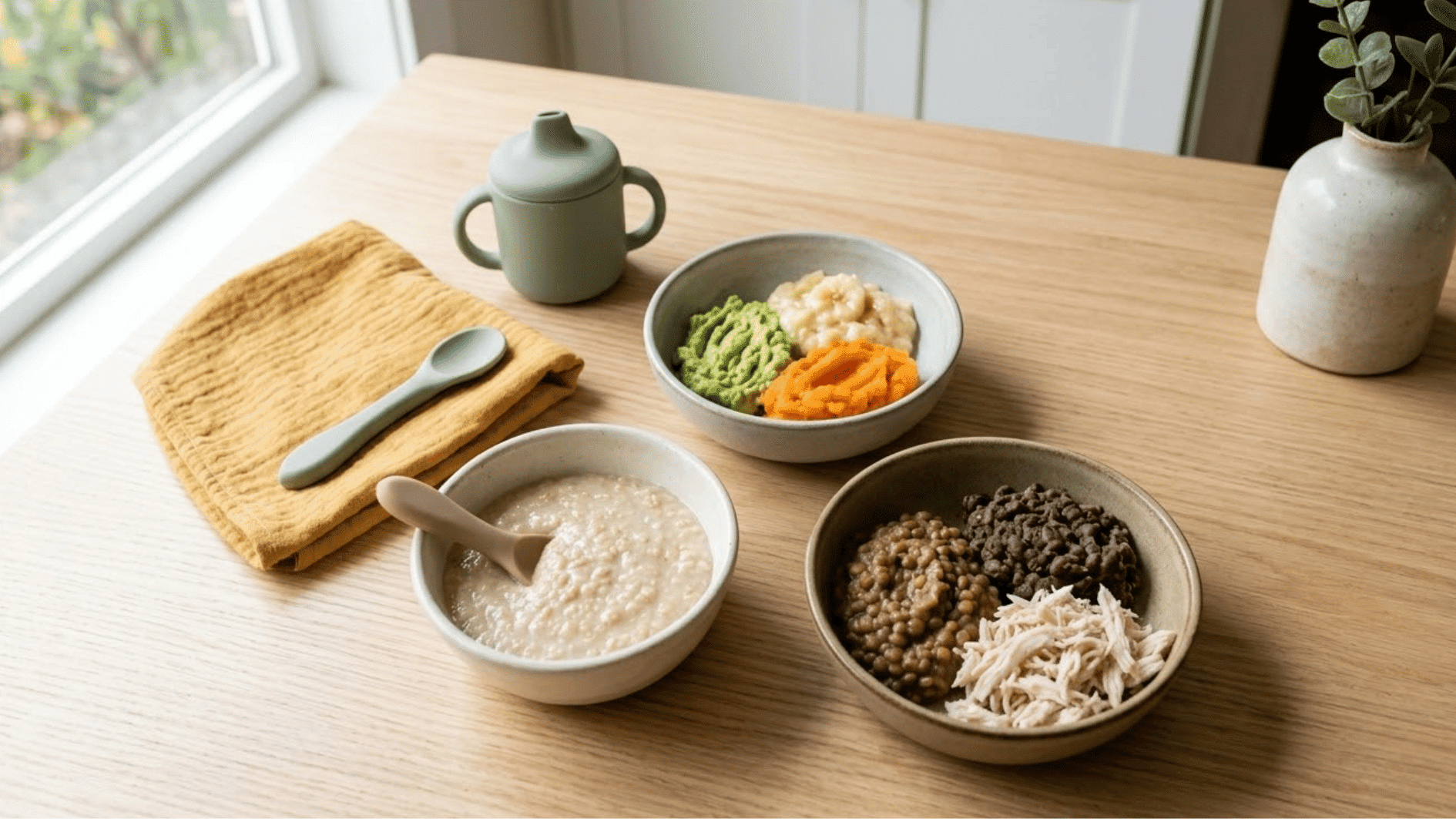
Baby cereal is a popular first food because it is simple to prepare and often provides added iron.
Iron is an important nutrient for growing babies, especially after about 6 months when their natural iron stores begin to decrease.
However, cereal is not the only choice for starting solids. Many parents introduce other soft foods that provide different flavors and textures, like a simple banana puree first food or a soft sweet potato baby food mash.
| First Food Option | Examples | Key Points |
|---|---|---|
| Baby cereal | Oatmeal cereal, infant cereal | Easy texture and often iron-fortified |
| Soft foods | Mashed fruits, vegetables, purees | Helps babies explore different tastes |
| Iron-rich foods | Meat purees, beans, lentils | Provides important nutrients |
How to Introduce Cereal Safely to Babies?
The first cereal feeding is mostly about observing. Many babies only take a small amount at first, and that is completely normal.
Start With Small Amounts
Begin with a small spoonful and allow your baby time to get used to the new texture. Early solid meals are more about practice than replacing milk feeds.
Some babies may spit food out, make funny faces, or only taste a little. This is part of learning how to eat.
Make the Texture Thin
When first introducing cereal, prepare it with a smooth and thin texture. Many parents mix infant cereal with breast milk, formula, or water to make it easier for babies to handle.
As your baby becomes more comfortable, the texture can slowly become thicker.
Introduce One New Food at a Time
Introducing foods one at a time can make it easier to notice if your baby has a reaction.
Give your baby time to adjust before adding several new foods together.
This also helps you understand which flavors and textures your baby enjoys, an approach that carries over well into these baby-led weaning recipes once cereal is going smoothly.
Follow Baby’s Hunger Cues
Babies have their own ways of showing when they are hungry or full.
Signs of being full may include turning away, closing their mouth, or losing interest in food. Avoid forcing extra bites, as learning to respond to hunger cues is an important part of healthy eating habits.
The CDC advises against adding cereal to a baby’s bottle unless recommended by a pediatrician. Thickened bottles may increase choking risks, and cereal in a bottle does not help babies sleep longer.
Appropriate Cereal Amounts (Age by Age)
There is no exact amount of cereal that every baby should eat. Some babies enjoy solids quickly, while others need more time to explore new foods.
| Age | Feedings Per Day | Texture | Notes |
|---|---|---|---|
| 6 months | 1 | Thin, milk-like | Start with single-grain cereal; introduce one new food at a time |
| 7 to 8 months | 2 | Slightly thicker | Add pureed fruits and vegetables alongside cereal |
| 9 to 12 months | 2 – 3 | Thicker, some soft pieces | Cereal can be soaked soft; move toward table foods |
Wrapping It Up
The right baby cereal age is less about hitting an exact date and more about matching the timing to your baby.
I recommend starting no earlier than 6 months, but let readiness signs like head control and interest in food confirm the moment, not just the calendar. From there, build up slowly.
Start with thin cereal, then move to thicker textures and new foods as your baby’s skills grow. By the time your baby reaches toddler age, they’ll be ready for table foods.
I’ve found that every baby moves at their own pace, and a slow start isn’t a setback. Check in with your pediatrician before you begin, especially if your baby was born early or has a health condition that affects feeding.
Frequently Asked Questions
Can I Mix Baby Cereal With Fruit or Vegetables?
Yes, cereal can be mixed with soft fruits or vegetables once your baby is comfortable with solid foods.
How Long Can Prepared Baby Cereal Be Stored?
Prepared cereal is best served fresh, and leftovers from your baby’s bowl should be discarded to reduce bacterial growth.
How Long Should Baby Eat Cereal Before Other Foods?
Most babies start other pureed foods within a week or two of cereal, not weeks later. There’s no need to wait long once cereal goes well.