





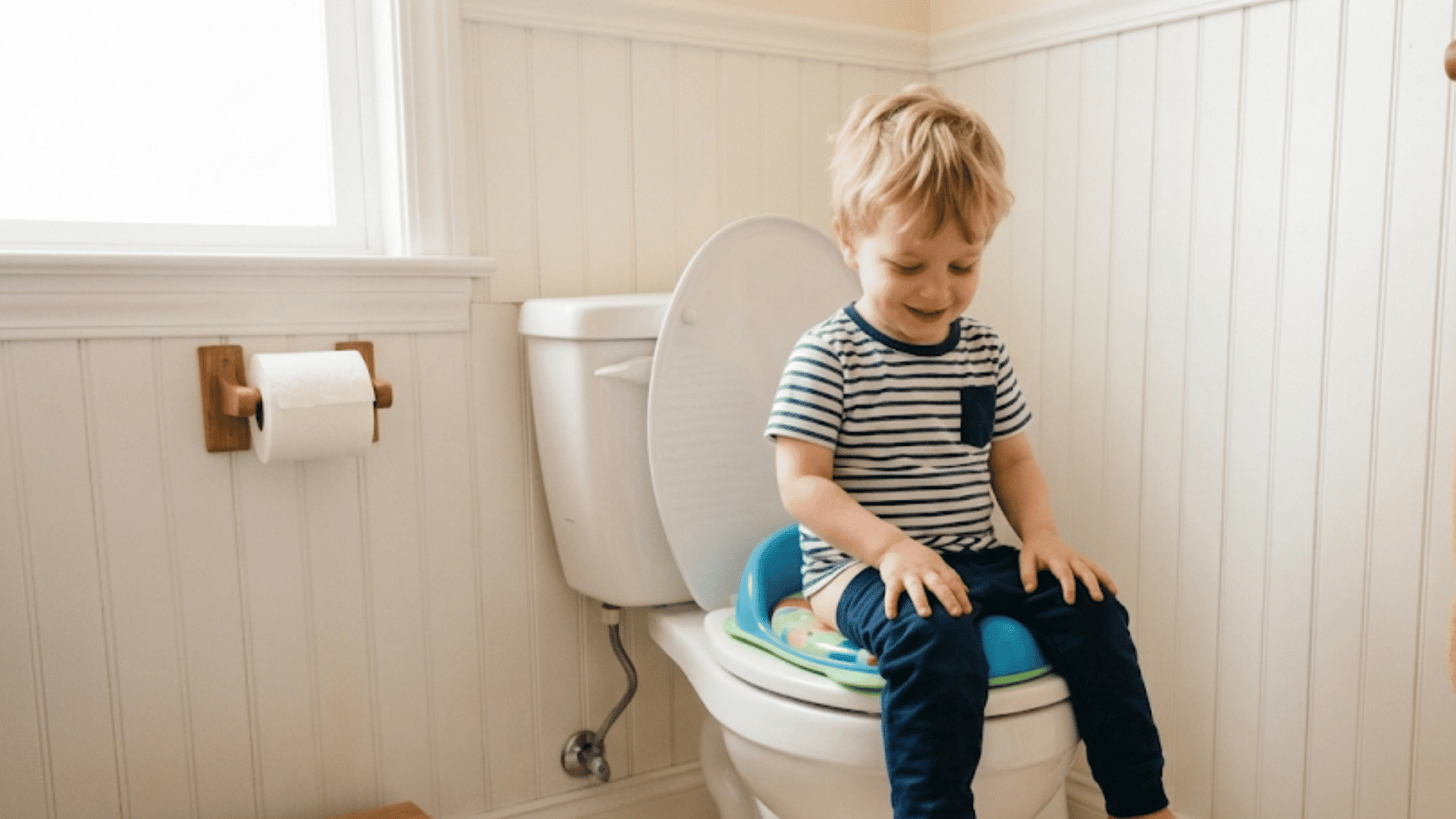
Potty training can feel confusing because every child learns at a different pace. Some children may show interest early, while others need more time before they feel ready.
Parents may also notice a few boy-specific challenges, such as learning to aim, deciding when to introduce standing, or staying focused during bathroom trips.
These small hurdles can make the process feel less predictable. The right potty training tips for boys can make daily practice calmer and easier to manage.
This blog covers potty training tips, including common challenges, nighttime training, and practical strategies to make the process easier.
When Should Boys Start Potty Training?
Most boys are ready somewhere between 18 months and 3 years old. Boys often start a few months later than girls on average.
Age alone doesn’t decide readiness. Behavior does. Watch for these signals instead of a birthday. A boy who stays dry for two or more hours is closer to ready.
So is one who tells you before he goes, or shows curiosity about the toilet. Starting too early usually leads to more accidents and more frustration for both of you.
How to Potty Train a Boy the Right Way?
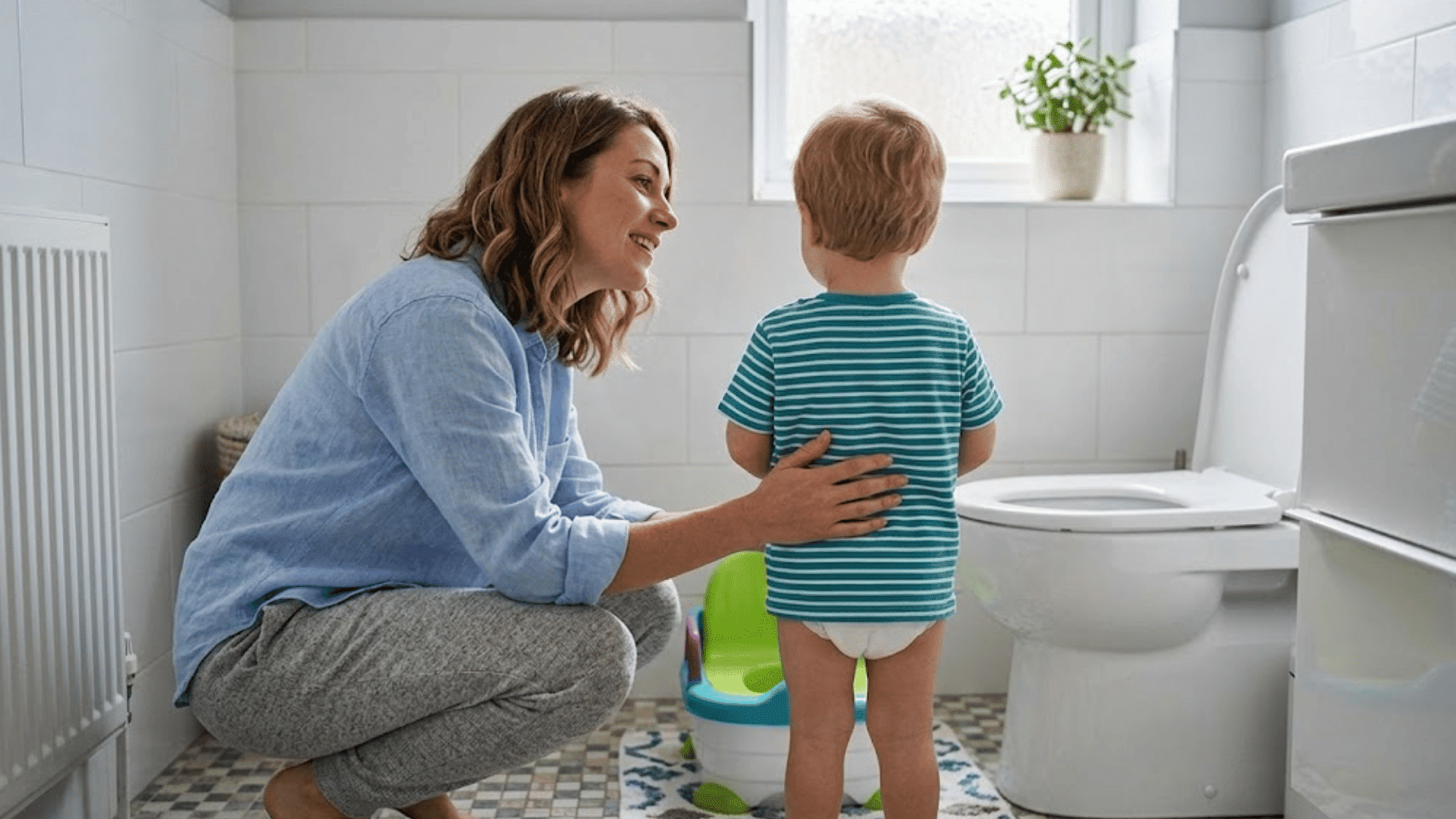
Potty training works best when you break it into small, manageable steps instead of expecting your child to master everything at once.
1. Introduce the Potty Before Training Begins
Place the potty chair in an easy-to-reach spot one to two weeks before you begin training.
Let your son sit on it fully clothed for a few minutes each day so it feels familiar and becomes part of his routine without any pressure.
Avoid asking him to use it right away. Simply reading a book, talking, or letting him explore the potty helps remove fear and makes the transition to actual training much smoother.
2. Start with Short Sitting Sessions
Begin with brief potty sessions lasting two to three minutes instead of expecting him to stay seated for a long time.
Use likely potty times, such as after waking up and before bath time, to increase the chances of success.
Keep each session relaxed and end it before your child becomes restless. Short, positive experiences are more effective than long sessions that make him associate the potty with boredom or frustration.
3. Dress Him in Easy-to-Remove Clothing
Choose loose pants or training underwear that your child can pull up and down without much help.
Simple clothing reduces frustration, encourages independence, and helps him reach the potty quickly when he needs to go.
Avoid overalls, belts, or outfits with complicated fasteners during training. The fewer obstacles your child faces, the easier it becomes for him to respond when he feels the urge to use the potty.
4. Follow a Consistent Potty Schedule
Encourage your son to try using the potty every 90 minutes to two hours, along with regular attempts after waking and after meals.
A predictable routine helps him recognize his body’s signals and build healthy bathroom habits.
Rather than repeatedly asking if he needs to go, gently guide him to the potty at the same time each day. Consistency helps establish the habit even before he begins to recognize the urge on his own.
5. Praise Every Effort, Not Just Success
Celebrate every attempt, even if nothing happens. Positive reinforcement for sitting calmly, trying, or telling you he needs to use the potty builds confidence and keeps the experience encouraging rather than stressful.
Offer specific praise, like “Great job sitting on the potty,” rather than focusing only on successful trips. Recognizing small achievements motivates your child to keep trying without feeling pressured.
Many parents find that pairing praise with a simple, low-pressure reward system helps keep motivation steady during the slower weeks.
6. Introduce Standing After Sitting Feels Natural
Once your son is comfortably using the potty while sitting, usually after a week or two, you can begin teaching him to stand for urination.
Keep the first few attempts fun and relaxed so he learns without feeling pressured.
A step stool can improve balance and confidence, while simple target games can make learning to aim more enjoyable.
Introduce standing gradually so it feels like a new skill rather than another challenge.
Common Potty Training Challenges and How to Handle Them
Potty training isn’t always smooth, and most boys face a few challenges along the way. Recognizing these common hurdles and responding with patience can make training less stressful for both you and your child.
- Won’t Sit Still: Many boys lose interest quickly. Keep potty sessions short, use a book or song, and avoid making him sit longer than he’s comfortable with.
- Playtime Distractions: Some boys ignore the urge to go while playing. Schedule regular potty breaks and give gentle reminders before activities.
- Hides to Poop: It’s common for boys to hide or ask for a diaper when they need to poop. Stay patient, avoid pressure, and check for constipation if pooping seems painful.
- Fear of Flushing: The sound of a toilet flushing can feel intimidating. Let your child flush when he’s ready and use a child-sized seat with a step stool.
- Frequent Accidents: Accidents are a normal part of potty training. Stay calm, help with cleanup, and encourage your child to keep trying.
- Poor Aim: Standing to pee takes practice. Start with sitting, then use a step stool and fun target games to improve aim.
Mistakes Parents Make When Potty Training Boys

A few habits slow boys down more than any lack of readiness does. Standing first is a common mistake, since skipping the sitting stage can confuse bowel training later.
Punishing accidents is another, as shame slows progress and can cause boys to hide bowel movements.
Comparing him to siblings, like saying his sister was trained by now, adds pressure without actually helping.
Rushing for daycare deadlines by forcing training on an outside timeline before readiness signs appear works against him, too.
Finally, switching methods too fast, giving a new approach only a day or two before abandoning it, keeps him from ever settling into one routine long enough for it to work.
Potty Training Tips that Help Boys Learn Faster
Small, consistent habits move things along faster than any single trick. These are the ones that make the biggest difference:
- Consistency: Use the same words (“potty,” “go”) and the same routine every day, even on weekends
- Loose clothing: Elastic-waist pants he can pull down himself, not snaps or buttons
- Books on the potty: A short book turns sitting time into calm time instead of a rushed chore
- Visual reward chart: A sticker for every attempt, not just successes, keeps motivation up early on and helps build his confidence as he goes.
- Matching underwear: Letting him pick his own underwear gives him a reason to stay dry in it
Avoid pull-ups during the day once training starts. They feel too much like a diaper and remove the wetness cue that teaches bladder awareness.
When to Talk to a Pediatrician?
Every child potty trains at their own pace, but some signs may need medical attention.
Talk to your pediatrician if your son isn’t making progress with daytime potty training by age 4 despite consistent efforts.
Pain while peeing or pooping is another red flag, since it can signal constipation, a urinary tract infection, or another medical condition.
Ongoing constipation or stool withholding also deserves evaluation, as it can interfere with potty training if left unchecked.
If your child starts having frequent accidents after being fully trained, a pediatrician can help identify the cause behind that sudden regression.
And if your son shows blood in his urine, frequent urination, fever, or pain while urinating, seek medical advice right away.
Conclusion
Every child reaches this milestone at their own pace, so try not to compare your son with siblings or other children.
The best potty training tips for boys focus on patience, consistency, and celebrating small wins instead of expecting perfection.
With the right routine and plenty of encouragement, your son will gain the confidence to become fully potty trained.
Have you discovered a potty training tip that worked especially well for your son, or are you facing a challenge not covered here? Share your experience in the comments.
Frequently Asked Questions
Why is My Son Afraid of the Toilet Flushing?
Loud automatic flushers startle many boys. Let him flush manually at home first, and cover public restroom sensors with a sticky note until he’s used to the sound.
Is It Normal for Boys to Potty Train Later than Girls?
Yes. Boys often reach full daytime training a few months after girls, on average, and nighttime dryness usually takes even longer for both.
Should I Let My Son Watch Another Boy Use the Toilet?
Yes, if there’s an older brother, cousin, or dad willing to demonstrate. Boys often learn to stand and aim faster from watching another male than from instructions alone.