

Tiny homes are becoming a popular choice across the United States for people who want a smaller, more practical living space.
Before building, one of the most important steps is choosing the right tiny house design. A smart layout can make a compact home feel comfortable, functional, and easy to live in.
Comparing different tiny home floor plans helps you find a setup that matches your lifestyle, storage needs, and available space.
It is also important to understand what comes with tiny home blueprints. These drawings provide the construction details needed to turn a plan into a finished home.
Below, you’ll find popular floor plan ideas, key blueprint features, and helpful tips for choosing a design that fits your needs.
What Makes a Great Tiny House Design?
The best tiny house design makes everyday living simple and comfortable. It should use space efficiently without making the home feel crowded.
Look for tiny home floor plans with open layouts, smart storage, and plenty of natural light. Features like built-in shelves, storage stairs, and multi-purpose furniture can make a big difference.
It is also important to think beyond the current layout. Consider how many people will use the space, your storage requirements, and any future needs before choosing tiny home blueprints.
Most importantly, choose tiny home blueprints that match your lifestyle. A design that fits your daily needs will always be the better choice.
Tiny Home Floor Plans by Size
The size of your tiny home affects everything from storage and comfort to layout options. While smaller homes can maximize efficiency, larger layouts often provide more flexibility for daily living.
1. Floor Plans Under 200 Square Feet
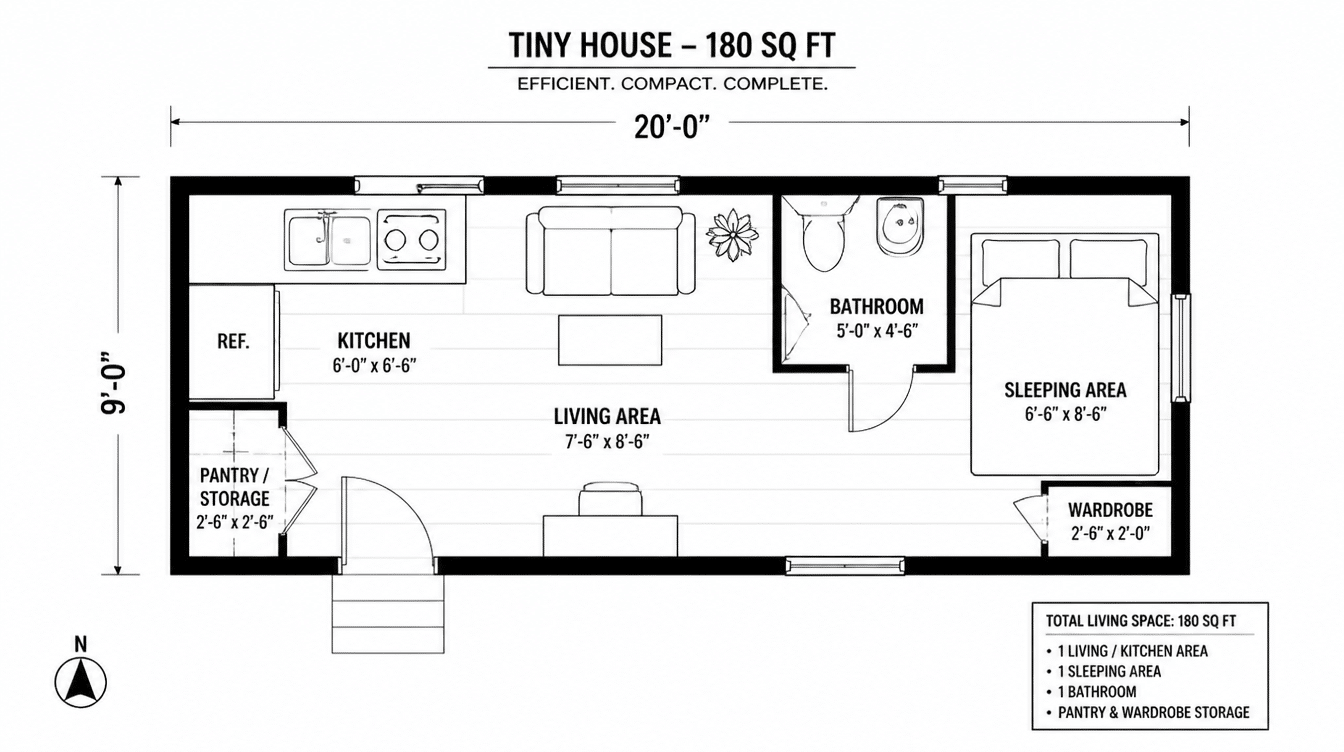
Tiny homes under 200 square feet are ideal for individuals who want a simple and compact living space. These layouts often combine the living room, kitchen, and sleeping area into one open space to make the most of every square foot.
Storage is usually built into furniture, walls, or staircases to reduce clutter. Many plans also include loft bedrooms to free up floor space below.
2. Floor Plans Between 200 and 400 Square Feet
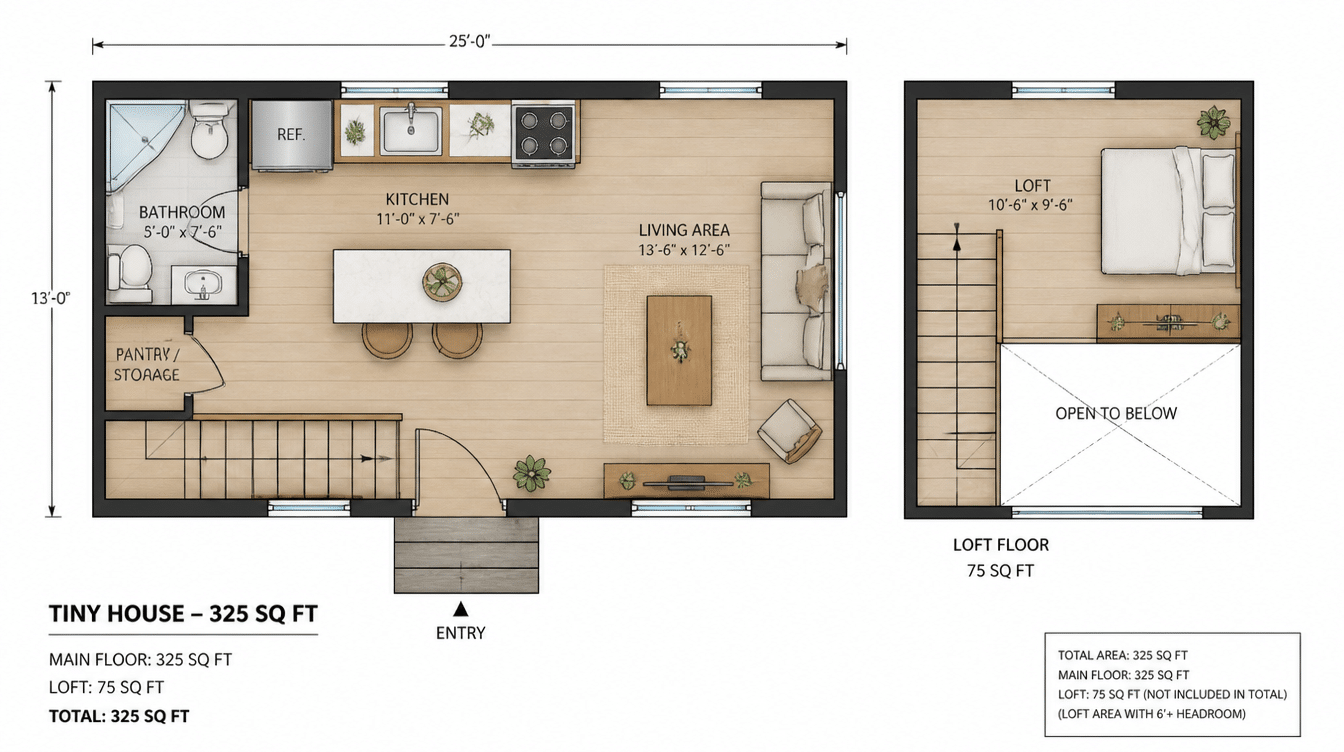
This size range is one of the most popular choices because it offers a good balance between functionality and comfort. Homeowners can enjoy a larger kitchen, additional storage, and a more spacious living area without significantly increasing the home’s footprint.
Many tiny home floor plans in this category include a separate sleeping loft, full bathroom, dining space, and room for everyday essentials. These layouts work well for singles, couples, and even small families.
3. Floor Plans Over 400 Square Feet
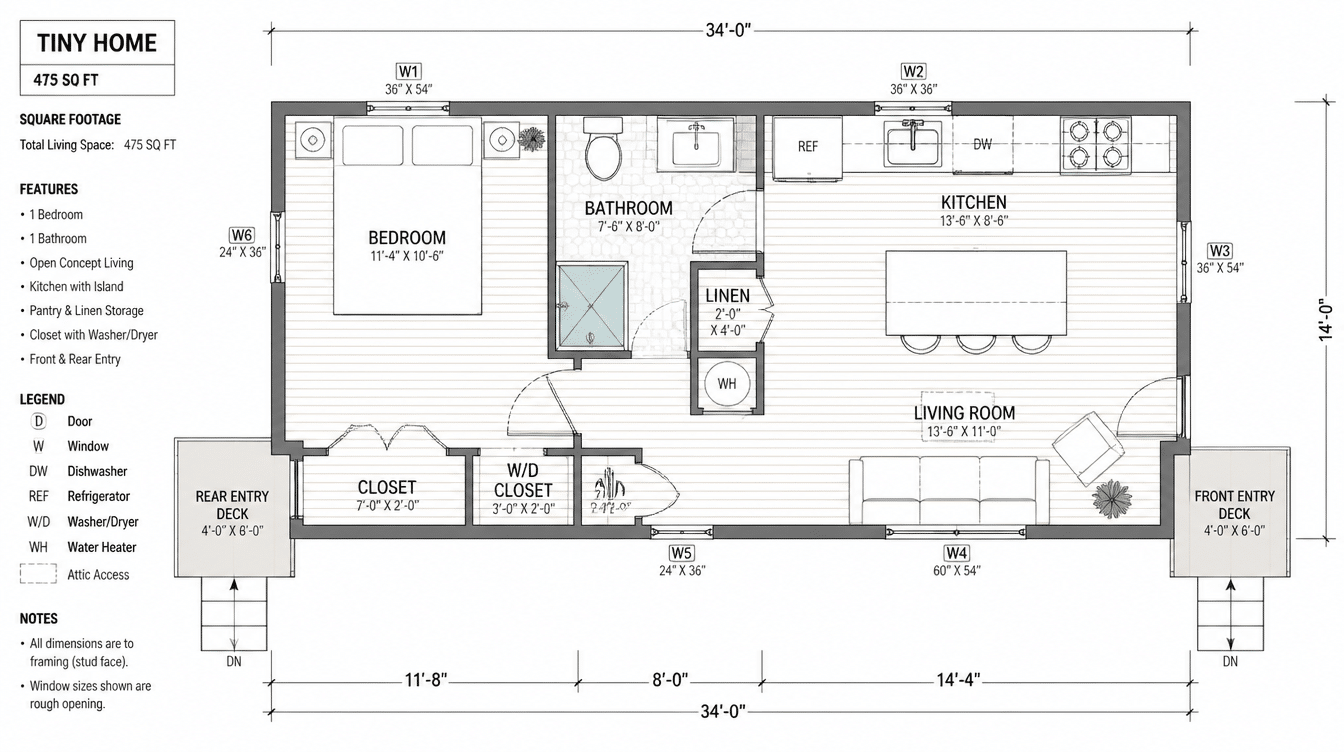
Tiny homes over 400 square feet provide greater flexibility for people who need extra space. These plans often feature private bedrooms, larger kitchens, dedicated office areas, and additional storage solutions.
They are a practical option for remote workers, retirees, couples, or families who plan to live in a tiny home full-time. The added square footage can make the home feel more like a traditional house while still maintaining a smaller overall footprint.
Tiny Home Blueprints and What They Include
A great floor plan shows how a tiny home will look and function, but tiny home blueprints provide the technical details needed to bring that design to life.
Complete blueprints can also help homeowners avoid unexpected issues during construction. Before purchasing a set of plans, it is important to know what information should be included.
Floor Plan Drawings
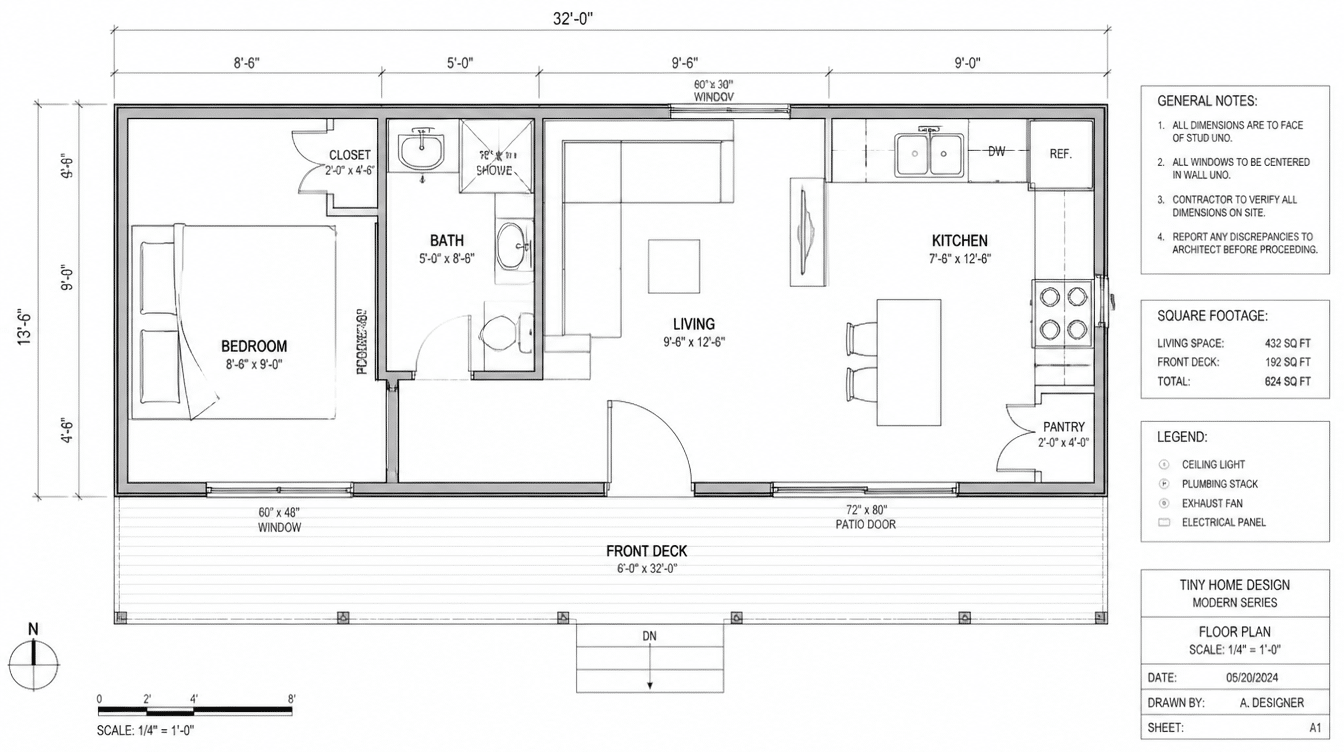
Floor plan drawings provide a top-down view of the home’s layout. They show room dimensions, wall locations, door swings, window placements, and the relationship between different living areas.
These drawings help homeowners visualize how the space will function before construction begins. They are often the first pages people review when comparing tiny home floor plans.
Foundation Plans
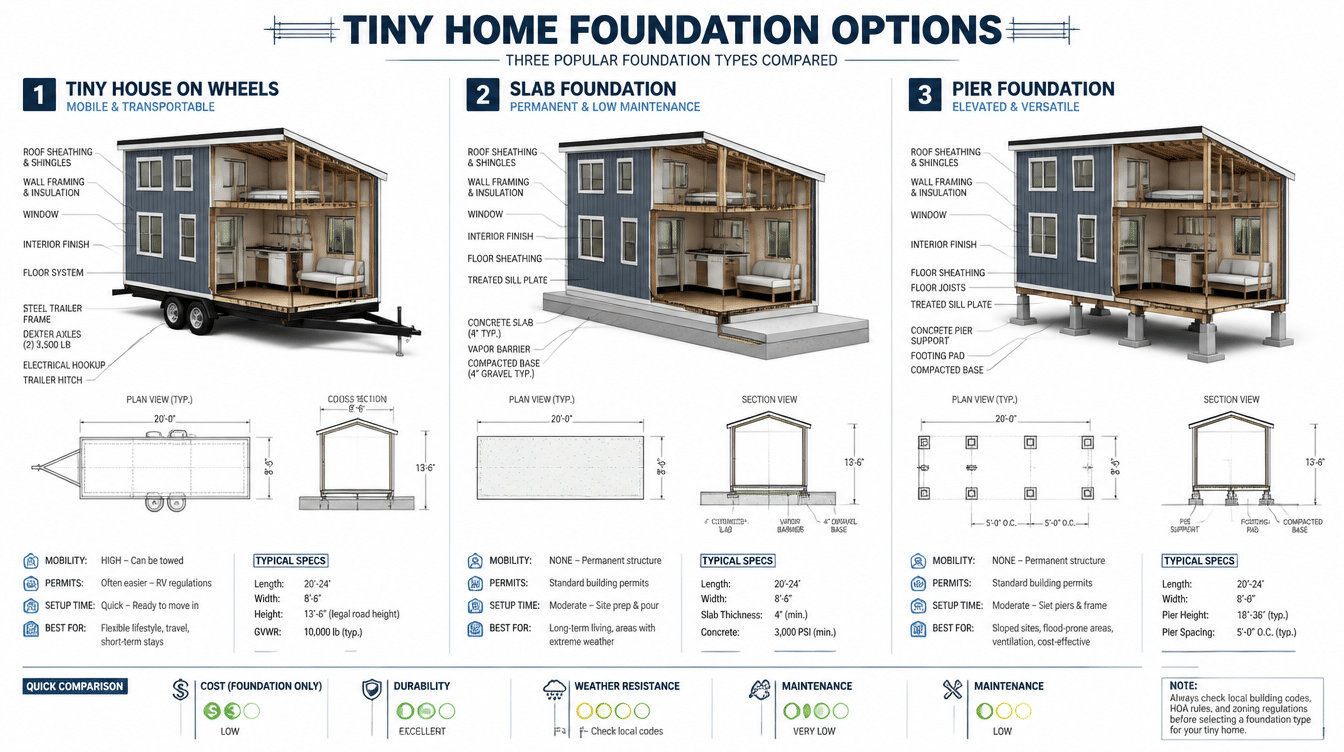
Foundation plans explain how the tiny home will be supported. The design may vary depending on whether the structure is built on a trailer, a concrete slab, piers, or another type of foundation.
These drawings include measurements, support locations, and construction details that help create a stable base for the home.
Framing Details
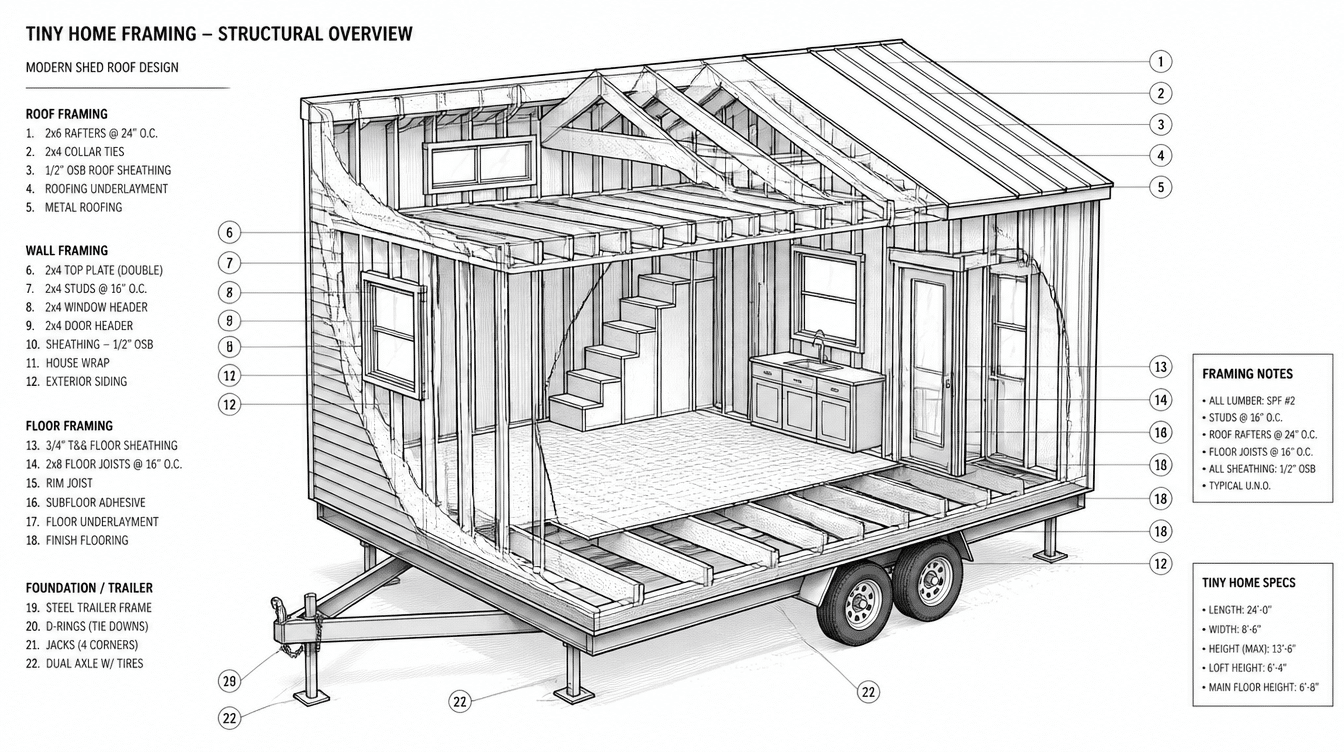
Framing plans outline the structural framework of the home. They show how walls, floors, and roof components are assembled to support the overall structure.
Builders rely on these drawings to understand material requirements, framing locations, and load-bearing elements throughout the home.
Electrical Layouts
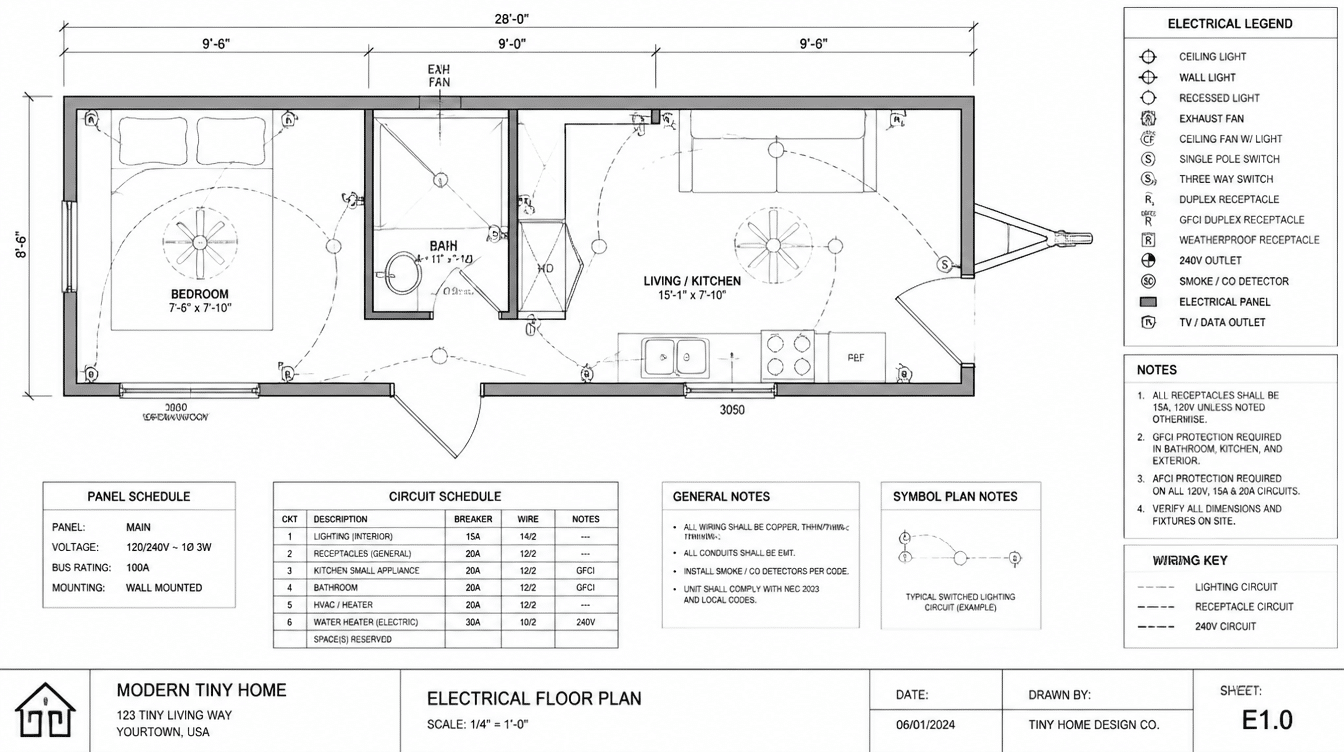
Electrical plans identify the placement of outlets, switches, light fixtures, smoke detectors, and major appliances. These drawings help ensure the home’s electrical system is installed safely and efficiently.
A well-planned electrical layout can also improve convenience by placing outlets and lighting where they are needed most.
Plumbing Plans
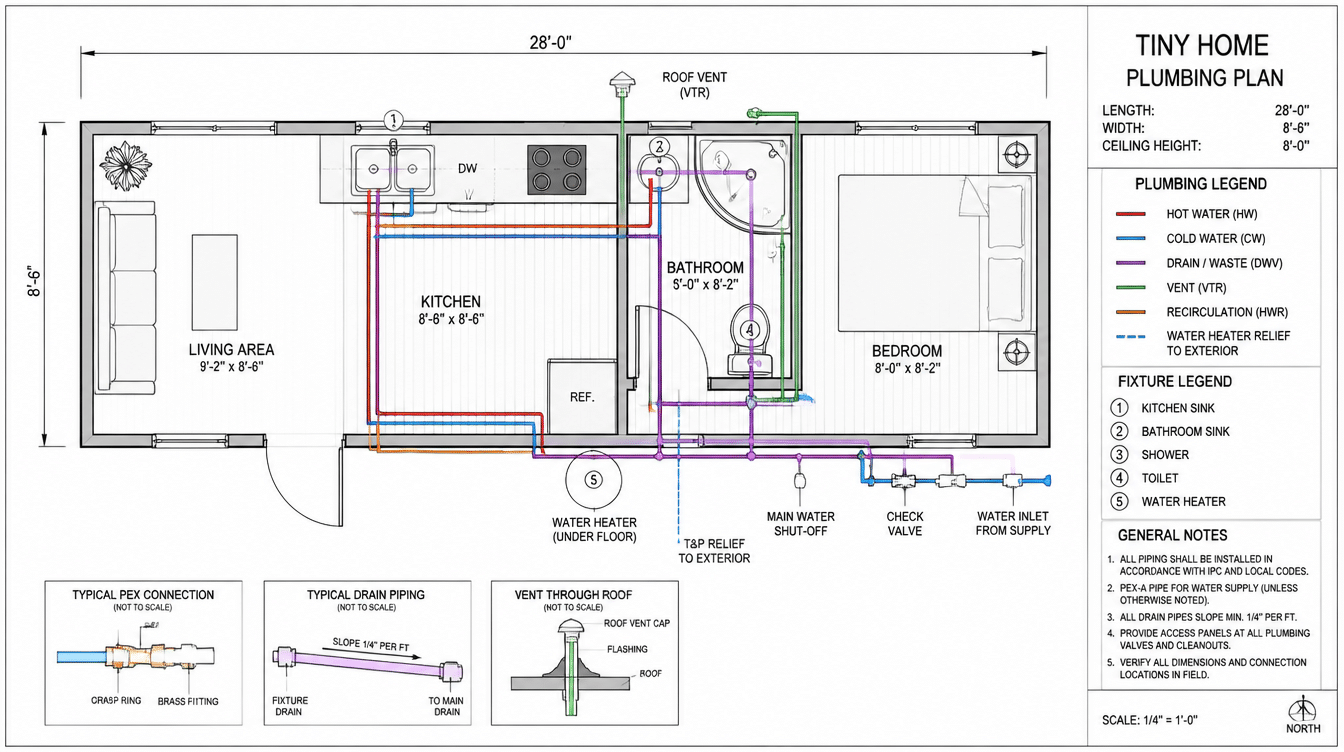
Plumbing drawings show the location of sinks, toilets, showers, water heaters, supply lines, and drainage systems. These plans help contractors install plumbing correctly while maximizing available space.
Since tiny homes have limited room for utilities, a well-designed plumbing layout can improve functionality and simplify maintenance.
Roof Plans
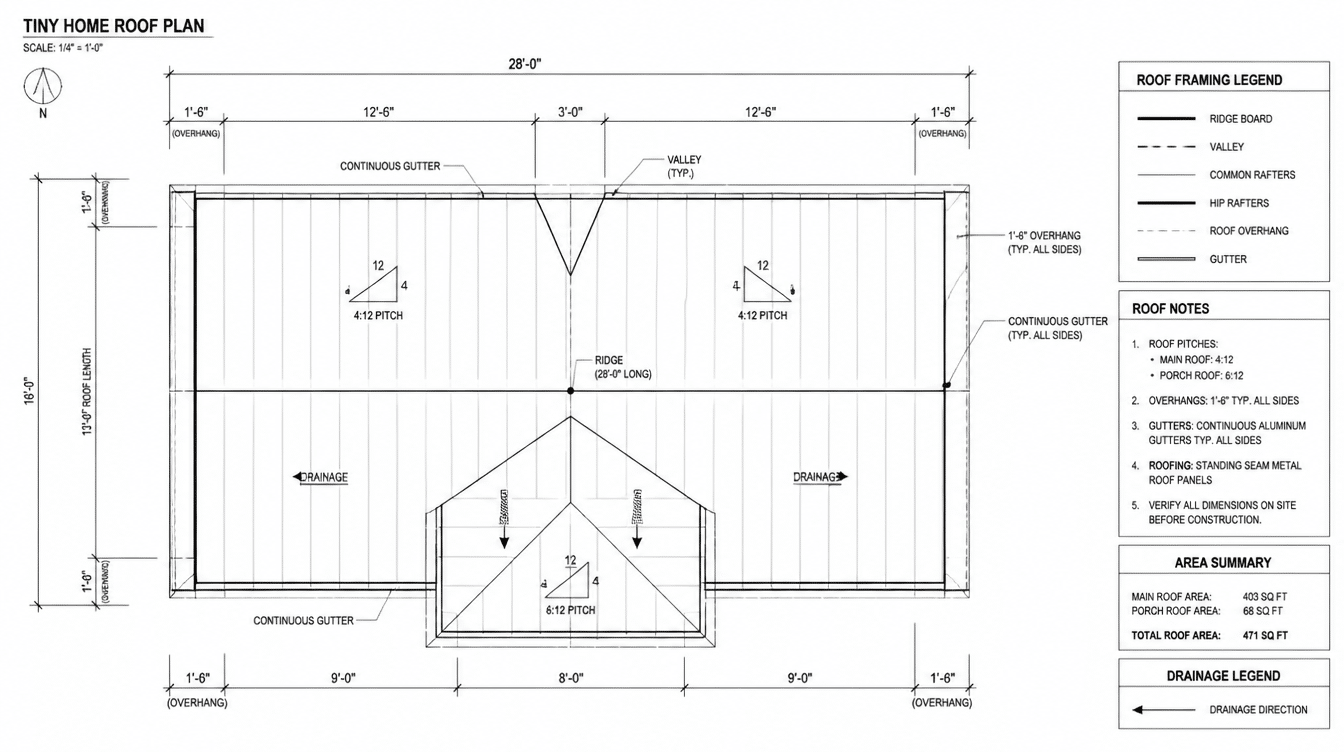
Roof plans provide details about the roof shape, dimensions, pitch, and drainage design. They help builders understand how the roof should be constructed and how water will flow away from the structure.
This information is especially important in regions that experience heavy rainfall, snow, or strong winds.
Features to Look for in Tiny Home Floor Plans
The best tiny home floor plans do more than save space. They create a home that feels comfortable, functional, and easy to live in every day. When comparing different layouts, pay close attention to these important features.
- Smart Storage Solutions – Look for built-in shelving, storage stairs, and hidden compartments to maximize space and reduce clutter.
- Open Living Areas – Open layouts combine key living spaces to make the home feel larger and easier to move around in.
- Natural Light and Window Placement – Large windows bring in more sunlight, improve airflow, and help small spaces feel more open.
- Multi-Purpose Furniture Areas – Features like fold-down tables and convertible furniture help make the most of limited square footage.
- Functional Kitchen Design – A good kitchen layout should include sufficient counter space, storage, and room for essential appliances.
- Flexible Sleeping Spaces – Loft bedrooms and main-floor sleeping areas offer different benefits depending on your space and accessibility needs.
Including these features in your tiny house design can help create a space that feels efficient, comfortable, and well-suited to your lifestyle.
Choosing the Right Tiny House Design for Your Needs
The right tiny house design depends on how you plan to live in the space. Factors such as household size, storage requirements, work-from-home needs, and long-term goals can all influence which layout works best.
As you compare tiny home floor plans, focus on functionality rather than appearance alone. A well-designed layout should support your daily routine while making efficient use of every square foot.
Before purchasing tiny home blueprints, review the details carefully and confirm that the plans include the information needed for construction.
Taking the time to compare your options can help you choose a design that feels comfortable, practical, and suitable for years to come.
Common Mistakes to Avoid
Choosing the wrong tiny home blueprint can lead to storage issues, poor layout flow, and costly changes later. Checking the plan details before buying helps you pick a home design that fits daily life, not just looks good online.
| Problem | Fix |
|---|---|
| Not enough storage space | Choose blueprints with built-in cabinets, loft storage, under-bed storage, or wall-mounted shelving. |
| Wrong home size | Match the square footage to your lifestyle, number of people, and future needs. |
| Poor layout flow | Look for plans with clear walking space, open zones, and easy access between rooms. |
| Lack of natural light | Pick a design with well-placed windows, glass doors, or skylight options. |
| Missing construction details | Buy plans that include dimensions, framing notes, elevations, and material guidance. |
| No room for future needs | Choose a layout that can support extra storage, a work area, or flexible sleeping space. |
Final Thoughts
Finding the right tiny house design starts with understanding how you want to use the space. The best layouts balance comfort, functionality, and efficient use of every square foot.
By comparing different tiny home floor plans and reviewing complete tiny home blueprints, you can make a more informed decision before construction begins.
Taking the time to choose the right plan today can help create a home that works well for your lifestyle both now and in the future.
Frequently Asked Questions
Do Tiny Homes Have the Same Insurance Requirements as Traditional Houses?
Not always. Insurance requirements vary based on whether the tiny home is built on wheels or on a permanent foundation.
How Long Does It Take to Build a Tiny Home?
Construction timelines vary, but many tiny homes can be completed within a few months depending on the design, materials, and builder availability.
Can a Tiny Home Increase in Value Over Time?
Some tiny homes may retain or increase their value, especially those built with quality materials and located on owned land.
Are Tiny Homes Suitable for All Climates?
Yes, but the design should include appropriate insulation, ventilation, and weather protection based on local climate conditions.
Can I Finance a Tiny Home?
Many lenders offer financing options for tiny homes, although loan types and eligibility requirements may differ from traditional mortgages.