
Stuck indoors with kids who have too much energy and too little patience? That’s a recipe for chaos. Most parents run out of ideas fast. The toys get ignored, the TV gets old, and by 10 AM, everyone is bored and restless.
But the right inside activities for kids can turn a slow day into something genuinely fun. Activities that hold attention, spark creativity, and yes, actually keep them busy for more than five minutes.
This blog has a list of solid options, from quiet crafts to active games. Something in here will surely work for you, so get ready to find it.
Why Inside Activities are a Smart Choice for Kids?
Honestly, inside activities get a bad rap. Most parents assume staying indoors means screens, boredom, or chaos, but that’s really not the case. The right activity can do a whole lot more than pass the time.
Here’s what goodinside activities for kids actually do:
- Spark Creativity: Art, crafts, and building projects get those little minds working
- Sneak in Learning: Science experiments and puzzles teach without feeling like school
- Build Focus: Quiet activities like journaling or coloring improve attention spans
- Encourage Imagination:Pretend play develops emotional and social skills
- Costs Almost Nothing: Most use supplies you already have at home
- Keep the Whole Family Involved: Many of these activities are just as fun for parents and siblings to join in
Inside Activities for Kids to Keep Kids Occupied
These inside activities are fun, easy to set up, and perfect for all kinds of moods. Pick a few and get started!
Suggested: If rainy days are the real problem, this list of fun kids indoor activities for rainy days is worth a look too, pick a few and get started!
1. Watercolor Painting
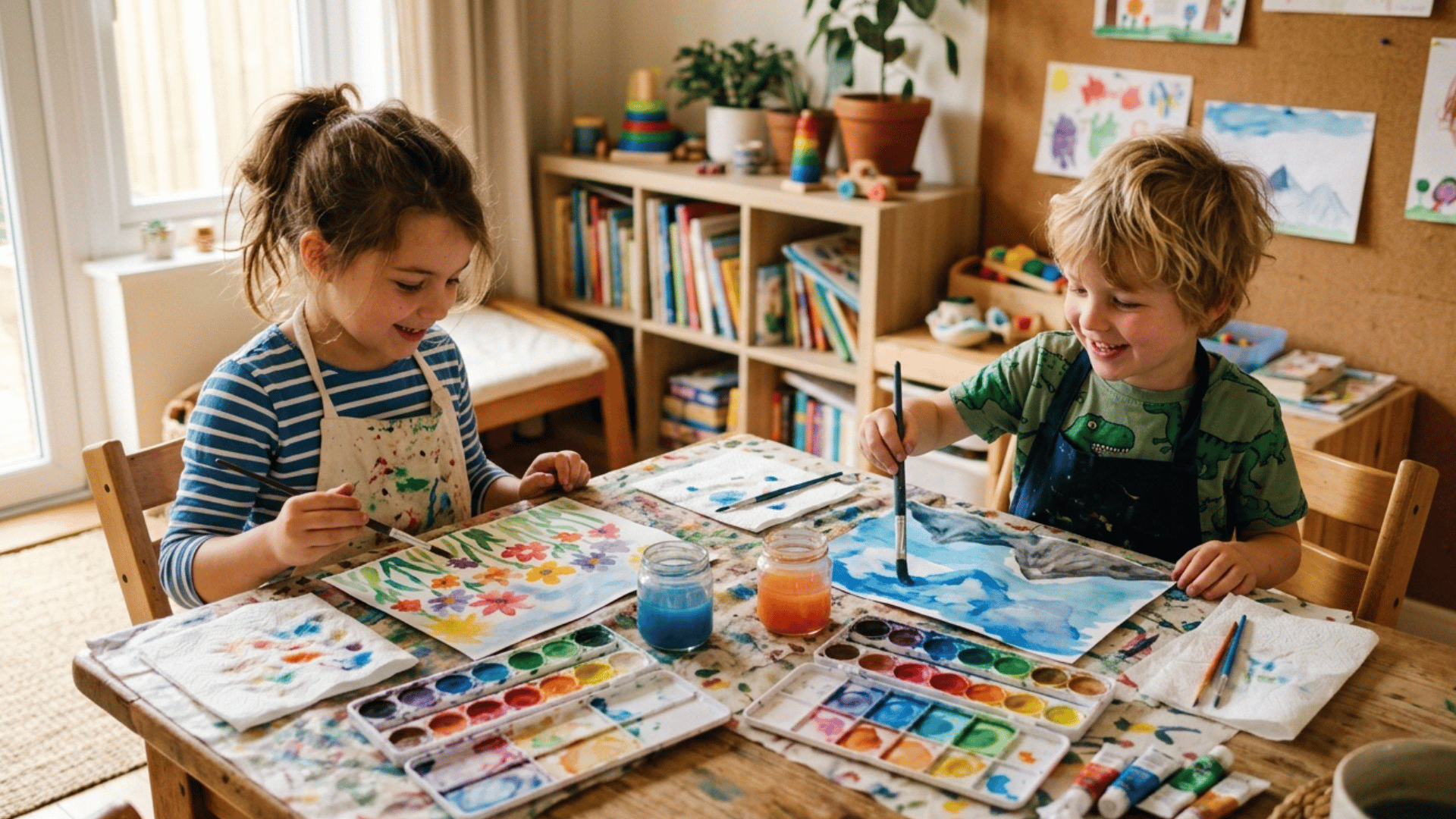
Watercolor painting is one of those inside activities for kids that never really gets old. Set up a small station with paper, brushes, and a few paint colors, and just let them go.
no rules, no specific subject. Kids can paint anything from rainbows to imaginary animals. It’s calming, creative, and keeps them genuinely focused. Plus, cleanup is easier than you’d think.
2. DIY Slime Making
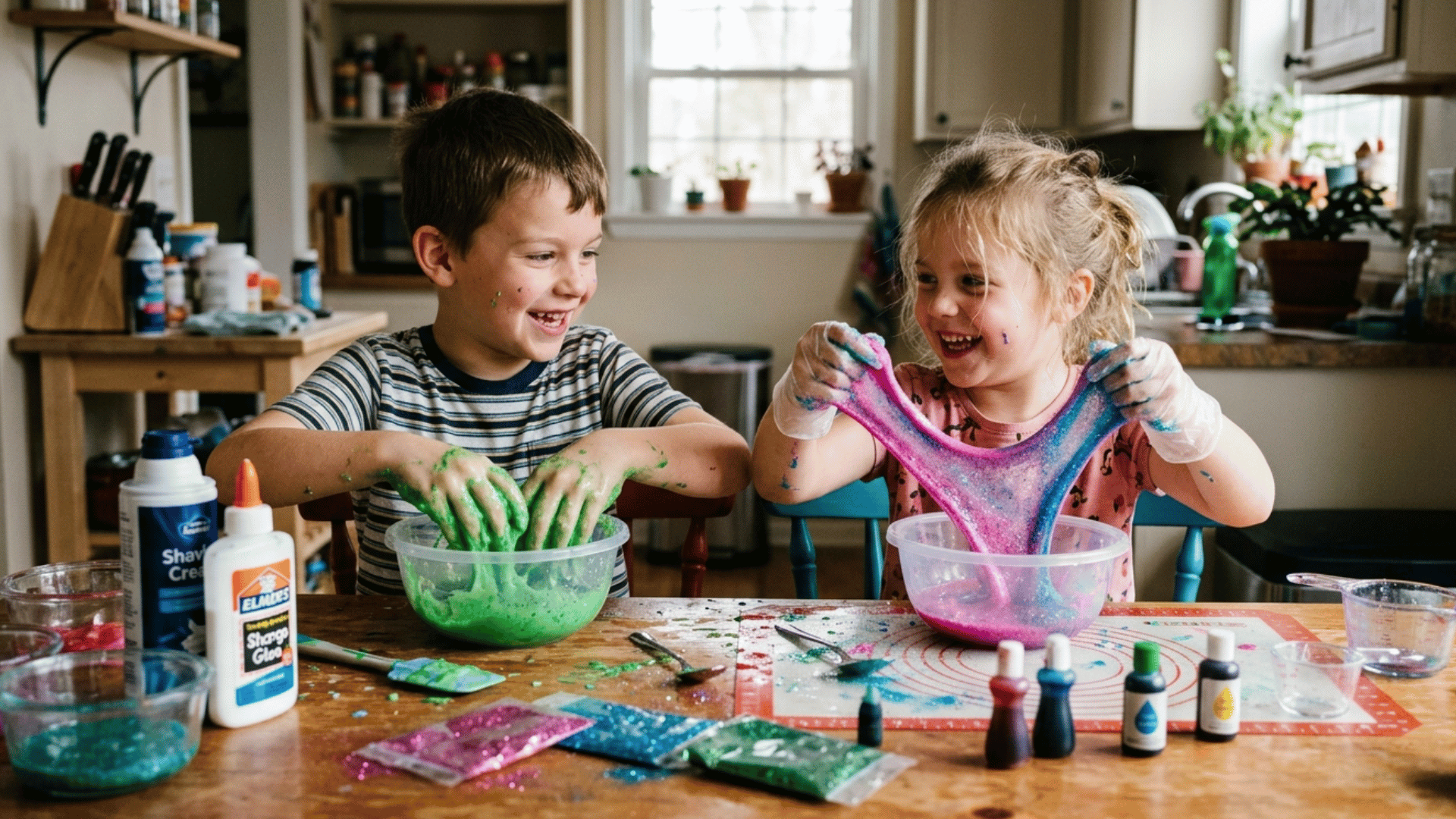
Kids are obsessed with slime, and making it at home is half the fun. Mix glue, baking soda, and contact solution, add some glitter or food coloring, and you’ve got a satisfying sensory activity going.
It’s a little science, a little craft, and a whole lot of fun. Just lay down some newspaper first, and you’re good to go.
3. Origami Folding
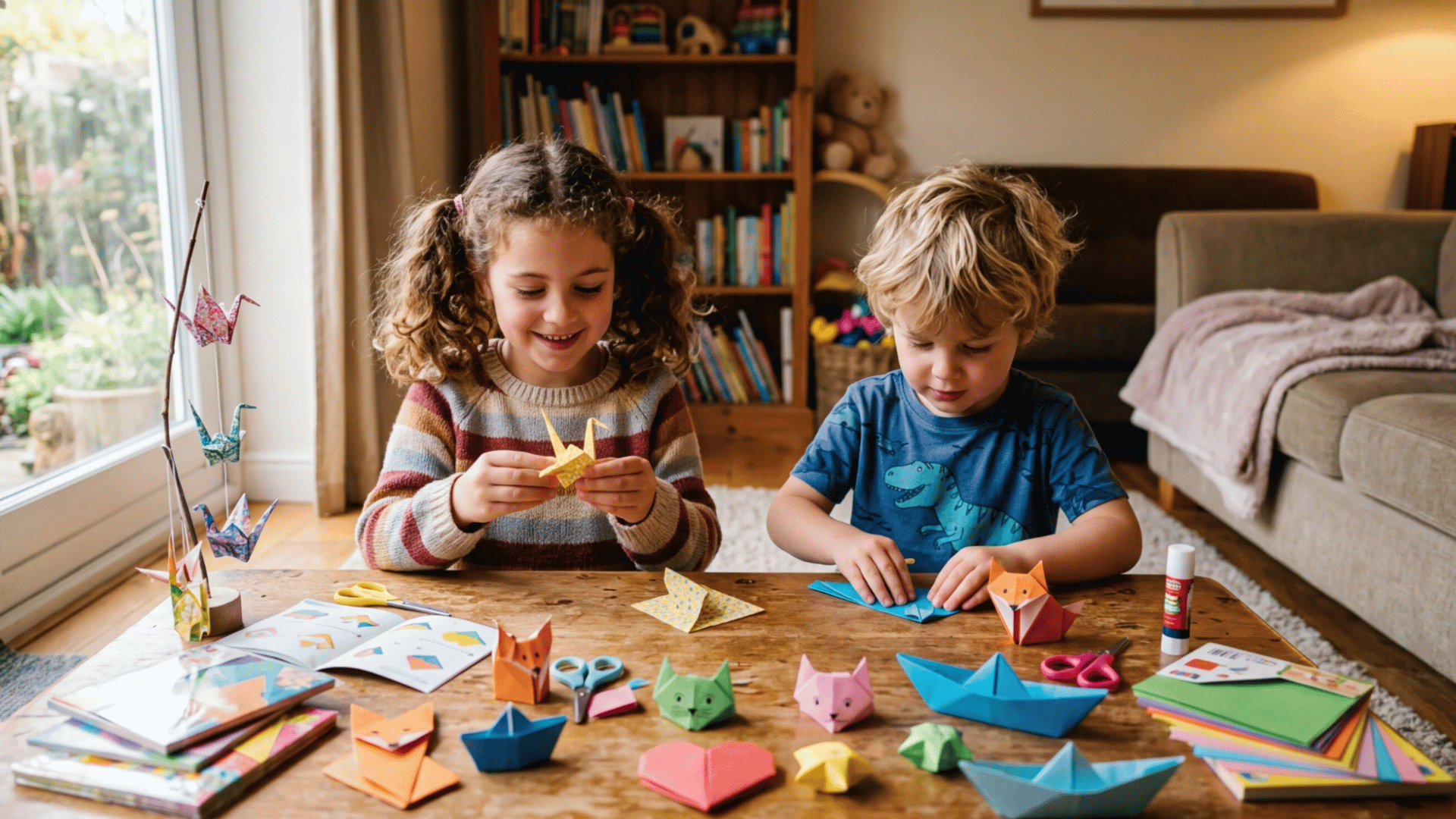
Origami is surprisingly great for kids. All you need is paper, no glue, no scissors, no mess. Start simple with frogs or boats and work your way up to cranes or butterflies.
There are tons of free tutorials on YouTube for every skill level. It builds patience, focus, and fine motor skills without kids even realizing they’re picking up something new.
4. Collage Making
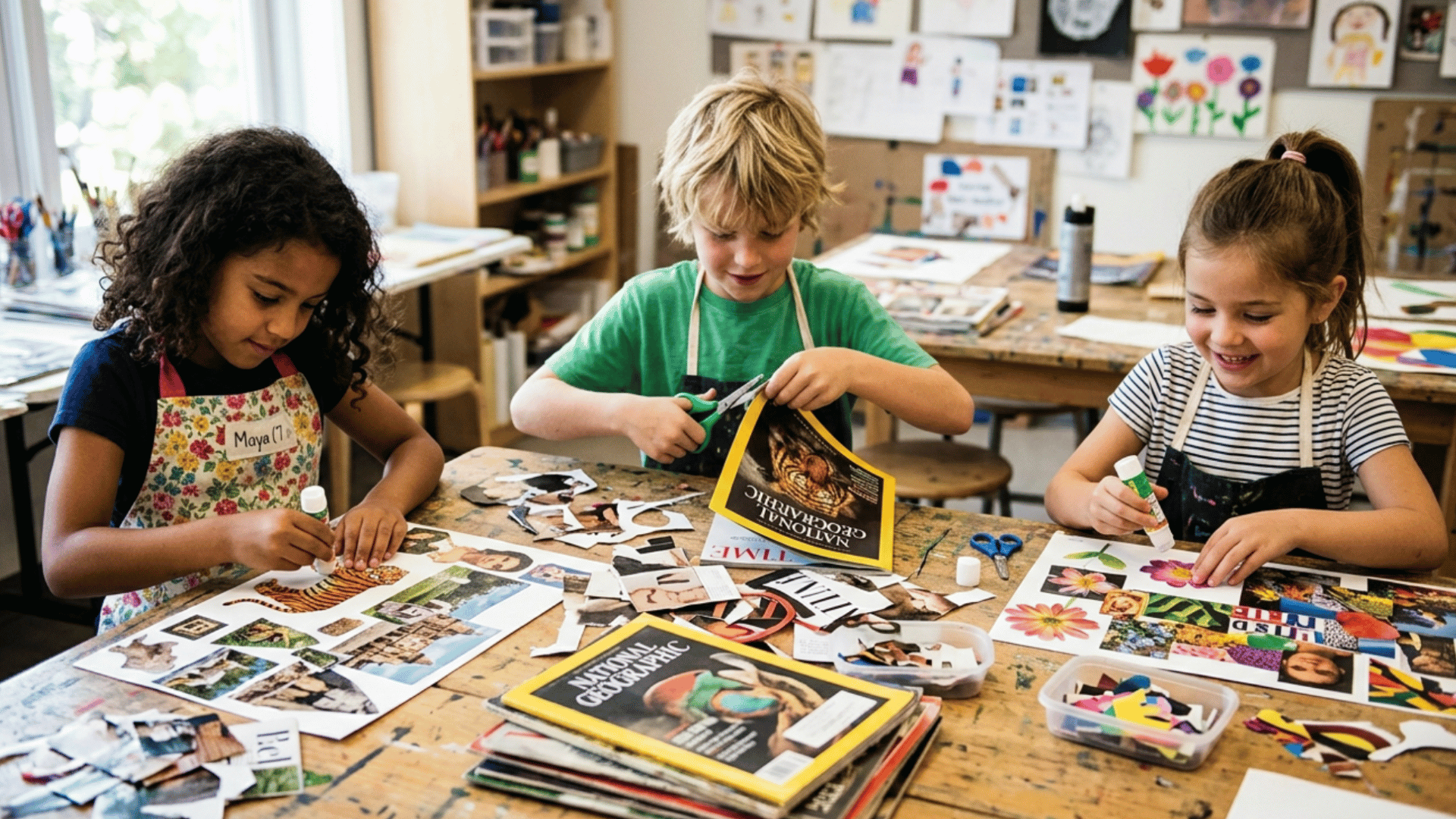
Pull out old magazines, catalogs, and wrapping paper scraps, and let kids go wild cutting and sticking. They can make themed collages like animals, food, or dream bedrooms, whatever they’re into.
It’s low-effort to set up, but it keeps kids busy for surprisingly long. great for all ages, with no special supplies needed.
5. Salt Dough Ornaments
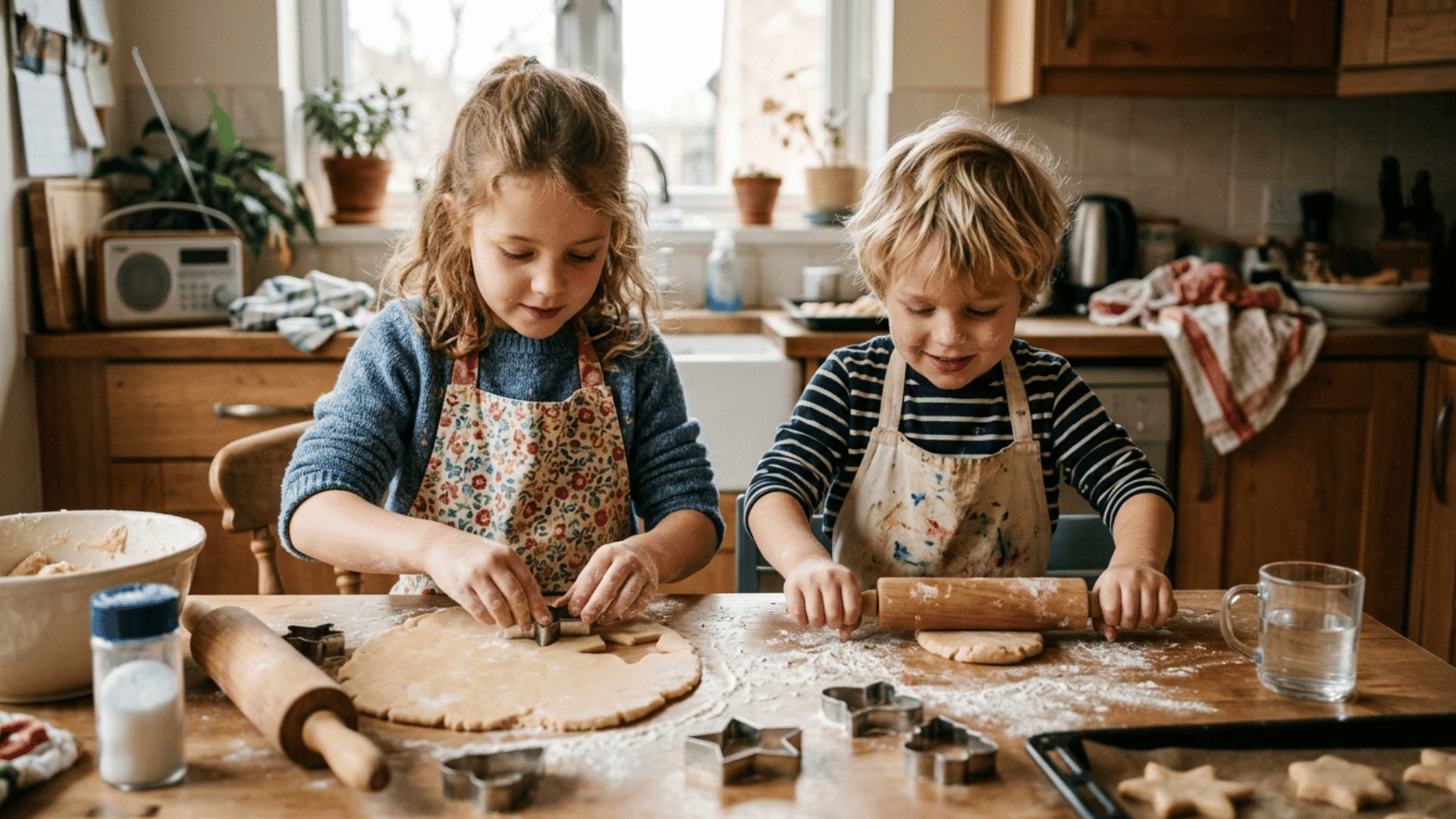
Salt dough is just flour, salt, and water, but kids absolutely love working with it. They can cut out shapes, press in patterns, and bake them in the oven.
Once cooled, they paint and decorate however they like. It’s a proper little project with a real finished result at the end, which kids find really satisfying.
6. Tie and Dye T-Shirts
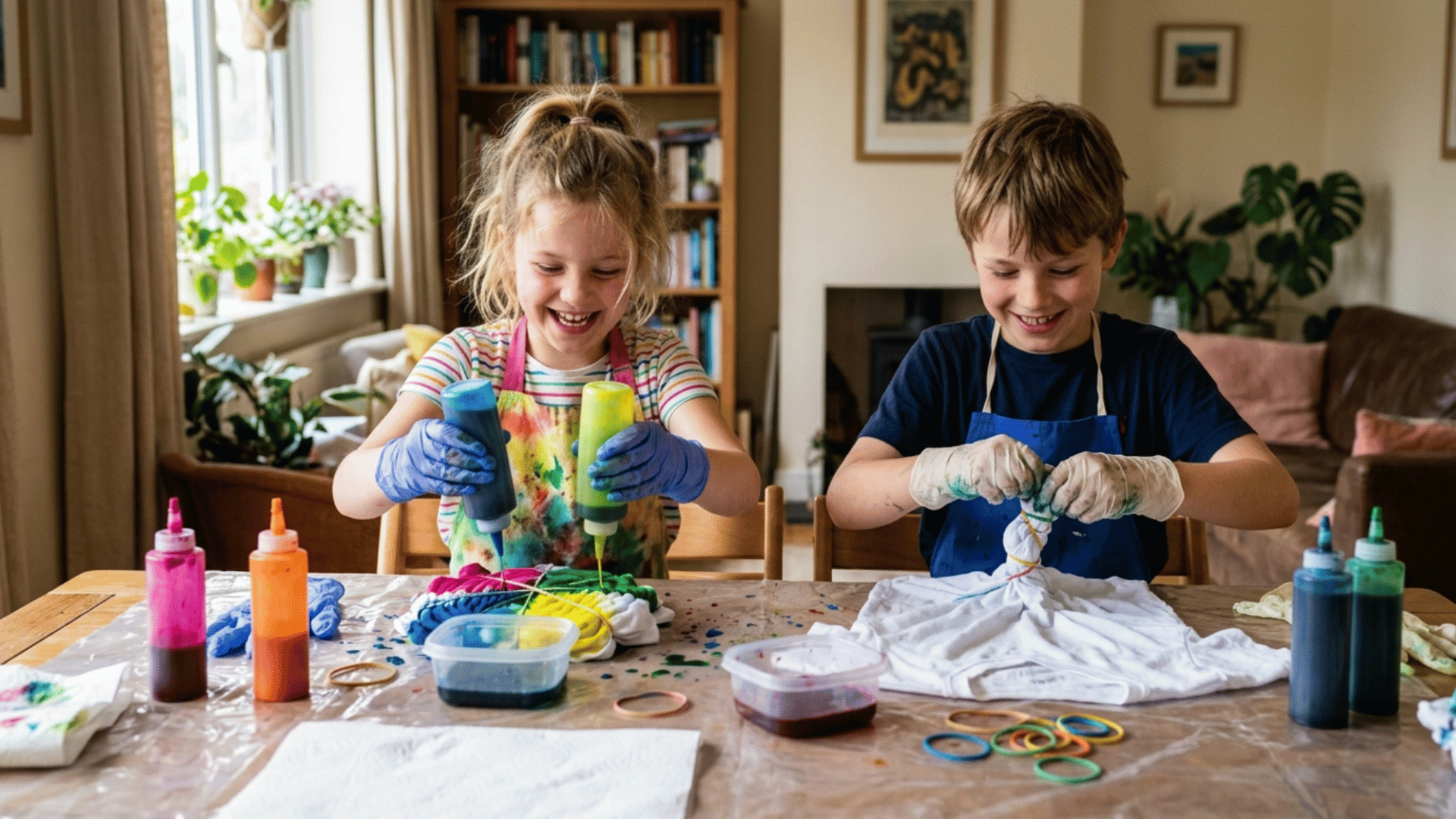
Tie-dye is one of those activities kids talk about for days after. Use rubber bands to scrunch up an old white t-shirt, apply fabric dye or even food coloring, and wait for the magic to happen.
Every design turns out different, which makes it exciting. Kids end up with something wearable they actually made themselves.
7. Make a Family Tree Chart
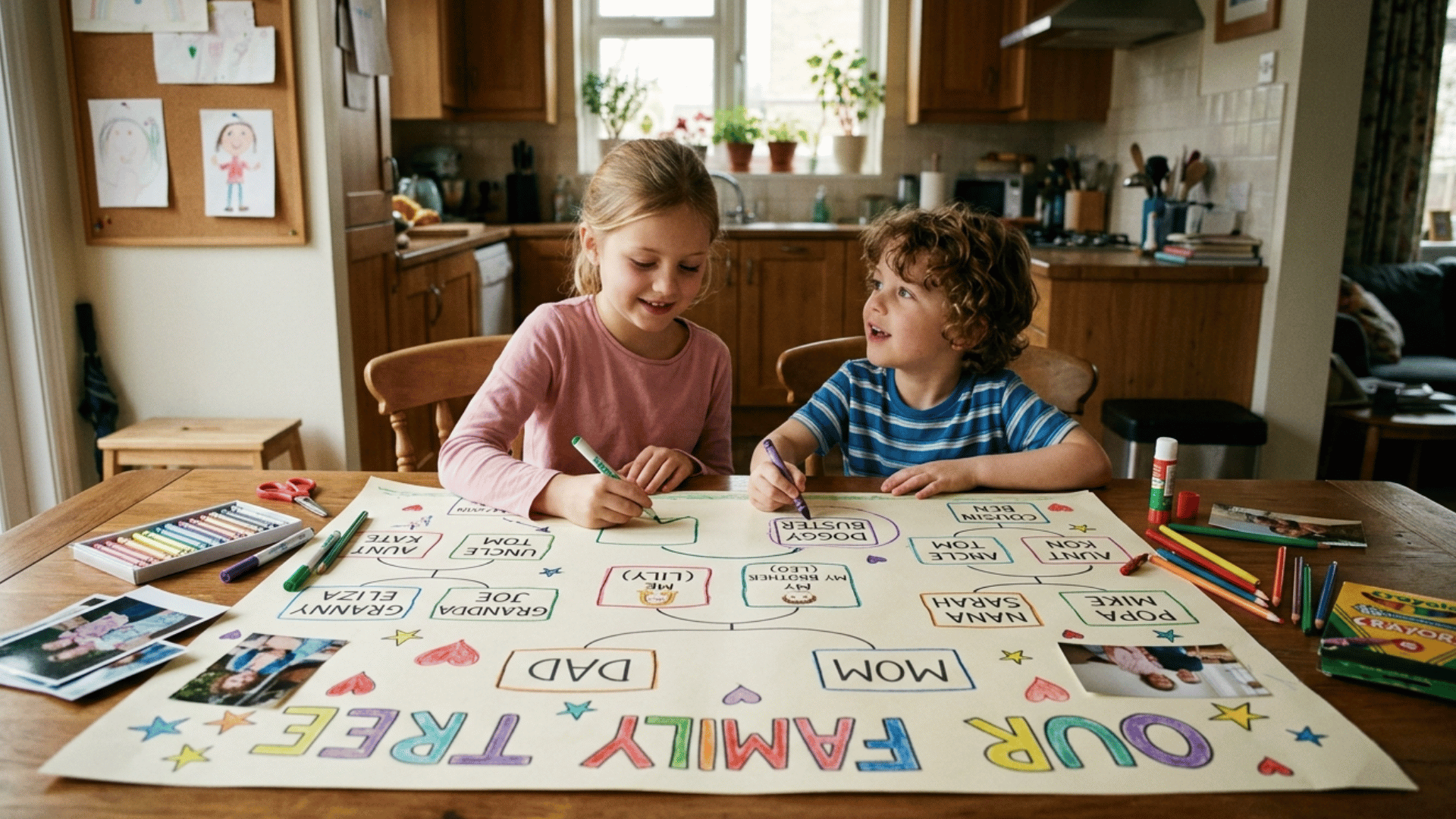
Making a family tree chart is a creative way for kids to learn about their family. Start by drawing a simple tree and adding names or photos of family members.
Kids can decorate it with colors, stickers, or drawings to make it more personal and fun. This keeps them engaged while learning.
It also helps them understand relationships and builds a sense of connection, making it both an educational and emotional activity.
8. Paper Plate Masks
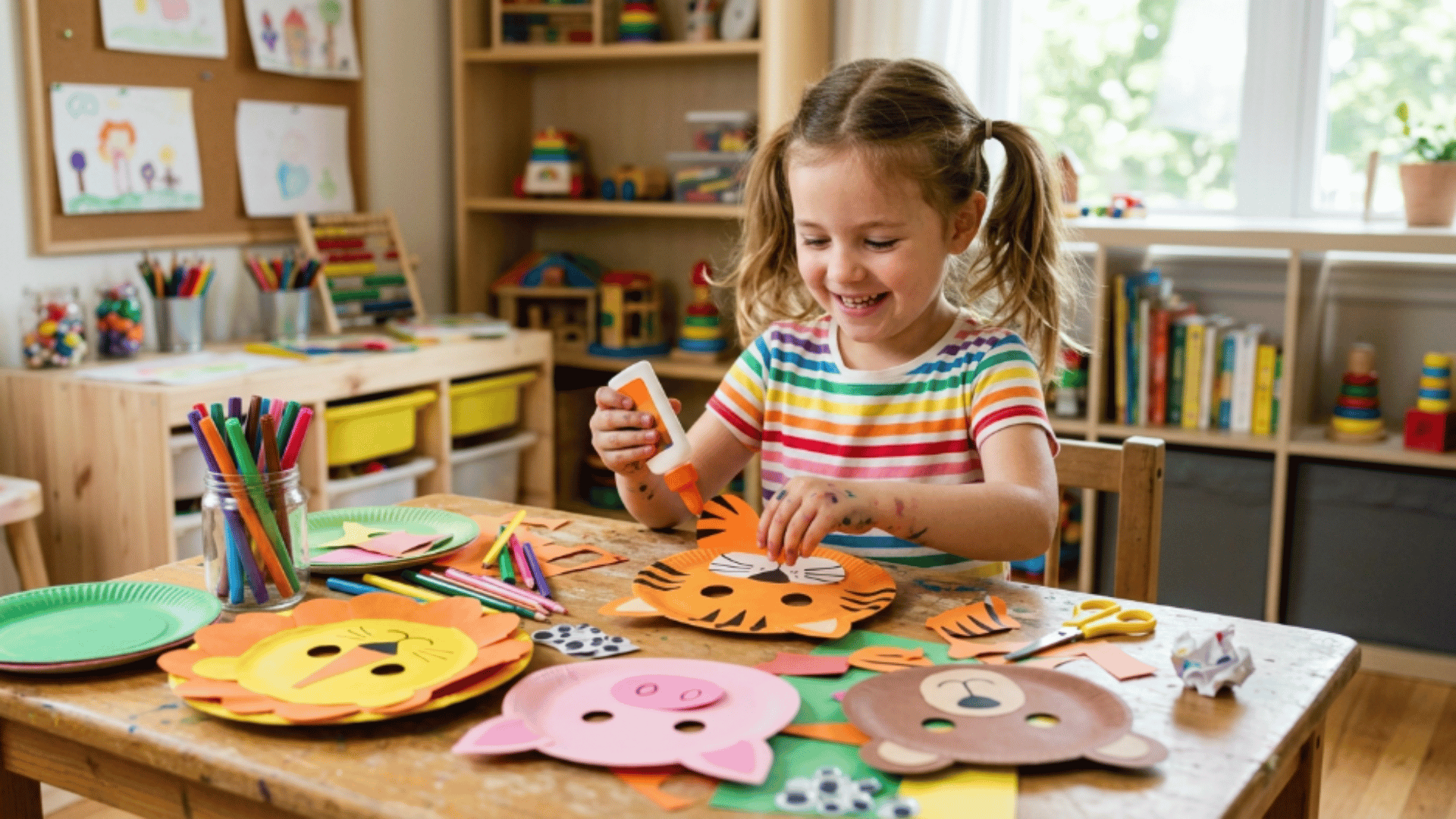
Paper plate masks are a fun way to spark imagination. Give kids paper plates, markers, glue, and scissors, and let them design their own masks.
They can create animals, superheroes, or even funny faces.
Once done, they can use the masks for pretend play or small skits. It keeps them busy while also encouraging creativity and role-playing.
9. DIY Bookmark Making
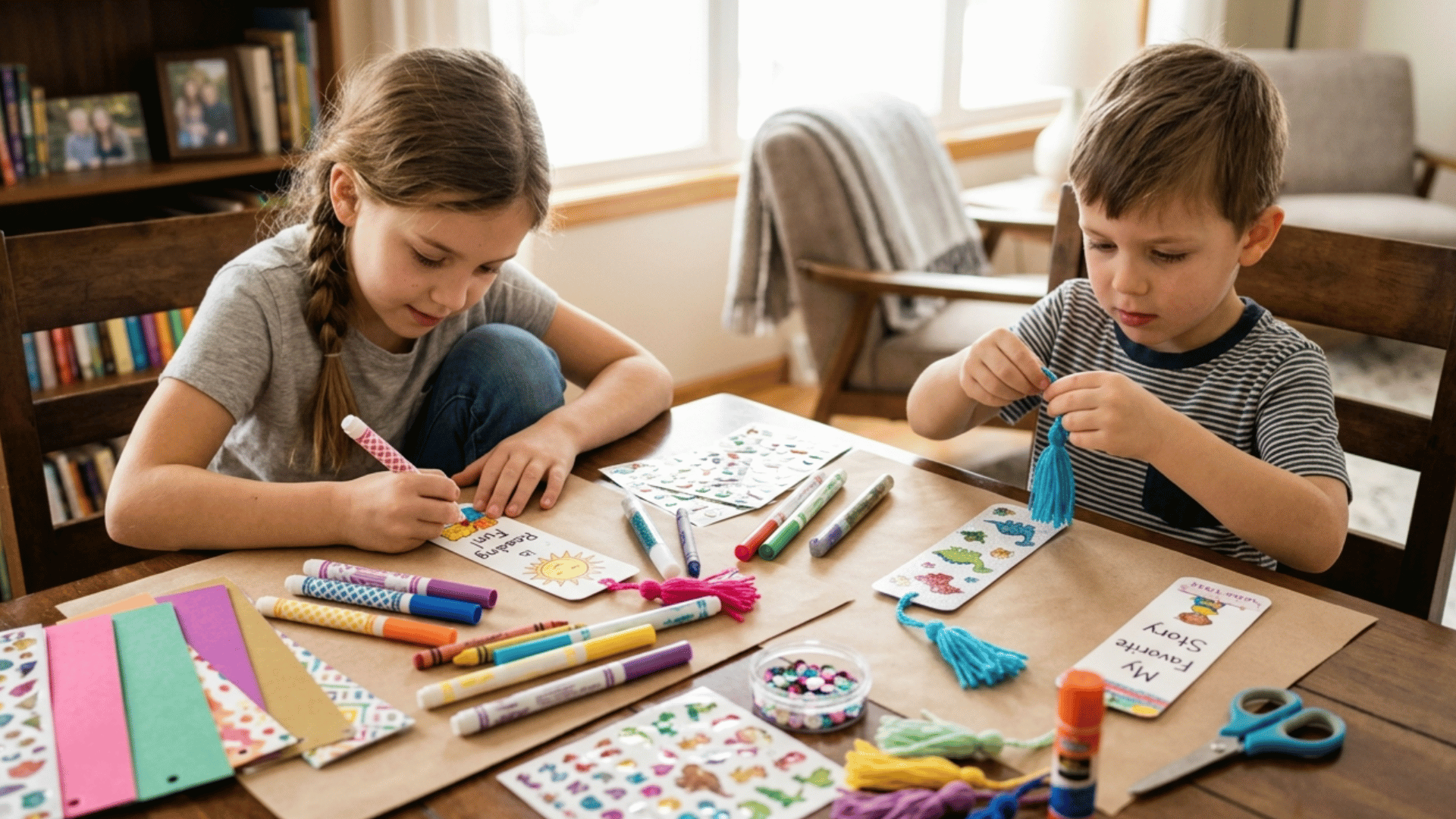
DIY bookmark-making is a calming and creative activity for kids. Use paper, colors, and stickers to design unique bookmarks. Kids can add drawings, patterns, or even their names.
It’s a great way to encourage reading while letting them create something useful. This activity also improves focus and gives kids a small project they can feel proud of.
10. DIY Greeting Cards
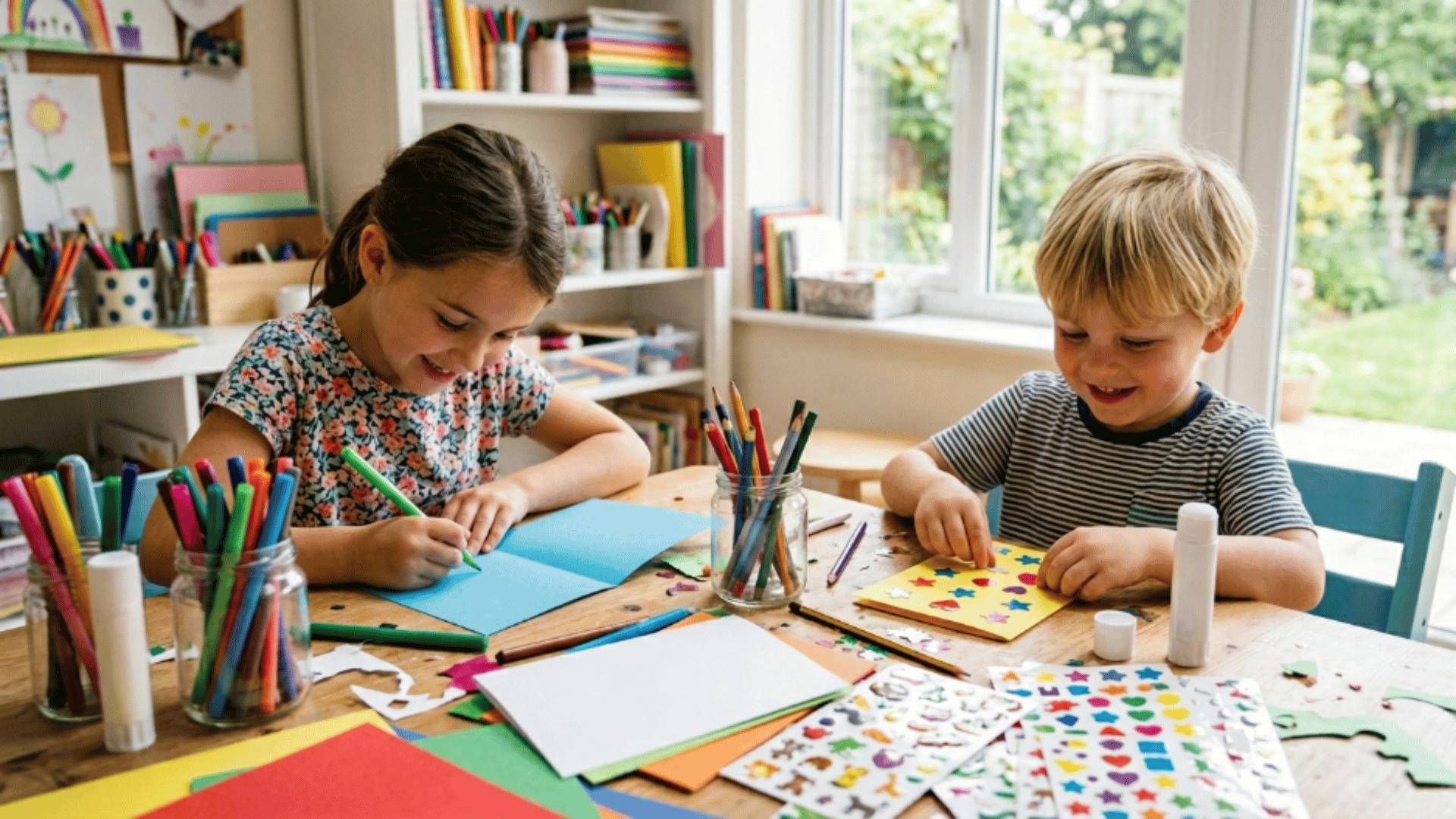
Making greeting cards is a simple and meaningful activity. Kids can use colored paper, stickers, and drawings to create cards for birthdays or special moments.
It helps them express feelings creatively. Plus, it teaches them the joy of giving something handmade. This is one of those inside activities for kids that feels fun and thoughtful at the same time.
11. Cotton Ball Painting
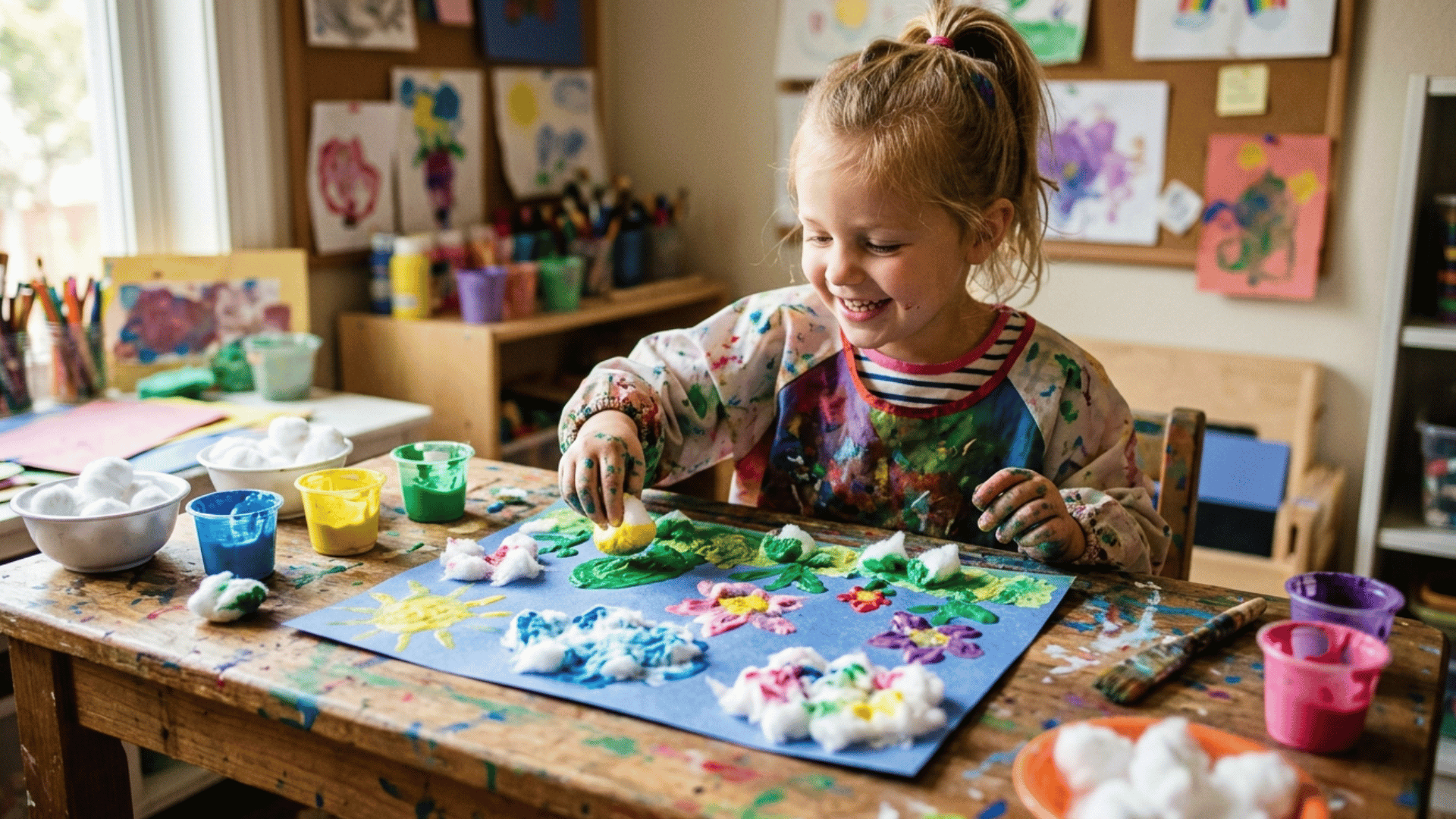
Cotton ball painting is a mess-friendly, creative activity. Dip cotton balls in paint and dab them onto paper to create soft textures.
Kids can make flowers, clouds, or abstract designs. It’s different from regular brush painting, which makes it more exciting.
This activity helps improve coordination and allows kids to experiment with colors playfully.
12. Build a Cardboard House
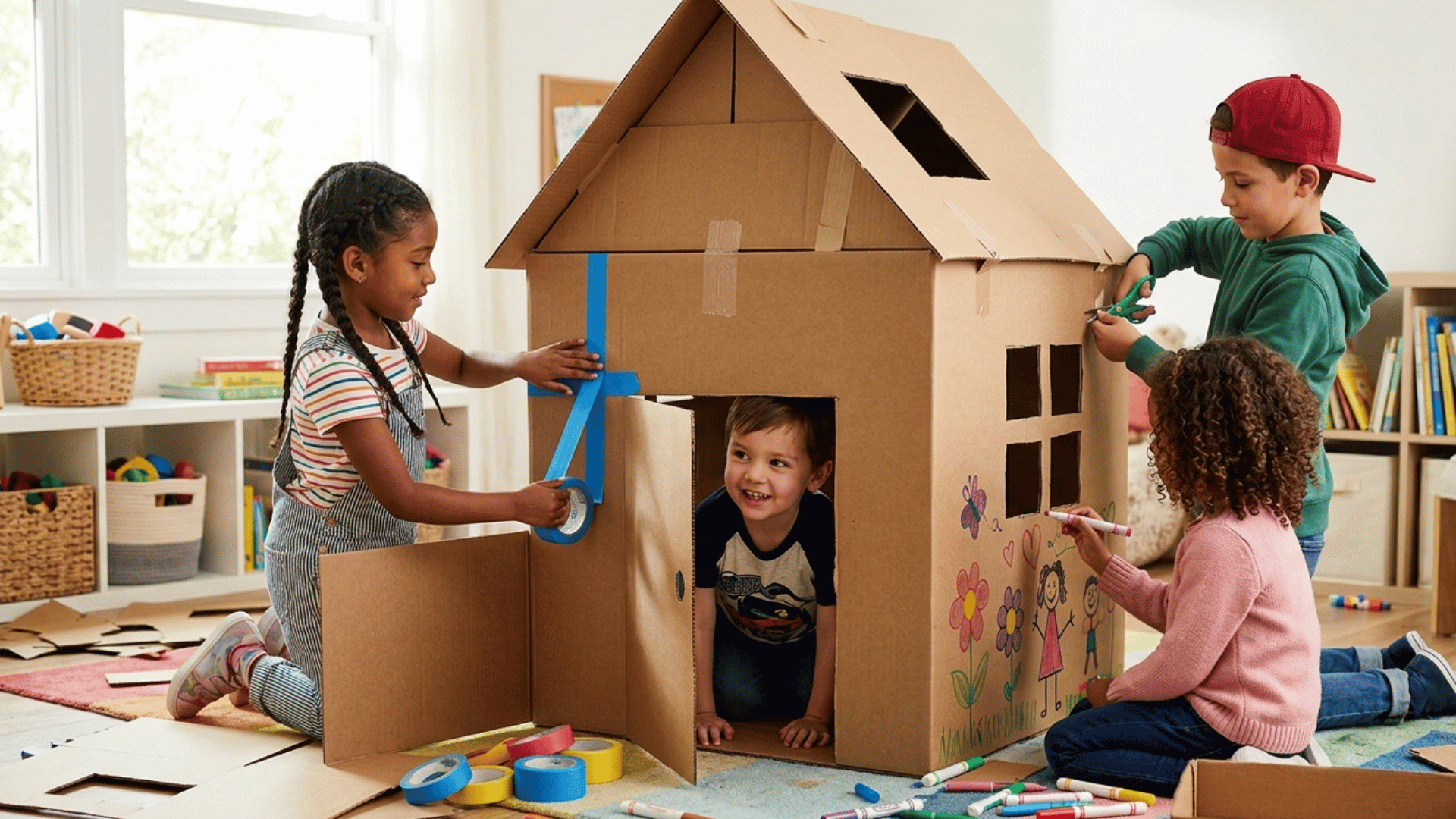
Turn old cardboard boxes into a fun little house or fort. Kids can draw windows and doors and decorate them however they like.
It becomes their personal play space where they can sit, read, or play pretend games. This activity uses simple materials but keeps kids engaged for hours.
It’s also a great way to reuse boxes instead of throwing them away.
13. DIY Sock Puppets
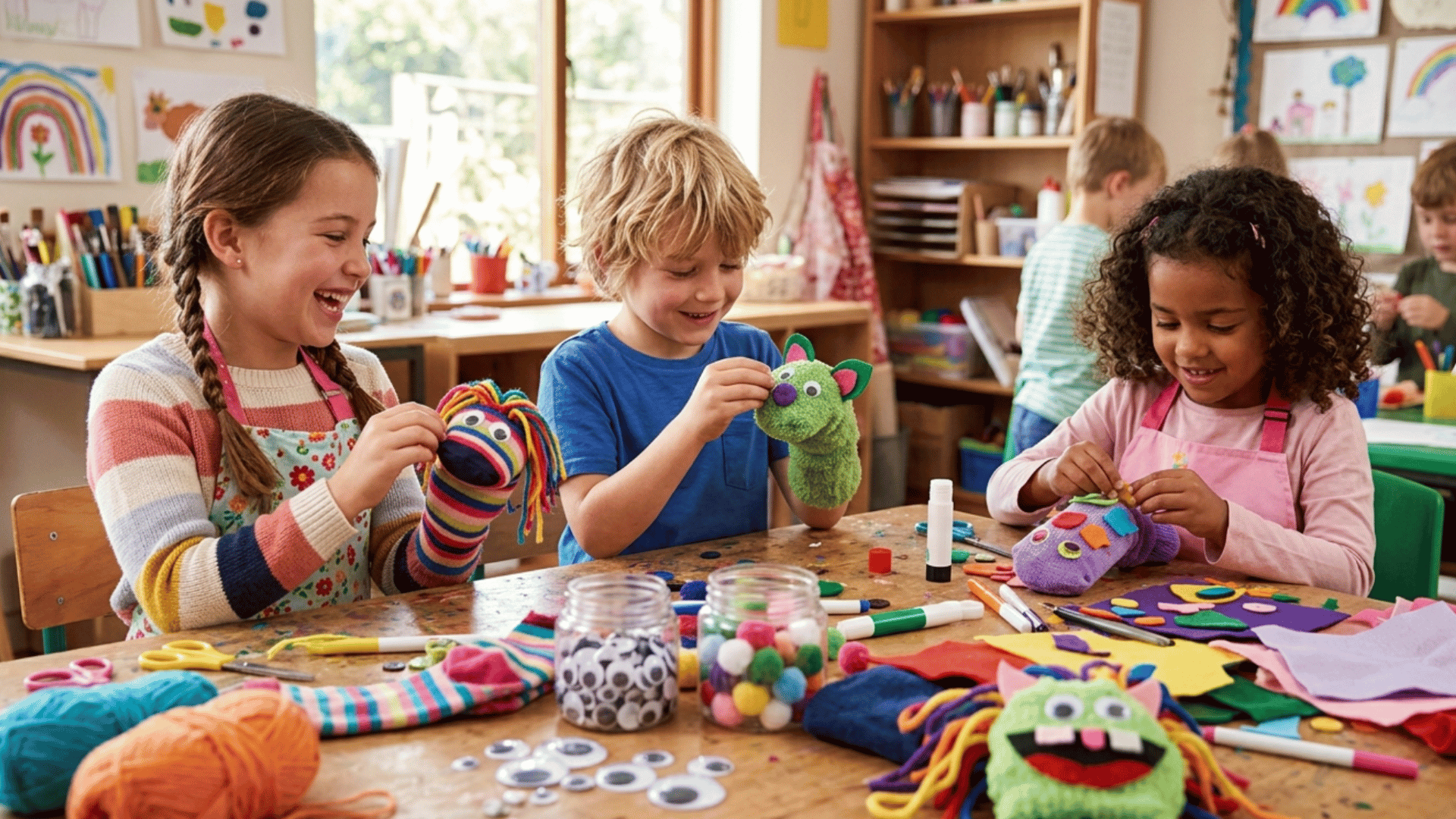
Sock puppets are easy to make and fun to use. Take old socks and add eyes, paper shapes, or yarn to create characters.
Kids can name their puppets and put on small shows or stories. It builds imagination and communication skills. This is one of those inside activities for kids that quickly turns into a full storytelling session.
14. Rock Painting
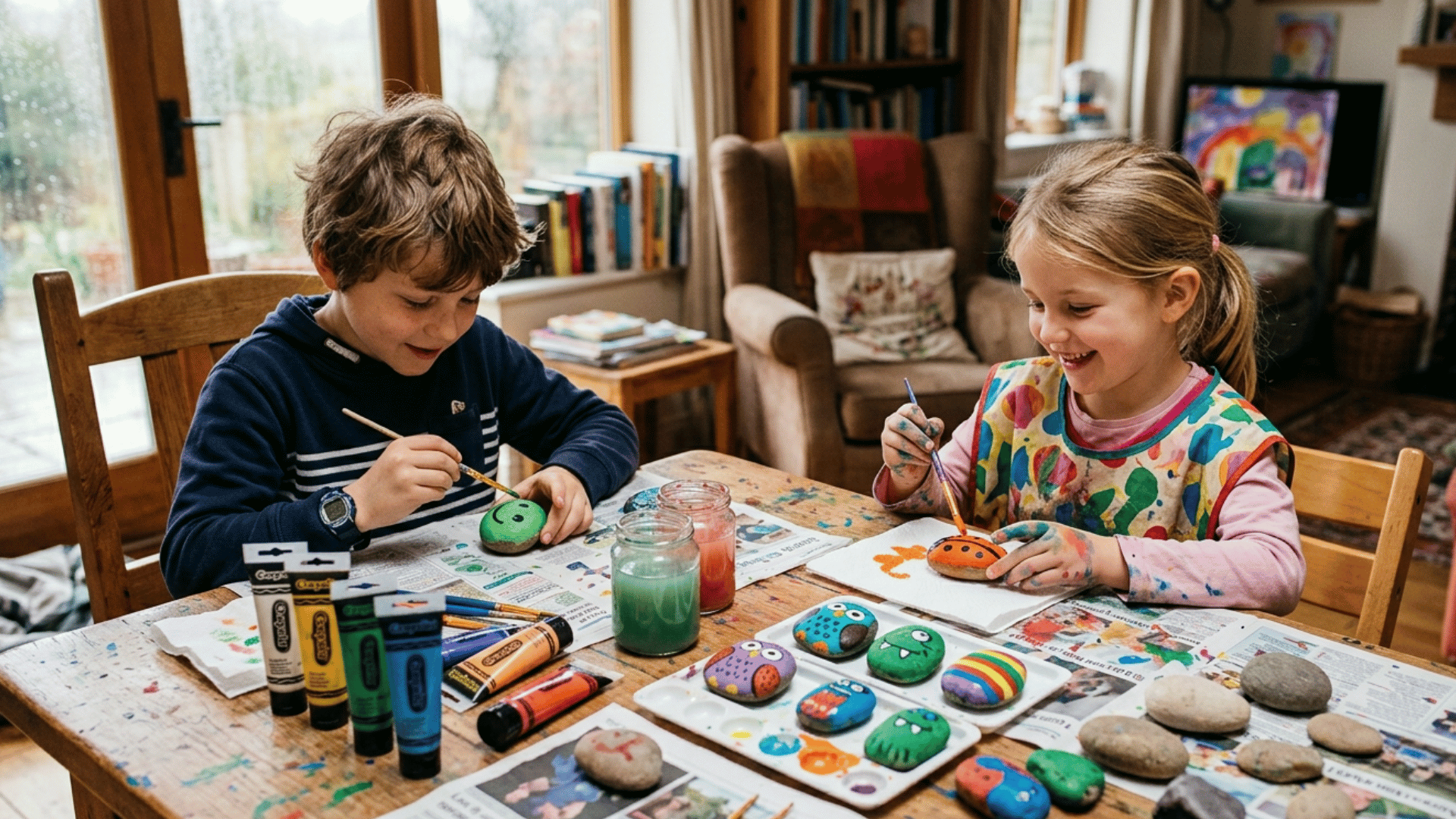
Rock painting is calm and creative. Give kids smooth rocks and some paint, and let them create patterns, faces, or tiny artworks.
They can keep them as decorations or gift them to others. It’s simple but very satisfying. This activity also helps kids focus and enjoy quiet, creative time without needing too many supplies.
15. Paper Airplane
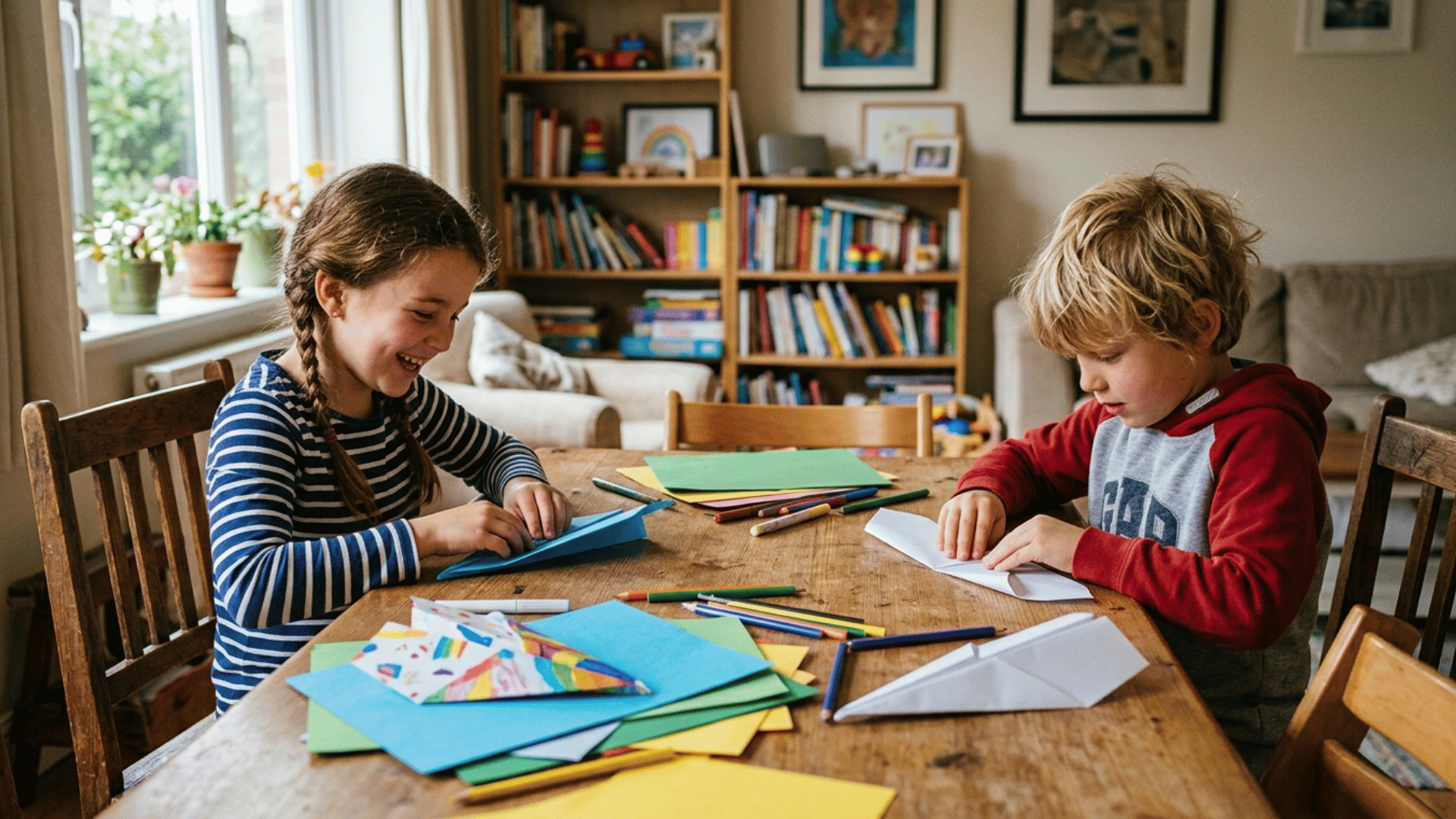
Paper airplanes are always fun and easy to make. Kids can fold different designs and test which one flies the farthest. Turn it into a small competition to make it more exciting.
It also introduces basic design and balance concepts. This is a quick activity that still keeps kids active and curious indoors.
16. Sticker Art Wall
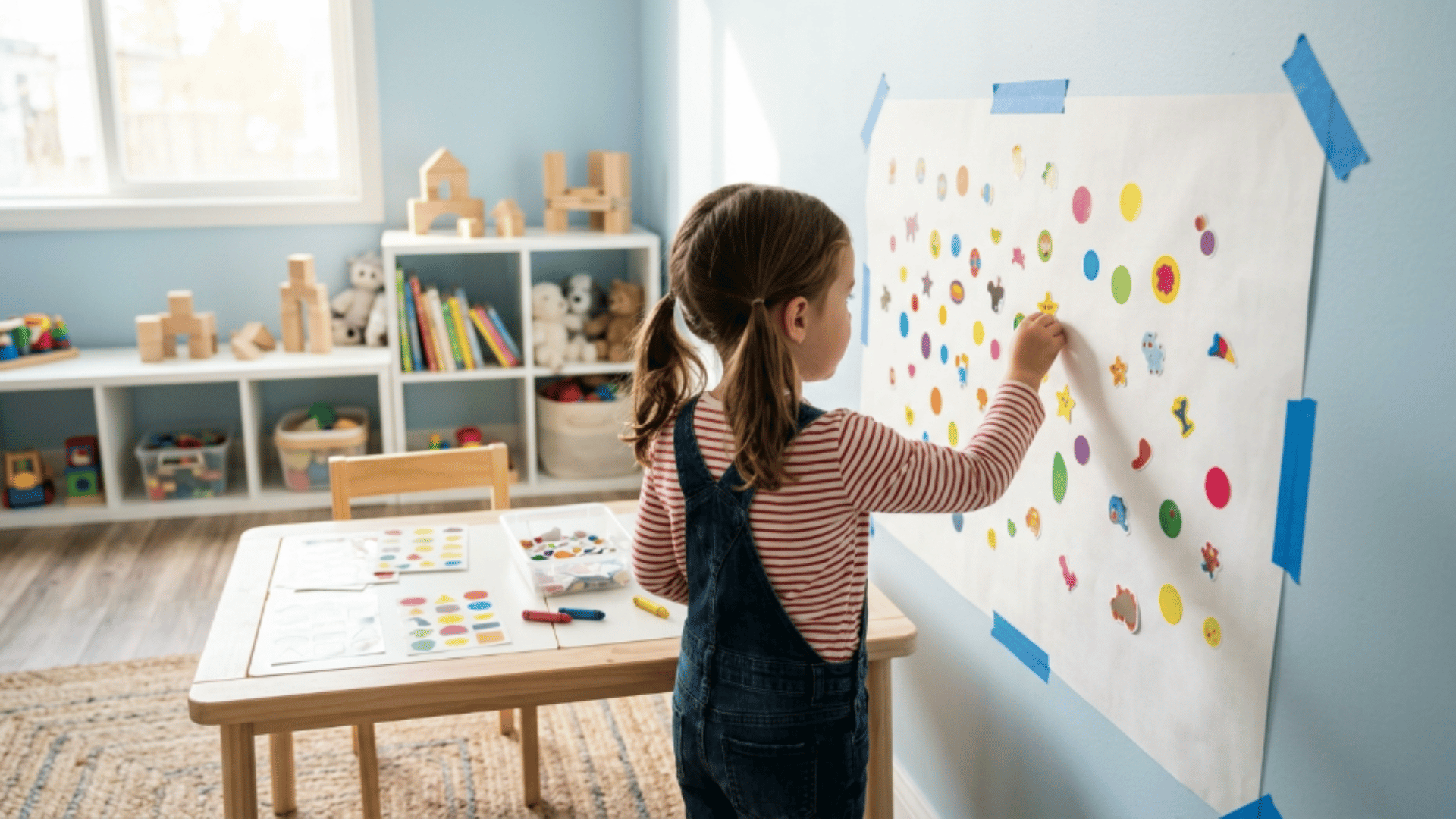
Create a sticker art wall using paper or a board. Kids can place stickers to make scenes, patterns, or stories. It’s a great activity for younger kids who enjoy simple creative play.
Plus, it helps with hand control and decision-making. This indoor activity for kids is low-effort but keeps them engaged for a long time.
17. Shadow Theater
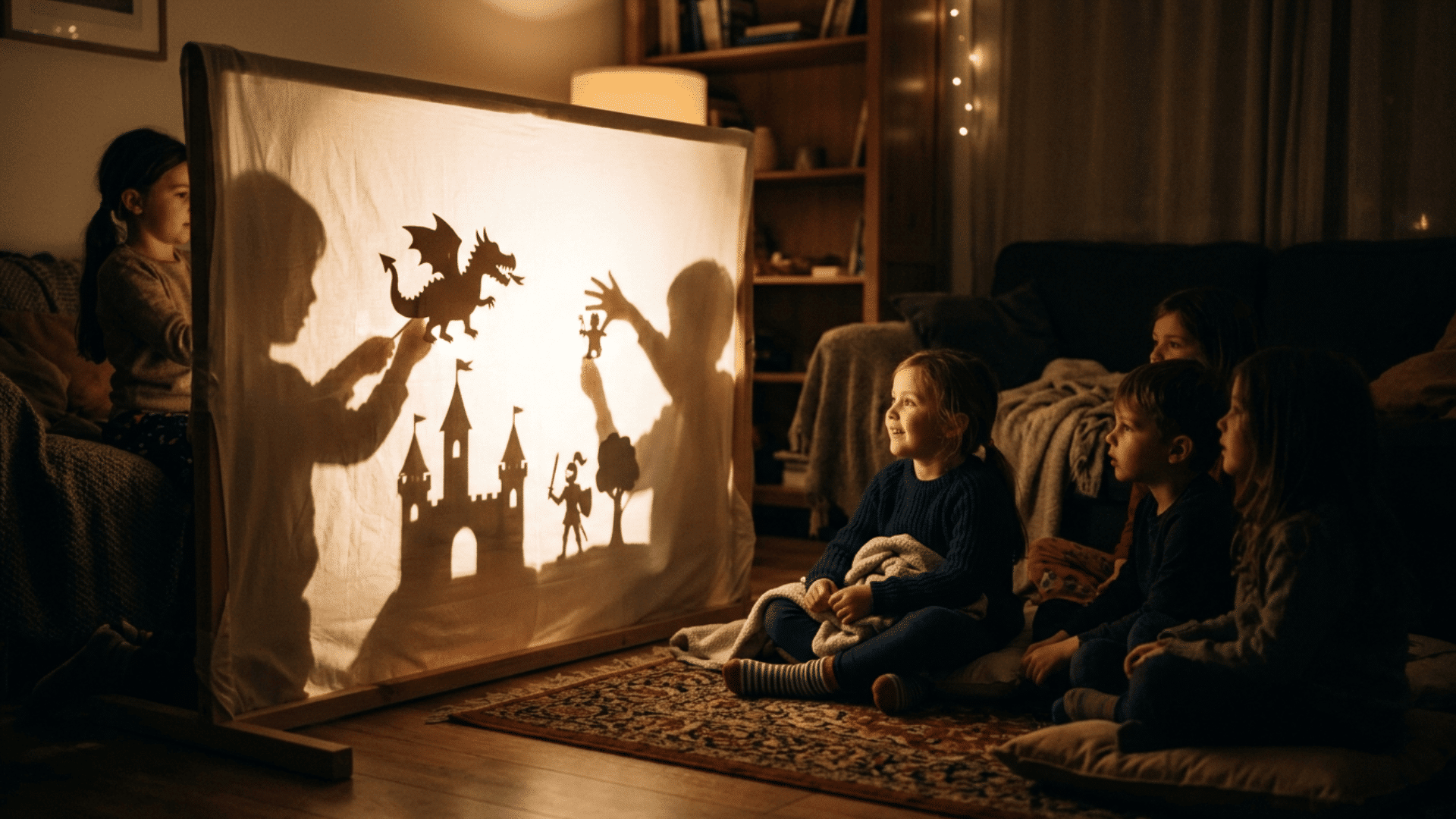
All you need is a white sheet, a flashlight, and some imagination. hang the sheet over a doorway, shine the light from behind, and let kids perform shadow shows using their hands or paper cutouts.
They can make up characters, write little scripts, and perform for the family. It’s simple to set up, and kids get really into it.
18. Blanket Fort Building
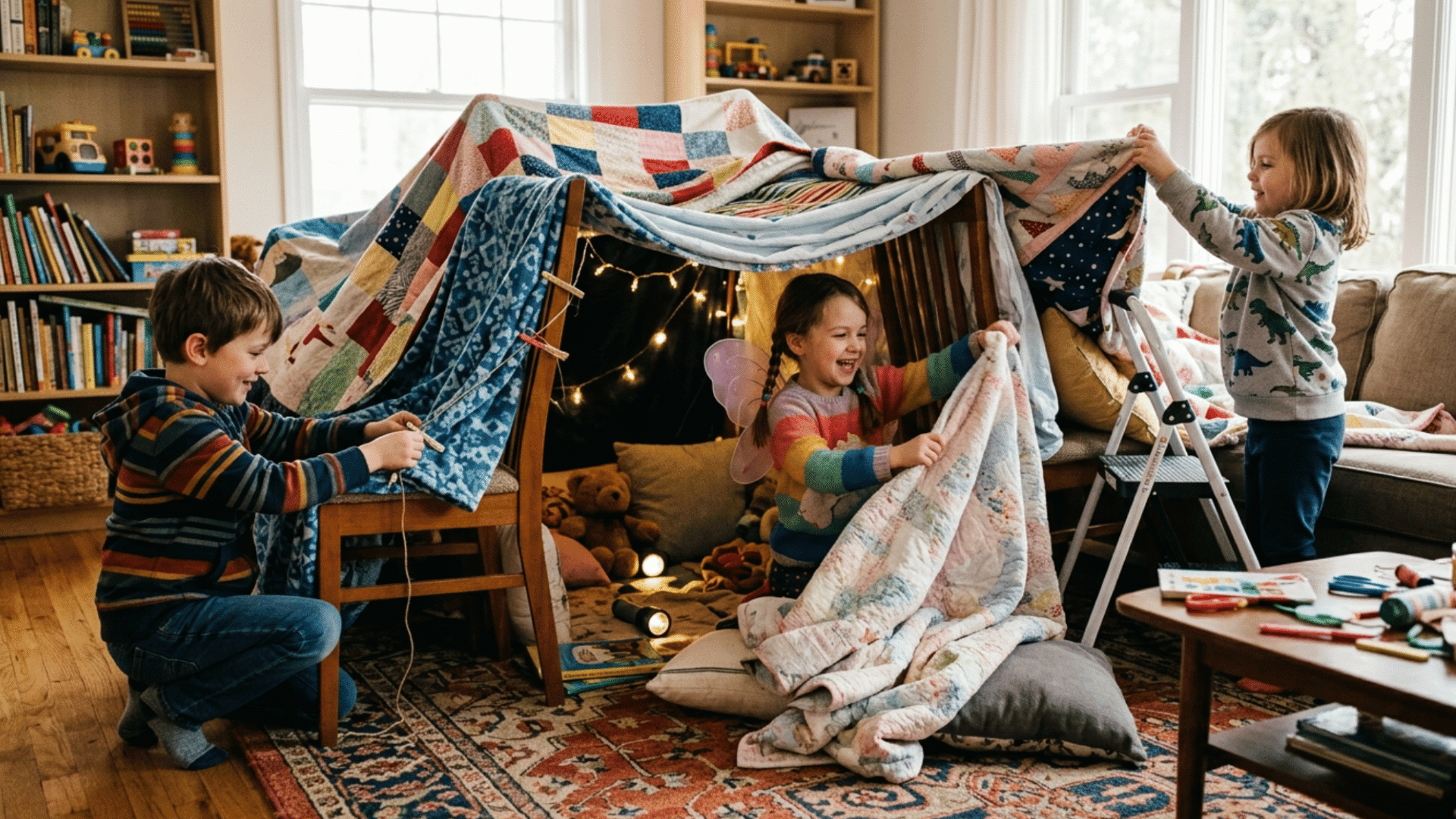
Blanket forts are a classic for a reason. Drape sheets over chairs and cushions, add some pillows inside, and suddenly the living room becomes the coolest hangout spot in the house.
Kids can read inside, play pretend games, or enjoy having their own little space. It keeps them busy building and even busier playing inside it afterward.
19. Indoor Treasure Hunt
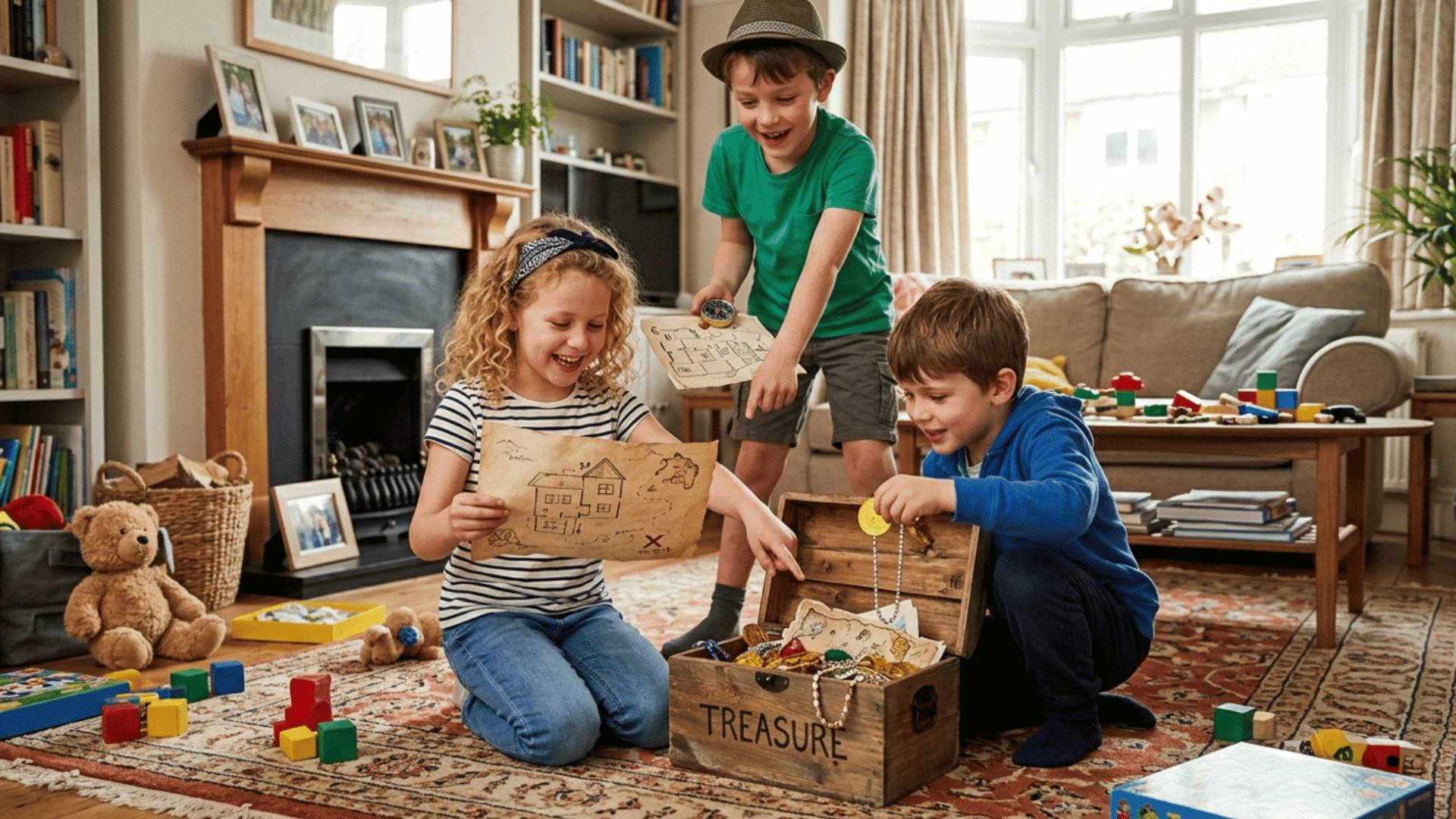
Write out a few simple clues that lead from one spot to the next and hide a small prize at the end. For older kids, make the clues rhyme or use riddles.
For younger ones, keep it straightforward with picture clues. It gets kids moving around the house, thinking, and genuinely excited. takes about 10 minutes to set up and lasts way longer than that.
20. Freeze Dance Party
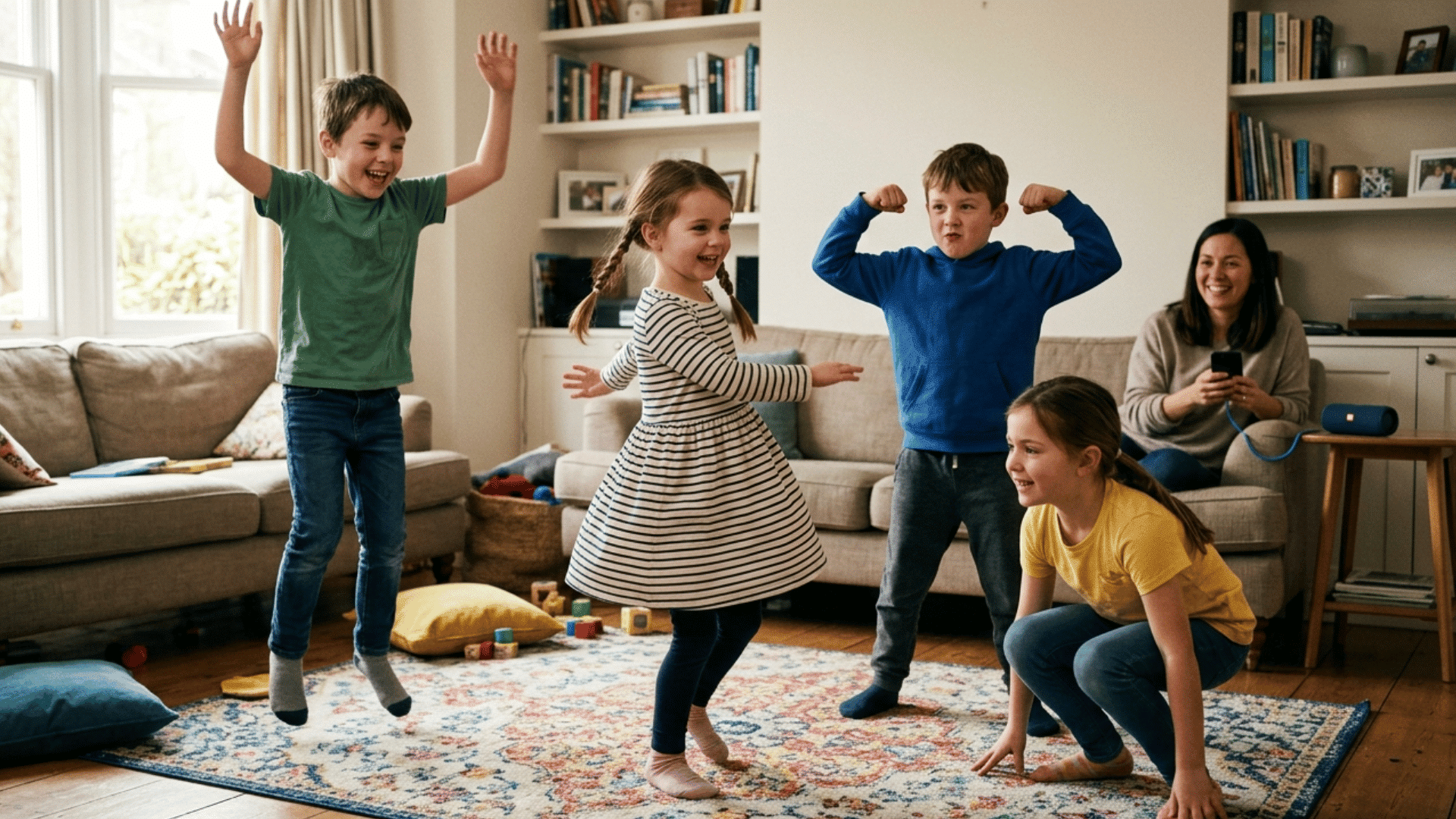
Put on some music and let kids dance as wildly as they want. When the music stops, everyone freezes. the last one moving is out. It’s loud, energetic, and honestly pretty hilarious to watch.
No equipment needed at all. This is one of the best indoor activities for kids who have extra energy to burn and need something fun and physical.
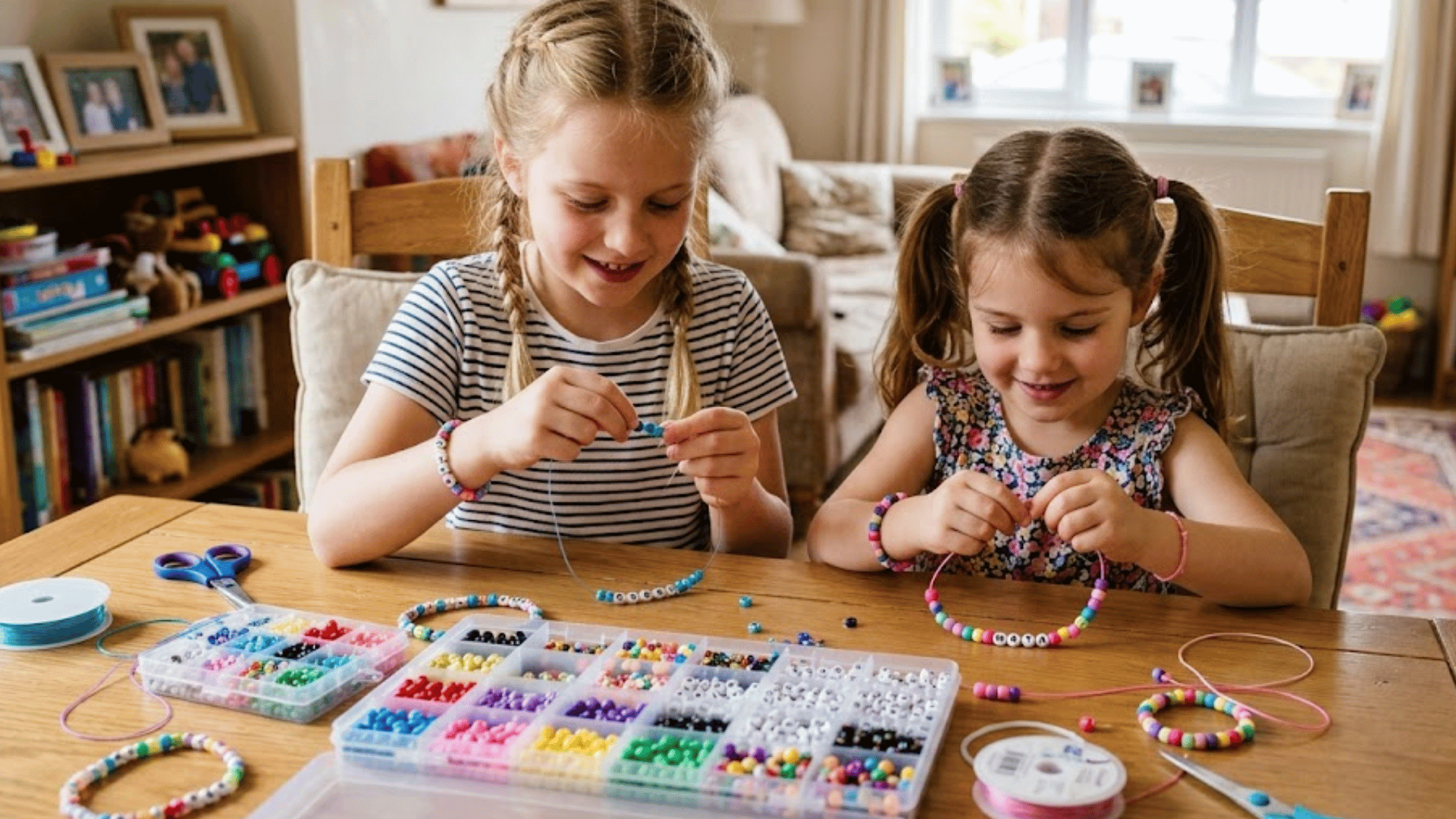
21. DIY Friendship Bracelets
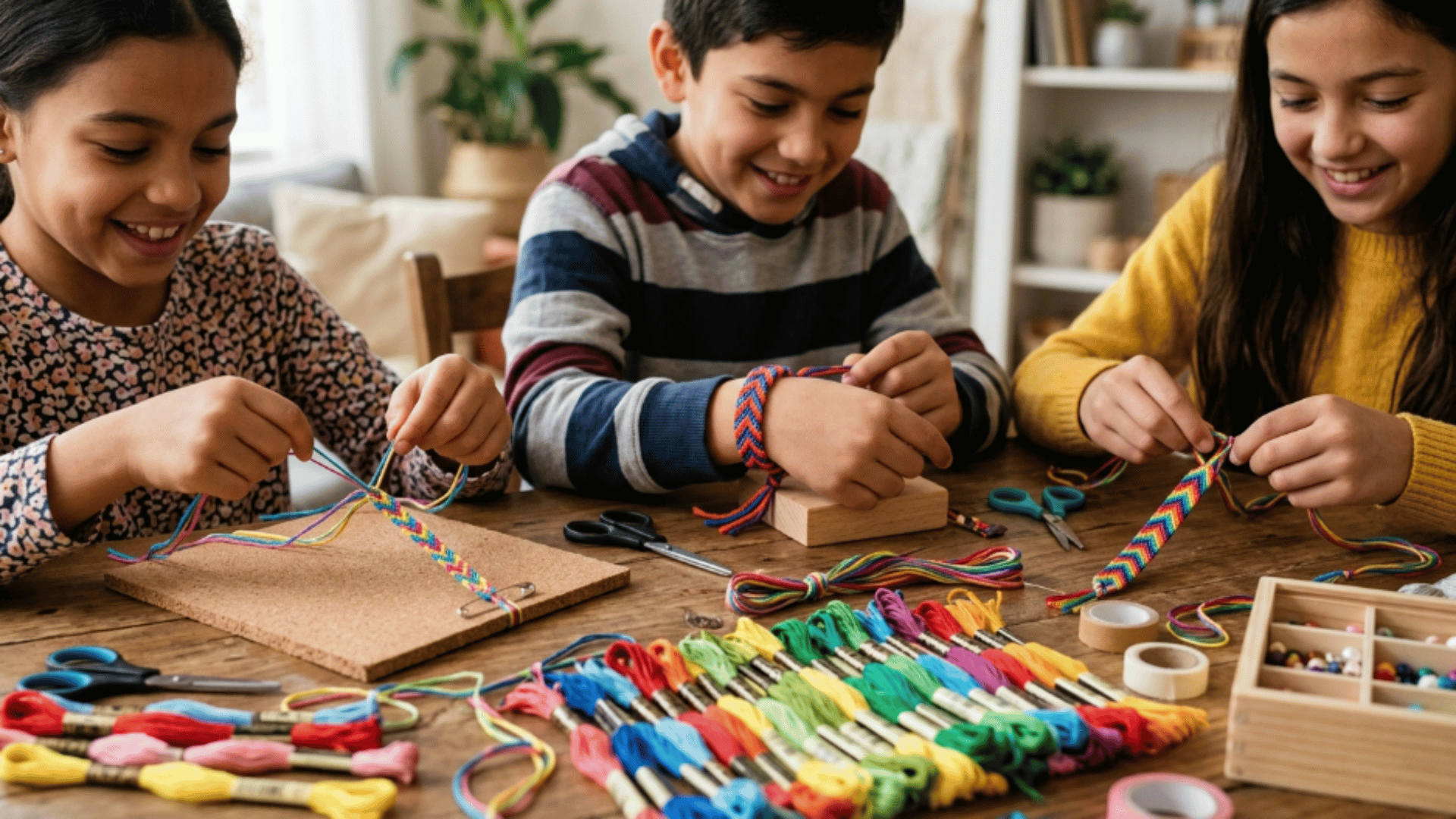
Making friendship bracelets is fun and relaxing. Kids can use threads, beads, or strings to create colorful designs. They can make them for friends or family members.
It helps improve patience and fine motor skills. This activity works well for slightly older kids who enjoy detailed work and want to create something they can wear or give as a gift.
22. Indoor Obstacle Game
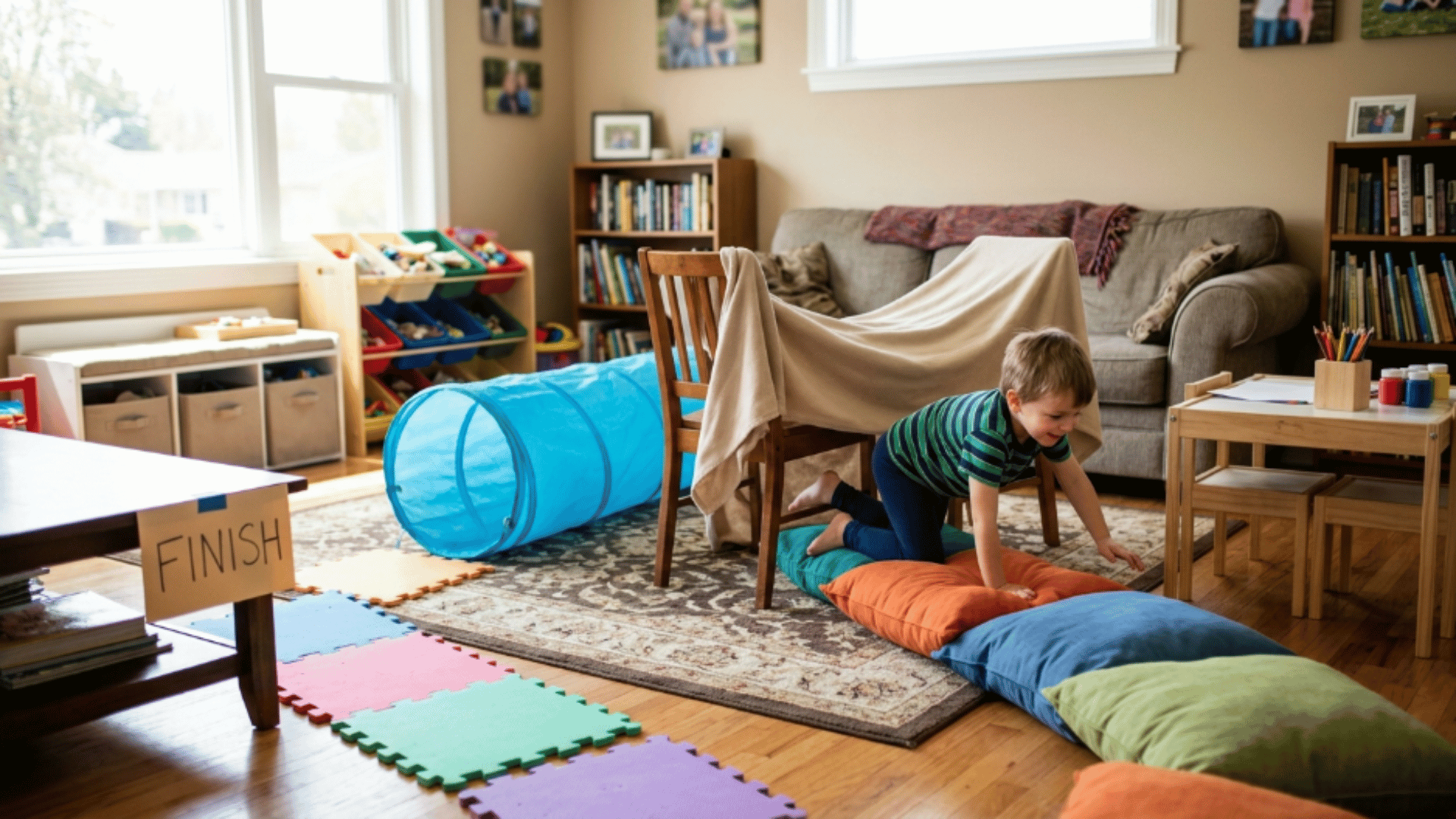
Set up a simple obstacle course using pillows, chairs, and blankets. Kids can crawl, jump, and navigate various obstacles.
It keeps them active even when they’re indoors. You can time them or make it a fun challenge. This is one of the best indoor activities for kids to burn energy and stay active.
23. Balloon Volleyball
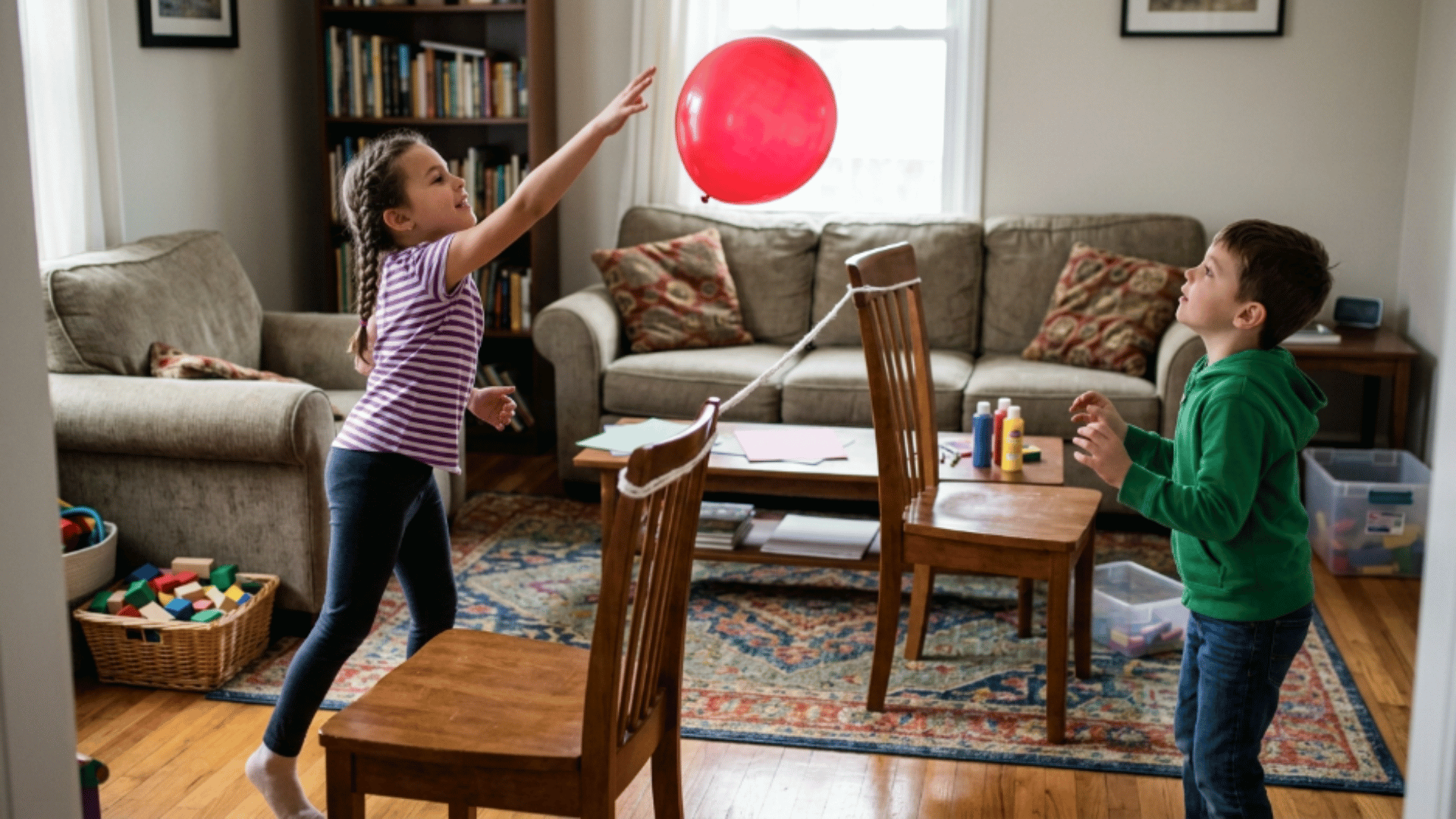
Balloon volleyball is safe and super fun indoors. Use a balloon and create a “net” with a string or tape. Kids can hit the balloon back and forth without worrying about breaking anything.
It improves coordination and keeps them moving. This game works well for siblings or small groups.
24. Inside Bowling with Bottles
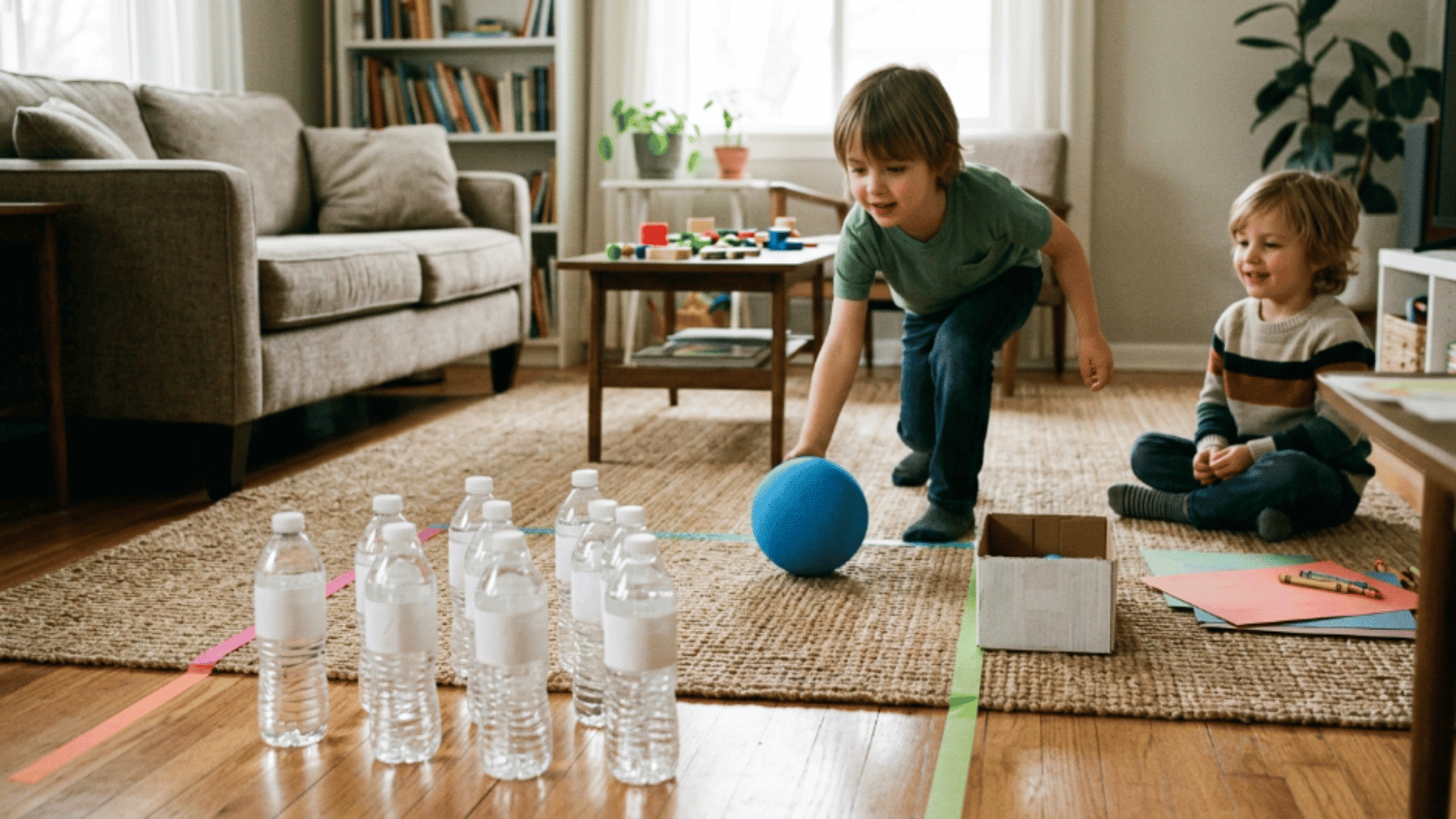
Use empty bottles as pins and a soft ball to play bowling indoors. Set them up in a line and let kids try to knock them down.
You can keep score to make it more exciting. It’s easy to set up and doesn’t need special equipment. This activity also helps with aim and coordination.
25. Tape Hopscotch Game
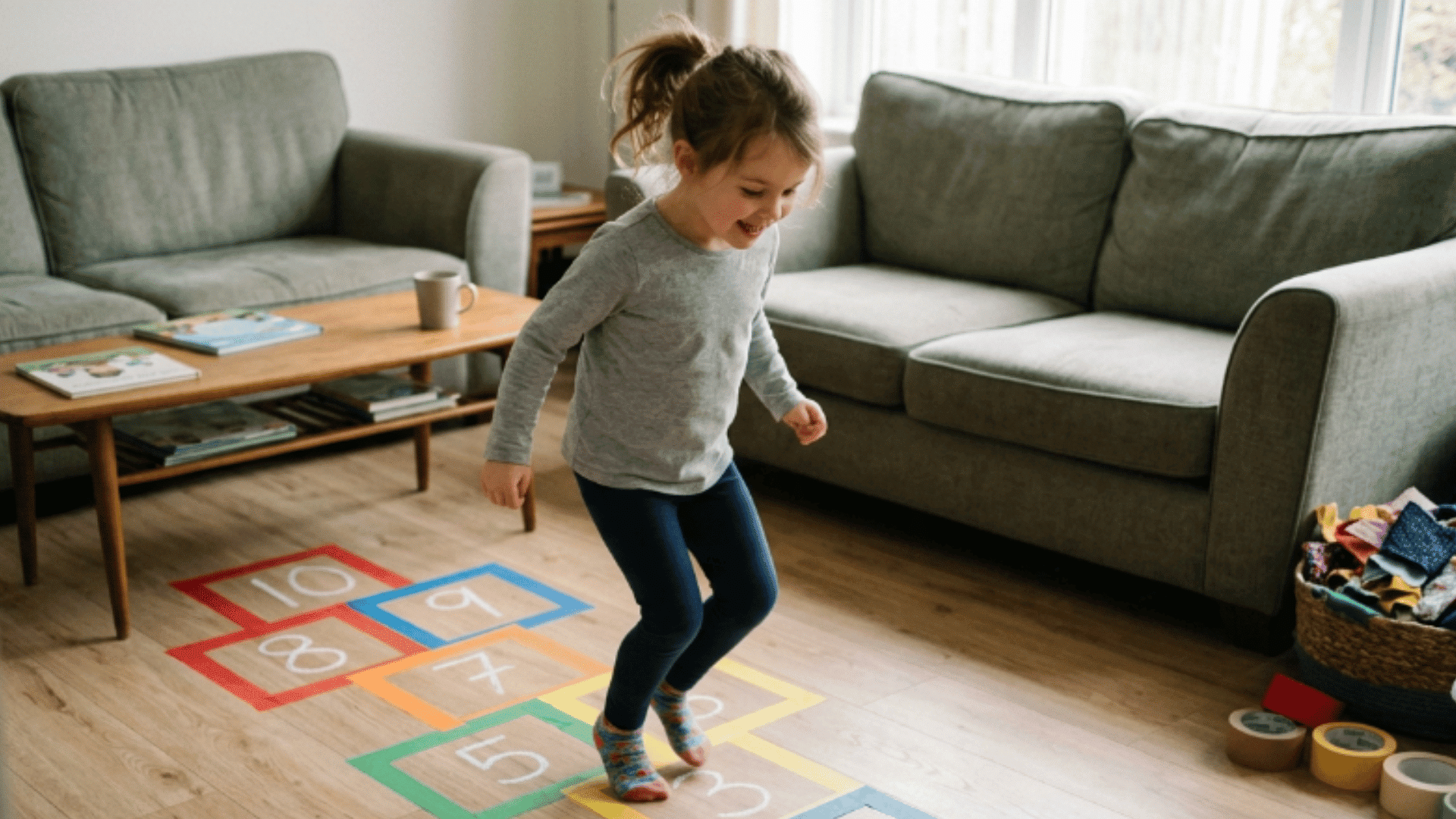
Create a hopscotch grid on the floor using tape. Kids can jump through the squares just like the outdoor version. It’s simple but keeps them active.
You can even add numbers or colors to make it more fun. This is a great way to bring a classic game indoors.
26. Musical Chairs
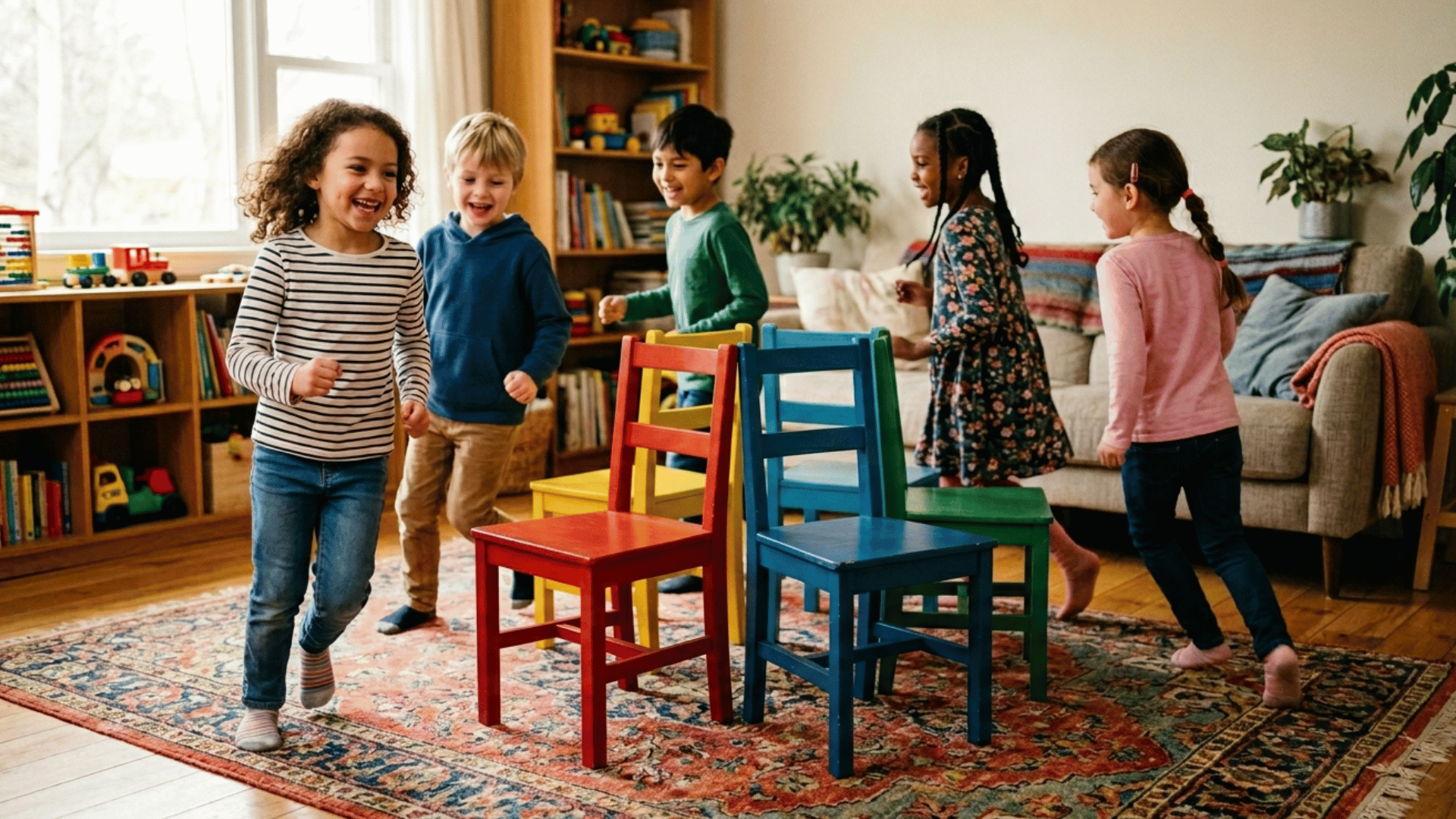
Musical chairs is always a hit with kids. Arrange chairs in a circle and play music while they walk around. When the music stops, they need to find a seat.
It’s exciting and keeps everyone involved. This game also helps with listening and quick reactions.
27. Baking Soda Volcano
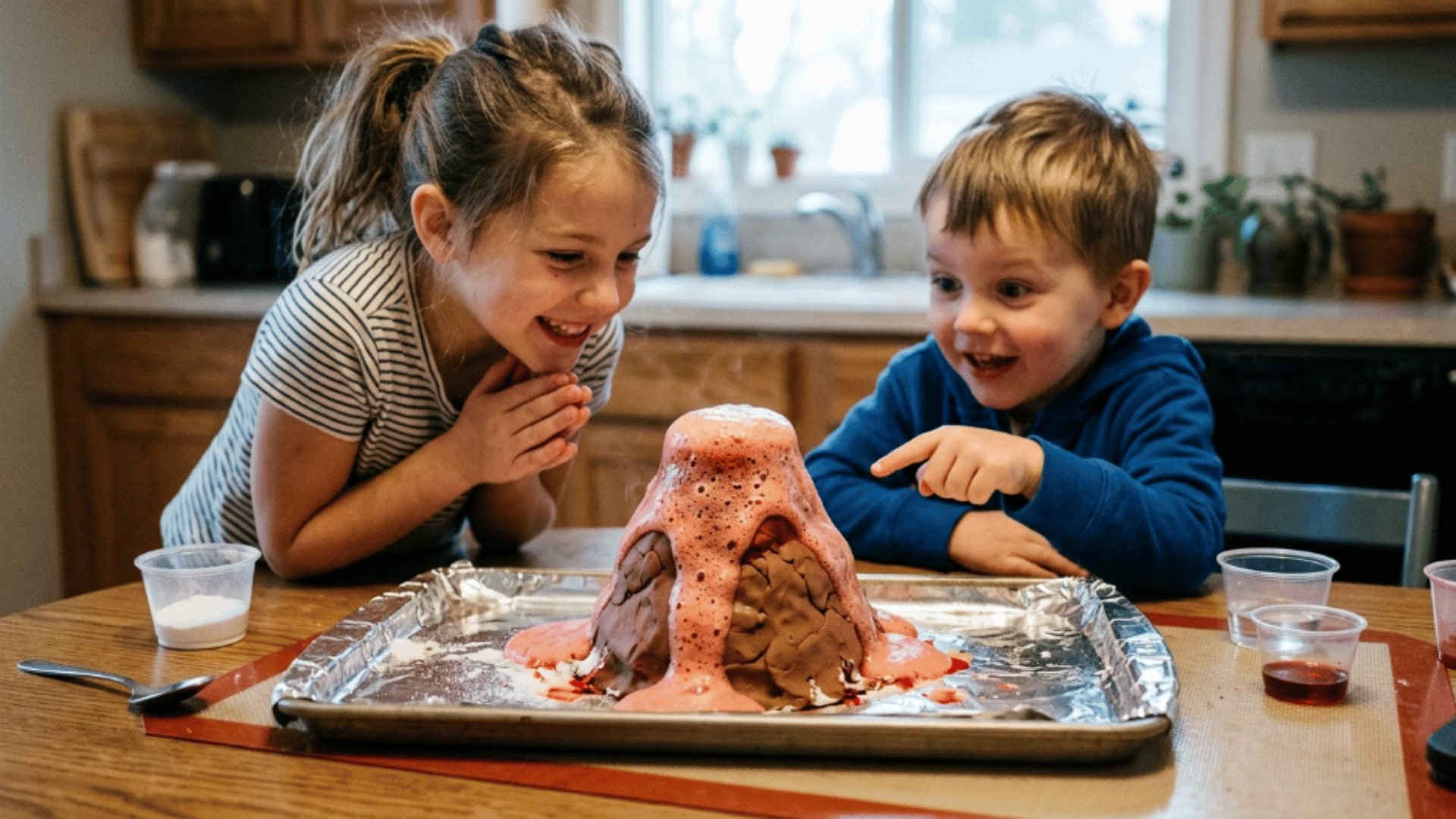
The baking soda volcano is a fun mini science activity. Use baking soda, vinegar, and a bit of color to create a “volcano” eruption.
Kids love watching the reaction happen. It’s simple, safe, and educational. This activity introduces basic science in a way that feels like play.
28. Puzzle Game
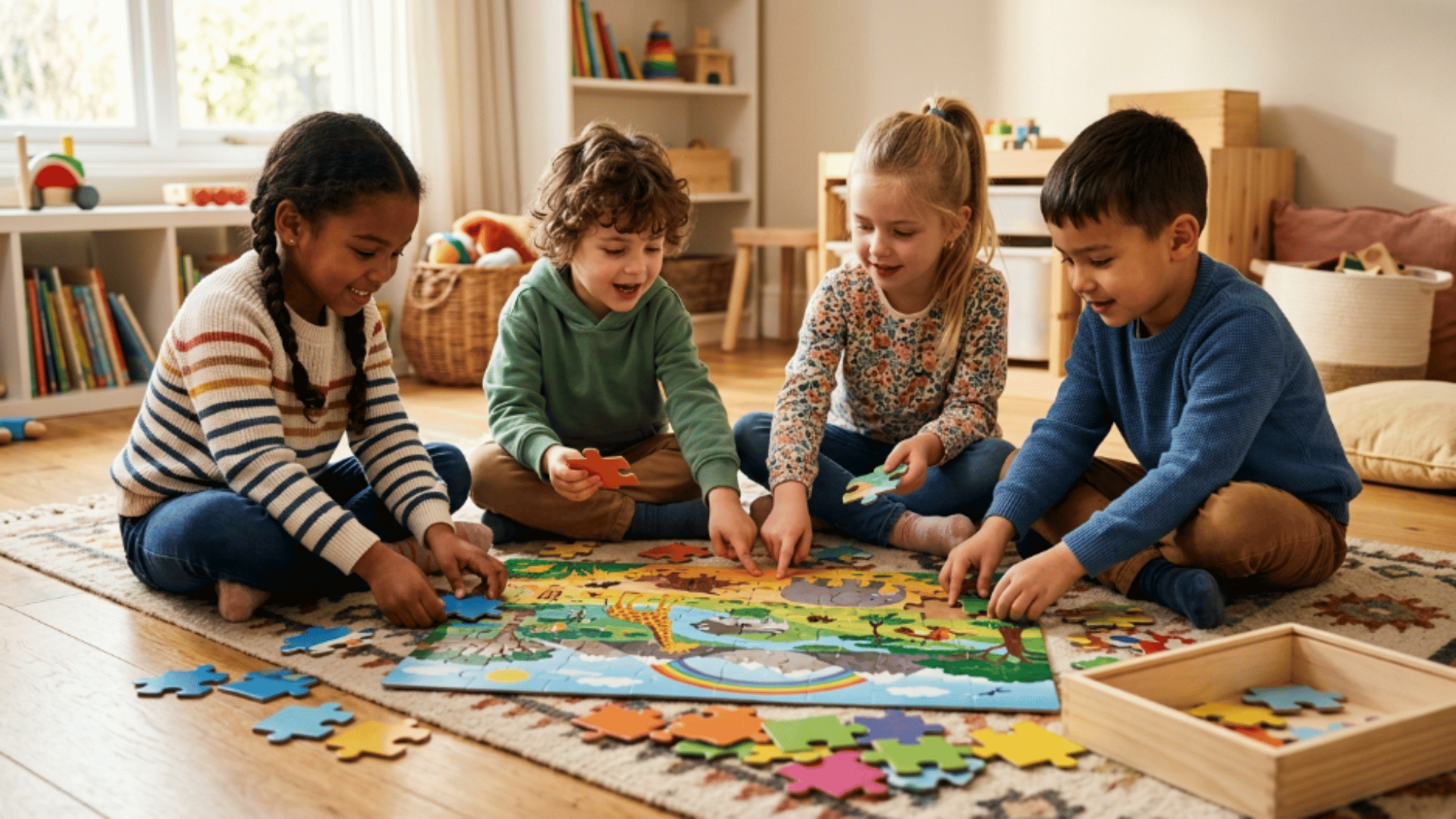
Puzzle games are great for quiet time. Kids can solve jigsaw puzzles or simple brain teasers. It helps improve focus and problem-solving skills.
Start with easy puzzles and slowly increase the difficulty. This is one of the best indoor activities for kids when they need a calm and focused task.
29. Lego Building Challenge
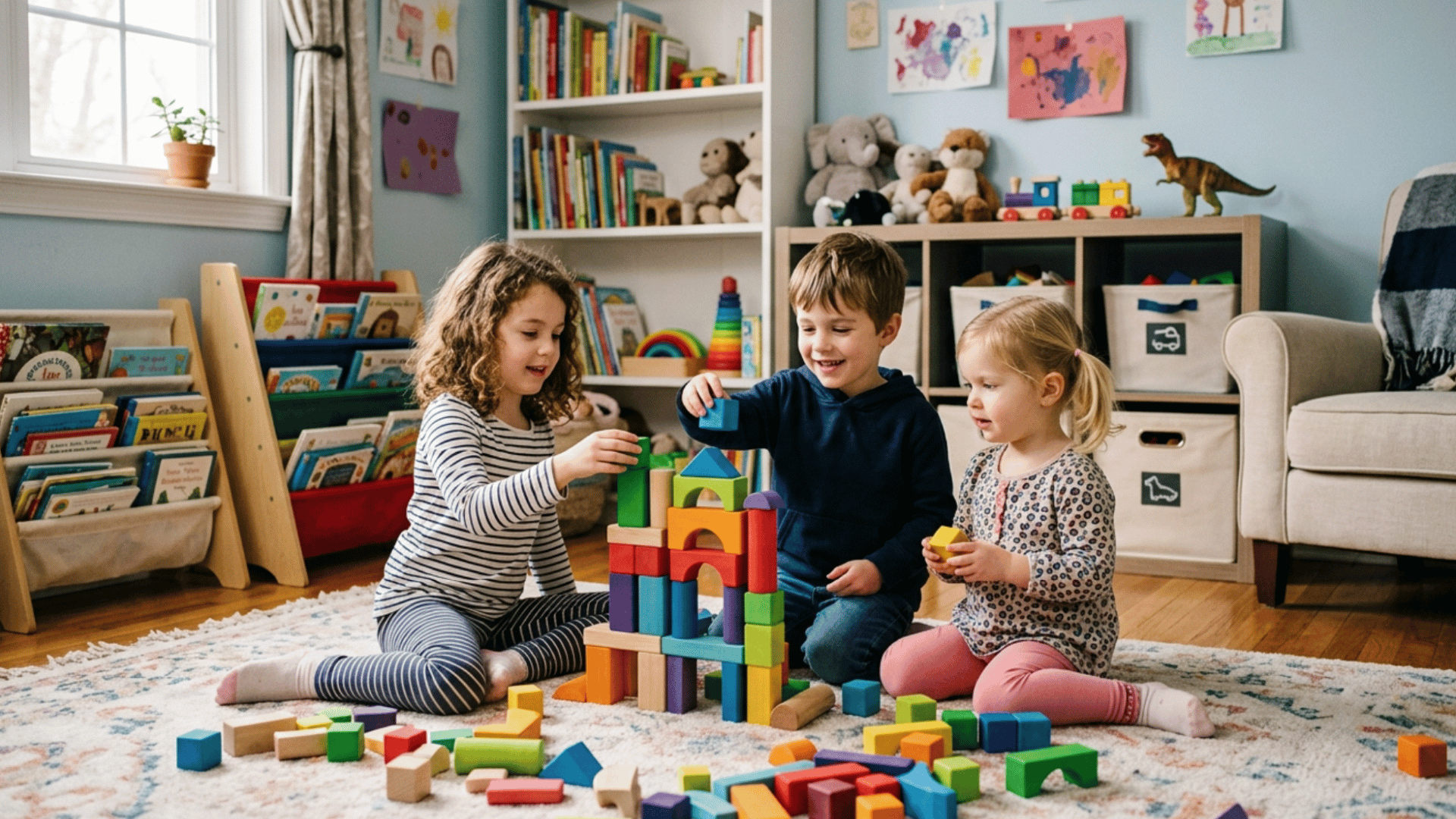
Give kids a fun theme like “build a house,” “design a car,” or “create a castle” using LEGO blocks. Setting a timer can make the challenge more exciting and engaging.
This activity encourages creativity, problem-solving, and imagination as kids come up with their own designs. It also helps improve focus and planning skills.
You can let kids present their creations at the end, or even hold a short “show and tell” session. It works well for both solo play and group activities.
30. Sensory Bin Play
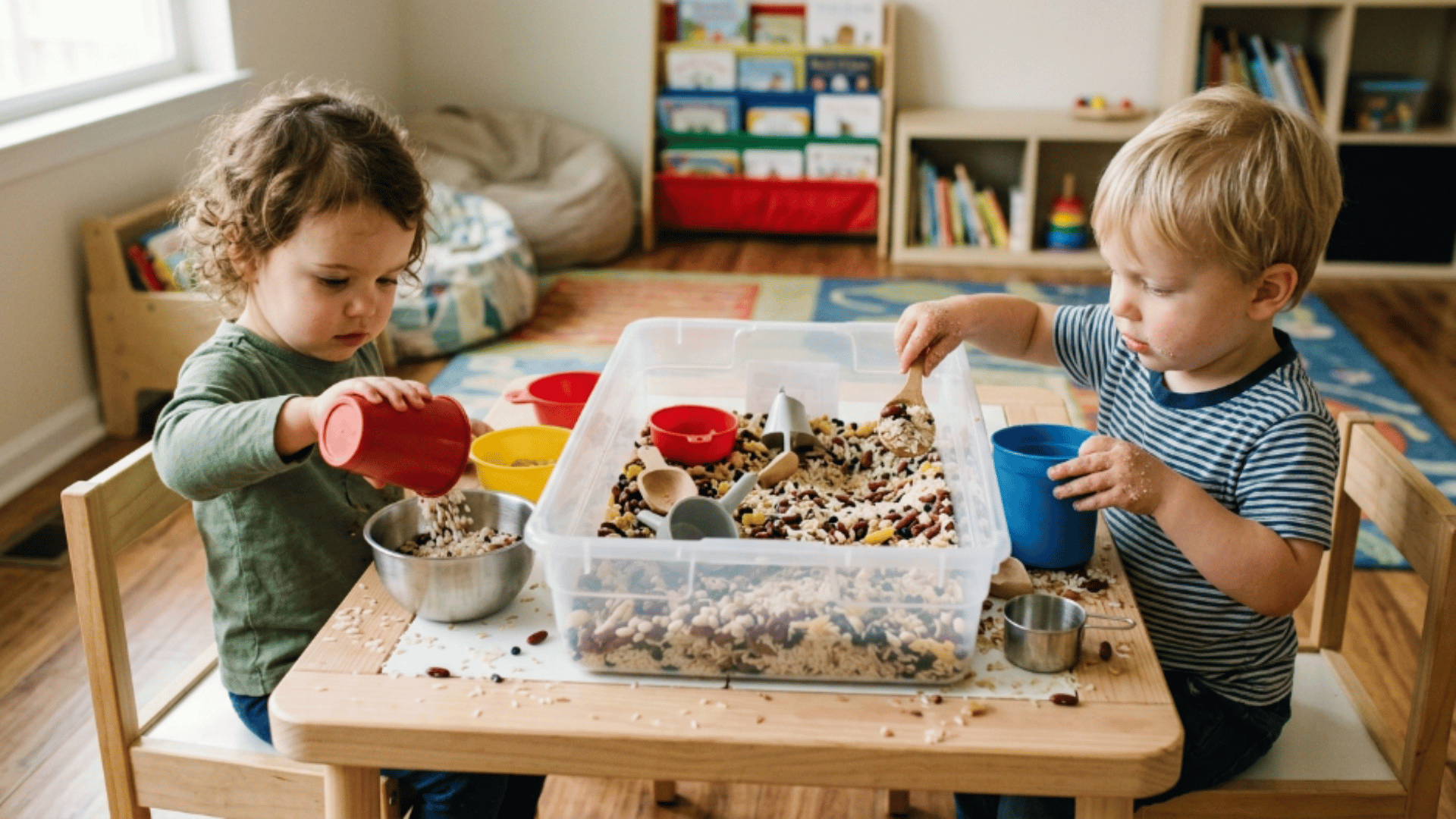
Fill a container with materials such as rice, beans, sand, or pasta, and add small toys or tools, such as spoons and cups. Kids can dig, scoop, and explore different textures.
Sensory play is calming and helps improve focus, fine motor skills, and hand coordination. It’s especially helpful for younger children who enjoy hands-on activities.
You can also change the theme by adding different items, such as animals, letters, or colors. This keeps the activity fresh and engaging every time.
31. Water Transfer Game
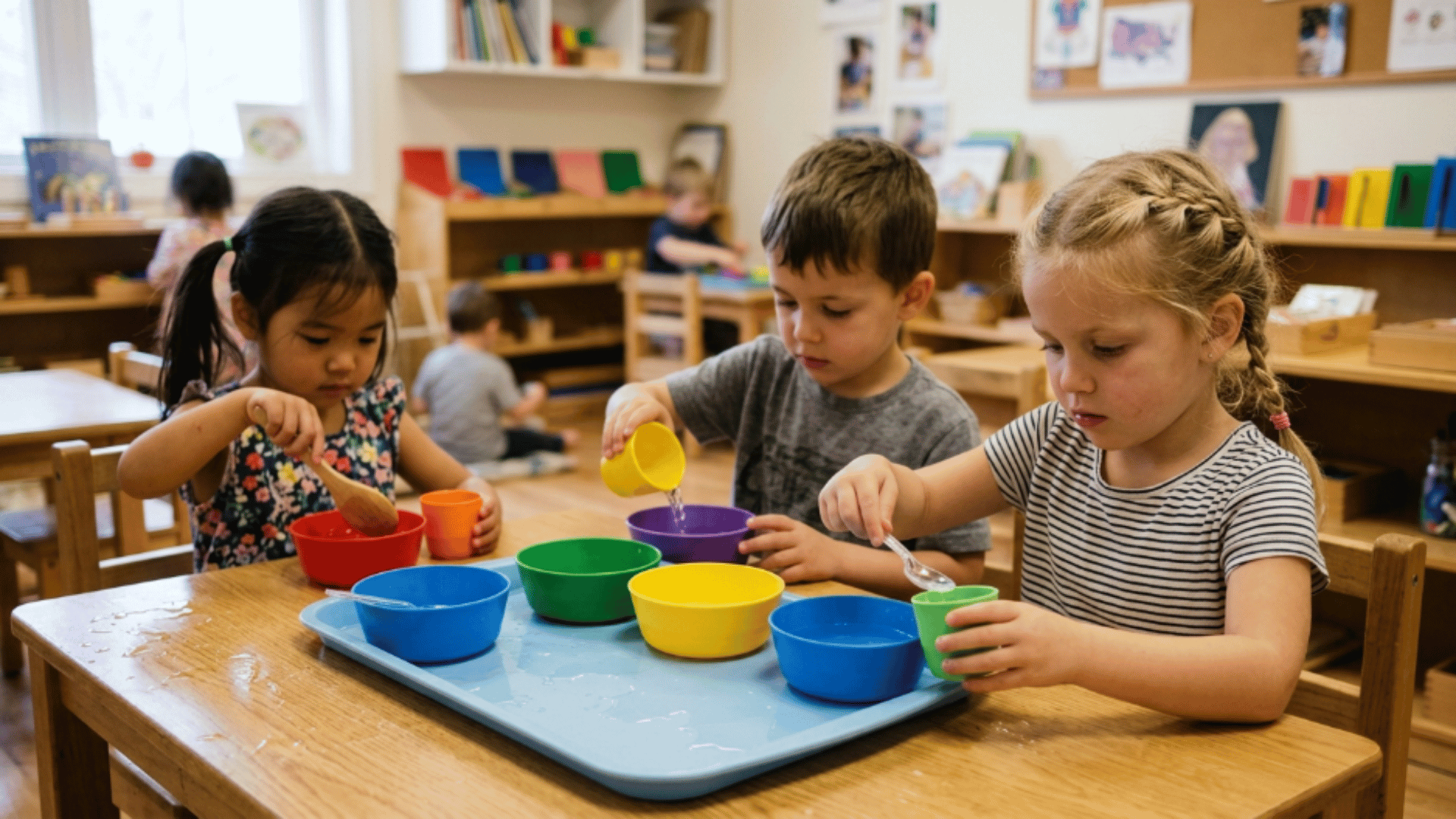
Give kids cups, spoons, or small containers filled with water and let them transfer water from one bowl to another. It may seem simple, but kids find it very engaging.
This activity helps develop hand control, coordination, and patience as they carefully move water without spilling. It’s also a great quiet-time activity.
To make it more fun, you can add food coloring or small floating toys. Just place a towel underneath to keep things tidy.
32. Color Sorting Activity
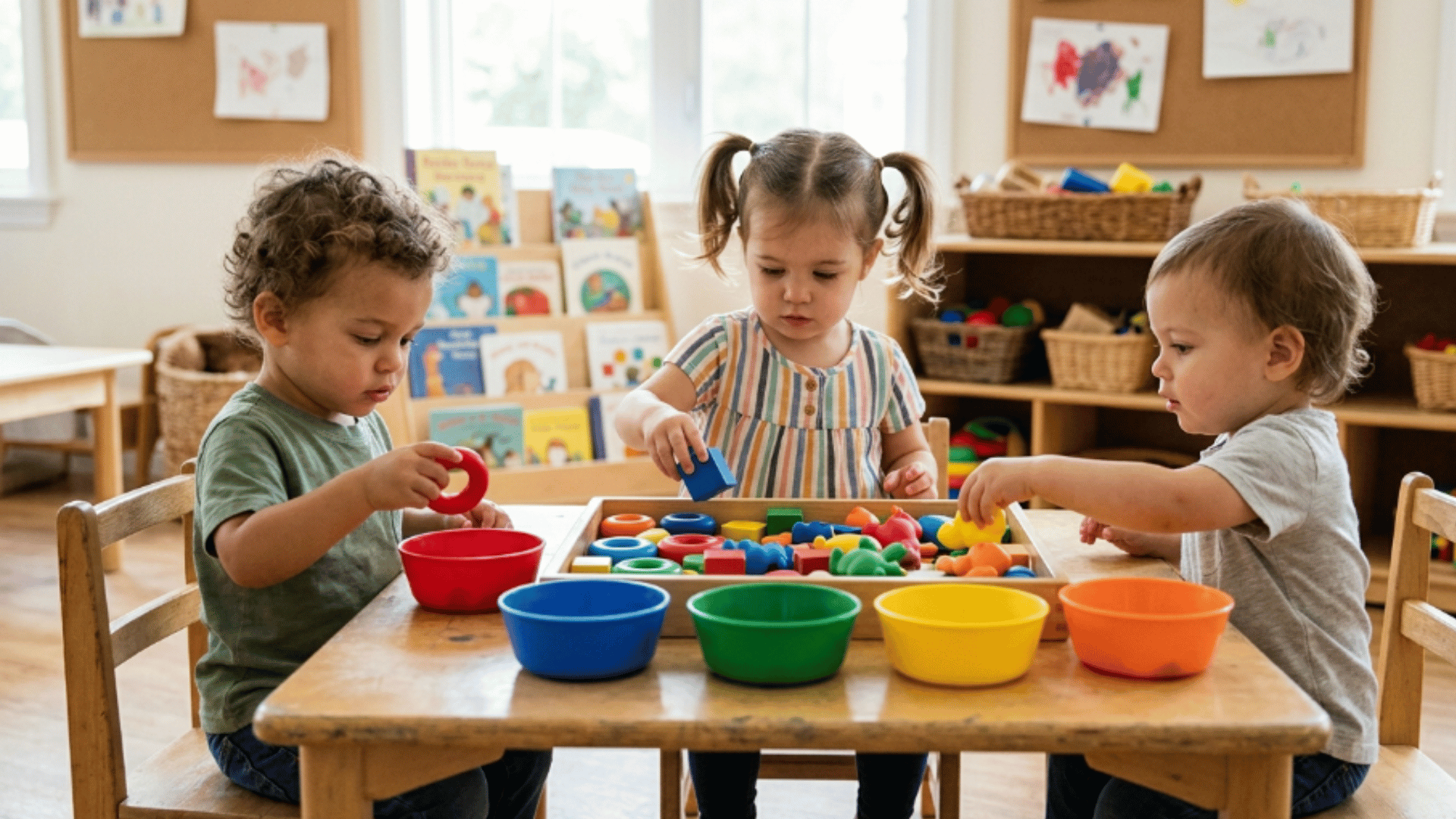
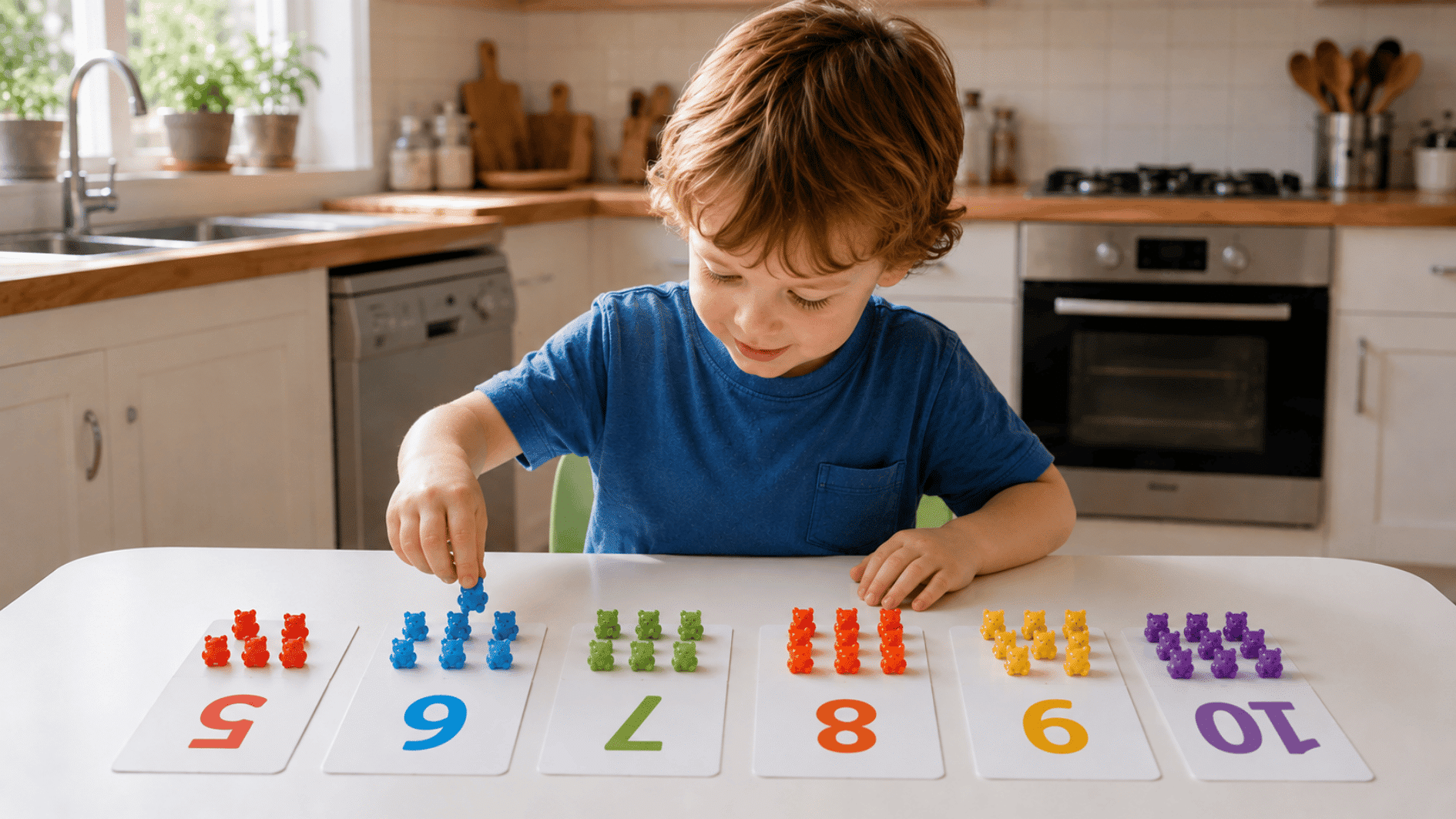
Provide a mix of colored objects like blocks, beads, or toys, and ask kids to sort them into separate containers by color. It’s a simple but effective learning activity.
This helps improve focus, organization skills, and color recognition, especially for younger children. It also builds early problem-solving abilities.
You can increase difficulty by adding more colors or asking kids to sort by size or shape as well. It’s easy to set up and works well for independent play.
33. Ice Cube Painting
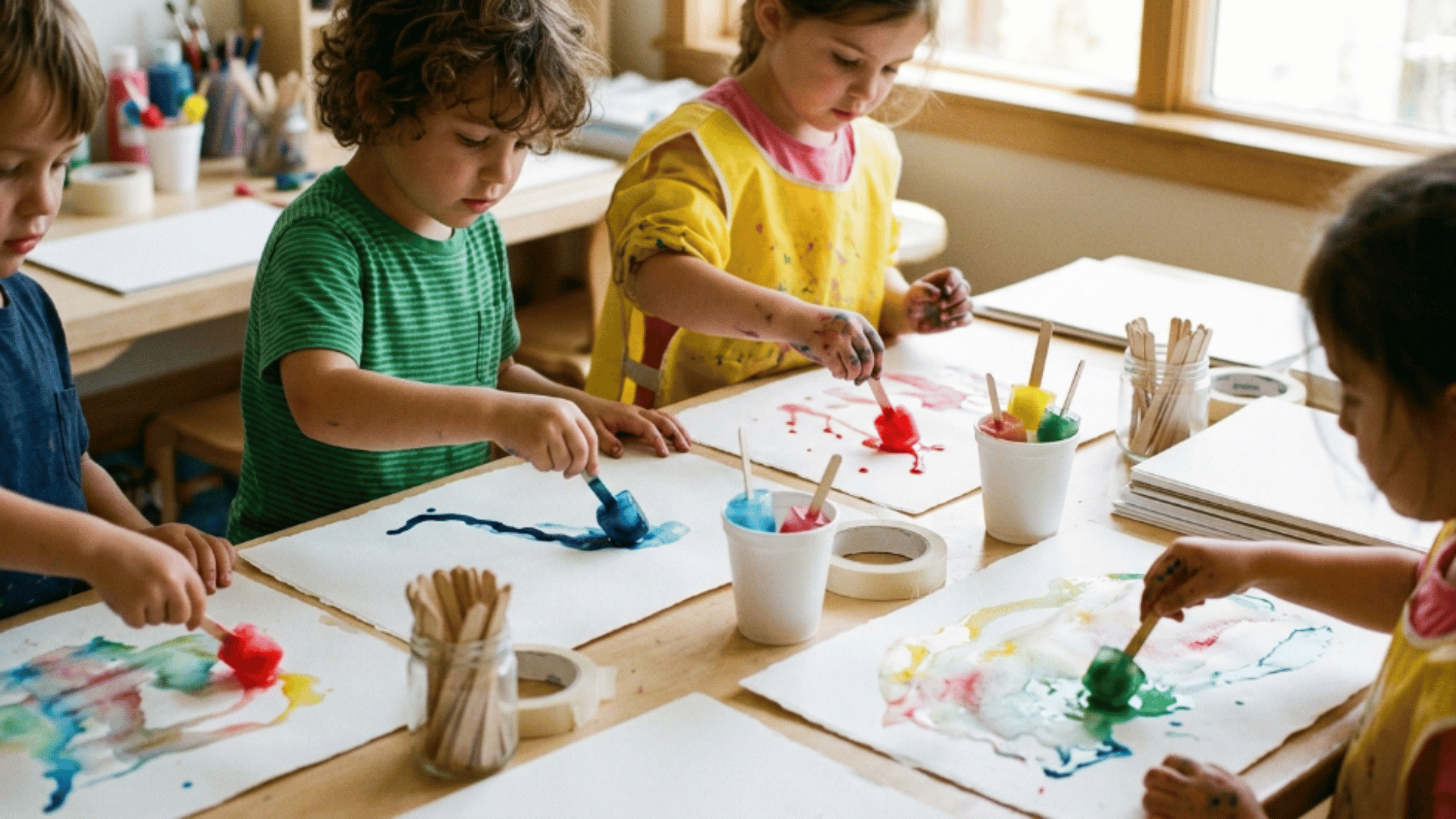
Freeze colored water into ice cubes and let kids use them to paint on paper. As the ice melts, it creates a unique and fun painting effect.
Kids enjoy the changing textures and watching colors blend as they paint. It adds a sensory element to a regular art activity.
You can use different colors or shapes to make it more exciting. It’s a creative way to combine art and play while keeping kids engaged.
34. Guess the Object (Blindfold Game)
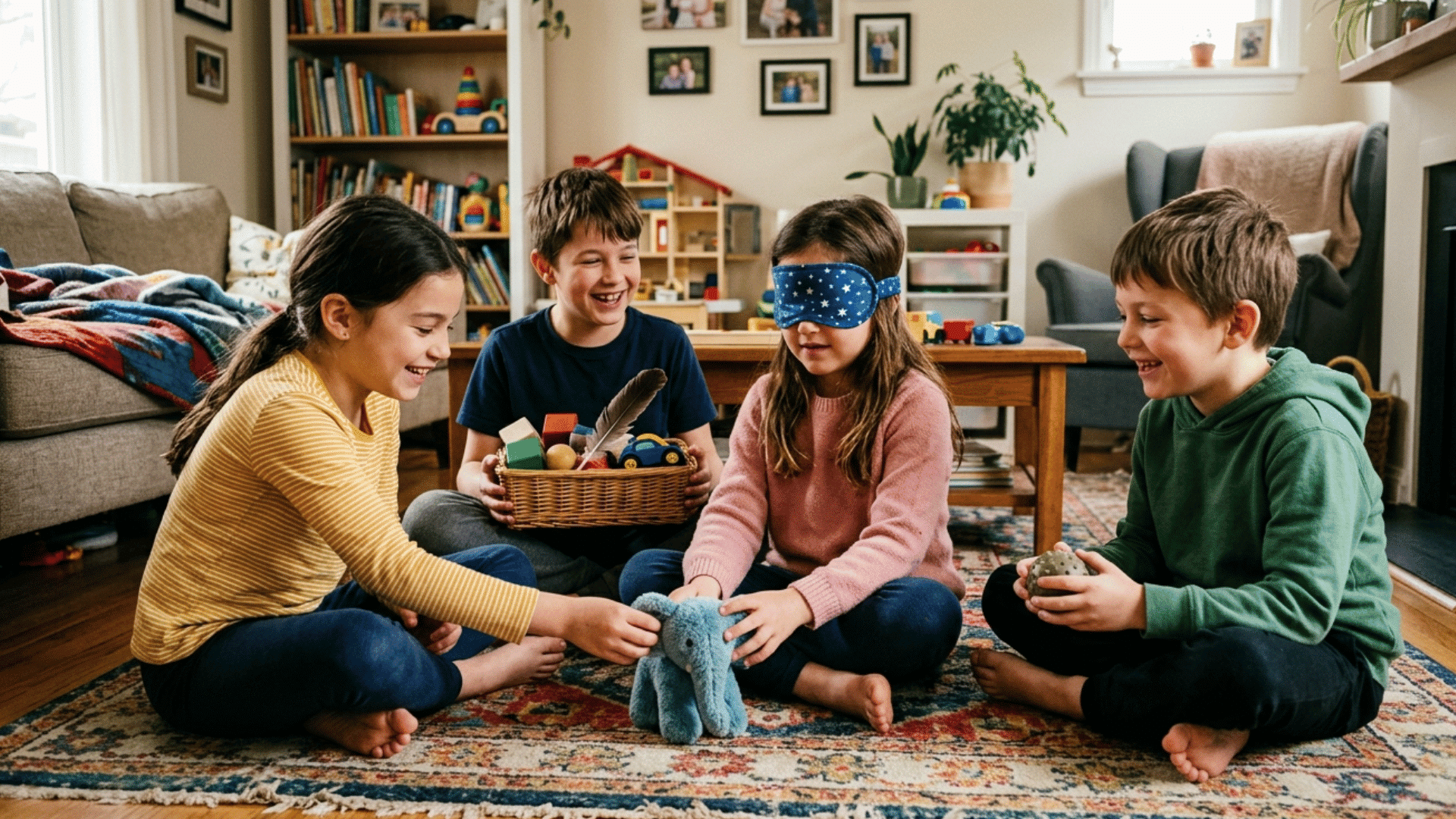
This game is simple but very fun. blindfold the child and give them different objects to touch and guess. Use safe items like toys, fruits, or household objects.
It helps improve their sense of touch and thinking skills. Kids enjoy the surprise element, and it often turns into a playful group activity with lots of laughter.
35. Homemade Play-Doh
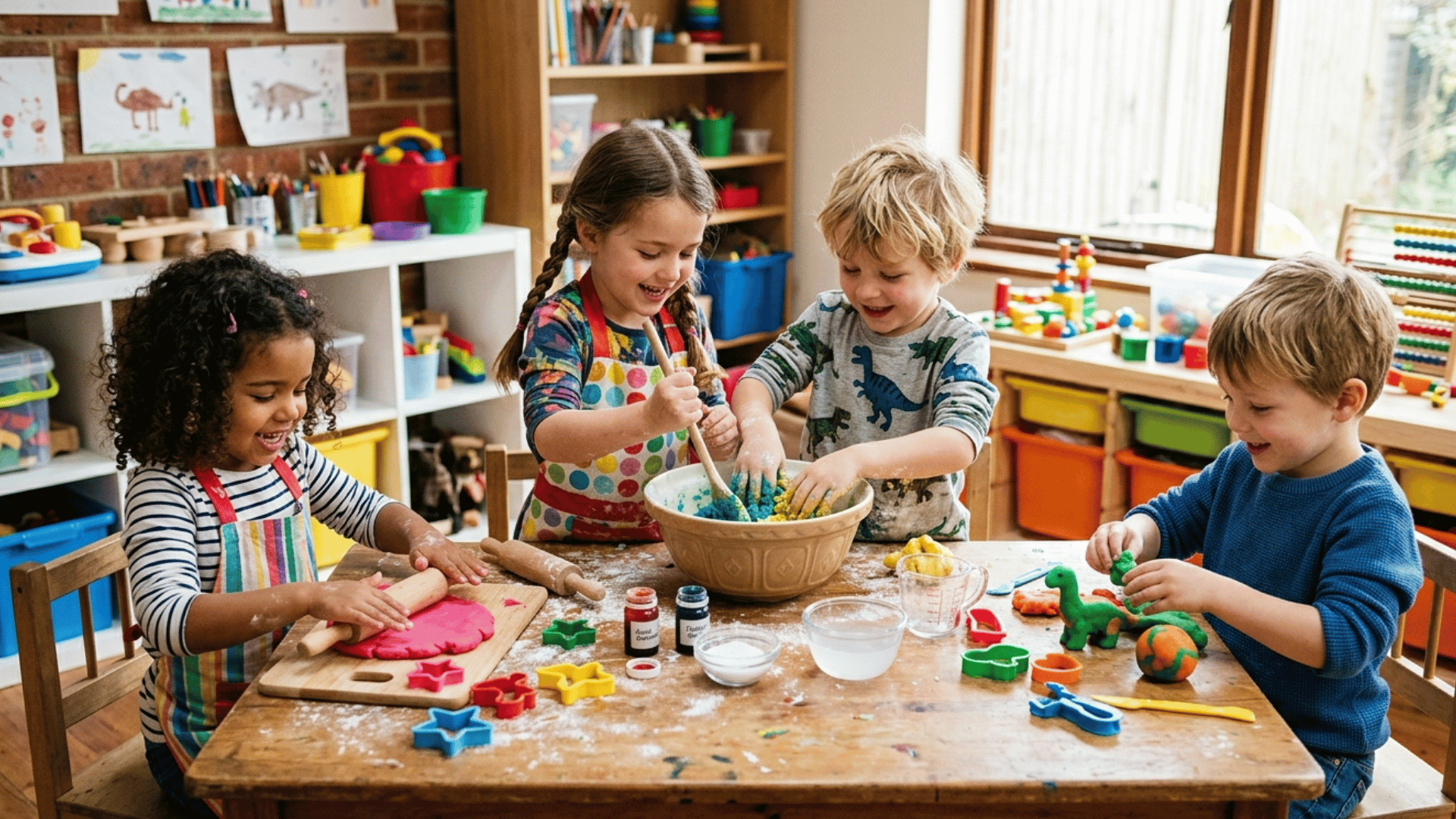
Homemade playdough is easy to make using flour, salt, and water. Once ready, kids can roll, shape, and mold anything they imagine.
Add food coloring to make it more exciting. It’s great for improving hand strength and creativity. This activity also keeps kids focused for longer, especially as they start building shapes or small figures.
36. Classic Board Games
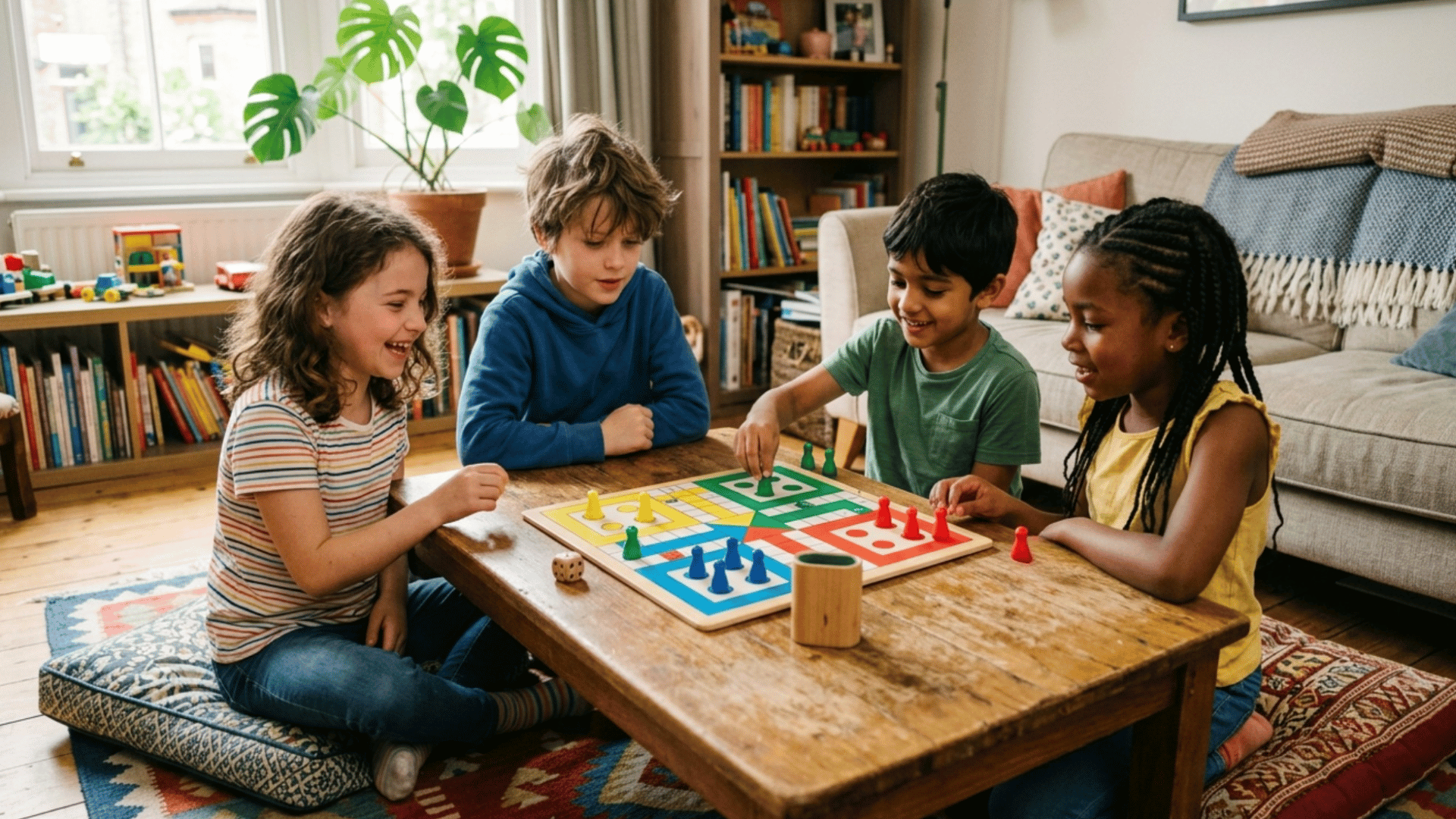
Dust off whatever board games you have sitting in the cupboard. Snakes and Ladders, Ludo, Scrabble Junior, Jenga, they all hold up well.
Board games teach kids turn-taking, patience, and how to handle winning and losing. and they genuinely bring the whole family together without anyone staring at a screen.
37. Kids Cooking or Baking Competition
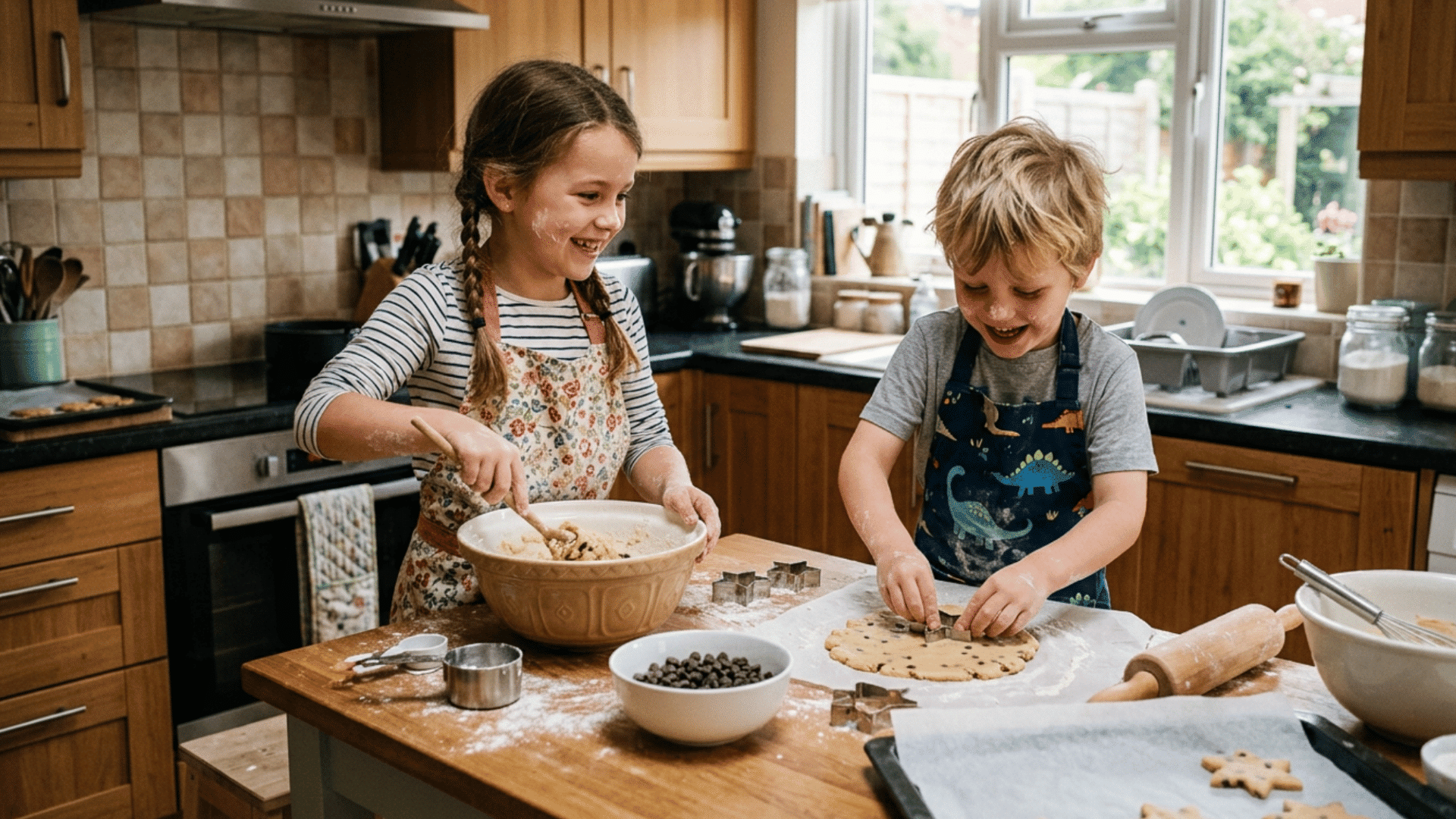
Let kids help make something simple in the kitchen, whether it’s cookies, sandwiches, or a fruit salad. Give them real tasks like measuring, stirring, or decorating.
cooking together builds confidence and teaches basic life skills. And at the end, they get to eat what they made, which is always the best part.
38. DIY Paper Crown Making
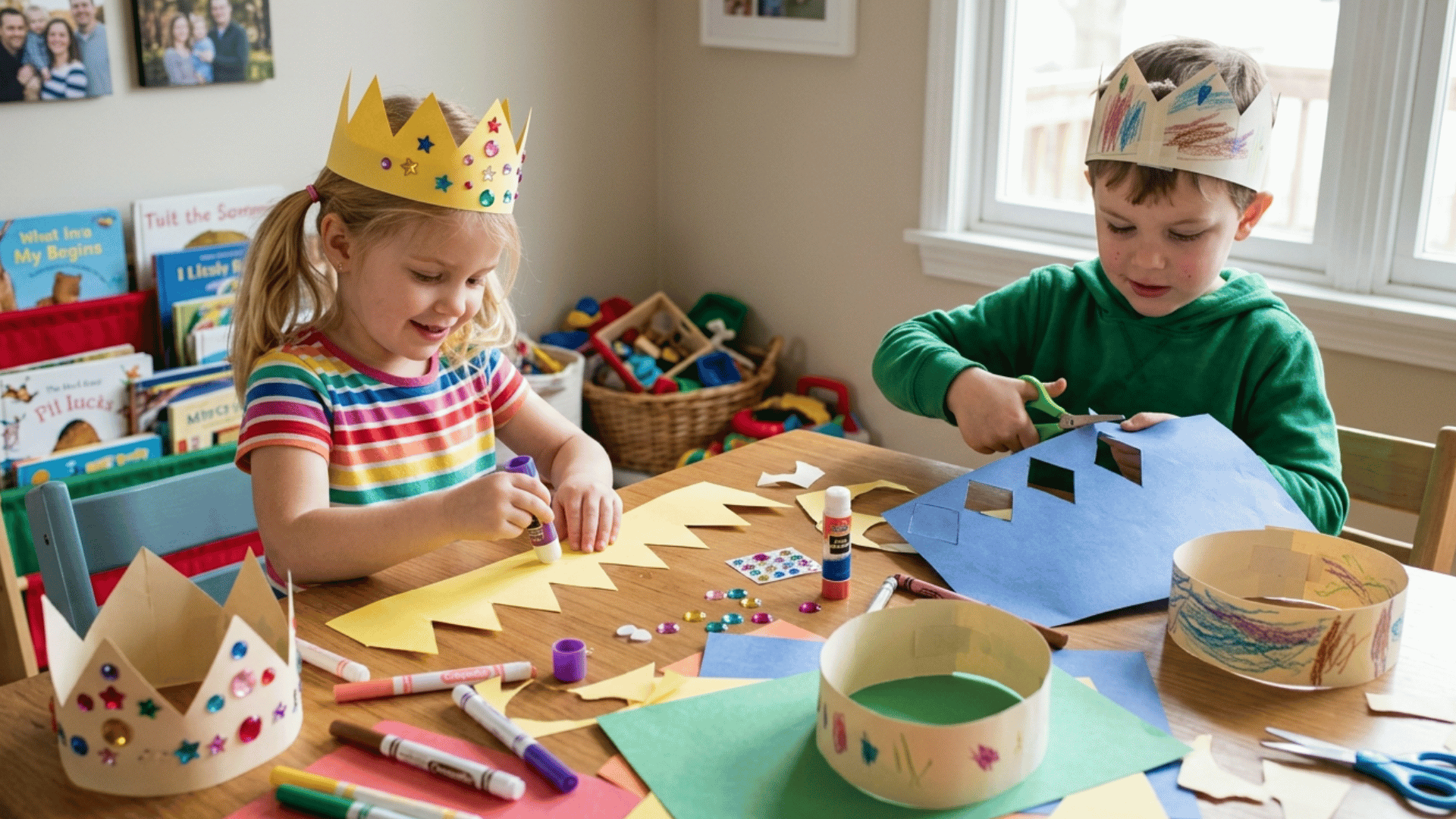
Cut strips of cardboard or thick paper into crown shapes and let kids go wild decorating with markers, stickers, foil, and glitter glue. Everyone gets a crown and a royal title to go with it.
It’s a quick craft with a fun payoff. Works especially well for younger kids who love a bit of dress-up and pretend play.
39. Follow the Leader Game
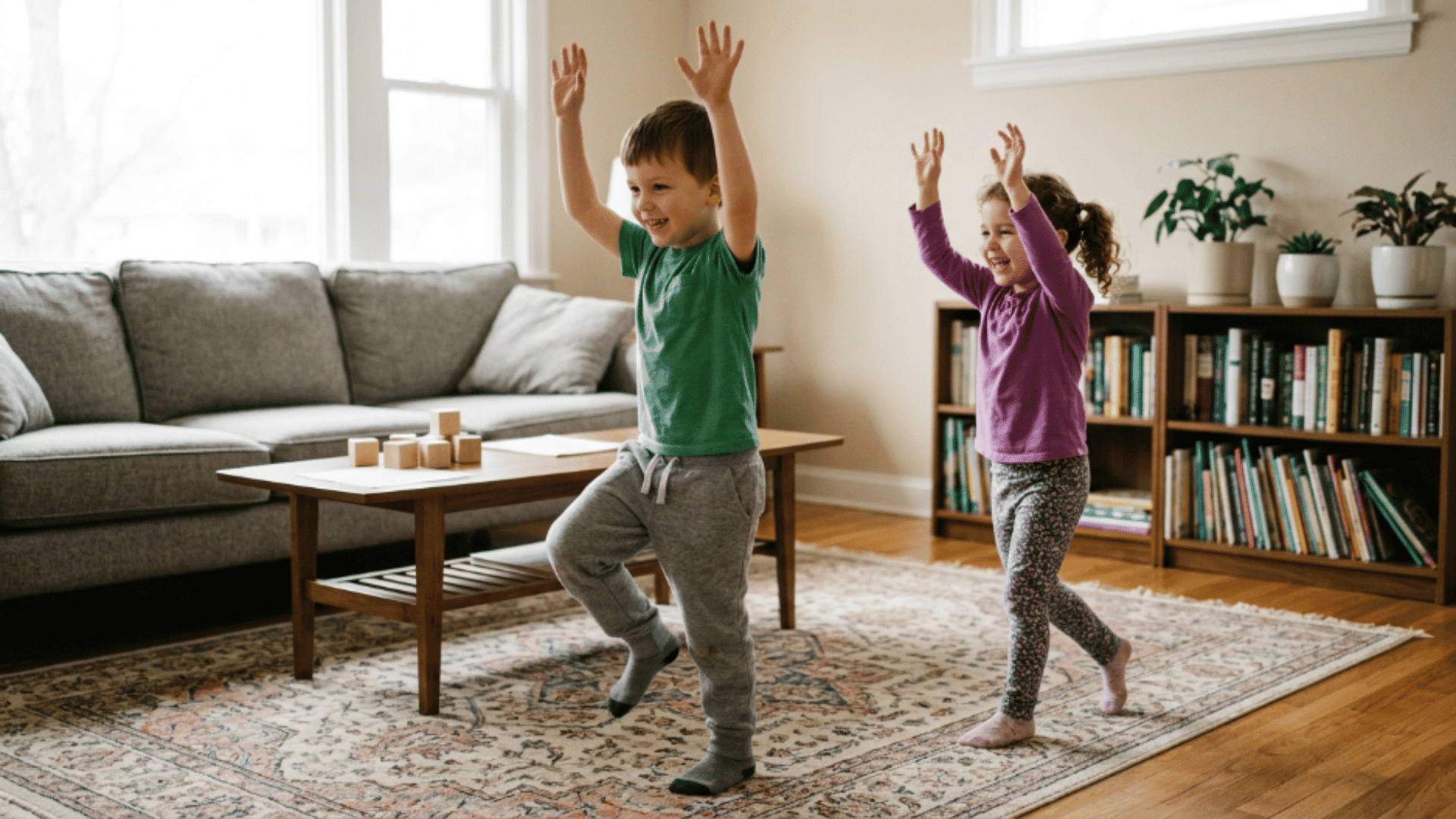
Follow the leader allows one child to perform actions while others copy the same movements around the room. observing and repeating actions improves attention and listening skills.
Children enjoy taking turns as the leader. the game also encourages group cooperation. Activities like this work well as kids’ indoor activities during group play.
40. Storytelling Game
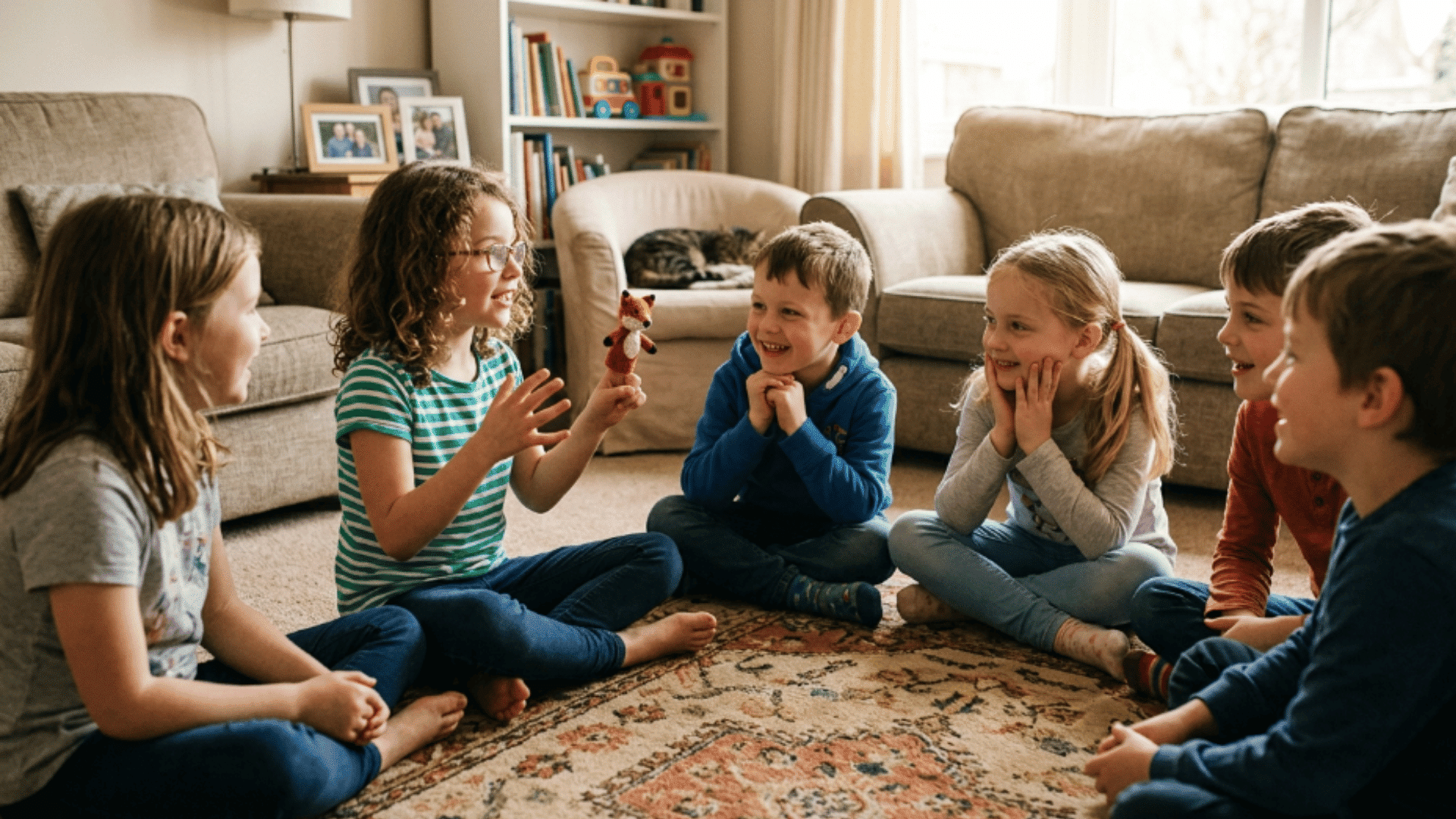
Telling games begin with a single short sentence, and each child adds another line to continue the story. the activity builds creativity and language development.
Speaking aloud helps children practice communication skills. Listening to others improves social interaction. Creative storytelling is one of the most enjoyable activities.
41. Drawing Portraits of Each Other
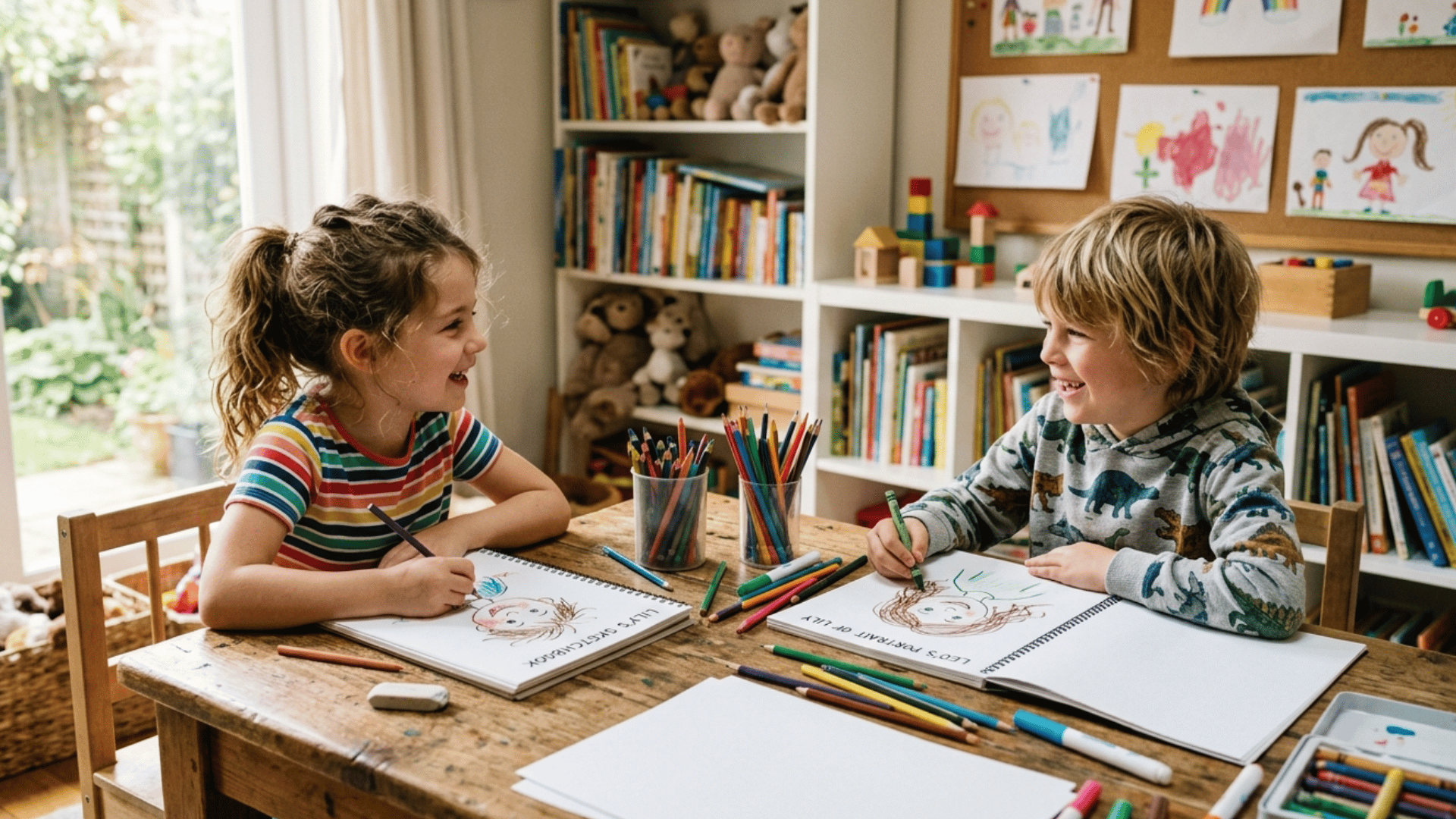
Sit across from a sibling or parent and draw their portrait. No erasing allowed, go for it. The results are always hilarious, and kids love comparing how everyone drew each other.
It’s a low-key activity that sparks a lot of laughter. Save the drawings and look back at them later; they make for really sweet memories.
42. Animal Walk Race
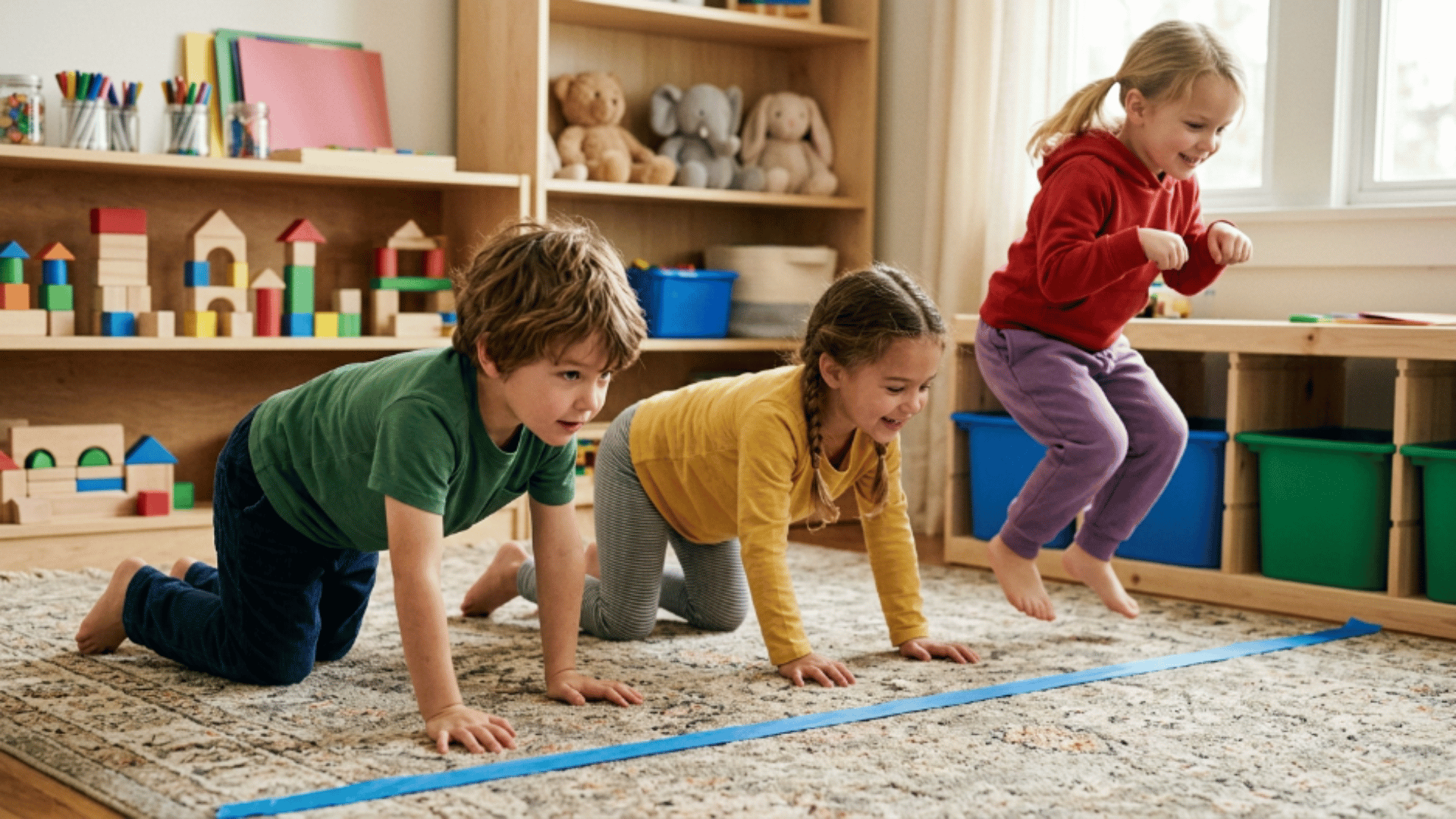
Children race across the room by crawling like bears, hopping like frogs, or waddling like ducks. These playful movements strengthen muscles and improve balance.
Pretending to be animals adds excitement and laughter during play. the activity also builds physical confidence. It remains one of the most energetic indoor activities for younger children.
43. Indoor Scavenger Hunt
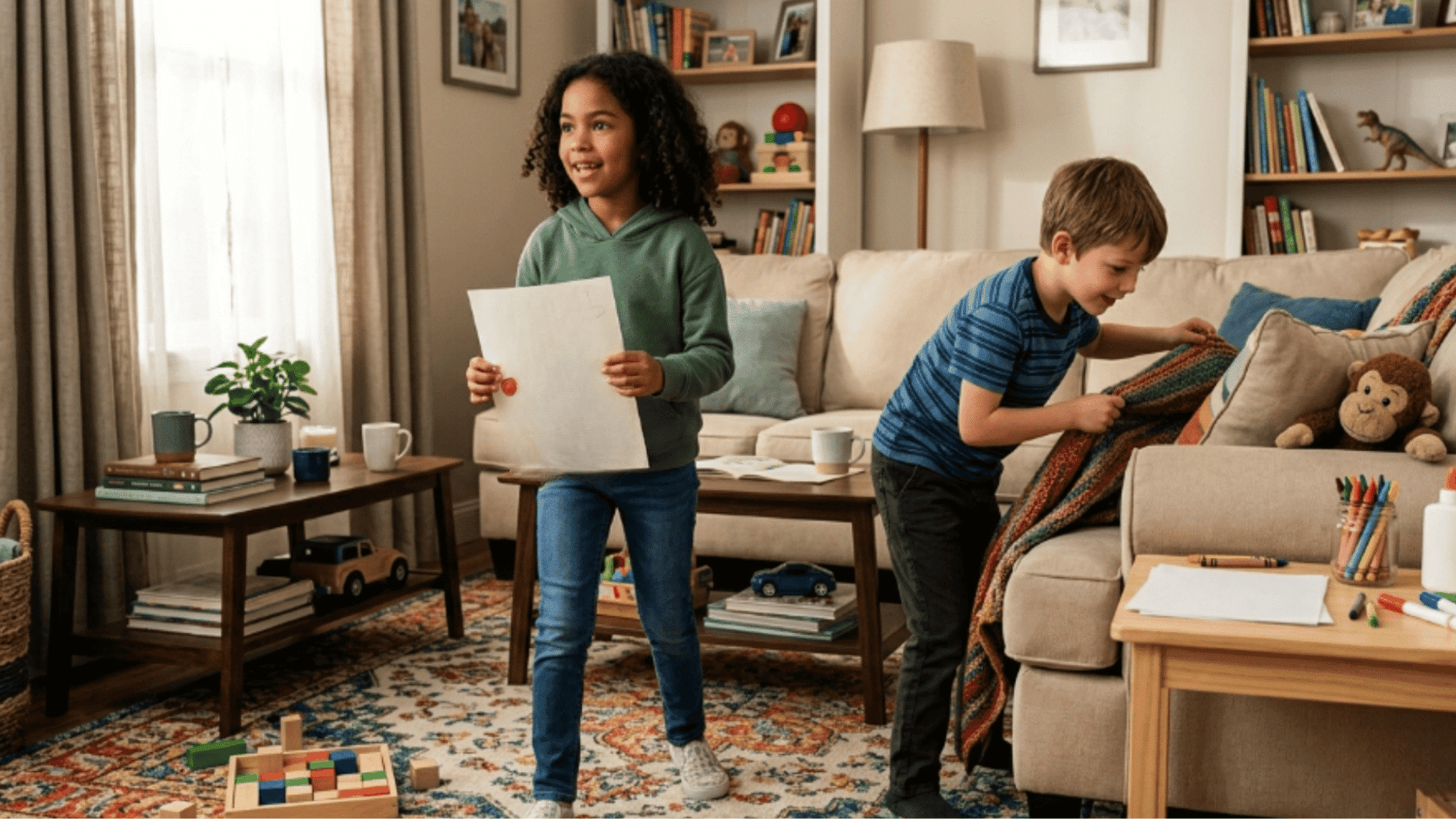
An indoor scavenger hunt includes a list of household items children must find around the house. searching for objects strengthens observation and memory skills.
Moving around different rooms keeps kids active indoors. the hunt builds excitement as children locate each item.
44. Paper Cup Stacking Game
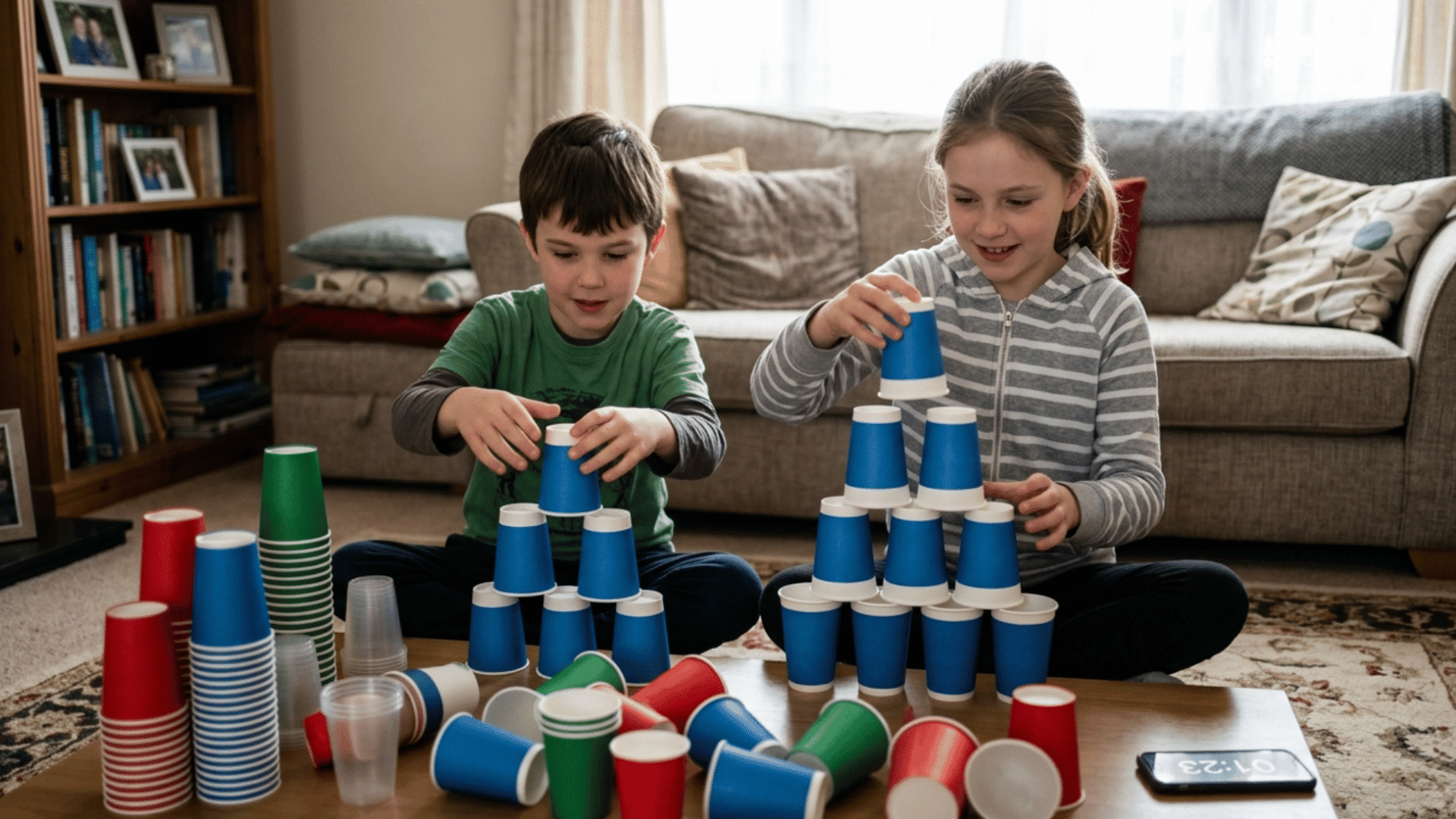
Paper cup stacking is simple but surprisingly fun. Give kids a set of plastic or paper cups and challenge them to stack them into pyramids as fast as they can.
You can time them or turn it into a friendly competition. It helps improve hand coordination and focus. Kids also enjoy knocking the stacks down and starting again, which keeps the activity going longer than expected.
45. DIY Photo Booth at Home
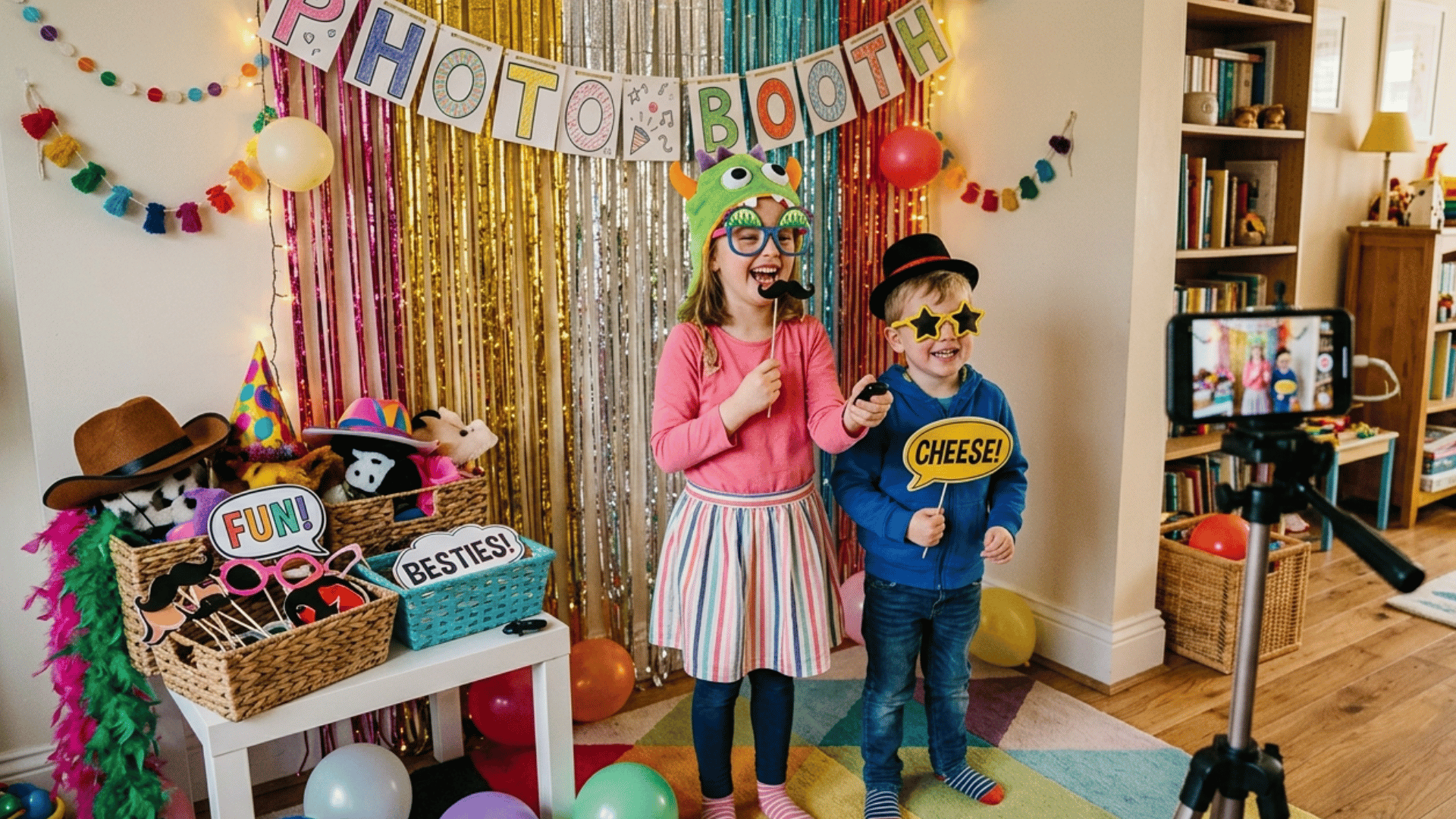
Create a mini photo booth at home using a plain wall, curtain, or bedsheet as a backdrop. Add fun props like hats, glasses, scarves, or even handmade signs to make it more exciting.
Kids can pose, make silly faces, act out characters, or even create short stories while taking pictures. It keeps them entertained for a long time and encourages creativity.
You can also let them decorate the backdrop or choose themes like “superhero” or “princess day.” the best part is that they get to see their photos afterward, which makes the activity even more fun and memorable.
46. Alphabet Treasure Hunt
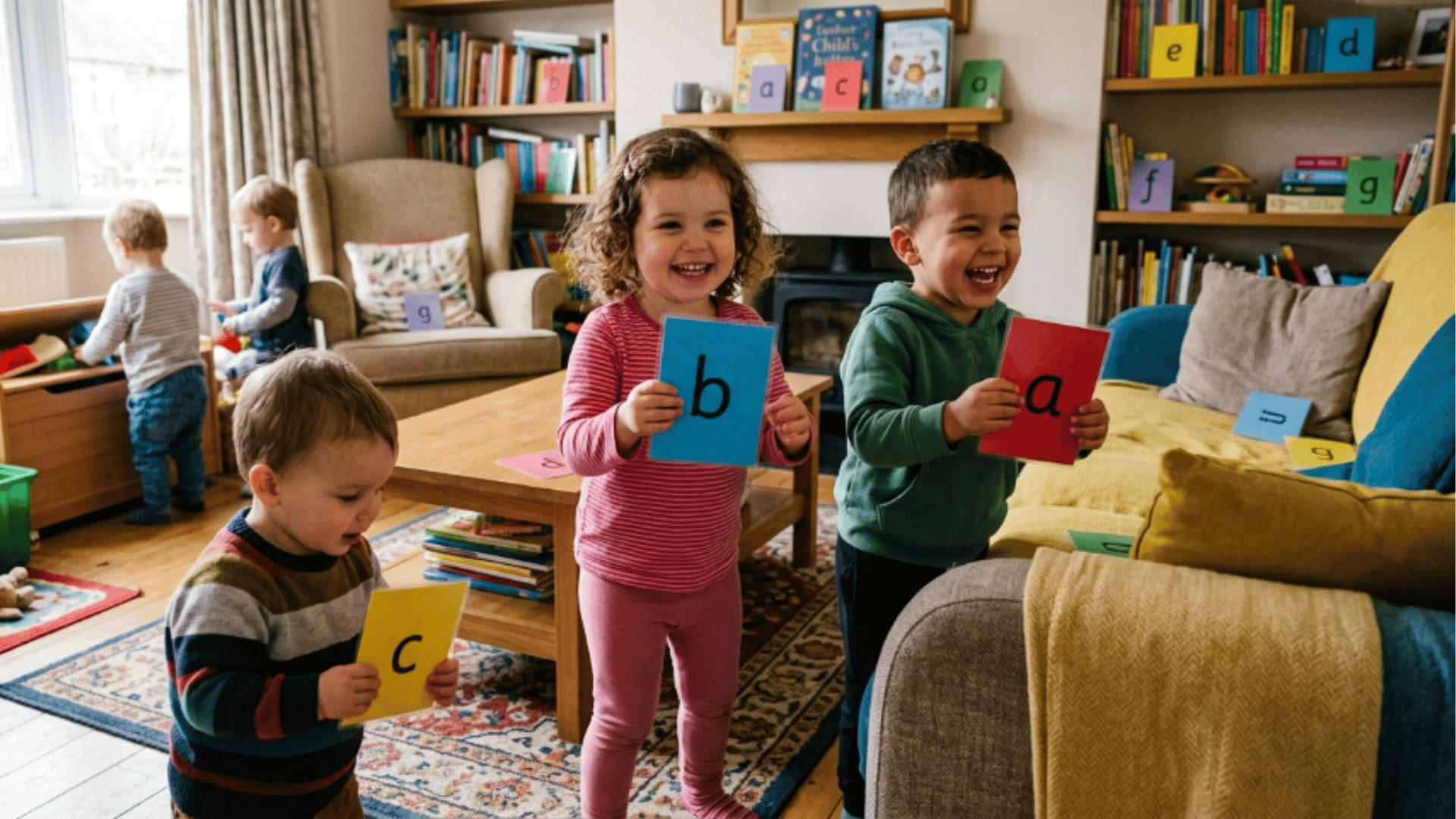
Alphabet treasure hunts involve hiding letter cards around the room for kids to find. As they search, they collect letters and try to identify or arrange them.
This activity strengthens letter recognition, memory, and early reading skills. You can also ask kids to say the sound of each letter they find to make it more interactive.
47. Sock Basketball
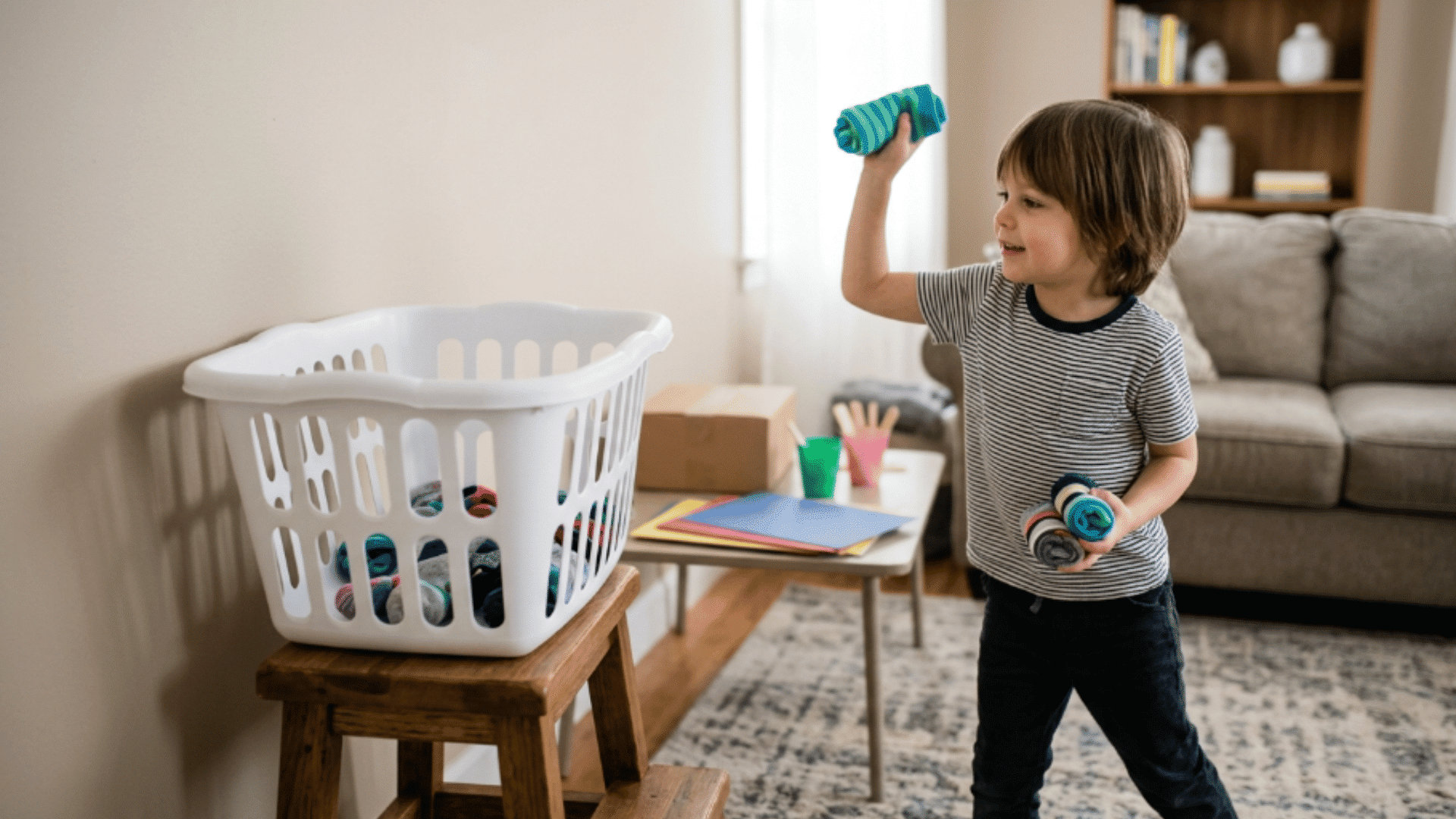
Rolled socks can be tossed into a laundry basket from different distances to create a soft indoor basketball game. Throwing helps improve hand-eye coordination and control.
Kids practice aiming while adjusting their distance from the basket. Friendly competition keeps them engaged. This playful game fits perfectly into rainy day activities for kids.
It’s a Wrap
Keeping kids busy indoors doesn’t have to feel stressful or repetitive. With the right mix of creative, active, and simple ideas, it becomes much easier to turn an ordinary day at home into something fun.
These inside activities for kids offer plenty of options that work for different moods, energy levels, and ages. Some keep them moving, while others help them slow down and focus.
The best part is that most of these ideas need very little setup. Try a few, mix things up, and see what your kids enjoy the most.