
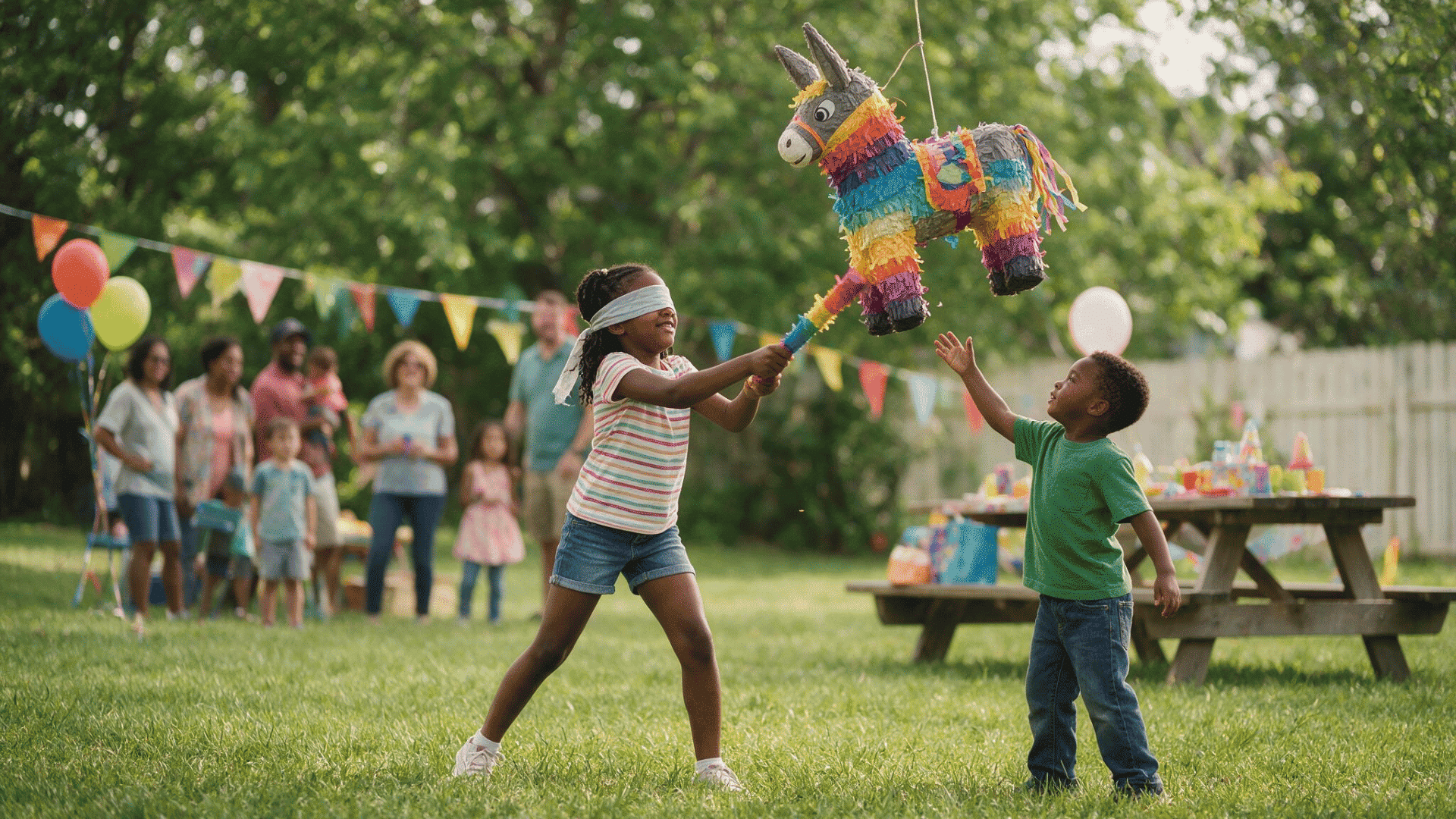
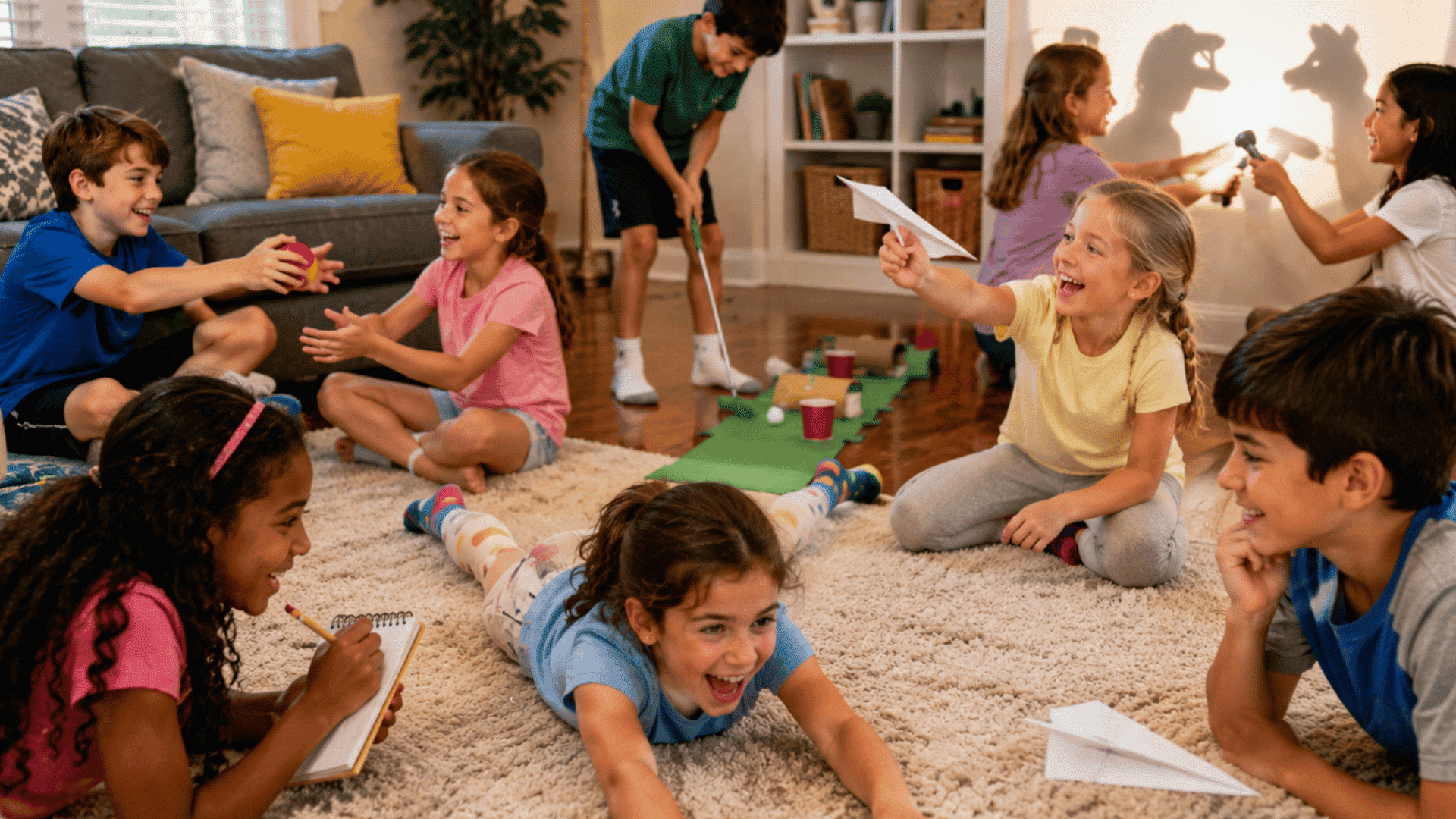

Young children learn best when they use their hands, eyes, ears, and nose. That is why sensory activities for preschoolers are so helpful during the early years.
These simple, hands-on activities help kids build important skills like focus, creativity, and problem-solving, all while having fun.
From playing with sand to squishing homemade dough, activities let little ones feel, think, and grow. Here are simple ideas for parents and teachers to try home or in the classroom.
What Does Sensory Activities Mean?
Sensory play is any activity that gets children to use their senses: touch, sight, sound, smell, taste, movement, and balance.
In simple words, it is learning through doing. Kids feel, move, and try things out on their own rather than just sit and listen.
For children between ages 3 and 5, this kind of hands-on play builds fine motor skills, improves focus, supports early reading and writing, encourages problem-solving, and helps them manage big emotions.
The best part is that sensory activities for preschoolers do not need to be complicated or costly. Most ideas use simple items already at home, take little time to set up, and work both indoors and outdoors.
Sensory Activities for Preschoolers
Here are simple, hands-on sensory activities that are easy to set up, budget-friendly, and fun for little ones to try every day.
1. Dry Rice Sensory Bin

- Skills Kids Pick Up: Scooping, pouring, and hand-eye coordination.
- Materials Needed: A plastic bin, dry white rice, measuring cups, spoons, and small toy figures.
- How to Set it Up: Pour rice into the bin. Add cups, spoons, and a few small toys buried inside. Let your child scoop, pour, and search for hidden objects.
- Safety Note: Keep this activity away from children who still put things in their mouths. Supervise at all times and teach your child not to throw rice.
2. Colored Pasta Sorting
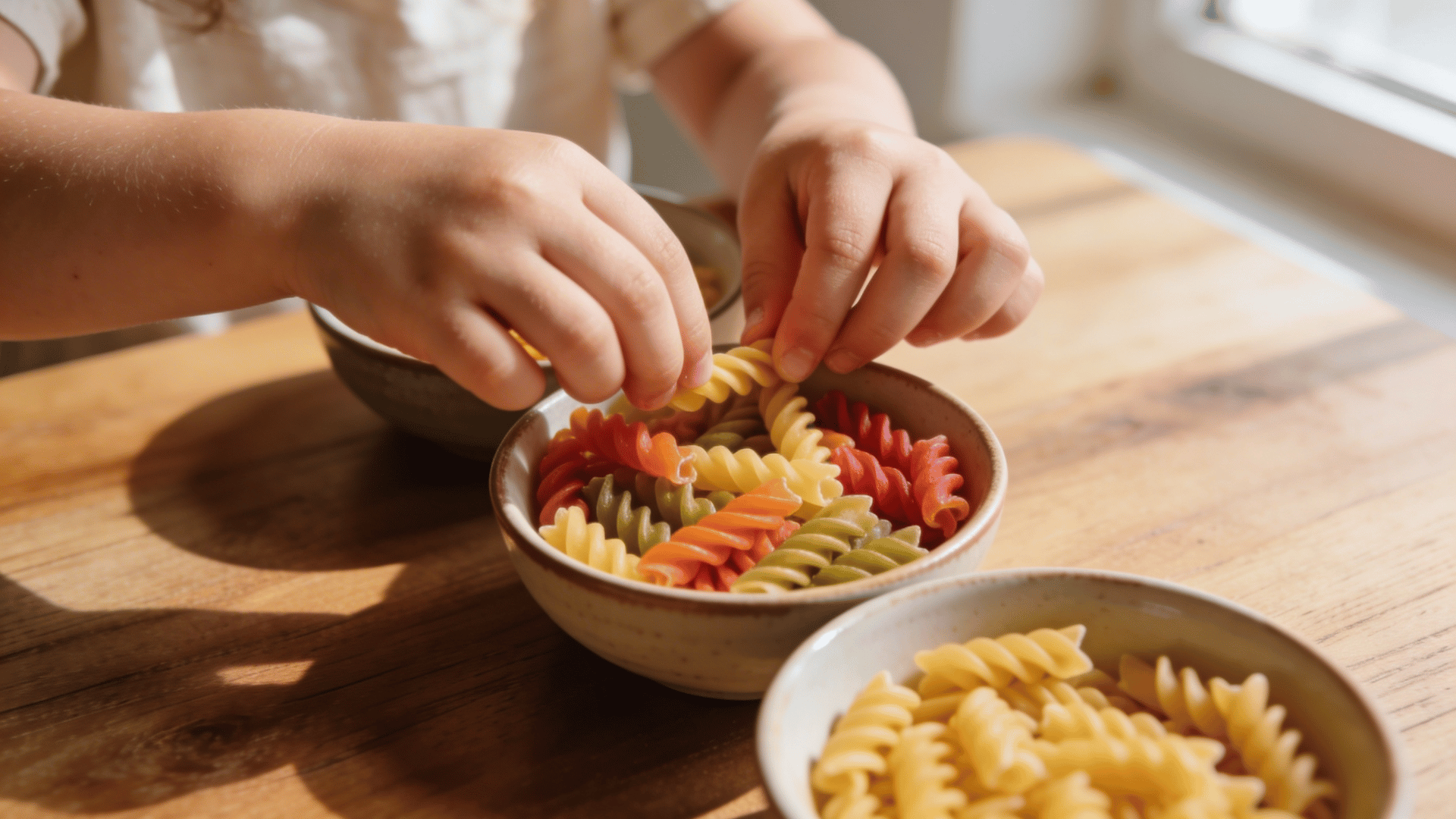
- Skills Kids Pick Up: Early math skills, color recognition, and sorting ability.
- Materials Needed: Dried pasta in different shapes, food coloring, zip-lock bags, and small bowls.
- How to Set it Up: Place pasta in zip-lock bags with a few drops of food coloring. Shake well and let it dry overnight. Mix all the pieces together, then ask your child to sort them by color or shape.
- Safety Note: Check for pasta allergies before starting. Do not use this activity with children who still mouth objects.
3. Sand Play Tray
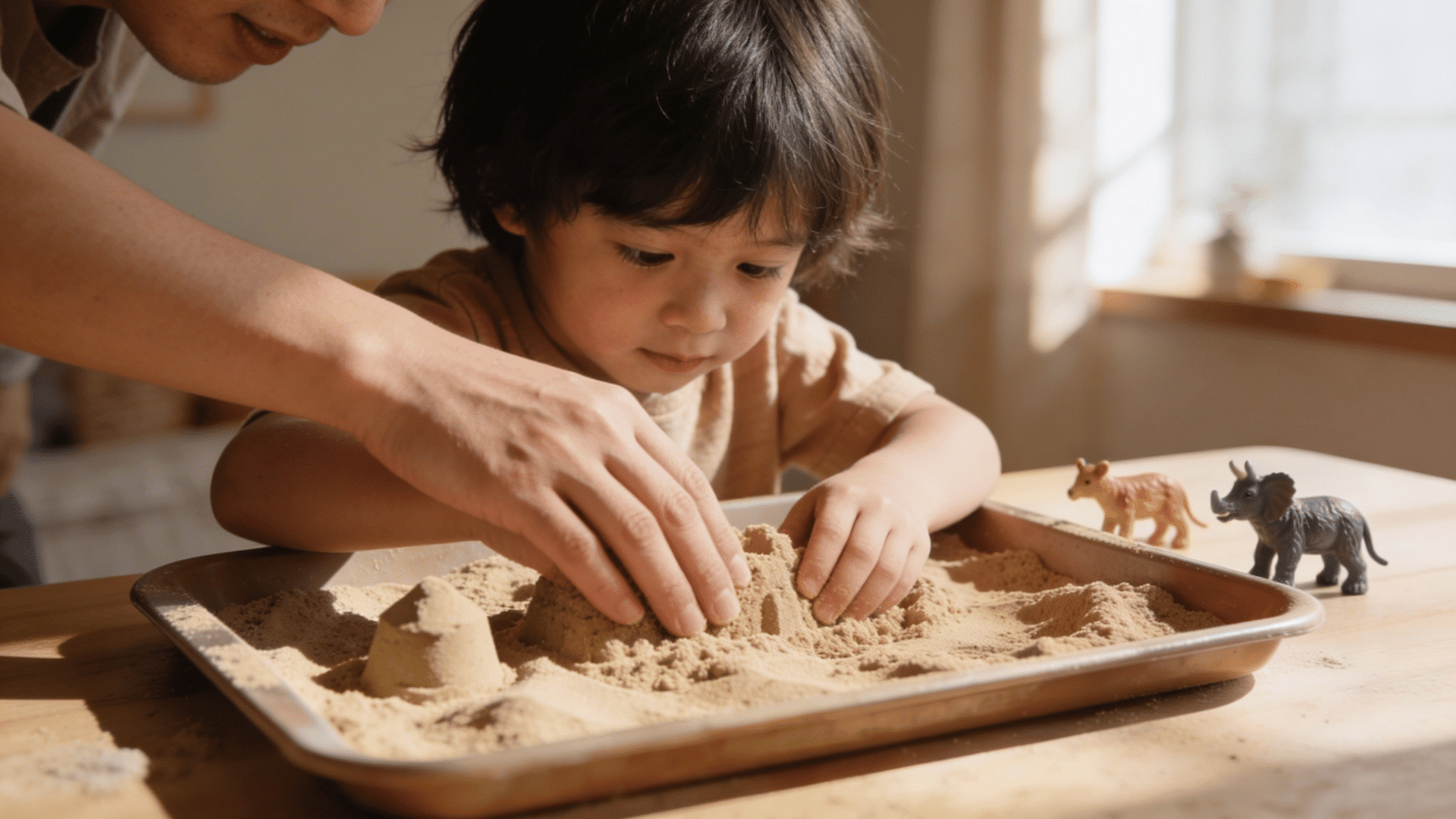
- Skills Kids Pick Up: Pre-writing skills, creativity, and hand strength.
- Materials Needed: A shallow plastic bin, clean play sand, toy animals, small trucks, or sticks.
- How to Set it Up: Pour sand into the bin. Add toys for free play. Encourage your child to draw lines, shapes, or letters using their finger or a stick.
- Safety Note: Use only clean, non-toxic play sand. Keep sand away from eyes and mouth. Shake off your hands before leaving the play area.
4. Shaving Cream Drawing
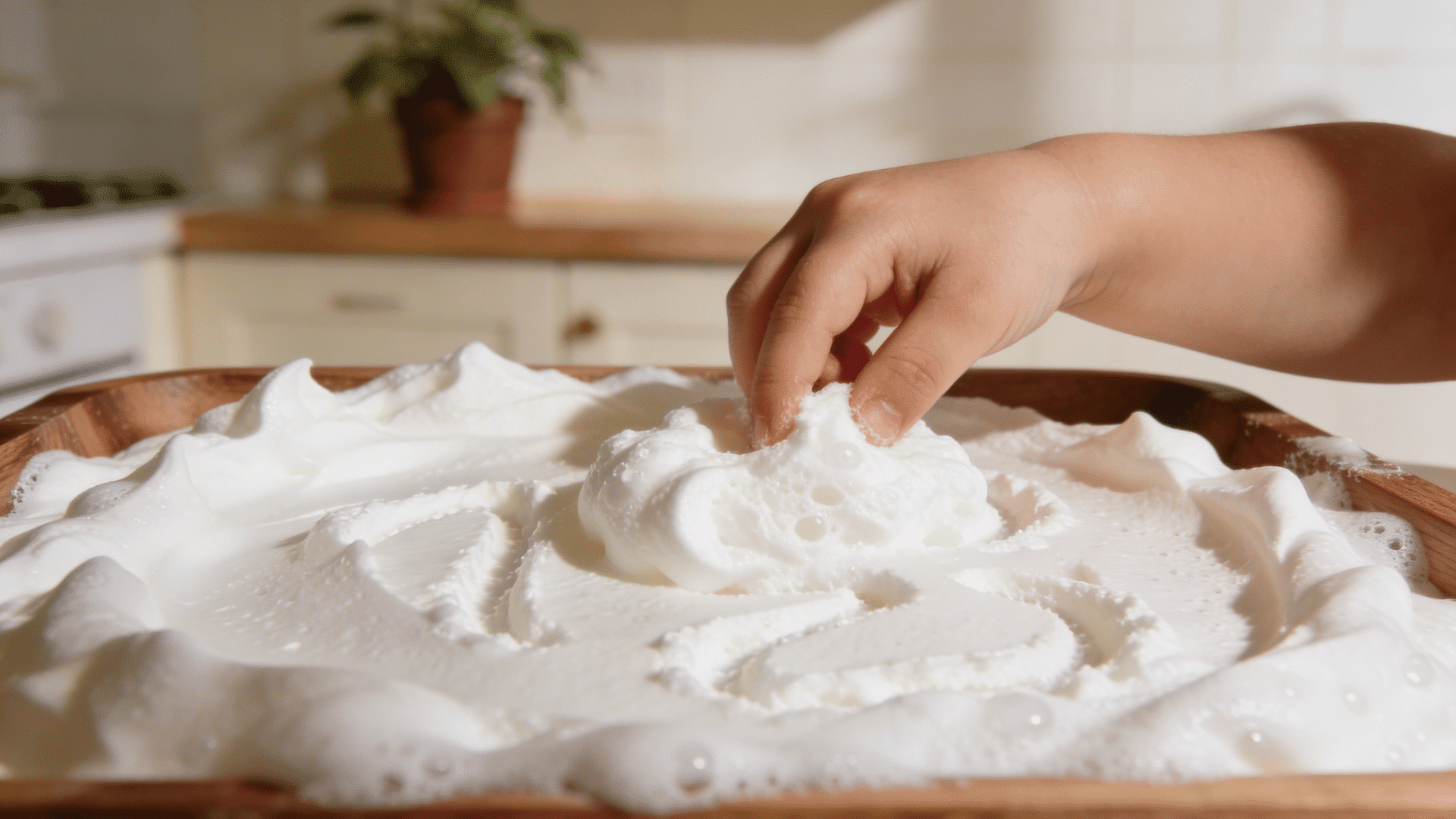
- Skills Kids Pick Up: Hand control, creativity, and letter or shape recognition.
- Materials Needed: A smooth tray or baking sheet and a can of plain white shaving cream.
- How to Set it Up: Spray a layer of shaving cream on the tray. Show your child how to spread it flat. Let them draw shapes, letters, or patterns using their fingers.
- Safety Note: Use fragrance-free, non-mentholated shaving cream. Keep away from the eyes and mouth. Wash your hands well when done.
5. Homemade Play-Doh
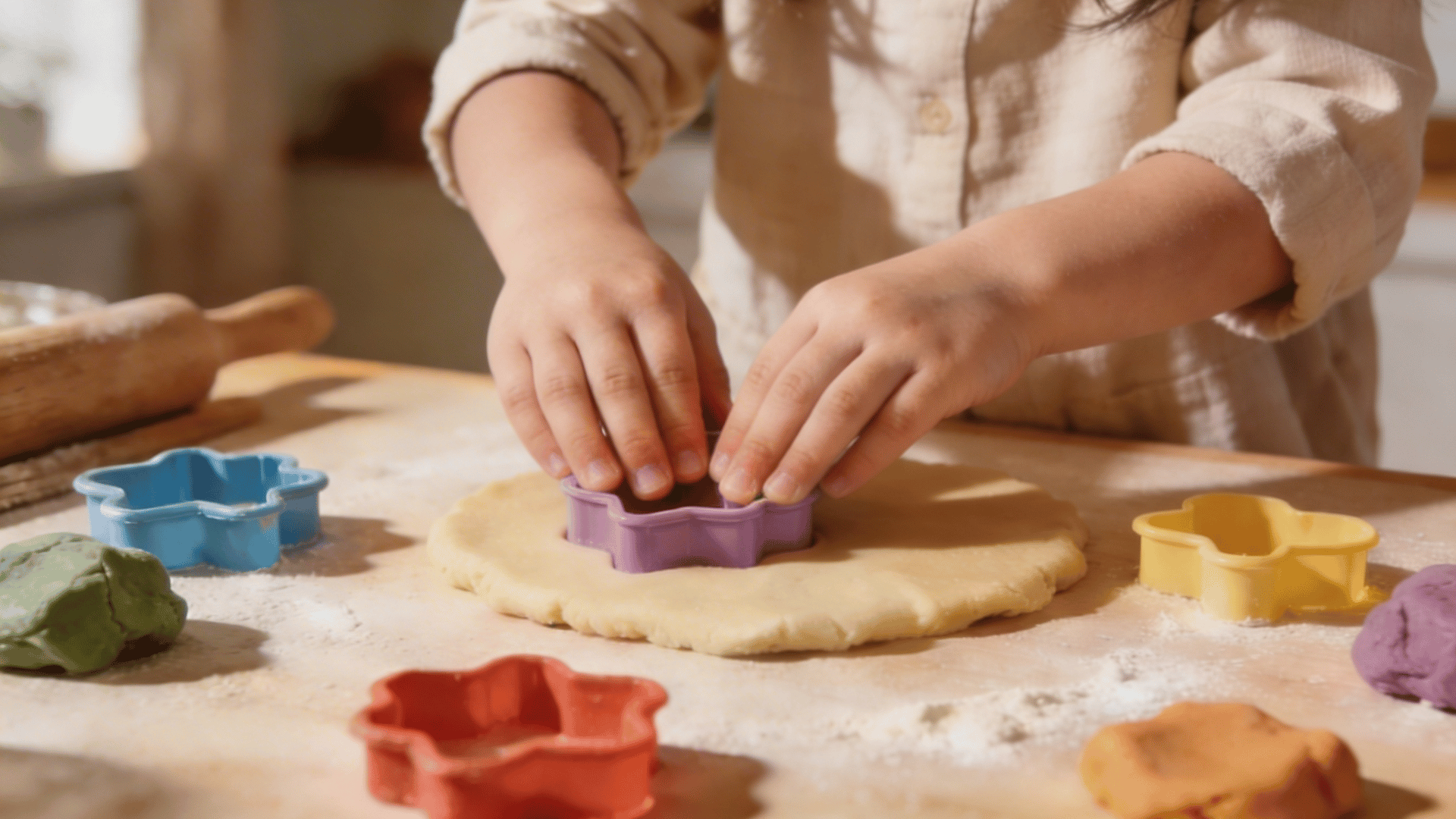
- Skills Kids Pick Up: Fine motor strength, creativity, and early number and letter recognition.
- Materials Needed: Flour, salt, water, cream of tartar, oil, and food coloring. Cookie cutters and safe plastic tools.
- How to Set it Up: Mix all ingredients in a pot over low heat until a soft dough forms. Let it cool. Give your child cutters and tools to roll, flatten, and shape the dough freely.
- Safety Note: Do not let children eat the dough. Store in an airtight container. Supervise the use of any tools.
6. Kinetic Sand Play
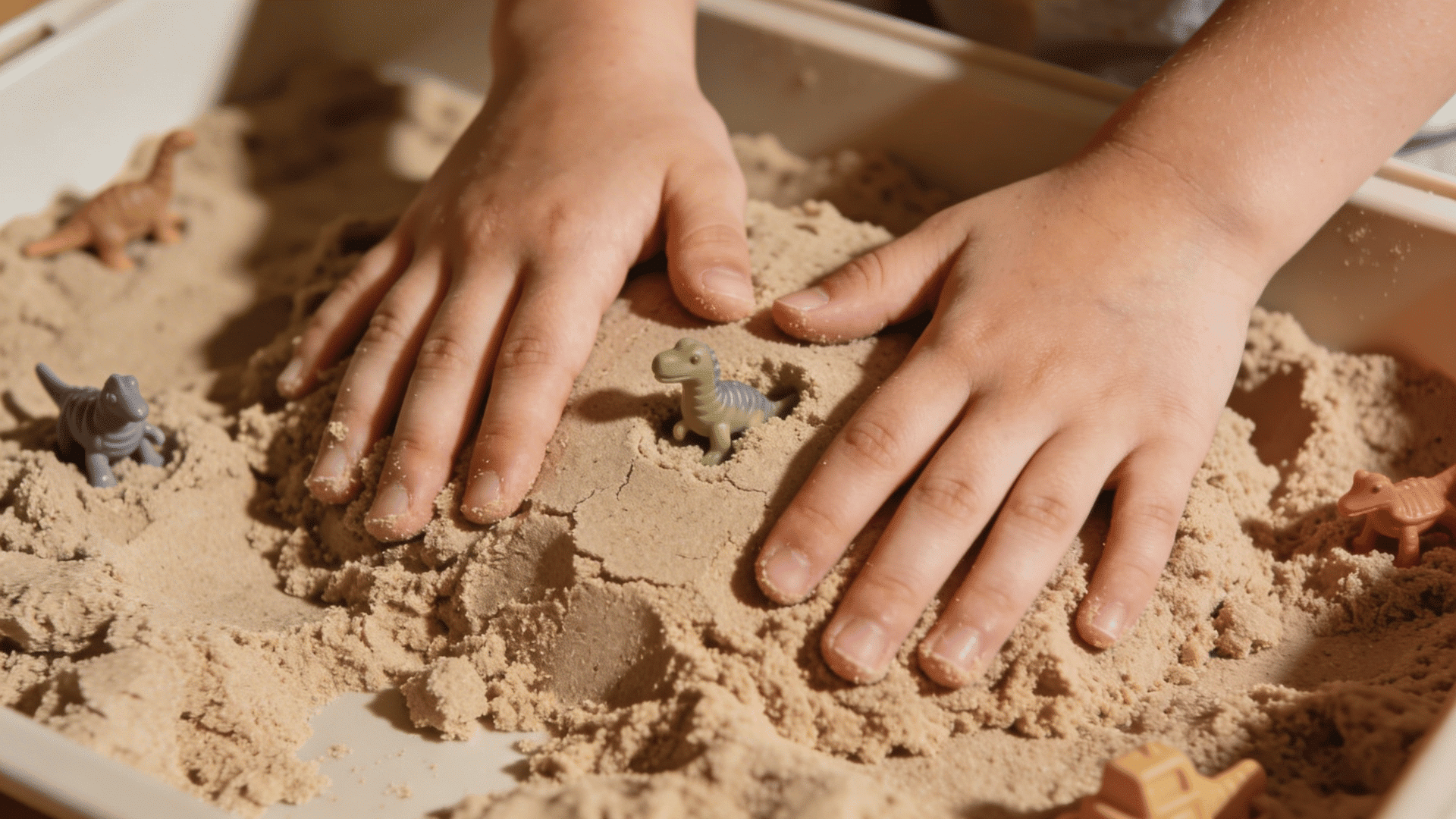
- Skills Kids Pick Up: Problem-solving, sensory awareness, and hand strength.
- Materials Needed: Store-bought kinetic sand and a shallow tray or bin.
- How to Set it Up: Pour kinetic sand into the tray. Let your child mold and shape it freely. Bury small plastic toys inside and let them dig to find them. Compare how it feels different from regular sand.
- Safety Note: Keep kinetic sand away from very young children who mouth objects. It can stain fabric, so use a mat underneath. Wash your hands after play.
7. Oobleck (Cornstarch and Water)
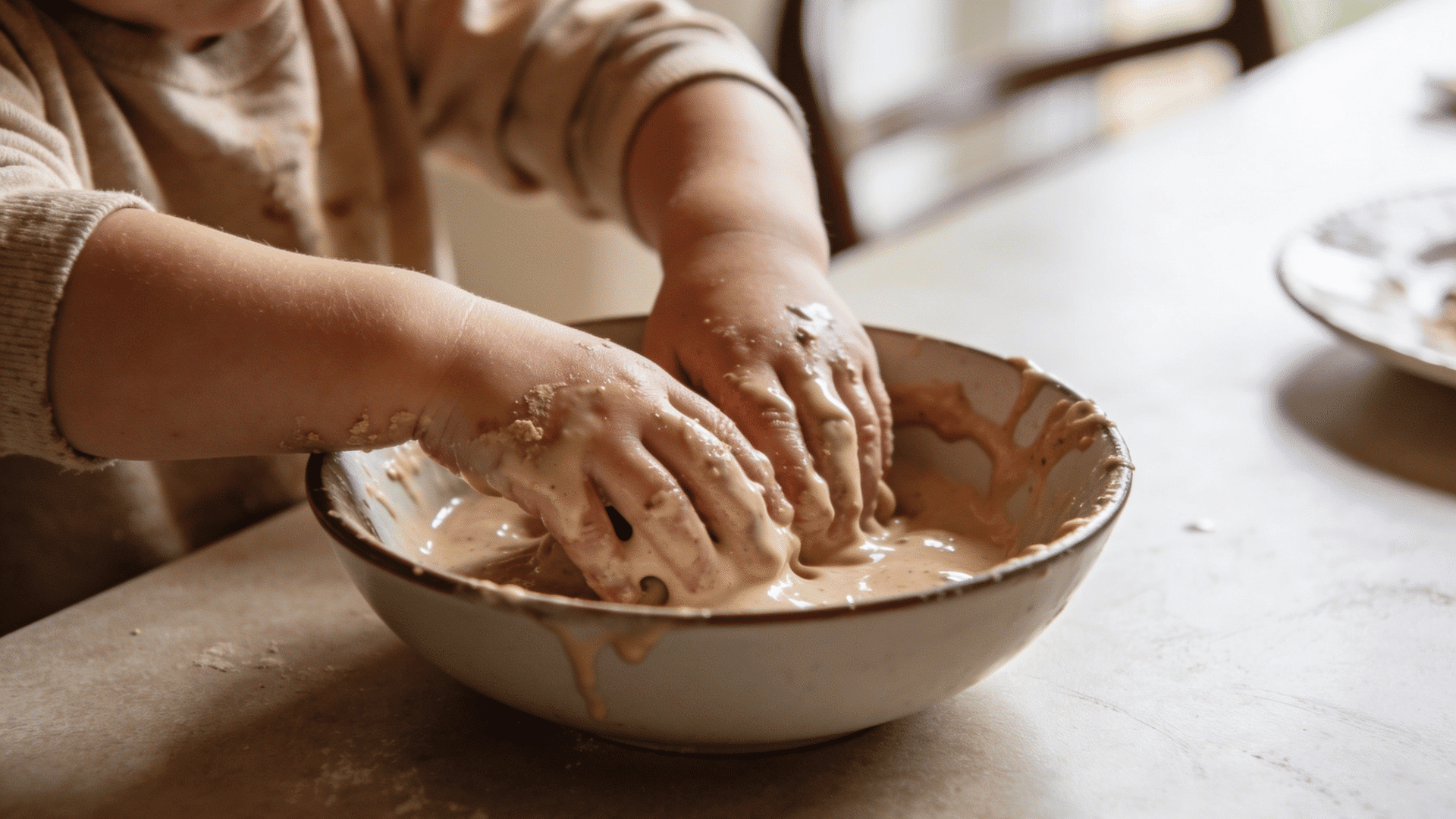
- Skills Kids Pick Up: Simple science thinking, sensory awareness, and cause-and-effect understanding.
- Materials Needed: Cornstarch, water, a large bowl, and a spoon.
- How to Set it Up: Mix two parts cornstarch with one part water. Stir slowly until it comes together. Let your child press it fast and slow. Talk about how it feels hard when pressed quickly, but melts when held gently.
- Safety Note: Non-toxic but not for eating. Keep away from carpets as they are hard to clean. Wash your hands and surfaces well afterward.
8. Bean Sensory Bin
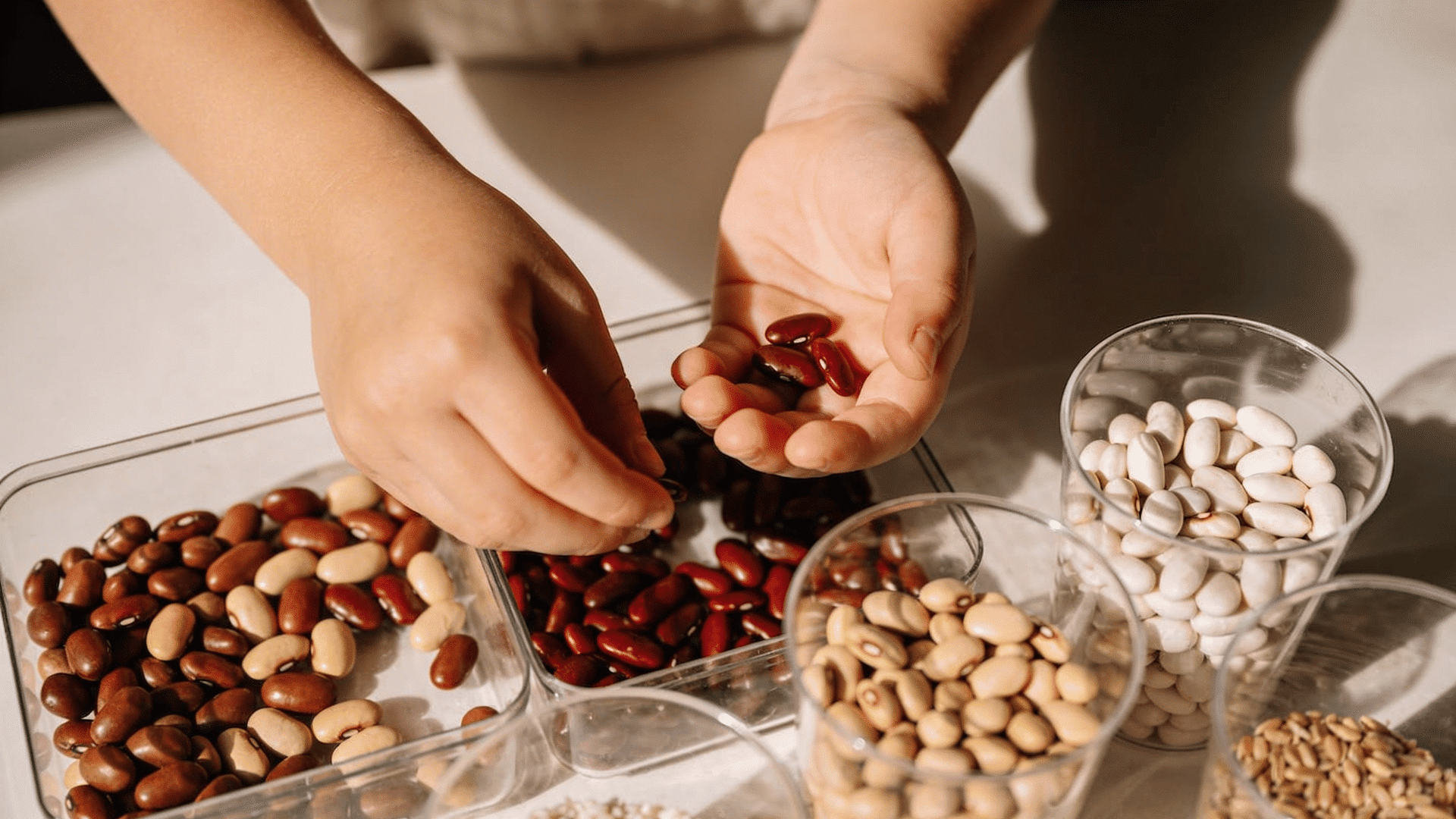
- Skills Kids Pick Up: Focus, sorting skills, and fine motor control.
- Materials Needed: Assorted dried beans, a plastic bin, small cups, funnels, and spoons.
- How to Set it Up: Pour a mix of dried beans into the bin. Add cups and funnels for scooping and pouring. Ask your child to sort beans by size or color into separate bowls.
- Safety Note: Dried beans are a choking risk. This activity is best for children aged 4 and above. Always supervise and keep the area tidy to avoid slipping on fallen beans.
9. Texture Box
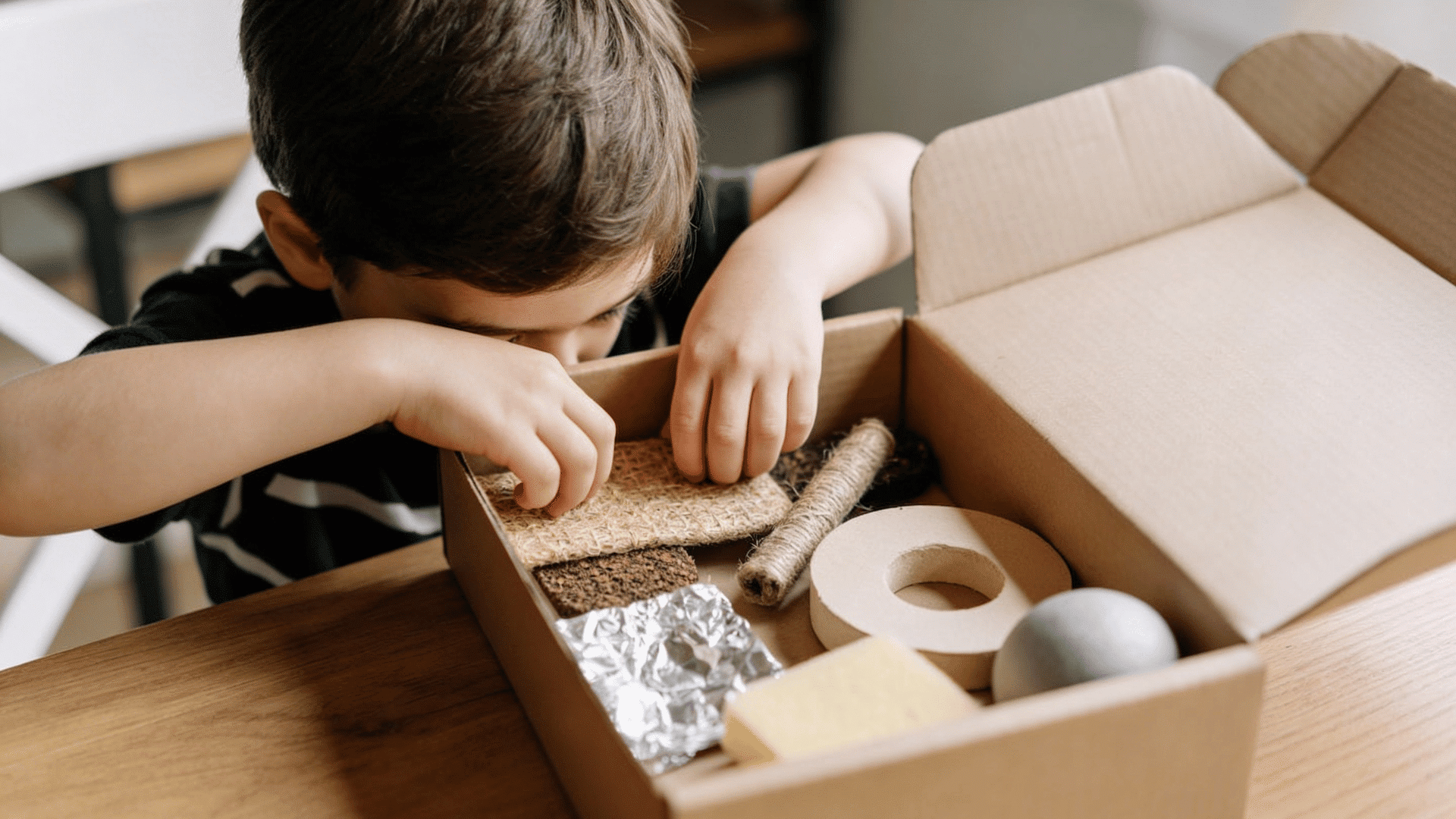
- Skills Kids Pick Up: Vocabulary, sensory awareness, and descriptive language skills.
- Materials Needed: A shoebox and small pieces of different materials such as cotton balls, foil, sandpaper, sponge, velvet fabric, and bubble wrap.
- How to Set it Up: Place all the materials inside the box. Ask your child to reach in, touch one item at a time, and describe how it feels. Use words like rough, soft, bumpy, and smooth.
- Safety Note: Make sure all items are clean and free of sharp edges. Avoid small pieces that could be swallowed. Stay close during the activity.
10. Ice Cube Exploration
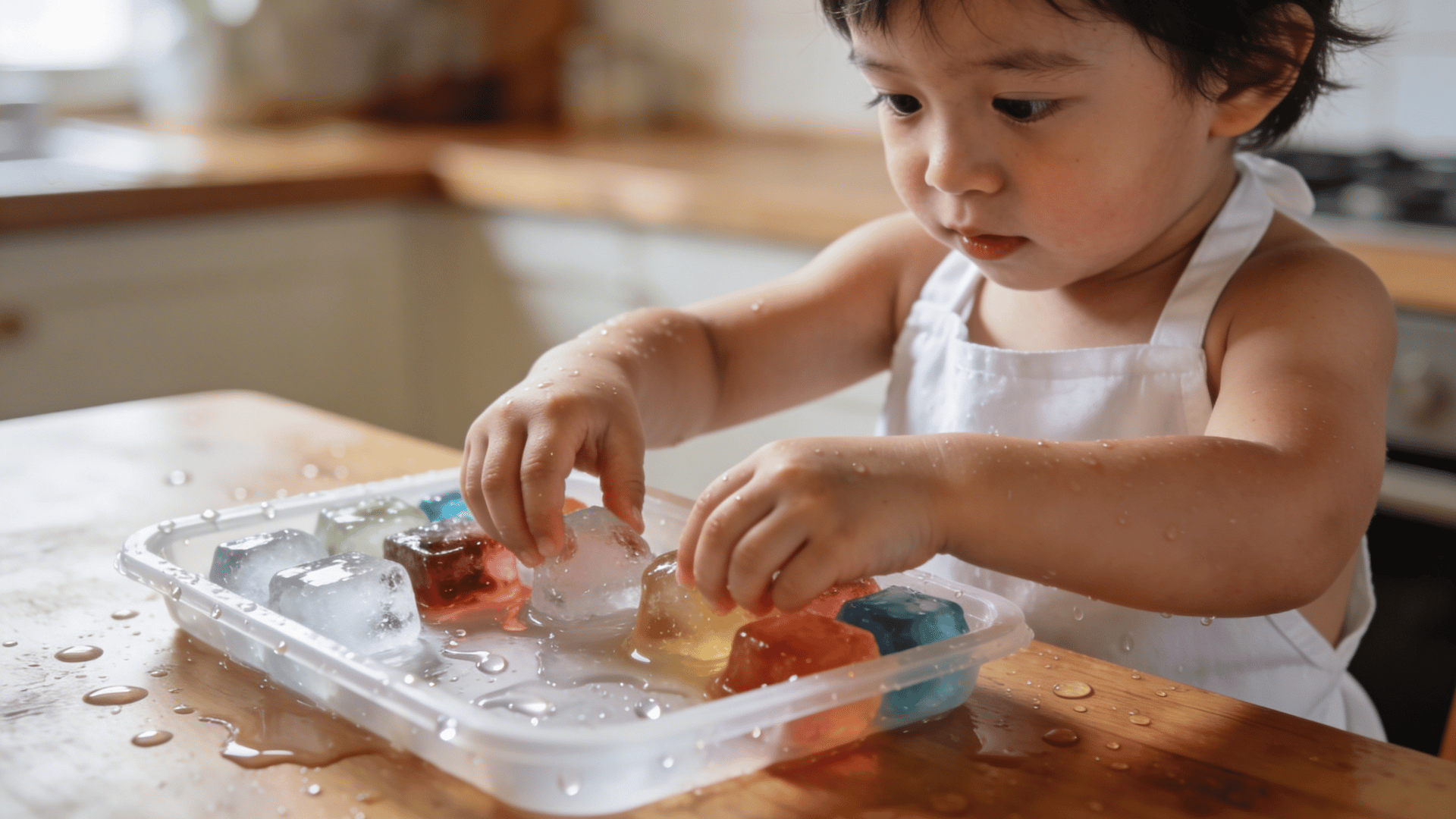
- Skills Kids Pick Up: Understanding of temperature, observation, and early science thinking.
- Materials Needed: An ice cube tray, water, food coloring, a shallow tray, and salt.
- How to Set it Up: Mix food coloring into water and freeze in the tray. Place colored ice cubes in the shallow tray. Let your child watch them melt. Sprinkle salt on top and talk about how it speeds up the melting.
- Safety Note: Keep cubes away from mouths. Wipe up melted water quickly to prevent slipping. Supervise at all times.
11. Water Pouring Station
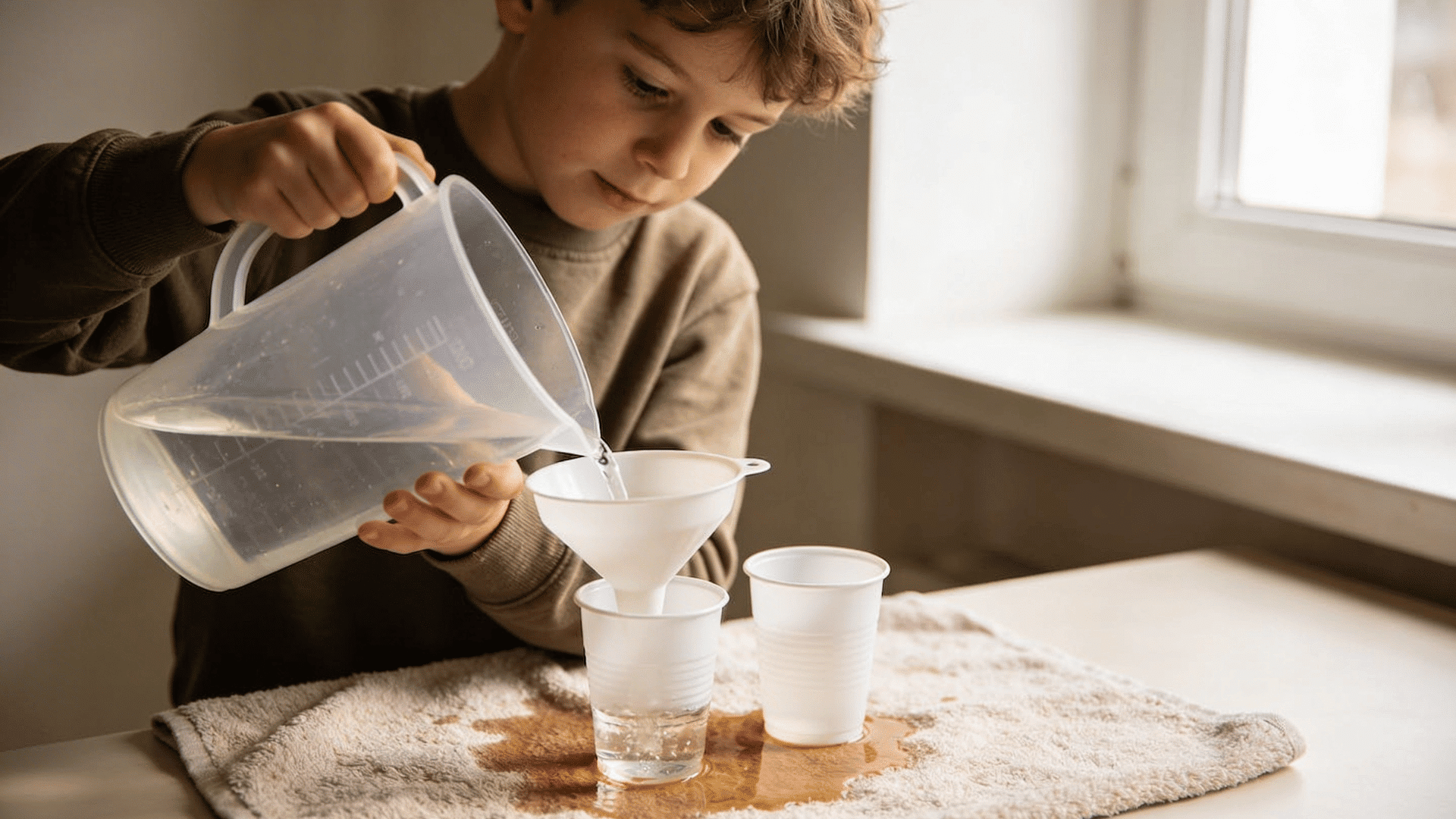
- Skills Kids Pick Up: Hand-eye coordination, focus, and movement control.
- Materials Needed: A low table or bin, plastic cups of different sizes, funnels, and a small pitcher.
- How to Set it Up: Fill the pitcher with water and set it on the table. Place cups and funnels nearby. Let your child practice pouring water from one cup to another using the funnel.
- Safety Note: Use only a small amount of water to limit spills. Place a towel or mat underneath. Always stay close to prevent slipping on wet floors.
12. Bubble Foam Play
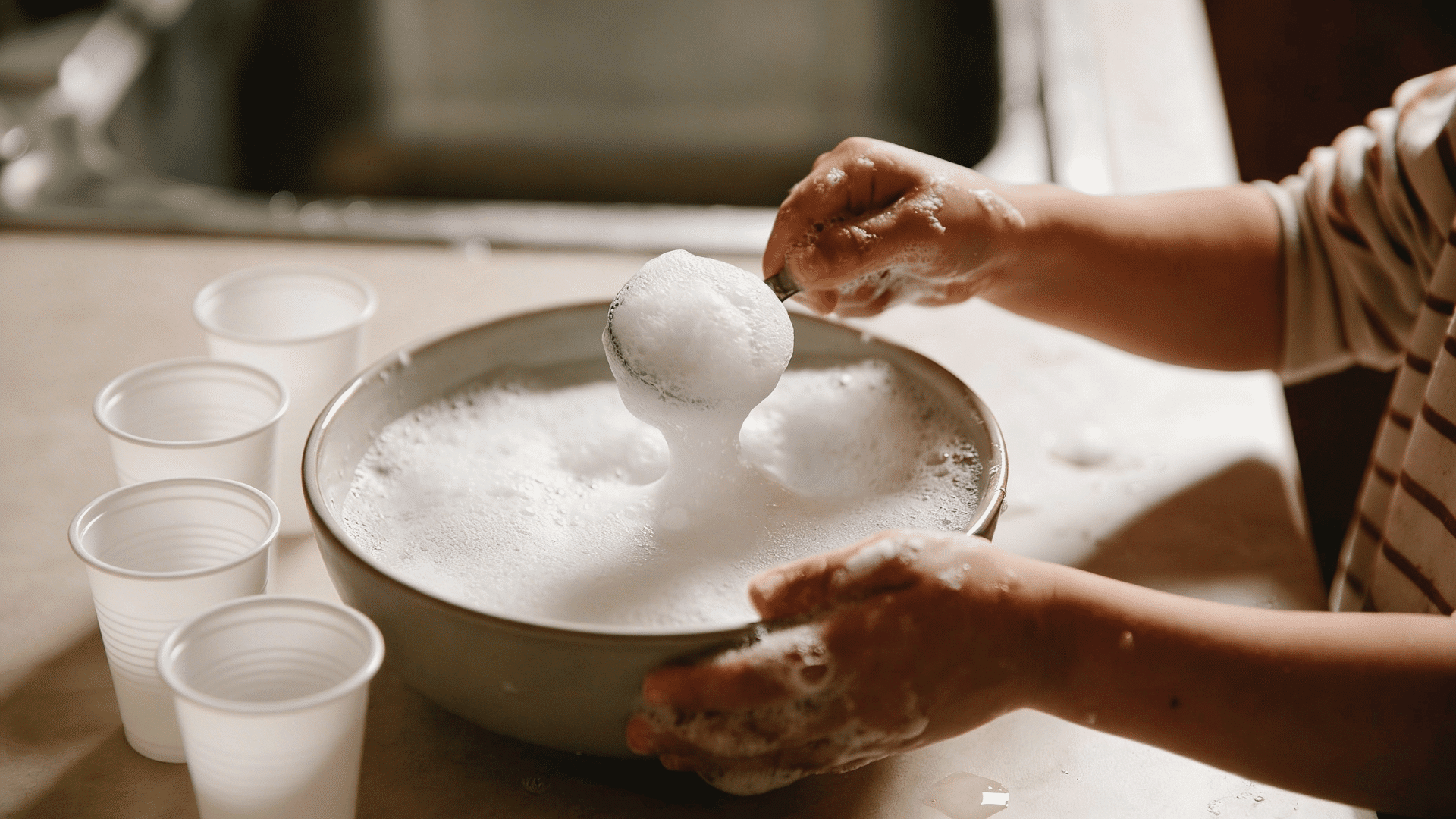
- Skills Kids Pick Up: Sensory awareness, hand strength, and creativity.
- Materials Needed: A bowl, dish soap, water, and a hand whisk or electric mixer.
- How to Set it Up: Add a few drops of dish soap to water in the bowl. Whisk quickly until thick foam forms. Let your child scoop, transfer, and shape the foam using cups and spoons.
- Safety Note: Use only mild, child-safe dish soap. Keep foam away from eyes. If foam gets into the eyes, rinse with clean water right away.
13. Floating and Sinking Test
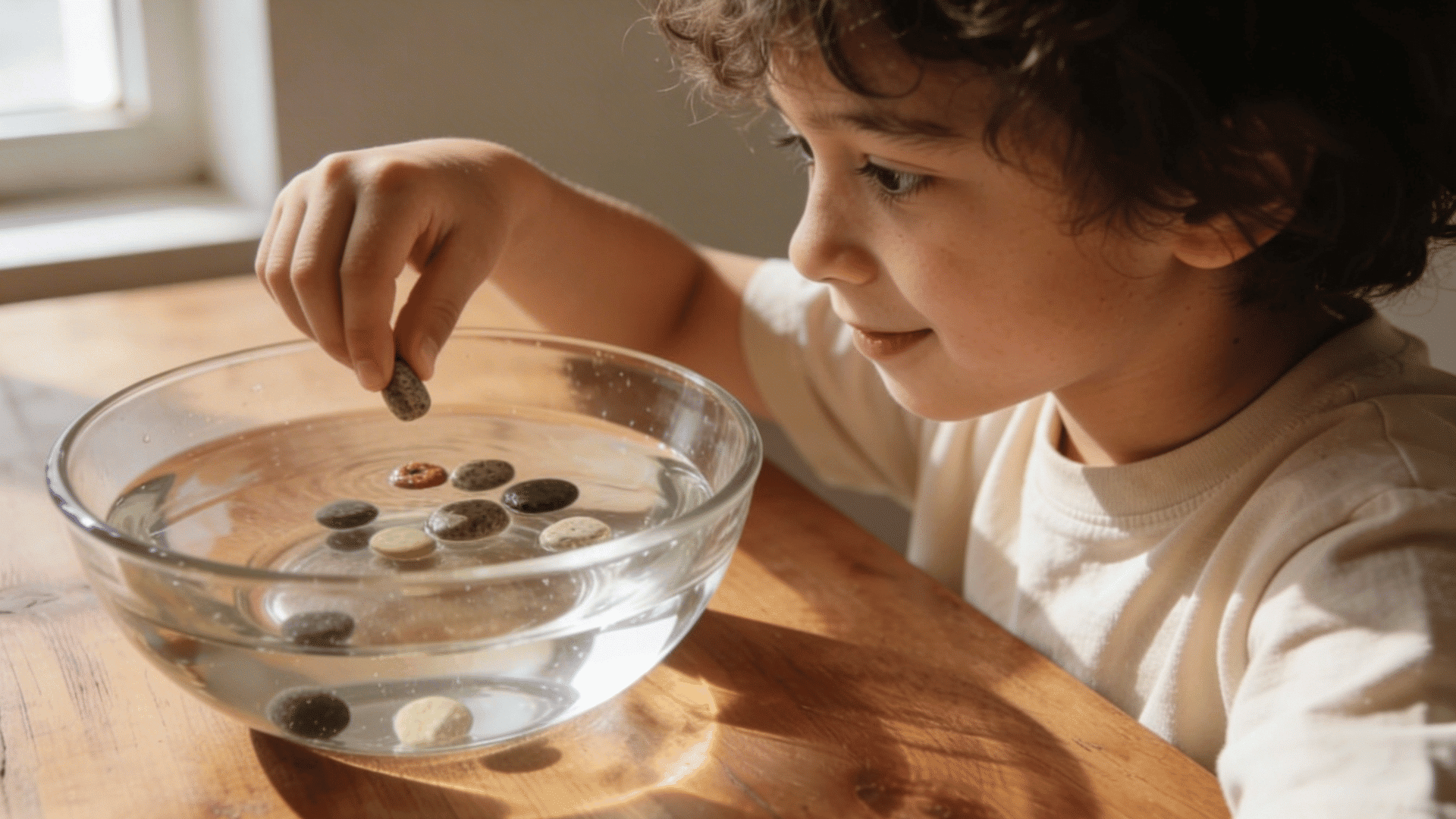
- Skills Kids Pick Up: Critical thinking, prediction skills, and early science understanding.
- Materials Needed: A large bowl of water and small household objects like a coin, a sponge, a plastic toy, a rock, and a leaf.
- How to Set it Up: Place the bowl of water on a low table. Show your child one object at a time. Ask them to guess if it will float or sink before placing it in the water. Talk about the results.
- Safety Note: Keep water level low. Never leave children alone near water. Avoid sharp or breakable objects.
14. DIY Sound Shakers
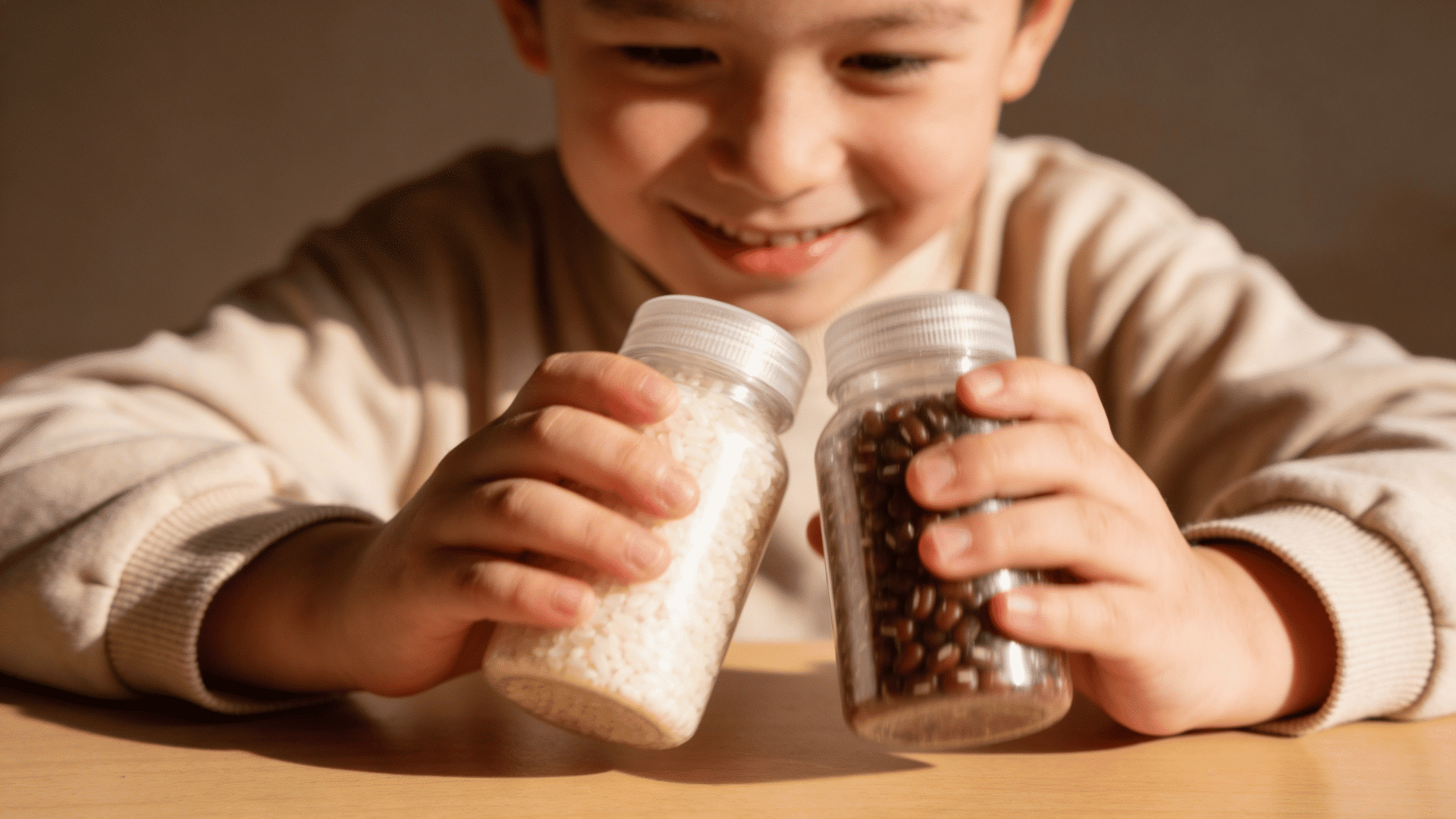
- Skills Kids Pick Up: Listening skills, cause-and-effect thinking, and creativity.
- Materials Needed: Empty plastic bottles with tight lids, dried rice, beans, small bells, or buttons.
- How to Set it Up: Fill each bottle with a different material. Seal the lids tightly with glue or tape. Let your child shake each bottle and compare the sounds. Ask them which is loud, soft, or different.
- Safety Note: Make sure all lids are sealed securely so nothing spills out. Do not use glass bottles. Check for loose lids before each use.
15. Obstacle Course
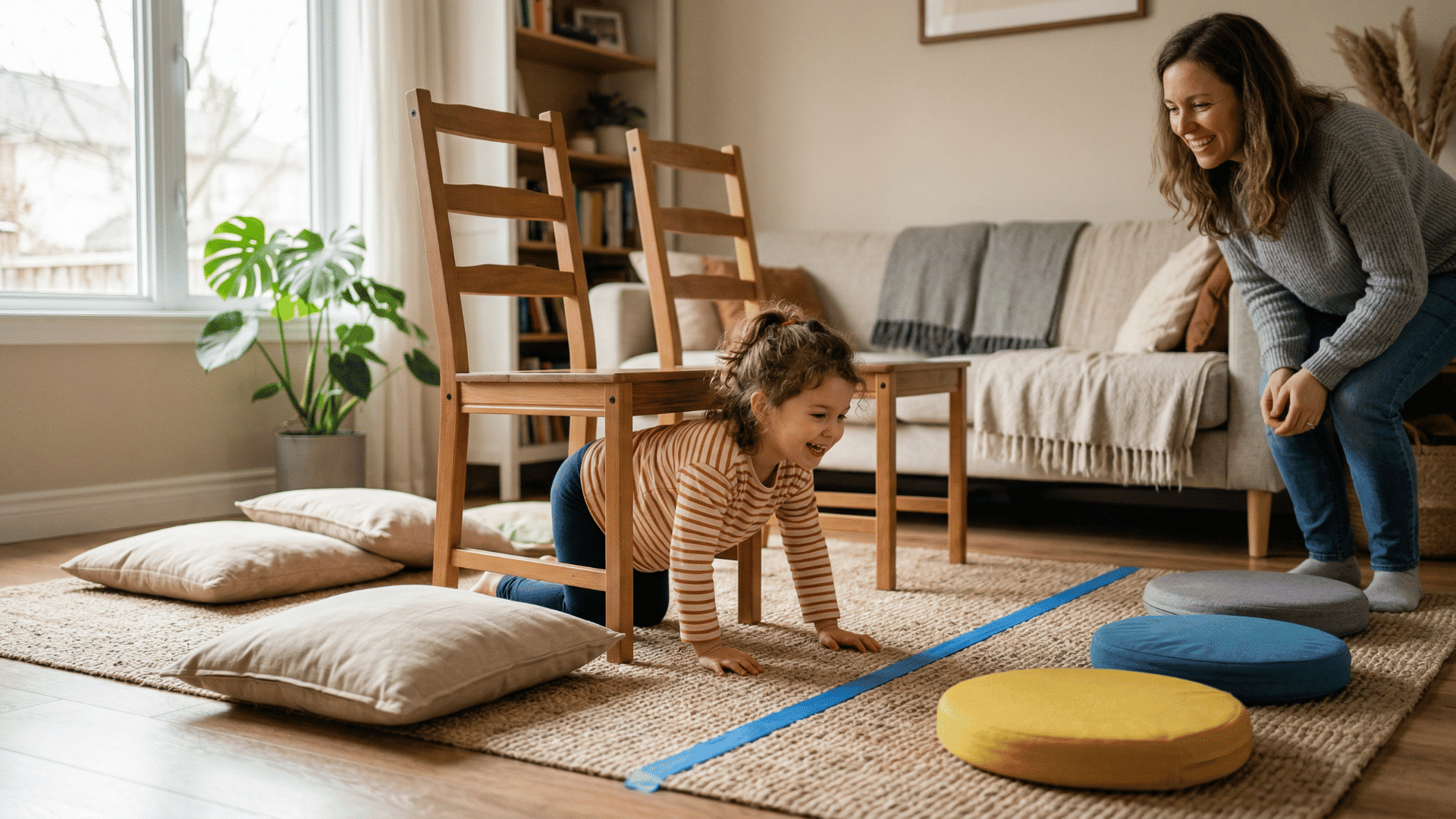
- Skills Kids Pick Up: Body awareness, balance, coordination, and gross motor skills.
- Materials Needed: Pillows, chairs, cushions, a low balance beam made from tape, and a hula hoop, if available.
- How to Set it Up: Arrange pillows to crawl over, chairs to crawl under, and tape lines to walk along. Add jumping spots using cushions. Guide your child through the course and cheer them on.
- Safety Note: Clear the area of sharp furniture or hard edges. Use non-slip mats on smooth floors. Keep the course low to the ground for safety.
Other Simple Sensory Activities for Preschoolers
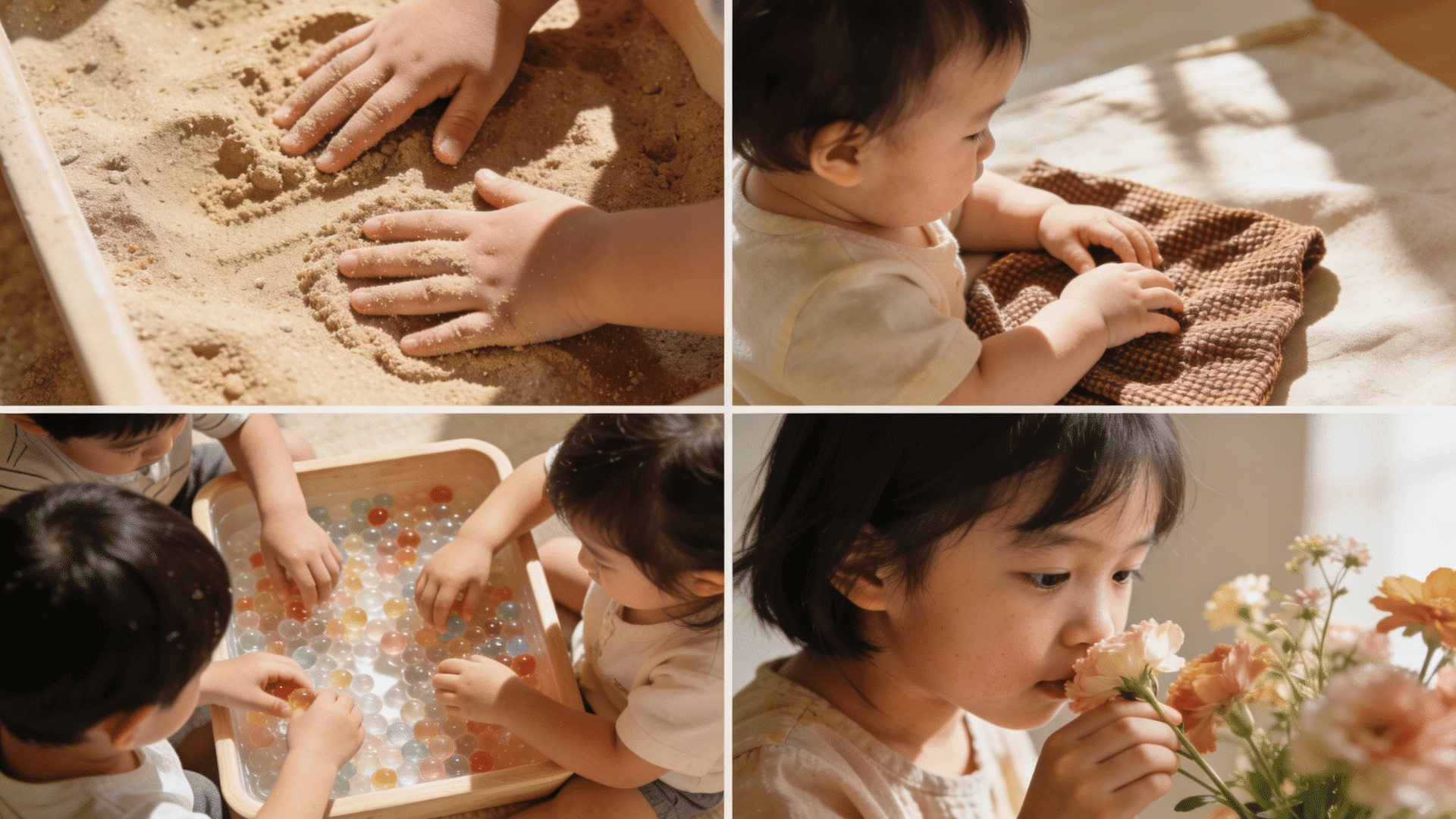
Not every sensory activity needs a big setup or special materials. Here are a few more simple ideas you can try with your preschooler using everyday items from around the house.
16. Toy Car Wash Station
Fill a bin with soapy water. Give your child small sponges and toy cars. Let them scrub, rinse, and dry each car. Squeezing the sponge builds hand strength and keeps the activity fun.
17. Water Beads Bin
Soak water beads in water overnight until fully hydrated. Pour into a shallow bin. Let your child scoop, pour, and feel the beads. Always supervise closely as beads are a choking risk.
18. Spray Bottle Painting
Fill small spray bottles with colored water. Tape paper to a wall or lay it on the ground outside. Let your child spray freely to create colorful patterns and designs.
19. Sponge Water Transfer
Place two bowls side by side. Fill one with water. Give your child a sponge and ask them to soak up water and squeeze it into the empty bowl. Repeat until done.
20. Ice Rescue Activity
Freeze small plastic toys inside an ice block overnight. Place the frozen block in a tray. Give your child warm water to pour over it and free the toys hiding inside.
21. Sound Matching Game
Fill pairs of small, sealed containers with the same material, such as rice or beans. Mix them up. Ask your child to shake each one and find the matching pair by sound.
22. Freeze Dance
Play your child’s favorite music and let them dance freely. Stop the music without warning. Your child must freeze in place. Start the music again and repeat. Great for listening and body control.
23. Nature Sound Walk
Take a slow walk outside. Stop every few steps and ask your child to close their eyes and listen. Talk about every sound they hear, such as birds, wind, or passing cars.
24. Guess the Sound Game
Hide a sound-making object behind your back or inside a bag. Make the sound and ask your child to guess what it is. Swap roles and let your child make the sound too.
25. Animal Walks
Call out an animal name and show your child how to move like it. Hop like a frog, stomp like an elephant, or crawl like a bear. Take turns picking the next animal.
26. Balance Line Walk
Use tape to make a straight line on the floor. Ask your child to walk along it, heel-to-toe, without stepping off. Try curved or zigzag lines to make it harder.
27. Jump on Bubble Wrap
Lay a sheet of bubble wrap flat on the floor. Let your child walk, stomp, and jump on it to pop the bubbles. The popping sound makes this activity very exciting for little ones.
28. Kids Yoga Poses
Guide your child through simple poses like the tree pose, cat stretch, and child’s pose. Use fun animal names to describe each move. Hold each pose for a few seconds before moving to the next.
29. Scarf Toss Game
Give your child a lightweight scarf or a piece of thin fabric. Toss it into the air and try to catch it before it lands. The slow fall makes it easier and more fun for preschoolers.
30. Rolling Down a Hill
Find a safe, grassy hill outdoors. Show your child how to lie down on their side and roll gently to the bottom. Always check the area for sharp objects or uneven ground before starting.
31. Spice Smelling Jars
Fill small jars or containers with spices like cinnamon, cocoa powder, or dried lemon peel. Let your child smell each one and try to guess what it is without looking inside.
32. Simple Taste Test
Prepare small portions of sweet, salty, and sour foods on a plate. Blindfold your child or ask them to close their eyes. Let them taste each one and describe what they notice.
33. Herb Sniffing Activity
Pick or buy a few fresh herbs, such as mint, basil, or rosemary. Let your child smell each one. Talk about which smells strong, fresh, or different. Compare two herbs side by side.
34. Citrus Peeling Practice
Give your child a soft orange or mandarin. Show them how to peel it using their fingers. Talk about the smell, the texture of the peel, and how it changes as they peel.
35. Yogurt Color Mixing
Spoon plain white yogurt into small cups. Add a different drop of food coloring to each cup. Let your child stir and mix the colors. They can taste as they go along.
36. Light Table Play
Place a light-up tablet or light table on a flat surface. Lay transparent colored shapes or blocks on top. Let your child mix, layer, and arrange the pieces to see how colors change and blend.
37. Shadow Exploration
Dim the room and shine a flashlight at a wall. Hold toys in front of the light to create shadows. Move them closer and farther to change the shadow size. Let your child try too.
38. Color Sorting Cups
Gather small objects in different colors, such as buttons, blocks, or pom-poms. Set out colored cups or bowls. Ask your child to place each object into the matching color cup as fast as they can.
39. Lava Lamp Bottle
Fill a clear bottle halfway with water and add food coloring. Pour oil on top. Drop in an effervescent tablet and watch colored bubbles rise and fall slowly. A great calm-down activity for kids.
40. I Spy Bottle
Fill a clear, sealed bottle with rice or sand. Hide small objects inside, like a button or a toy bear. Seal tightly. Roll the bottle and ask your child to find each hidden item.
41. Sensory Busy Bag
Fill a zip-lock bag with hair gel and a few small, colorful shapes or sequins. Seal the bag with strong tape. Let your child press, slide, and move the shapes around without opening the bag.
42. Sticker Peeling Activity
Give your child a sheet of stickers and a blank piece of paper. Ask them to peel each sticker slowly and place it on the paper to create a picture or pattern. Simple and effective.
43. Pom Pom Transfer
Place two bowls on the table. Fill one with colorful pom poms. Give your child a pair of tongs or a spoon. Ask them to move each pom pom into the empty bowl one at a time.
44. Tape Pull Wall
Stick several strips of masking tape across a low section of the wall or on a table edge. Ask your child to peel each strip off slowly using their fingers. Simple but great for finger strength.
45. Cardboard Box Hideout
Find a large cardboard box and cut an opening for a door. Place soft pillows or a small blanket inside. Let your child crawl in, relax, and play. Decorate together with crayons if they like.
46. Texture Walk
Clear a short path indoors or outdoors. Place different surfaces along the way, such as a carpet square, foam mat, smooth tile, and soft grass. Let your child walk barefoot and talk about each feeling.
47. Mud Kitchen Play
Set up an outdoor space with a bin of soil and a small jug of water. Give your child old pots, spoons, and cups. Let them mix, stir, and pour freely to make their own mud creations.
48. Garden Digging
Give your child a child-safe plastic shovel and find a patch of soft soil outdoors. Let them dig, scoop, and fill containers with soil. Talk about what they find, like roots, rocks, or worms.
49. Sidewalk Chalk Drawing
Give your child large sidewalk chalk and a flat outdoor surface. Let them draw freely or trace their own hand and foot outlines. Call out shapes or letters for them to draw as a fun challenge.
50. Leaf Collecting
Take a walk and collect fallen leaves of different sizes, shapes, and colors. Bring them home and sort them by size or color. Press them between heavy books to save and use in art later.
51. Water Balloon Toss
Fill small water balloons with water and tie them shut. Stand close together and gently toss one balloon back and forth. Take one step back after each catch to slowly increase the distance between you.
52. Bubble Chasing
Blow bubbles outdoors using a bubble wand and soap solution. Let your child run, jump, and clap to pop each bubble. Take turns blowing and chasing. A simple and very active outdoor sensory activity.
53. Rock Painting
Collect smooth, clean rocks from outside. Set up a painting station with washable paint and brushes. Let your child paint freely on each rock. Leave them to dry outdoors and display or gift them.
54. Paper Tearing Station
Give your child old magazines or scrap paper. Ask them to tear it into small strips or pieces using just their fingers. Apply glue to a sheet, then let the pieces stick to the collage.
55. Button Sorting Tray
Gather a mix of large buttons in different colors. Place them in a bowl with a divided tray or small cups nearby. Ask your child to sort each button by color into the correct section.
56. Cotton Ball Scoop Race
Place a bowl of cotton balls on one side of the table and an empty bowl on the other side. Give your child a spoon. Ask them to scoop and carry each cotton ball without dropping it.
57. Mirror Face Play
Sit your child in front of a mirror. Make a facial expression like happy, sad, or surprised. Ask them to copy it. Take turns making funny or emotional faces and talk about what each one means.
Benefits of Sensory Play for Preschool Development
Sensory play does far more than keep little hands busy; it quietly builds the foundation for how children think, move, communicate, and connect with the world around them.
- Supports brain growth: Every time a child touches, smells, or hears something new, their brain builds stronger connections.
- Builds fine motor skills: Small movements like pinching, pouring, and squeezing prepare hands for writing and daily tasks.
- Develops gross motor skills: Bigger movements like jumping, crawling, and balancing strengthen muscles and improve coordination.
- Supports early reading and writing: Tracing shapes in sand or molding letters with dough gives children a head start in literacy.
- Improves focus and attention: Hands-on play trains the brain to concentrate for longer periods.
- Supports emotional regulation: Sensory activities help children calm down, process feelings, and manage big emotions in a healthy way.
- Hands-on learning works best at this age: Preschoolers learn far more by doing than by watching or listening.
Final Thoughts
You do not need fancy toys or a big budget to make sensory activities for preschoolers happen.
Pick one or two activities from this list and see how your child responds. Some days will be messier than others, and that is perfectly fine.
The goal is not perfection, it is connection and growth. Watch your child play, follow their lead, and have fun alongside them.
Even 10 minutes of sensory activities each day can make a real difference in how your little one learns and grows.