



Wet weather has a habit of changing family plans at short notice. A trip to the park or an afternoon in the backyard suddenly isn’t happening, and everyone’s looking for something to do. Instead of filling those unexpected hours with screens, you can turn them into time to make something together.
Start with What You Already Have
Before buying a fresh set of craft supplies, see what’s already hiding in cupboards, drawers and the recycling.
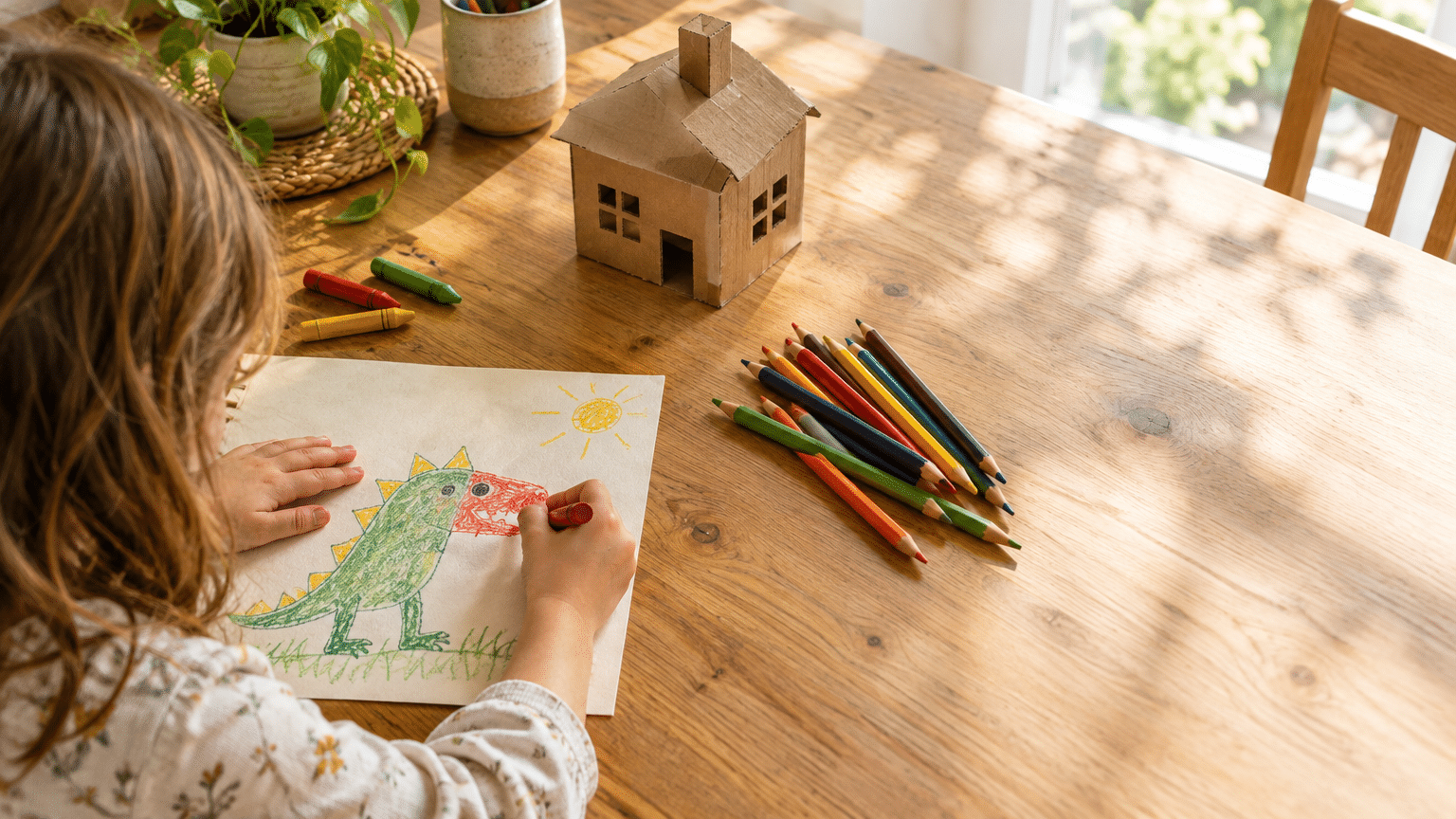
Cardboard boxes can become buildings, vehicles or picture frames. Old wrapping paper and fabric scraps add color and texture, while washable paints make it easier to involve younger children without worrying quite so much about the clean-up. Clean cereal boxes, yoghurt tubs and other packaging can also provide useful building materials.
Try putting a modest selection on the table rather than everything you own. A few choices give children enough direction to get started while leaving plenty of room to decide what they’re actually making.
Make the Project Everyone’s
A shared creation works well when each person can contribute at their own level. One child might sketch ideas while another paints cardboard, and an adult can tackle cutting or fiddly assembly.
You could build a cardboard town that gradually spreads across the dining table. Alternatively, make a family collage from drawings and old photos, or create Christmas decorations that you’ll bring out again each December.
Let people swap jobs as you go. Younger children can decorate pieces that older siblings have constructed, so nobody needs the same skills or attention span to feel involved.
Use the Internet for Inspiration, Not Instructions
If your pile of materials hasn’t produced an idea yet, the internet can provide a useful starting point. Search for crafts that match what you have rather than choosing an elaborate tutorial and buying everything it requires.
Parents may encounter different browsers and privacy tools while researching online, from everyday options to Tor Browser, so adults should check websites and resources themselves before bringing children into the search.
Once you’ve found an appealing idea, adapt it. If an online project calls for wooden craft sticks but you’ve got strips of cardboard, use those instead. Working around these little constraints encourages children to solve practical problems rather than simply copy a finished example.
Give Your Creation a Life Beyond the Afternoon
What you make doesn’t have to disappear when the weather improves. Put a collage on the wall or give something small to a grandparent the next time you visit.
There’s no need to finish everything in one sitting, either. A half-built cardboard neighborhood can wait for the next wet weekend, ready for another house or shop.
Keep a small box for reusable offcuts and leftover craft materials. The next time outdoor plans change, you’ll already have the beginnings of something you can make together.