



You paint the hallway doors white and notice how worn the old knobs look. One wobbles, and the bathroom lock no longer works. Replacing them can be a manageable DIY project when the new sets fit the existing doors. Start with four decisions: function, fit, feel, and finish.
Key takeaways
- Function first. Decide what each door must do before looking at finishes.
- Measure before buying. Backset, bore diameter, and door thickness determine fit.
- Try the handle. Choose a knob or lever that feels comfortable for your household.
- Repeat a finish. Coordinate the hardware without replacing every metal object.
Match the Hardware Function to the Room
Schoolhouse’s buying guide starts with the door’s function. Make a room-by-room list of what each door needs to do before comparing finishes.
Passage
A passage set has a latch that keeps the door shut but no lock. Hallway doors, closets, and a kids’ playroom usually fit here.
Privacy
Privacy sets add a basic lock operated from inside, usually with a small emergency release on the outside. Lowe’s describes privacy hardware as basic locks for bedrooms and bathrooms. Use this category for room privacy, not exterior entry security, and check how the emergency release works.
Dummy or inactive
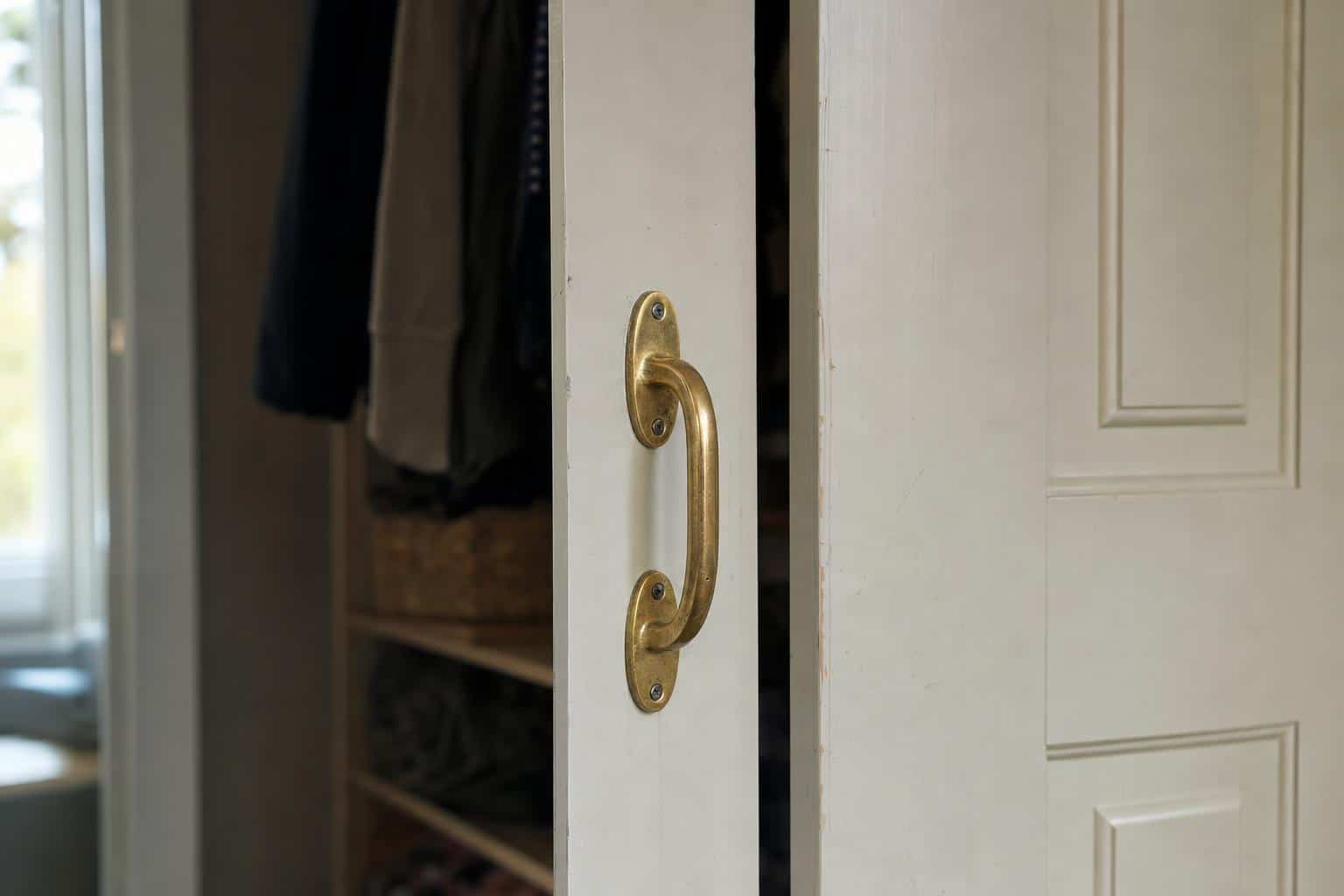
Dummy hardware, also called inactive hardware, doesn’t turn or operate a latch. It provides a handle to pull, which suits the fixed side of a double closet door or a pantry held by a ball catch. Don’t buy it where a working latch currently holds the door shut.
Keyed entry
Exterior openings need hardware chosen for entry security, a separate category from room privacy. If the front door is on your list, check the specific model’s security ratings as well as its fit.
|
Door |
Function |
Check before buying |
|
Hall bathroom |
Privacy |
Emergency release on the outside |
|
Kid’s bedroom |
Privacy or passage |
Household preference and emergency-release method |
|
Hall closet |
Passage |
Working latch needed |
|
Double closet, fixed side |
Dummy |
No latch to operate |
|
Exterior entry door |
Keyed entry |
Model-specific security rating |
Walk the house with a notepad and record each door’s function. Start with one hallway or floor so you can see how the finish looks before ordering for the rest of the house.
Measure for a Like-for-Like Replacement
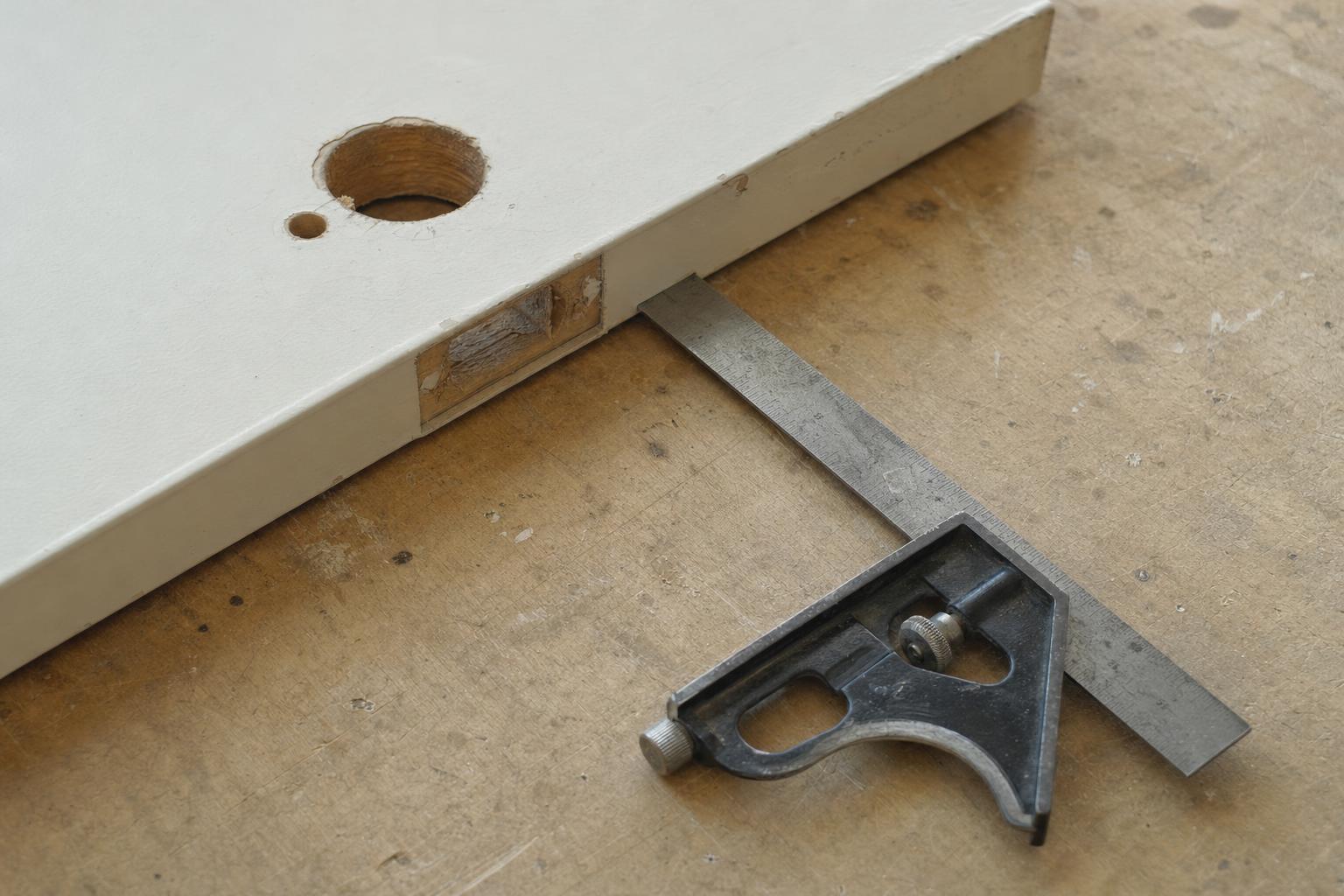
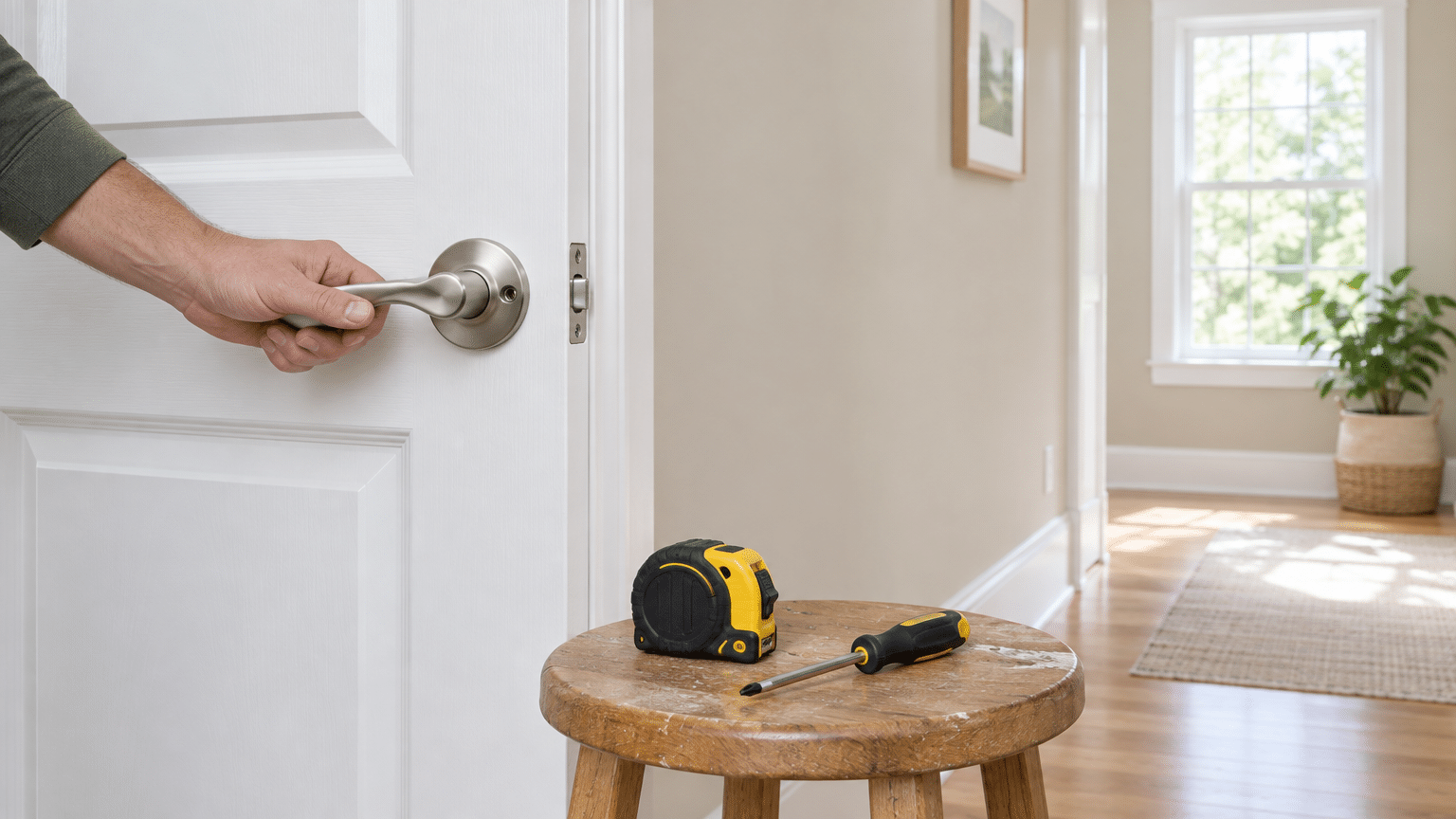
In a like-for-like replacement, the new set uses the existing holes. Measure the door and those holes before ordering rather than assuming the new hardware will fit. A tape measure and a few clear photos will help you compare products.
Door thickness. Measure the door at its edge. Direct Door Hardware’s purchasing guide gives 1-3/8 inches as the usual interior thickness and 1-3/4 inches for exterior doors, while noting that thickness varies. Treat those as starting points and record your actual measurement.
Backset. Backset is the distance from the door edge to the center of the large hole in the face. Schlage’s door preparation checklist lists 2-3/8 and 2-3/4 inches. The replacement latch must match the backset you measured.
Face bore. That large hole is the face bore. Lowe’s lists 2-1/8 inches as a typical diameter, but measure your door. This is different from the smaller hole drilled into the door edge for the latch, so measure both and label them.
Existing latch details. Remove the old latch and photograph its faceplate, noting whether the corners are rounded or square. Photograph the trim from both sides, too. A new rosette, the trim around the handle, may expose unpainted wood or old screw holes if it’s smaller than the previous one.
When comparing residential hardware at doors for pros or another retailer, match the listed function, backset, and supported door thickness to your notes before choosing a finish.
Check what’s included, especially the latch and strike plate, and read the return and shipping terms. Doors For Pros limits shipping to the Continental United States. Return restrictions can also be product-specific: Schoolhouse, for example, states that its Emtek hardware is non-refundable.
On installation day, follow the instructions supplied with the set. Test the lock first with the door open, then close it to check alignment. If the new set doesn’t sit correctly, stop and ask for help rather than forcing parts or enlarging holes.
Choose a Handle That Feels Comfortable
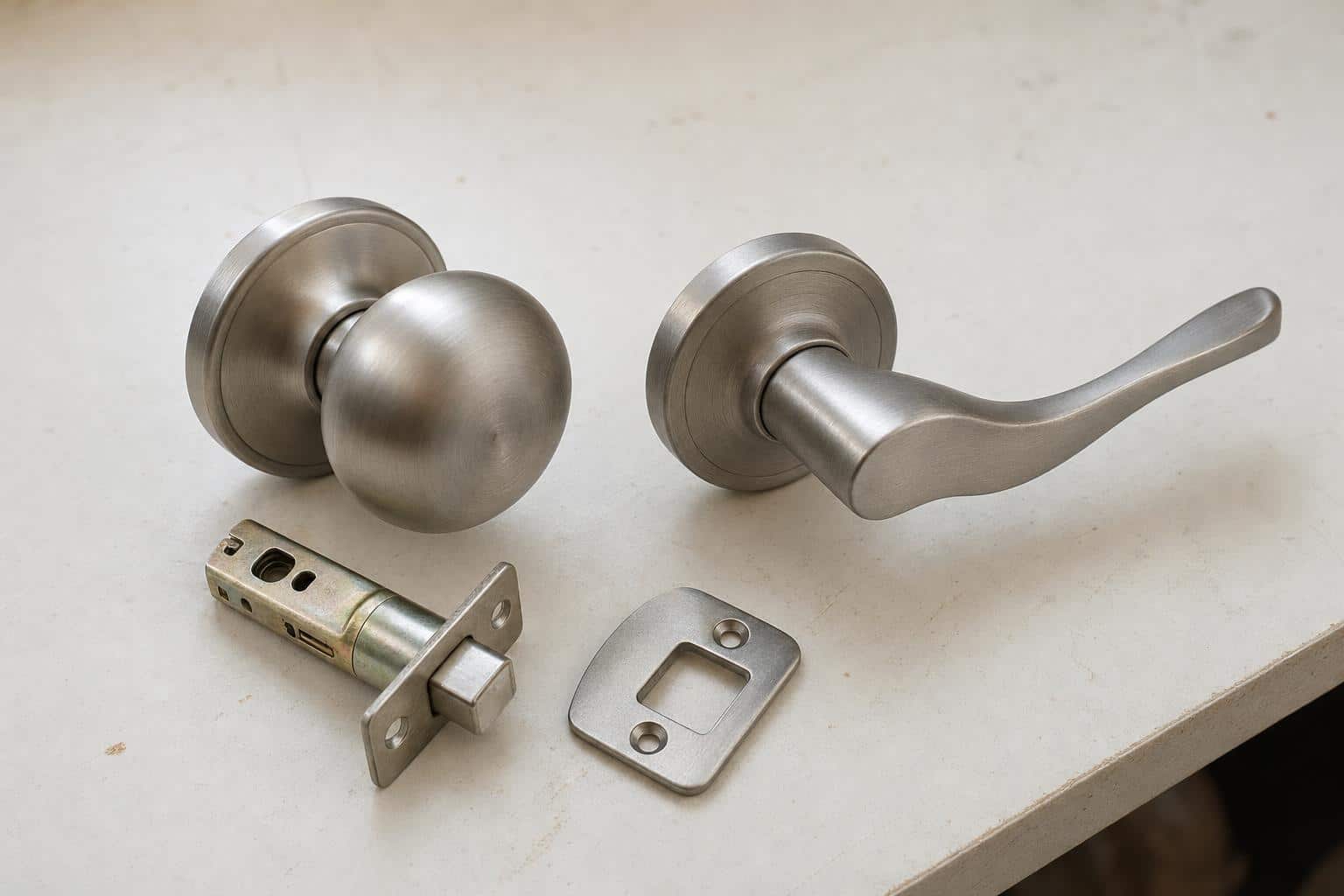
A knob takes a grip and a twist; a lever takes a push down. Try a lever if someone in your household finds gripping and twisting difficult. That’s a usability consideration, not a medical or accessibility-compliance guarantee.
Everyday operation. Try both styles in a store when possible, and consider who uses each door. Think about someone carrying laundry or a young child who can reach a lever. Easier operation may be welcome on a playroom door but less useful on a pantry you want to keep closed. Check that everyone who uses the room can operate the handle and lock from inside.
Door handing. Check whether the lever is designed for a left-hand door, a right-hand door, or either. Kwikset explains that its reversible lever function allows installation on either configuration. Reversibility varies by model, so confirm it on the exact product page rather than assuming.
Complete-set compatibility. Switching from knobs to levers can mean buying a whole lock set rather than a new handle. Schlage states that its door knobs aren’t interchangeable with its door levers. Doors For Pros says its team can help with residential hardware selection; share your measurements and ask which complete set fits the door.
Pick a Finish You Can Repeat and Maintain
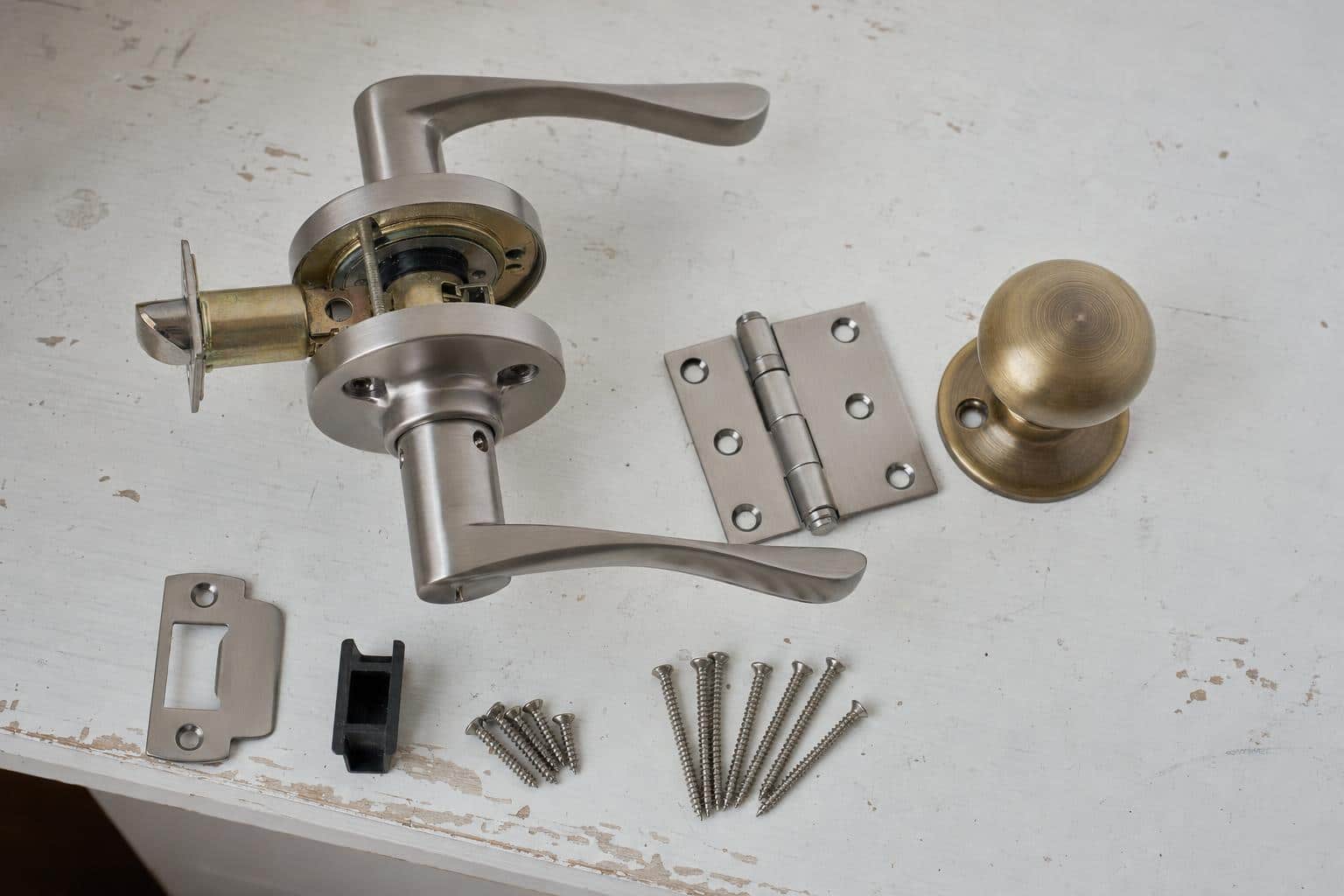
Choose a finish after narrowing the options by function, fit, and comfort. Black, nickel, and brass are worth comparing against the paint and metal finishes already in your home.
Start with an existing reference finish. Look at the hallway’s hinges, ceiling light, and any cabinet pulls in view. If you like the satin nickel hinges, matching nickel handles can reduce the number of pieces you need to replace. If you prefer black handles, decide whether you’ll keep the hinges as a contrast or replace them, and include that cost in your plan.
Coordinated rather than identical. Repeating a finish can make a hallway feel cohesive without matching every metal object in the house. Occasionally Crafty’s budget-decor advice takes a similar approach: repeat a few colors and materials to create a considered scheme. Bring a sample home and hold it against the paint and hinges in daylight before ordering the remaining sets. For another perspective, compare brass hardware finishes with the metals already in the room.
Finish-specific care. Schlage’s cleaning guide gives wiping with a damp cloth as a care example for chrome hardware. Follow the instructions for the finish you buy rather than assuming the same treatment suits coated black hardware or uncoated brass.
For an exterior door, check the model’s suitability for weather exposure as well as its performance ratings. The BHMA residential framework evaluates security, durability, and finish separately, so a finish you like is only part of the selection.