


The first snowy school day is all it takes to discover where your entryway falls short. Boots drip onto the floor, mittens disappear into coat sleeves, and somebody inevitably leaves a wet backpack against the wall. A boot tray, a few labeled hooks, and a spot for dry backups can make the space easier for everyone to use. You can put this together in an afternoon, even if your front door opens into a narrow hallway.
What You’ll Need
- A shallow waterproof tray with a raised rim
- A washable mat with a nonslip backing
- Hooks or an existing coat rack
- A small basket for dry hats and gloves
- Cardstock, markers, and clear tape for labels
- Clothespins and a washable towel
Before you buy supplies, set out the boots your household wears on a typical snowy day. Arrange them side by side and measure the space they take up. Use that measurement when you shop your own house for a tray. A spare plastic plant tray can work if it sits flat, holds the boots upright, and has a rim high enough to catch meltwater.
Lay Out the Drop Zone Before Hanging Anything
Measure the space with the door fully open. Set the mat and tray on the floor, then walk in carrying the things you usually bring home. Try taking off your boots while holding a school bag or a grocery tote. If you keep stepping around the tray to reach the hooks, move the tray closer to the spot where you naturally stop.
In a tight entry, try a narrow tray along the wall and hang the basket on an existing hook. Keep the doorway and walking path clear once the tray is loaded with everyone’s boots. If you have a little extra floor space, a bench with room for the tray underneath can give kids a place to sit while undoing laces. Check that the tray still slides out easily when the tallest boots are in it.
Make a Spot for Wet Gear
Place the washable mat where people step inside, then set the boot tray beside it. Pick a tray you can carry to the sink without bending it. When snow melts, empty standing water and wipe away grit before putting the tray back. A removable boot mat inside the tray can lift soles out of shallow puddles if you remember to rinse and dry it too.
Hang a washable towel near the tray for quick cleanups. Set aside a separate hook for wet bags so they have room to dry. After a slushy walk home, unzip damp backpacks and pull out lunch bags and papers before hanging them up. If the entryway has a floor vent, give it space when you lay out the mat and tray.
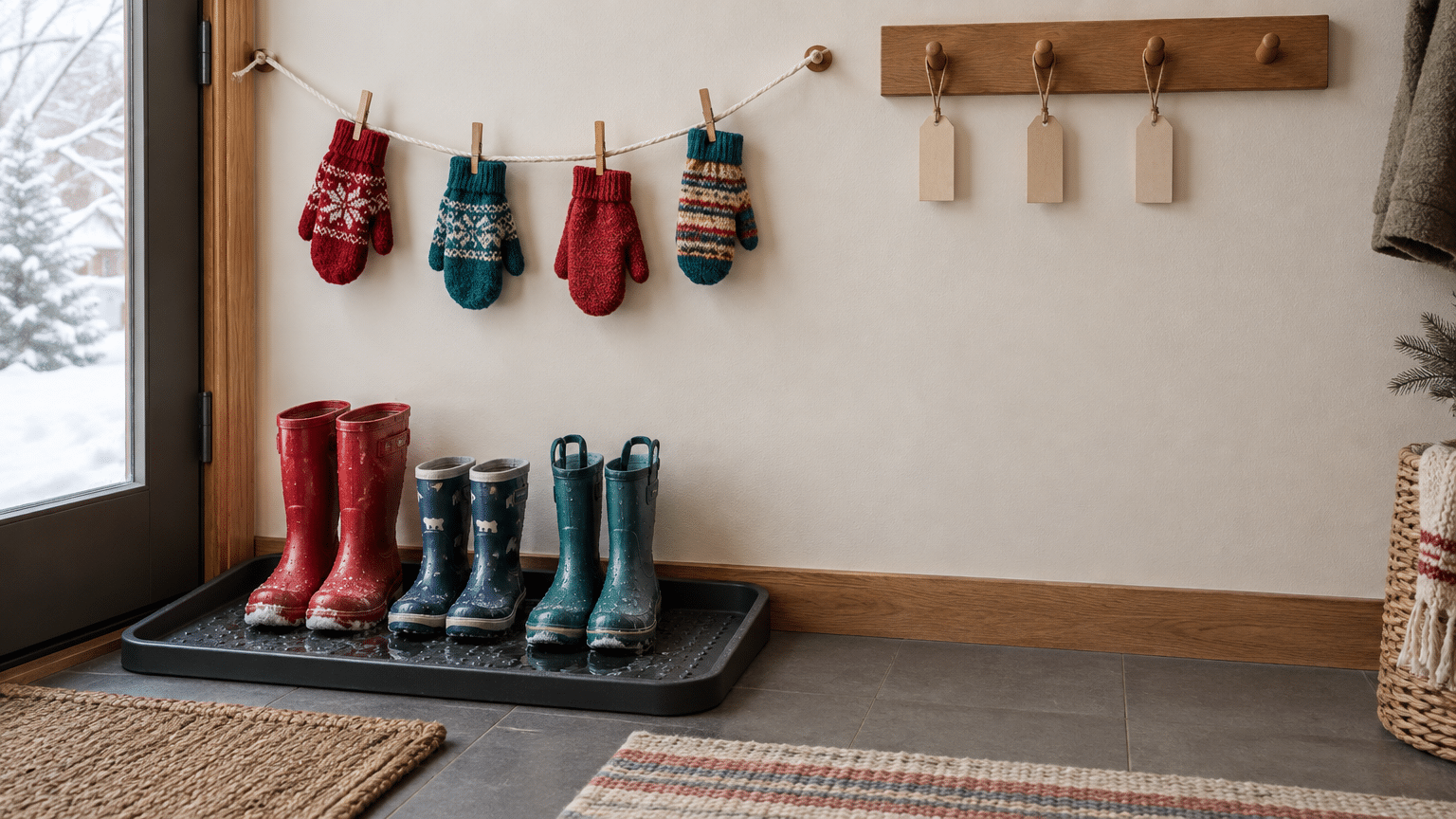
With several pairs of similar boots, give each person a regular spot along the tray. You can mark those places with colored tape on the outside of the rim. That gives younger kids a clear place to aim for and makes it easier to see which pair still needs to come in from the porch.
Give Each Person a Hook
Let kids choose a color or draw a symbol they can spot on their own. Cut the cardstock into tags, cover both sides with clear tape, and attach each tag above a hook. Put the youngest child’s hook where they can reach it without climbing. If a coat keeps slipping off, check whether it has a hanging loop tucked inside the collar. Showing kids where to find that loop can turn hanging up a coat into something they can do themselves.
Give bulky coats enough space to hang without swallowing the next hook. Existing coat racks often have hooks close together, so try using every other hook for coats and saving the gaps for lightweight scarves. If the family already shares a freestanding rack, tie the name tags to its hooks with ribbon so they can move when you rearrange it.
Make a Simple Mitten Drying Line
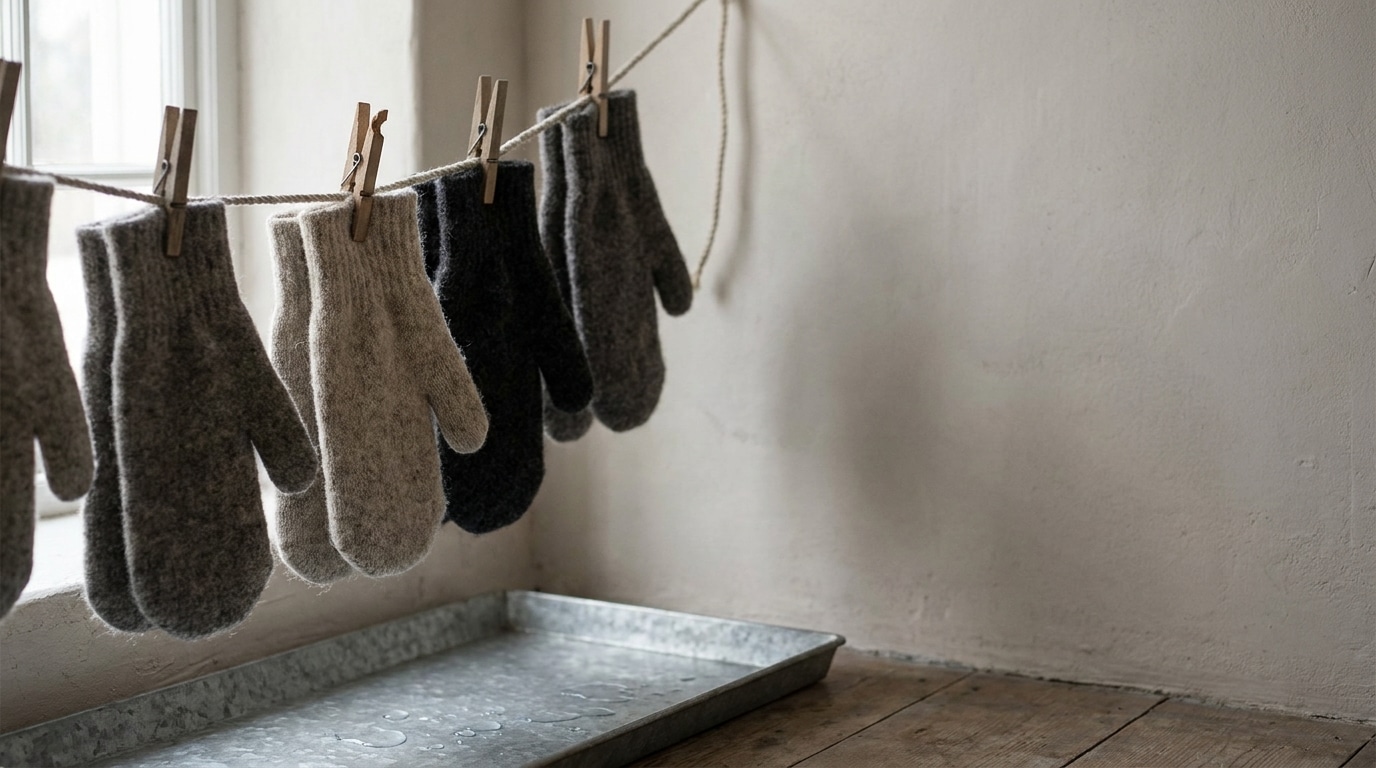
Clip a clothespin to a loop on the rack for each pair of mittens. Open the cuffs and hang damp mittens separately so air can reach them. If you’re short on hooks, tie a short length of cotton cord between two spots on the rack and slide on a few clothespins. Hang the cord above the tray and against the wall, where the mittens can drip into the tray and stay out of the walking path.
Kids can paint the ends of their clothespins to match their hook tags. Give each pair of mittens two matching clips so the pieces stay together while they dry. After a long afternoon in the snow, move soaked mittens to a drying rack with more space around them. The smaller line works well for gear that comes home slightly damp.
Keep Dry Spares Within Reach
A basket nearby can hold dry spares for the next outing. Label it “Dry Gear” so it stays ready for rushed mornings. Start with one backup pair of gloves per child and a couple of spare hats. If the basket gets crowded, separate small items with leftover fabric pouches or tuck each child’s spare pair into a labeled pocket in a hanging organizer.
Store the basket to one side of the drying line where drips can’t reach it. In a shared entry, leave one open hook for visitors and space at the end of the tray for their boots. That helps when a neighbor drops by or the kids bring a friend home after school. Keep a spare clothespin there, too, so guests have somewhere to hang a pair of gloves.
Check What’s Behind the Mess
If the floor keeps getting wet when nobody has brought in snow, dry the area and see where the moisture returns. Check nearby windows, the door threshold, and any accessible plumbing. A puddle under a utility sink or beside a supply line deserves attention before you add another mat.
If you use an attached garage as your main winter entrance, leave room to reach the main water shutoff when you move in winter gear. A quick photo of where a puddle first appears can help you describe what you’re seeing. If you spot a leak or the entry stays cold even when the heating is running, homeowners can contact Home Rangers for heating and plumbing help in Doylestown.
Make the Setup Easy to Reset
Give the drop zone a one-minute reset at the end of the day. Put dry mittens back in the basket, hang damp pairs, and empty the boot tray if necessary. After a week, move anything your family keeps missing. If backpacks still land on the floor, for example, shift their hooks closer to the spot where everyone takes off their boots.
Make room for the next season when snowy days taper off. Wash the mat, rinse the tray, and pack away spare mittens once they’re dry. Leave the hooks and labels in place if they’re working for your family. The same setup can catch muddy rain boots, light jackets, and the damp gear that comes home from spring soccer practice.