




Every December, parents feel the same tug. Wish lists get longer, catalogs pile up, and somewhere between the advent calendar and the last-minute shopping run, you start to wonder whether your kids understand what the season is really about.
The good news is that generosity isn’t a personality trait some children are born with and others aren’t. It’s a habit, and like any habit, it grows through small, repeated experiences that match a child’s stage of development.
A three-year-old and a thirteen-year-old understand giving in completely different ways. A toddler is still learning that other people have feelings, while a teenager can grasp community need and choose how to respond.
That’s why the most effective approach is to meet kids where they are. Below are realistic, low-pressure ideas organized by age, so you can pick what fits your family this Christmas.
Why Does Teaching Generosity Matter at Christmas?
Christmas is one of the few times of year when giving is visible everywhere: wrapped presents, food drives, holiday cards, and charity bell ringers outside the grocery store. That visibility makes it a natural teaching moment.
Research on child development consistently shows that children who practice giving tend to report greater happiness and stronger social connections. The goal isn’t to make kids feel guilty about receiving gifts. It’s to help them experience the quiet joy of making someone else’s day better.
Generosity Ideas for Toddlers (Ages 2–4)
At this age, generosity is about concrete, hands-on actions. Abstract ideas like “people in need” won’t land yet, but “Grandma will smile when she opens this” will.
- Let them “help” wrap gifts. Give your toddler a roll of tape and a small box. The finished product will be lumpy, but the lesson is that presents are something we prepare for others, not just something we open.
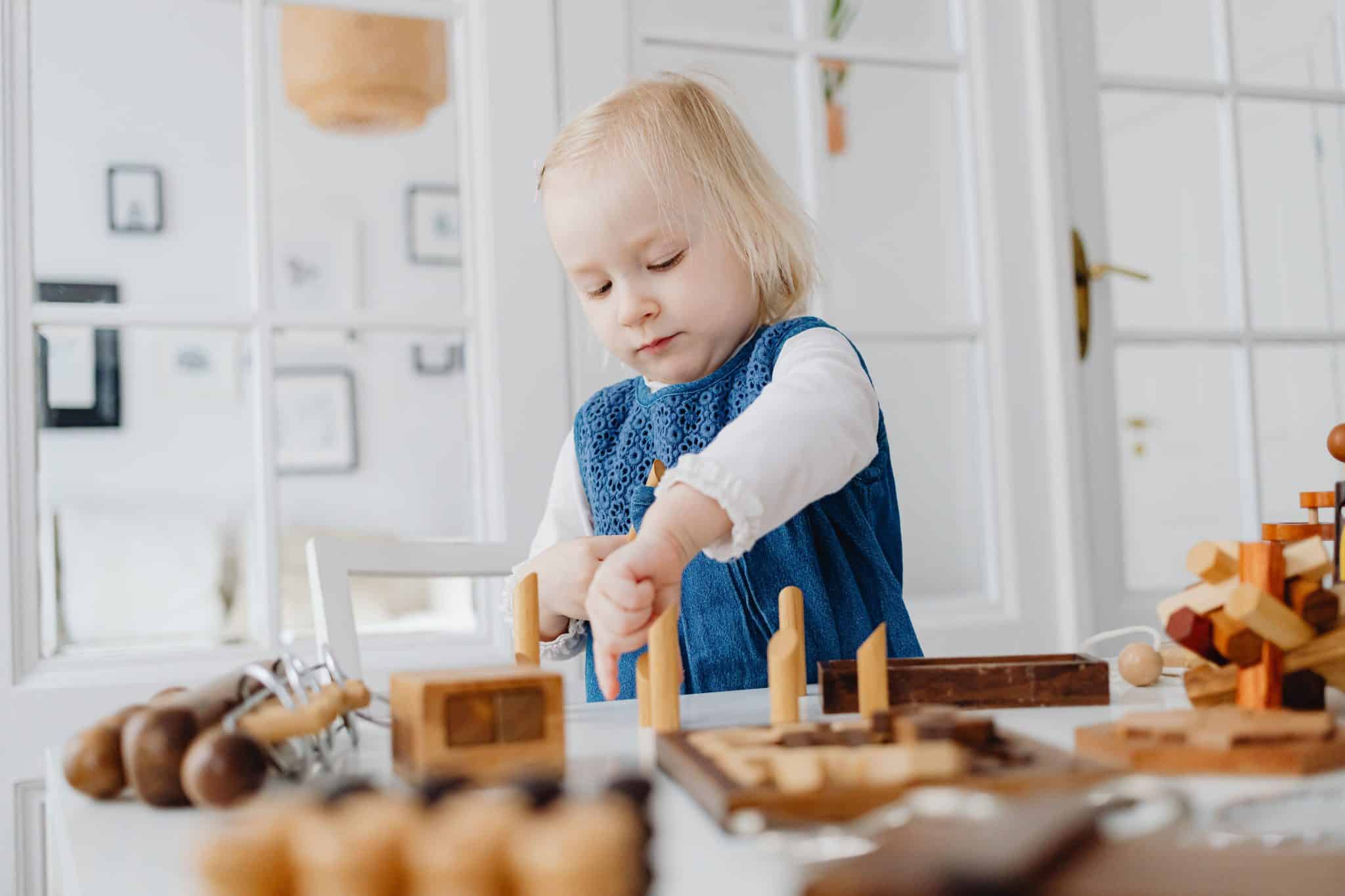
- Practice turn-taking with a favorite toy. Pretend play is a powerful teacher. Heirloom-style figures like Maileg toys, with their tiny mice and bunnies in miniature beds and matchbox houses, invite kids to act out scenes where one character shares a treat or gives a gift to a friend.
- Pick one toy to donate together. Keep it simple: one item, chosen by your child, dropped into a donation bin together. Talk about the child who will get to play with it next.
Generosity Ideas for Young Kids (Ages 5–7)
Children in this range are starting to understand fairness and other people’s perspectives. They also love making things, which opens the door to giving that comes from their own effort.
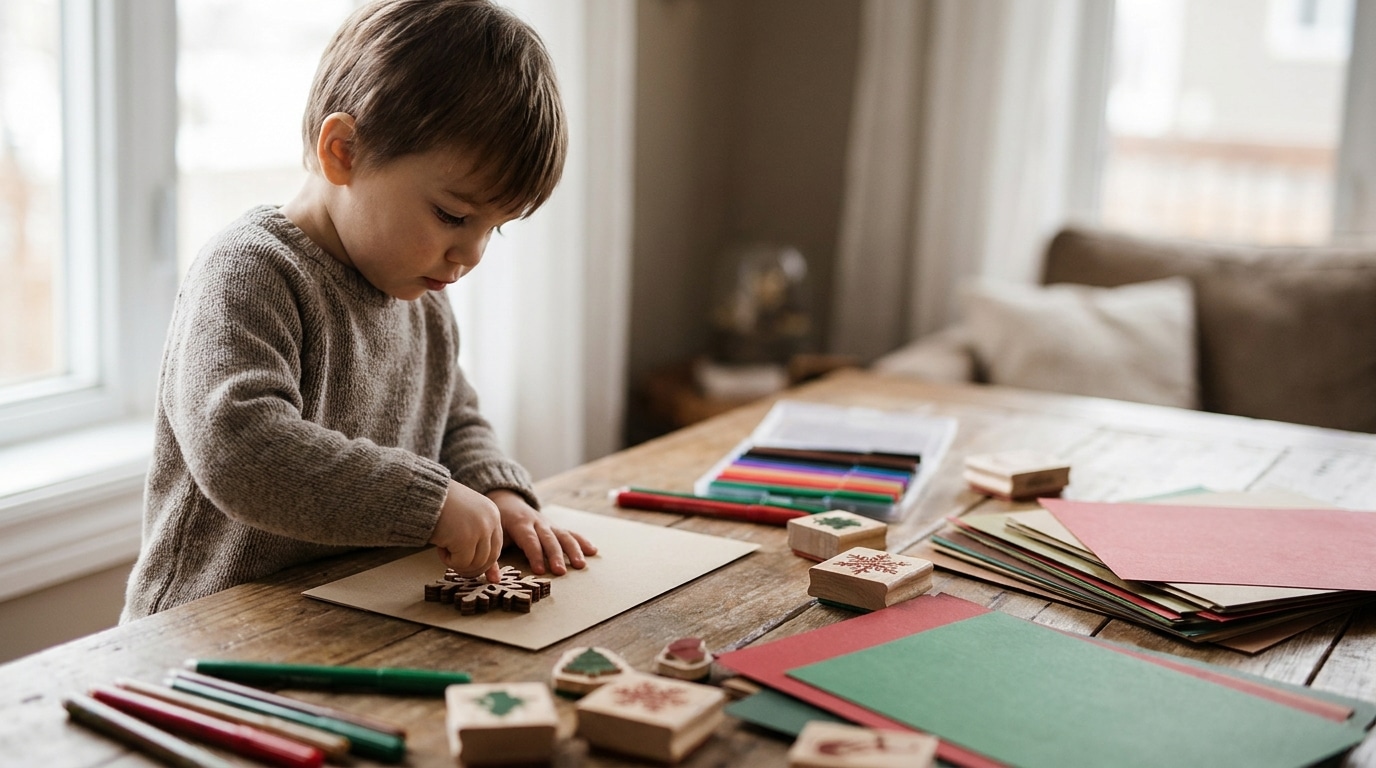
- Make handmade cards for neighbors. Set up a crafting station with cardstock, markers, and a few art stamps in holiday shapes like snowflakes, stars, and evergreen trees. Kids can create a stack of cards to leave on doorsteps or deliver to a local senior living community.
- Start a “kindness jar.” Each time your child does something generous, like holding a door or helping a sibling, add a pom-pom or bead to a jar. When it’s full, celebrate together.
- Shop for a giving tree. Many churches, schools, and retailers host giving trees with tags listing a child’s wish. Let your child pick a tag and choose the gift themselves.
Generosity Ideas for Big Kids (Ages 8–10)
By now, kids can handle more responsibility and longer projects. This is a great age to connect generosity with their own money and time.
- Introduce a “give” jar. If your child earns an allowance, split it three ways: save, spend, and give. Before Christmas, let them decide where the “give” money goes, whether it’s an animal shelter, a food bank, or a classmate’s fundraiser.
- Bake and deliver treats. Baking cookies for first responders, mail carriers, or a teacher teaches kids that thoughtfulness can be as valuable as anything store-bought.
- Write thank-you notes before the holidays. Gratitude and generosity go hand in hand. Have kids write notes to people who helped them this year, like a coach, a bus driver, or a librarian.
Generosity Ideas for Tweens and Teens (Ages 11+)
Older kids want autonomy and purpose. Instead of directing them, invite them to lead.
- Let them choose a cause. Ask what issue matters to them, whether that’s hunger, animal welfare, or the environment, then help them research local organizations.
- Volunteer as a family. Serving meals, sorting donations at a food pantry, or wrapping gifts for a toy drive gives teens a firsthand view of need in their own community.
- Give the gift of time. Encourage teens to offer a skill, such as babysitting for a busy neighbor, shoveling a walkway, or teaching a grandparent how to video call.
How Can Parents Model Generosity?
Kids notice what you do far more than what you say. Let them see you donate, tip generously, check on a neighbor, or volunteer. Talk out loud about why you’re doing it: “I’m bringing soup to Mrs. Lee because she’s been sick, and I know it would help.” Those small narrations show children that generosity is a normal part of life, not just a holiday event.
Frequently Asked Questions
At what age can kids understand generosity? Children as young as 18 months show early signs of helping and sharing. Around ages 3 to 5, they begin to understand that giving makes others happy, and by school age they can grasp fairness and need.
How do I teach generosity without making my child feel guilty about gifts? Focus on the joy of giving rather than comparing what your child has to what others lack. Receiving gifts gratefully and giving gifts thoughtfully can happen side by side.
What’s the easiest way to start? Pick one activity from your child’s age group and do it together this week. Consistency matters more than scale.
Christmas is a wonderful place to start, but the real goal is a habit that lasts long after the decorations come down. Choose one or two ideas that feel natural for your family, repeat them each year, and let them grow alongside your kids. Years from now, the moments they remember most may not be the gifts they unwrapped, but the ones they gave away.