



Kids remember what they make. A worksheet gets forgotten in a backpack, but a paper fortune teller full of times tables or a fruit garland spelling out new words gets played with, shown to grandparents and pinned on the fridge. If your children love crafts, you can turn everyday learning into projects they’ll actually want to do. Here are eight simple ideas that mix glue, paper and practice.
1. Times Table Fortune Tellers
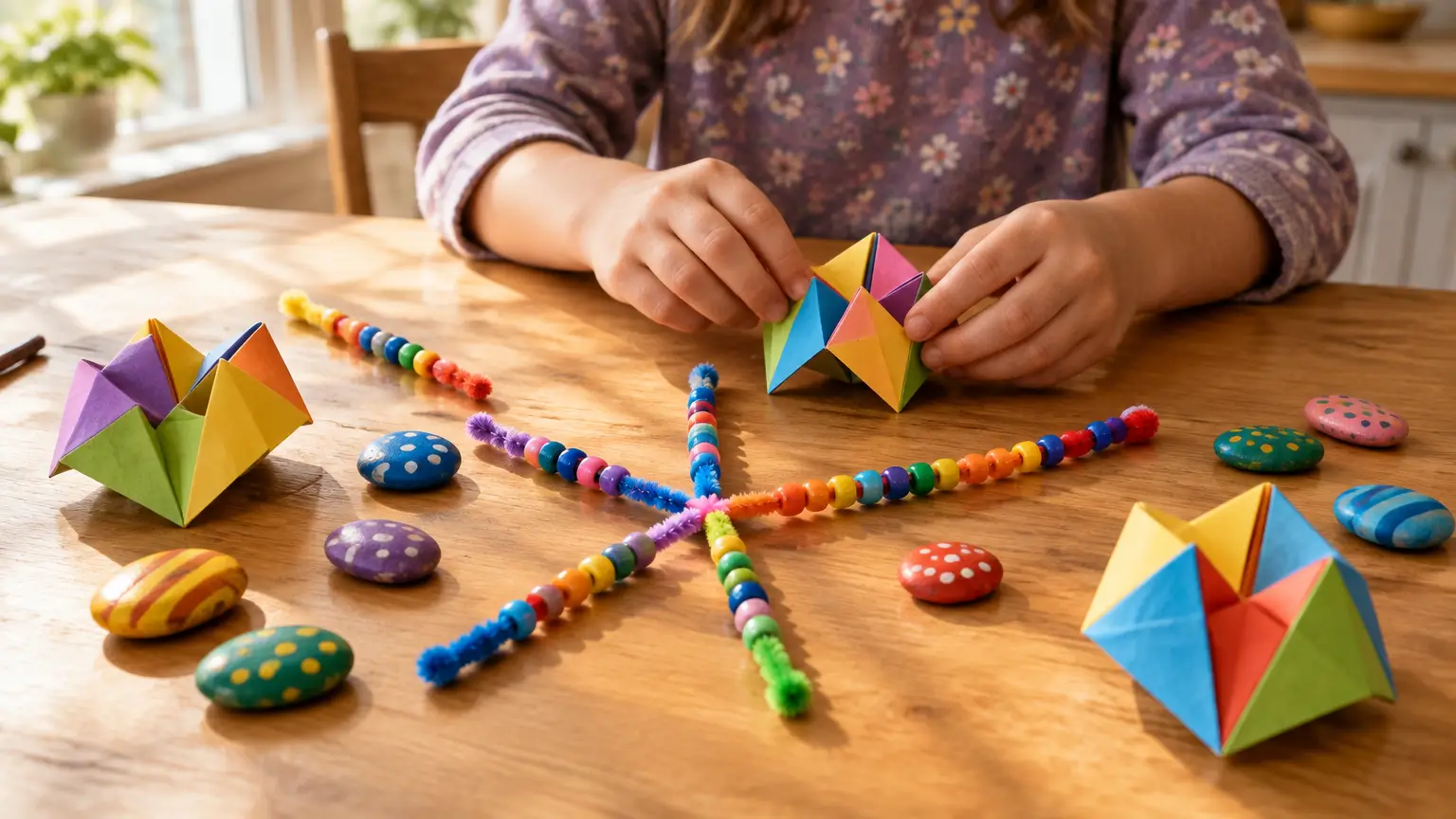
Fold a classic paper fortune teller (cootie catcher). On the outer flaps, write multiplication facts such as 6 × 7; under each inner flap, write the answer. Kids quiz each other and check by lifting the flap. Make one for each tricky table.
2. The Fridge Multiplication Chart
Print a large multiplication chart 1 to 100, then let your child decorate it: colour all the squares on the diagonal (6 × 6, 7 × 7…) in one colour, the tens in another, the fives in a third. Suddenly the patterns jump out, and the chart becomes artwork they’re proud to display.
3. Bead Skip-Counting Strings
Thread beads onto pipe cleaners in groups — three red, three blue, three red — to show the threes table. Counting along the string makes multiplication physical, which is especially helpful for younger kids.
4. Egg Carton Maths
Write numbers 1–12 in the cups of an egg carton. Drop in two buttons, close the lid, shake, and multiply the numbers where the buttons land. It’s quick, noisy and a great five-minute warm-up.
5. A Fruit-Name Garland
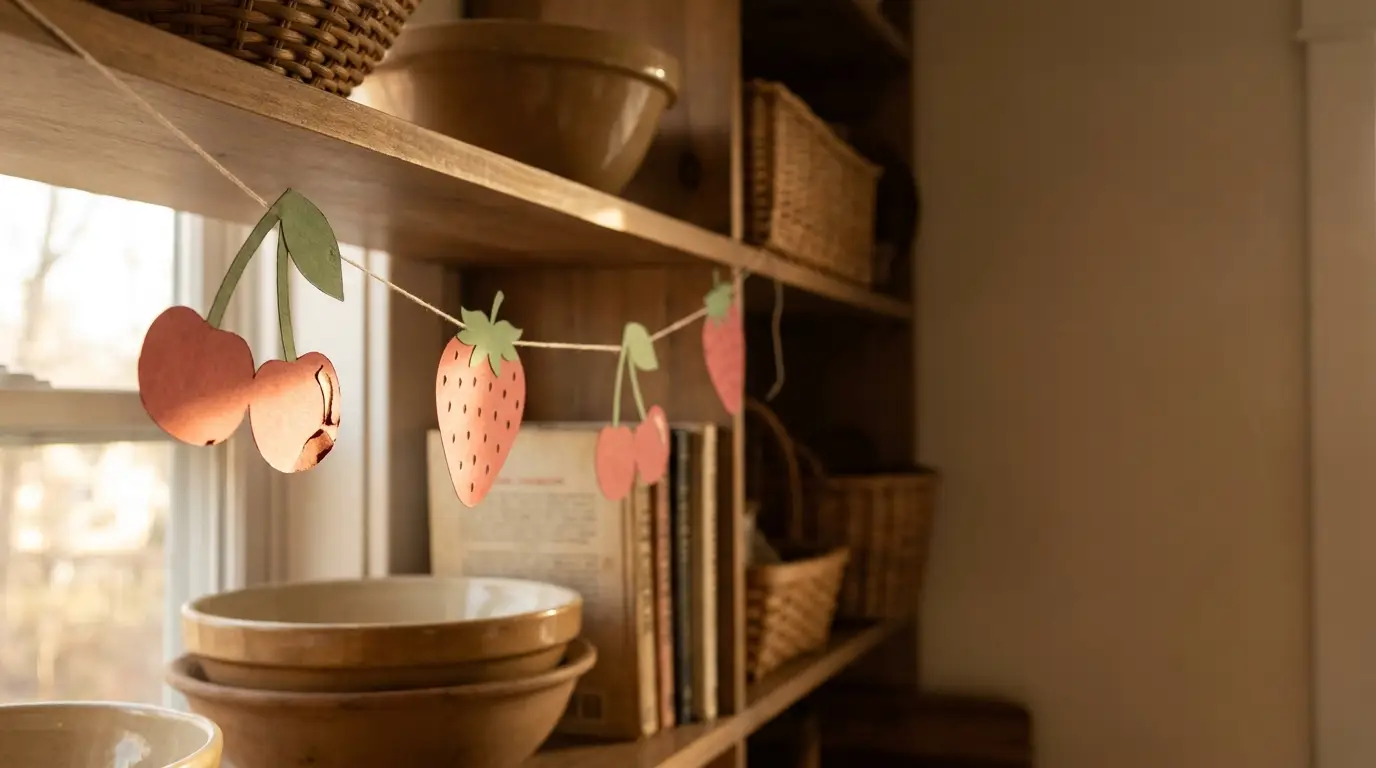
Cut fruit shapes from coloured card and write a fruit name on each one: cherry, strawberry, blueberry, cranberry… Then challenge kids to sort them by their first or last letter. Lists of fruits that end with Y are a handy source of new words — many berries end in Y, which makes a fun discovery in itself. String the cards into a garland for the kitchen.
6. Word Chain Paper Links
Make a paper chain where each new link must start with the last letter of the word on the previous one: apple → egg → grape → elephant. It’s spelling practice, vocabulary building and a craft all in one, and the chain gets longer every day.
7. Spelling Stones
Paint letters on smooth stones with acrylic paint and a sealant. Kids build words on the table, swap letters to make new ones and use them for spelling quizzes.
8. Flash Card Pockets
Decorate envelopes as “pockets” for each times table. Inside, keep small cards with facts on one side and answers on the other. As your child masters a card, it moves to a “done” pocket.
Tips for Crafty Learning
- Keep projects short: 15–20 minutes holds attention best.
- Let kids choose colours and designs — ownership boosts motivation.
- Display finished work where everyone can see it.
- Play with what you make: a craft that becomes a game gets used again and again.
The Takeaway
You don’t have to choose between crafting and learning. With a few supplies and a little imagination, times tables and spelling can become projects your children enjoy making — and keep coming back to.