
The weeks before a first sleepaway camp can stretch on forever for a kid who is equal parts excited and nervous, and a few hands-on projects give all that energy somewhere useful to go. Better yet, the right projects end up in his duffel bag and get used all summer long. So, what crafts can boys make before heading to sleepaway camp?
The best pre-camp crafts are ones boys will use at camp: a decorated stationery kit, a paracord bracelet, a custom duffel tag, a signature pillowcase, and a nature journal for logging hikes and adventures.
Those five projects are a great starting list, but each one also quietly prepares him for something specific he will face once he gets there, from writing home without a phone to keeping track of his own gear. Knowing what each craft does for him makes it a lot easier to decide which one to start with.
Why Hands-On Projects Help Boys Get Ready for Camp
Getting ready for camp usually means a packing list, a pile of labels, and a lot of parents doing the work. Crafting flips that around. When a boy makes his own gear, he becomes part of the preparation instead of watching it happen around him.
That ownership matters more than it might seem. A kid who spent an afternoon braiding his own bracelet or decorating his own pillowcase has a little piece of home that he made himself. On the first night in a new cabin, that kind of familiar, personal object can be surprisingly comforting.
Pre-camp projects also make great conversation starters. While you glue, paint, or braid together, it is easy to talk through what camp will be like, what he is excited about, and what feels a little scary. Those relaxed conversations often go further than a sit-down talk ever could.
A DIY Stationery Kit Keeps Letters Coming Home
Many traditional summer camps are electronics-free, which means no texting, no video calls, and no quick check-ins from a phone. Letters become the main way campers share news with family, and a homemade stationery kit makes writing them feel fun instead of like a chore.
Start with a simple pocket folder or a small zippered pouch. Have him decorate the outside with stickers, drawings, or his name in bold letters. Inside, tuck a stack of plain or lined paper, a few pens, and a handful of envelopes.
Here is the step that makes the biggest difference: pre-address and stamp every envelope before he leaves. Kids are far more likely to drop a letter in the camp mail when the hard part is already done. For younger campers, you can even add a few fill-in-the-blank pages with prompts like “The best thing I did today was…” and “My favorite food at camp is…” so writing home only takes a few minutes.
Paracord Bracelets and Duffel Tags Make Gear Easy to Spot
Camp gear has a way of wandering off. Towels, water bottles, and flashlights all start to look the same when a whole cabin of boys owns the same items. Two simple crafts help solve that problem.
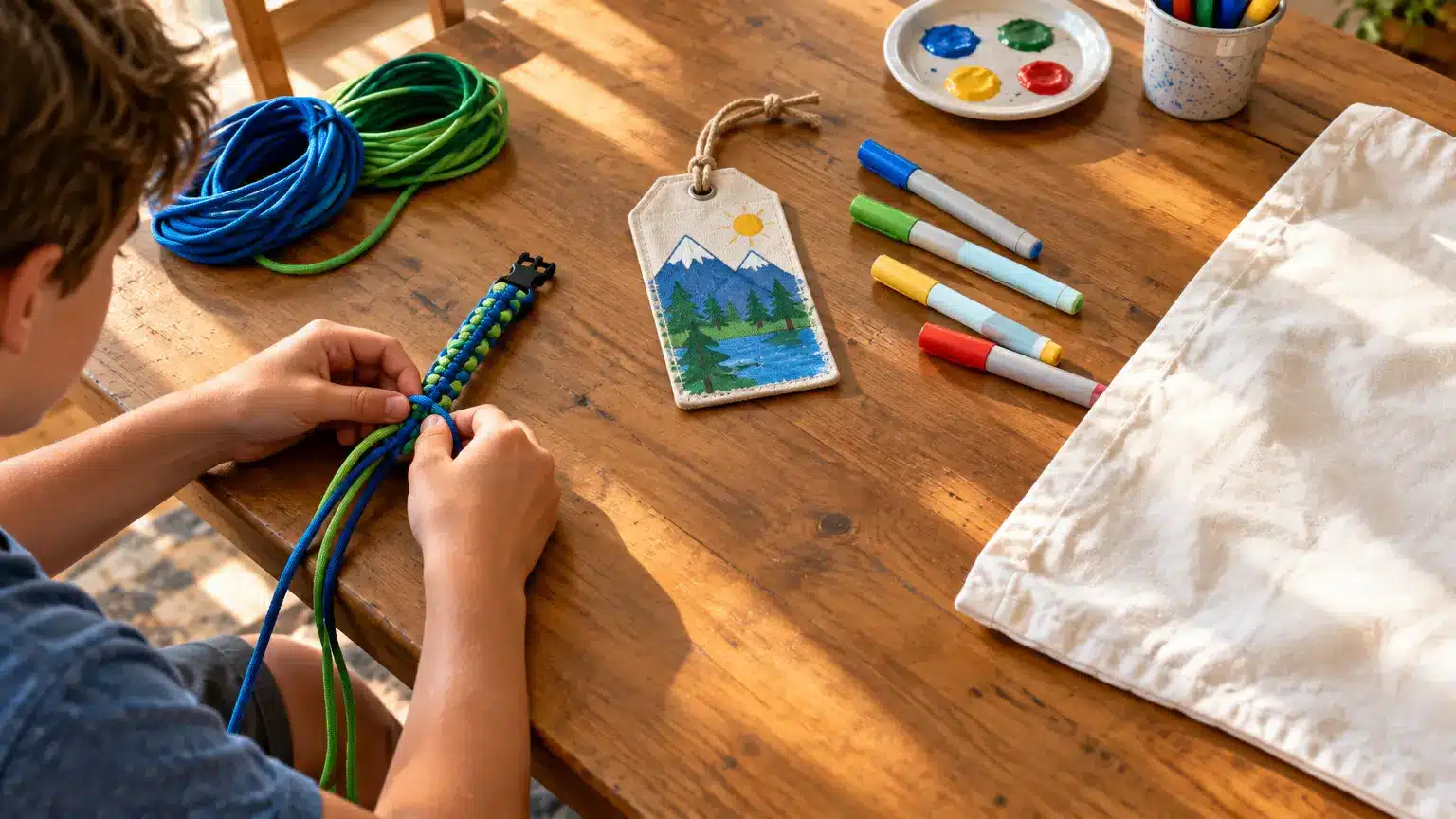
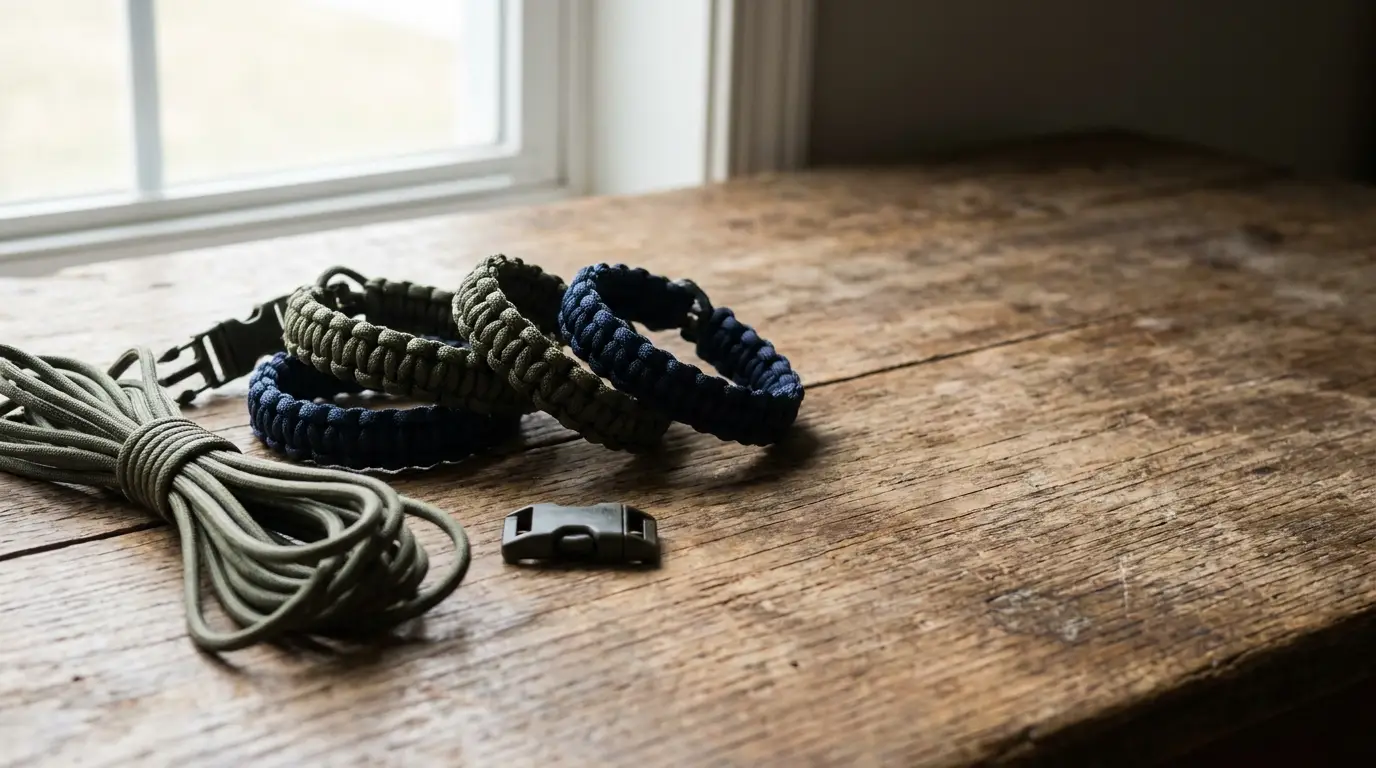
A paracord bracelet is a classic camp-style craft for a reason. With about eight to ten feet of paracord and a side-release buckle, most kids can learn a basic cobra weave in an afternoon. Let him choose his own color combination so the bracelet feels like his, and make a second one in matching colors to clip onto his water bottle or backpack zipper.
A custom duffel tag works the same way. Cut a tag shape from craft foam, a scrap of leather, or a thick piece of cardboard sealed with clear packing tape. Add his name, a bold design, or a favorite color pattern, then attach it to his bag with a loop of the same paracord. When dozens of duffels are piled up on arrival day, his will be easy to find.
A Signature Pillowcase Makes the Cabin Feel Like Home
A plain cotton pillowcase is one of the easiest blank canvases you can buy, and it turns into one of the most meaningful things a camper packs. Slide a piece of cardboard inside so the colors do not bleed through, then let him go to work with fabric markers or fabric paint.
He can draw his initials, a favorite animal, the outline of his home state, or a design he dreams up on the spot. Siblings can add small drawings or short notes in one corner, which gives him something to look at before lights out. Follow the directions on your markers or paint for setting the design, since many call for a quick press with an iron so the colors hold up in the wash.
At the end of the session, the pillowcase can become a keepsake too. Many kids like to have cabinmates sign it with fabric markers on the last day, turning it into a record of the friends they made.
A Nature Journal Turns Big Days Into Lasting Memories
Camp days are packed, and the details blur together quickly once kids get home. A simple nature journal gives a boy a place to sketch, jot notes, and save small memories while they are still fresh.
Use a small composition notebook or a sketchbook that fits in a backpack. Have him cover it with cardstock and decorate it, then add a few starter pages such as “Trails I Hiked,” “Things I Tried for the First Time,” and “Animals and Plants I Spotted.” A pencil secured with a rubber band means he never has to go looking for something to write with.
The journal pays off at a camp where every day looks a little different. At Camp Highlander’s boys camp, set on 240 acres in the Blue Ridge Mountains of North Carolina, boys move through more than 25 activities with their cabin, from kayaking, canoeing, and whitewater rafting to archery, horseback riding, climbing walls, and even flint-knapping. That is a lot of first-time experiences, and a journal gives him a place to remember them all.
It also helps on the drive home. Instead of a tired “it was good,” he can flip open his journal and walk you through the whole adventure page by page.
Start One Project This Weekend
You do not need to tackle every craft on this list before drop-off day. Pick the one that fits your camper best, whether that is the stationery kit for a first-timer or the paracord bracelet for a boy who loves working with his hands, and set aside one afternoon this weekend to make it together.