

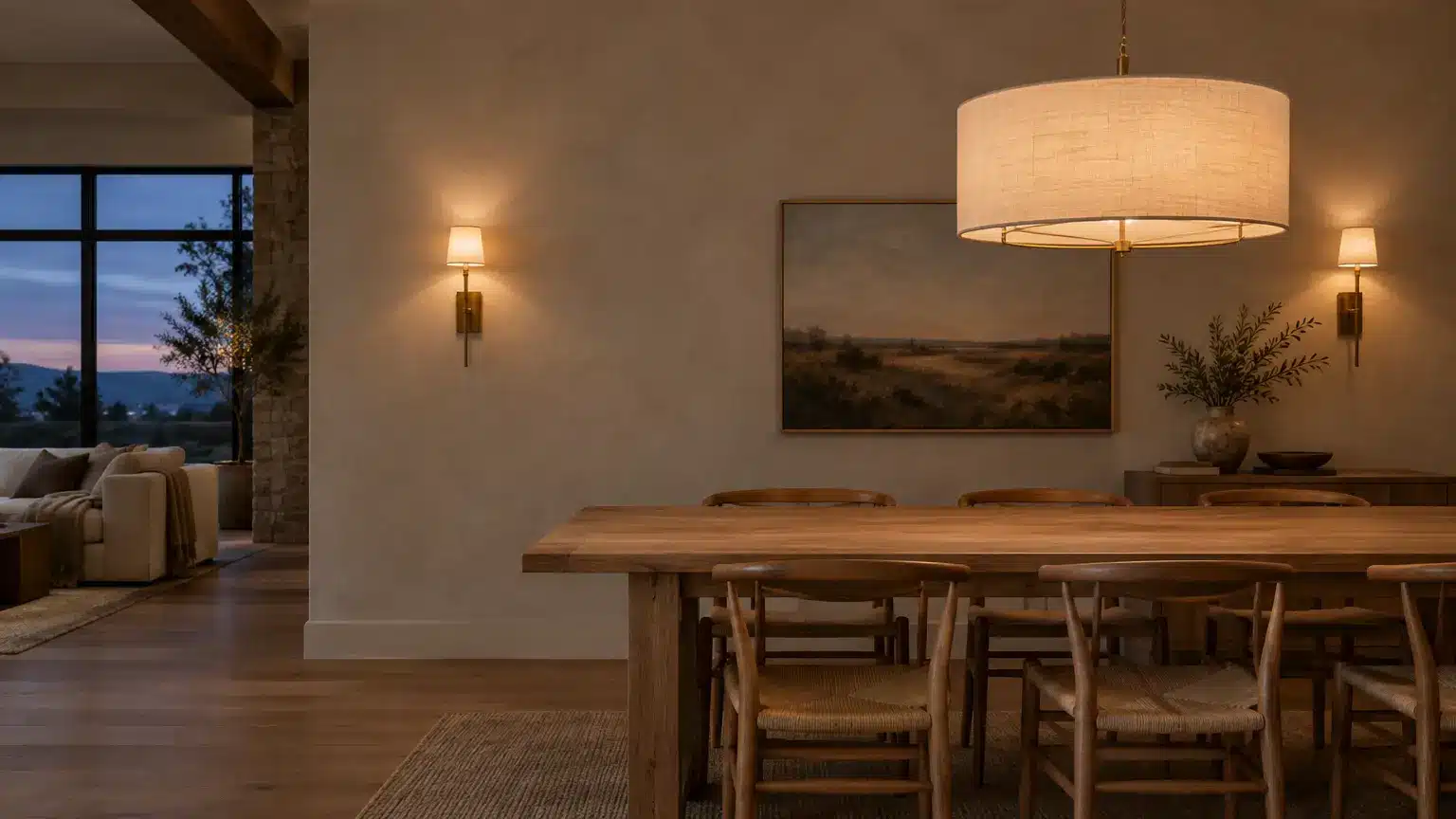
The majority of rooms are lit with a single fixture and remain in only one mood. Pairing solves that. The combined use of two fixtures provides coverage for the ceiling and the corners, giving the room a different look from morning to evening. Layers are paramount in a room that is habitable from early morning till evening.
The combinations below hold up in a farmhouse kitchen, a mid-century living room, and a modern loft. Catalogs from decorative lighting brands, for instance Visual Comfort lighting, group fixtures into families that share a finish, so pairing stays simple. Style comes from the shapes picked, never from the pairing itself.
1. Chandelier With Matching Wall Sconces
A dining chandelier handles the table. Sconces on the flanking walls handle everything past the table’s edge, which stops the corners from falling dark. The room reads finished at that point.
Shape carries the style here. A drum shade wrapped in linen leans traditional, while a bare-bulb frame in black metal leans industrial. Matching the metal finish across the two fixtures keeps the pairing quiet.
2. Island Pendants With Under-Cabinet Lights
Pendants over an island light the surface where food gets plated. It is lit by under-cabinet strips to light the counter behind it, where most chopping is done. They manage to dispel shadows cast by one ceiling fixture.
A typical workstation consists of:
- Two or three pendants evenly distributed down the length of the island
- Warm strips behind cabinet lip but not visible from the room.
- A dimmer for slower dinners on the pendants
- Slanted shades in the kitchen for a more subdued vibe over a hectic countertop.
Small kitchens work well with glass pendants, as the eye cuts through the glass. For larger islands, metal domes are a good choice to stand up to higher cabinets. The under-cabinet layer is not visible either way.
3. Flush Mount With Two Table Lamps
Low ceilings rule out a hanging fixture. The flush mount provides the room with its ambient light level without compromising on headroom. Two table lamps will create the evening light level at seat height.
The lamps are the key in this duo. The ceramic base translates to coastal, the brass stick is classic, and the matte black column is modern. The flush mount remains simple, allowing the lamps to lead. The effect will also change with the shade material used: a soft output on metal or a tighter pool on linen.
4. Linear Suspension With Recessed Downlights
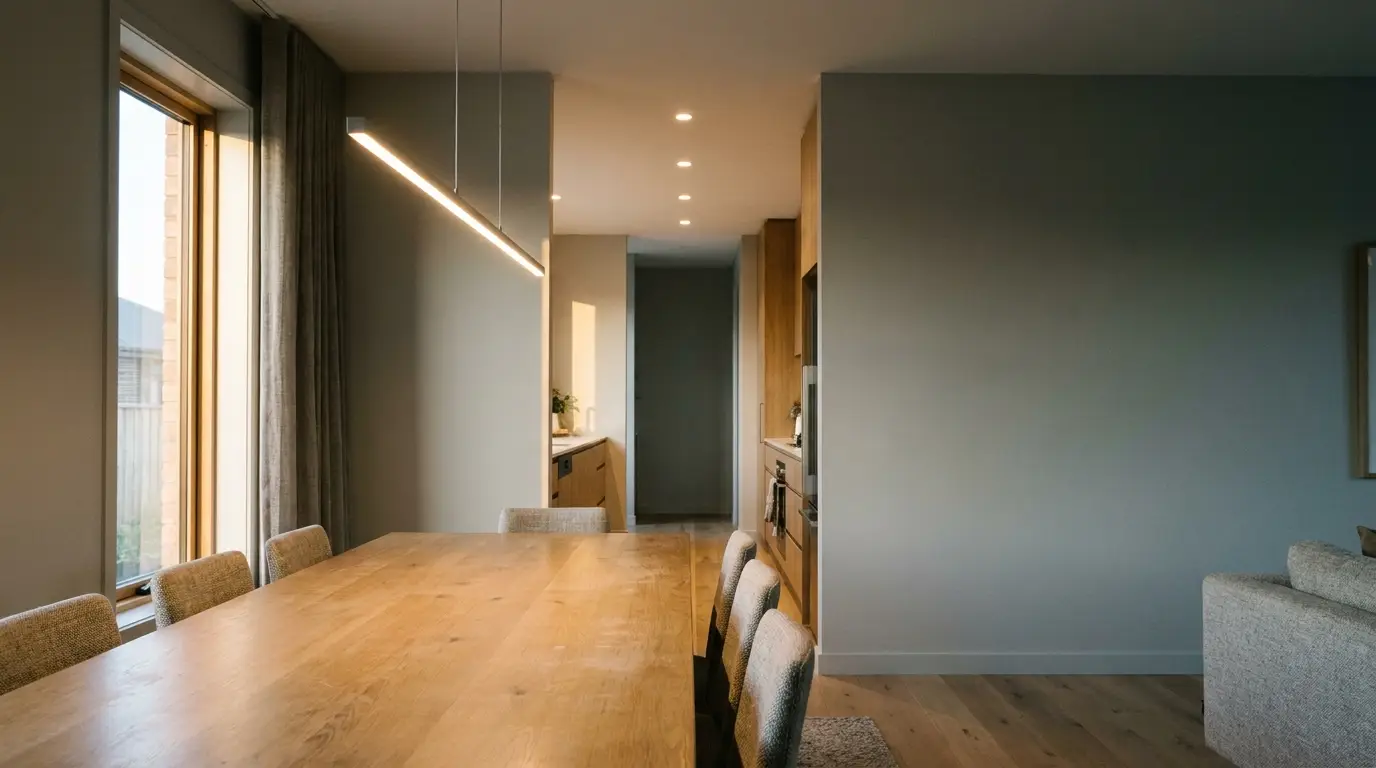
Long tables need light along their whole length. A linear suspension is parallel to the top and provides edge-to-edge spreading of the output. The walkways are filled with recessed cans around the outside.
The pairings are on open plans, one room giving on to another. The dining area is clearly marked by the suspension. Recessed lights will provide a smooth journey through the space, and the transitions will be even.
5. Picture Lights With a Floor Lamp
Art needs light of its own. Picture lights mounted above a frame throw a narrow wash across the canvas, pulling the color forward. A floor lamp nearby lifts the surrounding wall, so the art stops floating in the dark.
The effect is never overpowering due to the scale. A picture light that is slim will fit into one frame, and a long arm will fit into a wide canvas. There is one arc floor lamp that provides an entire gallery wall from one outlet.
6. Vanity Sconces With an Overhead Fixture
An overhead bathroom light alone casts shadows down a face. Instead, sconces placed next to a mirror, at eye level, illuminate the face from the sides. Shaving or makeup gets easier straight away.
Finish choice ties the pair to the rest of the fittings. Polished nickel works well with a classic bath, a matte black bath pairs best with a contemporary remodel, and a vintage bath will look best with an aged-brass bath. Normally, the overhead fixture will adhere to the faucet finishes.
7. Lantern With a Line of Recessed Cans
Entryways set the tone for the entire home. A lantern in the center provides a sense of focus at head level. That light continues along the adjacent hallways in recessed cans.
The pieces to line up:
- A lantern sized to the entry width, hung clear of the door swing
- Recessed cans placed in-line with the hallway’s center point
- Warm bulbs used in all light sources for an even glow
Collections by some companies make this task easy, like the Visual Comfort collection of lights where the lantern uses the same finish as the sconces down the hallway. Collections like that by other brands perform in the same fashion. It will be consistent from the front door forward.
The pairings do what a single fixture can not. An overhead fixture provides the ambient level of light while the second fixture illuminates faces, countertops, art, and corners. Style is created through shape, finish, shade, and material, not the pair itself. When planning the room, select the pairing based on its function and fixtures in a finish that already exists elsewhere in the house. Use of a dimmer on either fixture adds versatility after dark.