


If your family spends weekends tackling craft projects and backyard games with the kids, you already know that the setting matters just as much as the activity. A patchy, muddy yard makes it hard to spread out a picnic blanket for a DIY tie-dye session or let toddlers run barefoot through the grass.
That is where sod comes in. Unlike grass seed, which can take months to fill in and leaves bare dirt exposed to muddy shoes and wandering pets, sod gives you an instant, lush lawn that is ready for family memories almost right away.
Sod is simply mature grass that has been grown on a farm, cut into strips along with a thin layer of soil and roots, and then transplanted into your yard. Think of it like rolling out a living carpet.
For families in warmer climates, especially those dealing with hot, dry summers, choosing the right type of grass and installation method matters even more.
If you live in Southern California, working with a local provider of Los Angeles sod delivery and installation can help you select grass varieties suited to regional heat, water restrictions, and soil conditions rather than guessing at what might survive.
Understanding Sod: What It Is and Why Beginners Choose It Over Seed
Sod appeals to beginners because it removes the guesswork and waiting game that comes with seeding a lawn from scratch. Grass seed requires weeks of careful watering, protection from birds, and patience while thin green shoots slowly fill in bare patches.
Sod, on the other hand, gives you a finished look within a single afternoon of installation. This is especially appealing for busy households who want usable outdoor space quickly rather than roping off the yard for an entire growing season.
It is worth knowing that sod is a perishable product, much like produce at a farmers market. According to This Old House, sod is perishable and dries out quickly, so farmers often cut turf in the middle of the night so it can be delivered and installed the same day to preserve its freshness and viability.
This means timing matters. Once your sod arrives, you should plan to lay it within hours, not days, to keep the roots healthy and give your new lawn the best possible start.
Essential Soil Preparation: The Foundation for Success
Good soil preparation is the unglamorous but critical step that determines whether your sod thrives or struggles. Start by clearing the area of old grass, weeds, rocks, and debris, since anything left underneath will create bumps and interfere with root contact.
Next, loosen the top few inches of soil with a rake or tiller so that new roots can penetrate easily rather than hitting compacted, hardened ground. Many first-time installers skip this step and wonder later why their sod never quite takes root the way they hoped.
After loosening the soil, it helps to level the area and add a thin layer of compost or topsoil to improve nutrient content, particularly if your existing soil is sandy or heavy with clay. Lightly water the prepared soil the day before installation so it is moist but not soggy when the sod arrives.
This small bit of prep work mirrors the kind of careful setup you would do before any hands-on project with kids: gathering the right materials and prepping your workspace before diving in makes the actual process smoother and far less frustrating.
Laying Your Sod: Step-by-Step Installation Basics
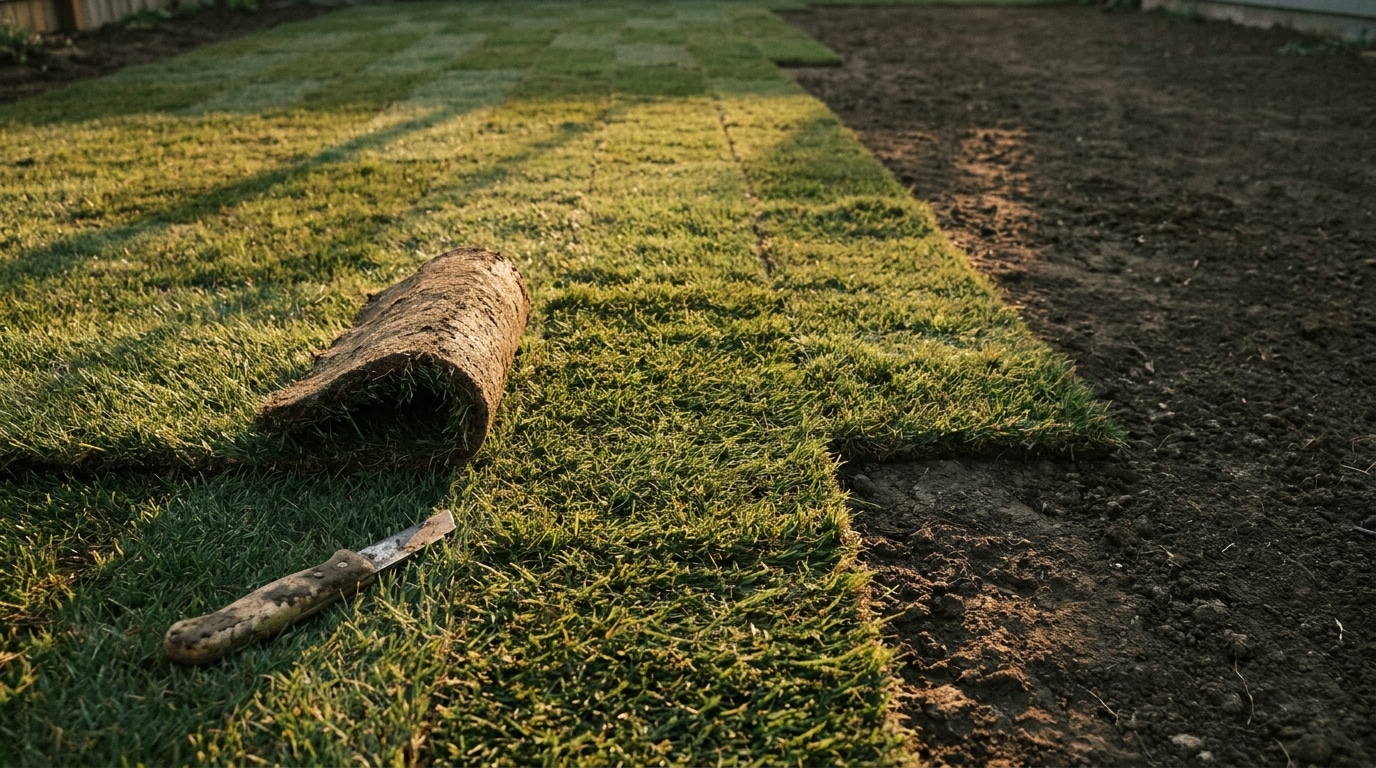
Once your soil is ready, begin laying sod along the longest straight edge of your yard, such as a driveway or sidewalk, to create a clean guideline. Unroll each strip and press it firmly against the soil, making sure edges touch snugly without overlapping, similar to fitting puzzle pieces together.
Stagger the seams in a brick-like pattern from row to row so that the joints do not line up, which helps prevent visible lines and keeps the lawn looking seamless as it fills in.
For curved areas or spots around trees and flower beds, use a sharp utility knife to trim the sod rather than forcing pieces to bend unnaturally. After the entire area is covered, go over the new lawn with a lawn roller, which helps press the roots into firm contact with the soil underneath and removes any air pockets.
This step is easy to overlook, but it plays a meaningful role in how quickly and evenly your sod establishes itself in the weeks that follow.
First-Week Care: Watering and Maintenance to Ensure Root Establishment
The first week after installation is the most critical window for your new lawn. Water thoroughly immediately after laying the sod, soaking it until the soil underneath is moist, and continue watering once or twice daily for the first week to prevent the roots from drying out.
It typically takes about two to six weeks for sod to fully bond with the soil beneath it, so consistent moisture during this period is non-negotiable even if it feels like a lot of effort upfront.
Avoid heavy foot traffic, pets, and toys on the new sod during this establishment period, since pressure can disturb the delicate root connections still forming underneath.
Once you notice resistance when gently tugging on the grass, that is a good sign roots have taken hold, and you can gradually reduce watering frequency while increasing the amount per session. Mowing should wait until the grass reaches a few inches in height, at which point you can begin a more normal maintenance routine.
Many homeowners choose to handle this entire process themselves, and recent data shows that approach is common nationwide. The table below highlights a few figures that can help beginners understand the broader landscaping landscape before starting their own project.
| Statistic | Figure |
| U.S. Landscaping Services Industry Revenue (2025) | $188.8 billion |
| Homeowners Who DIY Lawn Care | 54% |
| Average Professional Sod Installation Cost | $1.00-$2.50 per sq ft ($1,080-$3,070 typical yard) |
| Time for Sod to Establish Roots | 2-6 weeks |
| Sod Sold to Landscape Contractors vs Homeowners | 57% contractors, 8% homeowners |
Whether you decide to tackle sod installation as a weekend DIY project or bring in professional help, understanding these fundamentals sets realistic expectations for the process ahead. A freshly sodded lawn can transform an ordinary backyard into a welcoming space for family gatherings, outdoor crafts, and everyday play.
With the right preparation, careful installation, and attentive first-week care, that green, inviting outdoor space is well within reach for beginners and experienced homeowners alike.