
Toddler feet grow fast; a shoe that fits in March can be too small by June. Order the next pair a size bigger, and the heel slips off on the sidewalk.
Two wrong pairs in a row is the normal toddler shoe story, and the box size is usually the culprit.
Nordstrom Rack puts the average growth at half a shoe size every three months. Measuring toddler shoe size at home takes just five minutes and one sheet of paper.
This blog will walk you through the process of how you can measure your toddler’s shoe size correctly.
How Wrong Shoe Sizes Harm Feet
A toddler’s foot is mostly soft cartilage, not solid bone. It won’t fully harden until around age 5. That means a too-tight shoe can press on developing arches and toes. Wrong-fitting shoes actually cause:
- Too tight: Curled or overlapping toes, blisters, sometimes ingrown toenails.
- Too loose: Toe-gripping to hold the shoe on, which throws off a natural walking gait.
- Too narrow: Pushes the big toe inward, a habit linked to bunions later in life.
How Do You Measure Toddler Shoe Size?
Measure your toddler’s foot instead of using an old shoe as a size reference. You can use plain paper and a ruler, or print a kids’ shoe sizing chart.
The plain paper method is the easiest if you do not have a printer. The whole process should take about five minutes.
Step 1. Put the Paper on a Hard Floor
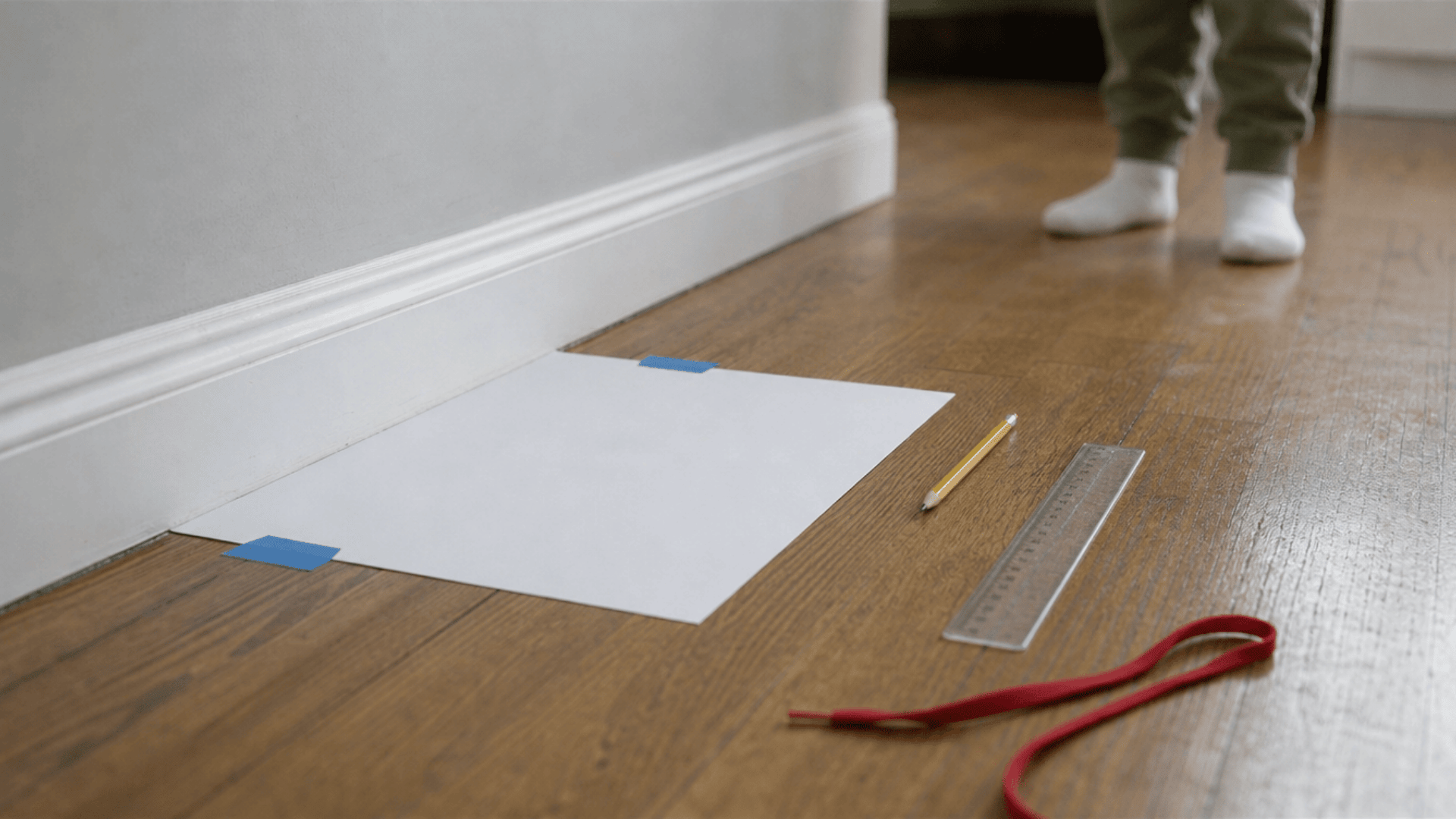
Place a sheet of paper on a hard, flat floor. Tape the paper down so it does not move.
Do not use carpet because it can press down under your toddler’s foot and make the measurement less accurate.
If you are using the New Balance printable kids sizing tool, print it on letter-size paper at 100% scale. Turn off any setting that says “fit to page.”
Step 2. Mark the Foot
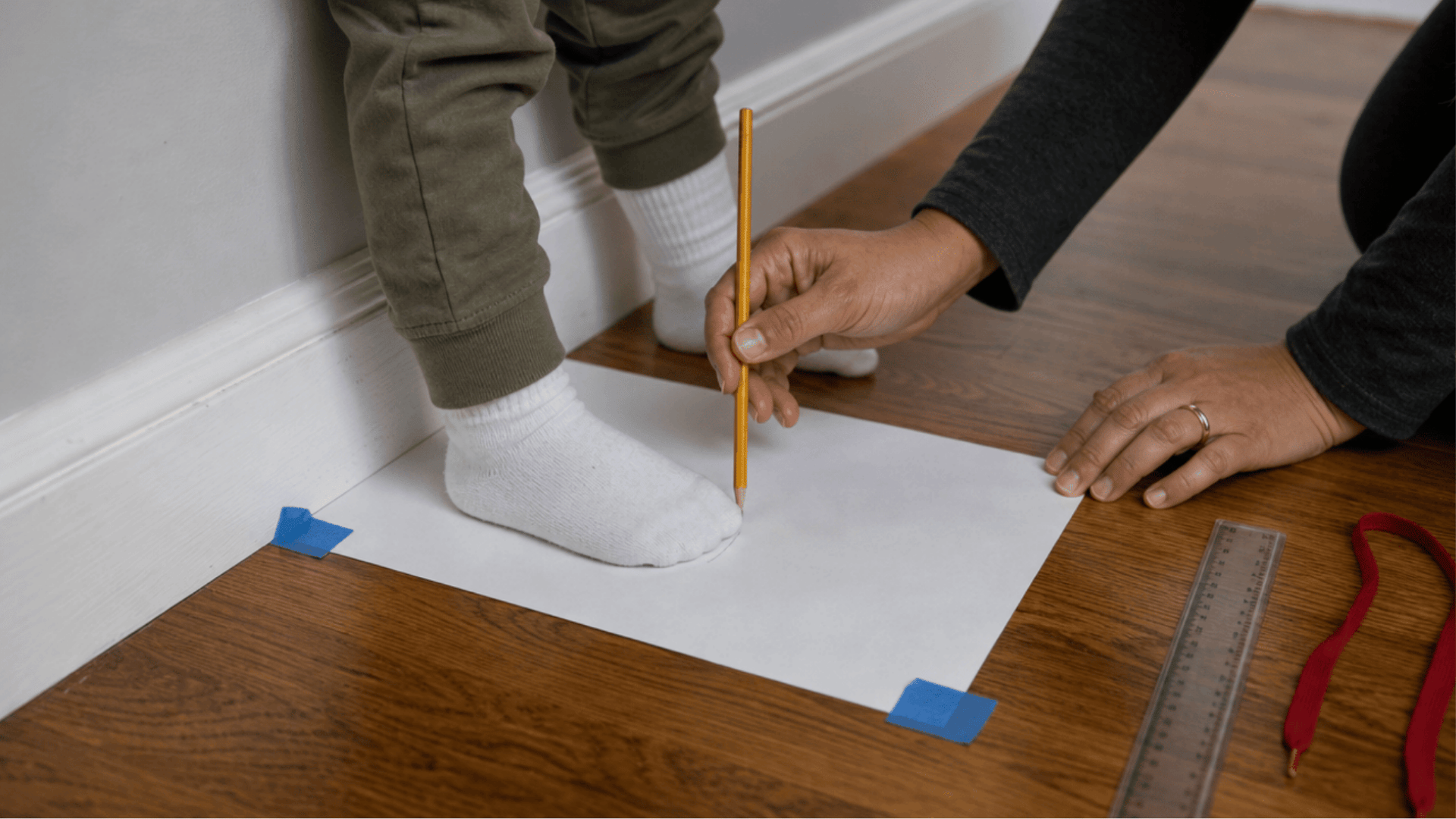
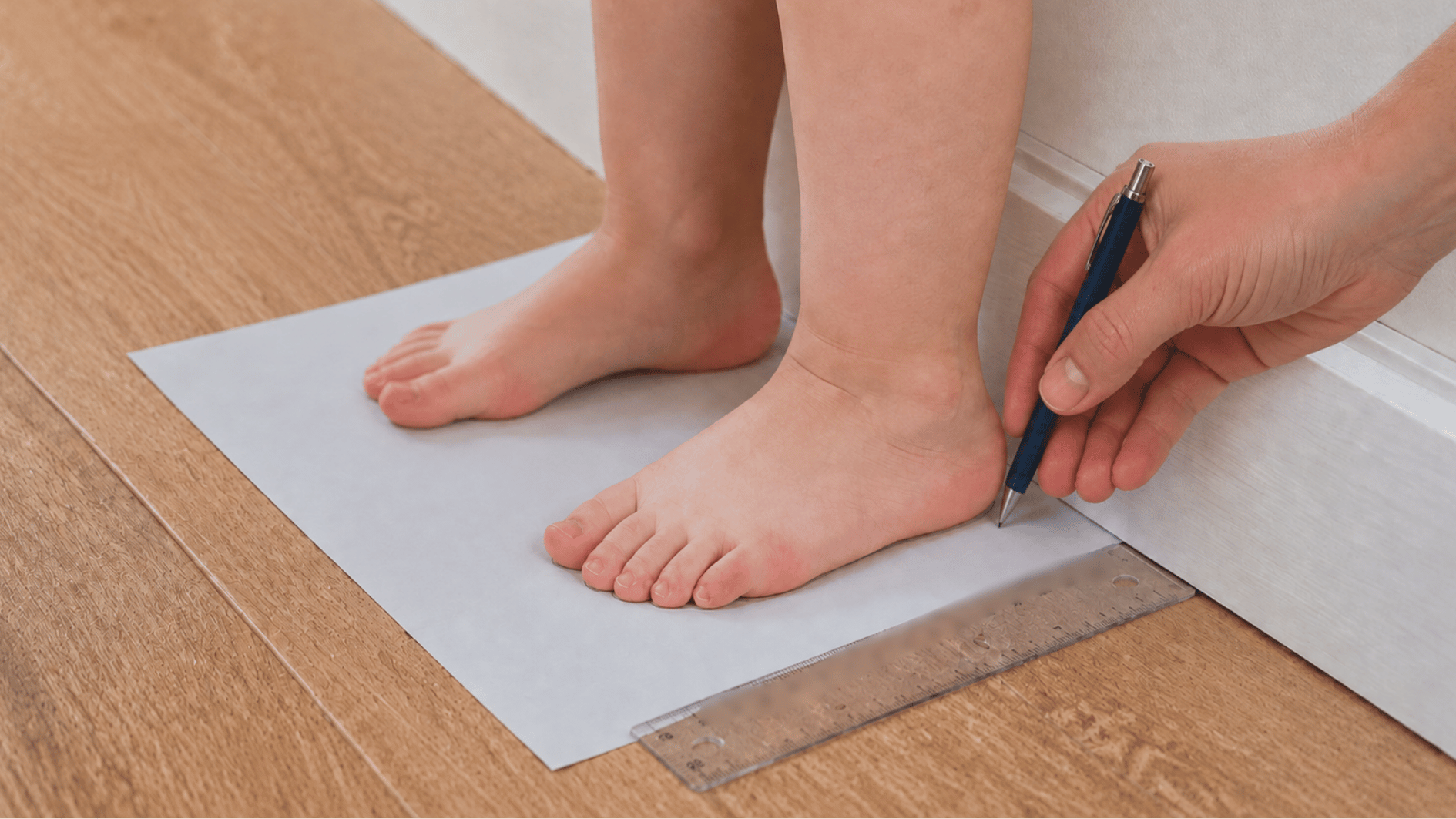
Have your toddler stand on the paper with the heel touching a wall. Make sure your toddler is standing normally with both feet on the floor. Their full body weight should be on their feet.
Hold the pencil straight up and make a small mark at the end of the longest toe. Check which toe is longest before you mark. For some children, the second toe is longer than the big toe.
Similarly, mark the other foot. Your toddler’s feet may be slightly different sizes.
If you are using a printed chart, place the heel on the heel line.
Step 3. Measure the Foot Length
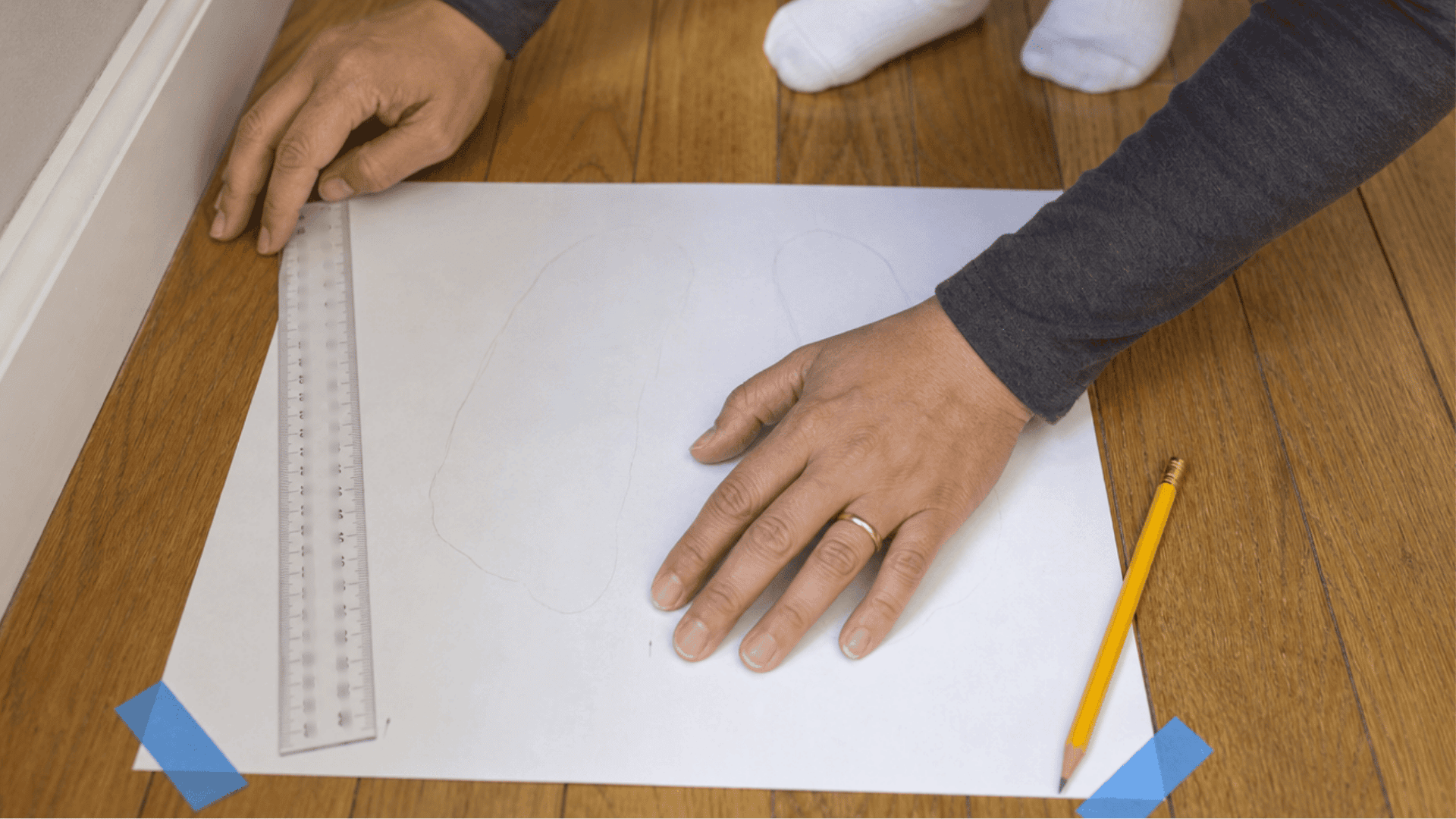
Use your ruler to measure from the back of the heel to the mark you made at the longest toe. Write the measurement down in centimeters. Measure both feet and keep the larger number.
If you are using a printed sizing chart, you may also see a shoe size next to the longest toe. Keep the centimeter measurement too, because shoe sizes differ between brands.
Step 4. Check the Foot Width
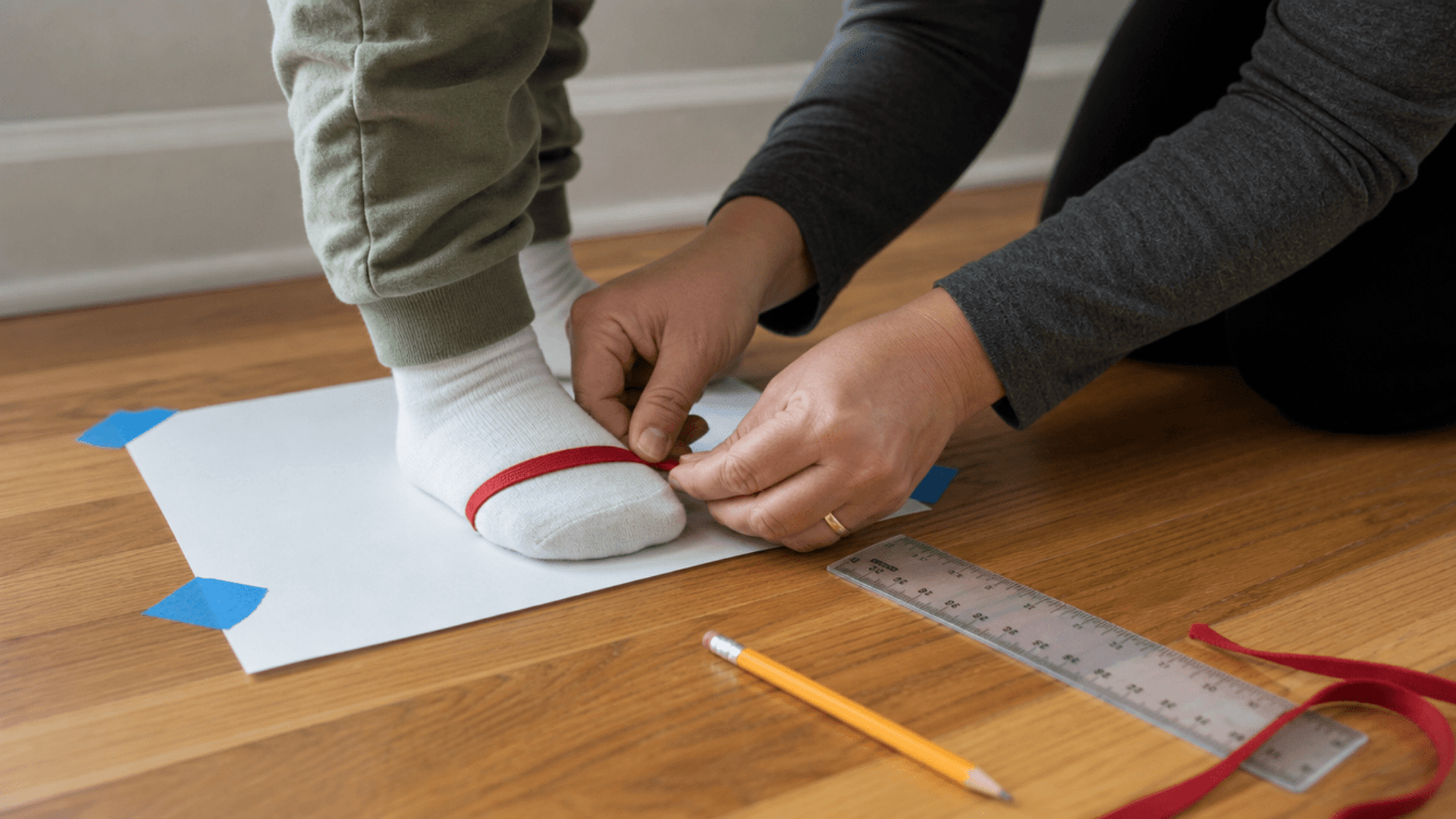
Take a shoelace and gently wrap it around the widest part of your toddler’s foot, near the ball of the foot.
The shoelace should feel snug but should not squeeze the foot. Mark the point where the shoelace meets the end. Then lay it flat and measure that length with your ruler.
|
Outcome Compare that number with the brand’s width chart. New Balance labels kids’ widths N for narrow, M for standard, W for wide, and XW for extra wide. If the sides feel tight, the foot is hard to get in, or the little toe presses the upper, try a W in the same length rather than sizing up. |
|---|
What Shoe Size Matches Your Toddler’s Foot Length?
The age column is only there as a rough reference. Toddlers grow at different rates, so the foot measurement is much more useful than age when choosing shoes.
|
Approx. age |
Foot length (cm) |
Inches |
US size |
EU |
UK |
|
12–18 months |
11.7–12.1 |
4.6–4.8 |
4.5C–5C |
20 |
3.5–4 |
|
18–24 months |
12.7 |
5.0 |
5.5C |
21 |
4.5 |
|
2 years |
13.0–14.0 |
5.1–5.5 |
6C–7C |
22–23 |
5–6 |
|
2–3 years |
14.3–14.6 |
5.6–5.8 |
7.5C–8C |
23–24 |
6.5–7 |
|
3 years |
15.2–15.9 |
6.0–6.3 |
8.5C–9.5C |
25–26 |
7.5–8.5 |
|
4 years |
16.5–16.8 |
6.5–6.6 |
10C–10.5C |
27 |
9–9.5 |
Note: No kids chart is universal, and the gap is wider than most parents expect. New Balance lists a US 8 kids shoe at 14.5 cm, UK 7.5, EU 25. Wearview lists the same US 8C at 14.6 cm, UK 7, EU 24; a full EU size apart. Use the chart above to get close, then check the brand’s own centimetre column before you order.
When Should You Add Growing Room to Toddler Shoe Size?
Add growing room after you match your toddler’s foot length to the size chart. If you add extra length before checking the chart, you may size up twice and end up with shoes that are too loose.
For a better fit, check these points
-
Closed-toe shoes should have about 1/2 inch of space in front of the longest toe
-
Sandals and flats usually need about 1/4 inch of extra space
-
The widest part of the foot should sit at the widest part of the shoe
-
The shoe should bend near the toes, not under the middle of the foot
How to Check If Toddler Shoes Fit
The shoes fit when there is about a thumb’s width of space in front of the longest toe, the heel stays put when you tug it, nothing bulges at the sides, and the feet show no red marks after ten minutes of walking.
Fasten both shoes and have your toddler stand before you check.
Toe room
Leave about a thumb’s width between the longest toe and the front of the shoe. Toes should move freely.
Heel fit
Slide your little finger behind the heel. The shoe should feel snug without squeezing.
Width
Check the sides of the foot for bulging or tight spots. The shoe should not press around the widest part of the foot.
Red marks
Let your toddler walk or run around for a few minutes. Then remove the shoes and look for red marks on the heel, toes, or top of the foot.
This kind of test-walk matters more once your toddler is steadily on their feet, since the age when babies start walking is exactly when shoe fit starts affecting how confidently they move.
Quick note: If the shoe feels tight across the sides, try a wider width instead of going up in length.
Wrapping It Up
Foot length in centimeters beats a box size and beats age every time. Add growing room after the chart, never before, or you will size up twice.
And a shoe that fits in length can still be the wrong shoe if it is tight across the sides.
To measure toddler shoe size, measure both feet and note the measurements. You can also set a reminder for two months for future reference.
Frequently Asked Questions
What if Your Toddler is Between Two Shoe Sizes?
Choose the larger size, especially if one foot is slightly bigger than the other. But check the heel. If the bigger shoe slips at the back while walking, the smaller size may fit better.
Are Toddler Shoe Sizes the Same for Boys and Girls?
Yes. Toddler shoe sizes are generally the same for boys and girls. The best fit depends on your child’s foot length and width, not gender.
Can I Measure My Toddler’s Feet With a Shoe Insole Instead?
Yes, but use it only as a quick fit check. Place your toddler’s foot on the insole and make sure there is a little extra room in front of the longest toe. For a more accurate size, measure the foot directly with paper and a ruler.