

You open one cabinet looking for something, and three others spill their contents before you find it. One cabinet door opens, and suddenly a tower of pans, lids, and spice jars starts shifting toward you.
That small moment says a lot about how easily kitchen storage can become frustrating when every item lacks a clear place. Cabinets often fill gradually as cooking habits change, new tools arrive, and older items stay tucked in the back.
I have found that the problem is usually not limited space but a setup that no longer matches daily routines.
This blog covers cabinet zones, DIY storage ideas, professional tips, tools, and lasting upkeep habits.
Why Do Kitchen Cabinets Get Disorganized?
Most kitchen storage is not planned in one sitting. It develops through small choices whenever a new pan, appliance, or container needs a place.
As cooking routines change, cabinets that once worked well can become frustrating. Lids separate from containers, deep shelves hide everyday tools, and useful space goes untouched because the setup no longer matches how you cook.
The best way to fix this is to organize each cabinet around what you use, where you use it, and how often you reach for it. This step-by-step process will help you create a practical system that fits your kitchen layout and makes daily tasks easier.
The same thinking can also carry over to nearby food storage, making it natural to learn how to organize a pantry while setting up a kitchen that works as one connected space.
How to Organize Kitchen Cabinets Step by Step
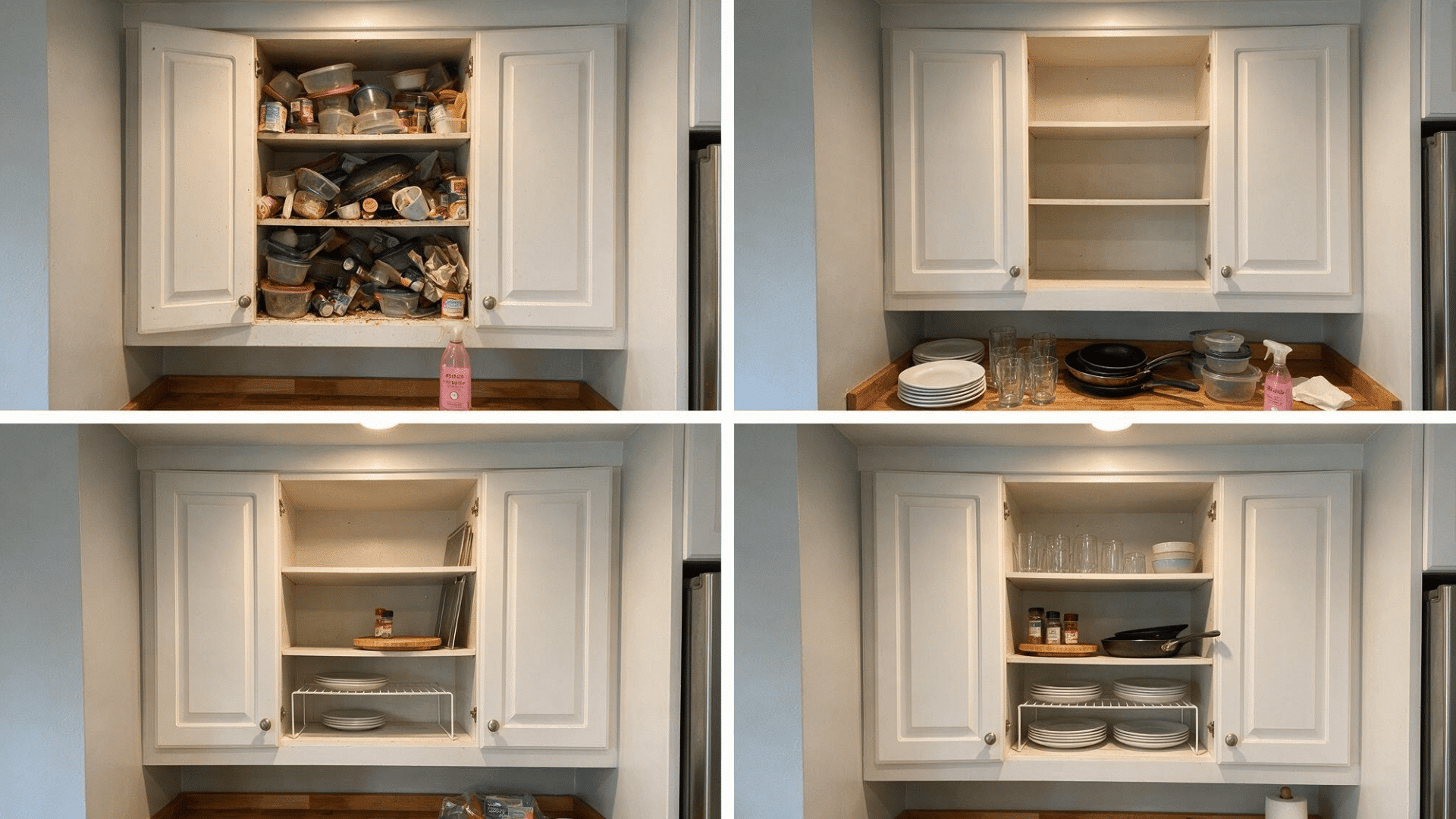
Organizing your cabinets starts with understanding what you use and how your kitchen works each day.
This step-by-step process helps you build a practical setup that fits your layout and makes cabinet space easier to manage.
Step 1: Empty, Declutter, and Clean Each Cabinet
Remove everything from one cabinet at a time so the task does not become overwhelming. Sort items into groups such as dishes, cookware, pantry goods, and food containers.
Check for expired food, damaged tools, duplicates, and anything you no longer use. Once the cabinet is empty, wipe the shelves, corners, doors, and handles. Measure the interior before purchasing any racks, dividers, or shelf inserts.
A clean, empty cabinet gives you a clear view of the available space and helps you decide what should go back inside.
Step 2: Sort Items by Use and Kitchen Zone
Place items according to your daily habits rather than their appearance. Keep everyday dishes, glasses, and cooking tools within easy reach, while seasonal items and rarely used appliances can go on higher shelves.
Store heavy cookware in lower cabinets and keep items used together in the same area. Baking supplies can stay near baking pans, while food containers should remain close to their lids.
Leave some open space in each cabinet so you can remove items without shifting everything around.
Step 3: Add Organizers That Solve Specific Problems
Look for cabinets with wasted vertical space, deep corners, or items that are difficult to reach. Add shelf risers for plates and bowls, vertical dividers for trays and cutting boards, or turntables for jars and bottles.
Hooks and hanging racks can hold mugs, lids, or lightweight tools, while pull-out bins can keep small packets and snacks together.
Only add an organizer when it solves a specific storage problem and fits the cabinet measurements.
Step 4: Build a System That Stays Organized
Give every item a fixed location and return it after each use. Keep similar products together so restocking and finding supplies remain simple.
Place new groceries behind older products so the older items are used first. Check expiration dates regularly and remove anything that is no longer needed.
Once the setup works for your household, avoid changing it unless your cooking habits or storage needs change.
Which Kitchen Cabinet Organizers Save the Most Space?
When learning how to organize a kitchen, cabinets play a big role, and the right tools help you make the most of the space you have.
If your current layout still leaves major storage gaps, broader kitchen storage ideas can help you rethink cabinets, drawers, and unused vertical space together.
1. Shelf Risers
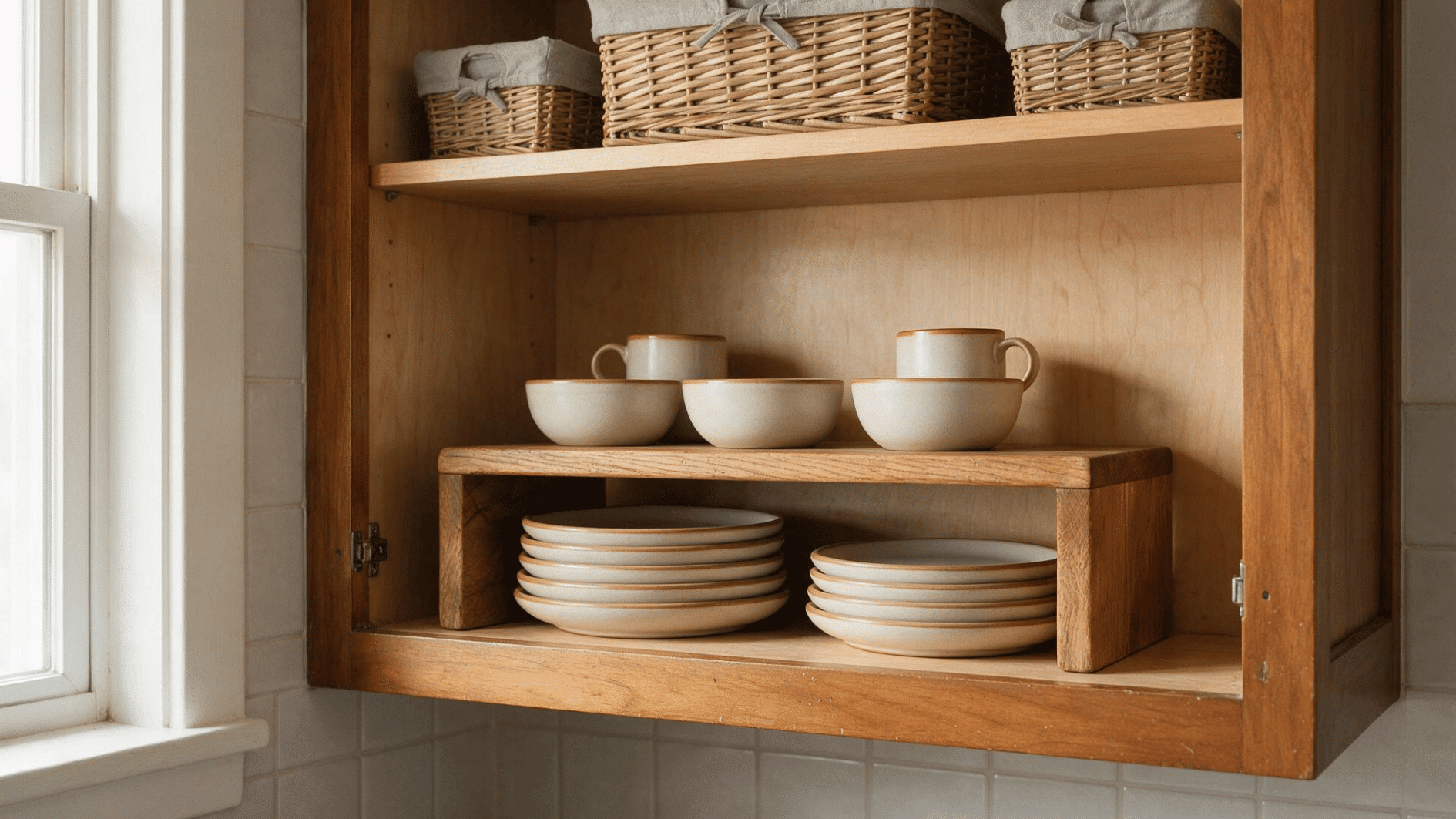
- Best for: Upper cabinets with unused vertical space
- DIY option: Easy with a sturdy board and wooden blocks
- Main benefit: Creates another level for plates, cups, or cans
Measure the cabinet height before adding a riser so plates and cups remain comfortable to lift. Leave enough clearance above each stack to prevent items from scraping the shelf.
2. Drawer Dividers
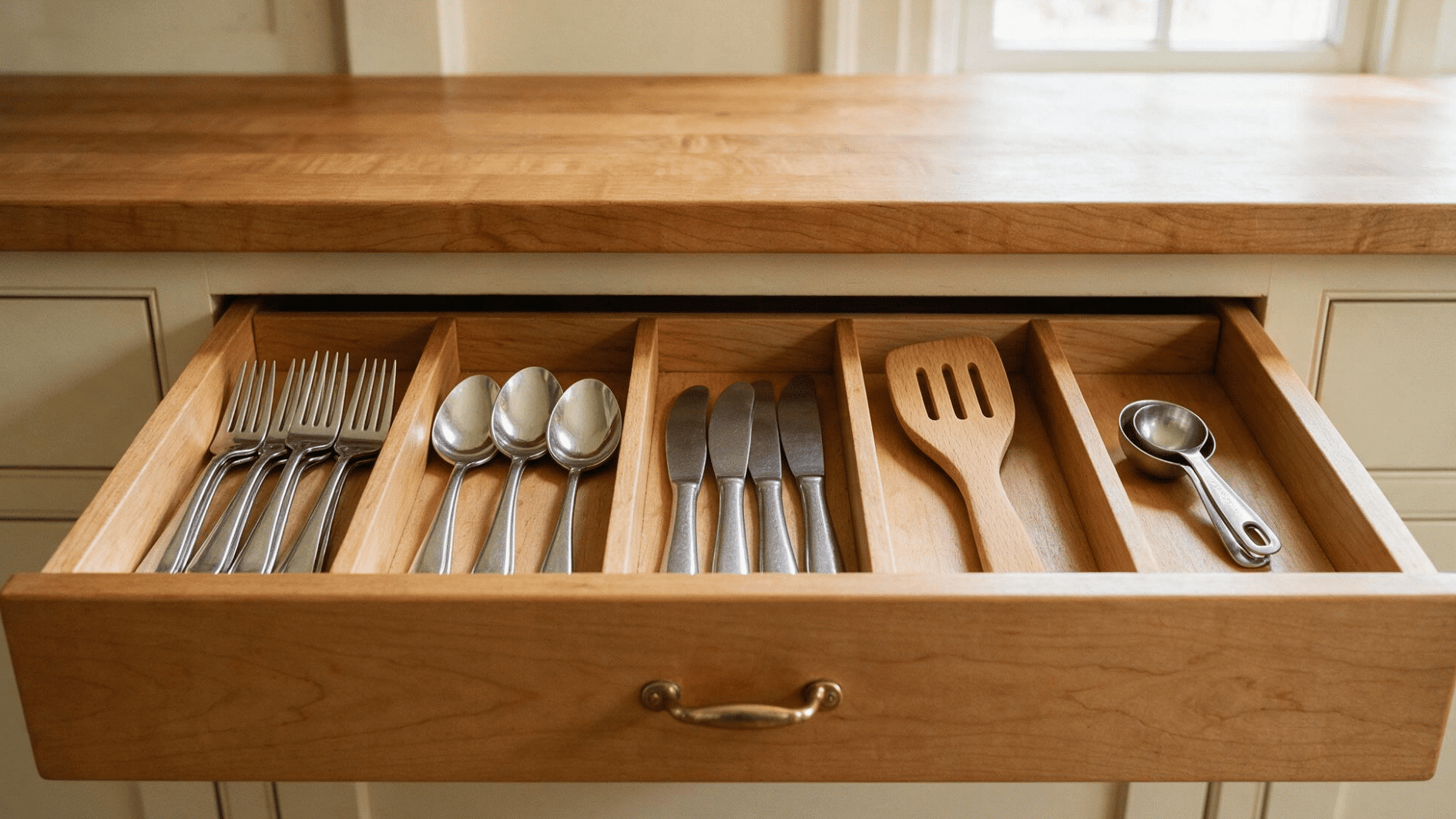
- Best for: Utensils, measuring tools, and small kitchen accessories
- DIY option: Easy with cardboard or thin wooden strips
- Main benefit: Keeps categories separated and prevents messy drawer piles
Adjust each section according to the size of your utensils instead of creating equal compartments. This keeps larger tools from overlapping and makes smaller pieces simpler to locate.
3. Cabinet Door Storage
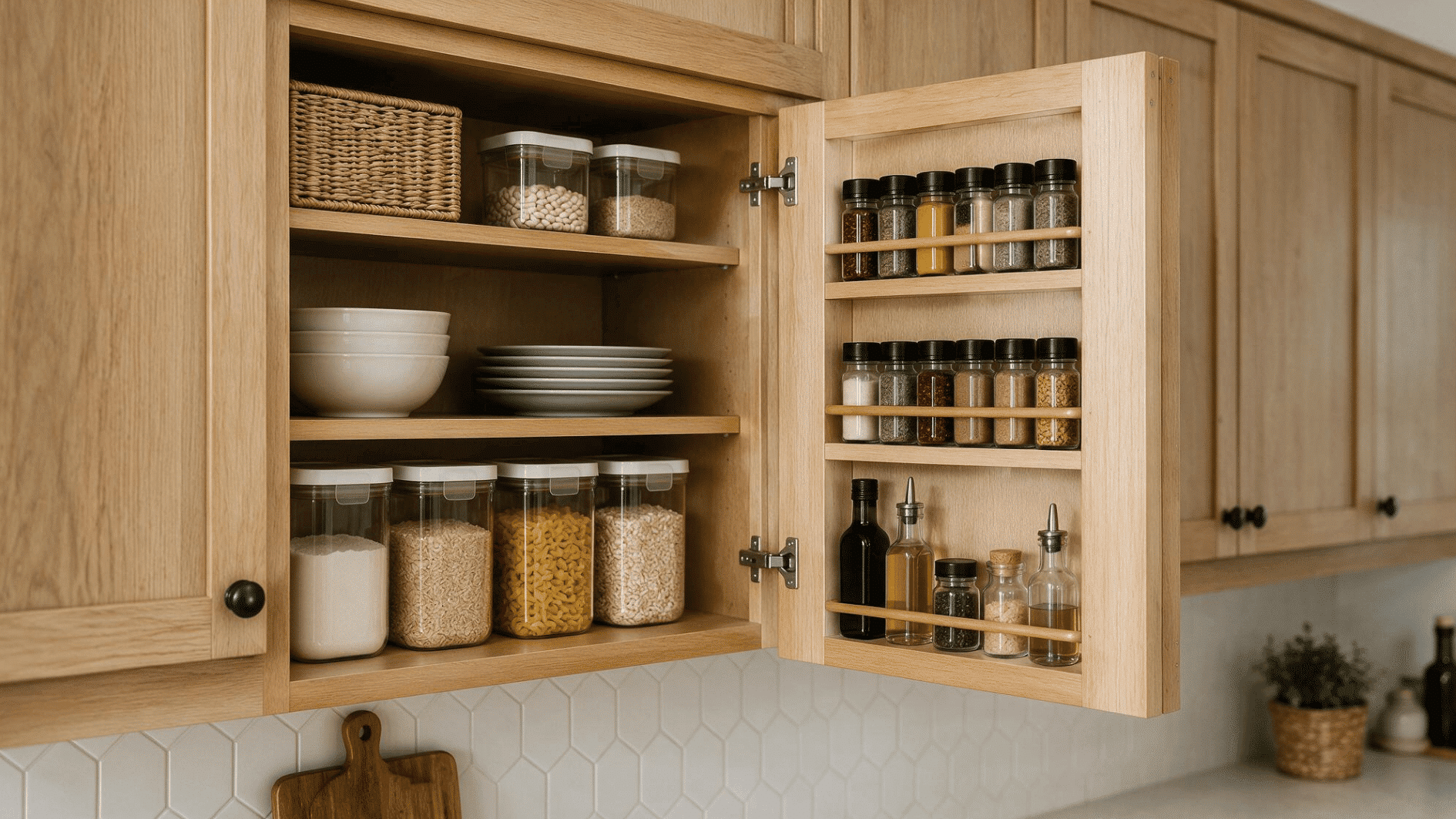
- Best for: Spices, lids, wraps, and small bottles
- DIY option: Available with hooks, tension rods, or narrow baskets
- Main benefit: Uses empty door space without crowding cabinet shelves
Check that stored items do not hit the shelves when the door closes. Use secure fittings and avoid placing heavy bottles on thin or loose cabinet doors.
4. Lazy Susans
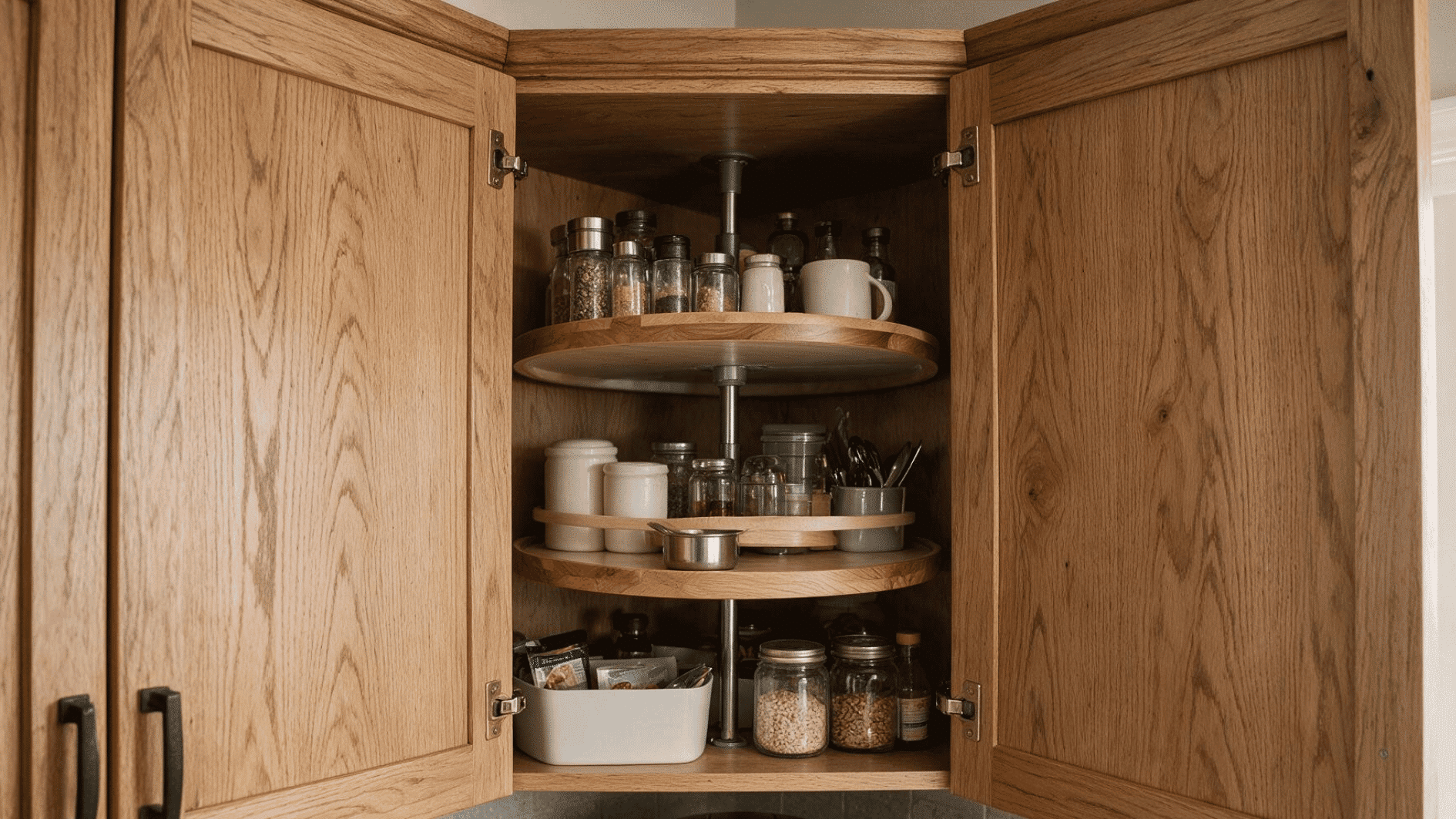
- Best for: Deep shelves, corner cabinets, and grouped condiments
- DIY option: Not recommended because homemade versions may wobble
- Main benefit: Brings items from the back within easy reach
Group similar bottles or jars together and avoid loading the turntable too tightly. A small gap between items helps it rotate smoothly without products tipping over.
5. Pull-Out Drawers
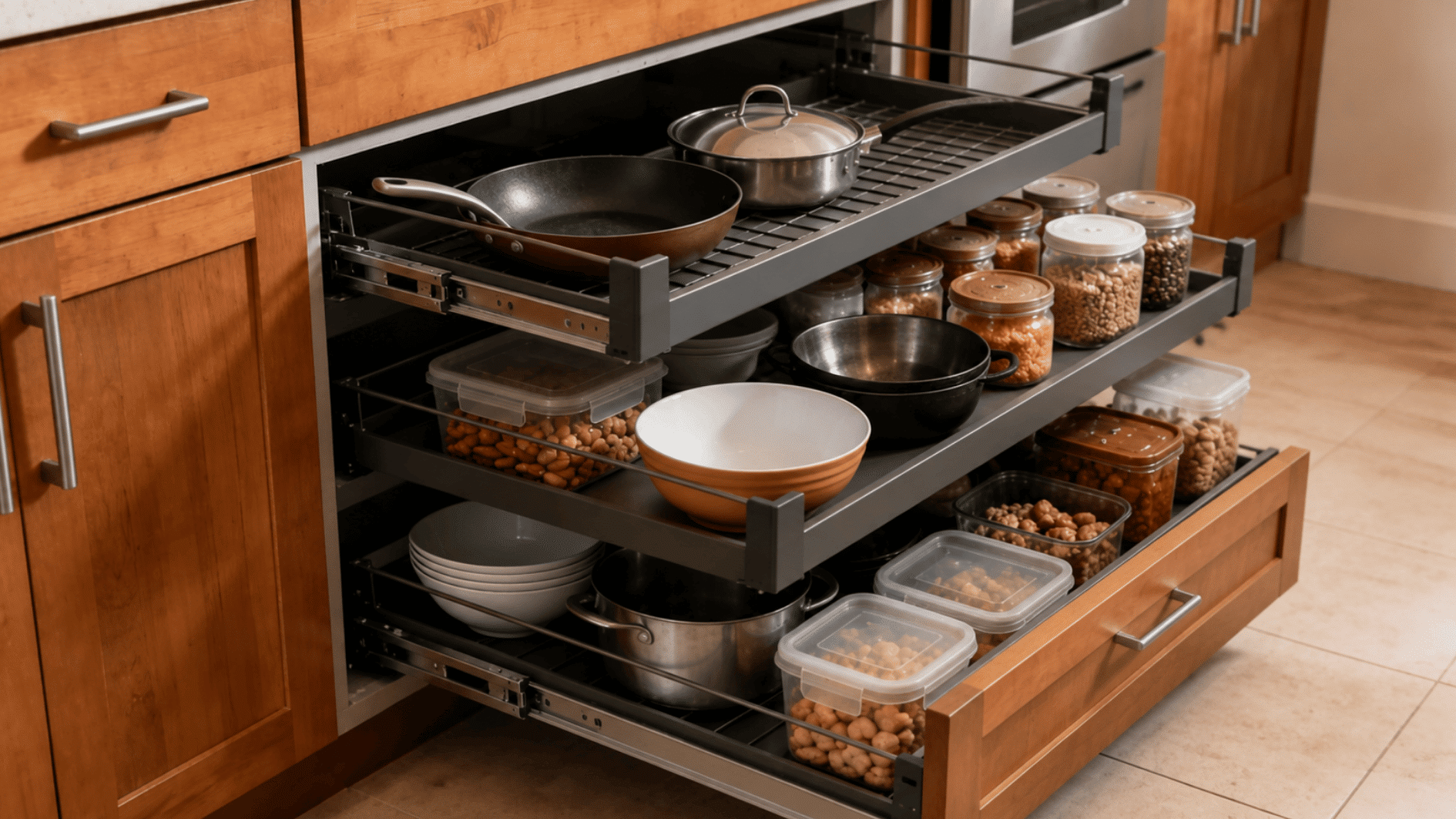
- Best for: Deep lower cabinets holding cookware or appliances
- DIY option: Not recommended without suitable hardware and measurements
- Main benefit: Makes heavy and hidden items easier to access
Measure the cabinet opening, hinges, and plumbing before installation. Choose hardware that can safely support the weight of cookware, appliances, or pantry supplies.
Pull-out drawers work especially well in a base cabinet setup, where deep storage can otherwise leave cookware difficult to reach.
6. Stackable Bins
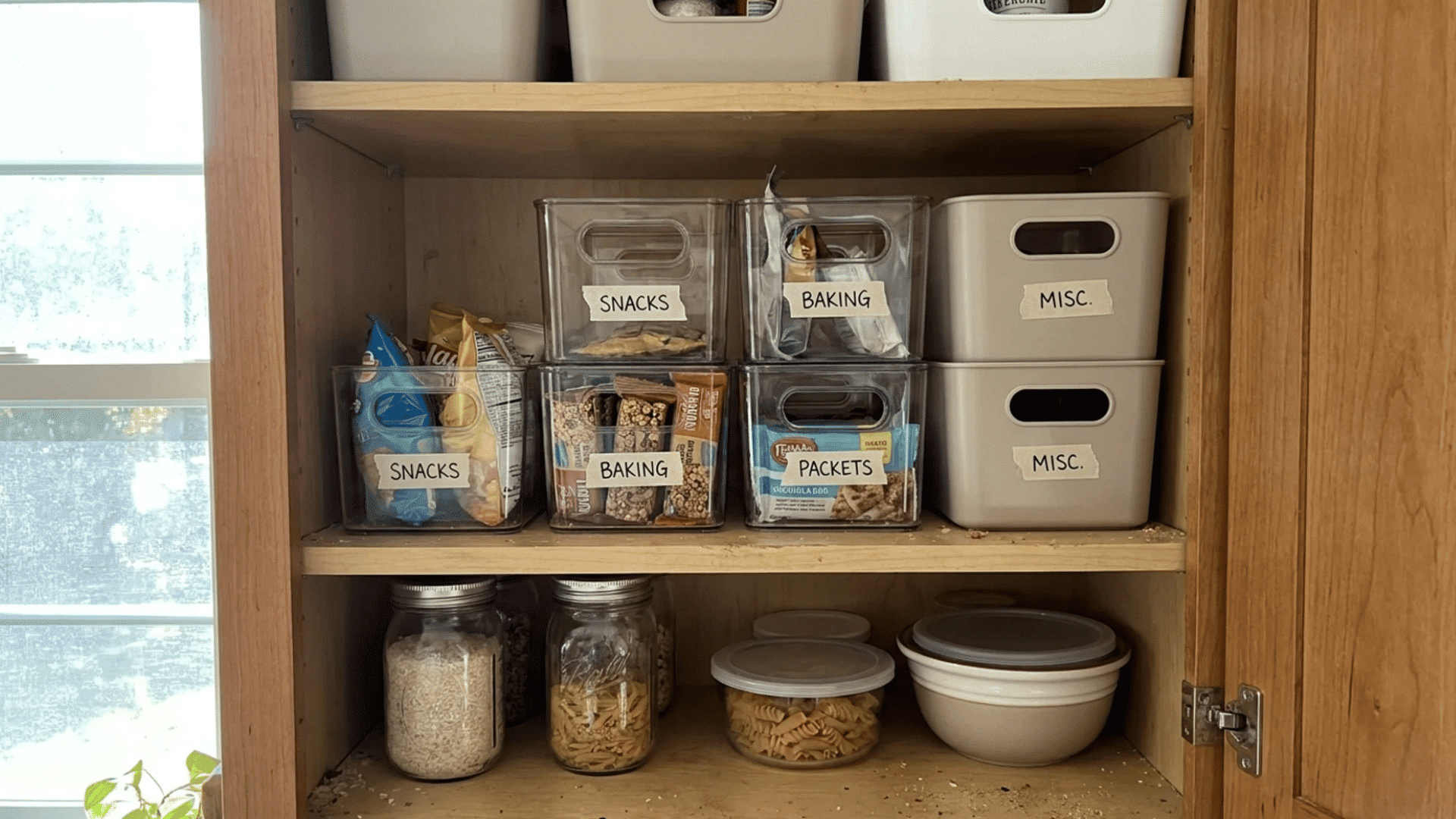
- Best for: Snacks, baking supplies, packets, and pantry items
- DIY option: Available with shoeboxes or reusable household containers
- Main benefit: Groups loose products while using vertical cabinet space
Assign one category to each bin and place frequently used products in the front. Avoid stacking too high, since lower containers may become difficult to reach.
7. Under-Shelf Baskets
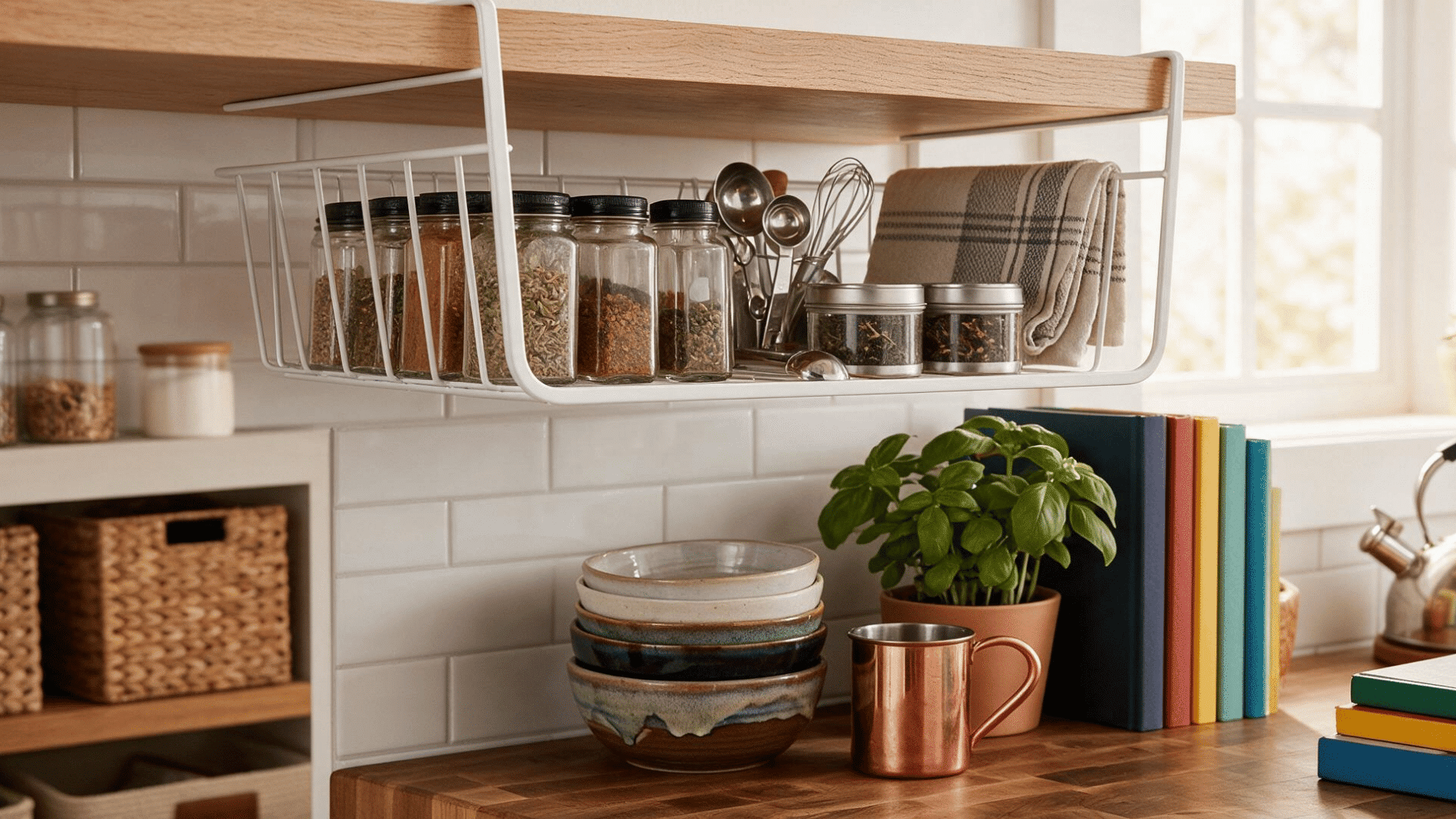
- Best for: Lightweight items beneath shelves with unused space
- DIY option: Available with wire baskets and secure S-hooks
- Main benefit: Adds storage without changing the existing shelf layout
Confirm that the basket does not reduce the usable space below it. Reserve it for flat or lightweight items that can be removed without disturbing nearby storage.
How Do Real People Organize Kitchen Cabinets?
Real kitchens rarely match a showroom setup, so a lot of the best advice comes from people who tested it in their own homes first.
A discussion on r/organizing highlighted real kitchen storage approaches, from assigning cabinet zones to arranging items based on how often they are used..
Users on r/Cooking shared unique kitchen organization tips that go beyond basic storage solutions. The discussion included ideas for managing recipes, labeling systems, making better use of cabinet space, and arranging everyday tools for easier access.
Users on r/konmari shared kitchen decluttering ideas for managing limited space without giving up items that bring value. The discussion focused on keeping meaningful items, reducing duplicates, and storing less-used kitchen supplies outside the main kitchen area.
What stands out across these threads, and to me too, is that the real solutions came from trial and error and not a single perfect system. Sometimes the best fix isn’t more storage; it’s rethinking what belongs in the kitchen at all.
Tips to Keep Kitchen Cabinets Organized Every Day
Daily use can leave kitchen cabinets cluttered, but a simple system makes them easier to manage. DIY storage ideas and organizing tips can create practical cabinet space that stays orderly and useful.
- Store Items Near Their Use: Keep cooking tools near the stove and everyday dishes near the sink or dishwasher, so the things you reach for most stay close by.
- Keep Everyday Items Within Reach: Place daily-use items, like your go-to mugs, plates, or spices, on shelves at eye or waist level for quick, effortless access.
- Use Clear Containers: Transparent bins make loose items like snacks, grains, or baking supplies easier to see and grab, cutting down on guesswork when you’re in a hurry.
- Group Similar Items Together: Keep spices, baking supplies, and cookware in their own sections instead of scattering them, so related items stay within the same small area.
- Think Vertically: Use risers, hooks, and stackable shelves to add more usable storage without extra cabinets, making the most of vertical room that often goes wasted.
- Avoid Overfilling Shelves: Leave a little breathing room on each shelf so items stay easy to remove and return, instead of packing things in so tightly.
- Review Your Setup Regularly: Adjust your storage every few months as your kitchen needs change, since new appliances or shifting habits can quickly make a system feel outdated.
Organizing kitchen cabinets becomes easier when your storage matches your daily routine. Small changes, smart solutions, and simple habits can create a cleaner space that stays functional without constant effort.
Conclusion
An organized kitchen should feel easy to use long after the shelves have been cleaned and rearranged. The most effective setup reflects where you cook, what you reach for, and how much effort you can realistically maintain.
I recommend starting with one cabinet because a small finished area often makes the next step feel more manageable. Keep the changes practical, leave room for new items, and adjust the system when routines shift.
Learning how to organize kitchen cabinets is less about creating a perfect display and more about building storage that supports everyday cooking without adding extra work.
Frequently Asked Questions
What’s the Best Order to Organize Cabinets: Upper or Lower First?
Start with lower cabinets since they usually hold heavier, more frequently used items that shape the rest of your layout.
What Should I Do With Mismatched Food Storage Containers?
Keep only the pieces with matching lids and recycle or donate the rest to free up space.
How Do I Organize the Cabinet Under the Kitchen Sink?
Store cleaning supplies in bins, use door hooks, protect pipes, and keep hazardous products away from children and pets.
What Should Be Stored in Corner Kitchen Cabinets?
Use corner cabinets for bulky cookware, small appliances, or rotating turntables that keep deep items visible and reachable.
{
“@context”: “https://schema.org”,
“@type”: “FAQPage”,
“mainEntity”: [
{
“@type”: “Question”,
“name”: “What’s the Best Order to Organize Cabinets: Upper or Lower First?”,
“acceptedAnswer”: {
“@type”: “Answer”,
“text”: “Start with lower cabinets since they usually hold heavier, more frequently used items that shape the rest of your layout.”
}
},
{
“@type”: “Question”,
“name”: “What Should I Do With Mismatched Food Storage Containers?”,
“acceptedAnswer”: {
“@type”: “Answer”,
“text”: “Keep only the pieces with matching lids and recycle or donate the rest to free up space.”
}
},
{
“@type”: “Question”,
“name”: “How Do I Organize the Cabinet Under the Kitchen Sink?”,
“acceptedAnswer”: {
“@type”: “Answer”,
“text”: “Store cleaning supplies in bins, use door hooks, protect pipes, and keep hazardous products away from children and pets.”
}
},
{
“@type”: “Question”,
“name”: “What Should Be Stored in Corner Kitchen Cabinets?”,
“acceptedAnswer”: {
“@type”: “Answer”,
“text”: “Use corner cabinets for bulky cookware, small appliances, or rotating turntables that keep deep items visible and reachable.”
}
}
]
}