






If the thought of decluttering feels overwhelming, confusing, or just too time-consuming to even start, the 5 5 5 rule is about to change everything, and pairing it with a solid house cleaning schedule can make the entire process feel far more manageable.
This simple but incredibly effective method takes all the guesswork out of deciding what to keep and what to let go, breaking the entire process down into something so easy and manageable that anyone can do it.
No more staring at a pile of stuff and not knowing where to begin. No more holding onto things out of guilt or uncertainty. Just a clear, straightforward approach that makes decluttering feel less like a chore and more like a fresh, liberating new start.
What is the 5-5-5 Rule for Decluttering?
The 5-5-5 rule for decluttering is a simple and practical method designed to make organizing your space feel less overwhelming.
It typically involves removing or sorting 5 items, spending just 5 minutes on the task, and focusing on 5 small areas or categories at a time, similar in spirit to the 20 10 rule for cleaning, which also emphasizes short, focused bursts of effort.
Benefits of Using the 5-5-5 Rule
The 5-5-5 rule isn’t just about tidying up; it’s a smart and manageable approach that makes decluttering easier, faster, and more effective in everyday life.
- Reduces Overwhelm: Breaks decluttering into small, manageable tasks so it feels less stressful
- Builds Consistent Habits: Encourages daily action through quick routines that are easy to maintain over time
- Saves Time Efficiently: Uses short bursts of effort, making it ideal for busy schedules
- Improves Mental Clarity: A tidy space helps reduce stress and enhances focus and productivity
- Beginner-Friendly Method: Simple structure makes it accessible even for those new to decluttering
- Uses Psychology of Small Wins: Quick results boost motivation and create a sense of accomplishment
- Reduces Decision Fatigue: Limits choices, making it easier to take action while building momentum
How the 5-5-5 Decluttering Rule Works
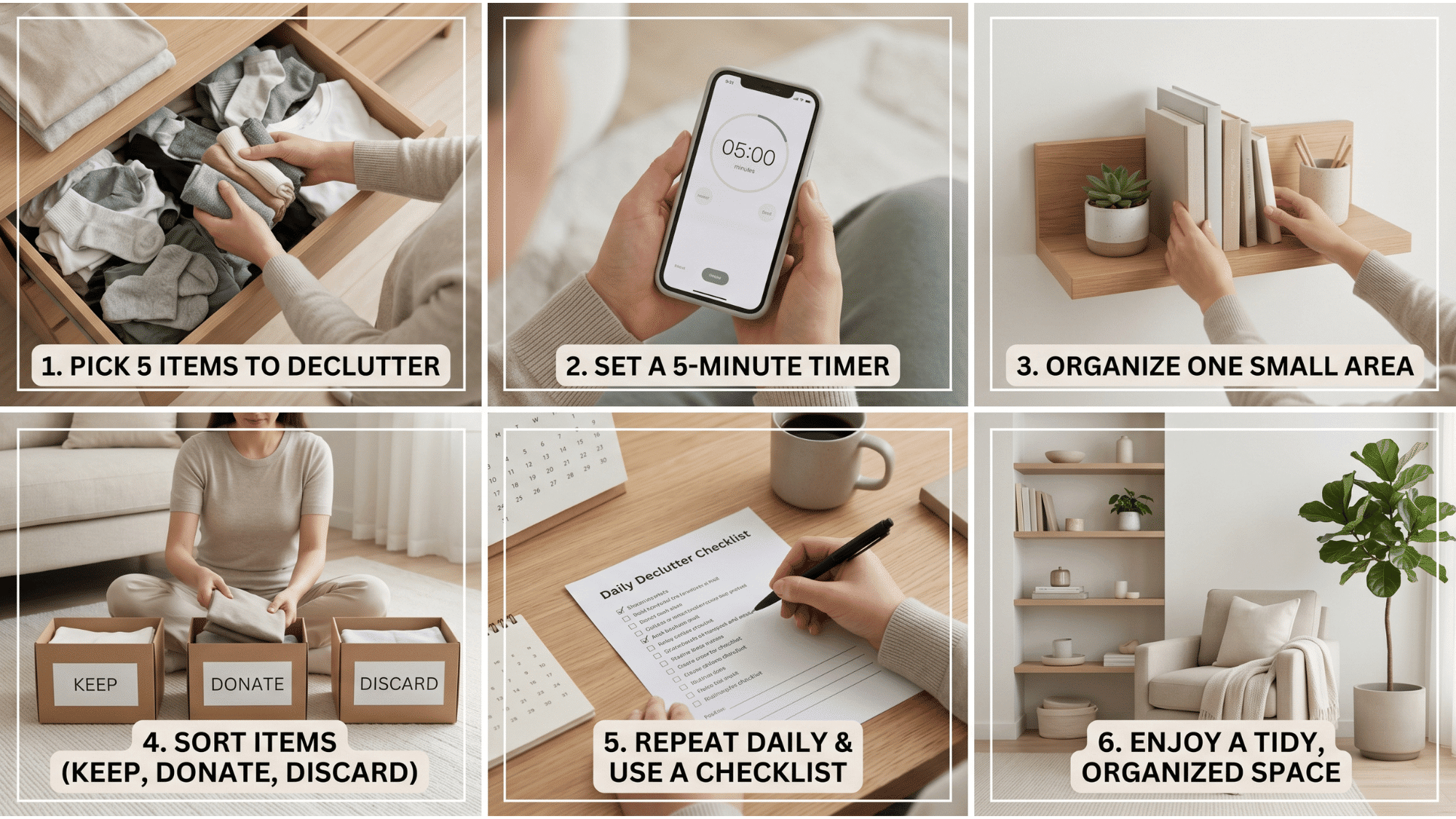
The 5-5-5 decluttering rule works by breaking the process into simple, repeatable steps that make organizing your space quick and manageable.
Step 1: Pick 5 Items
Start by identifying five items you no longer need or use in your space. These can range from clothes to papers to unused gadgets. The goal is to make quick decisions without overthinking.
This small number keeps the task simple and stress-free. It also helps you ease into decluttering without pressure. Over time, letting go of items becomes easier and more natural.
Step 2: Set a 5-Minute Timer
Limit your decluttering session to just five minutes to avoid feeling overwhelmed. A short time frame makes it easier to get started without procrastination.
It also adds a sense of urgency and focus. Even a few minutes daily can lead to noticeable progress.
Step 3: Focus on One Small Area
Choose a specific, small space, such as a drawer, shelf, or desk corner. Avoid trying to clean an entire room at once, as it can feel exhausting. Focusing on one area helps you stay organized and efficient.
It also gives a quick sense of accomplishment. Small wins build motivation to continue. Gradually, these areas add up to a fully organized space.
Step 4: Sort Items Quickly
Decide whether each item should be kept, donated, or discarded. Avoid spending too much time thinking about each object. Quick decisions help maintain momentum and prevent burnout.
This step is key to making consistent progress. Trust your instincts to simplify the process. The faster you decide, the easier decluttering becomes over time.
Step 5: Repeat the Process Daily
Make the 5-5-5 rule a part of your daily routine for best results. Regular practice helps build a decluttering habit over time. Small, consistent efforts are more effective than occasional deep cleaning.
This keeps your space manageable long-term. Daily repetition reduces the chances of clutter piling up again. It also turns decluttering into a natural part of your lifestyle.
Step 6: Track Your Progress
Pay attention to how your space improves with each session. Seeing visible results can boost motivation and satisfaction. You can even keep a simple checklist or journal.
Tracking progress helps you stay committed and consistent. It also gives you a sense of achievement as you move forward. Over time, this reinforces positive habits and keeps you motivated.
How Often Should You Use the 5-5-5 Rule?
The frequency of using the 5-5-5 rule depends on your lifestyle, but the key is to stay consistent and choose a routine that feels easy to maintain.
| Frequency | When to Use It | Best For |
|---|---|---|
| Daily | For small, quick decluttering sessions | Building strong habits and daily consistency |
| 3–4 Times a Week | If you have a moderately busy schedule | Maintaining balance without burnout |
| Weekly | For light maintenance and touch-ups | Keeping clutter from building up |
| Twice a Week | Ideal for beginners easing into a routine | Starting slow and staying consistent |
| As Needed | During busy or stressful periods | Managing clutter with minimal effort |
| Monthly Boost | Combine with a longer decluttering session | Faster overall organization progress |
Wrapping Up
The 5 5 5 rule proves that decluttering does not have to be a stressful, all-day event.
With just a little structure and a simple approach, letting go of the things that no longer serve a purpose becomes surprisingly easy and even a little freeing.
A clutter-free space is not just easier on the eyes; it is easier on the mind, too. So start small, stay consistent, and trust the process.
Because once the clutter is gone, what is left is a home that feels lighter, cleaner, and a whole lot more like the peaceful space it was always meant to be.