


Step outside, take a slow breath, and let your next nature walk feel a little more playful. A nature walk scavenger hunt turns an ordinary outing into something kids actually look forward to, and it doesn’t take much to get started.
With a simple list or a spring scavenger hunt printable, even a short walk can keep everyone curious and engaged. You’ll spot small details you usually miss, and kids stay focused without feeling pushed.
In this blog, you’ll find easy ideas to make your next walk more interactive, relaxed, and genuinely fun.
Why Nature Walk Scavenger Hunts are Great for Kids
A walk scavenger hunt is a simple way to help kids slow down and really notice what’s around them. Instead of rushing through a walk, they start paying attention to small details like leaf shapes, bird sounds, or patterns on the ground, which naturally builds observation skills.
It also gives them a good reason to step away from screens and spend time outside without it feeling forced. A spring scavenger hunt, in particular, adds excitement with flowers, insects, and new growth to spot.
The best part is how flexible it is; you can use it during a family outing, in a classroom setting, or even let kids search on their own, and it works just as well in a park, backyard, or along a simple trail.
Classic & Beginner-Friendly Scavenger Hunt Ideas
If you’re just getting started, keep things simple. These ideas don’t require much setup and work well for younger kids who are still learning to observe and stay engaged during a walk hunt.
1. Basic Nature Item Hunt
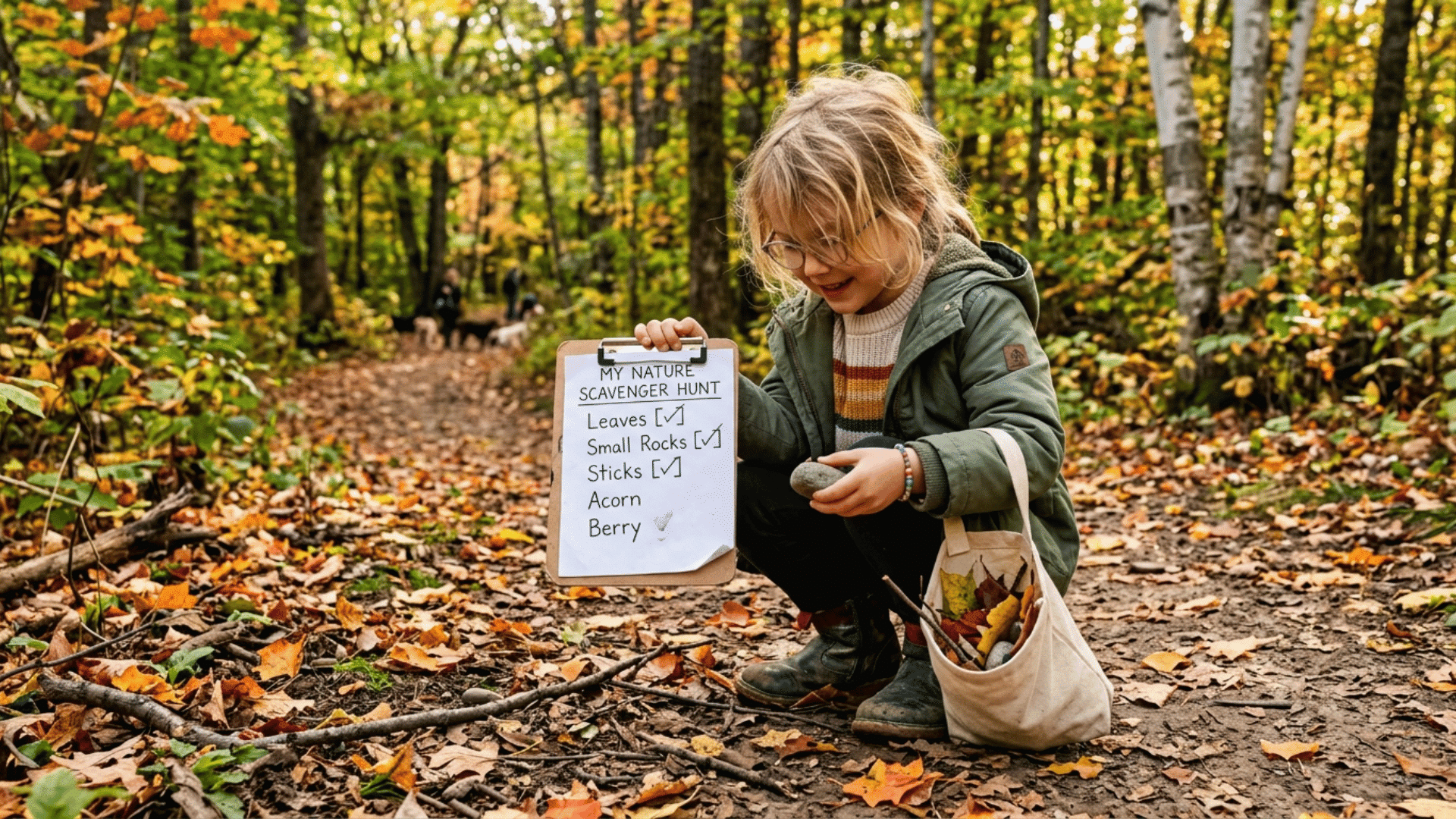
This is the easiest way to introduce kids to a walk-and-hunt without making it feel overwhelming. It focuses on simple, familiar items so children can quickly understand the activity. It’s perfect for first-timers who need a smooth and fun start.
- Leaves, rocks, sticks, flowers
- Keep the list short and simple
- Let kids collect or just point things out
- Works well in parks or backyards
2. Color-Themed Scavenger Hunt
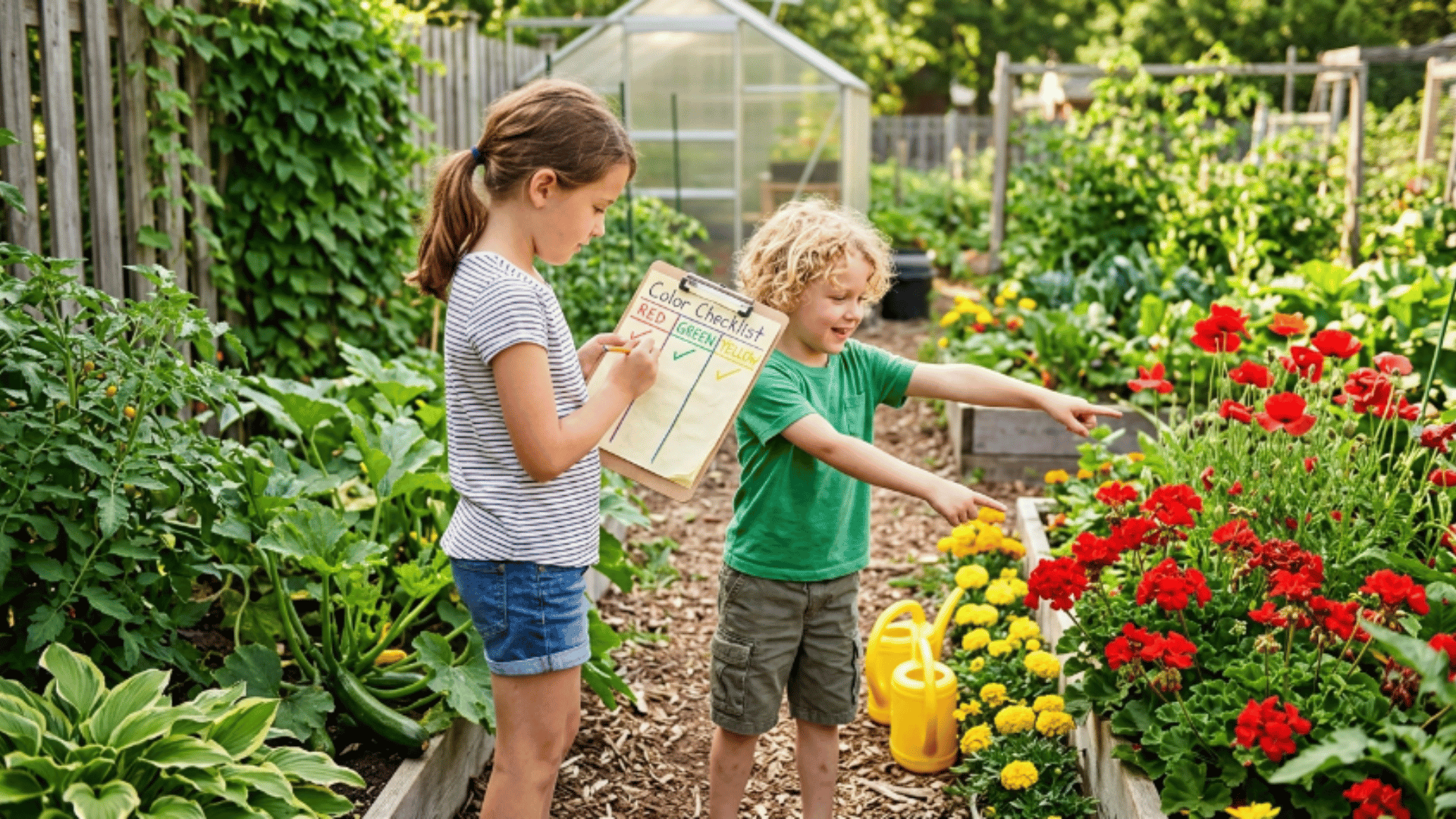
Instead of focusing on objects, this activity encourages kids to notice colors in their surroundings. It naturally sharpens observation skills while keeping the task simple and engaging. This works especially well for younger kids who enjoy visual matching.
- Find red, green, yellow, and brown items
- Use a simple printable grid
- Great for younger kids
- Encourages careful looking
3. Shape Hunt in Nature
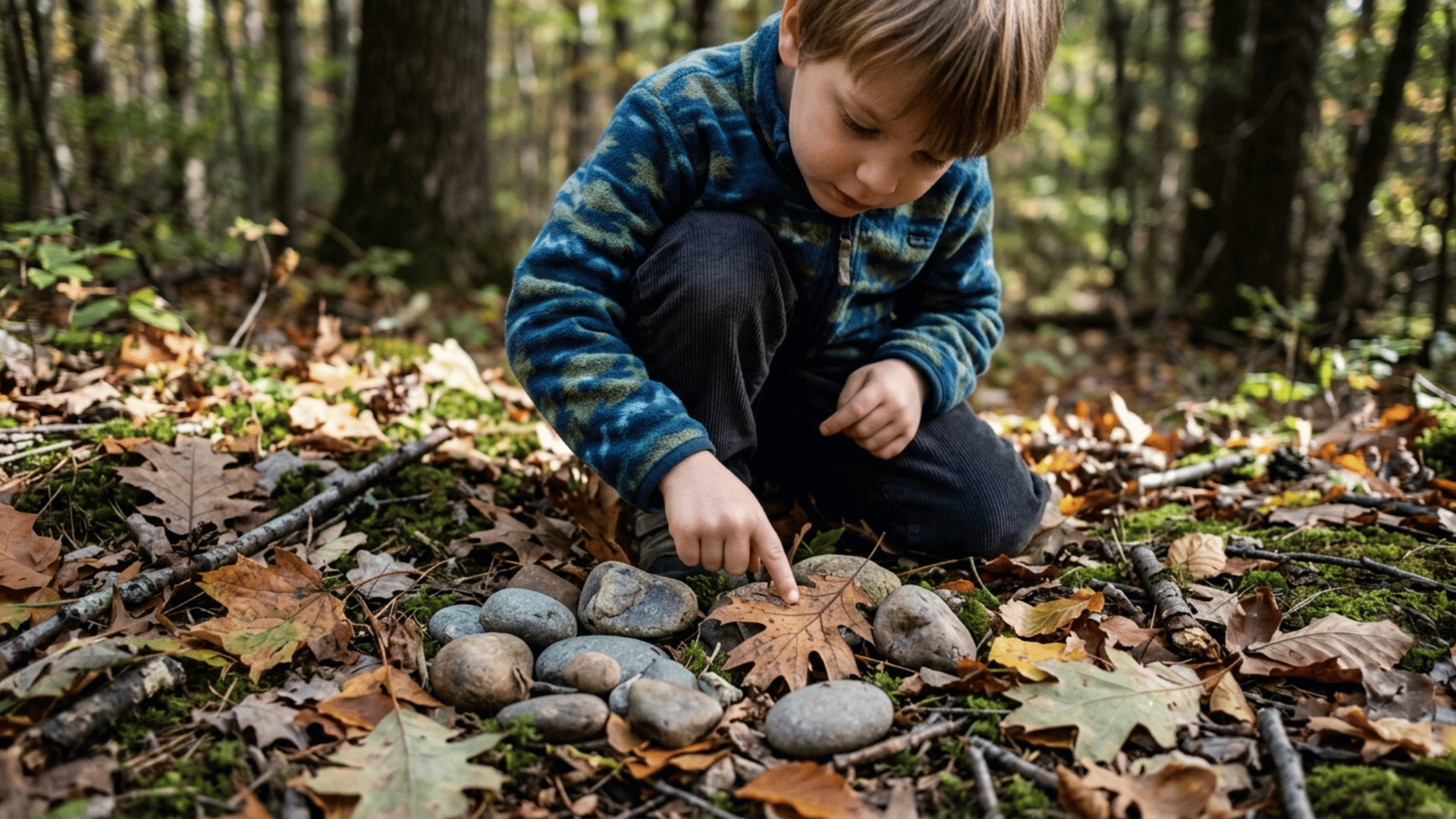
This version shifts focus from identifying objects to recognizing shapes and patterns. It helps kids think differently about what they see during a walk. Over time, it improves visual awareness and creativity.
- Circles, triangles, natural patterns
- Look at leaves, stones, bark
- Ask kids to describe shapes
- Can turn into a drawing activity later
Spring-Themed Scavenger Hunt Ideas
A spring scavenger hunt feels fresh because there’s more to notice outside. These ideas work best when plants, insects, and birds are more active, so kids stay naturally curious without much prompting.
4. Spring Bloom Hunt
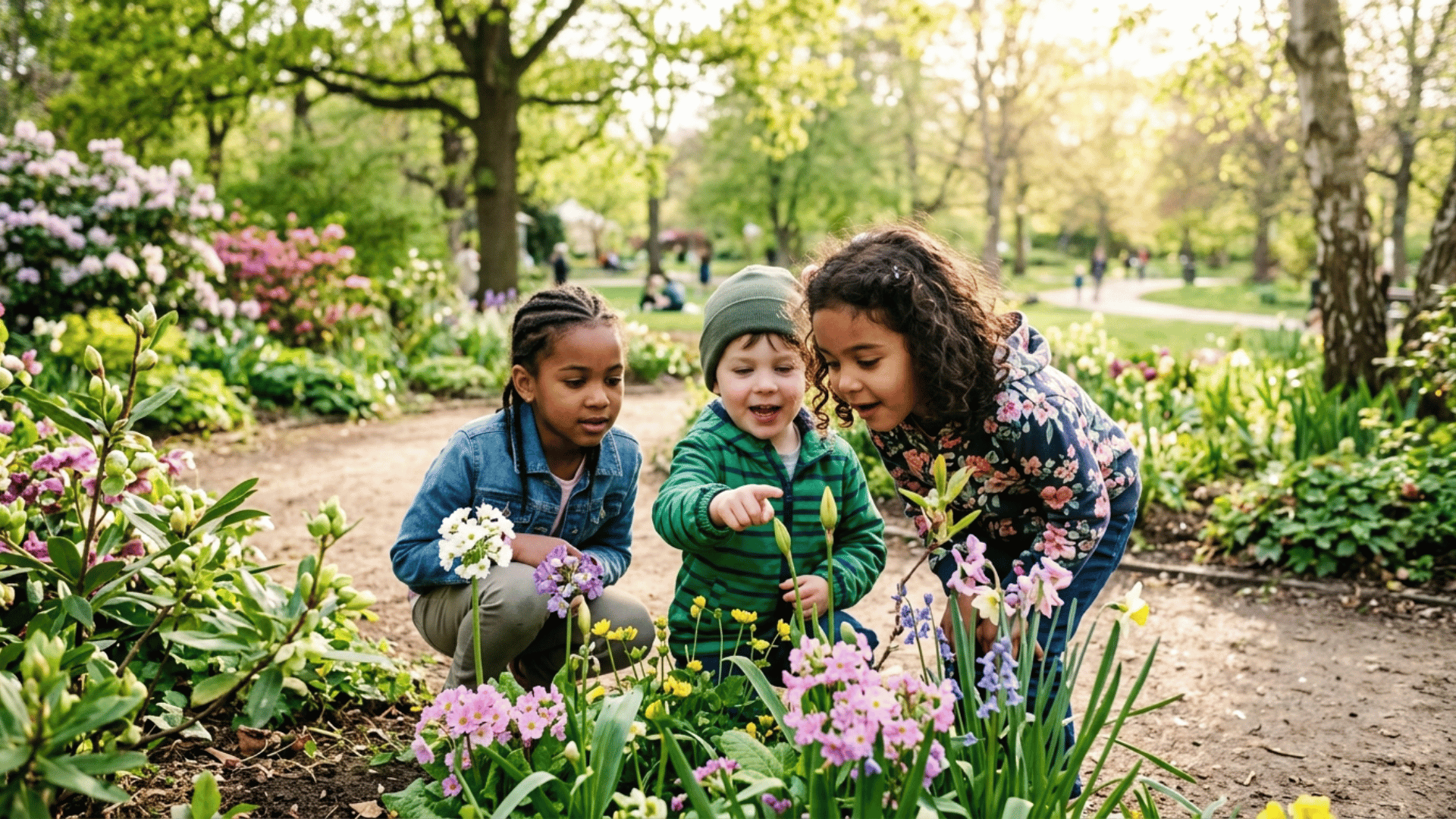
This activity helps kids notice how nature changes during spring. It encourages them to observe small details, such as buds, flowers, and new leaves. This makes the walk feel more meaningful and connected to seasons.
- Look for flowers, buds, and new leaves
- Compare colors and shapes
- Talk about what’s new
- Works well in gardens or parks
5. Bug & Insect Hunt
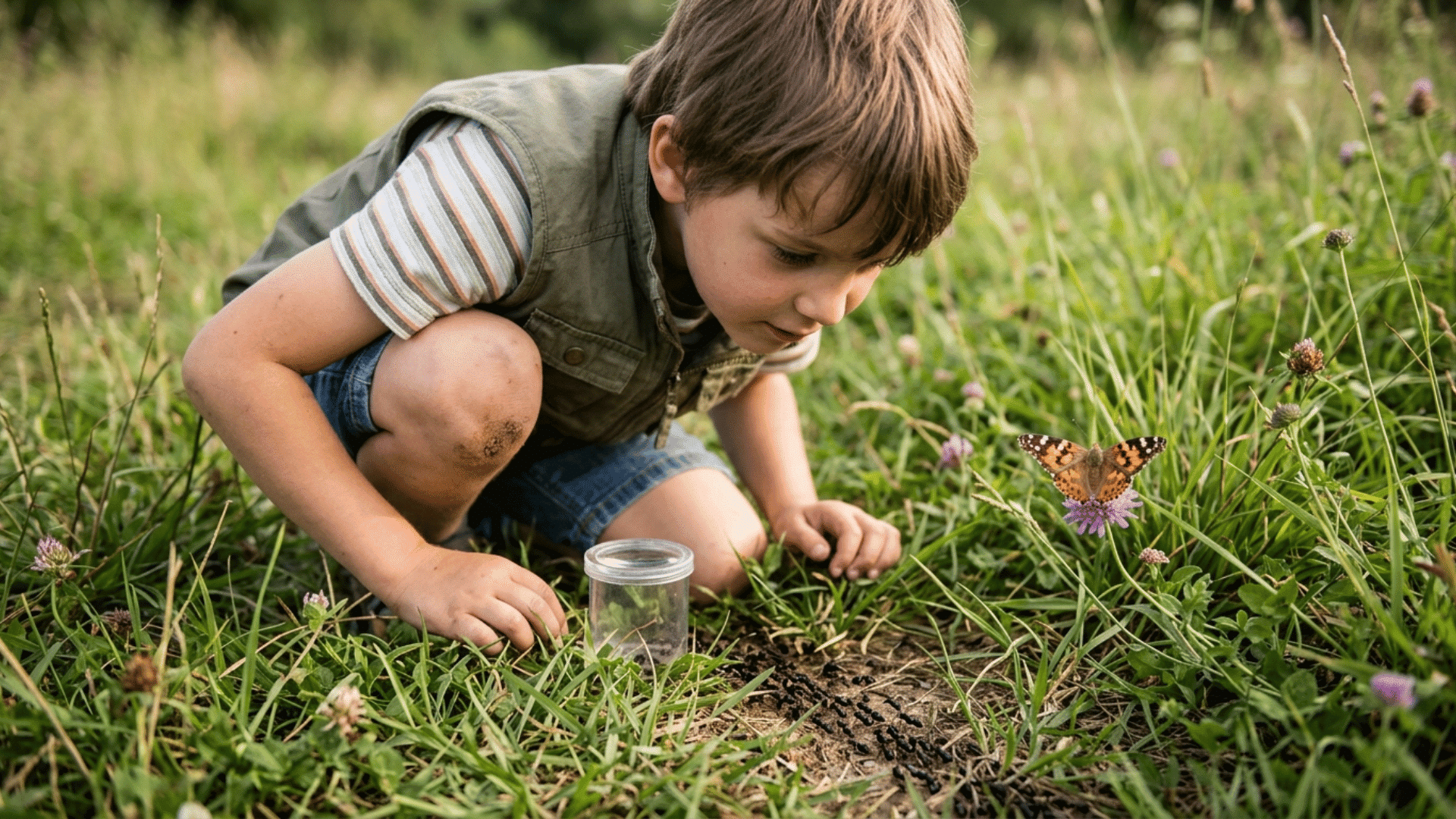
Kids are naturally curious about small moving creatures, making this activity highly engaging. It keeps them focused throughout the walk with minimal guidance. It’s a simple way to spark curiosity about nature.
- Ants, butterflies, beetles
- Observe without touching
- Keep it safe and simple
- Best in grassy areas
6. Bird Watching Hunt
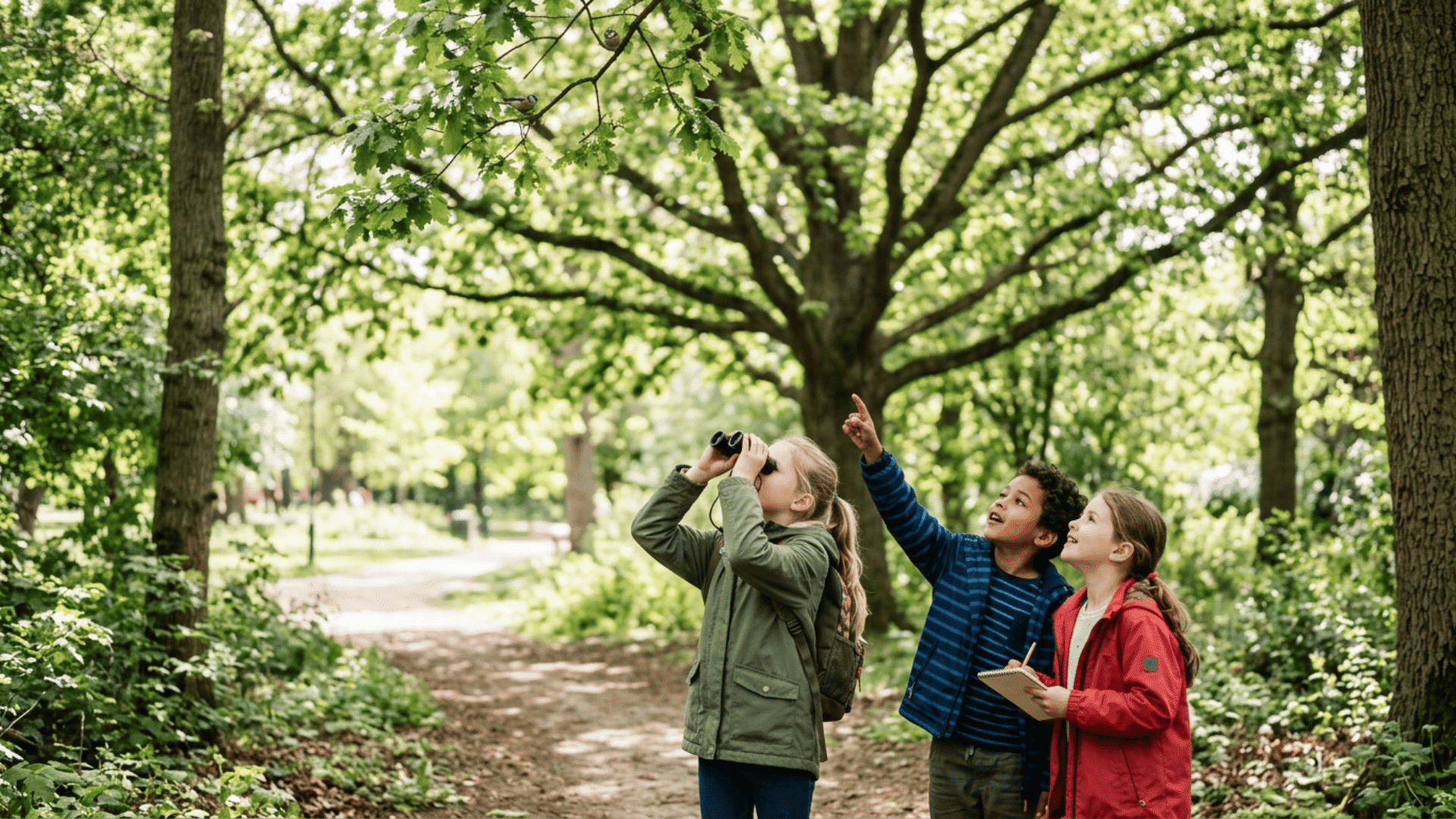
This activity slows things down and encourages kids to observe patiently. Instead of rushing, they focus on spotting or listening to birds. It helps build attention and calm observation skills.
- Spot birds or listen for calls
- Count how many you see or hear
- Use binoculars if available
- Encourages patience
7. Rainy Day Nature Hunt
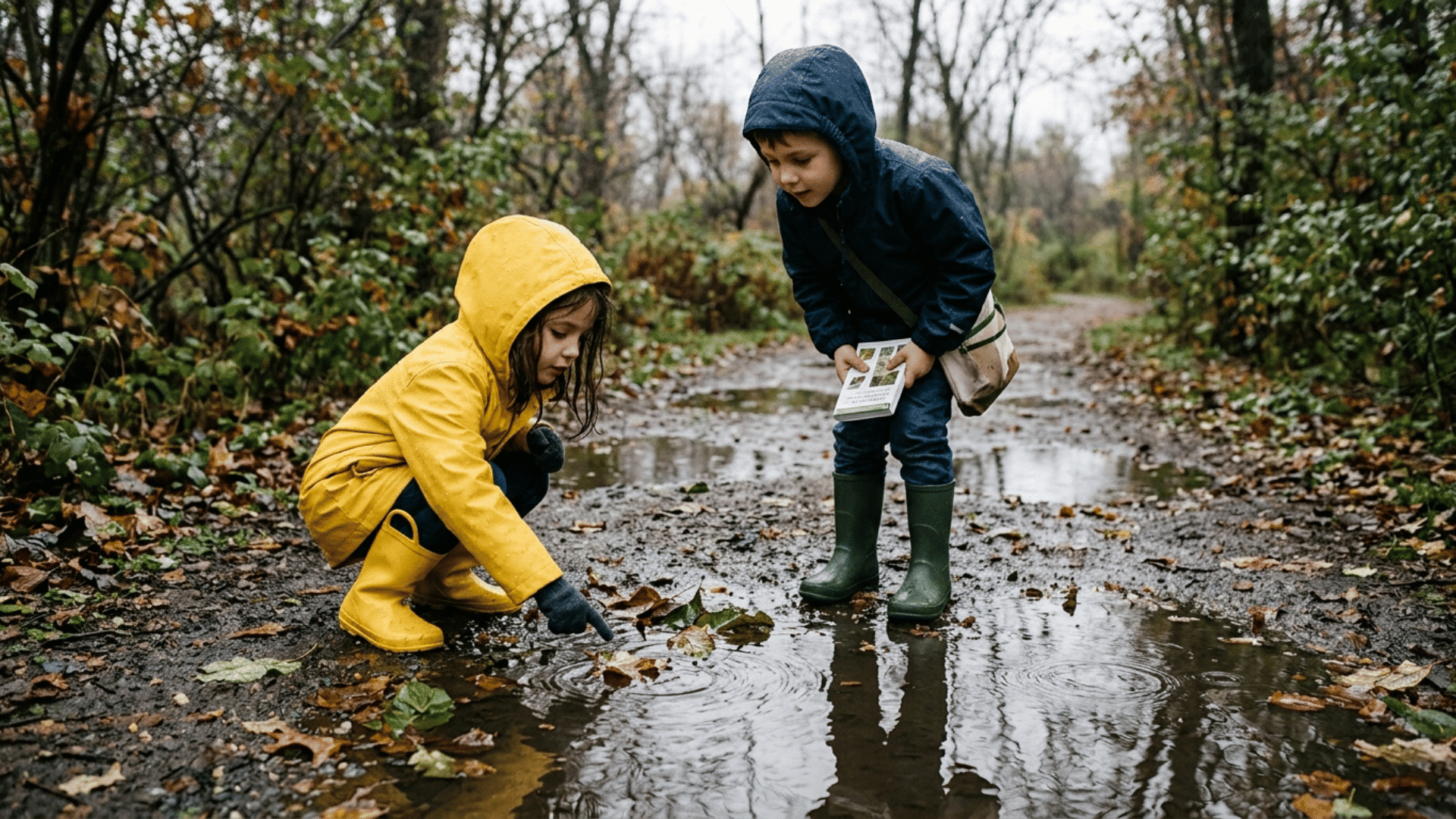
A light rainy day changes how everything looks and feels outdoors. This makes familiar surroundings more interesting and different. It’s a great way to turn an ordinary day into something exciting.
- Puddles, worms, wet leaves
- Notice reflections and textures
- Keep the walk short
- Wear proper footwear
Sensory & Mindful Scavanger Hunt Ideas
These activities help kids slow down rather than rush to finish a list. An activity like this feels more relaxed and works well when you want quieter, more focused outdoor time.
8. Senses Scavenger Hunt
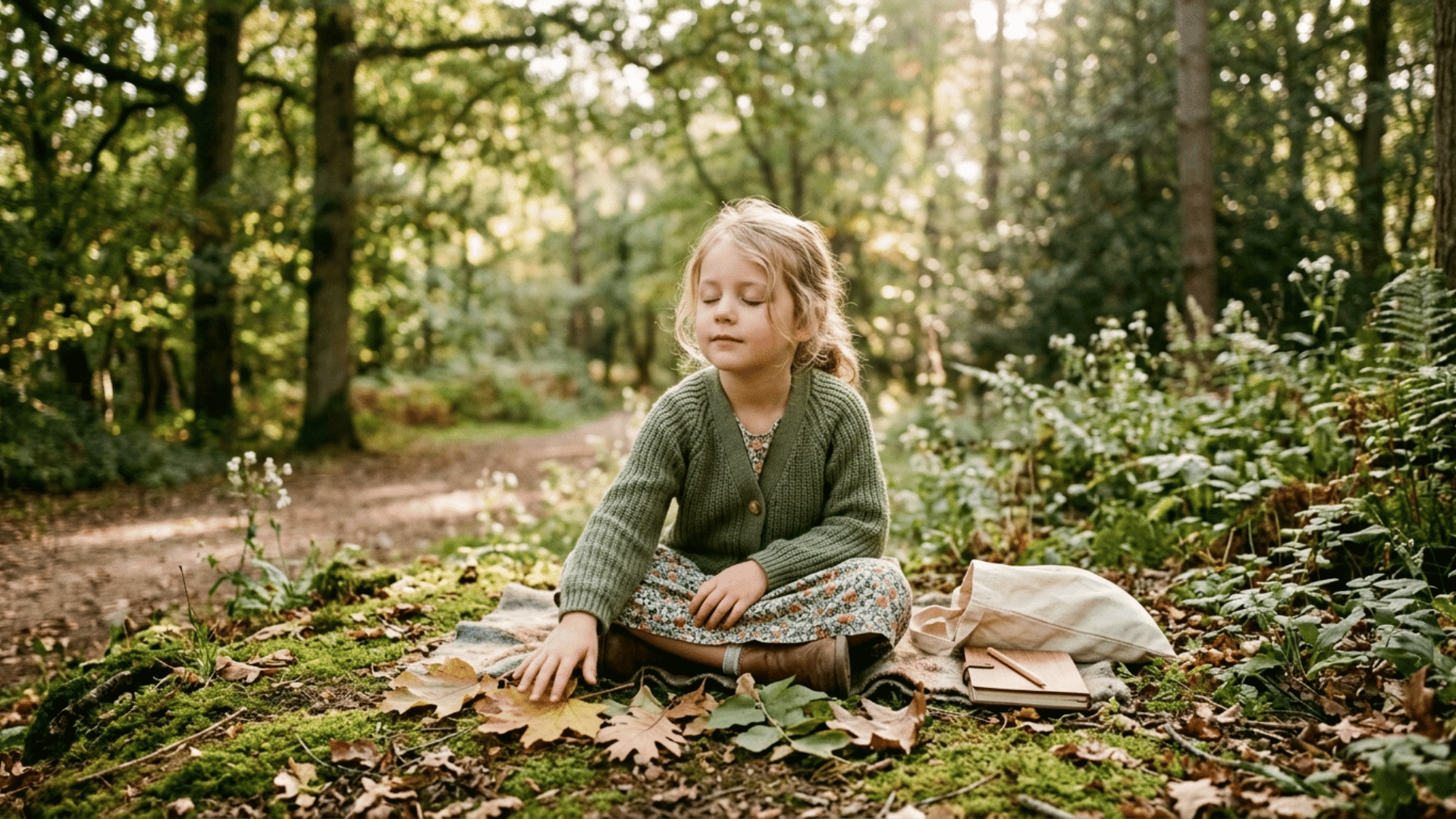
This activity focuses on experiencing nature rather than collecting items. Kids use their senses to notice sounds, smells, and textures. It creates a slower and more mindful outdoor experience
- Find something you can hear, smell, touch
- Pause often during the walk
- Talk about each sense
- No need to collect items
9. Texture Hunt
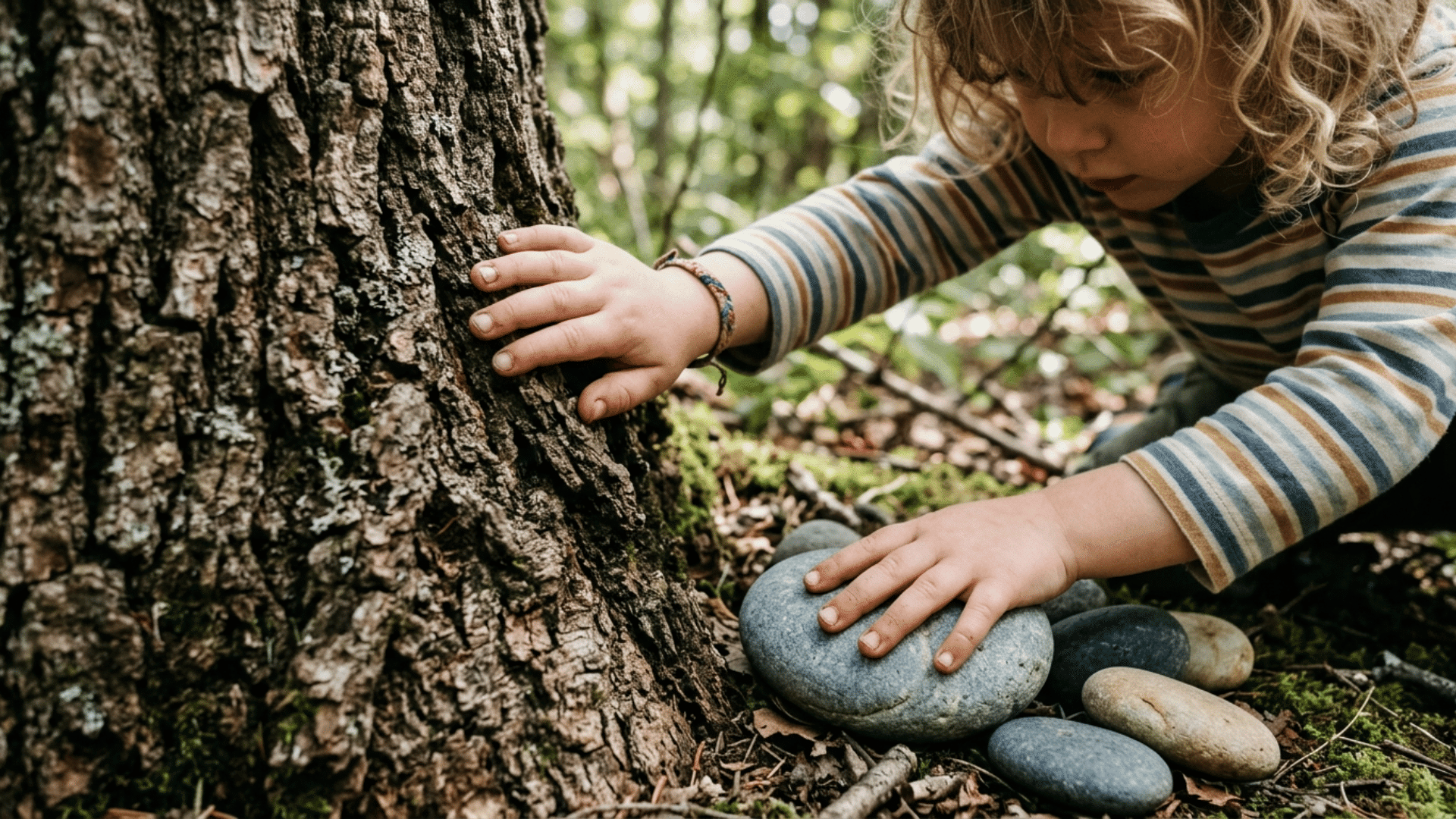
Kids enjoy touching and comparing different surfaces during a walk. This activity makes learning physical and interactive. It also helps them naturally understand differences in texture.
- Rough bark, smooth stones, soft petals
- Compare how each item feels
- Keep it safe and supervised
- Works anywhere outdoors
10. Sound Mapping Activity
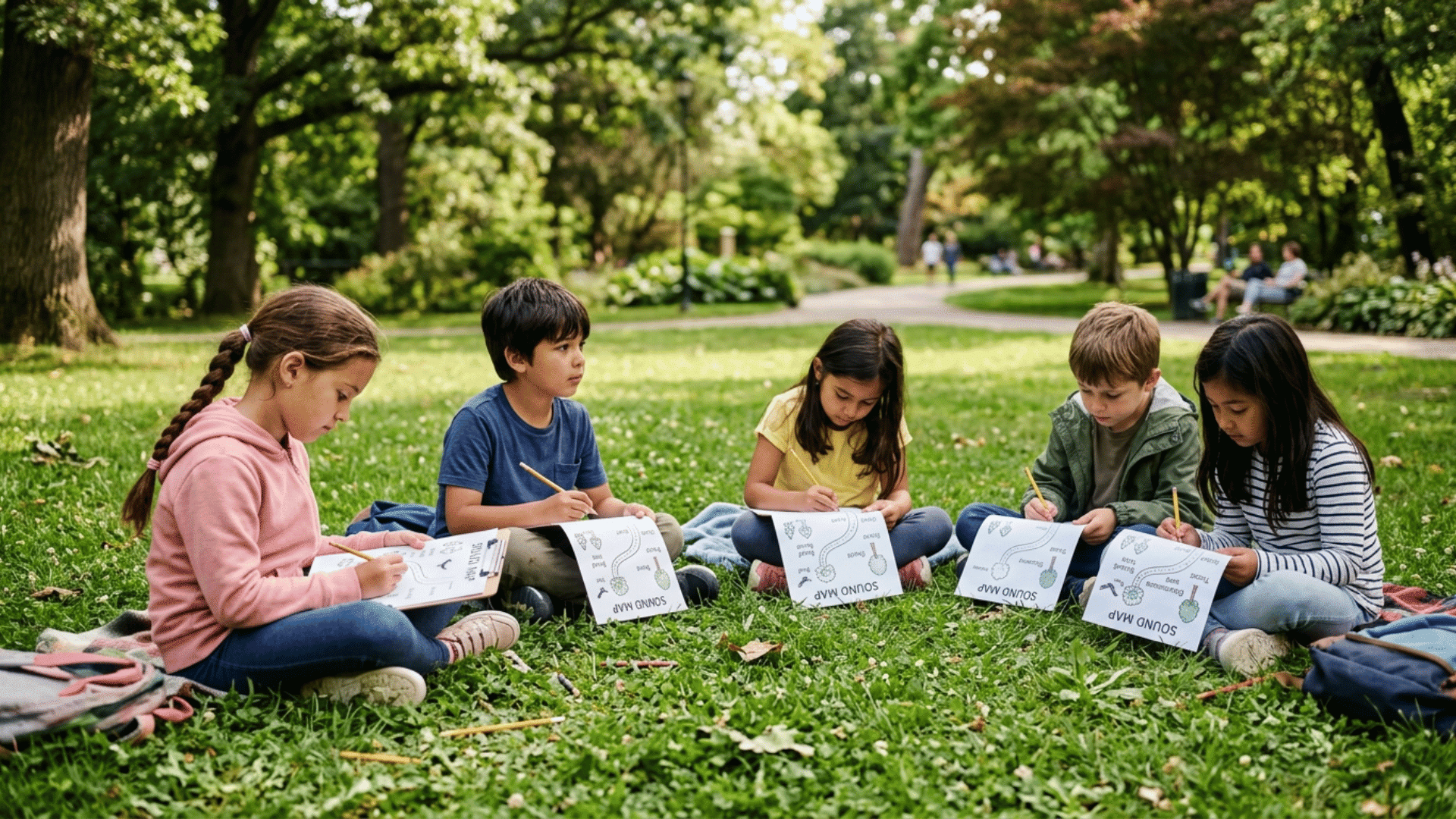
This is a quiet activity that helps kids tune into their surroundings. Instead of moving constantly, they pause and listen carefully. It builds focus and awareness in a calm way.
- Stop and listen quietly
- List natural sounds
- Try in different spots
- Helps build attention
Educational & Skill-Based Hunt Ideas
These ideas add learning without making it feel like a lesson. They fit well into a walk hunt when you want kids to think a bit more while still enjoying being outside.
11. Alphabet Nature Hunt
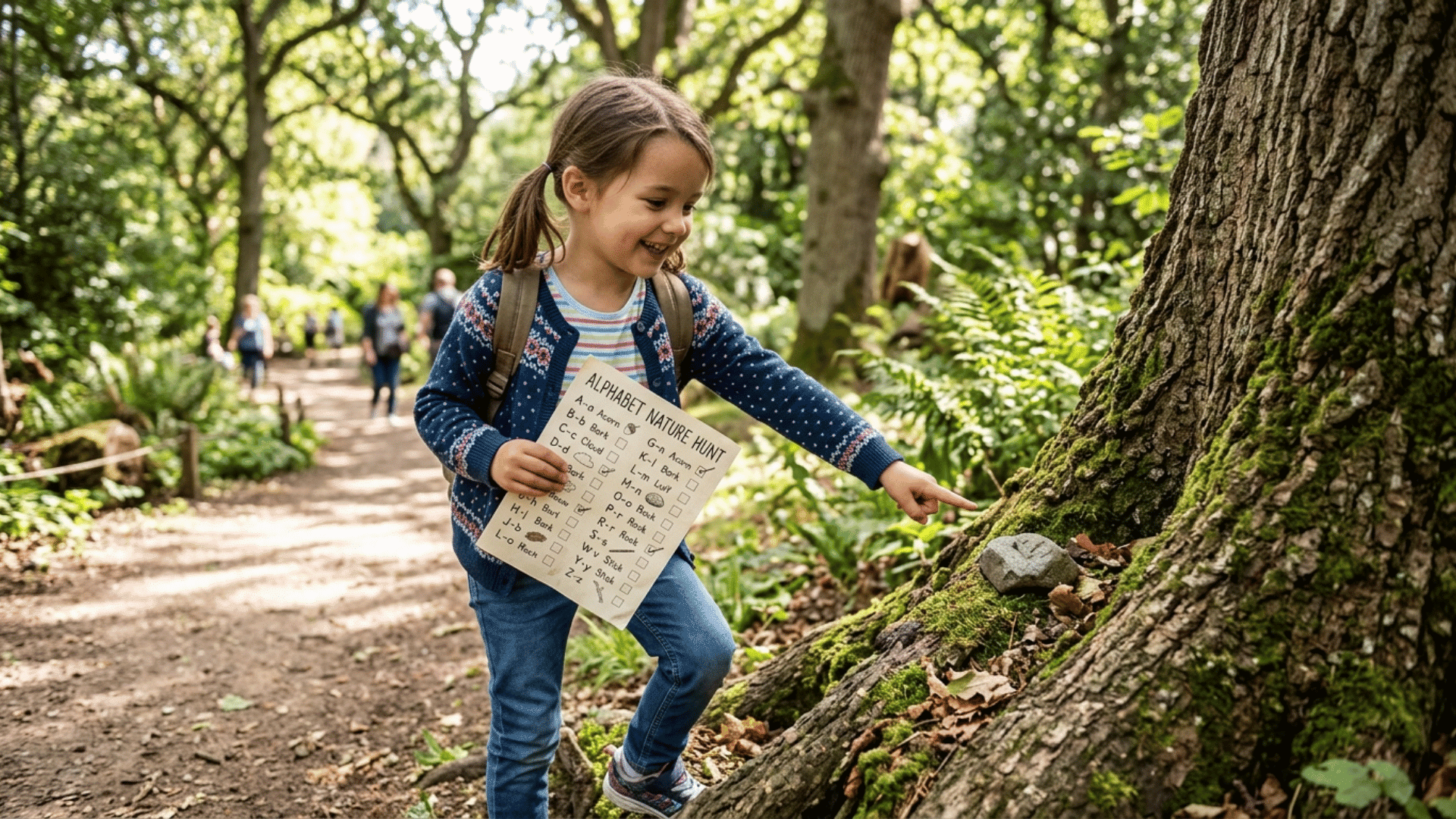
This activity combines outdoor fun with basic language skills. Kids learn to associate letters with real-world objects. It makes learning feel natural and fun.
- Find items starting with A–Z
- Start with fewer letters if needed
- Say answers out loud or write them
- Works for different age groups
12. Counting & Math Hunt
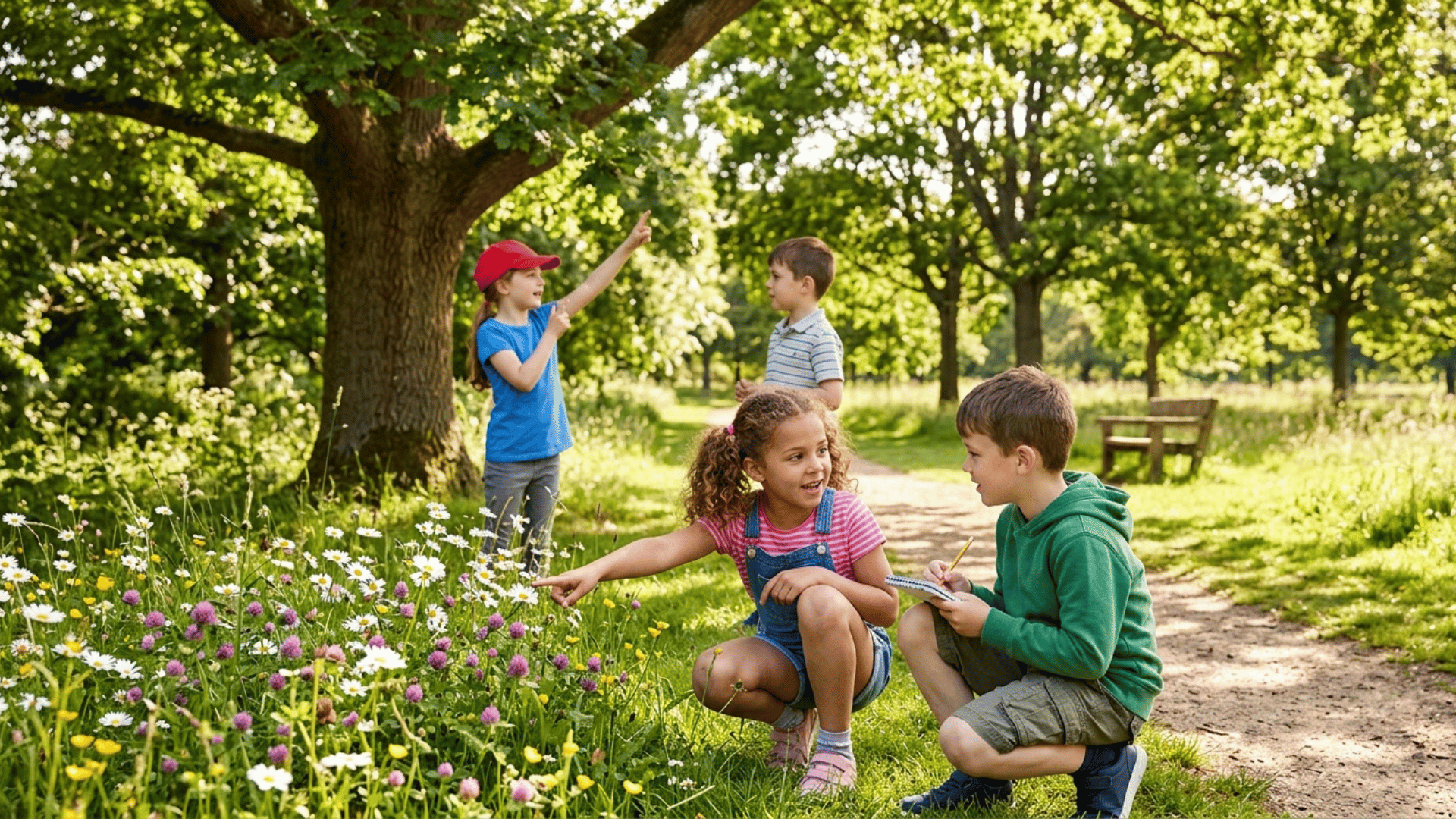
This is a light way to introduce numbers during a nature walk. Kids count objects without feeling like they’re studying. It keeps learning simple and stress-free.
- Count petals, trees, birds
- Compare which has more or less
- Keep it flexible
- Works well for younger kids
13. Pattern Recognition Hunt
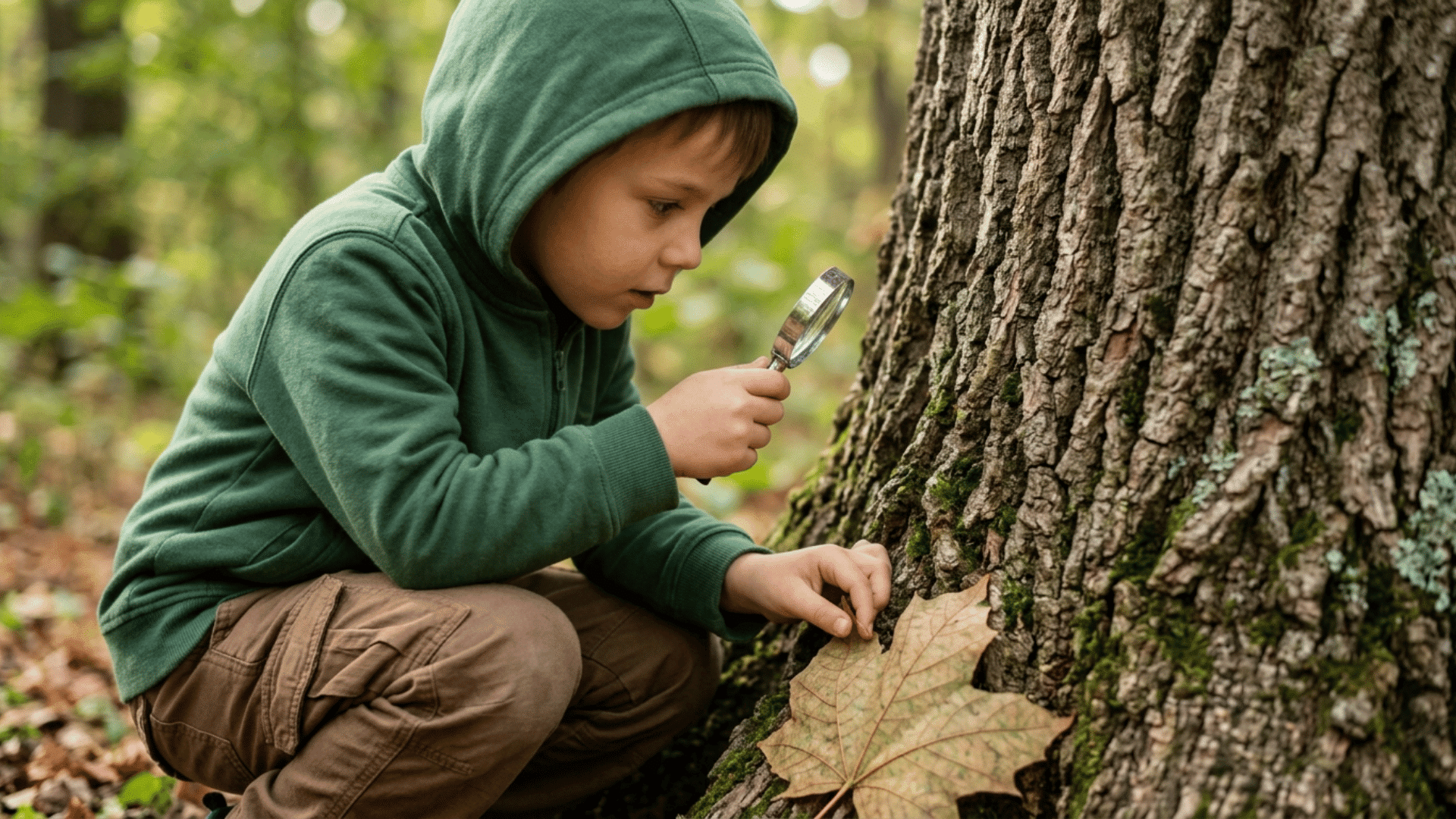
This activity helps kids notice repeating patterns in nature. It encourages them to observe details they might normally ignore. Over time, it builds stronger thinking and observation skills.
- Look for patterns in leaves or bark
- Ask kids to explain what they see
- Compare different patterns
- Builds thinking skills
Creative & Imaginative Hunt Ideas
Some kids enjoy adding a creative angle. These ideas keep a scavenger hunt interesting by letting them think beyond just finding items.
14. Nature Art Hunt
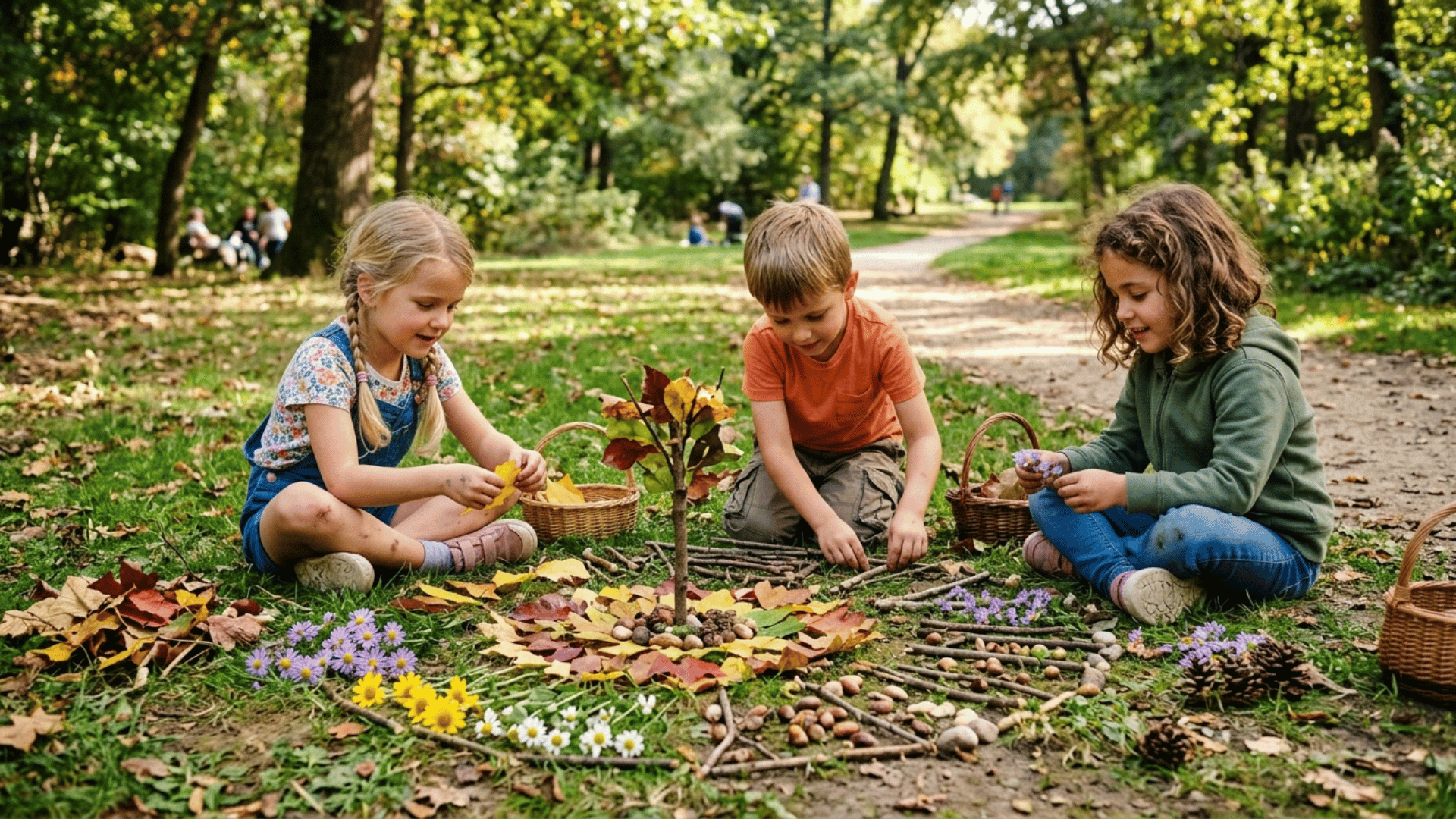
This activity extends beyond the walk by adding a creative element. Kids collect items and use them later to create something. It keeps them engaged even after the activity ends.
- Collect small natural items
- Create a collage later
- Keep collections minimal
- Use items respectfully
15. Photo Scavenger Hunt
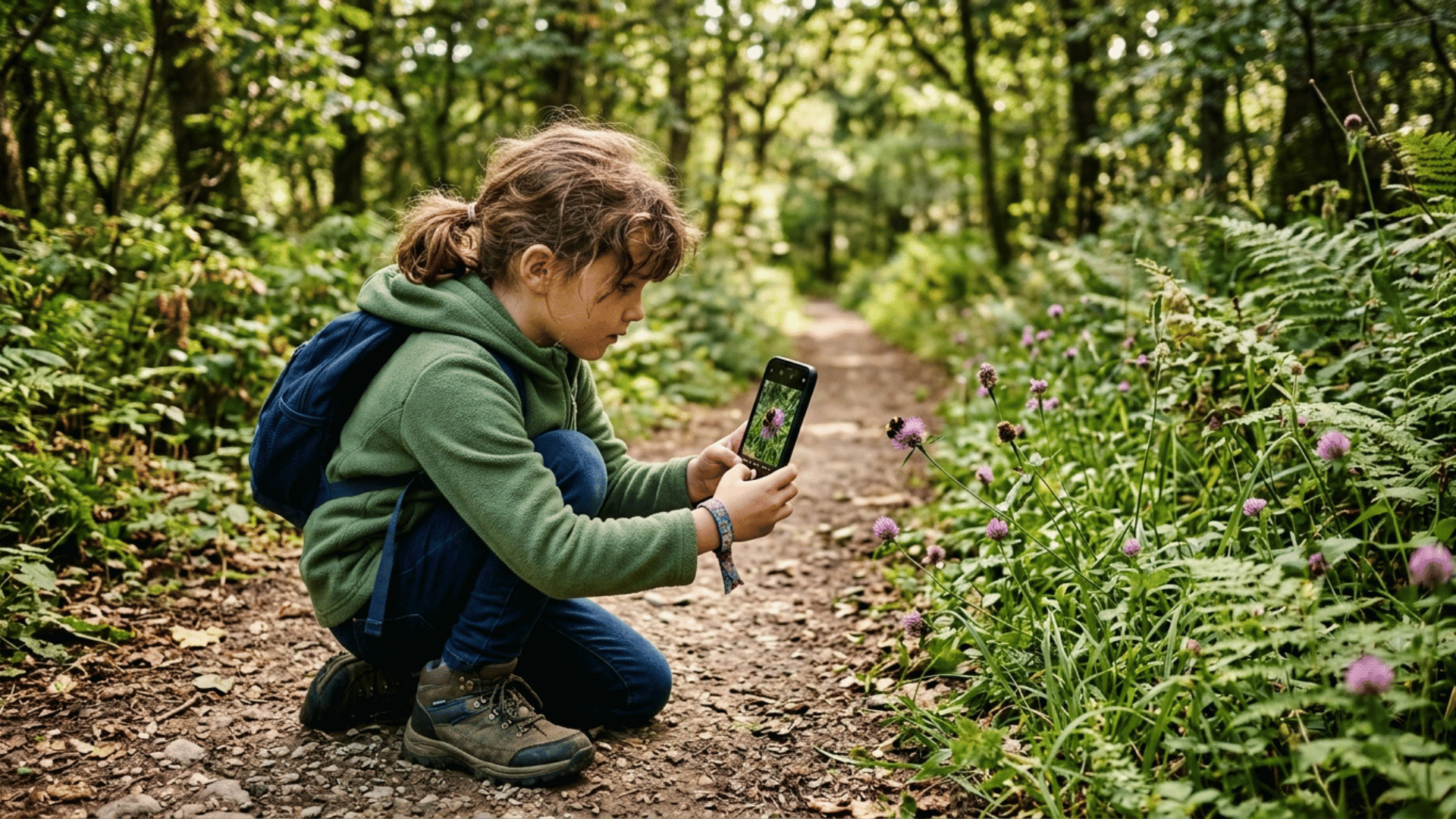
Instead of collecting items, kids capture what they see using a camera or phone. This feels more modern and engaging, especially for older children. It also encourages creativity and observation.
- Take photos of the listed items
- Review pictures later
- Use a phone or camera
- Encourages creativity
16. Fairy or Treasure Hunt
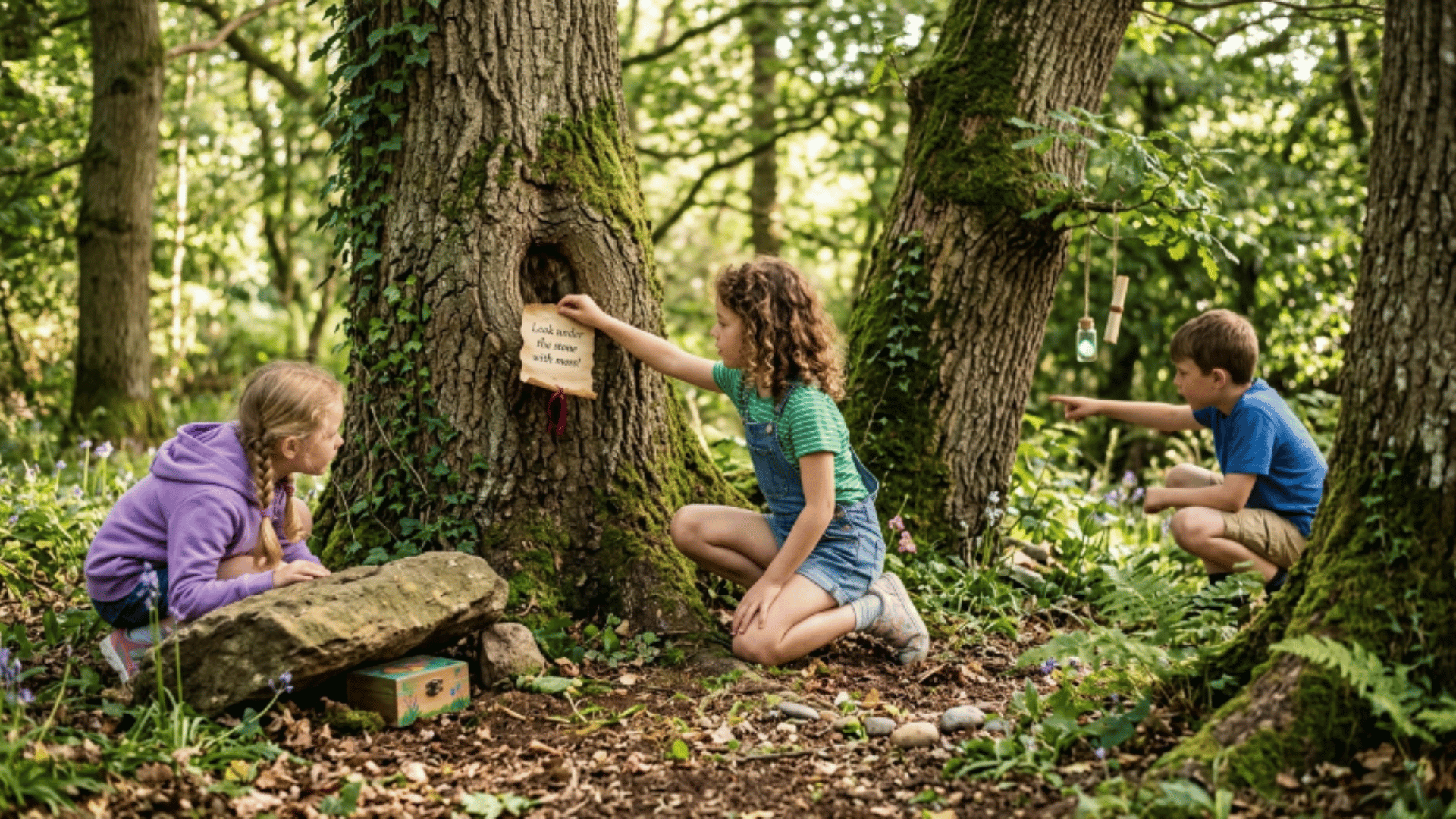
Adding a simple story makes the activity more immersive and exciting. Kids stay engaged longer when there’s imagination involved. It turns a basic walk into an adventure.
- Hide small clues or objects
- Create a basic storyline
- Let kids imagine characters
- Works well in small areas
Adventure & Challenge Hunt Ideas
If kids get bored easily, adding a bit of challenge helps. These versions of a walk hunt incorporate time limits or problem-solving without making things stressful.
17. Timed Scavenger Hunt
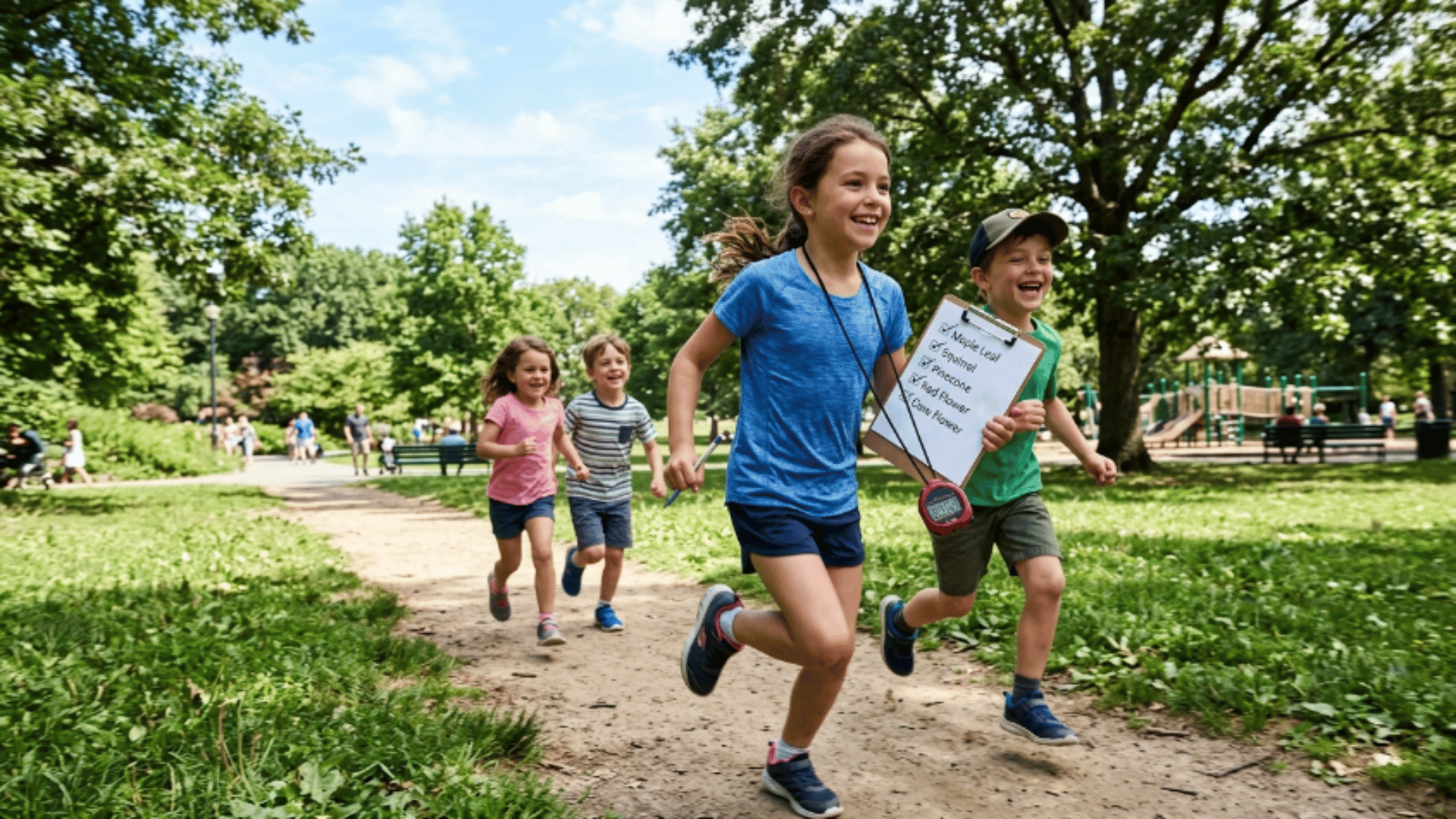
This version adds a time limit to keep kids active and focused. It works well for short attention spans or quick outings. The challenge makes the activity more exciting.
- Set a 15–20 minute timer
- Try to complete the list
- Keep expectations realistic
- Great for short walks
18. Clue-Based Treasure Hunt
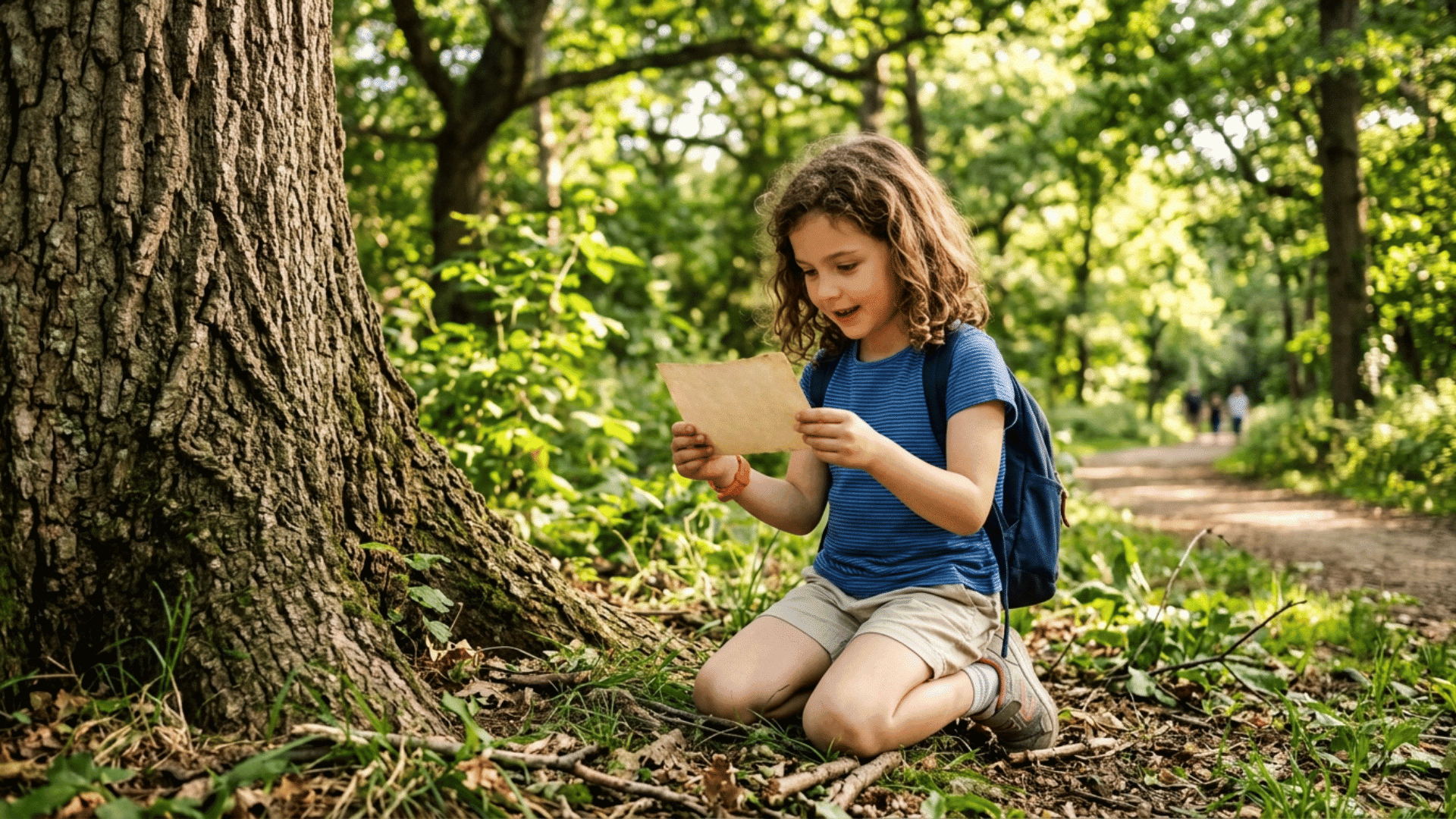
This activity adds structure through clues that lead to the next item. It encourages thinking and problem-solving during the walk.
- Each item leads to another
- Keep clues simple
- Guide along a set path
- Works well in parks
19. Eco Awareness Hunt
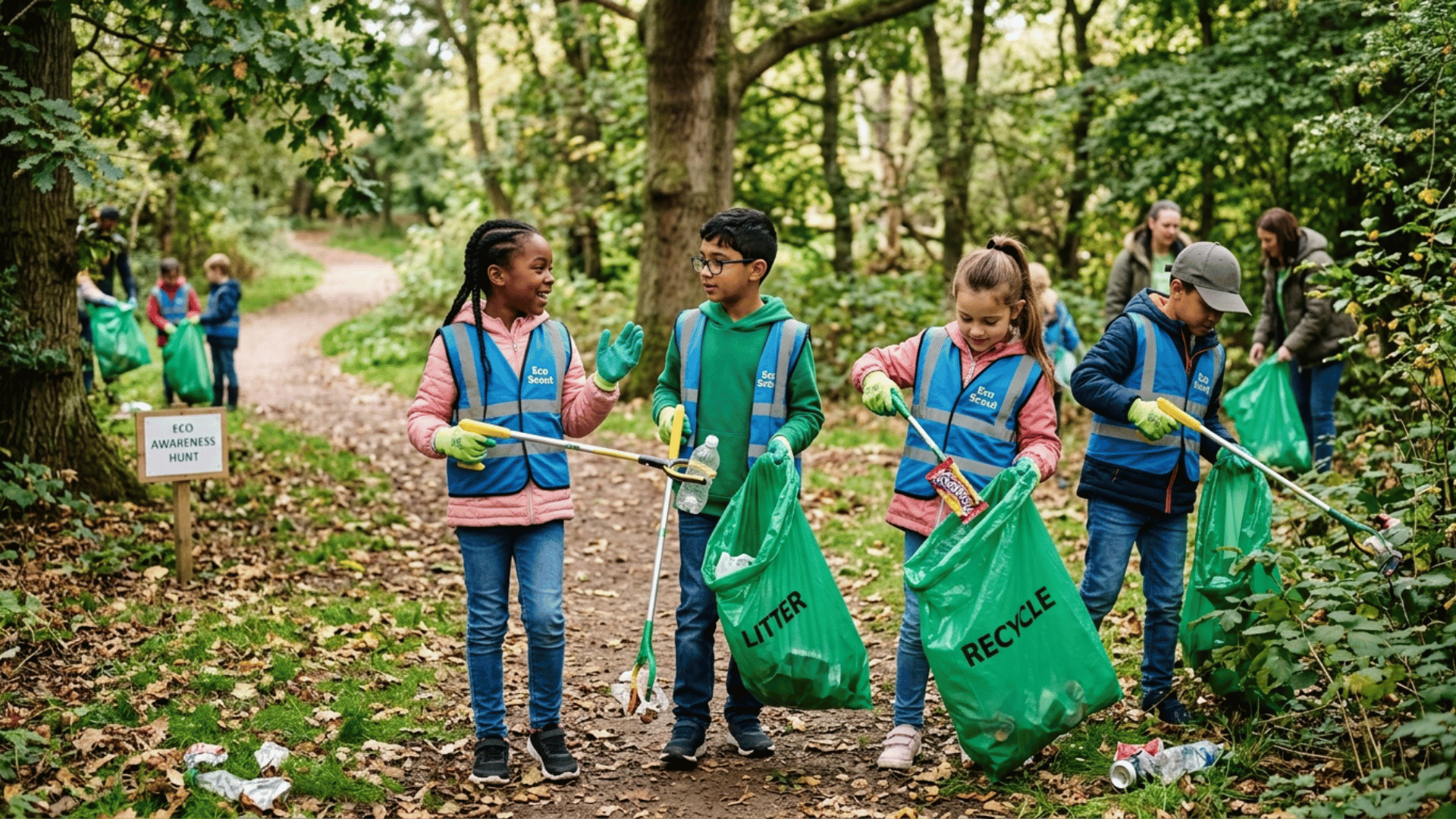
This activity helps kids become more aware of their environment. It introduces simple ideas about cleanliness and responsibility. It’s a good way to build mindful habits early.
- Spot trash or recycling
- Talk about keeping areas clean
- Encourage safe cleanup
- Keep it simple
Group & Family Activity Ideas
These ideas work best when more people are involved. They make a scavenger hunt walk feel more interactive without requiring much extra planning.
20. Team Competition Hunt
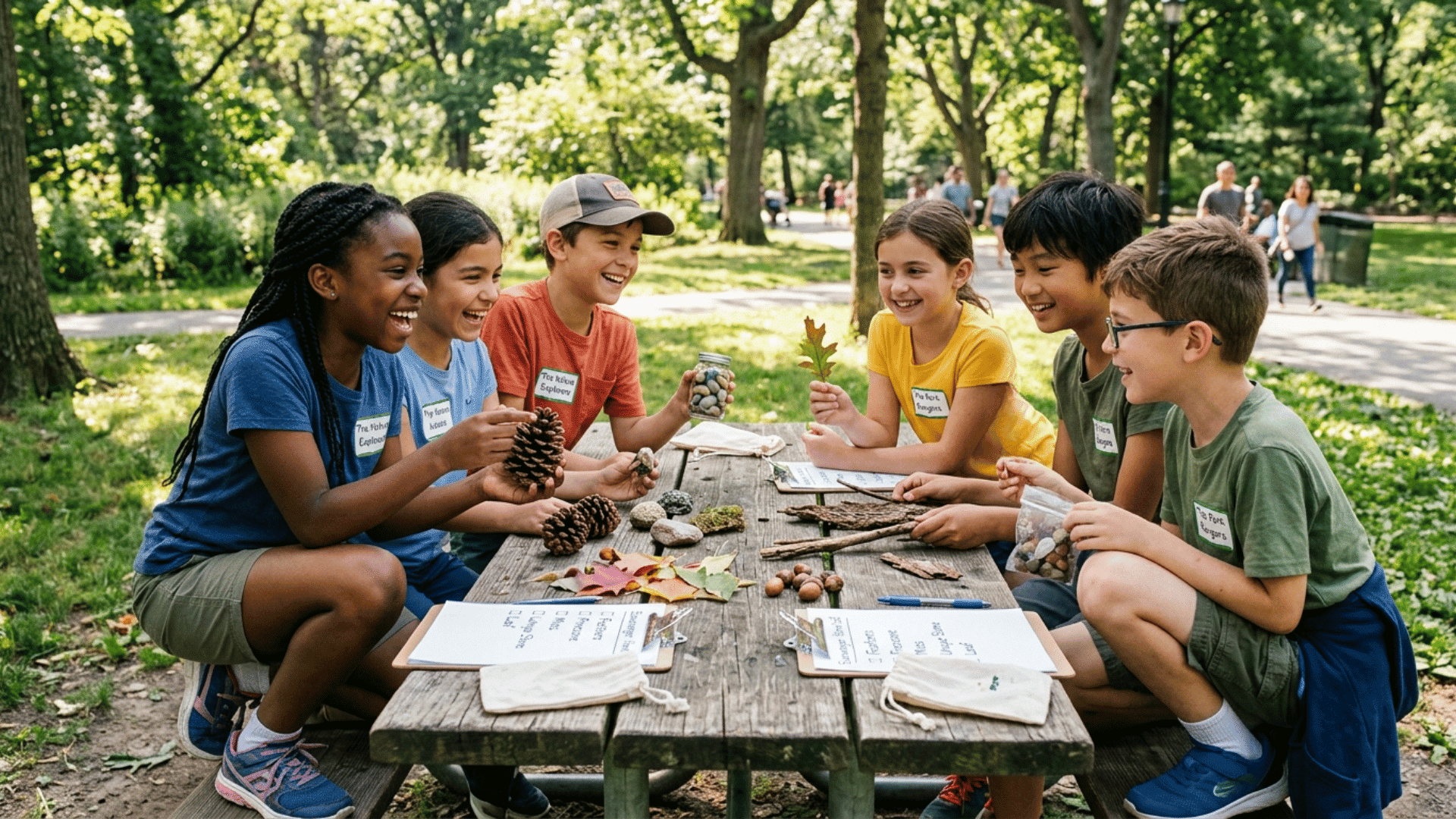
This works well when multiple kids are involved. Turning it into a team activity makes it more interactive and fun. It also encourages teamwork and communication.
- Split into small teams
- Compare results at the end
- Keep it friendly
- Add small rewards if needed
21. Night or Sunset Nature Hunt
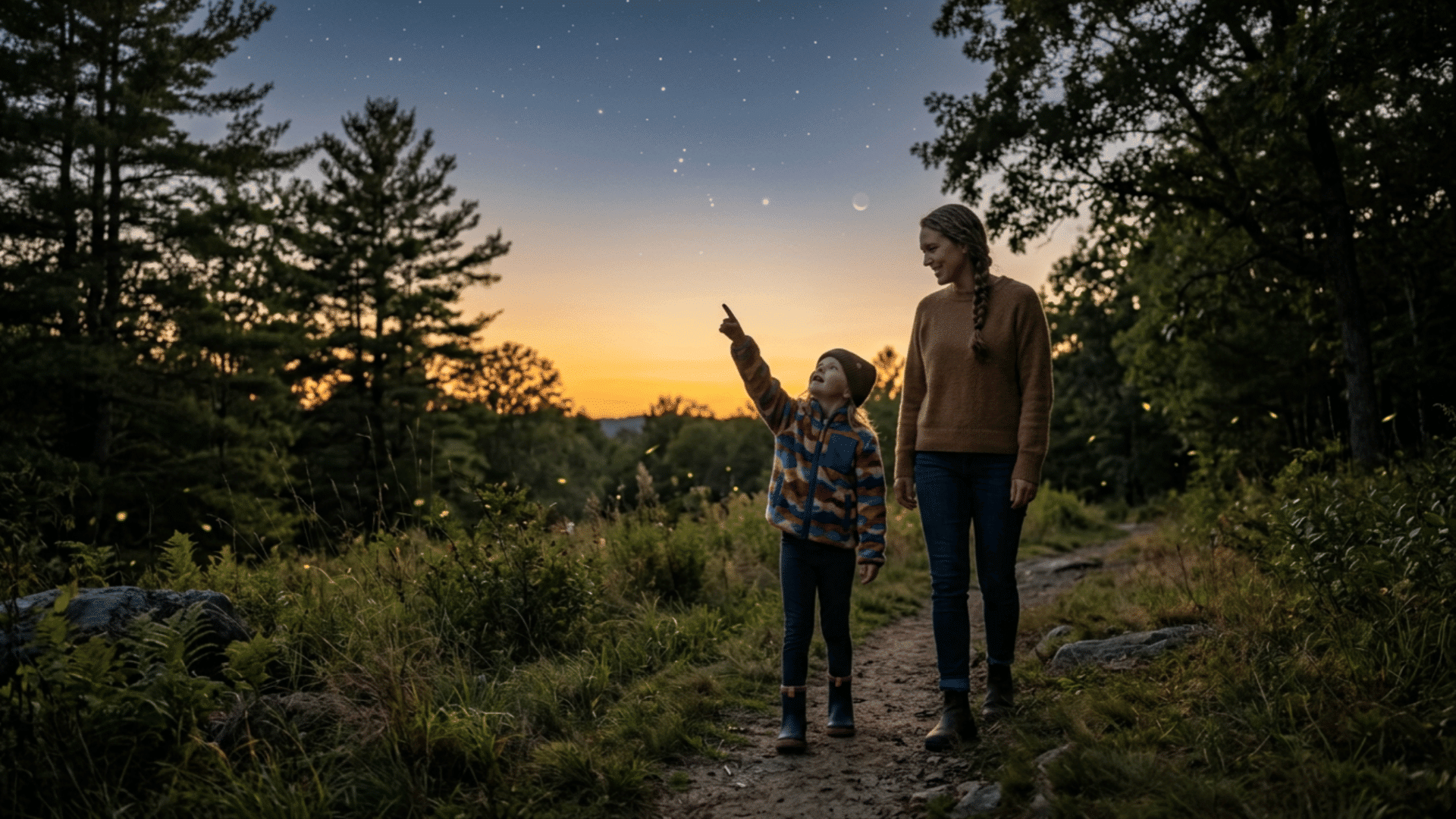
Changing the time of day makes the same place feel completely different. Kids notice new sounds, shadows, and sights. It adds excitement and curiosity to a familiar environment.
- Look for stars, shadows, and evening sounds
- Notice what changes after sunset
- Keep it short and supervised
- Focus on safety first
Free Printable Nature Walk Scavenger Hunt Checklist
If you’re planning a walk with kids, a ready-to-use scavenger hunt checklist makes the activity more fun and organized. This version uses simple item names instead of pictures, helping kids read, recognize, and mark what they find.
While platforms like Canva and Twinkl offer designed templates and Pinterest provides creative ideas, a clean text-based checklist keeps things simple, flexible, and easy to use anywhere.
Basic Scavenger Hunt Checklist May Include:
- Green leaf
- Dry brown leaf
- Small rock
- Smooth stone
- Stick or twig
- Flower (any color)
- Yellow flower
- Grass patch
- Tree with rough bark
- Tree with smooth bark
- Feather
- Ant
- Butterfly
- Bird
- Bird sound
- Insect on a plant
- Spider web
- Pinecone or seed
- Something round
- Something soft
- Something that smells nice
Tips to Make Your Nature Walk Scavenger Hunt Fun and Safe
A scavenger hunt works best when it feels easy and relaxed, not like a task kids have to finish. The same goes for a spring scavenger hunt, where kids can get excited and distracted by everything around them.
A few small adjustments can keep them interested while ensuring everyone stays safe during the walk.
- Keep the walk short, especially for younger kids, so they don’t lose interest halfway
- Don’t overload the list; fewer items usually mean better focus and more enjoyment
- Allow flexibility, it’s okay if some items aren’t found
- Encourage curiosity by asking questions instead of pushing for completion
- Stay on safe and familiar paths to avoid unnecessary risks
- Avoid touching unknown plants or insects
- Carry water and sunscreen, even for short outdoor times
Final Thoughts
A nature walk scavenger hunt is one of those simple ideas that actually works; it gets kids outside, keeps them engaged, and adds a bit of purpose to a regular walk.
You don’t need perfect planning or a long list to make it enjoyable. Even a short walk in nature with a few prompts can hold their attention.
Try a scavenger hunt in spring when the air feels fresh, or switch it up based on where you are. The goal isn’t to finish everything, it’s to notice more, stay curious, and enjoy the time outside together.