




Jarred Alfredo sauce tastes flat compared to a homemade Alfredo sauce made from scratch. You only need a few ingredients to make a rich, restaurant-style version at home.
This sauce comes together on the stove in about 15 minutes, with no roux and no special equipment.
It’s the kind of recipe you can make on a weeknight without planning ahead, similar to the shortcuts behind these quick weeknight dinner ideas.
How Homemade Alfredo Sauce Builds Its Classic Flavor?
Homemade Alfredo sauce gets its classic flavor from butter, heavy cream, and freshly grated Parmesan.
Butter provides richness, while the cream creates a smooth base and Parmesan adds a salty, nutty finish. Gentle heat helps the ingredients blend without separating or becoming grainy.
It’s the same base you’ll find in an easy chicken Alfredo pasta recipe, just built fresh on the stovetop instead of a slow cooker.
A little garlic, black pepper, and salt can round out the sauce without overpowering it. Freshly grated Parmesan melts more evenly than pre-shredded cheese, which often contains anti-caking ingredients.
Keeping the heat low prevents the dairy from scorching or separating.
What You Need for Homemade Alfredo Sauce
This homemade Alfredo sauce uses five pantry staples you likely already have on hand. No specialty items, no substitutes needed, just simple ingredients that come together into a rich, creamy sauce.
| Ingredients | Amount | Notes |
|---|---|---|
| Butter | 1/2 cup | Unsalted preferred |
| Heavy cream | 2 cups | Full-fat, no substitutes |
| Garlic | 2 cloves, minced | Fresh, not powder |
| Parmesan cheese | 1 1/2 cups | Freshly grated off the block |
| Salt and pepper | To taste | Add at the end |
The Only No-Drama Alfredo Sauce Recipe you Need
This recipe comes together in four simple steps, ready in about 15 minutes from start to finish. Follow the order below for a smooth sauce with no lumps or graininess
Step 1:Melt the Butter and Warm the Cream
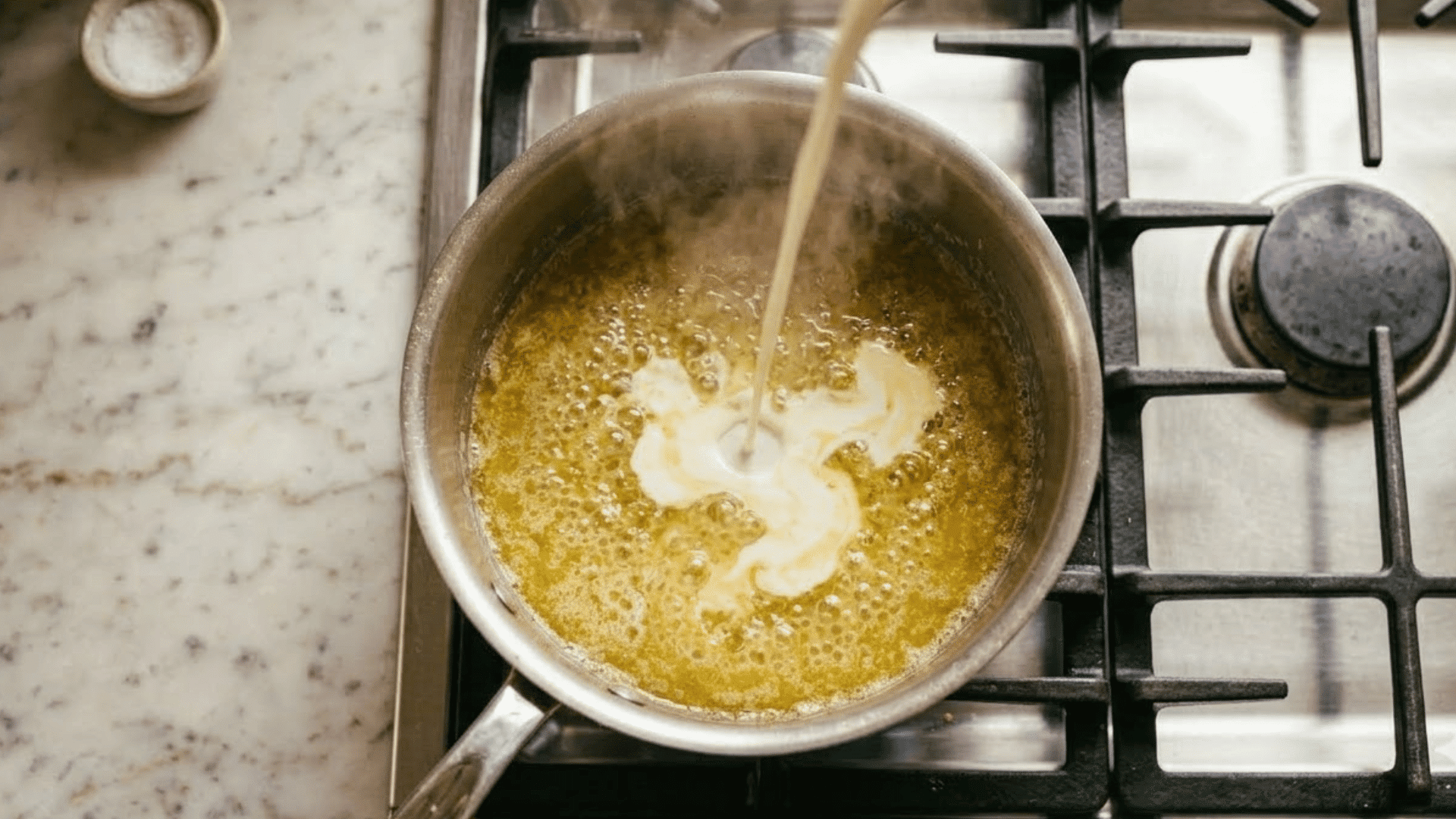
Add the butter to a saucepan over low heat. Once it melts, pour in the heavy cream and stir to combine. Let the mixture warm for 2-3 minutes, but don’t let it boil.
A gentle simmer is all you need here. Boiling too hard at this stage can cause the cream to separate later, so keep the heat low and steady throughout.
Step 2:Add the Garlic
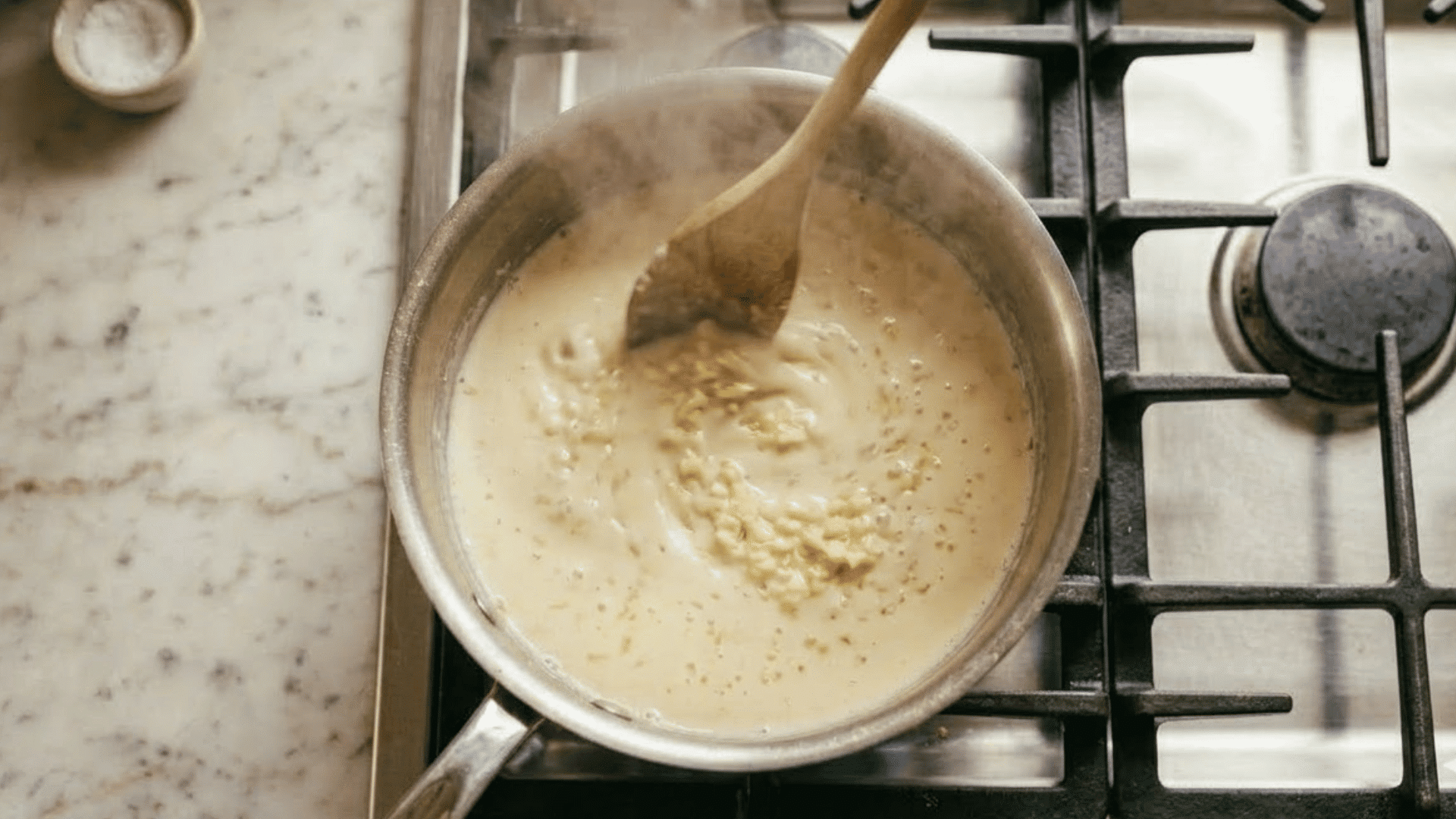
Stir the minced garlic into the warm cream mixture. Cook it for about one minute, stirring often so it doesn’t burn or stick to the bottom of the pan.
You’ll notice the aroma becomes stronger and more fragrant.
This short cook time is enough to soften the garlic’s raw bite while keeping its flavor present in the finished sauce.
Step 3:Whisk in the Parmesan Until Smooth
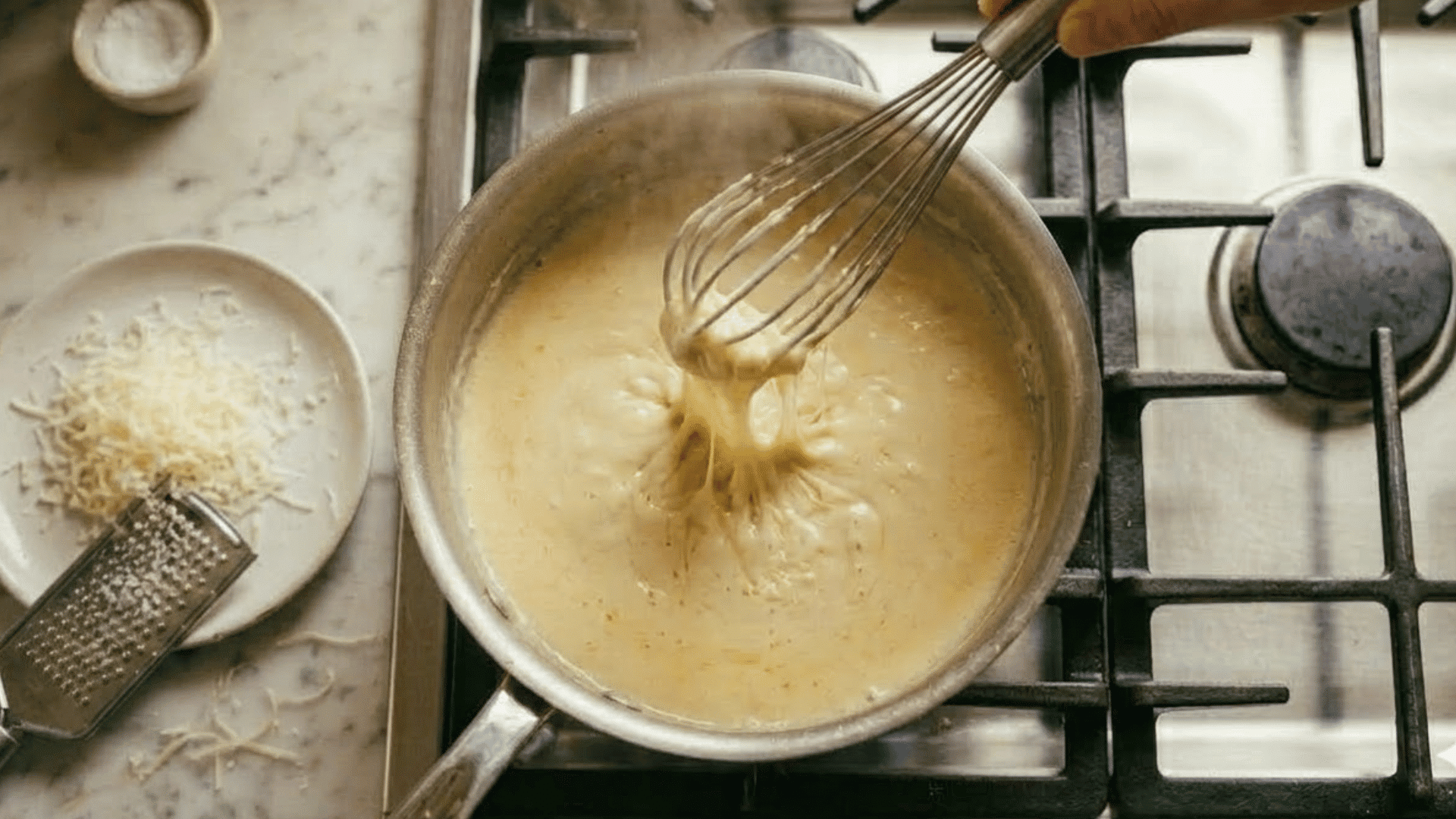
Reduce the heat to low, then add the Parmesan cheese in small handfuls. Whisk constantly as it melts, waiting until each addition is fully incorporated before adding more.
This gradual approach keeps the sauce smooth instead of clumpy
Tip: Adding all the cheese at once, or over heat that’s too high, is the most common reason Alfredo sauce turns grainy.
Step 4:Season and Simmer to Thicken
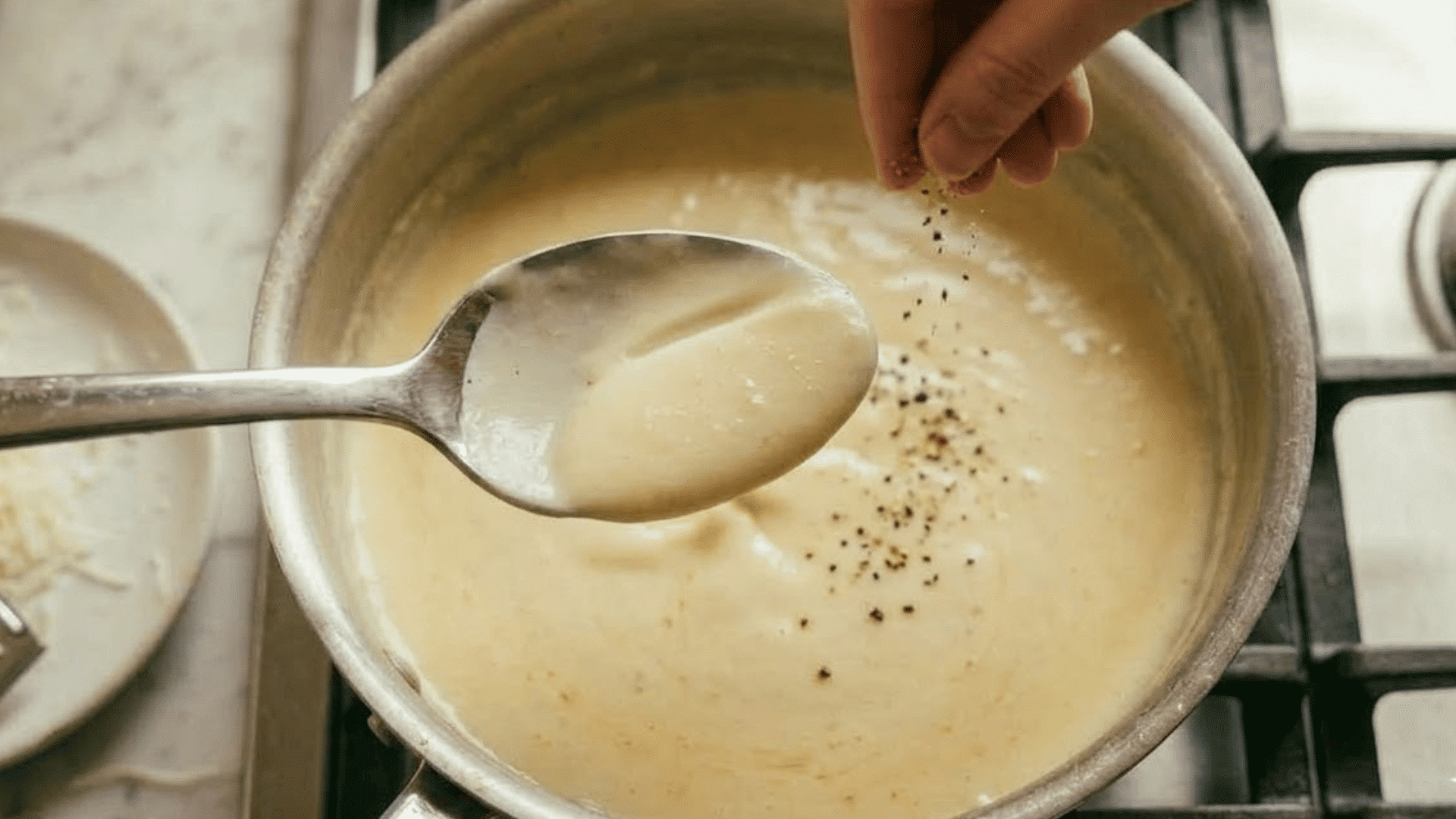
Add salt and pepper to taste, then let the sauce simmer gently for 2-3 minutes. It will continue to thicken as it sits, coating the back of a spoon when it’s ready.
If it’s still thin, give it another minute or two before pulling it off the heat. Serve immediately over pasta while it’s warm and smooth.
How Do You Keep Alfredo Sauce From Getting Grainy?
Grainy Alfredo usually comes down to heat and cheese choice, not bad luck. A few small adjustments to how and when you add the Parmesan fix it every time.
- Use Freshly Grated Parmesan: Pre-shredded bags contain anti-clumping additives that keep it from melting smoothly, so grab a block and grate it yourself right before cooking.
- Keep the Heat Low: High heat causes the milk proteins in the cheese to seize up and separate. Low and slow is the only way to go here.
- Add Cheese Gradually: Dumping it all in at once overwhelms the sauce. Small handfuls, whisked in one at a time, melt evenly instead of clumping.
- Take the Pan Off Direct Heat if Needed: If the sauce starts looking grainy anyway, pull it off the burner while whisking in the last of the cheese. The residual heat is often enough
What if My Alfredo Sauce is Too Thin or Too Thick?
Thin sauce usually just needs more time. Let it simmer gently for another minute or two on low heat, and it will thicken as the cheese and cream reduce together. Adding an extra handful of Parmesan speeds this up too.
Thick sauce is just as easy to fix.
Splash in a little warm cream or reserved pasta water, a tablespoon at a time, whisking as you go until it loosens back up.
Both fixes work best in small increments. Adjust slowly, taste as you go, and you’ll land on the right consistency without overcorrecting in either direction.
Serving Ideas for Homemade Alfredo Sauce

This sauce pairs well beyond a bowl of pasta, so it’s worth having a few serving options on hand.
Toss with Fettuccine or Penne
Coat the pasta right in the pan for even coverage, then finish with a crack of black pepper.
Add a Protein
Grilled chicken or sautéed shrimp turns this into a full meal in the same 15 minutes, and smaller, saucier portions work well for little ones, borrowing ideas from these toddler pasta meal prep recipes.
Serve Alongside Bread
Warm garlic bread or breadsticks are perfect for scooping up extra sauce.
Finish with Fresh Herbs
A sprinkle of parsley or basil adds color and a touch of freshness against the richness.
Conclusion
Homemade Alfredo sauce proves that a restaurant-quality dish doesn’t require complicated techniques or a long ingredient list.
With butter, cream, garlic, and Parmesan, you can build a sauce that rivals anything from a jar or a menu.
The method stays the same each time: low heat, fresh cheese, and patience while it thickens.
Once you master that balance, the sauce becomes a reliable base for countless meals, including many of these healthy toddler meal ideas built around a simple cheese sauce.
Try this recipe tonight, and keep the ingredient ratios on hand for the next time pasta night comes around.
Frequently Asked Questions
Can I Use Milk Instead Of Heavy Cream?
Yes, but the sauce will turn out thinner and less rich. If you substitute milk, add a bit of extra Parmesan or a small amount of cream cheese to help thicken it back up.
What is the Best Cheese for Alfredo Sauce?
Parmesan is the standard choice, but Pecorino Romano works well too and adds a sharper, saltier flavor. Some cooks blend the two for a more complex taste.
Can I Add Vegetables to Alfredo Sauce?
Yes, mushrooms, spinach, and broccoli are common additions. Stir in pre-cooked vegetables near the end so they warm through without releasing extra water into the sauce.