

Most people pick a rug based on looks alone, the color, the pattern, maybe the price. And then they get it home, roll it out, and something just feels off.
The room looks smaller. Or the rug looks lost, that’s the thing about area rug sizes: they make or break a space, even when everything else is perfect.
A 6×9 is one of those sizes that comes up a lot, and for good reason. It’s not too big, not too small. But is it right for your room? That’s where a proper 6×9 rug size comparison actually helps.
This blog highlights how a 6×9 stacks up against other common sizes and where it truly shines.
How Much Floor Does a 6×9 Rug Cover?
A 6×9 rug measures 6 feet wide and 9 feet long. That gives you 54 square feet of coverage, which is actually a solid amount of floor space.
It’s big enough to anchor a seating area but still fits comfortably in most average-sized rooms without taking over.
To put it simply, think of it as roughly the size of a twin bed, just a bit wider. It works well under a coffee table, in a dining nook, living area, or at the foot of a bed.
The conversions below will help you compare rug sizes with room measurements, floor plans, or furniture dimensions without confusion.
| Unit | Dimensions |
|---|---|
| Feet | 6 ft × 9 ft |
| Inches | 72 in × 108 in |
| Centimeters | 183 cm × 274 cm |
| Meters | 1.83 m × 2.74 m |
| Square Feet | 54 sq ft |
| Square Meters | 5.02 sq m (approx.) |
6×9 Rug Size Comparison
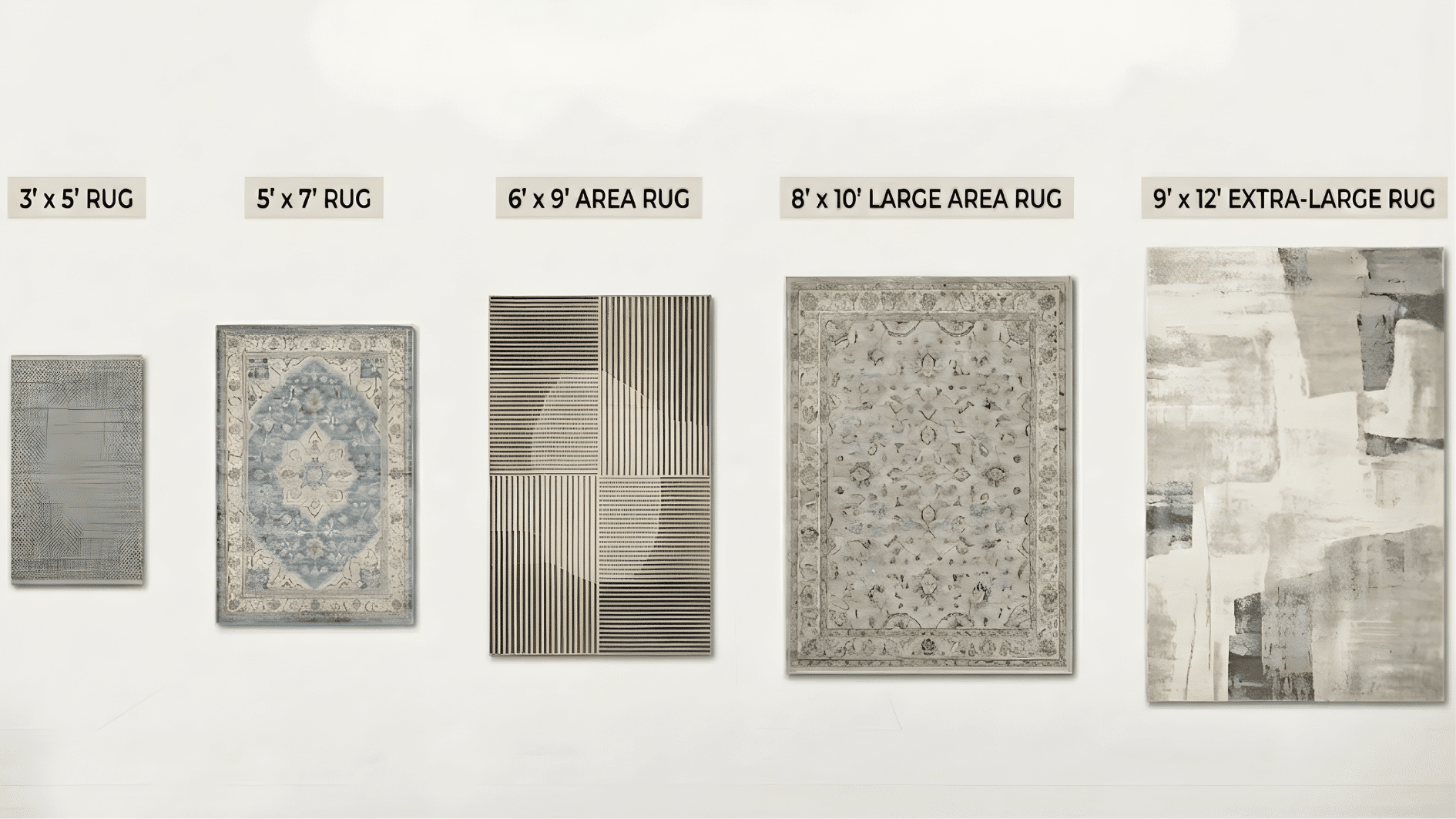
Choosing between different area rug sizes becomes easier when you compare them with other popular options. A 6×9 rug sits right in the middle, making it a practical choice for many homes.
3×5 Rug
A 3×5 rug is quite small and works best in very tight spots where only a little coverage is needed. It’s more about adding a soft touch than defining a full seating area.
While it looks clean and simple, it can feel too tiny in a living room unless used with purpose.
- Best For: Entryways, bedside areas, or small corners
- Placement Style: In front of a chair, beside a bed, or near a doorway
- Room Impact: Adds a subtle layer without taking up much visual space
A 3×5 rug is a great choice for quick styling or layering, but it won’t anchor furniture or tie a living room together on its own.
5×7 Rug
A 5×7 rug is smaller and works best in tight spaces where you only need minimal coverage. It’s often used to highlight a specific area rather than anchor an entire seating setup.
While it can look neat in compact rooms, it may feel too small in a living room if not styled carefully.
- Best For: Small spaces and entryways
- Placement Style: Usually under a coffee table or small seating setup
- Room Impact: Keeps the space open, but may not fully connect furniture
8×10 Rug
An 8×10 rug is one of the most common choices for living rooms because it provides enough space for most furniture to sit comfortably.
It creates a more connected, grounded look, especially in medium- to large-sized rooms.
- Best For: Standard living rooms with full furniture layouts
- Placement Style: All or most furniture legs sit on the rug
- Room Impact: Makes the space feel complete and well-defined
Compared to a 6×9 rug, an 8×10 rug offers more coverage but may feel too large for smaller rooms. A 6×9 works better when space is limited or when a lighter layout is preferred.
9×12 Rug
A 9×12 rug is designed for larger rooms where you want full coverage and a strong visual base. It helps anchor big furniture arrangements and works well in open layouts where multiple zones need to feel connected.
- Best For: Large living rooms and open floor plans
- Placement Style: The entire furniture setup sits comfortably on the rug
- Room Impact: Fills the space and creates a more unified look
How to Use a 6×9 Rug in Different Spaces?
A 6×9 rug is one of those sizes that fits into many spaces without feeling too big or too small. It works well when you want comfort and structure without covering the entire floor.
1. Living Room
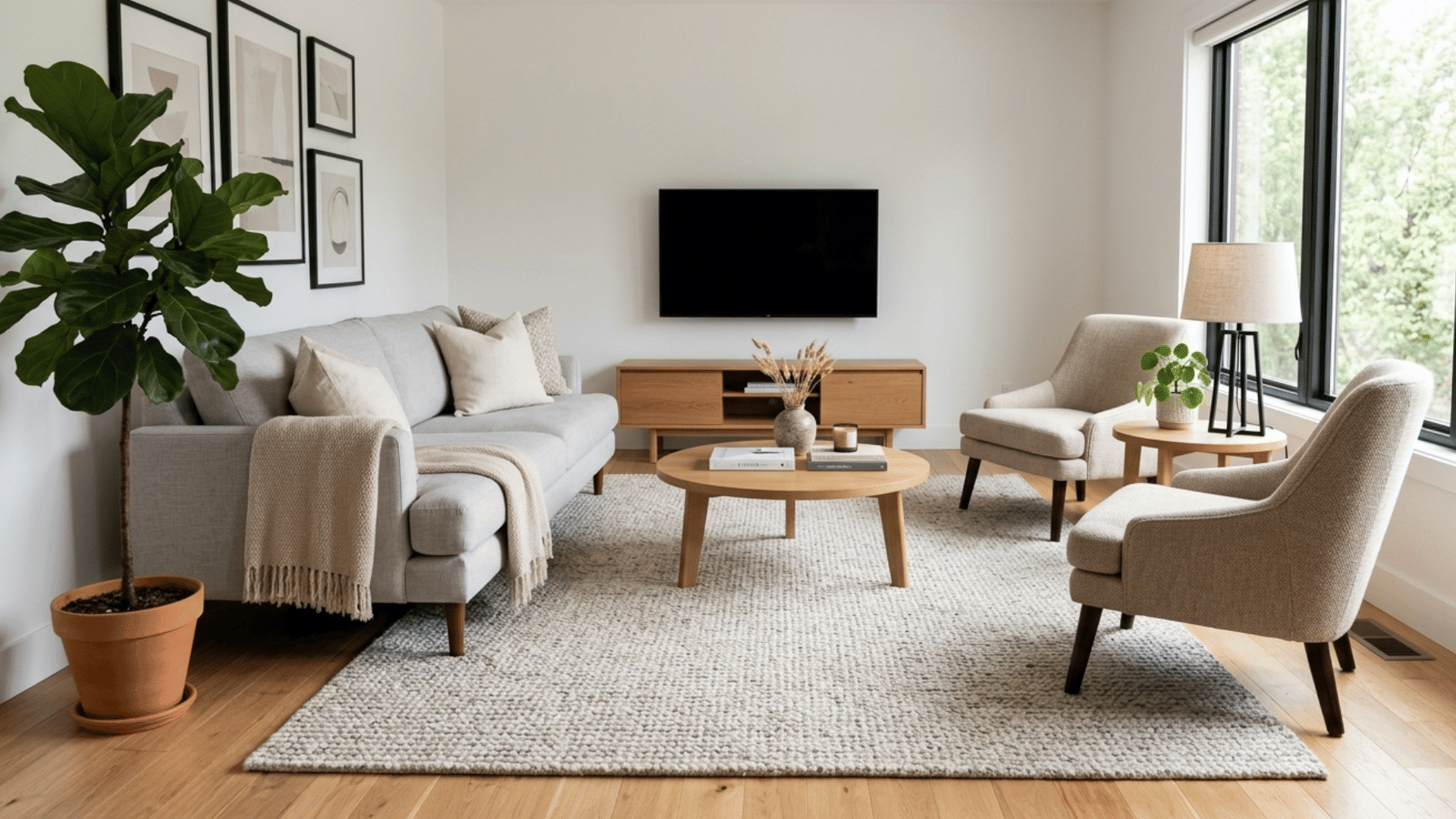
If you are wondering what size rug for living room works best in smaller spaces, a 6×9 rug is a smart choice. It fits well in small to medium living rooms where you want the space to feel open and not overcrowded.
This size usually sits under the front legs of sofas and chairs, helping tie the seating area together while keeping the layout visually balanced.
It works especially well in apartments or tighter layouts where an 8×10 rug might feel too large.
2. Bedroom
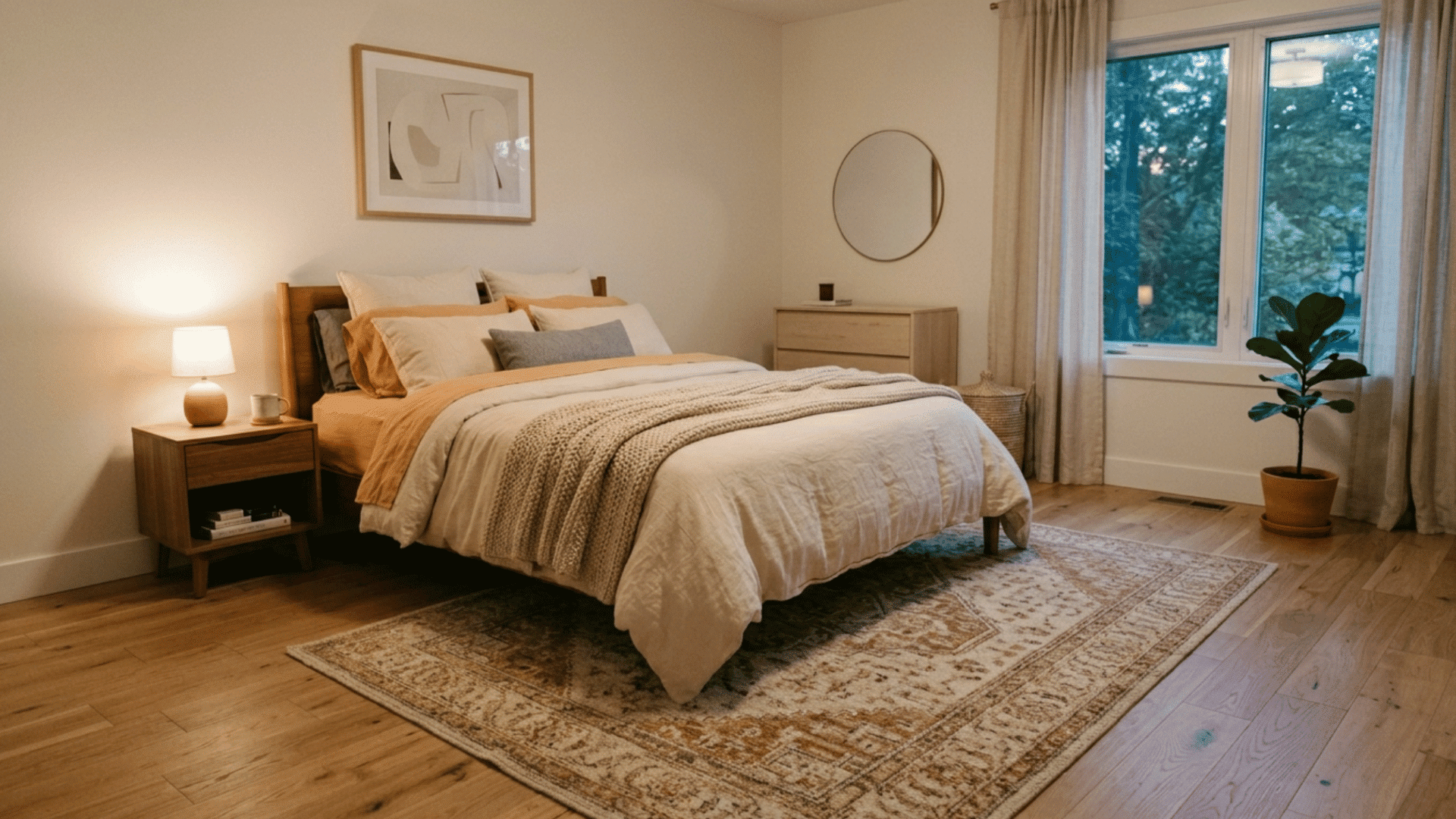
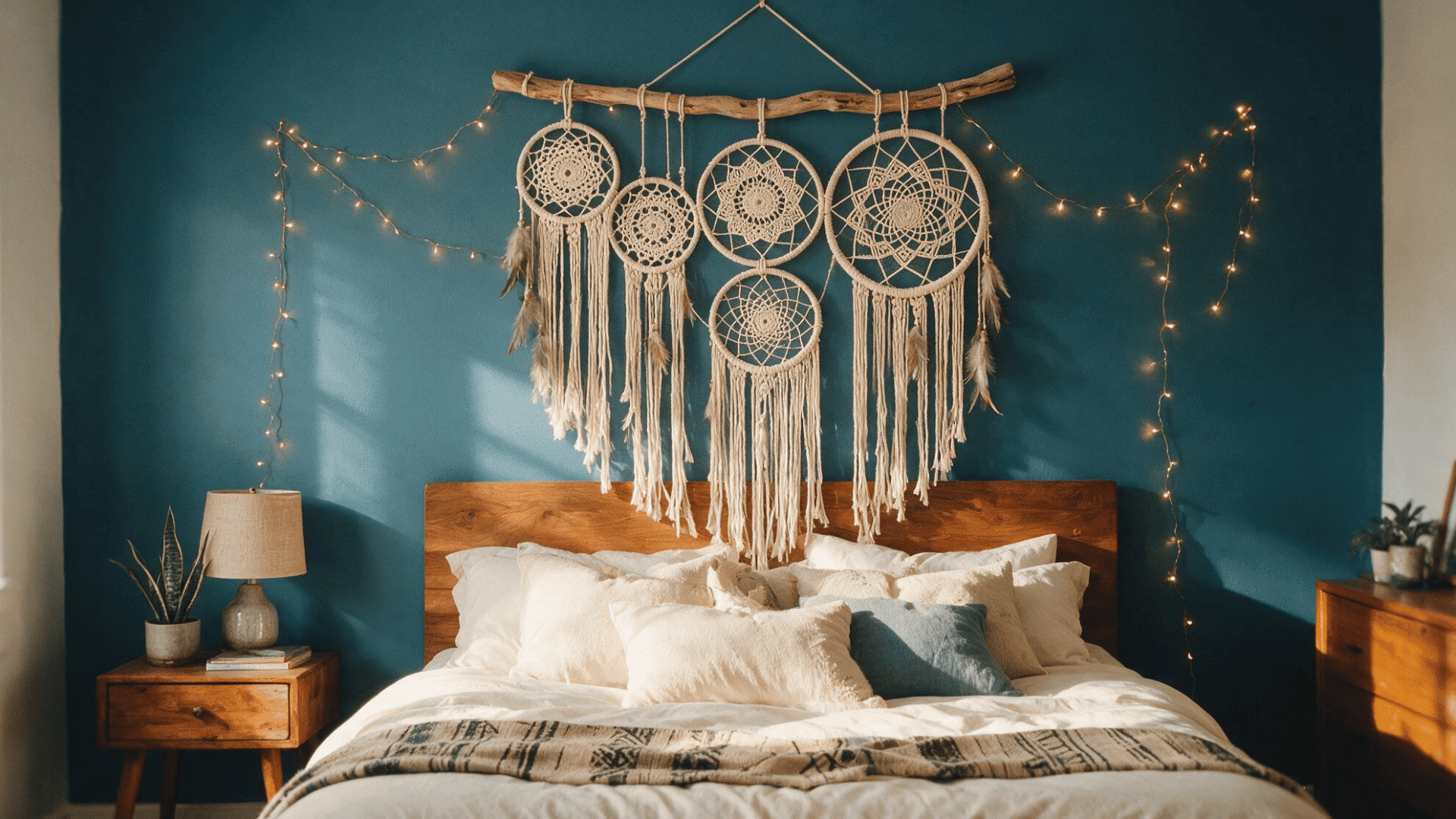
In a bedroom, a 6×9 rug works well under a queen bed when placed from the lower half. This creates a soft landing spot for your feet each morning.
It adds comfort without covering the entire floor, keeping the room from feeling too full. This size is especially useful in smaller bedrooms where space is limited.
3. Dining Area
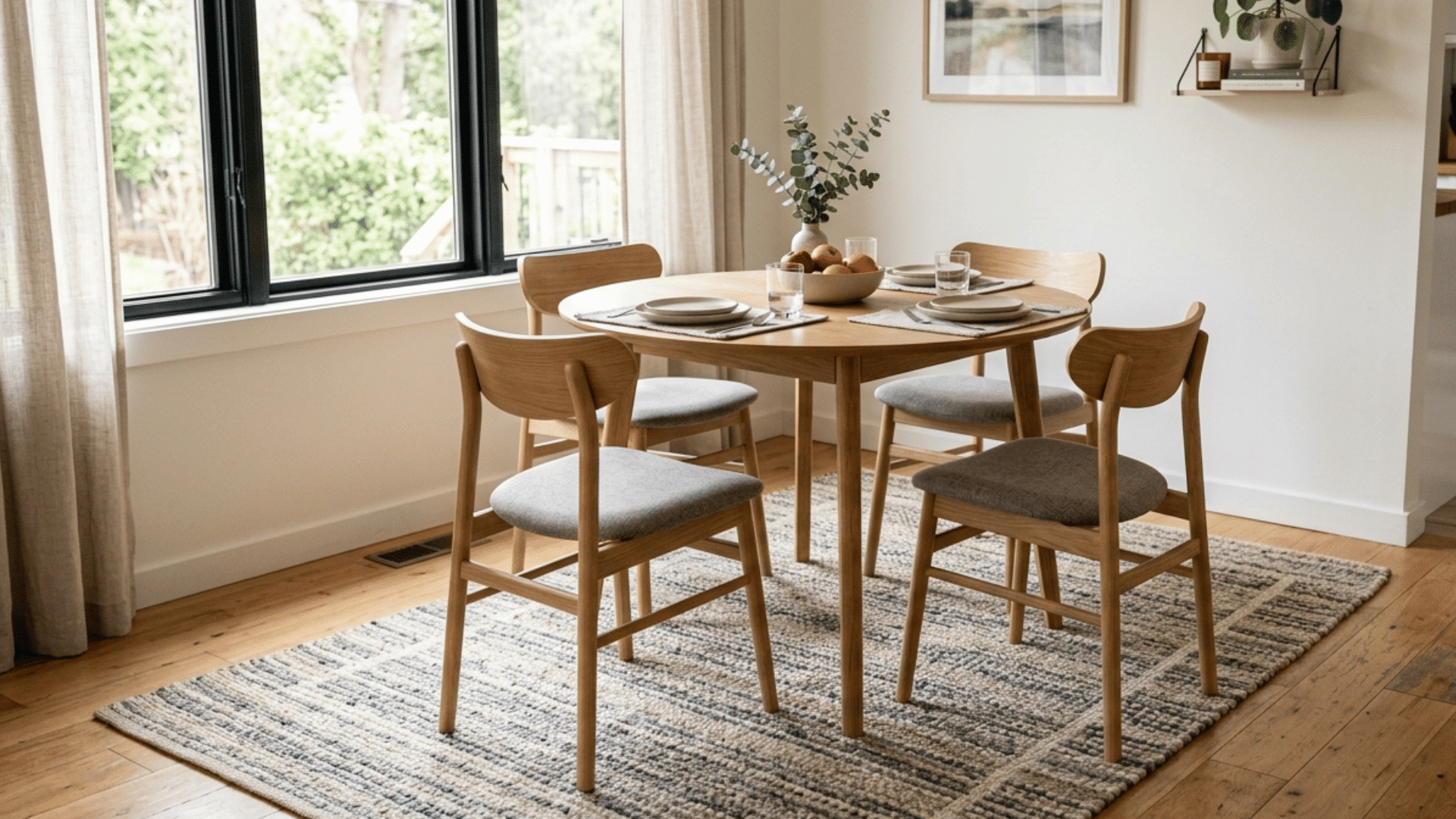
It suits small dining areas with a table and up to four chairs. It helps frame the dining setup and gives the space a more defined look.
For best results, ensure chairs stay on the rug even when pulled out slightly. This size works well in compact dining rooms or breakfast nooks.
It adds comfort underfoot and helps reduce noise, while still keeping the space open and easy to move around without feeling cramped.
4. Home Office
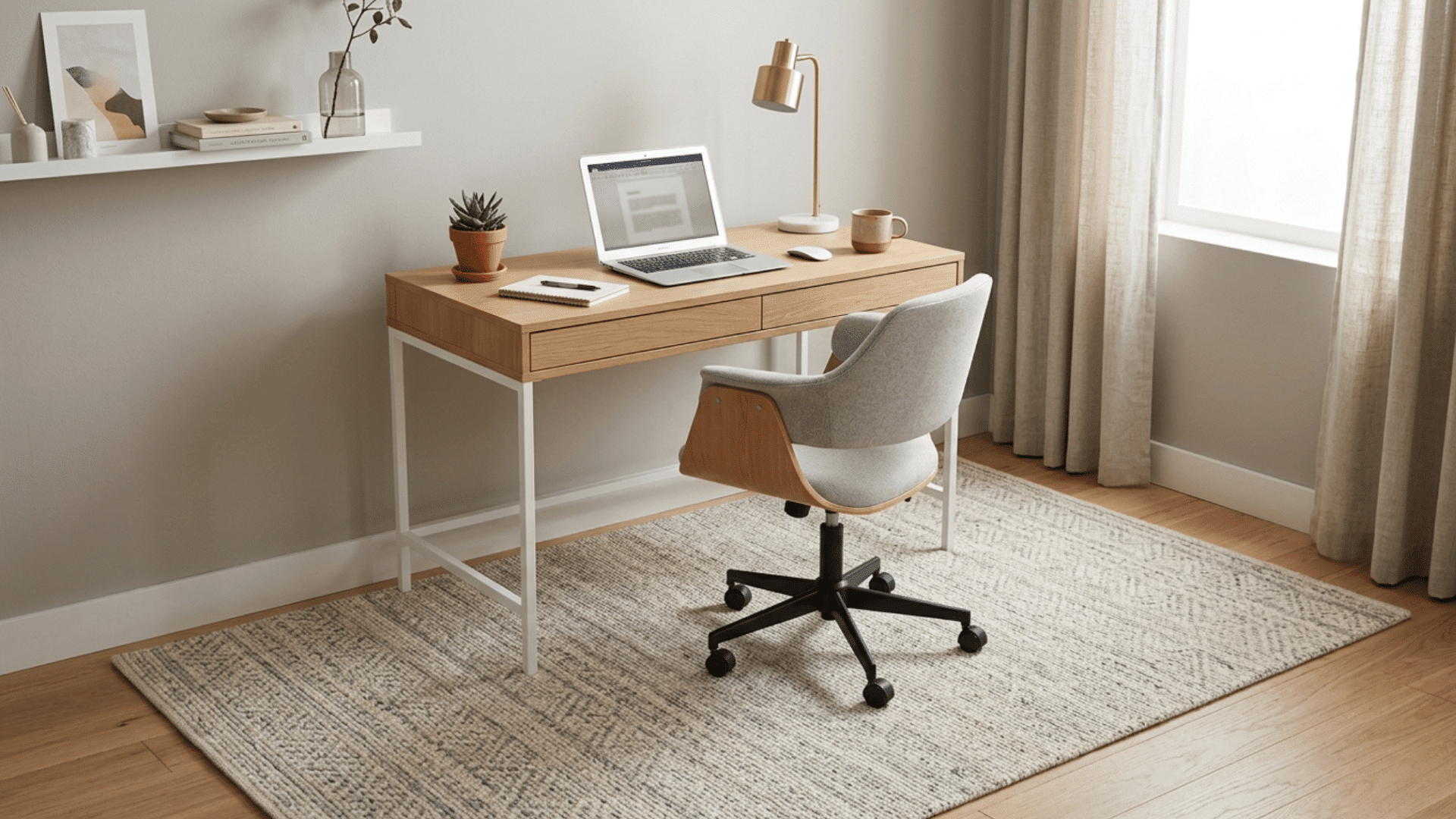
The rug fits nicely in a home office, especially in smaller rooms or work corners. It can sit under a desk-and-chair setup, adding softness underfoot while helping define the workspace.
This size keeps the area from feeling crowded while still adding warmth and texture. It also helps reduce noise and makes the room feel more inviting.
How to Choose the Right Rug Size?
Choosing from area rug sizes is just as important as picking the right design. Follow these simple rules, and you’ll avoid the most common rug mistakes.
- Measure Your Space First: Grab a tape measure before anything else. Know your room’s exact dimensions, so you’re not guessing when you shop.
- Leave 6 to 12 Inches From the Walls: A rug that runs wall to wall feels more like carpet. Keeping some floor visible around the edges gives the room a clean, balanced look.
- Match the Rug With Your Furniture Layout: The rug should connect your furniture, not sit under just one piece. At least the front legs of your sofa or chairs should rest on it.
- Scale the Rug to the Room Size: A small rug in a large room looks out of place. Always go for a size that fills a good portion of the floor space in proportion to the room.
- Consider the Rug’s Purpose: A rug under a dining table needs extra length so chairs stay on it even when pulled out. A bedside rug just needs enough width to frame the bed nicely.
- Stick to Standard Sizes When Possible: Standard sizes are easier to find, replace, and style around. Custom sizing costs more and limits your options down the line.
The Bottom Line
Choosing the right rug comes down to knowing your space and being honest about how you use it. A 6×9 works beautifully in many rooms, but it is not a one-size-fits-all answer.
Measure twice, buy once, and do not let looks alone drive the decision. The right size will make your room feel pulled together without you even knowing why.
Use this 6×9 rug size comparison, get that part right, and everything else falls into place pretty naturally.
Frequently Asked Questions
Is an 8×10 Rug Bigger than A 6×9 Rug?
Yes, an 8×10 rug is bigger and covers more floor area than a 6×9 rug. It works better for larger rooms where more furniture needs to sit on the rug.
Does a Rug Make a Small Room Look Bigger or Smaller?
A correctly sized rug can make a small room feel bigger and more open. A rug that is too small can break the layout and make the space feel smaller.
How to Layer a 6×9 Rug?
Layer a 6×9 rug over a larger neutral rug to add depth and texture. Make sure the bottom rug is visible around the edges for a balanced look.