

Kitchen renovation ideas often start with a simple goal: making the space more functional while improving its overall look. But with so many options out there, it’s easy to overthink the process, especially when finding latest kitchen designs that influence current choices.
Some choices make a real difference in daily use. Others just add to the budget without adding much value. This blog will walk you through practical kitchen design ideas that cover layout, storage, and overall style.
The goal is to keep things straightforward, so it’s easier to find ideas that genuinely fit the space without overcomplicating the plan.
The Importance of Kitchen Layout and Function
Kitchen renovation works best when layout and function come first. Focusing on how the space is used daily helps create a design that actually works.
- Traffic Flow: Identify bottlenecks where movement feels restricted, especially around cooking and prep areas.
- Storage Gaps: Notice where storage is lacking so cabinets and organizers can be planned more efficiently.
- Workflow Efficiency: A good layout reduces unnecessary steps between cooking, cleaning, and storage zones.
- Space Utilization: Smart planning can make the kitchen feel larger without changing its actual size.
- Planning Foundation: Once the layout is set, decisions about cabinets, countertops, and finishes become easier and more practical.
Kitchen Renovation Ideas for a Better Look
These ideas focus on layout, storage, and design choices that shape a practical remodeling plan while keeping things simple to follow.
1. Open-Plan Layout
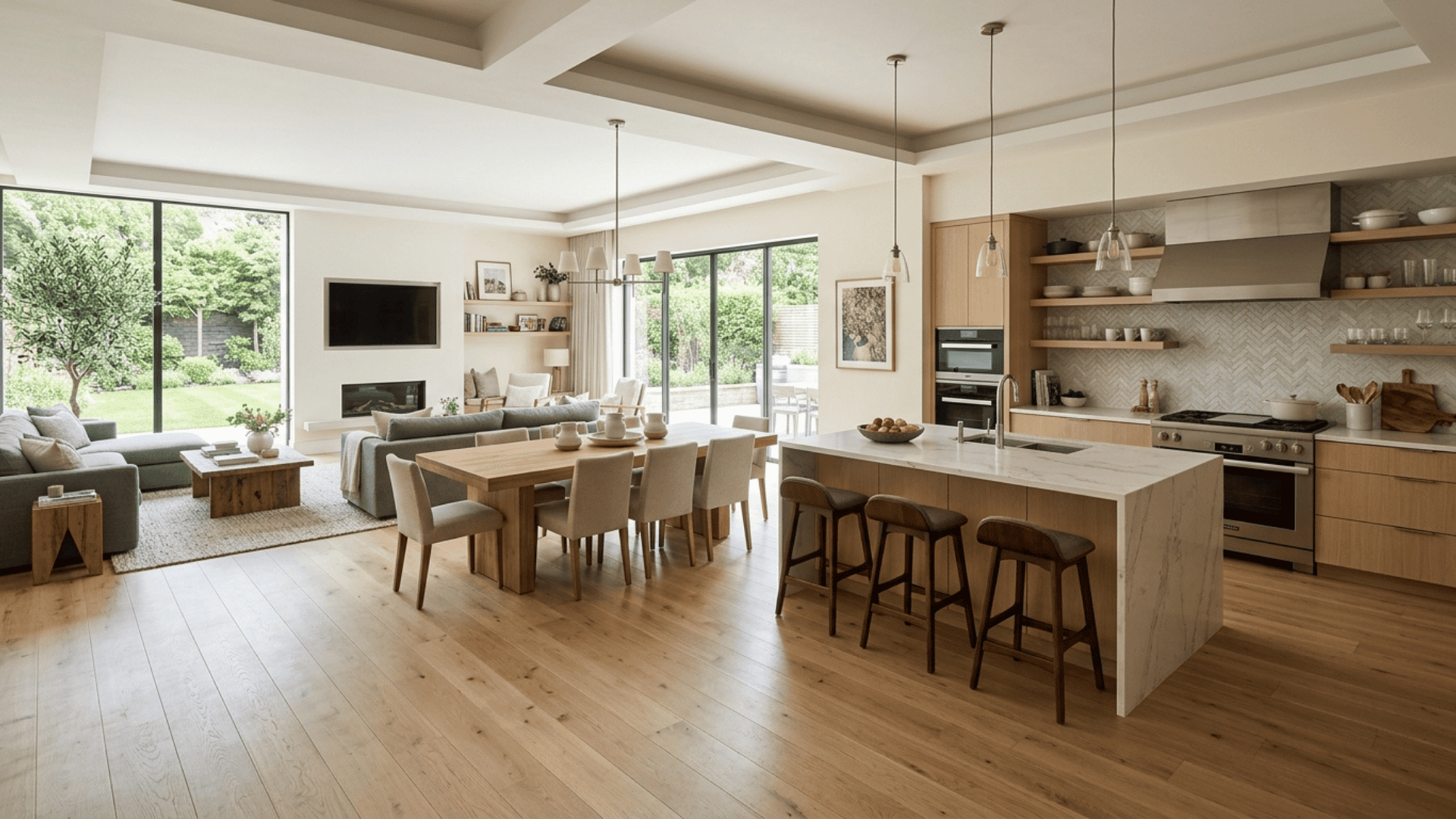
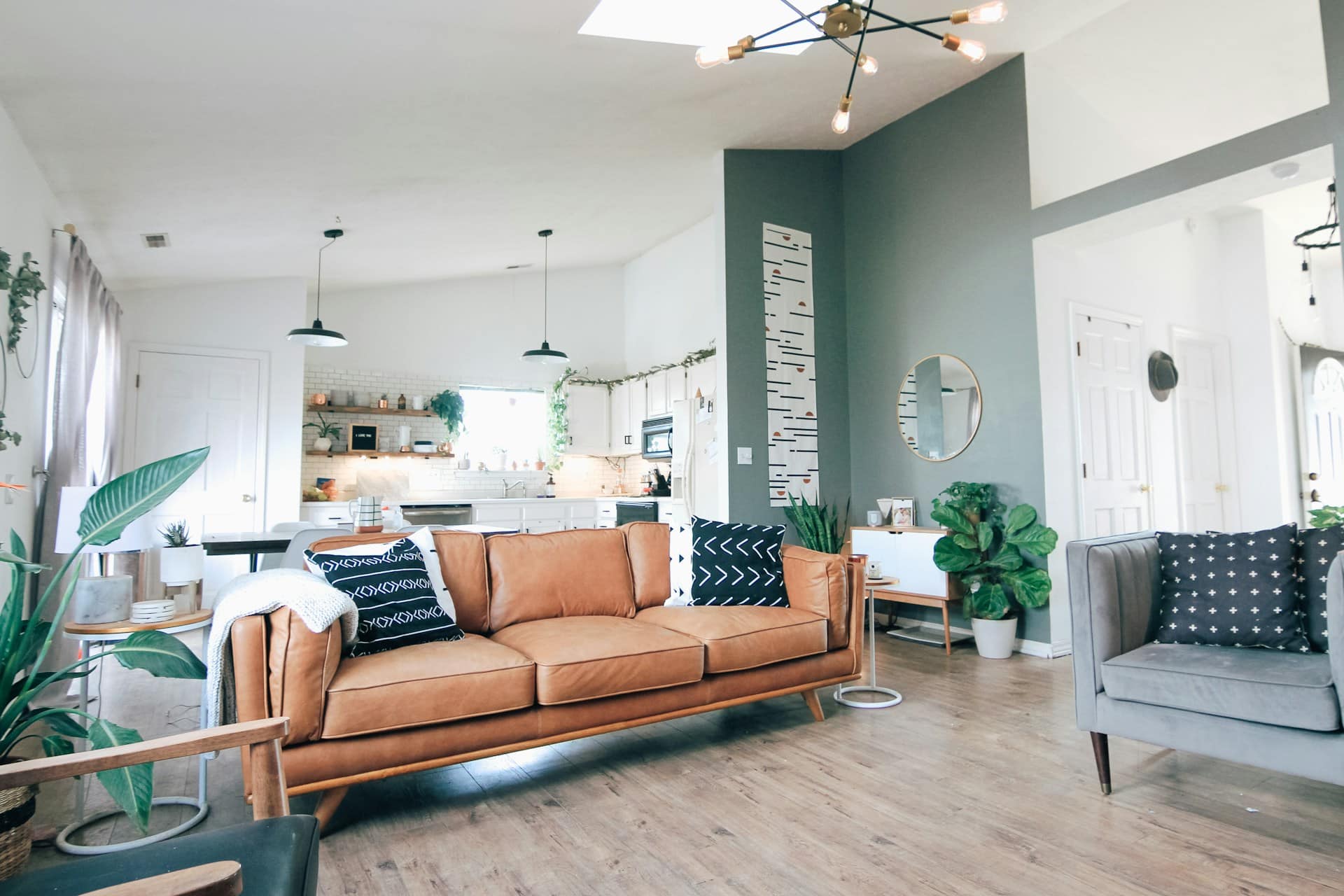
One of the most popular kitchen renovation ideas right now is the open-plan layout. Removing the wall between the kitchen and the living or dining area creates a space that feels more open and connected.
If you’re looking for layout inspiration, these small open concept kitchen and living room ideas can help you see how different setups work in real homes.
That said, it’s important to keep the trade-offs in mind. Noise, smells, and clutter become more visible, so storage and organization need extra thought.
2. Broken-Plan Layout
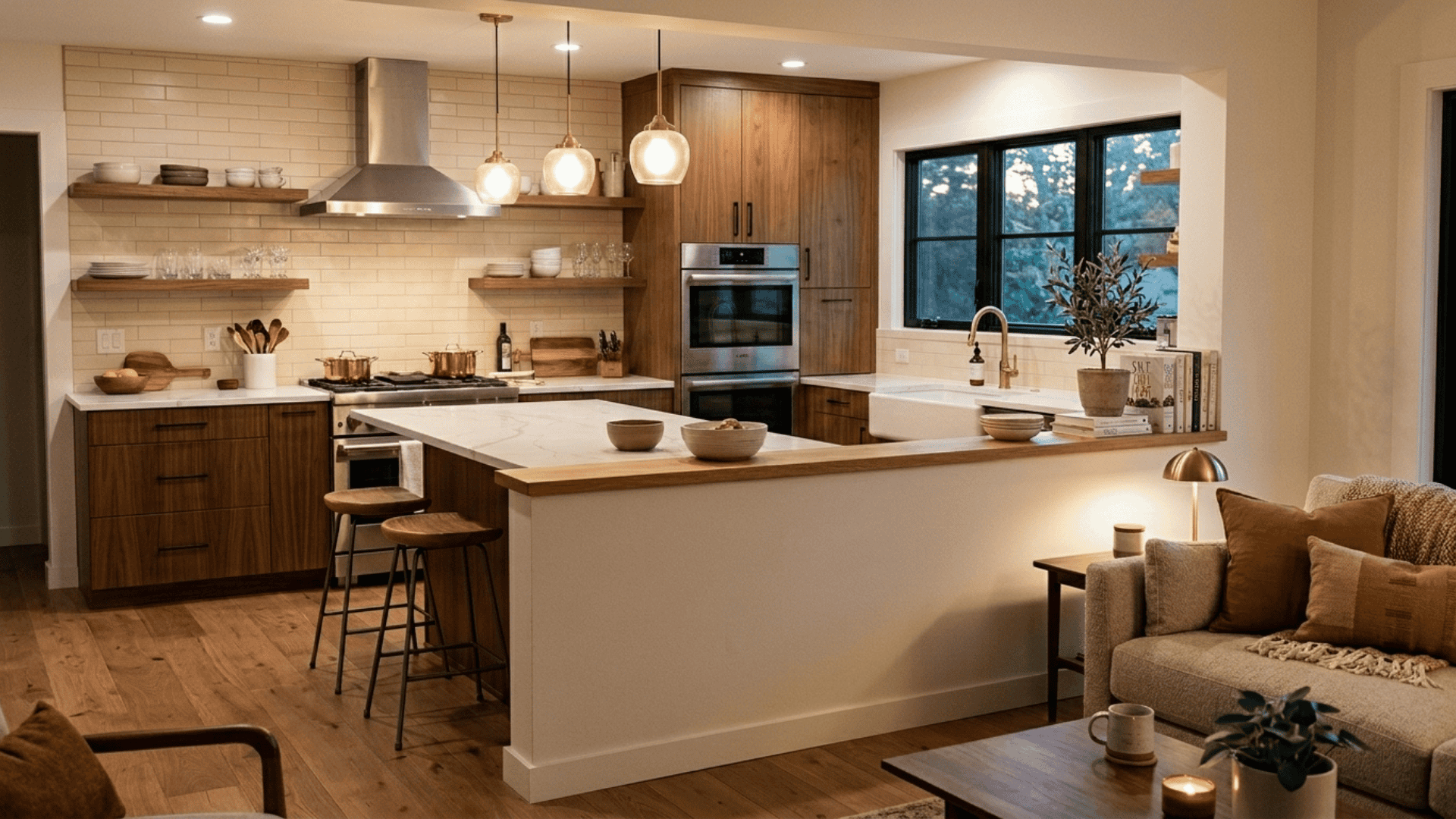
If a fully open kitchen feels like too much of a commitment, a broken-plan layout is worth considering. It uses partial dividers or half walls while still maintaining a visual connection.
This kitchen remodeling approach works well in homes that need some separation without completely closing things off. The space stays open, but still manages cooking mess and noise better.
3. One-Wall Kitchen
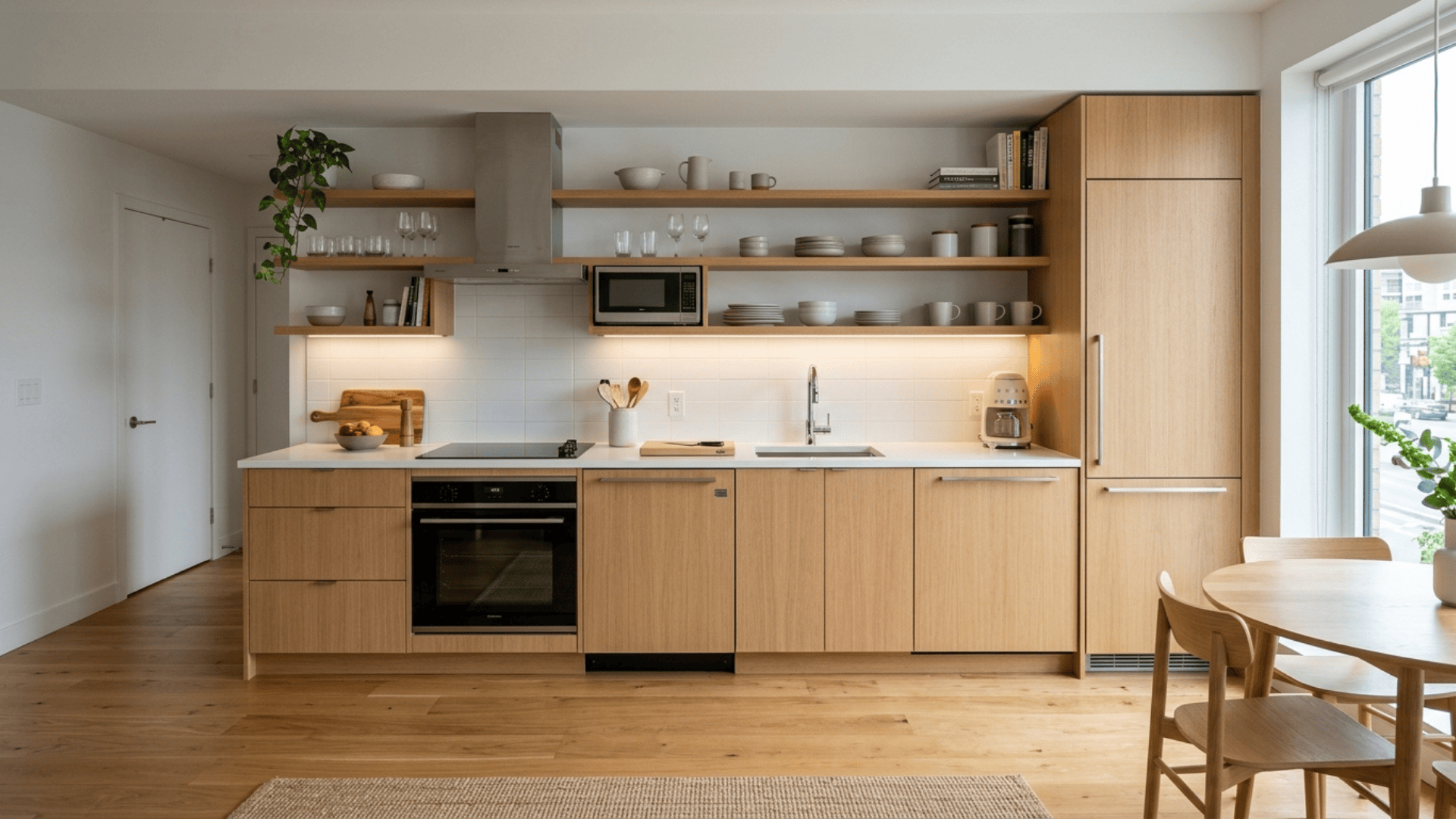
A one-wall kitchen is a smart option for smaller homes or open layouts with limited space. Keeping everything along a single wall helps maintain a clear, uncluttered kitchen design without crowding the space.
That said, planning storage becomes important here. Cabinets, shelves, and vertical space need to be used well to keep the kitchen remodeling layout functional.
4. Galley Layout
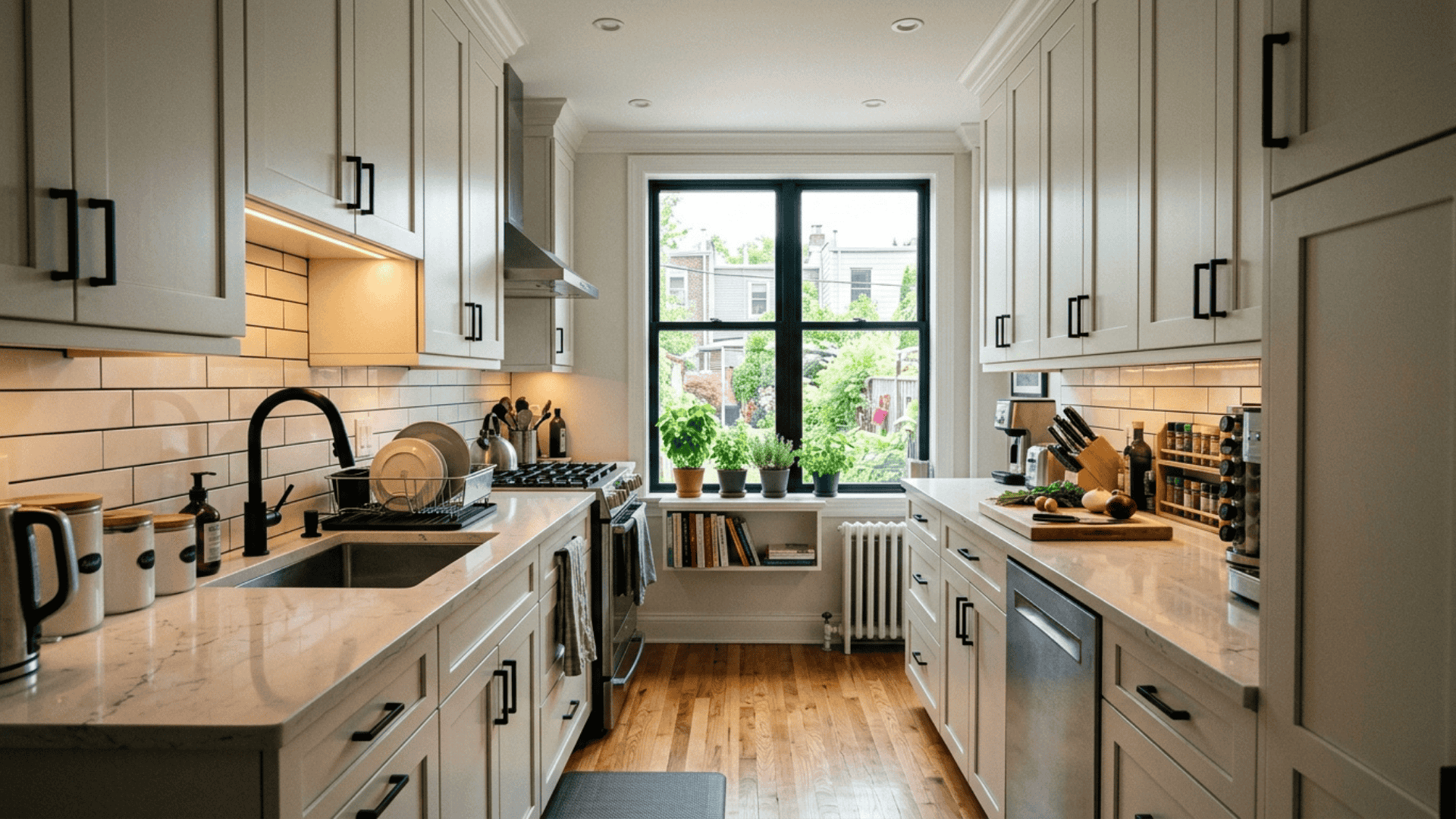
The galley layout works by placing two parallel counters with a walkway in between, making it one of the most efficient kitchen renovation ideas.
I’ve seen this setup work especially well for cooking-focused spaces where movement stays efficient and uninterrupted.
At the same time, it can feel narrow if not planned right. Good lighting and smart storage can help make the space feel more open and comfortable.
5. L-Shaped Layout
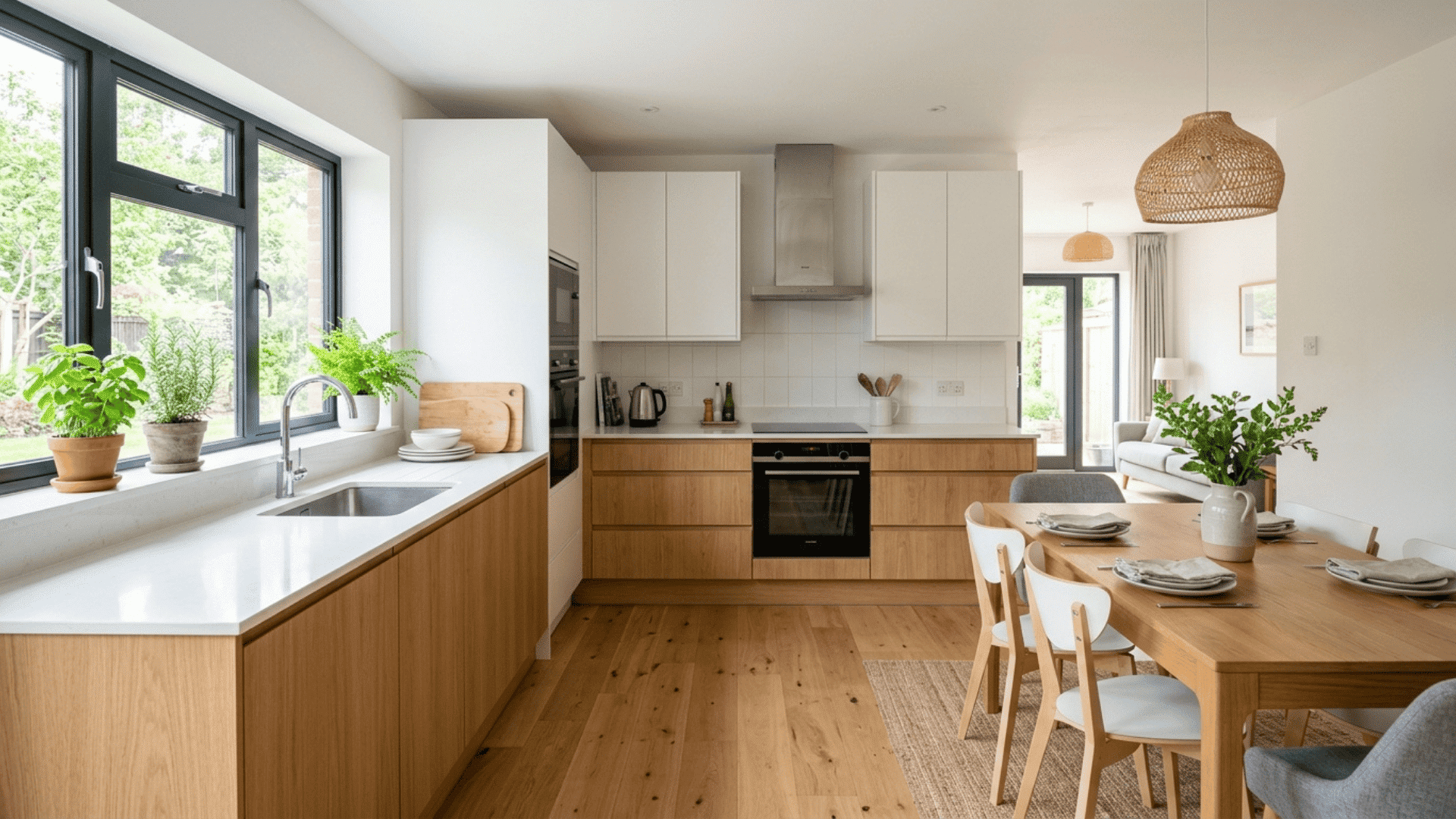
An L-shaped kitchen uses two walls to create an open, flexible layout. This layout is useful because it allows smooth movement and leaves room for dining or additional seating.
It also adapts well to homes of different sizes. With the right placement of appliances and storage, it can support both functionality and a clean kitchen design.
6. U-Shaped Layout
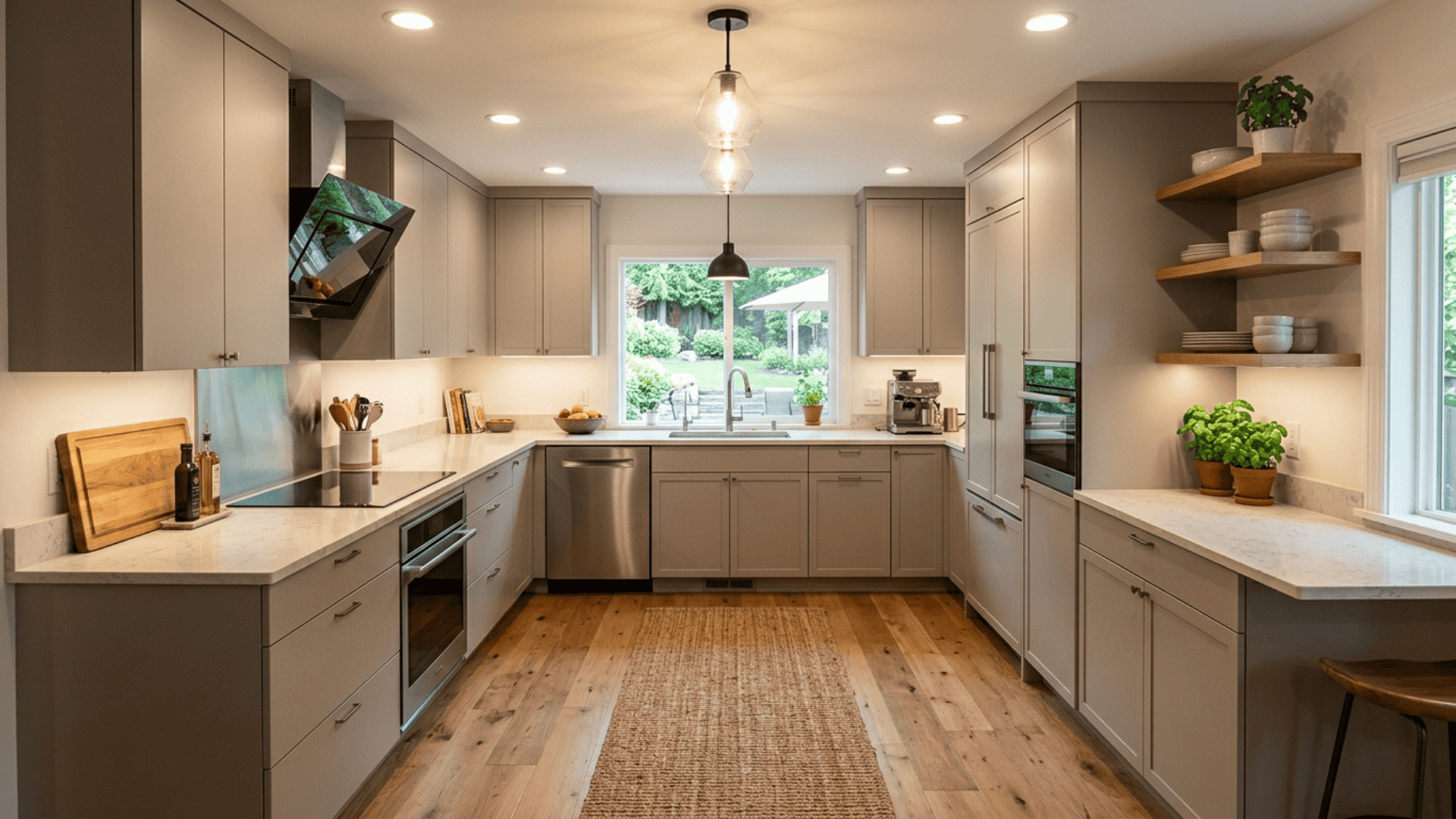
A U-shaped kitchen uses three walls to create a compact, efficient layout. This kitchen renovation idea works well for maximizing counter space and keeping everything within easy reach.
At the same time, it can feel closed in smaller rooms. Keeping the upper area light or partially open helps balance the layout better.
7. Peninsula Design
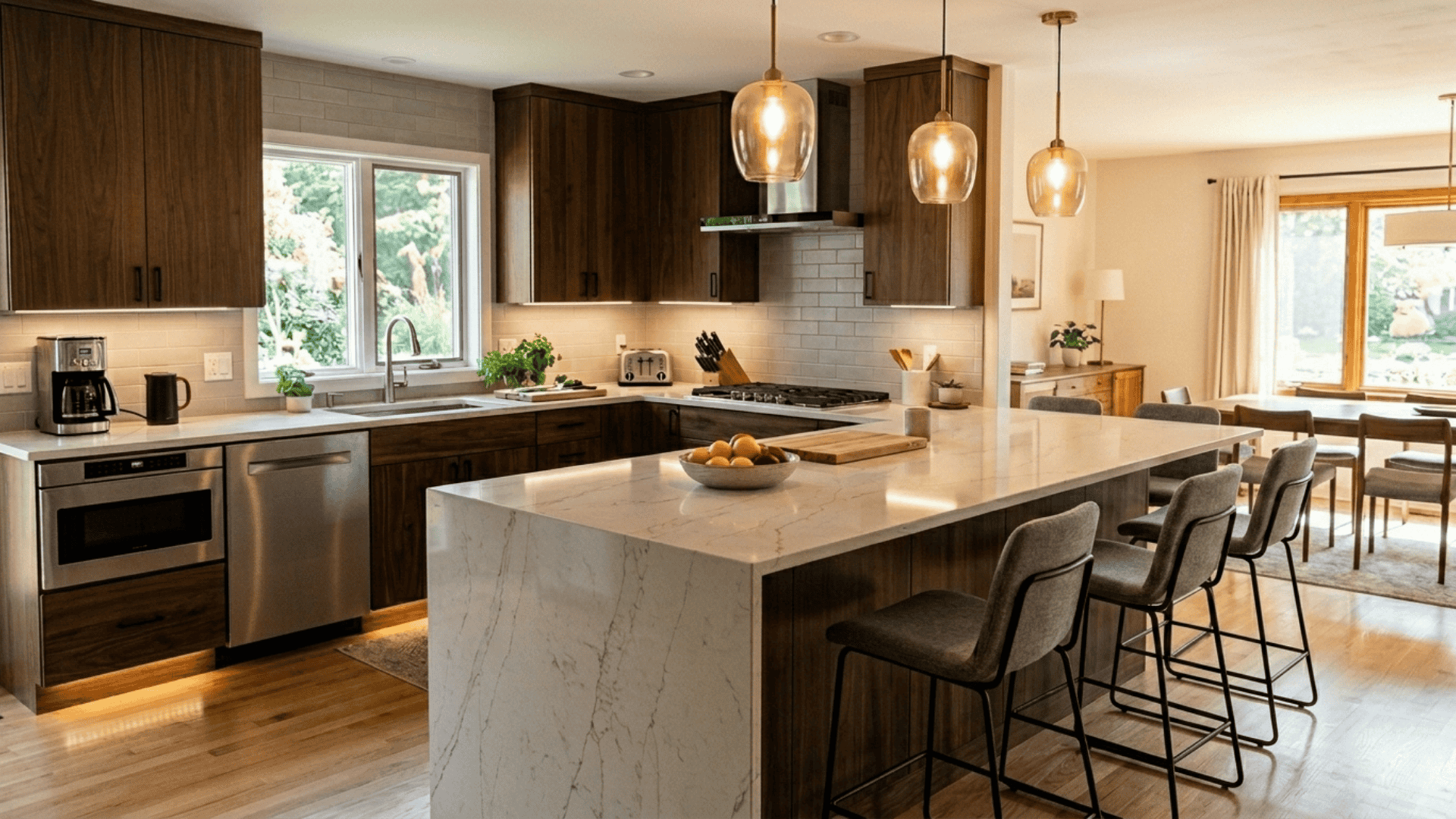
A peninsula layout extends from a wall or cabinet run, adding extra workspace without needing a full island.
This kitchen remodeling idea works well in homes with limited space but where additional seating is needed.
It also helps define the kitchen area while keeping it connected to the rest of the space.
8. Double Island Setup
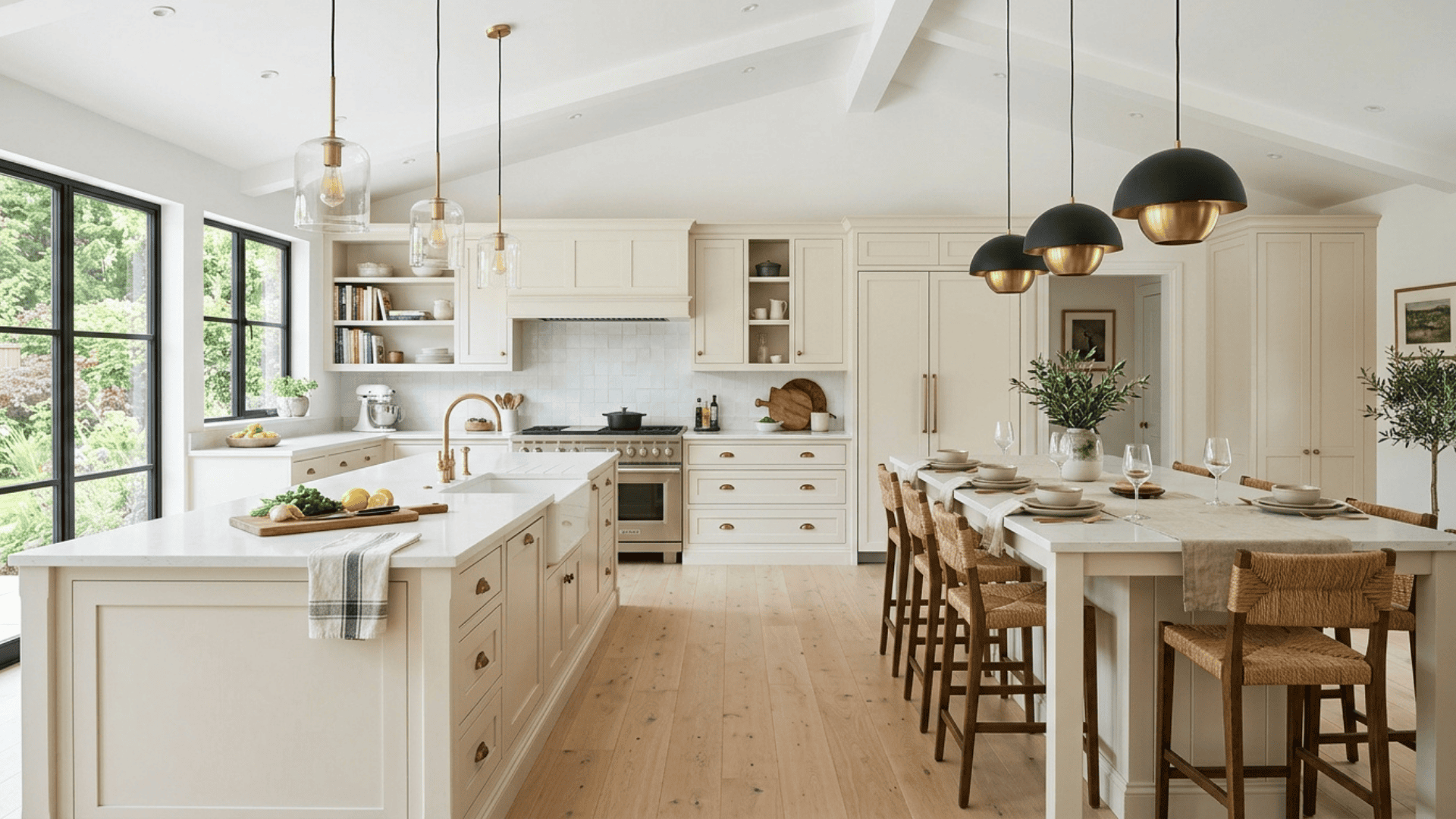
A double-island setup is often used in larger kitchens to separate the prep and dining areas.
This kitchen design idea allows multiple people to use the space at the same time without causing disruption. However, it requires sufficient room to maintain proper movement between the two islands.
9. Island with Prep Sink
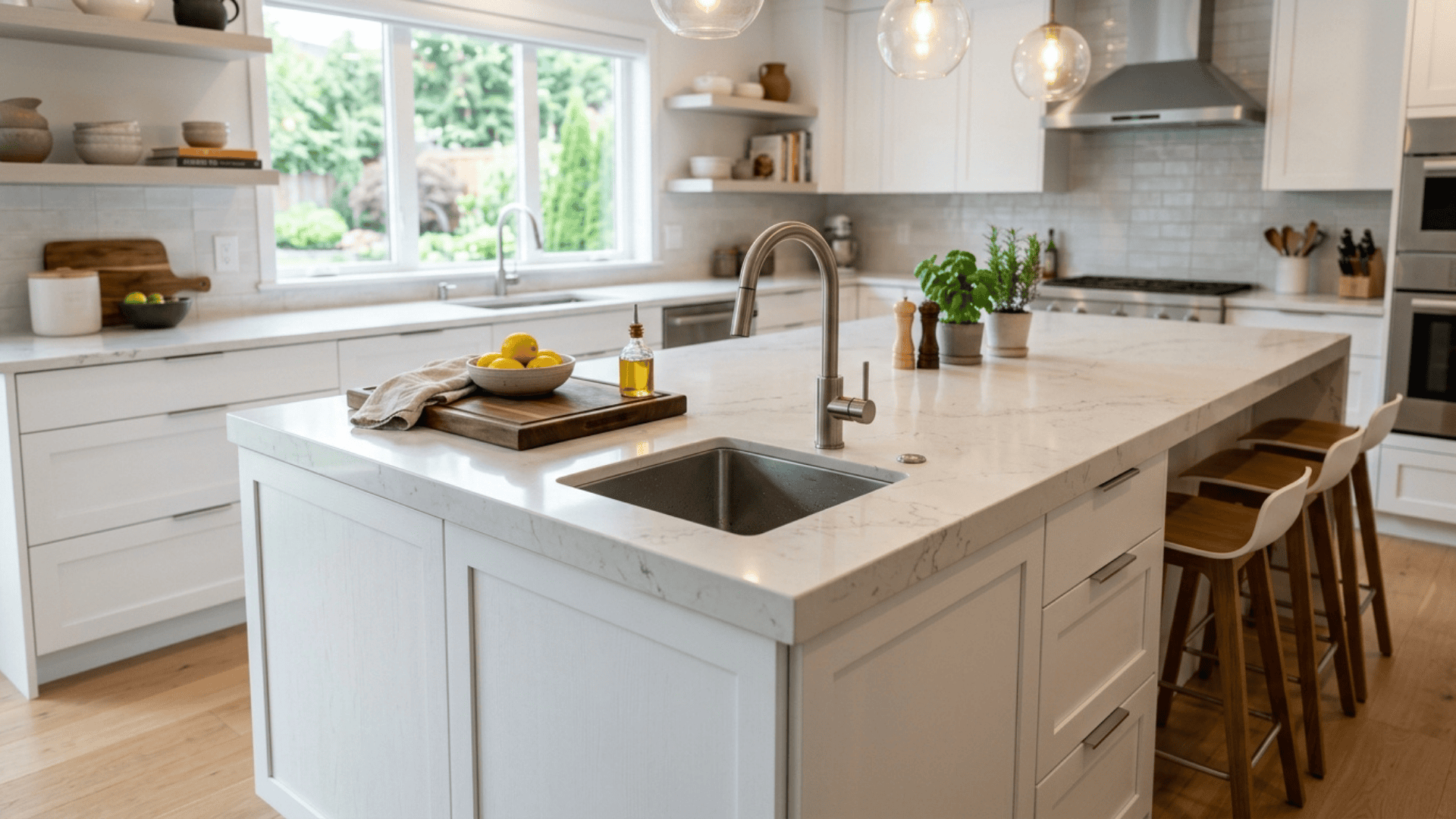
Adding a prep sink to the island makes daily tasks more efficient by creating a dedicated space for washing and cutting.
This idea is specifically useful in busy kitchens where multiple tasks are happening simultaneously. It also helps reduce movement between the main sink and cooking area.
10. Island with Cooktop
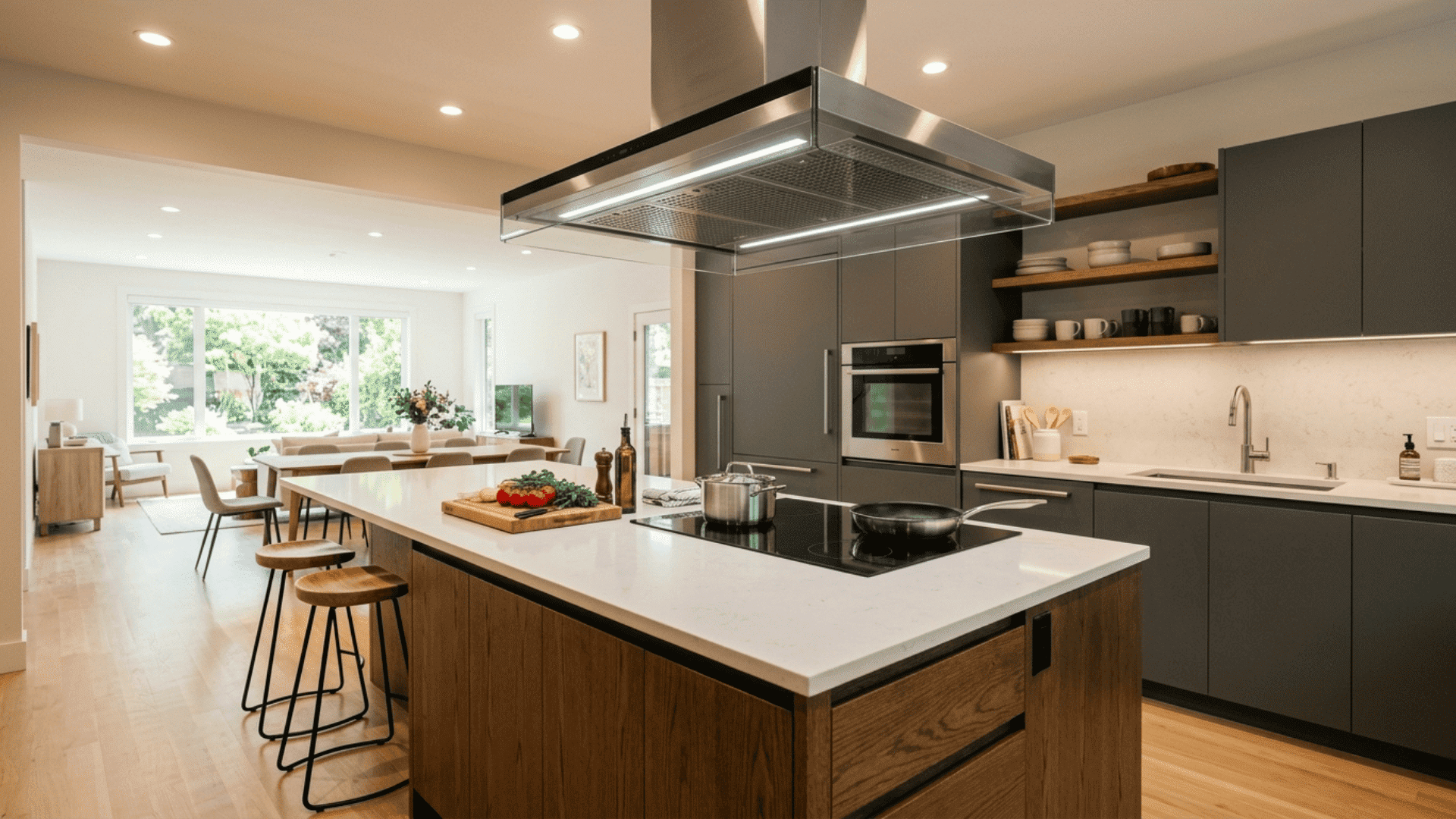
Placing a cooktop on the island turns it into a central cooking zone. This idea works well in open layouts where interaction is part of the design.
Proper ventilation becomes important here, so planning for a hood or downdraft system is key. It also helps keep the main counter space free for prep and serving.
11. Waterfall Island
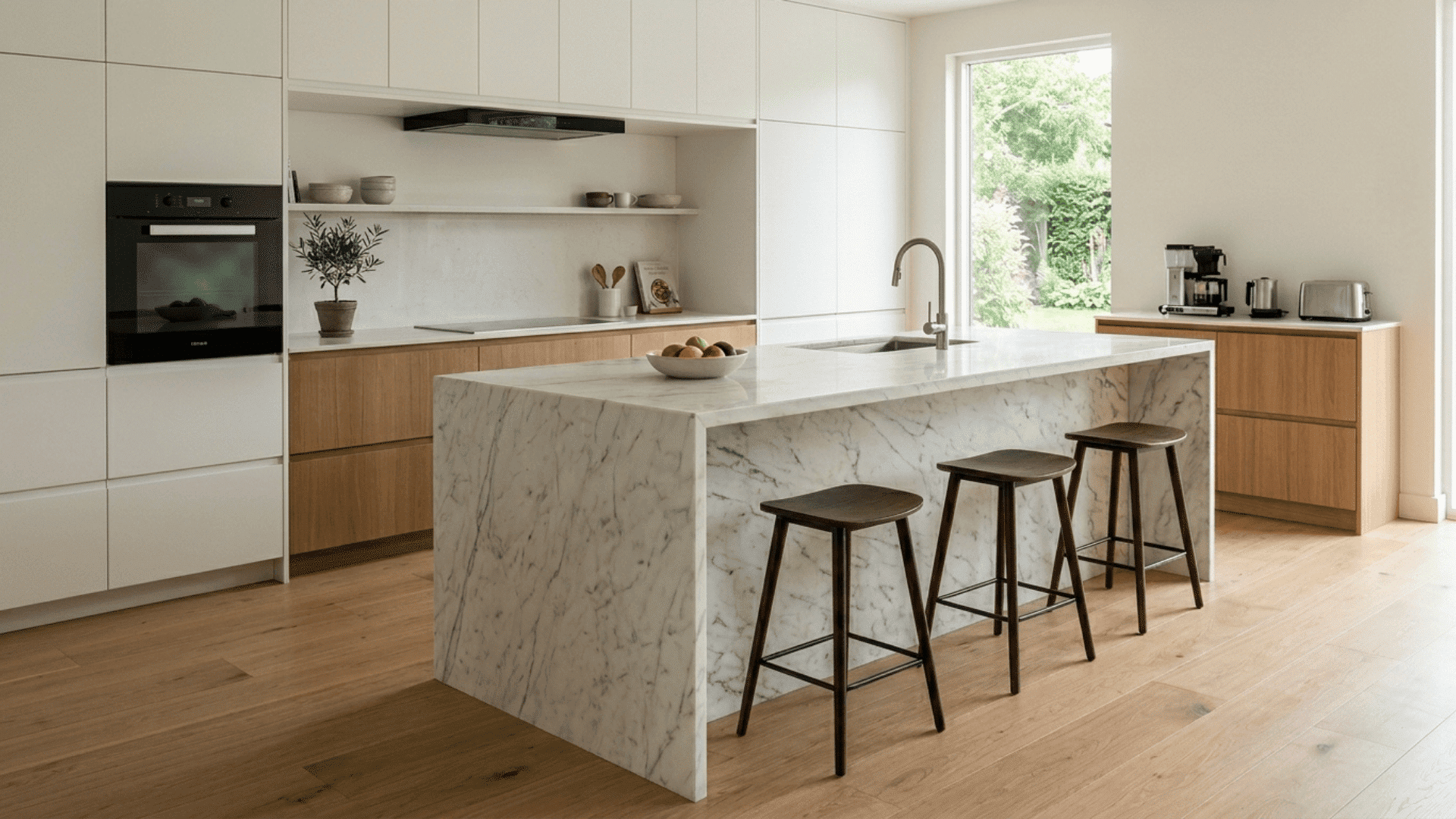
A waterfall island extends the countertop material down the sides, creating a continuous look. This kitchen design idea creates a strong visual element without adding extra components.
It works best when paired with simple cabinetry to keep the focus on the island. The clean edges also make the space feel more structured and defined.
12. Built-In Dining Nook
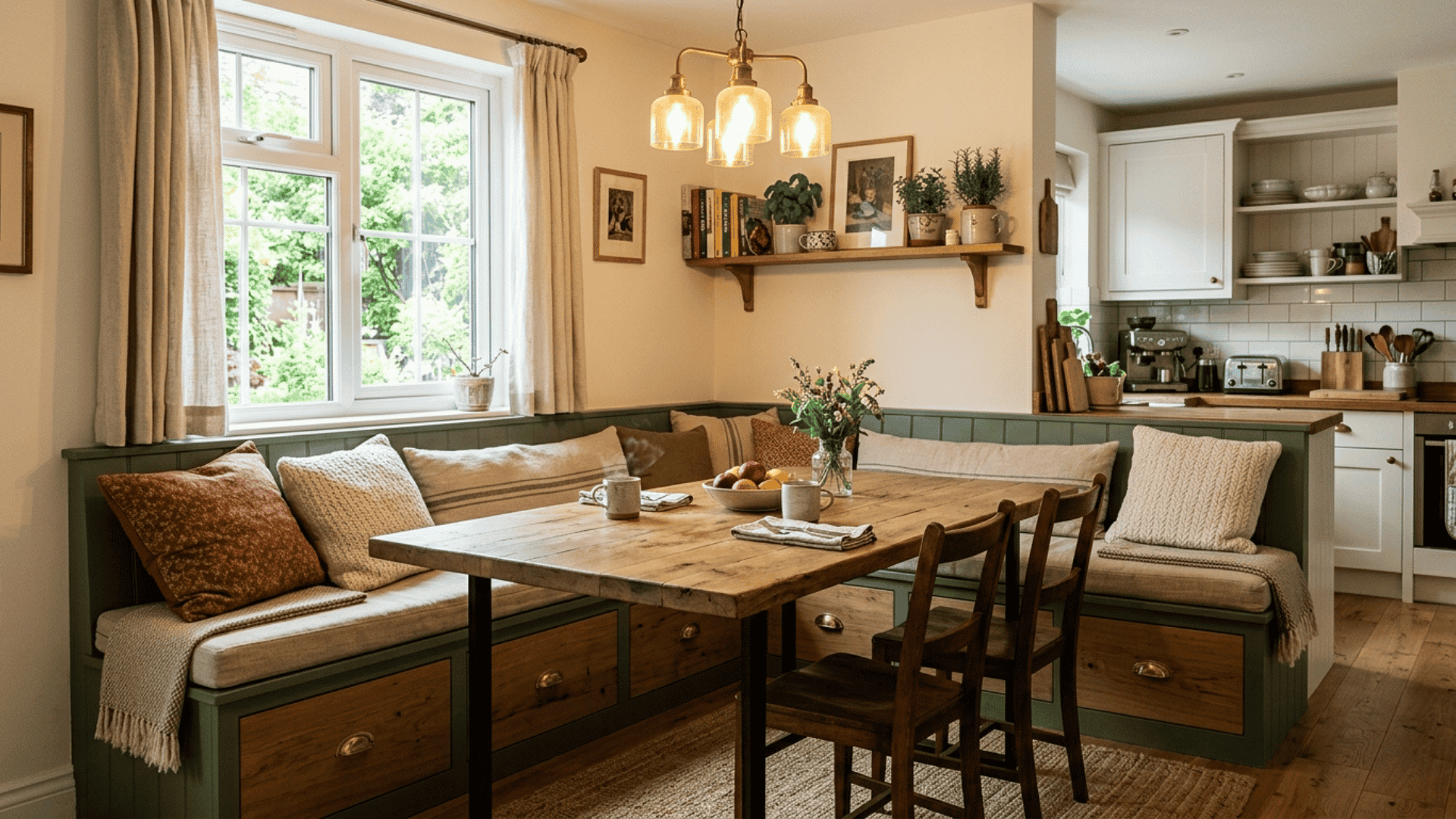
A built-in dining nook uses corner space for seating and meals. I’ve seen this kitchen renovation idea fit well in smaller homes where a full dining area isn’t practical.
It also helps create a defined eating space within the kitchen layout. Adding storage under the seating can further improve its usability.
13. Walk-In Pantry
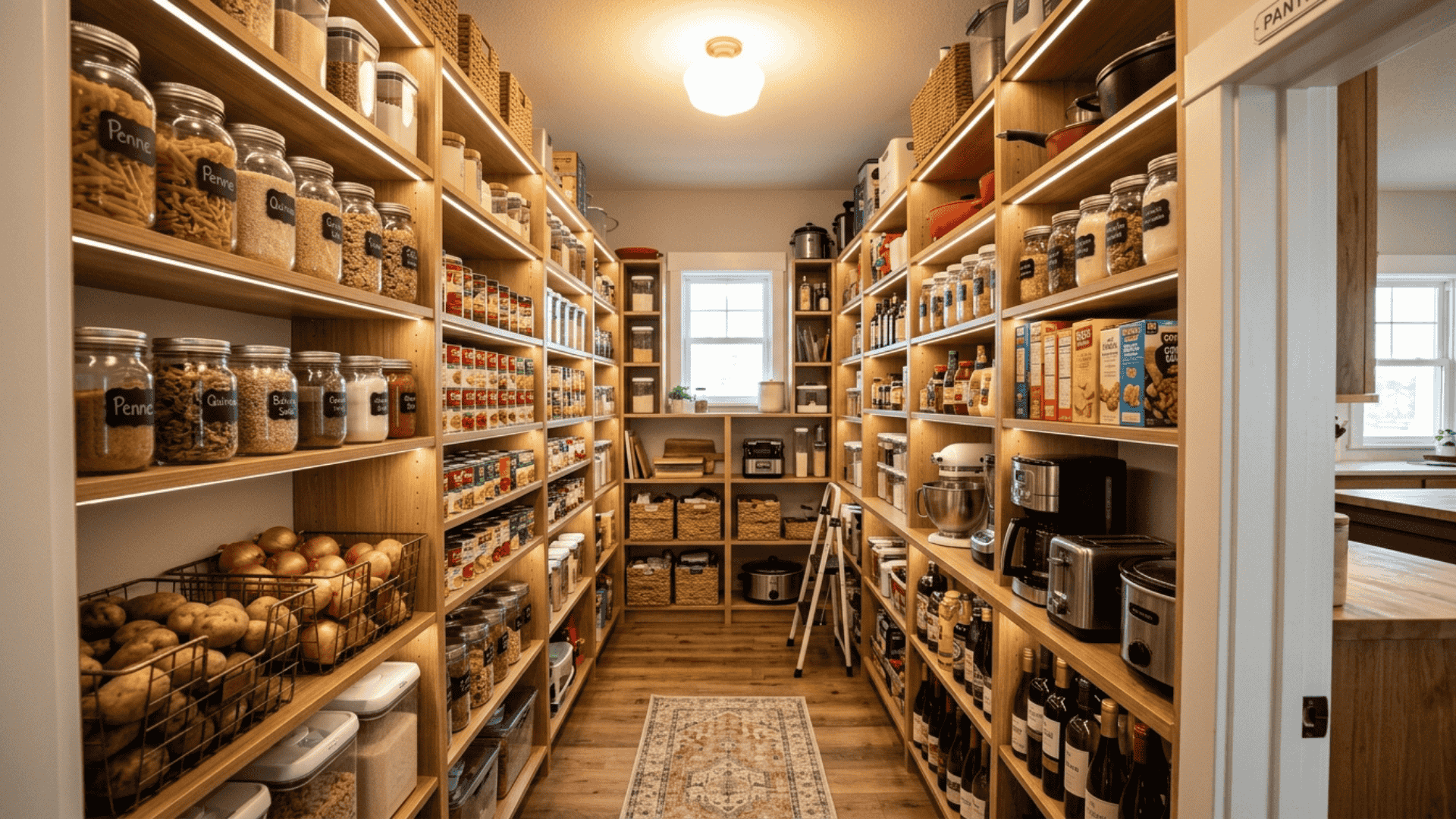
A walk-in pantry creates a separate area for storing groceries, appliances, and bulk items. This helps reduce clutter in the main cooking space.
Having a dedicated storage zone also makes it easier to keep things organized and find them. It works especially well in homes that need extra storage without affecting the kitchen layout.
14. Pantry Wall Storage
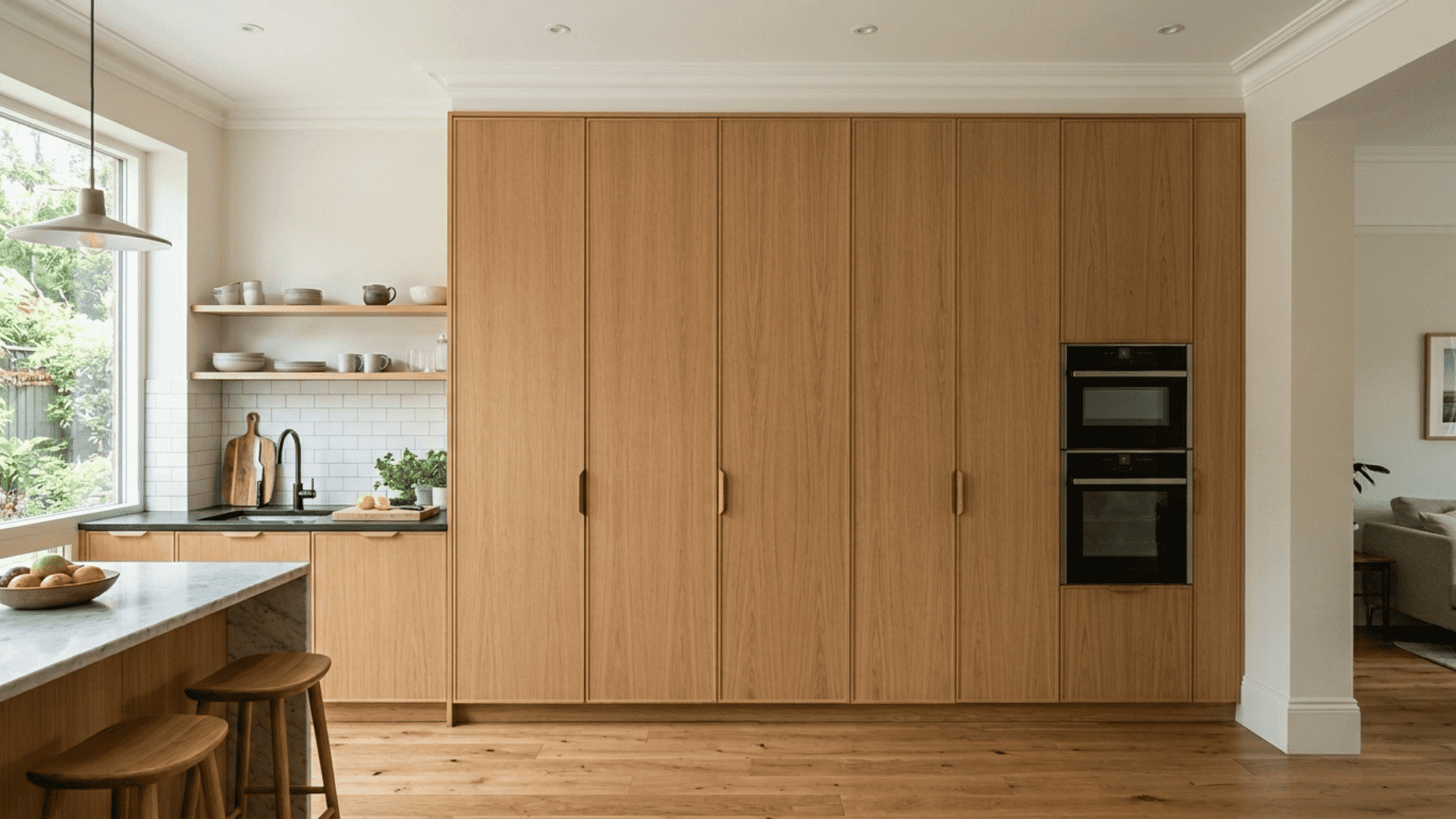
A pantry wall uses floor-to-ceiling cabinets to maximize storage within the kitchen. This design idea works well when a separate pantry isn’t possible.
Everything remains easily accessible while still maintaining a clean and consistent layout. It also helps keep the overall design simple without adding extra sections.
15. Appliance Garage
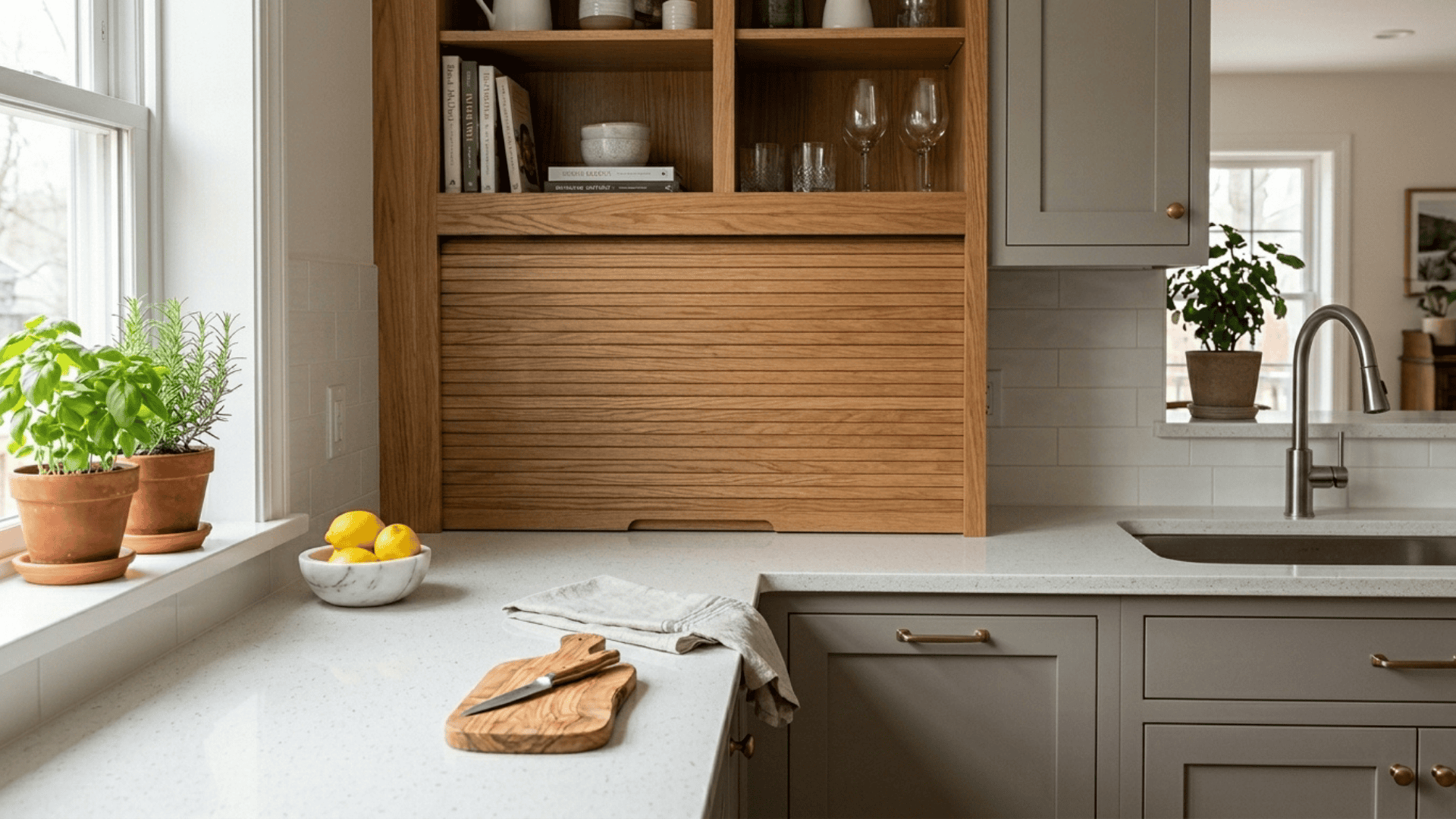
An appliance garage keeps small appliances like mixers and toasters hidden behind closed doors. This idea is useful for clearing up counter space without affecting access.
It works well for keeping the surface neat while still being practical. This setup is helpful in kitchens with limited counter space.
16. Deep Drawer Cabinets
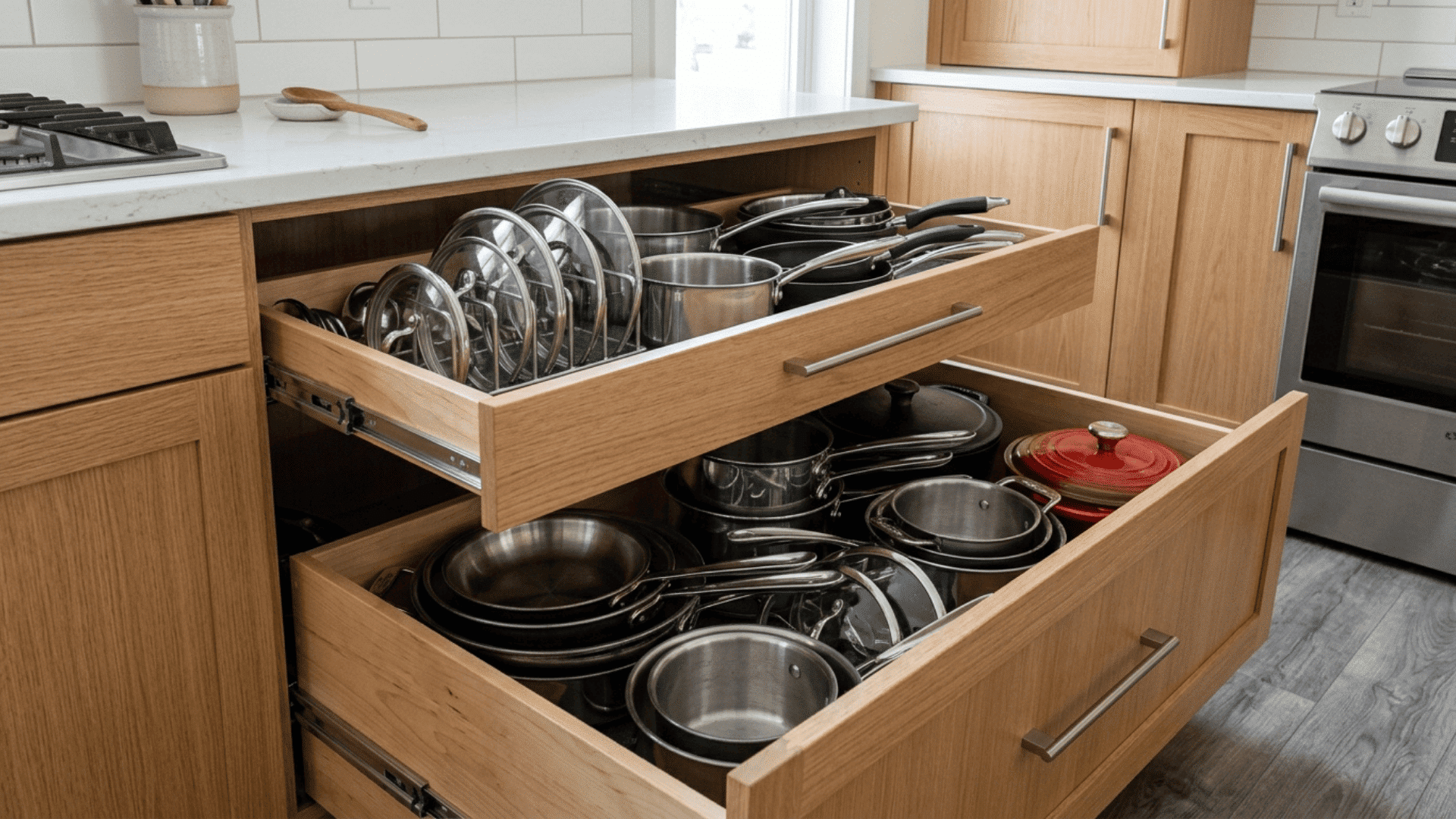
Deep drawer cabinets replace traditional lower cabinets for easier access to cookware. This kitchen renovation idea makes storing larger items more convenient.
Pull-out drawers also improve visibility compared to fixed shelves. It also reduces the effort needed to reach items stored at the back.
17. Smart Corner Storage
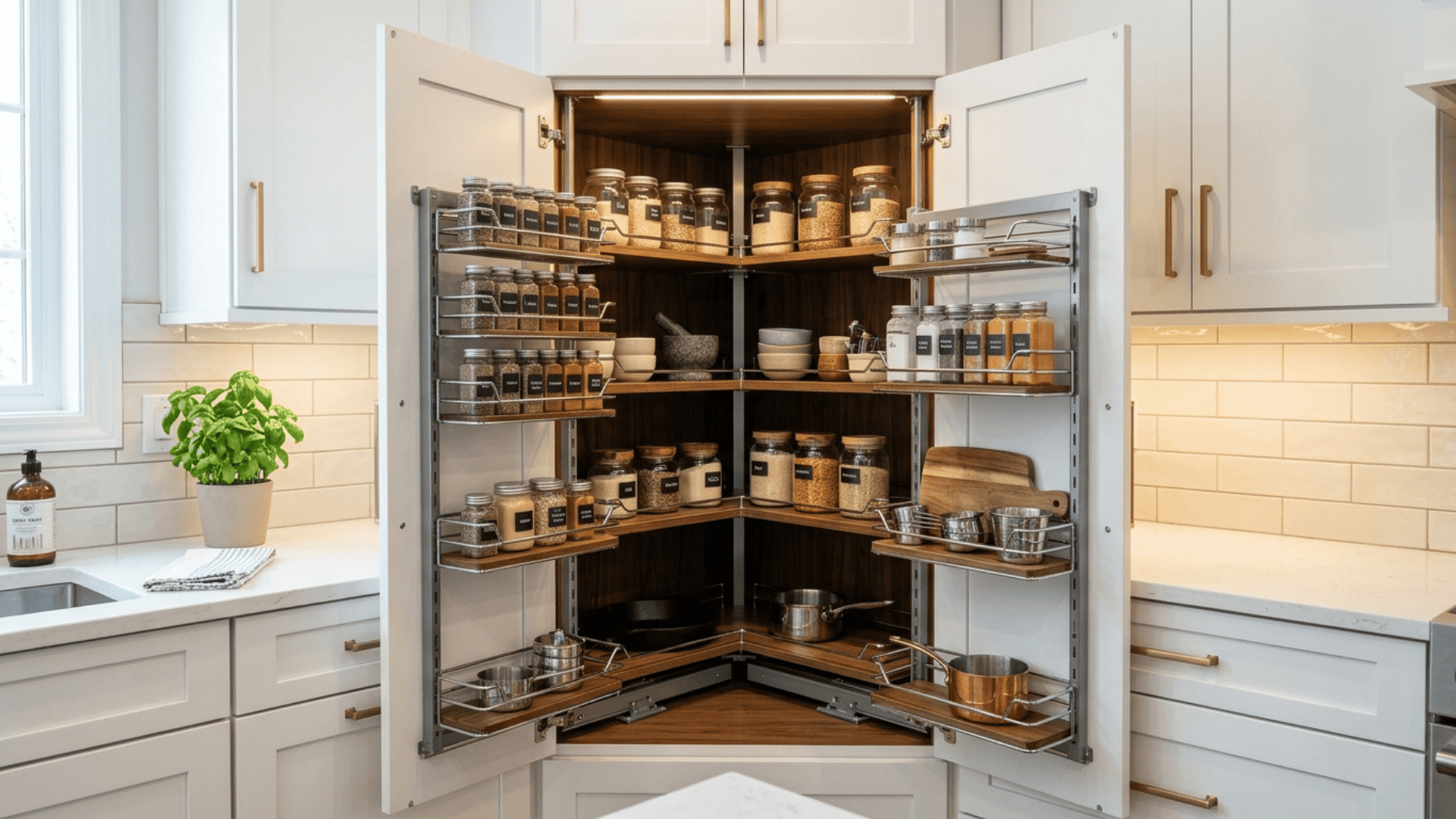
Corner storage solutions make use of areas that are often difficult to access. They make the space more practical to use with rotating shelves or pull-out systems.
These additions help make better use of space without changing the layout. It ensures that no part of the kitchen goes to waste.
18. Open Shelf Mix
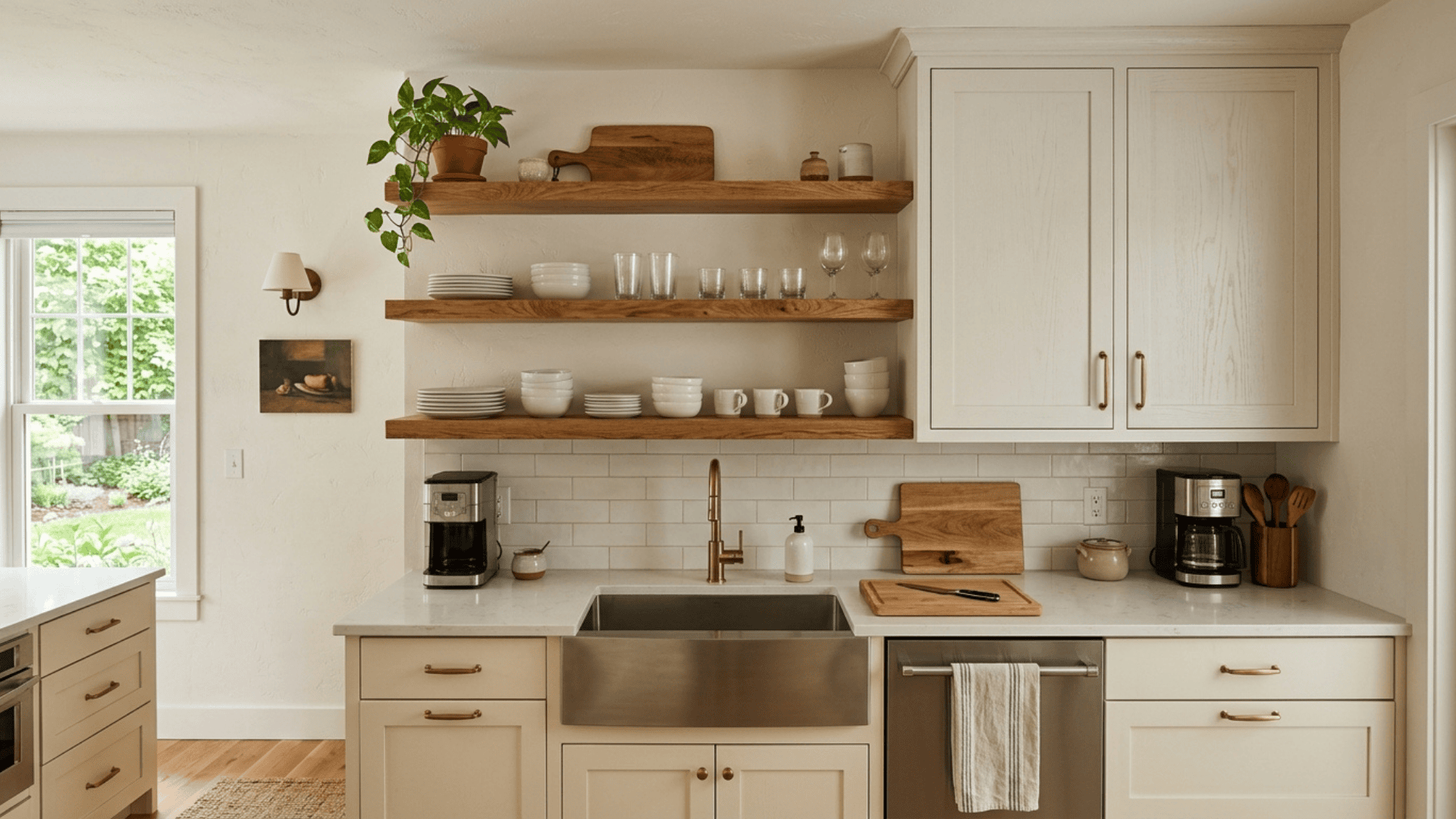
Combining open shelves with closed cabinets creates a balanced storage setup. This idea keeps daily-use items accessible while hiding others.
It introduces contrast while keeping the space visually balanced. The mix works well for both small and large kitchens.
19. Glass-Front Cabinets
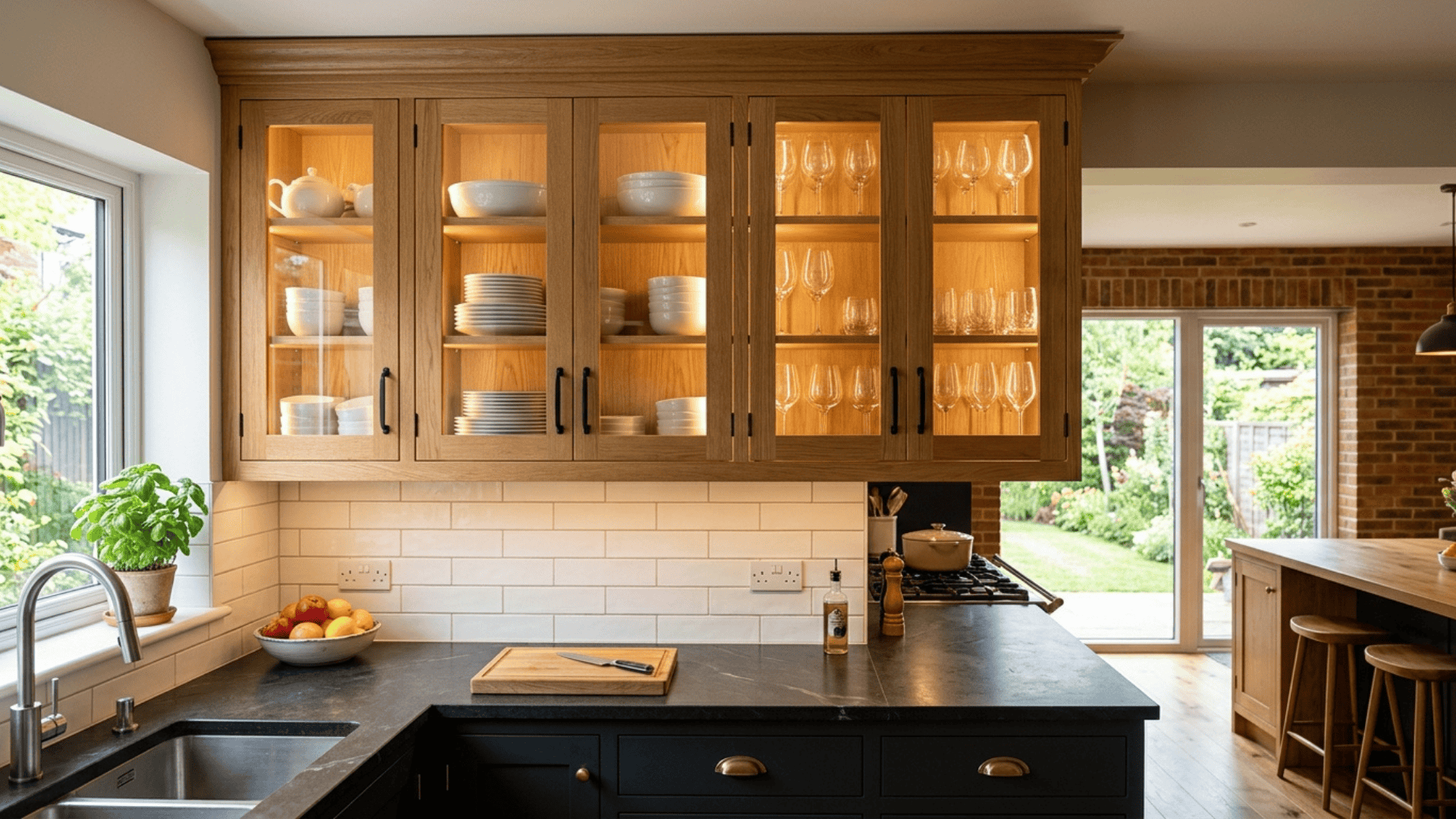
Glass-front cabinets soften the look of solid cabinetry and add depth to the design. You can use them for displaying dishes or glassware.
They help reduce the heavy look of large cabinet sections. It also brings a lighter feel to the overall kitchen space.
20. Two-Tone Cabinets
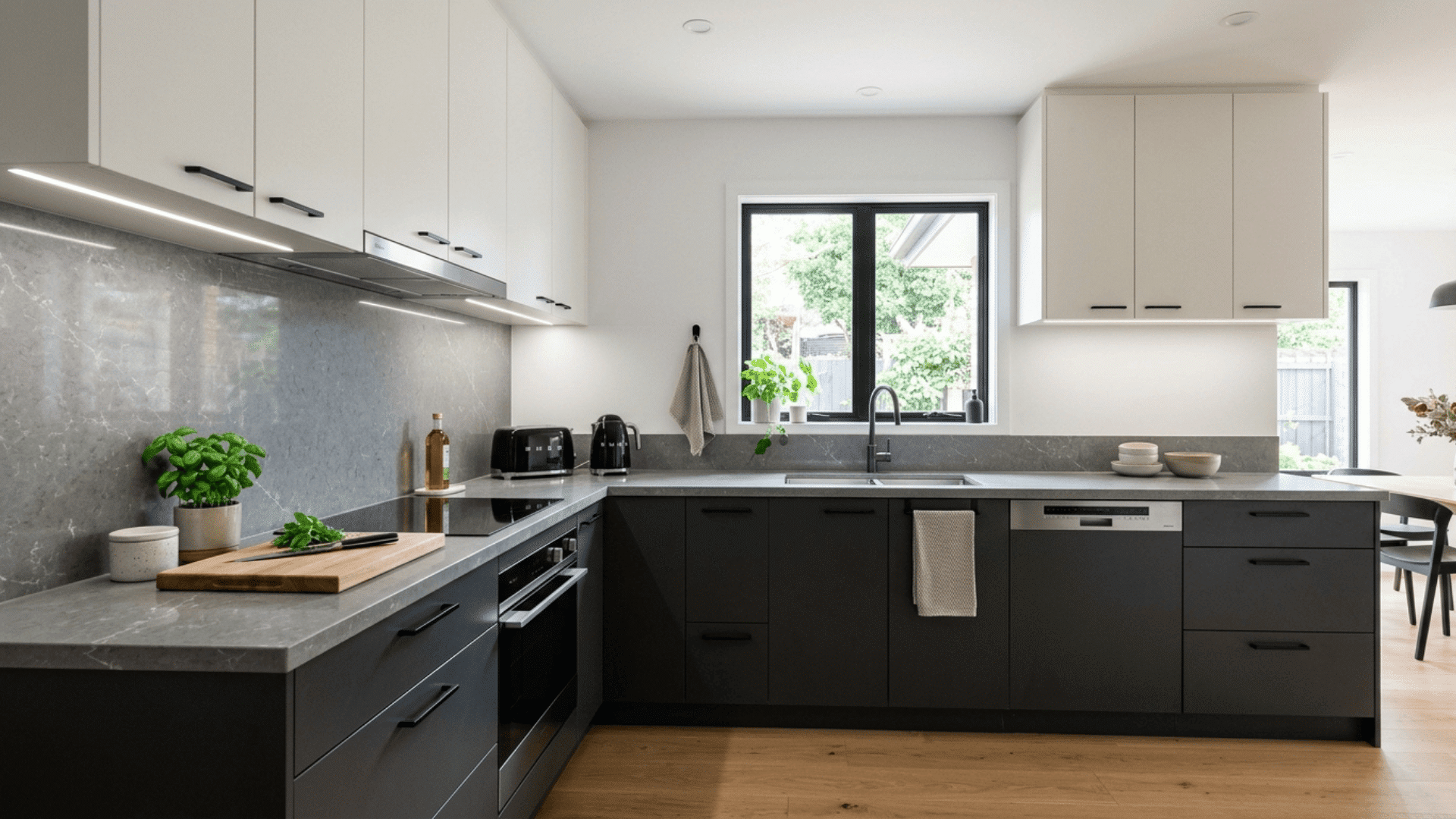
Two-tone cabinets use different colors for upper and lower sections to create contrast. This kitchen design idea helps define different parts of the space.
It keeps the kitchen from looking too uniform or flat. This approach works well in both modern and traditional layouts.
21. Mixed Material Cabinets
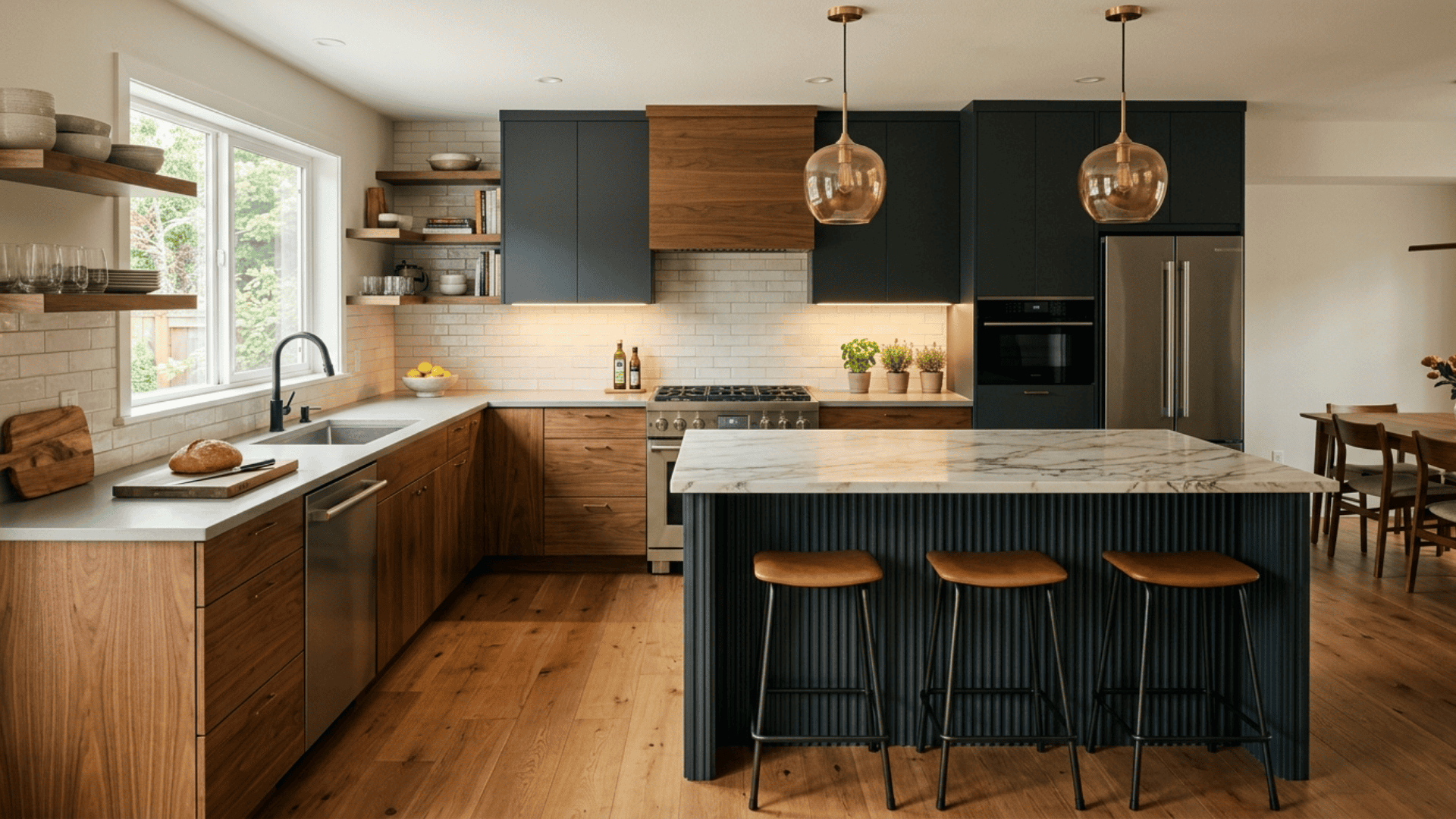
Using a mix of materials, such as wood and laminate, creates a layered cabinet style. This idea is useful for adding variety without relying only on color.
Different finishes can also help balance durability and maintenance. It also allows flexibility in matching cabinets with other surfaces.
22. Slim Shaker Cabinets
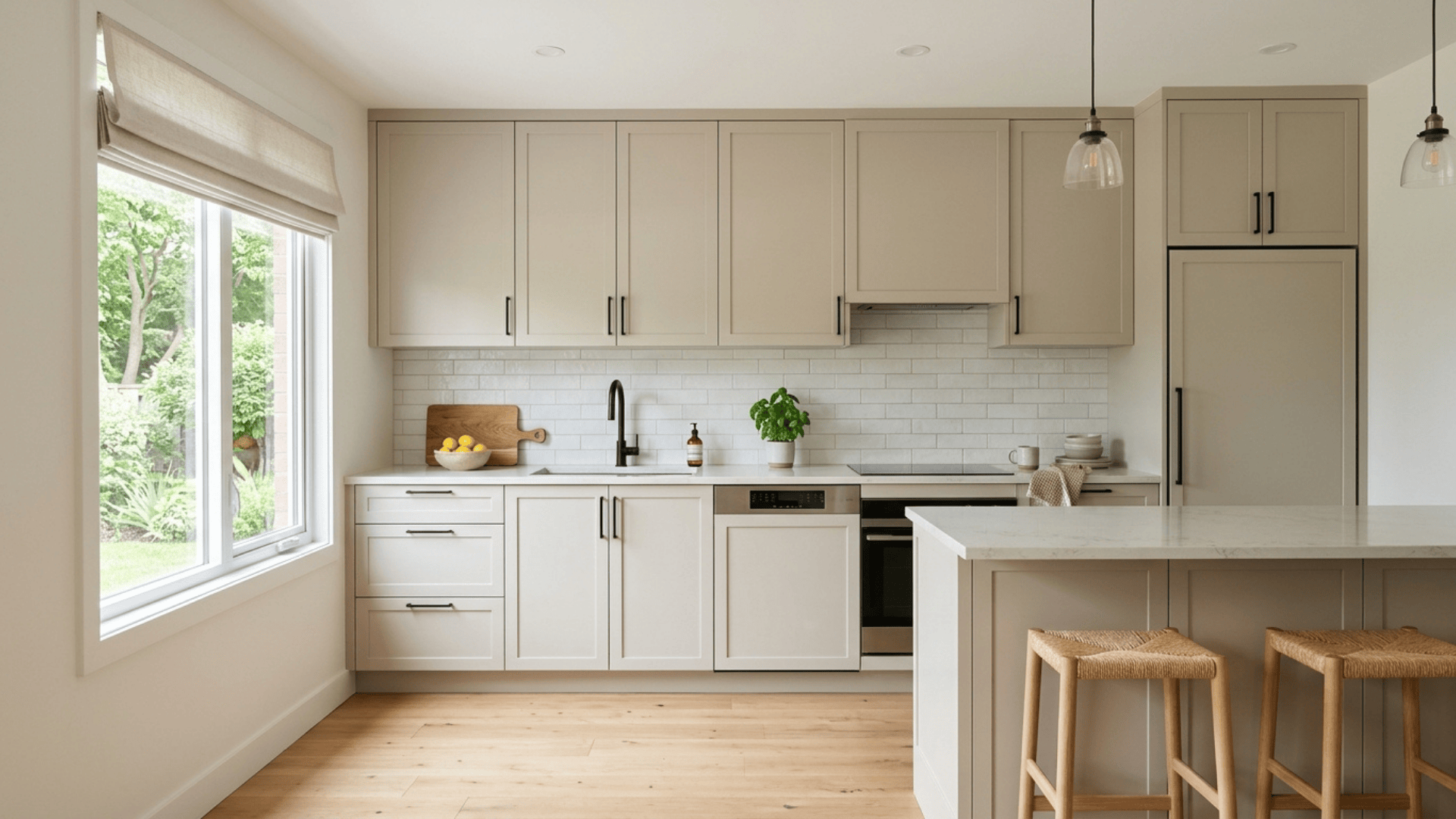
Slim shaker cabinets offer a simple frame design with a slightly modern touch. This idea works well for keeping the cabinet style clean without adding too much detail.
The thinner frame gives a more modern look than traditional shaker styles. It also fits easily into both modern and classic kitchen layouts.
23. Flat-Panel Cabinets
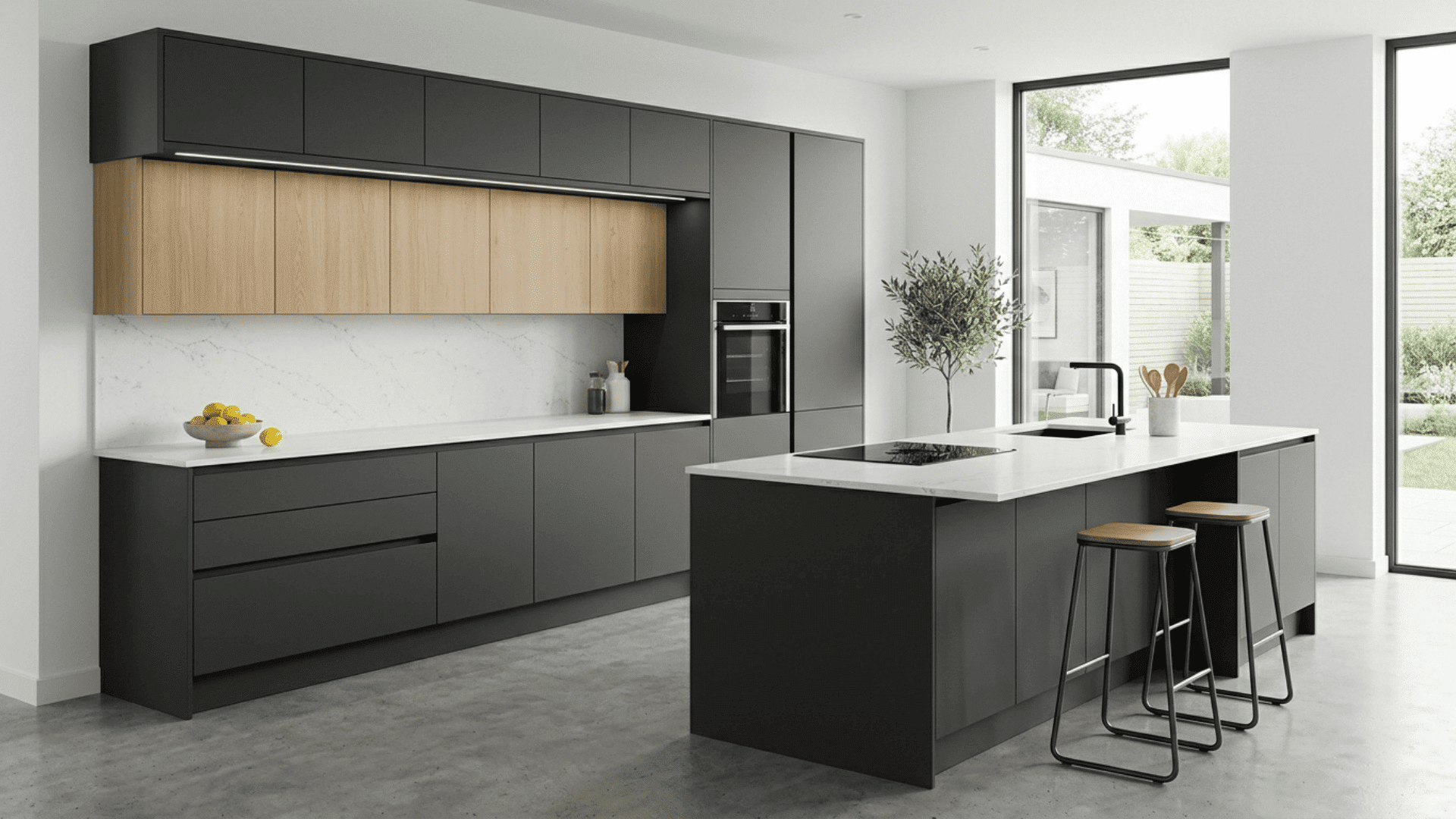
Flat-panel cabinets have a smooth surface with no visible detailing. This kitchen design idea works well to create a clean, minimal look.
The simple finish makes it easier to pair with a variety of materials and colors. It also helps maintain a clutter-free visual appearance.
24. Full Slab Backsplash
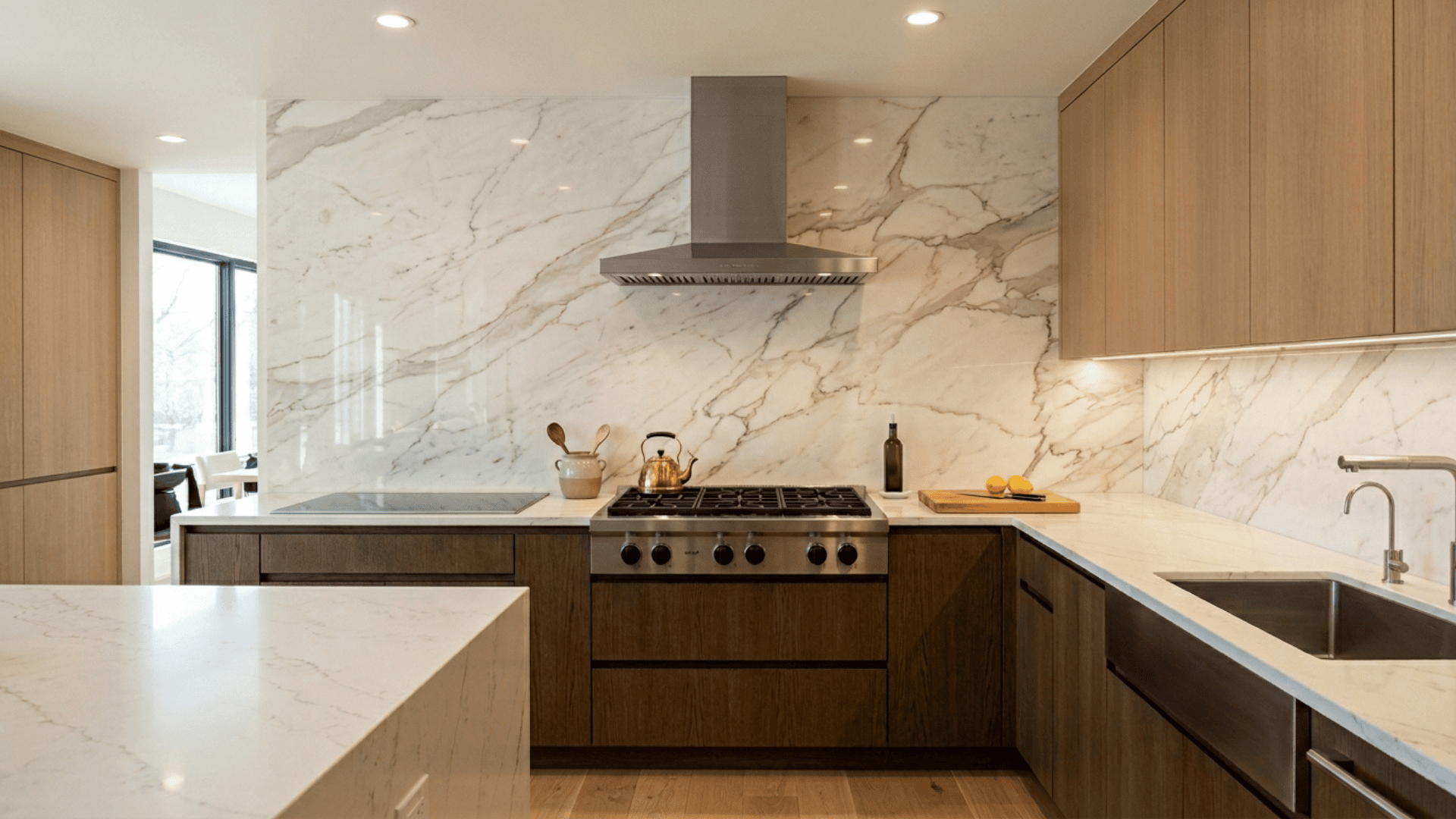
A full slab backsplash uses a single continuous surface instead of tiles. It reduces visible joints and makes the wall simpler to maintain.
It creates a seamless look between the countertop and wall area. This approach works well in kitchens aiming for a simple finish.
25. Vertical Tile Backsplash
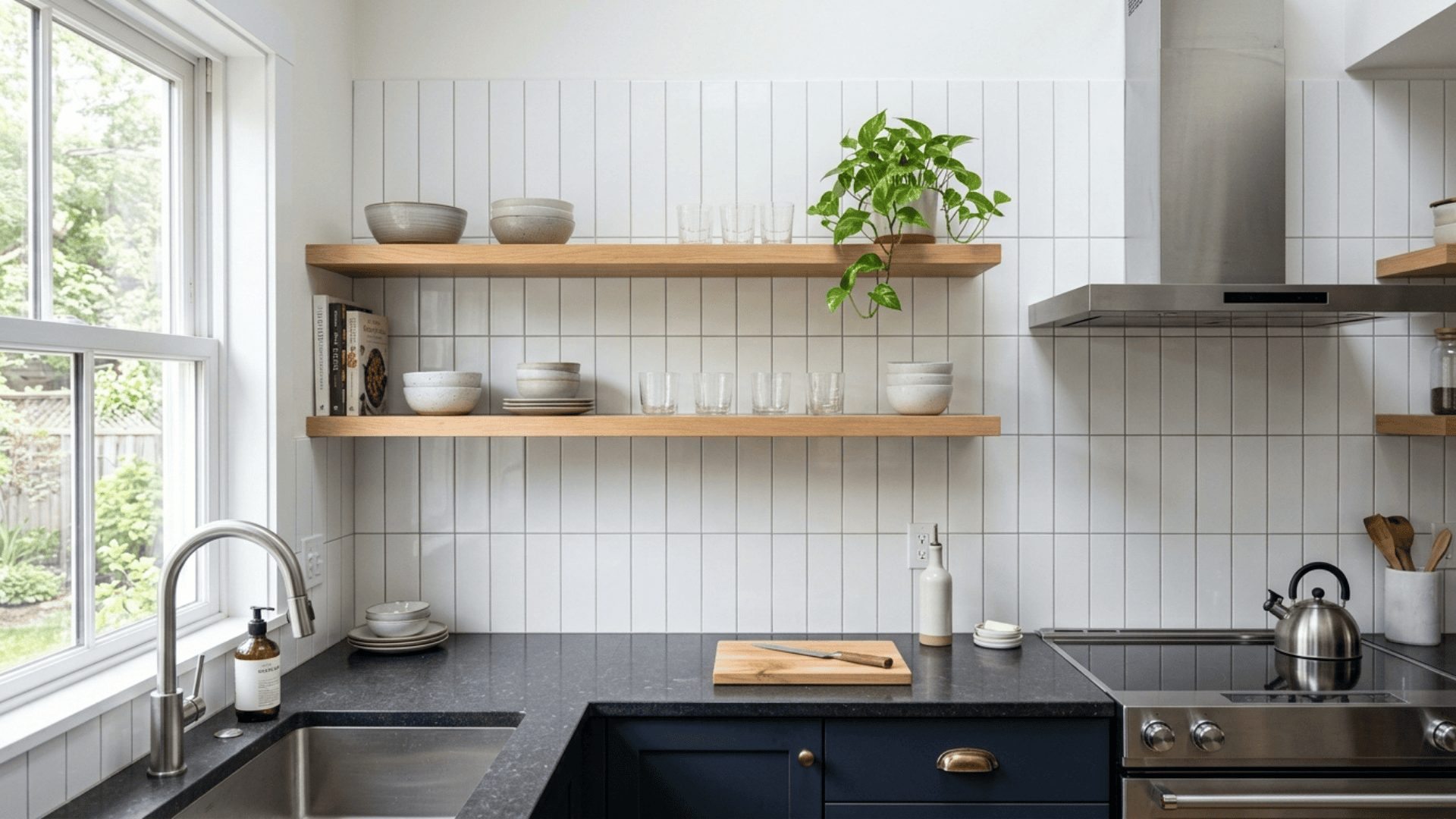
Vertical tile placement changes the direction of traditional tile layouts. This kitchen renovation idea helps draw the eye upward and adds height to the space.
It works well in smaller kitchens that need a more open feel. The layout also adds a subtle variation without changing materials.
26. Statement Backsplash Zone
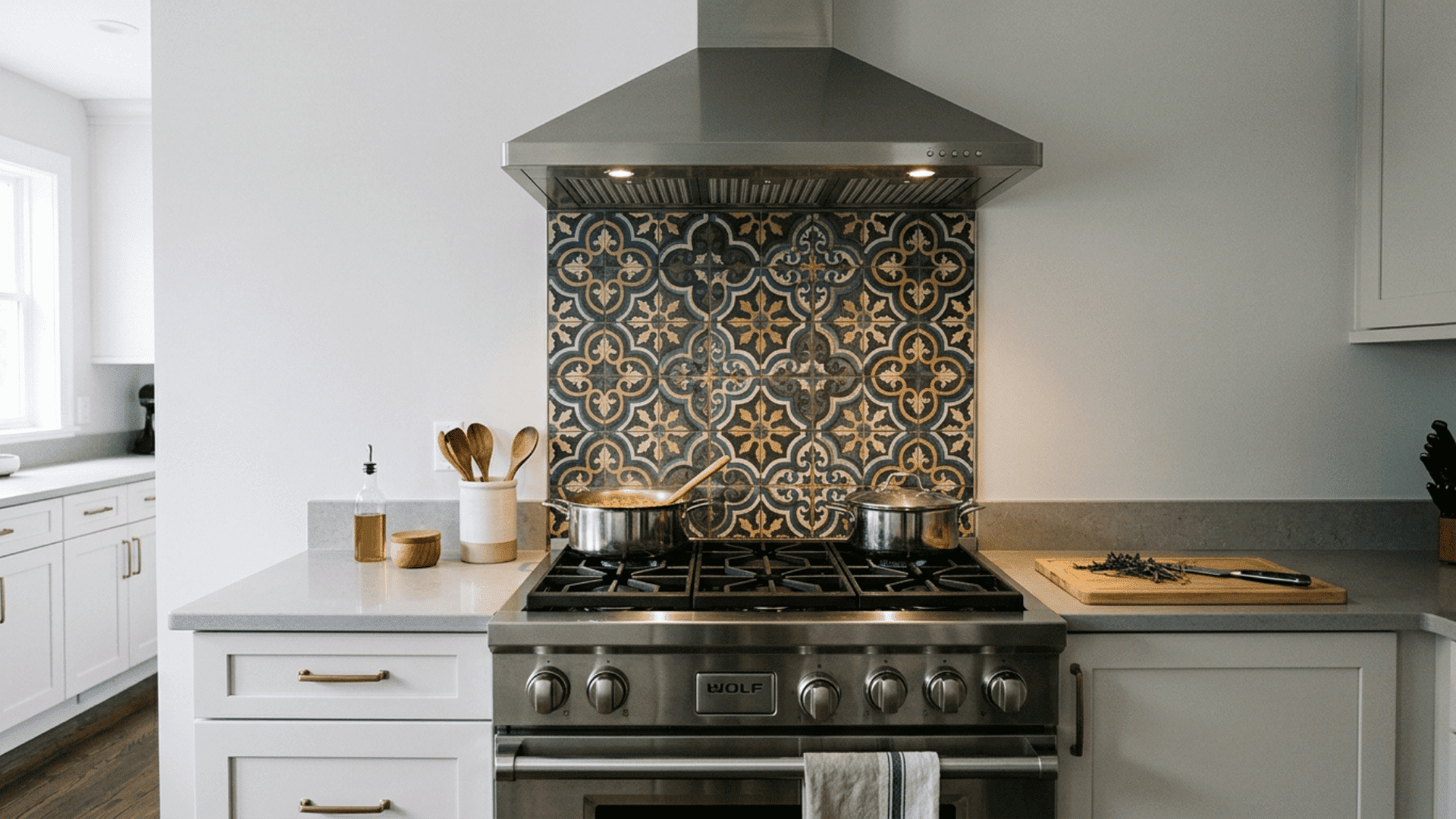
A statement backsplash focuses on one area, usually behind the stove or sink. It adds visual interest without covering the entire wall.
It also helps break up uniform surfaces and adds contrast. This idea works well when the rest of the kitchen design stays simple.
27. Feature Range Hood
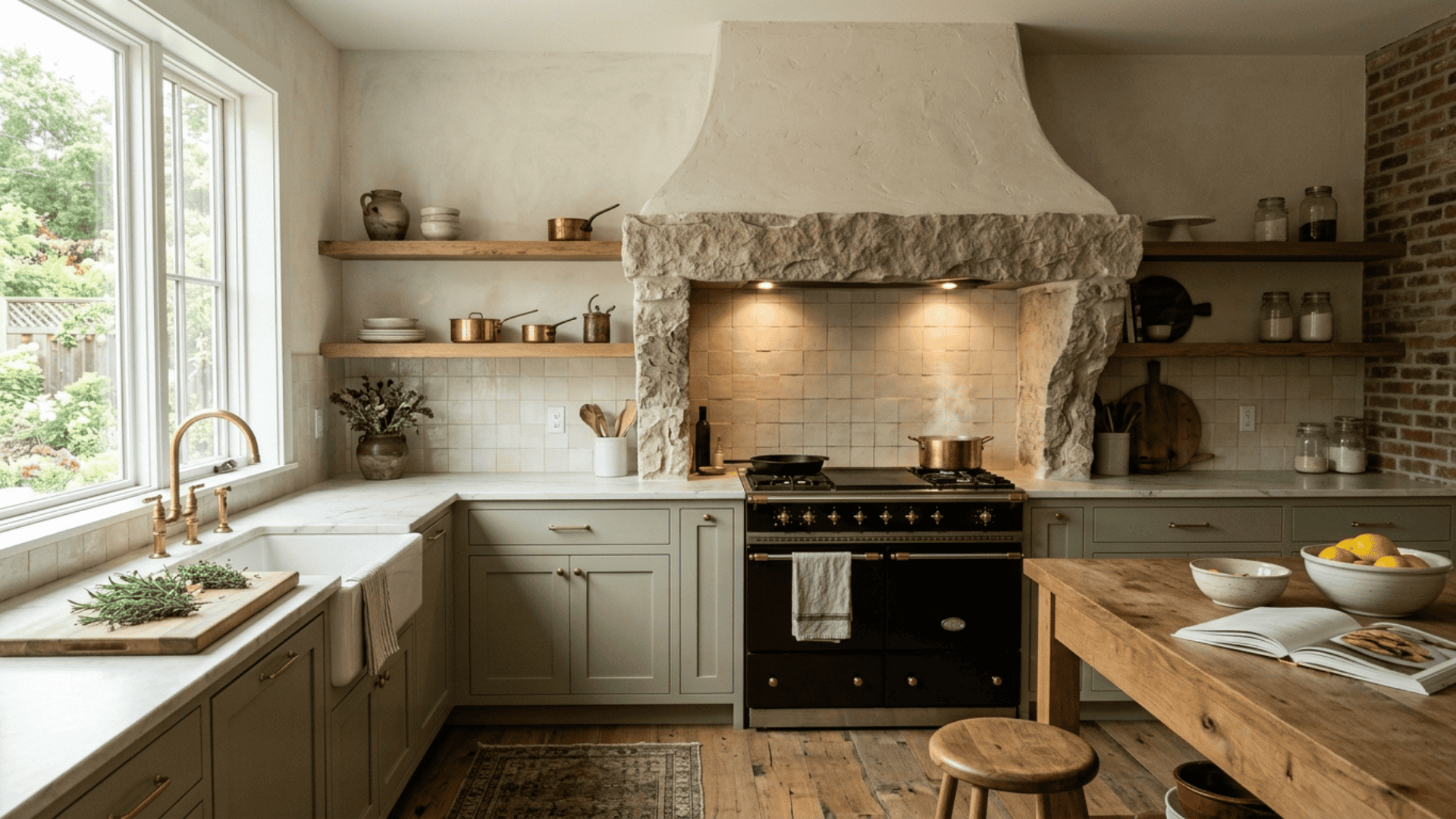
A range hood acts as a central design element in the kitchen. This kitchen remodeling idea draws attention to the cooking area without adding extra features.
It can be designed using different materials to match the overall style. This helps create a clear focal point in the layout.
28. Layered Lighting Plan
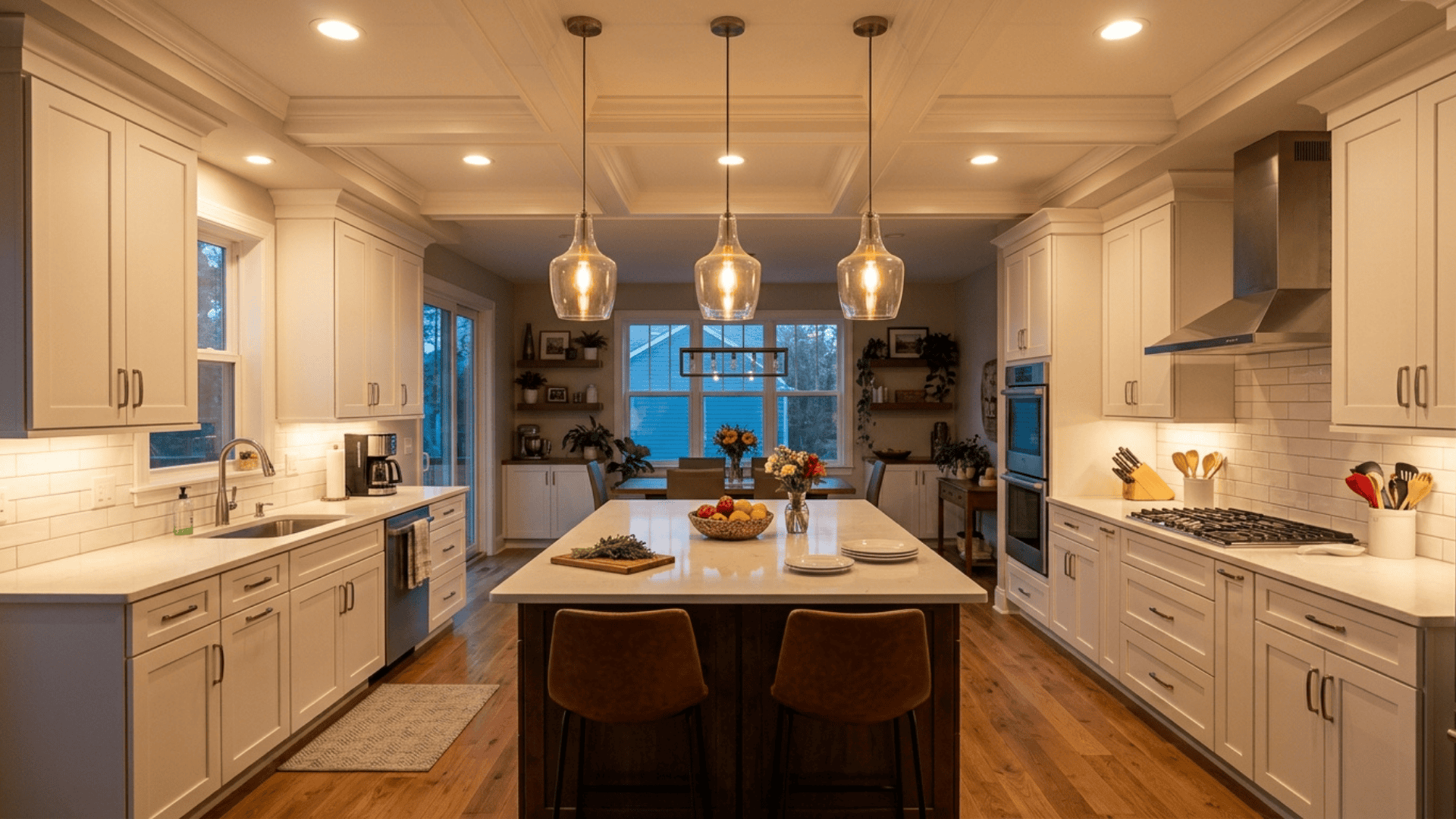
A layered lighting plan combines ceiling, task, and accent lighting. It is improving both function and overall visibility.
Each layer serves a different purpose within the space. It also helps avoid dark spots in key working areas. This setup allows better control over brightness based on different needs.
29. Under-Cabinet Lighting
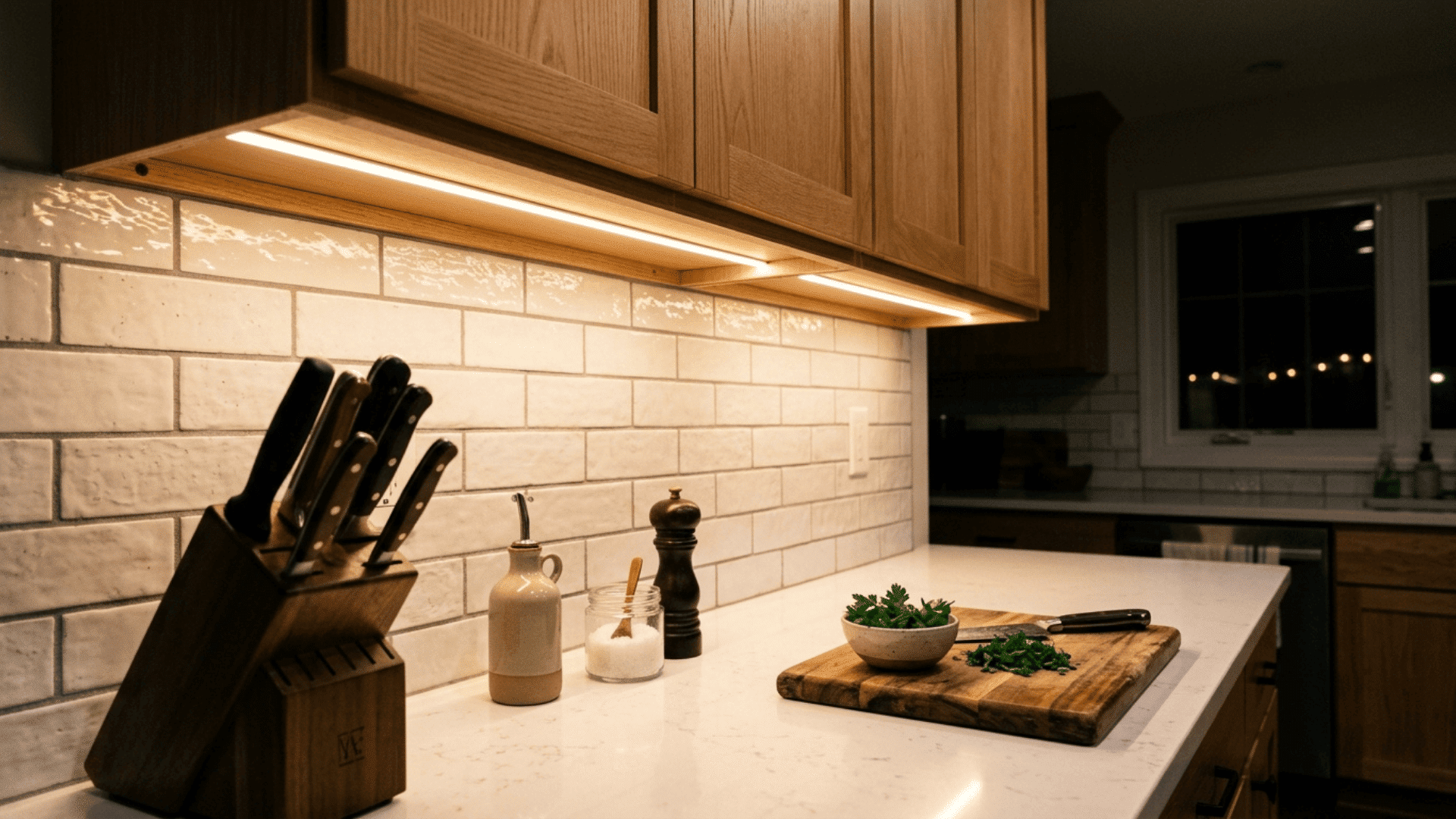
Under-cabinet lighting is installed beneath upper cabinets to illuminate the countertop. This improves visibility for daily tasks like cutting and cooking. It also adds a soft light that brightens the workspace.
This setup works well in both small and large kitchens. It can also highlight the backsplash and improve the overall look of the space.
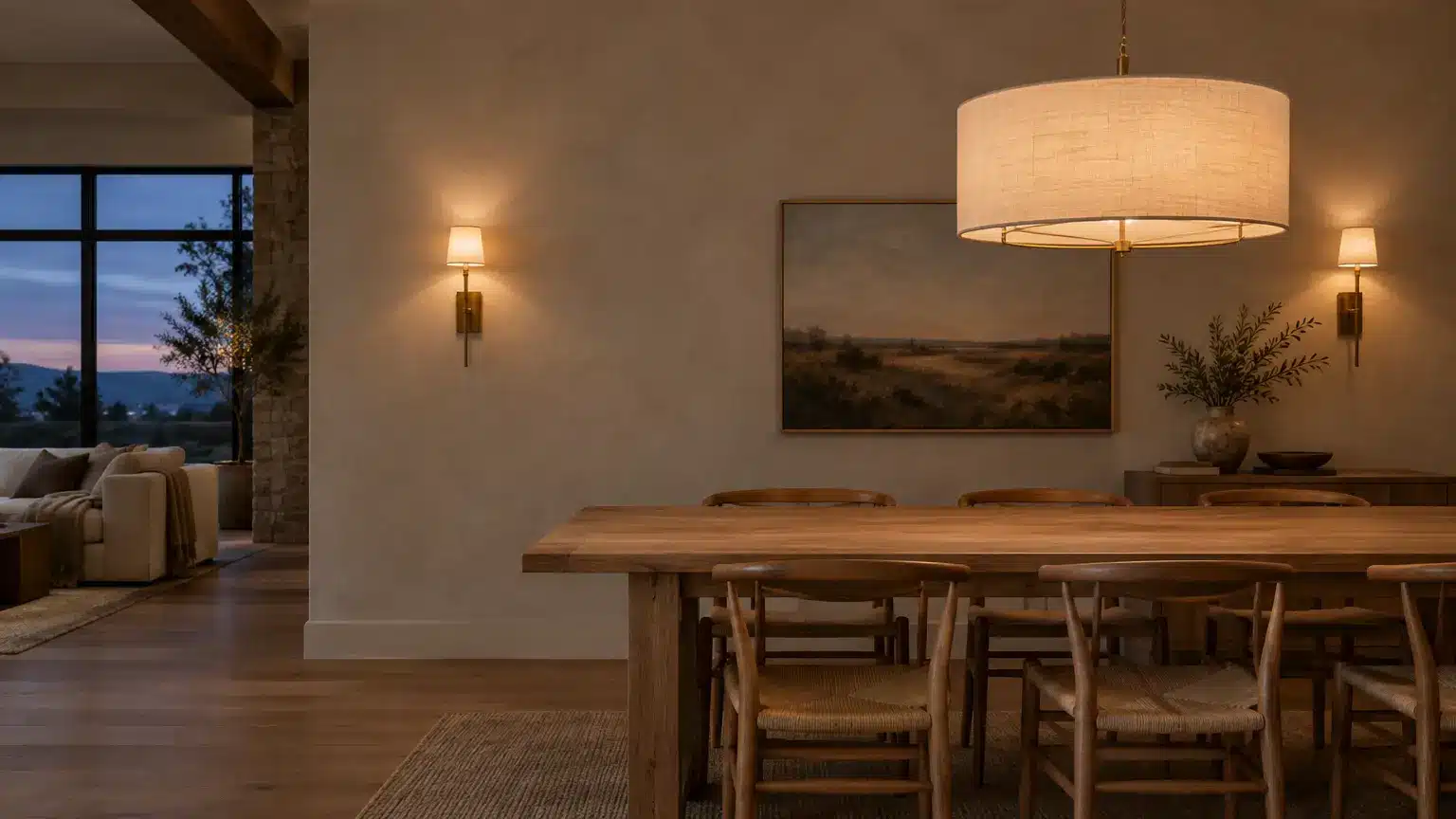
30. Oversized Pendants
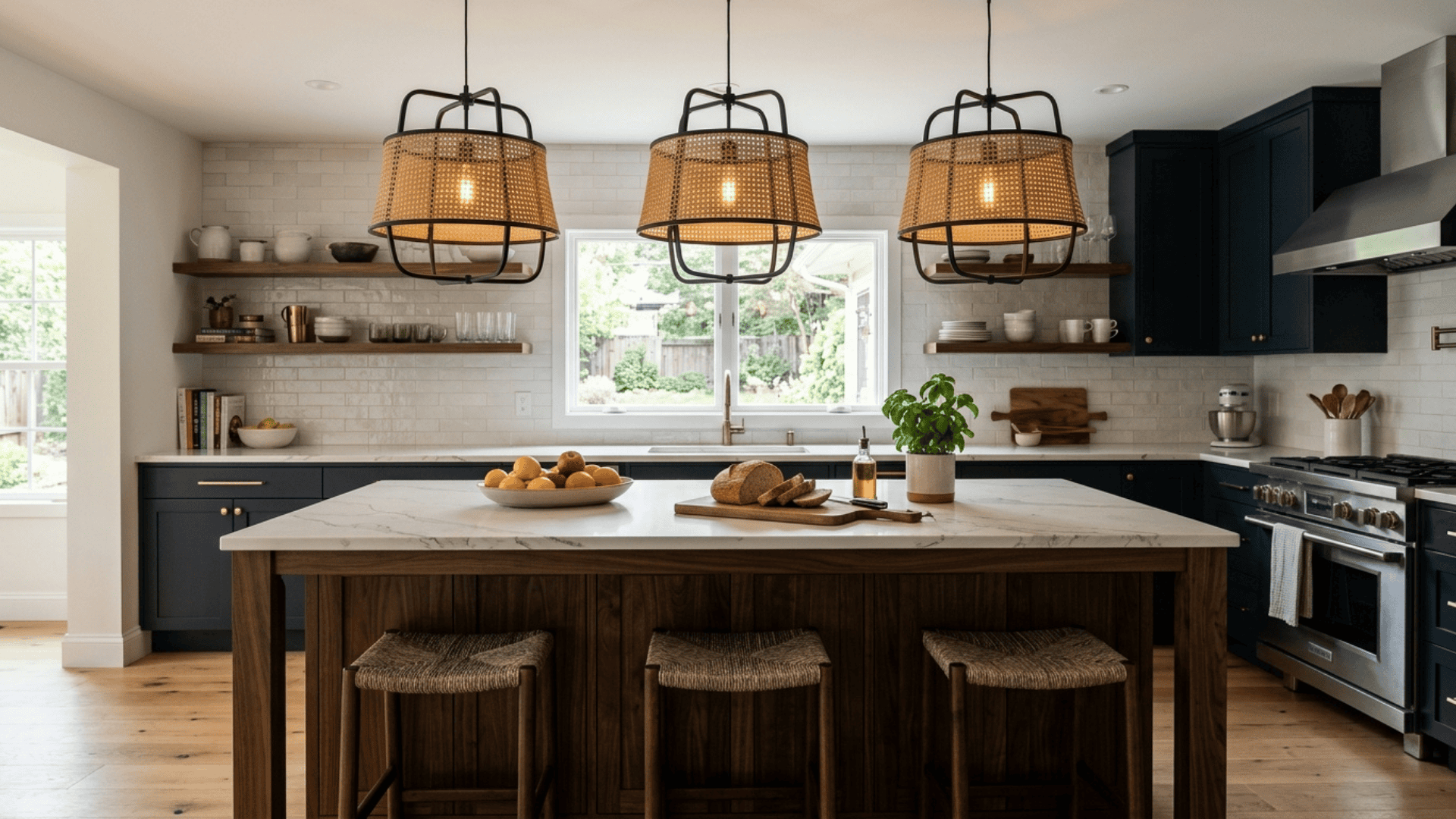
Oversized pendant lights are often placed above islands or dining areas. This kitchen remodeling idea helps define specific zones within the space.
Larger fixtures also add a strong visual element without extra décor. They work best when spaced evenly for a balanced look.
31. Skylight Addition
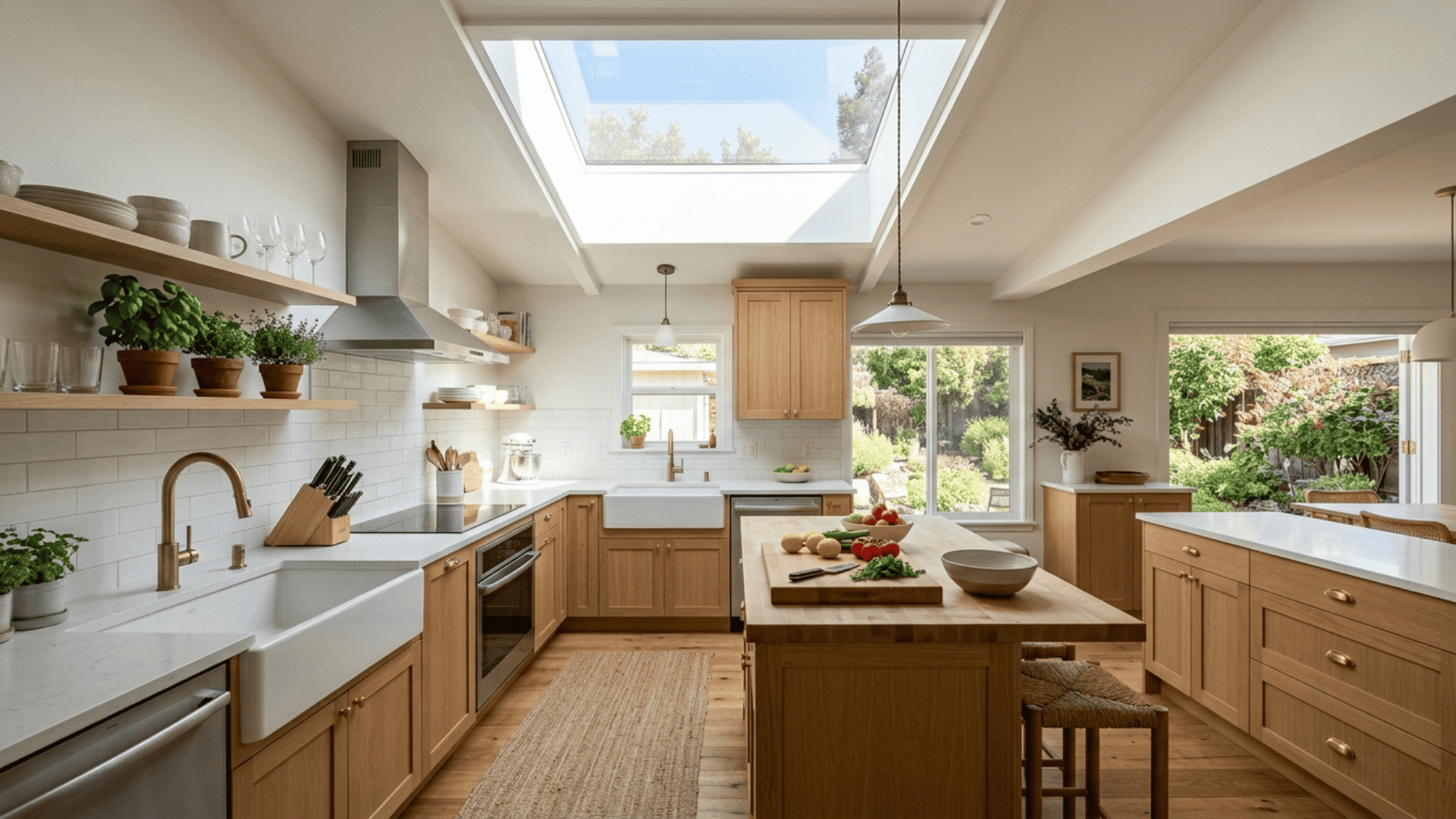
Adding a skylight brings natural light directly into the kitchen. This idea helps make the space feel brighter during the day.
It reduces the need for artificial lighting in certain areas. This works especially well in kitchens with limited wall windows.
32. Large Sink Window
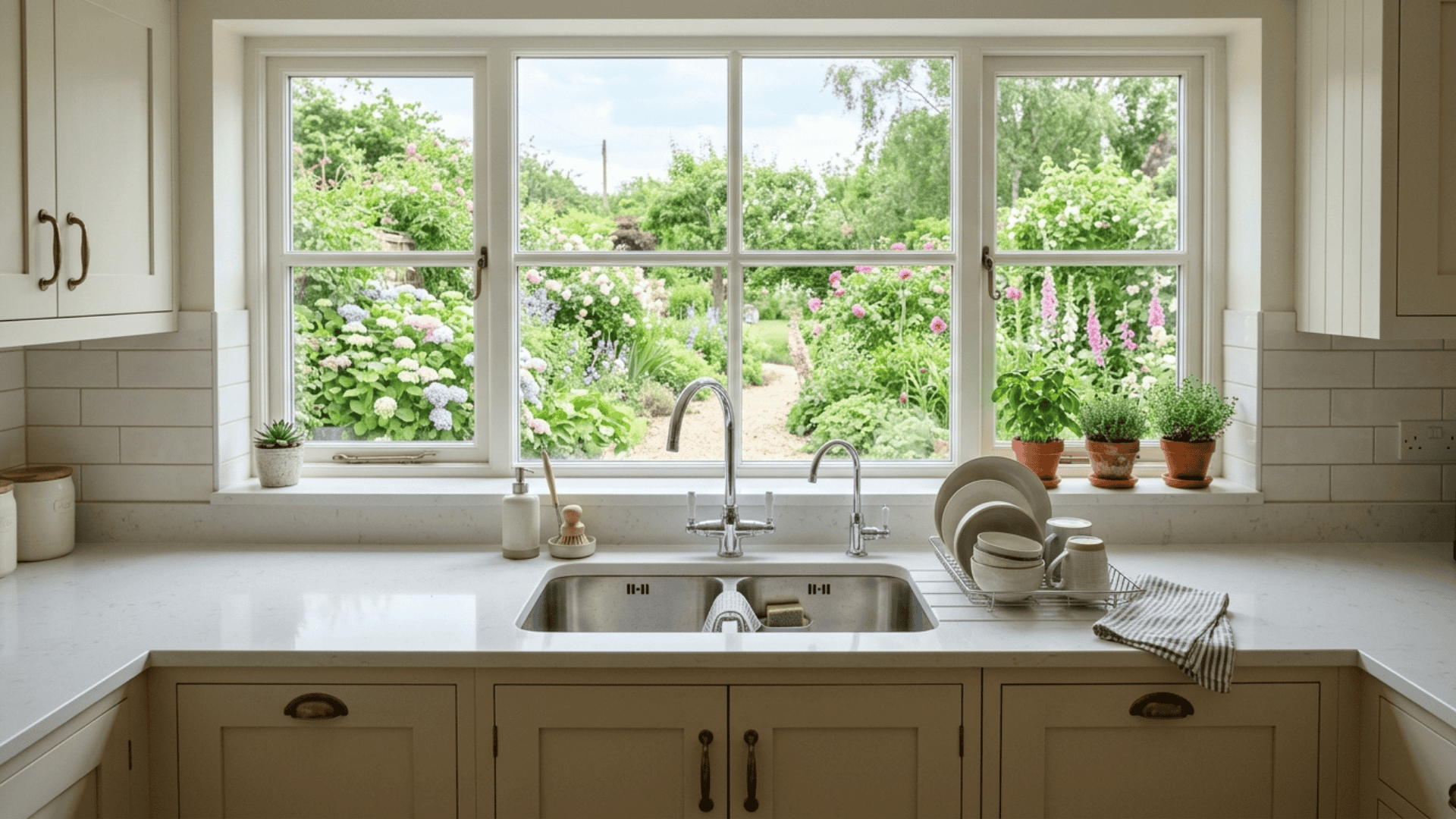
A large window above the sink brings in more natural light while opening up the wall space. It also improves ventilation and keeps the kitchen feeling fresh.
The added light makes everyday tasks more comfortable. This works well in kitchens that need a brighter setup.
33. Light-Tone Flooring
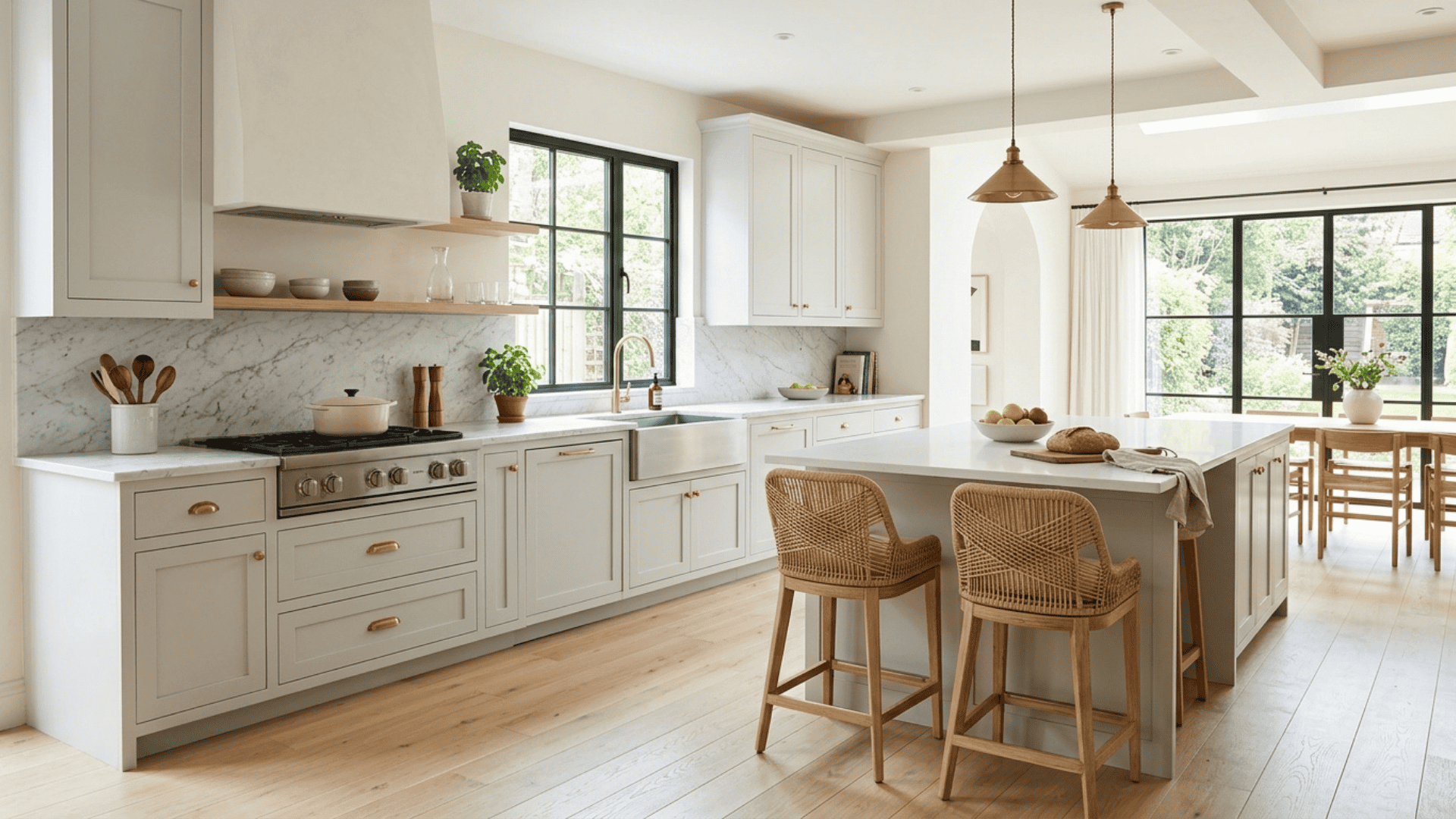
Light-tone flooring helps make the kitchen feel more open and spacious. This kitchen design idea works well in smaller spaces that need a brighter base.
It also reflects light better compared to darker surfaces. The overall space appears more open with lighter flooring. It pairs easily with a variety of cabinet styles and colors.
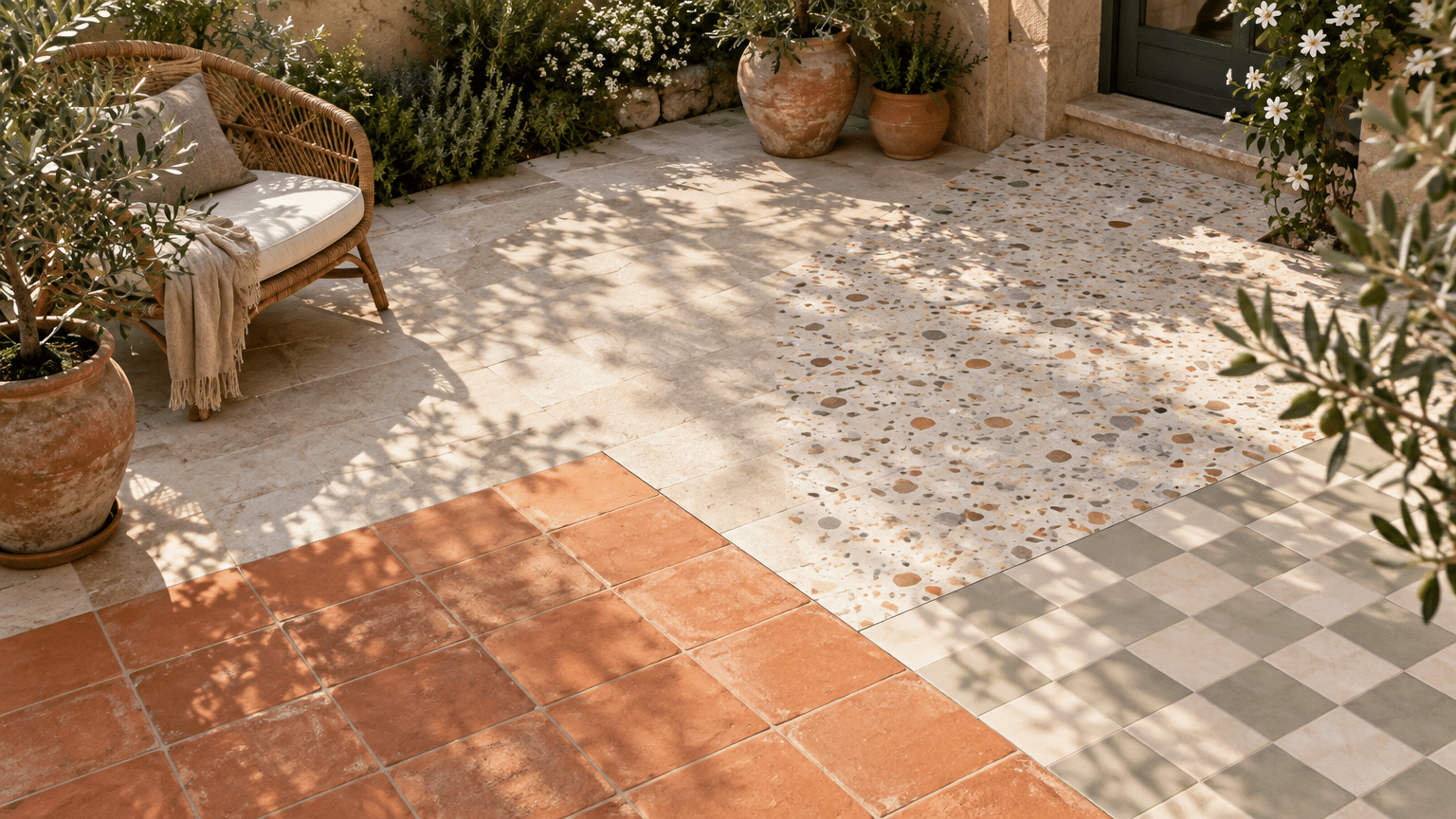
34. Patterned Floor Tiles
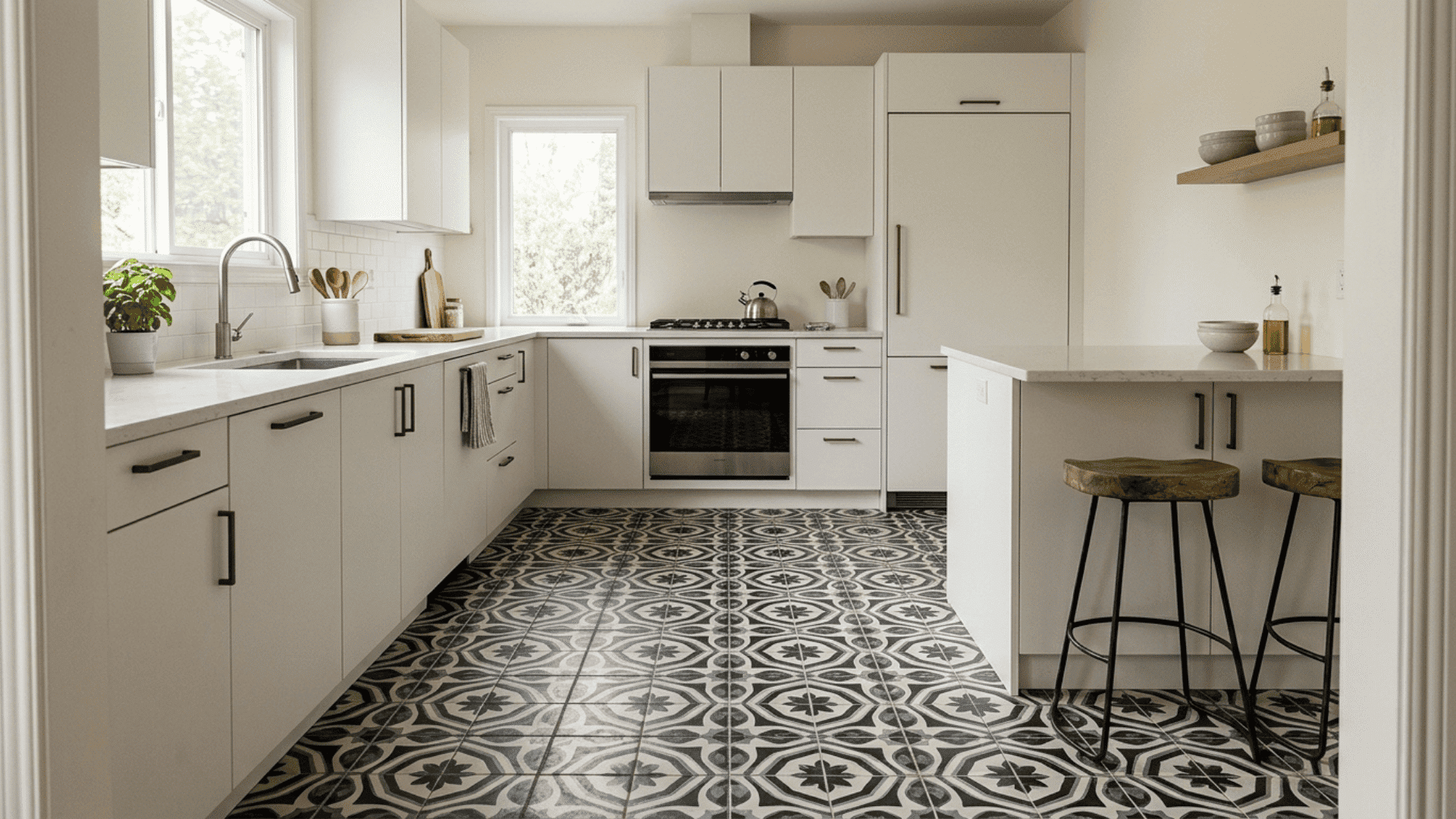
Patterned floor tiles add visual interest without changing the overall layout. It works best when the rest of the design stays simple.
Patterns can help break the monotony of plain surfaces. This option suits both modern and classic kitchens.
35. Wood Flooring Finish
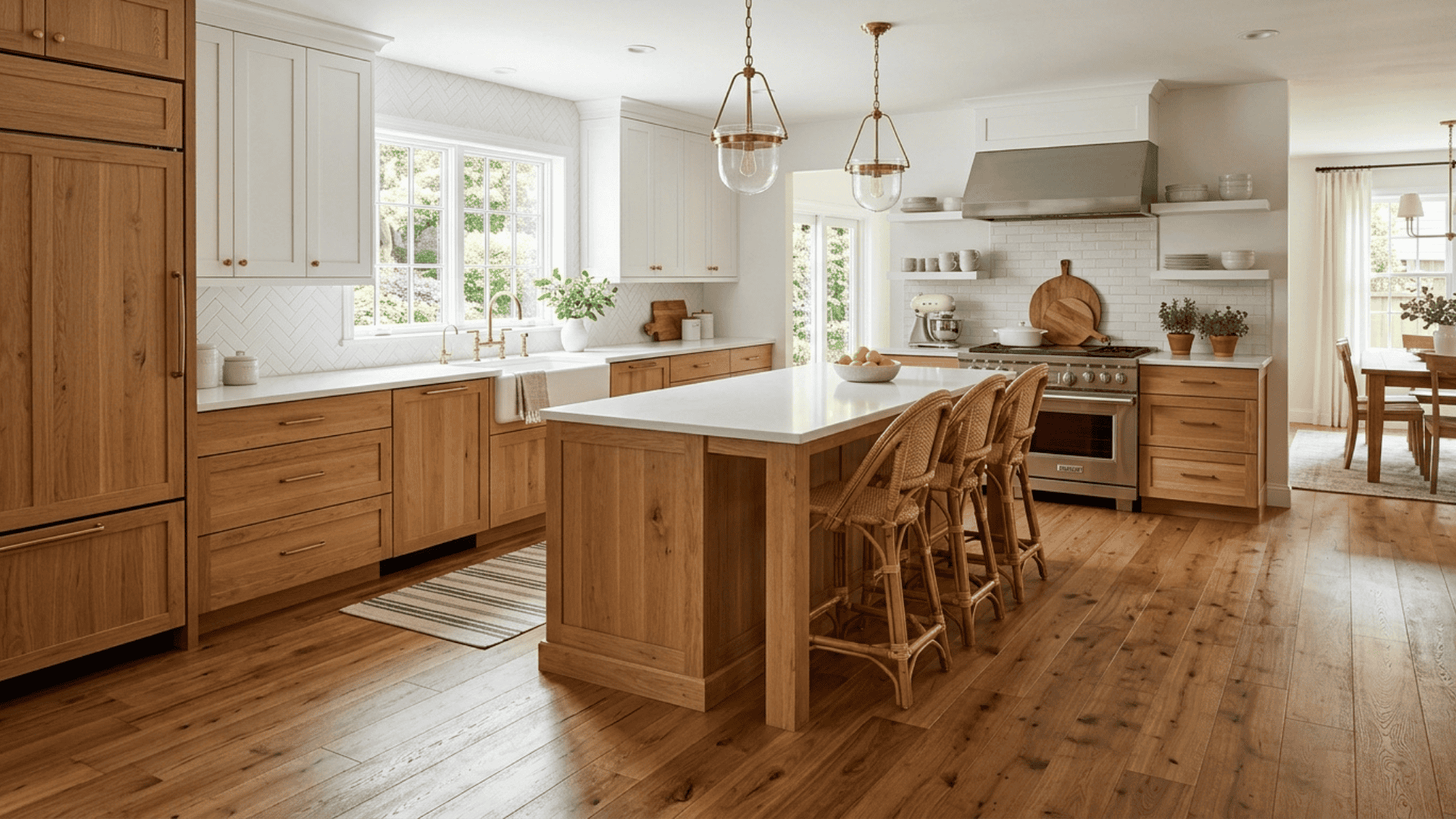
Wood flooring adds warmth and texture to the kitchen space. This addition creates a balanced, natural look.
It also pairs well with both light and dark cabinetry. The surface feels more inviting compared to harder materials. It requires proper care to maintain its condition over time.
36. Ceiling Beam Detail
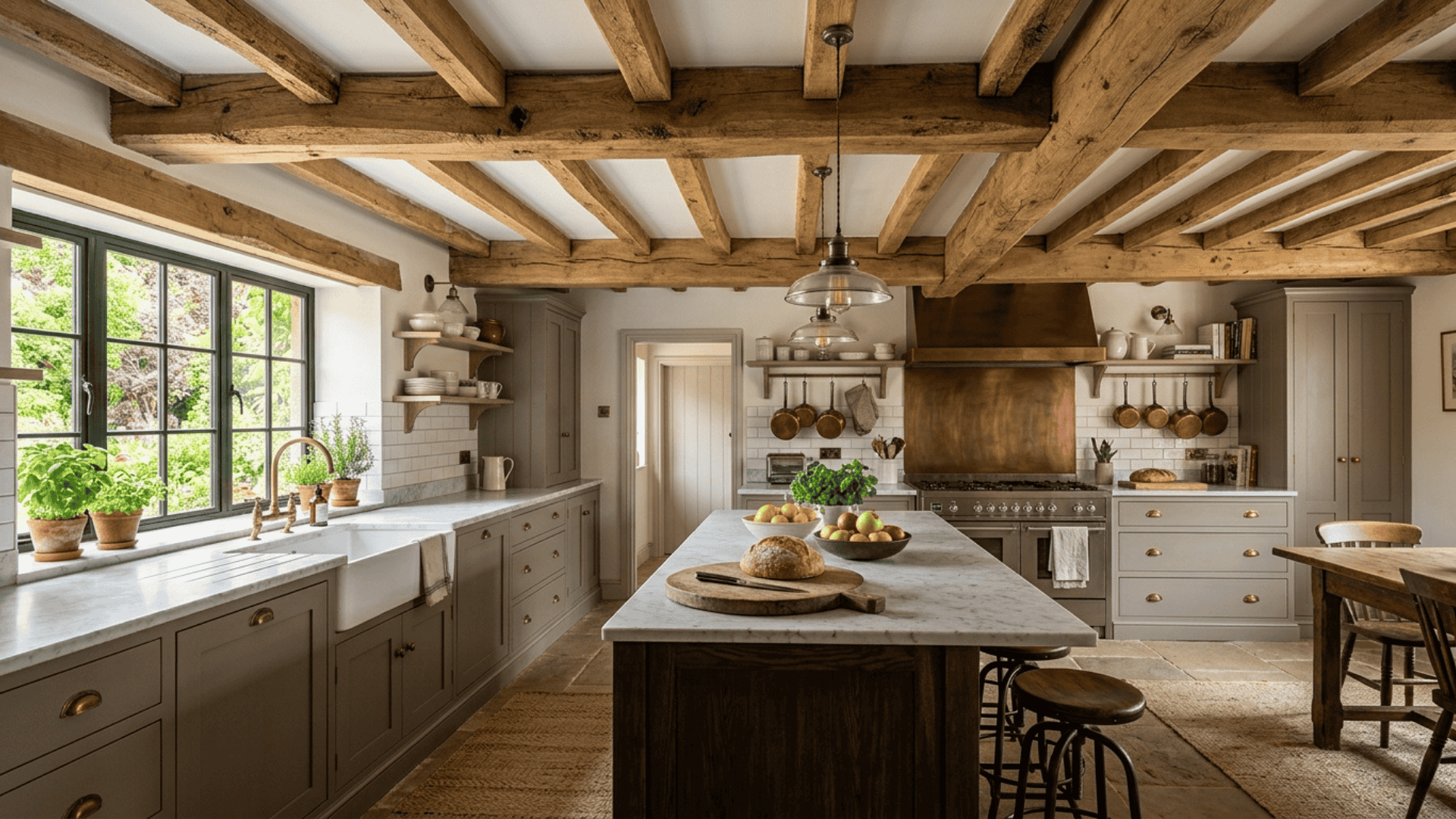
Adding ceiling beams introduces structure and detail to the upper space. They work well in larger kitchens that need visual balance.
They also help draw attention upward without adding clutter. The detail adds character without changing the layout. This idea can be adapted to both modern and traditional styles.
37. Single-Tone Kitchen
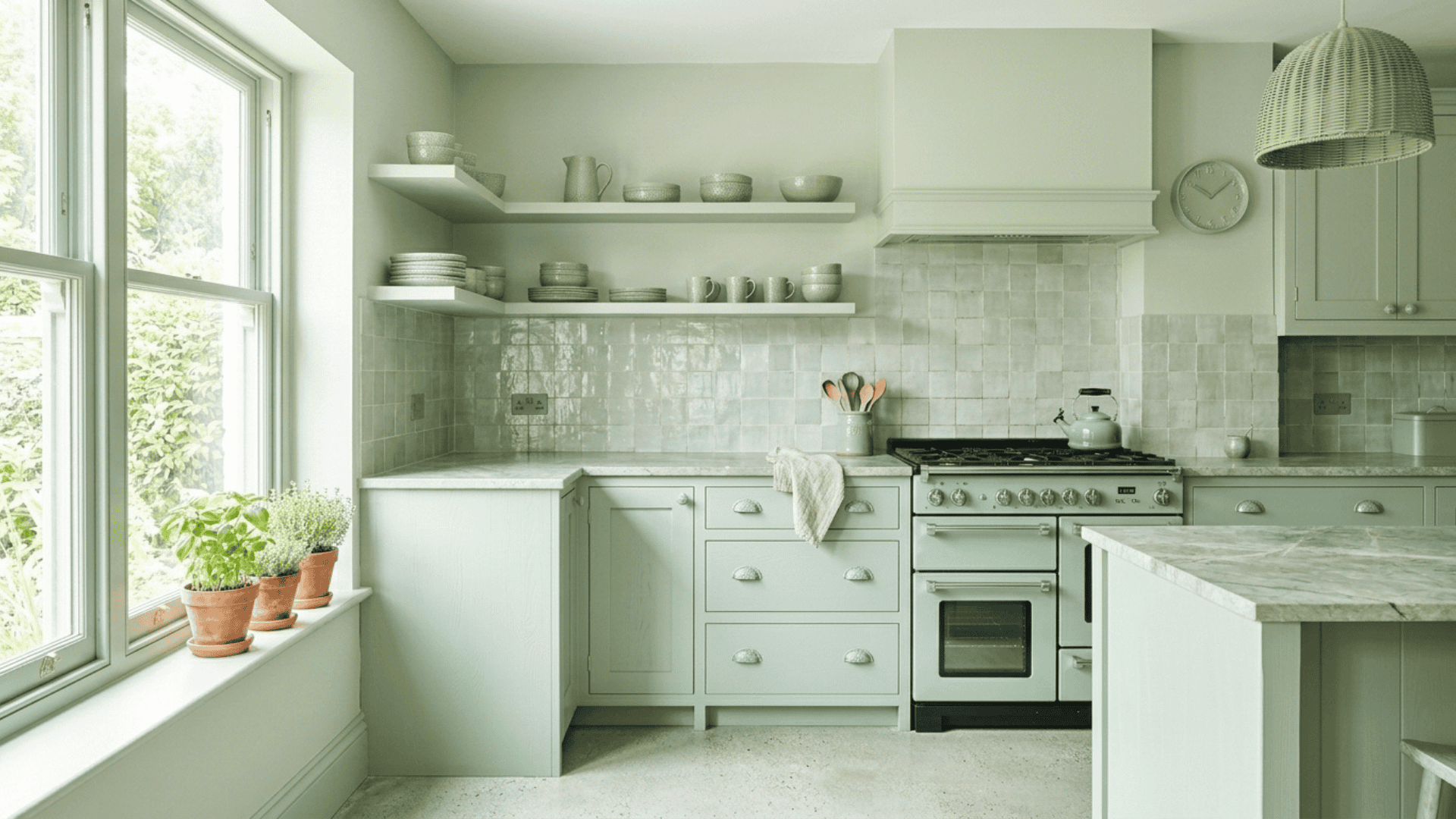
A single-tone kitchen uses a single main color throughout the cabinets and walls, creating a clean and consistent look. It helps reduce visual breaks in the design.
The space looks more unified and visually consistent. Different textures can be used to avoid a flat appearance.
38. Green Cabinet Theme
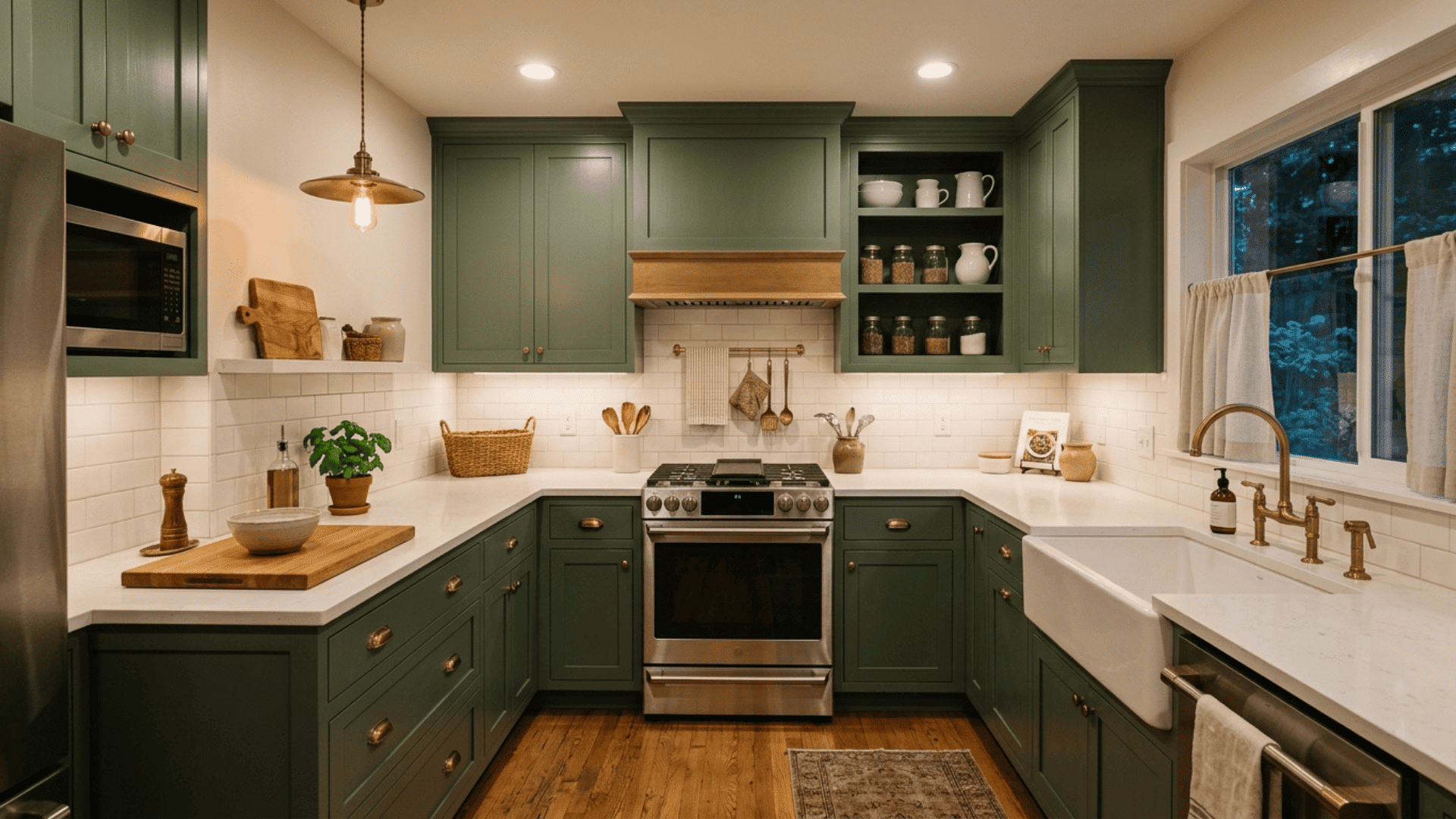
Green cabinets bring a fresh color option into the kitchen. This idea works well when paired with neutral surfaces.
It adds contrast without overpowering the space. The tone can be adjusted from light to dark based on preference. This approach fits well in both small and large kitchens.
39. Small-Space Layout Fix
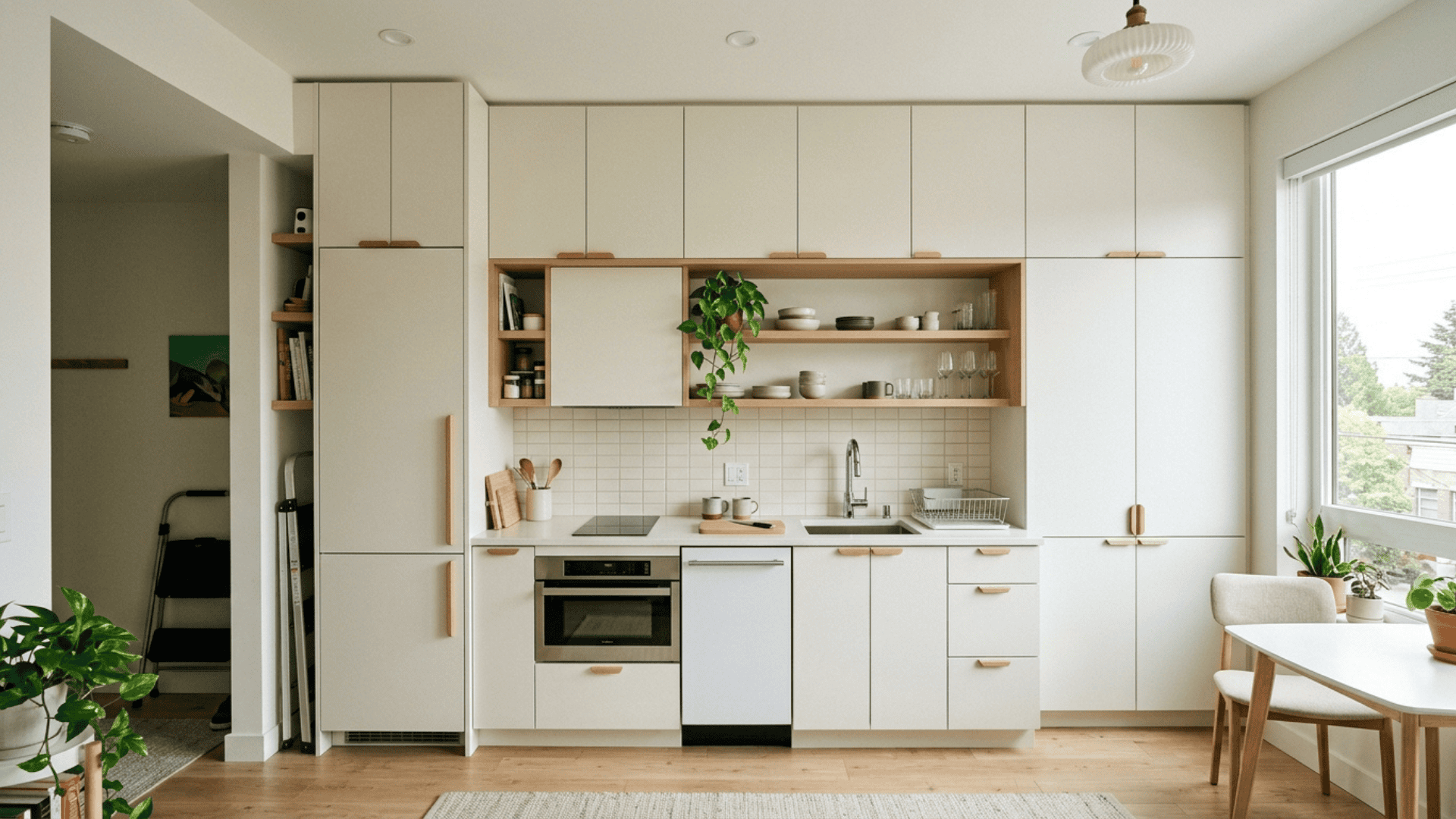
A small-space layout emphasizes vertical storage and compact elements. This kitchen design idea improves functionality without expanding the area.
It keeps movement easy within a limited space. Smart placement of cabinets and appliances matters here. This works best in apartments or compact homes.
Conclusion
Kitchen renovation ideas work best when they balance layout, storage, and design to suit how the space needs to function.
Small changes or larger updates can both make a noticeable difference when planned with purpose. I’ve found that focusing on practical kitchen design ideas first makes it easier to choose finishes and details later without confusion.
With so many options available, the goal is to keep things clear and choose ideas that improve both function and overall look without overcomplicating the space.
Frequently Asked Questions
Can You Renovate a Kitchen on a Small Budget?
Yes, a small budget can work for basic upgrades. Keeping the same layout and choosing ready-made cabinets helps reduce overall costs.
What is the Kitchen Work Triangle Rule?
It connects the sink, stove, and fridge to improve movement. This layout makes cooking easier by keeping everything within reach.
Is $50,000 Enough for a Kitchen Remodel?
Yes, it is enough for a full mid-range remodel with new cabinets, appliances, and flooring. However, high-end changes may need a higher budget.