






That moment your child runs to you with a wobbly tooth, eyes wide and slightly panicked, it’s one of those parenting moments nobody really prepares you for.
Losing baby teeth is one of those childhood milestones that every family goes through, filled with equal parts excitement, nervousness, and the hopeful anticipation of a visit from the tooth fairy.
But as a parent, it is completely natural to wonder: when do kids start losing baby teeth, and whether it is happening too soon, too late, or right on schedule?
Every child is different, and knowing what to expect can make the whole process a lot less stressful. Here is everything you need to know about the average age to lose first tooth and what to watch out for along the way!
The Natural Process Behind Losing Baby Teeth
Kids lose their baby teeth as part of a natural growth process that prepares the way for permanent adult teeth. It also plays an important role in guiding permanent teeth into their correct positions.
Baby teeth, also called primary teeth, begin to loosen as the adult teeth beneath them push upward through the gums.
As the roots of baby teeth dissolve, the teeth become loose and eventually fall out.
This process is completely normal and essential for proper dental development. It also helps ensure that permanent teeth come in aligned and healthy.
In most cases, this transition happens gradually over several years, giving the jaw enough time to grow and make space for larger adult teeth.
When Do Kids Start Losing Baby Teeth?

The average age for losing the first tooth is typically between 5 and 7. However, every child is different, and some may start a little earlier or later.
If your child hasn’t lost a tooth by age 7, it’s usually still within a normal range, but a quick dental checkup can provide reassurance.
The Timing Often Depends On:
- Genetics (when parents lost their teeth)
- Overall health and nutrition
- Dental development
Signs Baby Tooth Is Ready to Fall Out
As your child’s teeth begin to transition, there are a few clear signs that a baby tooth is getting ready to fall out. These changes are usually easy to notice and completely normal.
- A loose or wiggly tooth that moves easily when touched
- Your child frequently touches or wiggles the tooth with their tongue
- Mild gum tenderness or slight discomfort while eating
- Gums around the tooth may look slightly red or swollen
- Small gaps are starting to appear between teeth
- The tooth may look slightly out of alignment or shifted
- Occasional minor bleeding when the tooth is very loose
Baby Teeth Loss Timeline: What to Expect
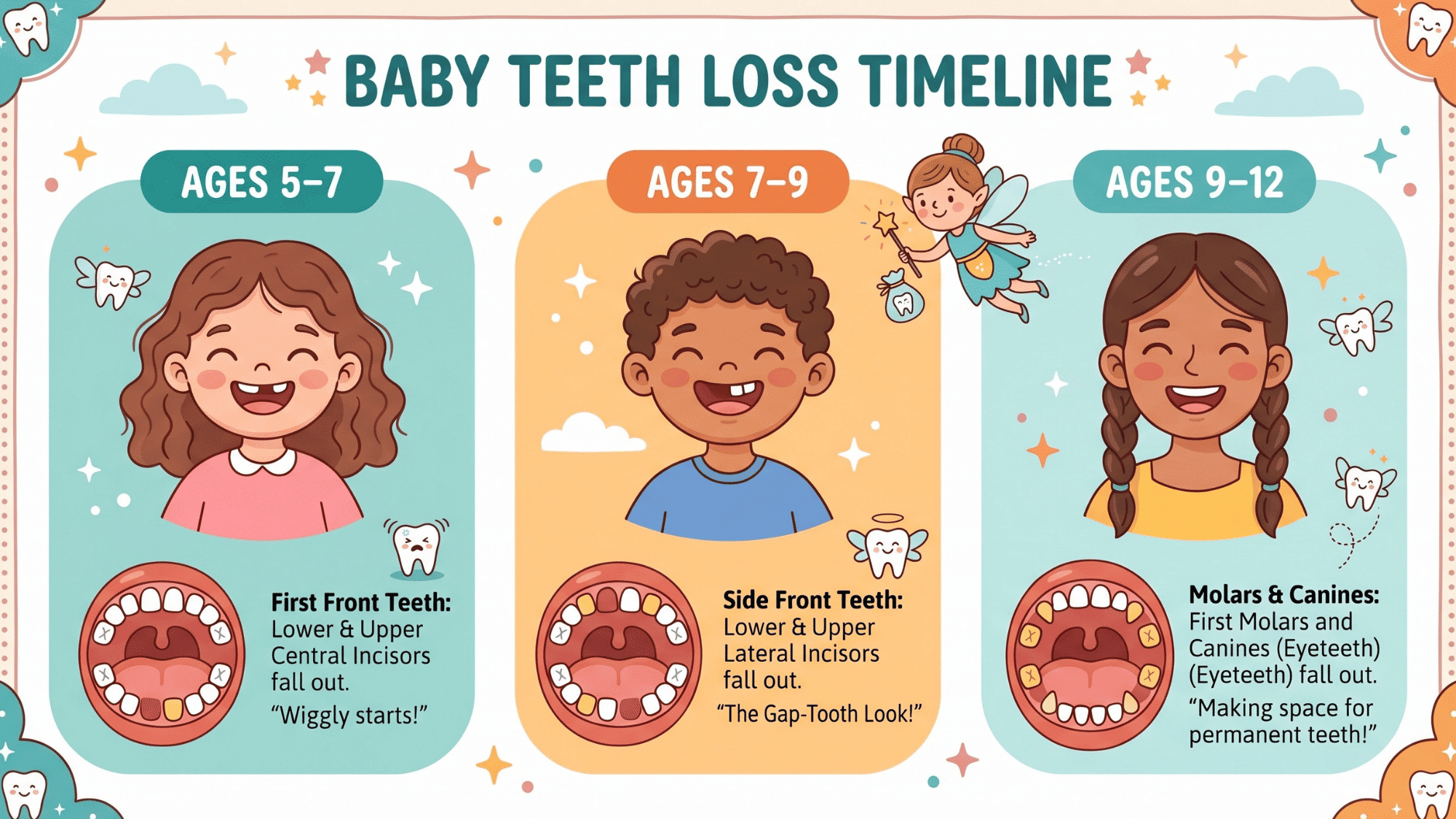
For many kids, this marks an exciting milestone often celebrated with traditions like the Tooth Fairy. Every child develops at their own pace.
Ages 5–7: First Teeth (usually Front Teeth) Fall Out
This is the average age to lose first tooth. Most children lose their lower central incisors. It’s also the stage when parents typically notice the earliest signs of loose teeth.
Children may feel excited or a little nervous during this phase. This is a great time to introduce fun traditions like the Tooth Fairy and reinforce good oral care habits.
Ages 7–9: More Front Teeth and Lateral Incisors are Lost
During this stage, children continue to lose their front teeth, including their lateral incisors. You may notice visible gaps in their smile as new teeth begin to come in.
This is a normal part of dental development and helps create space for permanent teeth. Regular brushing and dental checkups remain important to keep new teeth healthy.
Ages 9–12: Molars and Canines Fall Out
In the later stage, children lose their baby molars and canines. Many parents often wonder: Do kids lose molars? The answer is yes, baby molars fall out and are replaced by adult teeth.
This phase completes most of the transition from baby teeth to adult teeth. It may take longer compared to earlier stages, but it’s completely normal.
What if My Child Loses Teeth Earlier or Later than Average?
It’s completely normal for children to follow slightly different timelines when losing baby teeth. Small variations are common and usually not a cause for concern.
| Cause | Early Tooth Loss | Delayed Tooth Loss |
|---|---|---|
| Physical/Developmental | Injury or trauma (falls, hits) | Late eruption of permanent teeth |
| Dental Health | Tooth decay or cavities weaken teeth | Retained baby teeth with slowly dissolving roots |
| Natural Development | Some kids naturally develop faster than others | Lack of space is causing crowding |
| External Factors | Health or nutritional conditions | Genetics and family history |
If you’re concerned, a pediatric dentist can evaluate your child’s development and provide the right guidance.
When Do Permanent Teeth Fully Come In?
Permanent teeth begin to replace baby teeth around age 6 and continue developing throughout childhood. Most children will have nearly all their permanent teeth by the age of 12 to 13, except for wisdom teeth.
The process happens gradually, with new teeth emerging as baby teeth fall out in sequence. First molars, often called “6-year molars,” usually appear without replacing any baby teeth.
Proper dental care during this phase is essential to ensure healthy growth and alignment. Regular dental checkups can help monitor development and catch any issues early.
Tips for Parents During the Tooth-Loss Phase

The tooth-loss phase can be both exciting and a little uncomfortable for kids. With the right approach provided by the American Dental Association (ADA), parents can make this transition smooth and stress-free.
- Encourage gentle wiggling to let teeth fall out naturally
- Maintain proper brushing and flossing every day
- Offer soft foods to avoid discomfort while eating
- Avoid pulling teeth before they are ready
- Use clean gauze to manage minor bleeding
- Make the experience fun with small rewards
- Schedule regular dental checkups for monitoring
Wrapping It Up
Losing baby teeth is one of the most natural and memorable parts of growing up, and knowing the answer to the question: When do kids start losing baby teeth? means there is no need to worry every time a little tooth starts to wiggle.
From the first front tooth to the bigger question of: do kids lose molars? Every step of the process is completely normal and part of the journey.
The most important thing is to maintain good dental habits, stay informed, and enjoy these precious milestones as they come.
Before long, that gap-toothed grin will be replaced with a brand new smile, and that is something worth celebrating every single time.