
Tessellation art is one of those cool concepts that combines math with creativity, and the results are mind-blowing!
You’ve probably seen geometric patterns that fit together perfectly, like in mosaics or on a bathroom tile floor, but tessellation goes beyond that.
It’s not just about shapes, it’s about creating endless, repeating patterns that look super intriguing. If you’re into art or math (or both!), tessellation brings the best of both worlds.
In this blog, we’ll look into how tessellation works, its history, and some famous artists like M.C. Escher, who took this concept to a whole new level. So, let’s get into it!
What is Tessellation Art?
Tessellation art is the creation of patterns using shapes that fit together perfectly without gaps or overlaps. The term comes from the Latin word “tessella,” meaning small tile
This art blends math and creativity by repeating geometric shapes to cover a surface seamlessly.
It has roots in ancient Islamic art and Roman mosaics, where patterns symbolized infinity. During the Renaissance, artists and mathematicians explored geometric relationships further.
In the 20th century, M.C. Escher brought new life to tessellations with designs that played with perception and illusion.
Today, tessellation is widely used in digital art, architecture, and education, helping teach geometry while allowing creative expression through patterns and symmetry.
Creating Seamless Patterns: The Technique of Tessellation Art
The technique can be applied using traditional materials, such as paper and pencil, or modern digital tools, such as graphic design software. Creating tessellation art involves a few key steps:
- Choose a Shape: The first step is selecting a shape. Artists often start with basic geometric shapes, like squares, triangles, or hexagons.
- Modify the Shape: To ensure the shapes fit together without gaps, the chosen shape may need to be adjusted slightly. This could mean cutting, stretching, or reflecting parts of the shape.
- Repeat the Shape: The shape is then repeated across a surface, creating a seamless, continuous pattern. In mathematical tessellations, the pattern is highly precise, but in art, there’s room for creative interpretation.
- Transformation: Artists often use rotation, reflection, or translation to create more dynamic and complex designs.
- Add Color and Detail: Once the pattern is laid out, colors, shading, and additional design elements are added to improve the visual effect.
From Math to Art: The Mesmerizing World of Tessellation
From intricate mathematical patterns to captivating works of art, tessellation brings together the precision of geometry with the creativity of design, creating a world where shapes fit together seamlessly in endless, mesmerizing ways.
Regular Tessellation

Regular tessellation involves using identical shapes to cover a surface without any gaps or overlaps. These shapes, typically geometric, fit together perfectly, creating a clean, repetitive pattern.
1. Square Tessellation
- Art Description: Repeating square shapes fill the surface with no gaps.
- Material Required: Paper, pencil, ruler, colored pencils, and scissors.
- How to Make: Draw squares and repeat them across the surface to form a grid pattern.
2. Equilateral Triangle Tessellation
- Art Description: Equilateral triangles fit together seamlessly to form a repeating pattern.
- Material Required: Paper, pencil, ruler, colored pencils, and scissors.
- How to Make: Draw equilateral triangles and place them edge-to-edge to cover the surface.
3. Regular Hexagon Tessellation
- Art Description: Regular hexagons are arranged in a pattern that fills the surface.
- Material Required: Paper, pencil, ruler, colored pencils, and scissors.
- How to Make: Draw hexagons and repeat them across the surface, ensuring edges align.
4. Octagon Tessellation
- Art Description: Octagons are arranged to create a seamless pattern with no gaps.
- Material Required: Paper, pencil, ruler, colored pencils, and scissors.
- How to Make: Draw octagons and fit them together across the surface, adjusting for alignment.
5. Diamond Tessellation
- Art Description: Diamond-shaped tiles are used to form a continuous, non-overlapping pattern.
- Material Required: Paper, pencil, ruler, colored pencils, and scissors.
- How to Make: Draw diamond shapes and place them next to each other, aligning their sides.
6. Kite Tessellation
- Art Description: Kite-shaped tiles are repeated to cover the surface with a continuous pattern.
- Material Required: Paper, pencil, ruler, colored pencils, and scissors.
- How to Make: Draw kite shapes and arrange them in a way that fills the surface without gaps.
7. Parallelogram Tessellation
- Art Description: Parallelograms fit together perfectly, forming a continuous pattern without gaps.
- Material Required: Paper, pencil, ruler, colored pencils, and scissors.
- How to Make: Draw parallelograms and arrange them so that they align edge to edge.
Semi-Regular Tessellation
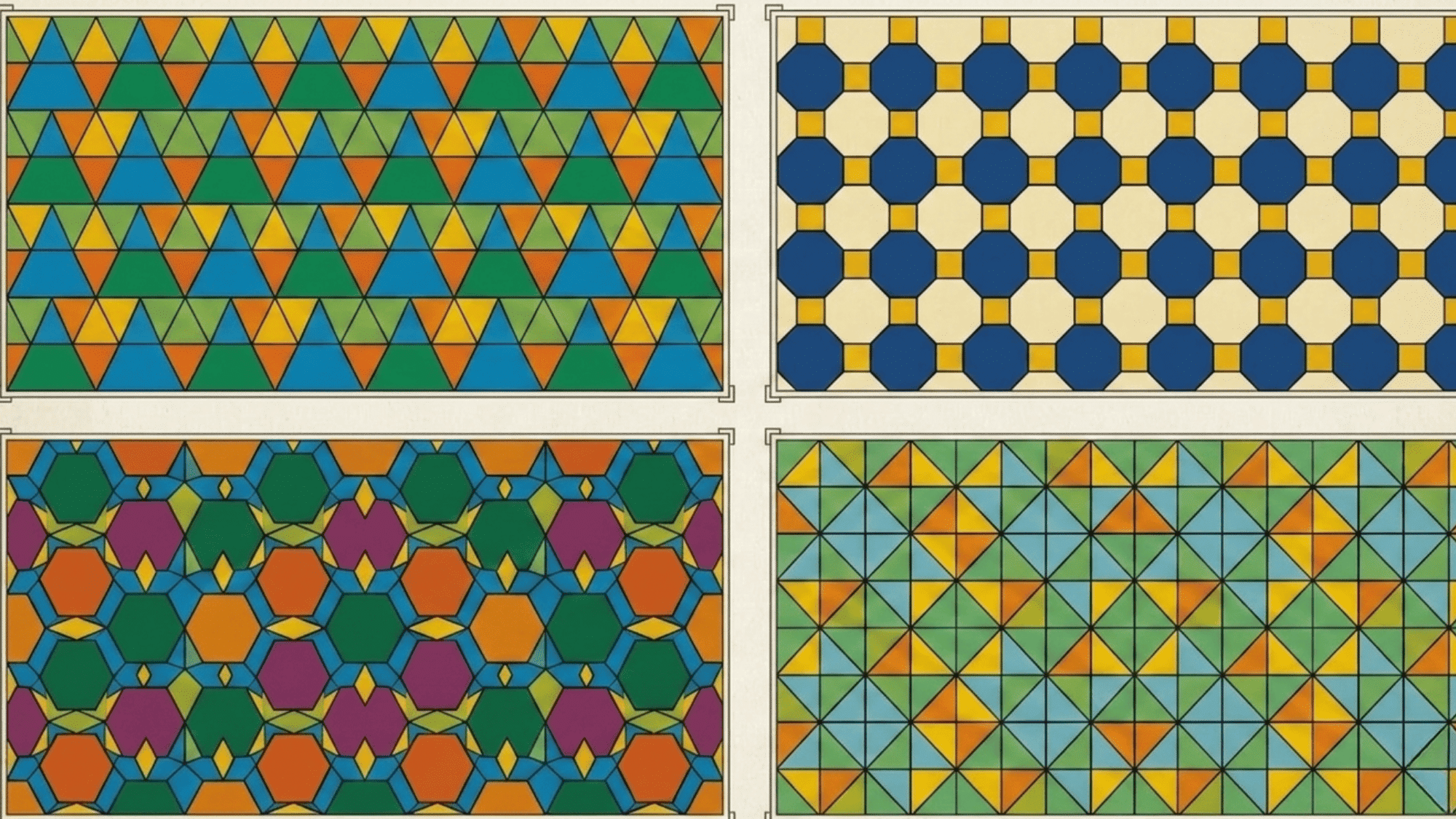
Semi-regular tessellation combines two or more regular shapes to create intricate patterns that still maintain symmetry and repetition.
8. Square and Equilateral Triangle Tessellation
- Art Description: Combines squares and triangles in a repeating pattern.
- Material Required: Paper, pencil, ruler, colored markers, scissors.
- How to Make: Alternate squares and triangles to create a seamless pattern.
9. Regular Hexagon and Triangle Tessellation
- Art Description: Regular hexagons and triangles fit together without gaps.
- Material Required: Paper, pencil, ruler, colored markers, scissors.
- How to Make: Place hexagons and triangles together, ensuring they fit snugly.
10. Octagon and Square Tessellation
- Art Description: Octagons and squares form a complex tessellation pattern.
- Material Required: Paper, pencil, ruler, colored markers, scissors.
- How to Make: Alternate octagons and squares to fill the surface.
11. Regular Hexagon and Diamond Tessellation
- Art Description: Hexagons and diamonds alternate in a repeating pattern.
- Material Required: Paper, pencil, ruler, colored markers, scissors.
- How to Make: Align hexagons and diamonds to form a continuous tessellation.
12. Triangle and Trapezoid Tessellation
- Art Description: Triangles and trapezoids combine to create a unique tessellation.
- Material Required: Paper, pencil, ruler, colored markers, scissors.
- How to Make: Fit triangles and trapezoids together to create a seamless design.
13. Square and Triangle Tessellation
- Art Description: Squares and triangles are arranged together to form an interesting tessellation.
- Material Required: Paper, pencil, ruler, colored markers, scissors.
- How to Make: Alternate squares and triangles to cover the surface evenly.
14. Equilateral Triangle and Parallelogram Tessellation
- Art Description: Parallelograms and equilateral triangles form a harmonious tessellation.
- Material Required: Paper, pencil, ruler, colored markers, scissors.
- How to Make: Fit triangles and parallelograms together to create a continuous design.
Irregular Tessellation
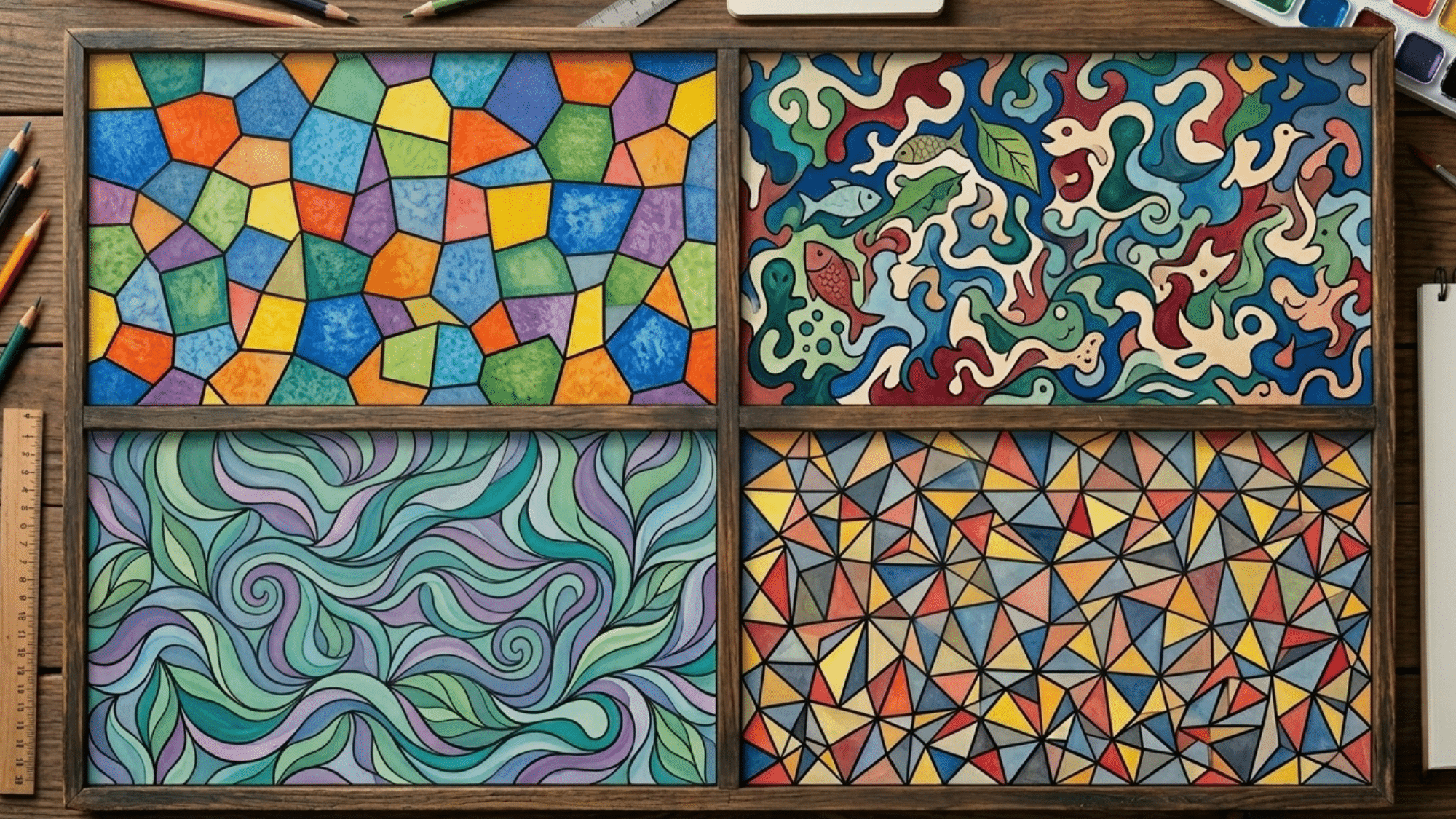
Irregular tessellation uses unique, nonrepeating shapes that fit together to cover a surface without gaps or overlaps. Unlike regular tessellations, the shapes in this pattern vary in size and form, offering greater creative freedom and resulting in dynamic, unpredictable designs.
15. Irregular Triangles Tessellation
- Art Description: Irregular triangles fit together to form an unpredictable pattern.
- Material Required: Paper, pencil, scissors, markers, ruler.
- How to Make: Arrange irregular triangles to cover the surface seamlessly.
16. Odd-Shaped Polygons Tessellation
- Art Description: Non-standard polygons are used to create a tessellating pattern.
- Material Required: Paper, pencil, scissors, markers, ruler.
- How to Make: Fit irregular polygons together to form a continuous design.
17. Custom Shape Tessellation
- Art Description: Custom shapes are designed to fit together without gaps.
- Material Required: Paper, pencil, scissors, markers, ruler.
- How to Make: Design unique shapes and arrange them to cover a surface.
18. Organic Curve Tessellation
- Art Description: Curved, organic shapes tessellate to form a flowing pattern.
- Material Required: Paper, pencil, scissors, markers, ruler.
- How to Make: Use curves and organic shapes to create a seamless, flowing tessellation.
19. Random Polygon Tessellation
- Art Description: A mix of random polygons tessellates in an abstract design.
- Material Required: Paper, pencil, scissors, markers, ruler.
- How to Make: Arrange random polygons to form a complete pattern with no gaps.
20. Freeform Tessellation
- Art Description: No fixed pattern is used in freeform tessellation, leaving room for creativity.
- Material Required: Paper, pencil, scissors, markers, ruler.
- How to Make: Use freeform shapes and position them to create a dynamic, abstract tessellation.
21. Irregular Quadrilaterals Tessellation
- Art Description: Irregular quadrilaterals fill a surface with no repeating pattern.
- Material Required: Paper, pencil, scissors, markers, ruler.
- How to Make: Arrange irregular quadrilaterals to create an interesting tessellating design.
Fractal Tessellation
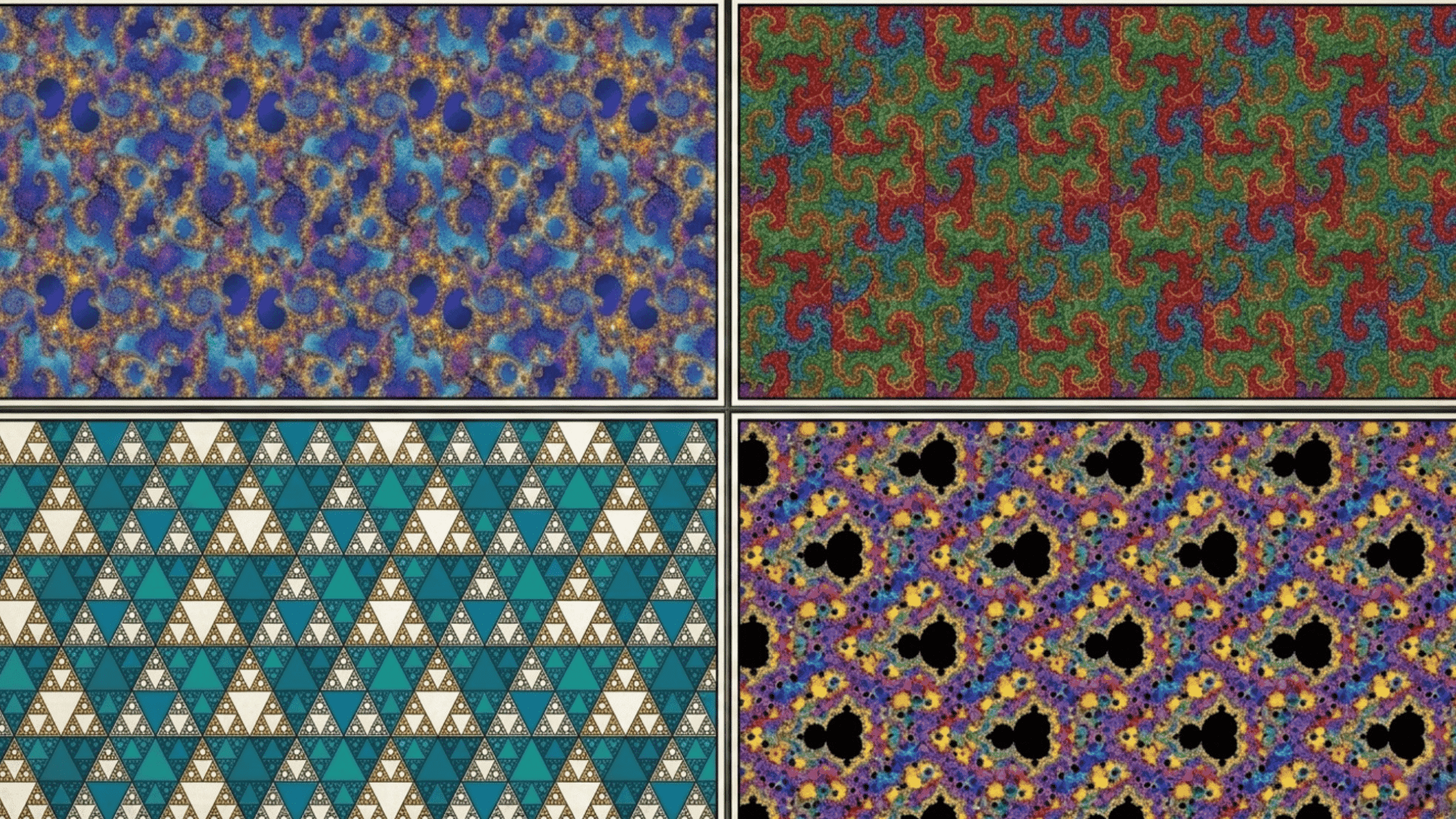
Fractal tessellation features self-replicating patterns that repeat at smaller scales, creating intricate, never-ending designs.
These patterns exhibit a high level of detail, with each part of the tessellation resembling the whole, offering a beautiful blend of mathematical precision and artistic complexity.
22. Sierpinski Triangle Tessellation
- Art Description: A repeating triangular pattern that forms a fractal structure.
- Material Required: Paper, digital tools, colored pencils.
- How to Make: Create triangles and repeat them at smaller scales to form the Sierpinski triangle.
23. Mandelbrot Set Tessellation
- Art Description: A fractal pattern that exhibits self-similarity at different scales.
- Material Required: Paper, digital tools, colored pencils.
- How to Make: Use digital tools to zoom into the Mandelbrot set and repeat the pattern at various scales.
24. Julia Set Tessellation
- Art Description: A fractal pattern created by repeating the Julia set at multiple scales.
- Material Required: Paper, digital tools, colored pencils.
- How to Make: Generate the Julia set fractal and repeat the pattern to fill a surface.
25. Dragon Curve Tessellation
- Art Description: A fractal curve that creates a tessellated, self-replicating pattern.
- Material Required: Paper, digital tools, colored pencils.
- How to Make: Generate the Dragon curve fractal and repeat the pattern.
26. Cantor Set Tessellation
- Art Description: A fractal pattern formed by repeating sections of a divided line.
- Material Required: Paper, digital tools, colored pencils.
- How to Make: Divide a line into smaller sections and repeat the process to form a fractal tessellation.
27. Peano Curve Tessellation
- Art Description: A continuous curve that fills a surface in a self-replicating way.
- Material Required: Paper, digital tools, colored pencils.
- How to Make: Generate the Peano curve and repeat it to fill the surface.
28. Levy C Curve Tessellation
- Art Description: A self-replicating curve that tessellates across a surface.
- Material Required: Paper, digital tools, colored pencils.
- How to Make: Draw the Levy C curve and repeat it to cover the surface.
Escher-Style Tessellation
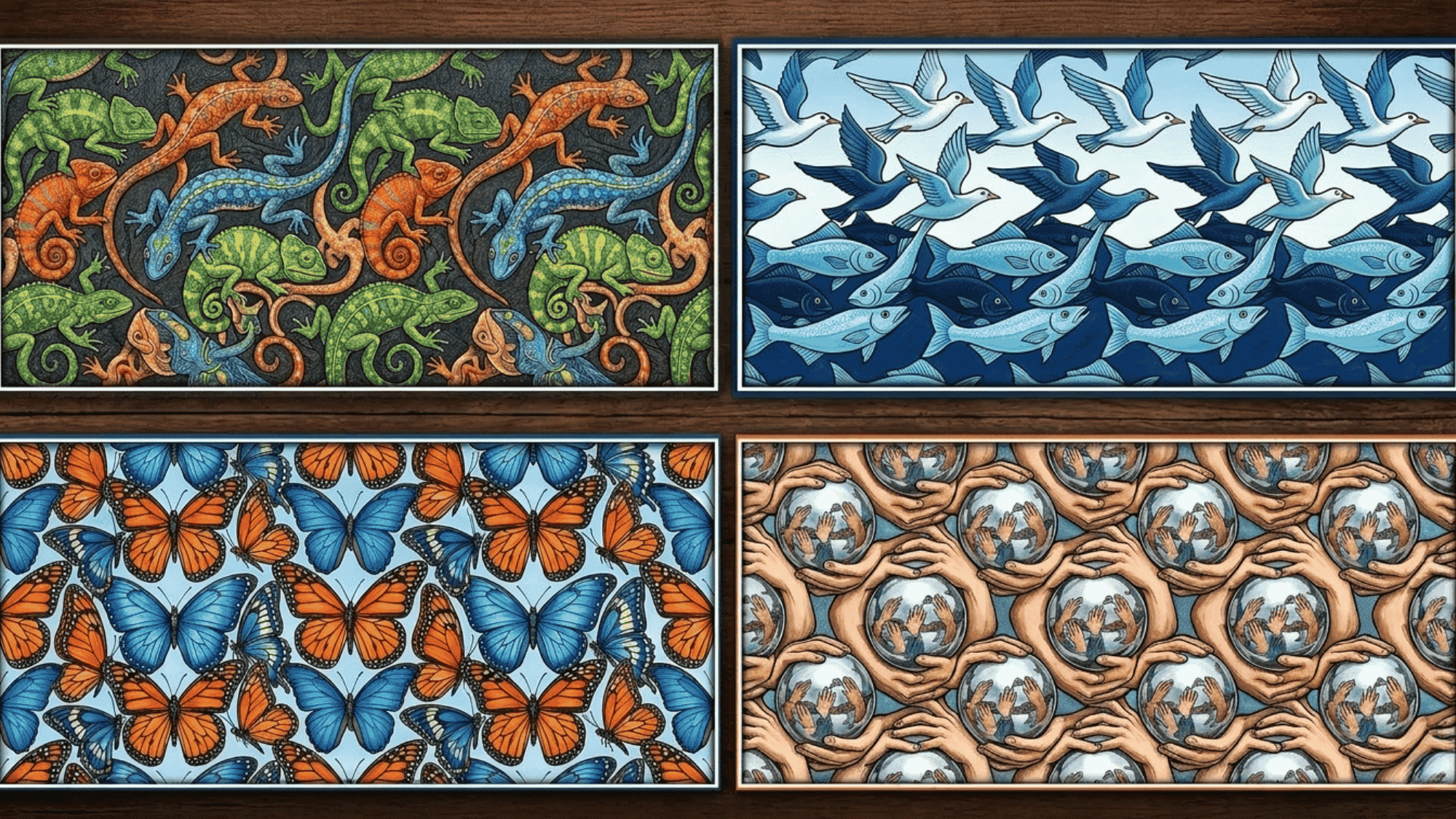
Escher-style tessellation art draws inspiration from the works of M.C. Escher, in which shapes seamlessly transform into one another, creating mind-bending, surreal patterns.
29. Reptiles Tessellation
- Art Description: Shapes transform into each other to create a tessellating pattern.
- Material Required: Paper, pencil, ruler, digital tools (optional).
- How to Make: Use transformation to create reptiles that tessellate seamlessly.
30. Sky and Water Tessellation
- Art Description: Imagery of fish transforming into birds in a tessellation pattern.
- Material Required: Paper, pencil, ruler, digital tools (optional).
- How to Make: Use the transformation of shapes to create fluid transitions between creatures.
31. Regular Division Tessellation
- Art Description: Shapes divide evenly to create a tessellating pattern.
- Material Required: Paper, pencil, ruler, digital tools (optional).
- How to Make: Divide a shape into regular parts and repeat the divisions to create a tessellation.
32. Hand with Reflecting Sphere Tessellation
- Art Description: A tessellation featuring Escher’s famous hand holding a sphere.
- Material Required: Paper, pencil, ruler, digital tools (optional).
- How to Make: Use transformation and reflection techniques to replicate the design.
33. Fish Tessellation
- Art Description: Fish shapes interlock to form a repeating tessellation.
- Material Required: Paper, pencil, ruler, digital tools (optional).
- How to Make: Draw fish shapes and repeat them across the surface to form a tessellating pattern.
34. Snakes and Lizards Tessellation
- Art Description: Snakes and lizards transform to tessellate seamlessly.
- Material Required: Paper, pencil, ruler, digital tools (optional).
- How to Make: Use shape transformation to create interlocking snakes and lizards.
35. Butterfly Tessellation
- Art Description: Butterfly shapes tessellate to create a repeating pattern.
- Material Required: Paper, pencil, ruler, digital tools (optional).
- How to Make: Draw butterflies and repeat them across the surface.
Pioneers of Tessellation: Masters Who Shaped the Art
Tessellation art has been deeply influenced by visionary artists who blended mathematics with creativity, pushing the boundaries of design.
These pioneers have transformed simple shapes into intricate patterns, leaving a lasting legacy in both the art and mathematical worlds.
| Practitioner | Famous Works | Style/Contribution |
|---|---|---|
| M.C. Escher | Reptiles, Sky and Water, Relativity | Known for transforming shapes into morphing patterns, blending mathematics with art. |
| Robert Fathauer | The Circle Limit, Tessellations from Nature | Focuses on mathematical tessellations with a modern, geometric approach. |
| Branko Mitrovic | Tilings, Geometrical Transformation | Combines mathematical precision with intricate designs and natural forms. |
Wrapping It Up
Tessellation art beautifully blends mathematics and creativity, offering endless possibilities for artistic expression.
From ancient mosaics to the revolutionary works of M.C. Escher, tessellation continues to captivate and inspire both artists and mathematicians.
Whether through regular, semi-regular, or irregular patterns, tessellation art showcases the harmony between structure and creativity.
Its eternal appeal and versatility ensure that tessellation will remain a significant form of artistic expression, evolving as new techniques and tools emerge.