


A watermelon, a carton of eggs, and a twelve-pack of toilet paper make a surprisingly good shopping test. One is heavy and inclined to roll, one needs protection, and one can fill half a cargo box while weighing almost nothing. If you’re comparing еlectric сargo bikes for family grocery trips, take last week’s receipt with you. It tells you what your bike will have to carry, how much of that load needs to stay upright, and whether there will still be room for the child who wants to come along and pick the watermelon.
Read Your Receipt Before You Choose a Bike
Look back over a few ordinary shopping trips. You may think of yours as a four-bag household, but four bags of pasta, greens, and cereal are a different proposition from four bags containing milk, canned tomatoes, and laundry detergent. Circle the items that regularly give you trouble on the way from the car to the kitchen. The paper bag you support with one hand underneath and the loaf you carry separately are clues about the kind of storage you need.
Then put a few empty packages in the bags you normally take to the store. A cereal box, an egg carton, and a rinsed milk jug are enough to reveal how much space disappears when things have to stand upright. Bring those bags to a bike shop and ask to try them on a demonstration model. If the bike will carry a child, have the appropriate passenger equipment fitted first. An empty cargo box can look enormous right up until a bench, a pair of rain boots, and somebody’s knees claim part of it.
Choose a Layout You Can Pack at the Curb
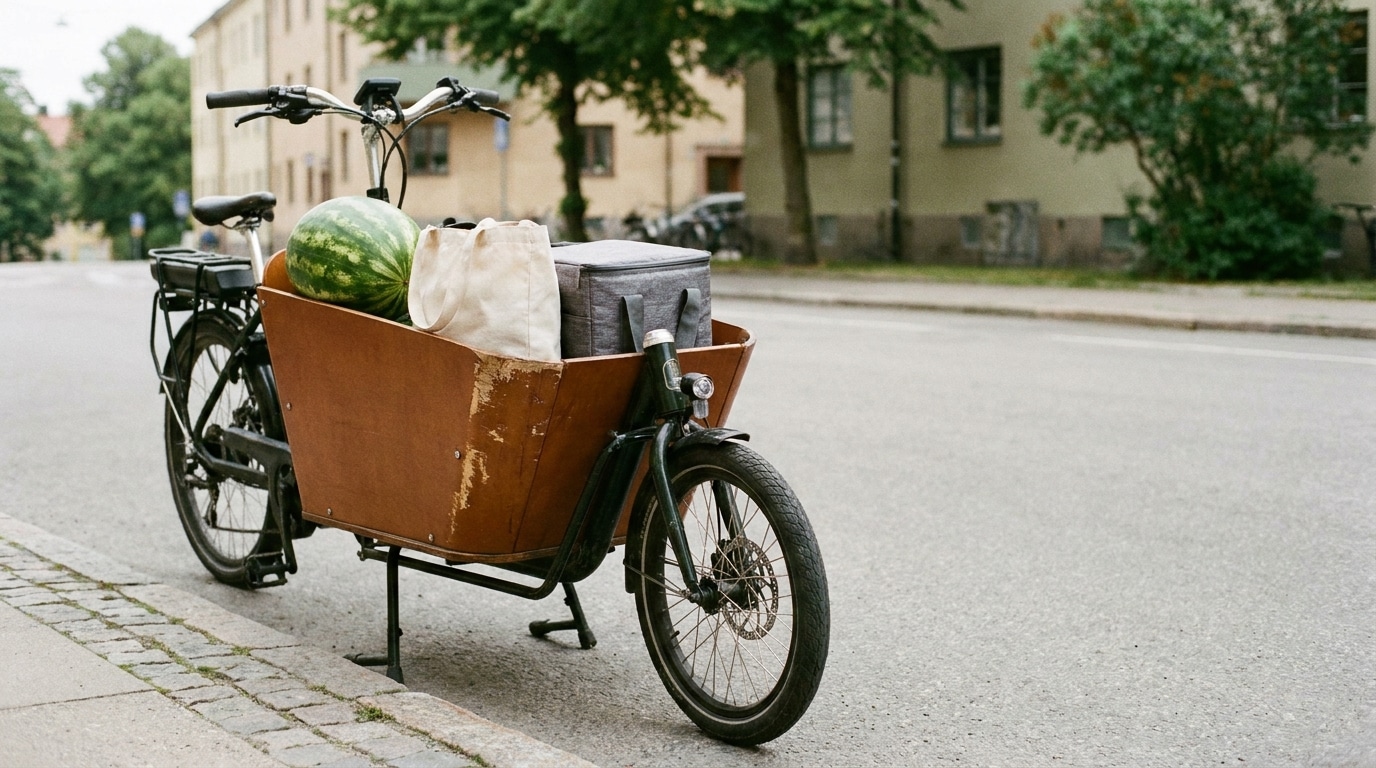
A front-loading bike carries goods ahead of the rider, usually in a box. A longtail carries passengers or cargo on an extended rear section and can take large bags called panniers on either side. Each layout asks you to pack a little differently. A front box gives you a broad space where several grocery bags may sit side by side. With panniers, you can separate purchases as you go, although the shape of each opening determines what will pass through it.
Try each layout with the least cooperative item on your receipt. If you buy pizza on Fridays, take an empty pizza box and see whether it can ride flat and be secured. If milk comes in tall glass bottles, try lifting a bottle carrier over the side of the front box. On a longtail, check that you can get a full shopping bag into the pannier and lift it out by its handles. A bag that goes in easily when empty may wedge itself under a passenger rail once it’s full.
Check the model’s manual for the overall weight limit and the separate limits for its racks, box, and accessories. The distinction matters when you put several dense items in one place. A bike may have capacity to spare overall while one pannier has already reached its limit. If a heavy purchase appears on your receipt most weeks, weigh it once at home. Knowing what your usual bag of rice weighs makes the instructions easier to apply at the store.
Give the Cashier a Packing Order
A little planning at checkout saves you from having to rebuild the whole load on the sidewalk. Set your reusable bags in the cart as you enter the store. If you use a handheld scanner, you can pack as you shop. At a conventional checkout, group items on the belt in roughly the order you want to carry them. Keep anything fragile until you know where it will go.
For a typical family shop, this packing list gives each awkward item a place.
- Milk, cans, and jars. Put dense items low in the designated cargo space. With two panniers, divide the weight between them. Keep glass jars from knocking together on the way home.
- Frozen and refrigerated food. Bring an insulated bag that fits your cargo setup when full. Pack it where you can lift it out first at home, particularly if you park some distance from the kitchen.
- Eggs, berries, and bread. Reserve a protected spot for them while you pack the rest. A small rigid container can earn its space if soft fruit regularly comes home bruised.
- Large, light packages. Give paper goods and cereal boxes their own space and secure them. Check your view and steering clearance before you leave the rack.
- Round or loose produce. Contain the apples, onions, and that watermelon so they stay put through a turn. In a shared passenger box, keep groceries secured clear of the child’s seating area and restraints.
- The lock and the house keys. Give each a location you can reach when the bike is full. Nobody wants to unpack dinner on the doorstep to find the key that lets it inside.
Test the Return Journey Under Load
The outward ride to the supermarket can give you a misleading impression of the trip. You leave home with empty bags, and the long slope down to the store barely registers. On the way back, the same slope becomes a climb that starts at a traffic light. This is where pedal assist can make a meaningful difference. On a test ride, ask the dealer to show you how the assist settings work and let you practice with a secured load. Get comfortable starting, turning, and stopping in a quiet area before taking the bike into traffic.
Pay attention to the last few hundred yards. Perhaps your usual route home involves turning across traffic and then entering a steep driveway. Coming around the block from the other direction might give you a simpler approach for the price of an extra minute. Try the entrance with the bike loaded and decide where you’ll stop to unload. If the driveway slopes, find a level spot where you can park according to the manufacturer’s instructions and lift out the bags comfortably.
For a bike you already own or have borrowed, check the battery level before and after a few comparable grocery trips. Note which journey included a passenger or the climb home with a full load. Over time, you’ll have a reasonable idea of the charge your own route takes. That’s especially handy on a Friday when the bike has already done the school run and someone remembers that there’s nothing in the fridge for dinner.
Pick the Store With the Easier Arrival
Families often keep shopping at the supermarket they know from driving, even when another store suits the bike better. Consider the whole trip. One supermarket might be a mile closer but have its bike rack around the back, beyond a row of delivery bays. Another might sit beside a quiet street with a rack near the entrance and enough room to wheel a shopping cart alongside your cargo box. Visit both at the hour you usually shop. The difference becomes obvious when you picture loading a week’s groceries in the rain.
If a child comes along, give them a specific job at the point where shopping usually becomes hectic. An older child might count the bags or be in charge of spotting the loaf before anything lands on it. Plan where they’ll stand while you transfer purchases and return the cart. Look for a parking position that lets you handle those jobs while keeping your child beside you and away from moving vehicles. That extra bit of space may be a better reason to choose a store than a small difference in distance.
Decide What Belongs on the Weekly Trip
After two or three rides, take another look at the receipt. Which items made the ride home awkward? Which simply needed a different bag? If bread got squashed, try giving it a rigid container next time. If a case of sparkling water took the space you needed for three dinners, buying it on a separate trip might suit you better. Keep the purchases that naturally go together on the same outing. A stop at the bakery on the way home from Saturday soccer may solve the bread problem more pleasantly than buying another accessory.
The most revealing moment comes when you get home. If you can lift out the cold bag, hand someone the bread, and get the rest through the door in two trips, you’ve learned more about the bike’s suitability than a capacity figure alone could tell you. And if the watermelon makes it home but takes up the whole passenger footwell during your packing test, you’ve learned something equally valuable. Next Saturday, the child who picks the fruit can choose the berries.