





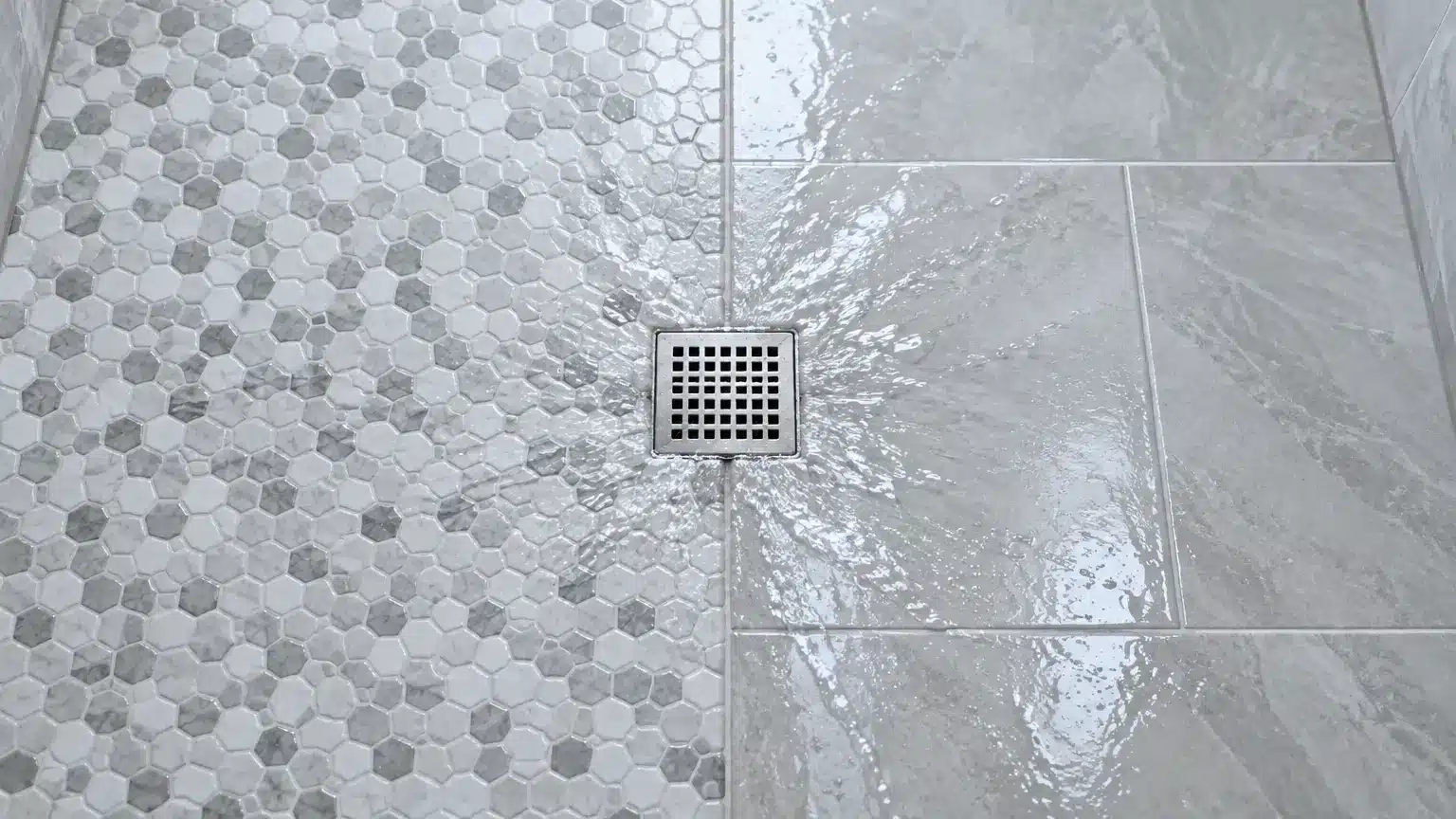
A large tile might look beautiful in a bathroom showroom, but putting the same tile on a shower floor can be a different story. Unlike the rest of the bathroom, a shower floor needs to direct water toward a drain while providing suitable traction under wet, soapy feet.
For most traditional shower floors, smaller tiles are the more practical choice. They can follow the slopes around a central drain more easily, and their additional grout joints may help provide traction. Larger tiles offer a cleaner, less interrupted appearance, but they usually require more careful coordination between the tile format, drainage system and floor construction.
The best option depends on the shower’s layout, the selected material and how much maintenance you’re comfortable handling.
Why Tile Size Matters on A Shower Floor
A shower floor is different from an ordinary bathroom floor because it cannot simply be flat. It needs a properly designed slope that carries water toward the drain.
Traditional showers often use a central drain with the floor sloping inward from several directions. Small tiles accommodate these changes in angle because the numerous joints allow the surface to follow the underlying contours.
Large tiles are less flexible. A rigid tile cannot bend to follow multiple intersecting slopes, so installers may need additional cuts to prevent uneven edges or areas where water collects.
A linear drain can simplify the arrangement by allowing a single-direction slope in certain shower designs. This can make larger tile formats more practical.
The choice of tile size should therefore begin with the shower’s drainage plan rather than a photograph of the finished bathroom.
The Advantages of Small Shower Floor Tiles
They Work Well with Conventional Drains
Small tiles are particularly useful for shower floors with a centrally positioned drain.
Common formats include penny rounds, small squares and hexagonal mosaics. These are often supplied on mesh-backed sheets to simplify positioning, although individual pieces may still require adjustment during installation.
Their smaller dimensions help the finished surface follow changes in slope without creating pronounced edges between tiles.
More Grout Joints Can Improve Traction
A mosaic floor has considerably more grout joints than a floor finished with large-format tiles.
Those joints can contribute to traction, although grout alone does not guarantee a slip-resistant surface. The tile’s texture, finish and intended application also need consideration.
The Tile Council of North America explains how the dynamic coefficient of friction (DCOF) is used when evaluating flooring surfaces. Shower floors require particular consideration because they are regularly exposed to water and are generally used barefoot.
Homeowners should confirm that the specific tile is suitable for shower floors rather than assuming every matte or textured tile will perform equally well.
They Offer More Decorative Flexibility
Small tiles can introduce patterns without overwhelming the bathroom.
White hexagons create a classic appearance, while tumbled stone mosaics bring warmth and natural variation. Penny rounds offer a softer geometric look, particularly when paired with simple wall tiles.
For homeowners comparing these possibilities, clé’s shower tile floor collections include mosaic formats, natural stone, cement and handcrafted tile options. The collection also allows shoppers to explore finishes, shapes and products designated for shower-floor use.
Individual product specifications should guide the final selection, particularly for materials requiring sealing or specialized installation.
When Large Shower Floor Tiles Make Sense

Large-format tiles appeal to homeowners who prefer a continuous, uncluttered appearance.
Fewer grout lines can create a quieter visual surface, particularly when the same material extends across the bathroom floor and into a walk-in shower.
This approach is especially attractive in minimalist bathrooms, where consistent finishes and restrained detailing help create a sense of openness.
However, large tiles need a drainage arrangement compatible with their dimensions.
A single-plane slope toward a linear drain may allow the use of larger rectangular tiles without the complex cuts associated with a central drain. The shower assembly must still meet the relevant installation requirements.
For homeowners considering a complete bathroom update, planning a shower replacement should include drainage, waterproofing and material selection before the final tile layout is approved.
Which Tile Size Is Easier to Clean?
Large tiles generally have fewer grout joints, reducing the amount of grout that needs regular attention.
That can be appealing in households where shower cleaning already feels like a chore.
Small mosaic tiles have more joints, which may collect soap residue and mineral deposits if they are not maintained consistently.
However, grout quantity is only part of the cleaning equation.
Highly textured tiles can retain residue within surface irregularities, while porous stone and cement tiles may require compatible cleaners and periodic sealing.
Glazed ceramic and porcelain tiles are often comparatively straightforward to maintain, provided they are suitable for the application.
When planning a bathroom remodel, it helps to consider cleaning routines alongside color, tile size and fixture selection.
Choosing a practical grout color and following the manufacturer’s maintenance recommendations can make a noticeable difference over time.
How Tile Size Changes the Look of A Shower
Small and large tiles create different design effects.
Small-format tiles introduce rhythm through repeated shapes and grout lines. Their detail can make a simple shower feel thoughtfully finished, especially when the walls use a restrained color palette.
Large tiles create broader surfaces with fewer visual interruptions. This can complement contemporary bathrooms with frameless glass, concealed storage and simple fixtures.
A particularly effective approach is to use large-format tiles on the shower walls and smaller tiles on the floor in a coordinating color.
The difference in scale introduces texture without requiring a dramatic change in material.
The same idea of visual continuity appears in minimalist interior design, where a limited palette and carefully chosen surface finishes help create a calmer room.
Installation Details Homeowners Should Understand
Even beautiful tiles can become problematic if the shower assembly is incorrectly constructed.
A tiled shower needs a suitable waterproofing system beneath the finished surface. Tile and grout alone do not make the shower waterproof.
The installer must also establish the correct slope toward the drain and ensure the waterproofing, bonding materials and drain components are compatible.
With small mosaics, sheet alignment requires particular attention. Poorly positioned sheets can create visible seams across the finished floor.
With larger tiles, the main challenges involve maintaining drainage slopes and controlling lippage between adjacent pieces.
Before installation, ask the contractor to confirm the proposed tile size works with the drain location, shower dimensions and waterproofing system.
For natural stone or handmade tiles, discuss variation in thickness, sealing requirements and appropriate grout joint dimensions as well.
So, Should You Choose Small or Large Shower Floor Tiles?
For a conventional shower with a central drain, small-format tiles are usually the easier choice. They accommodate multiple slopes, offer decorative flexibility and can contribute to traction through additional grout joints.
Large-format tiles can work beautifully when the drainage system and floor geometry are designed around them. They may also appeal to homeowners seeking fewer grout lines and a more continuous appearance.
Before ordering, confirm three things: the tile is approved for shower-floor use, its finish is appropriate for wet barefoot conditions, and the proposed size is compatible with the drainage design.
A well-chosen shower floor should look appealing on installation day and remain practical through years of everyday use.