



An old satellite dish might seem harmless once it is no longer being used. Many homeowners have these devices removed when switching television providers or changing their entertainment systems. After removal, the roof may look perfectly normal, especially if the mounting area is not visible from the ground. However, the screws, brackets, and attachment points left behind can create problems long after the equipment disappears.
Satellite dishes are often secured directly to roof structures using mechanical fasteners. Removing the dish does not automatically restore the roofing materials disturbed during installation. Small openings, damaged shingles, or deteriorating sealants may allow rainwater to enter gradually. In some cases, the first noticeable ceiling stain appears years after the equipment was removed, making the source difficult to identify.
Why Can an Old Satellite Dish Leave Problems Behind After Removal?
A satellite dish needs a stable mounting location to remain properly positioned. Depending on the installation, brackets may be secured to roof decking, structural framing, or other suitable supports.
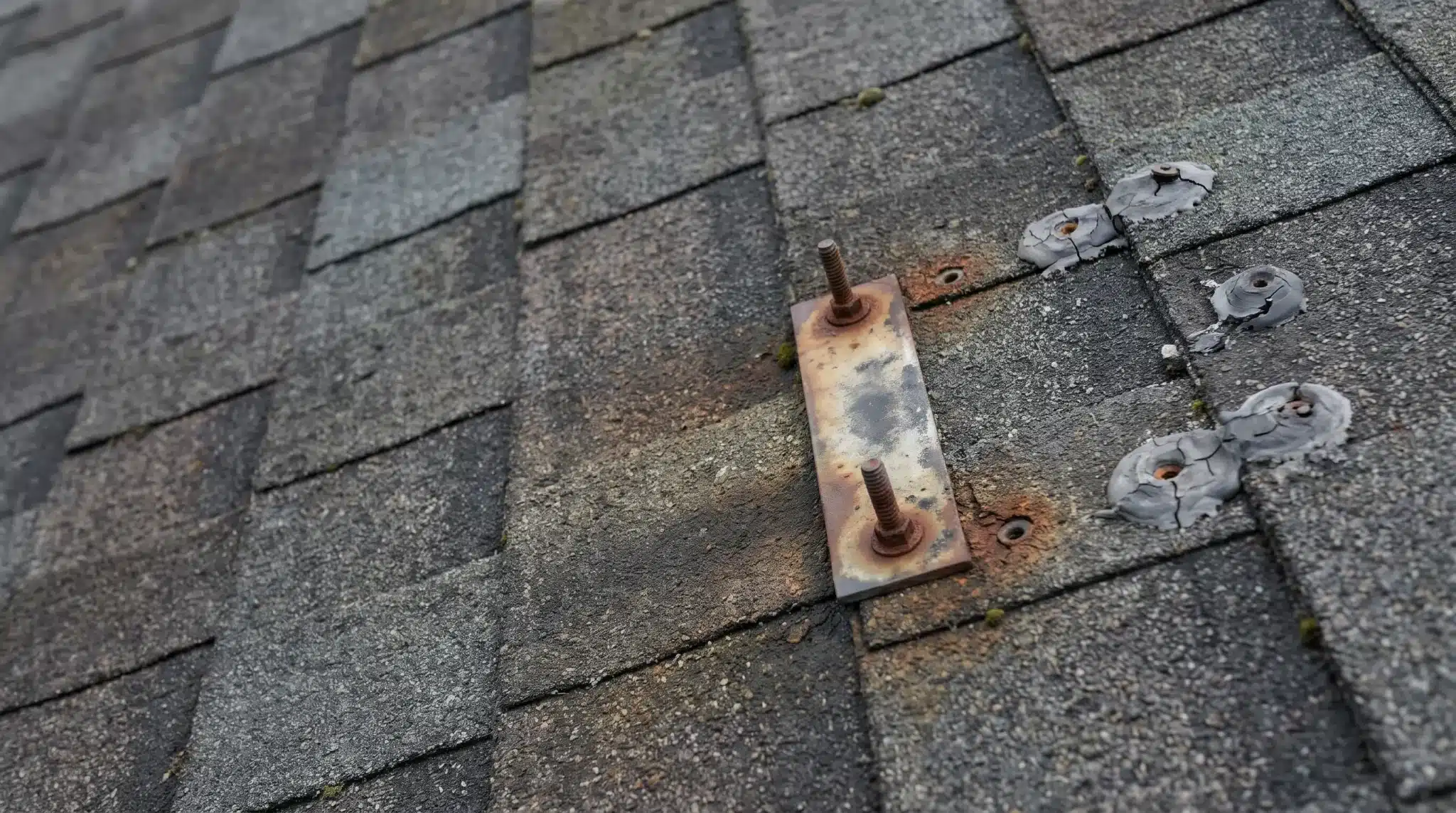
These attachments can involve screws or bolts that penetrate roofing materials. Properly installed mounts require suitable weatherproofing, but removing the equipment can disturb those protective details.
Removing the Dish Does Not Remove Its Attachment Points
Some removal jobs involve disconnecting the dish while leaving the mounting bracket attached. Others involve taking away the entire assembly, including the fasteners.
Both approaches can create concerns if the remaining attachment points are not evaluated.
A bracket left in place may eventually develop loose fasteners or deteriorated seals. Removing the entire bracket may expose holes that previously remained covered by mounting hardware.
The roof may appear intact from a distance, but small openings can remain beneath surrounding shingles or patches.
What Happens to the Holes Left by Mounting Screws?
Roofing materials work together to direct water away from the building. When a screw passes through those layers, it creates a potential pathway for moisture unless the penetration is properly protected.
Removing that screw can leave an opening through the shingle and possibly the underlayment or decking.
Small Openings Can Allow Water Beneath Shingles
A mounting hole may be only a few millimetres wide, yet its location can make it vulnerable to rainfall.
Water flowing down the roof may reach the opening, particularly if surrounding materials have shifted or deteriorated.
Once moisture passes beneath the outer roofing layer, it can follow the roof deck or framing before reaching an interior surface.
This explains why a leak caused by an abandoned fastener hole may produce a stain some distance from the original penetration.
Holes in the Decking Require Careful Assessment
Not every fastener hole causes structural damage. However, larger openings, damaged wood, or repeated moisture exposure may require more than a surface repair.
The surrounding decking should provide suitable support for the repaired roofing assembly.
If moisture has weakened the wood, the affected area may need additional work before new roofing materials are installed.
Why Can a Roof Remain Leak-Free for Years Before Problems Appear?
One confusing aspect of abandoned satellite mounts is the delay between equipment removal and visible water damage.
A roof may withstand numerous rainstorms before moisture begins reaching the interior.
Temporary Sealants Can Deteriorate Over Time
Some mounting holes are covered with roofing sealant after the brackets are removed.
Although certain sealants are appropriate for specific roofing applications, their performance depends on the product, installation conditions, and surrounding materials.
A small amount applied over an exposed hole may not provide a lasting repair if the underlying roofing layers remain damaged.
Temperature changes, weather exposure, and movement around the repair can eventually affect the seal.
When protection deteriorates, water may enter through an opening that previously appeared closed.
Water May Take Time to Become Visible
Moisture entering beneath shingles does not always drip immediately through the ceiling.
Small amounts may be absorbed by wood or insulation, or they may dry before visible staining develops.
Repeated wetting can gradually increase deterioration until moisture finally reaches an interior finish.
The absence of an early ceiling stain therefore does not prove that an abandoned mounting point was properly repaired.
Can Old Mounting Brackets Damage More Than the Shingles?
The visible shingle surface is only one component of the roofing assembly. Beneath it are underlayment, decking, and structural supports that may also be affected by improperly protected mounting points.
Loose Brackets Can Disturb Surrounding Materials
A bracket that remains attached after equipment removal may experience gradual movement from temperature changes or physical disturbance.
If its fasteners loosen, the surrounding roofing materials may no longer remain properly protected.
Movement around attachment points can also affect sealant or other weatherproofing components.
The extent of the problem depends on the mounting method and the condition of the roof.
Trapped Moisture Can Affect the Roof Deck
Water entering around a mounting bracket may reach the decking beneath it.
Repeated exposure can contribute to swelling or deterioration of wood-based materials.
In severe cases, weakened decking may no longer provide a reliable fastening surface.
Addressing the damaged area requires identifying both the water-entry point and any deterioration that occurred below the outer roofing layer.
How Can Contractors Identify Abandoned Roof Penetrations?
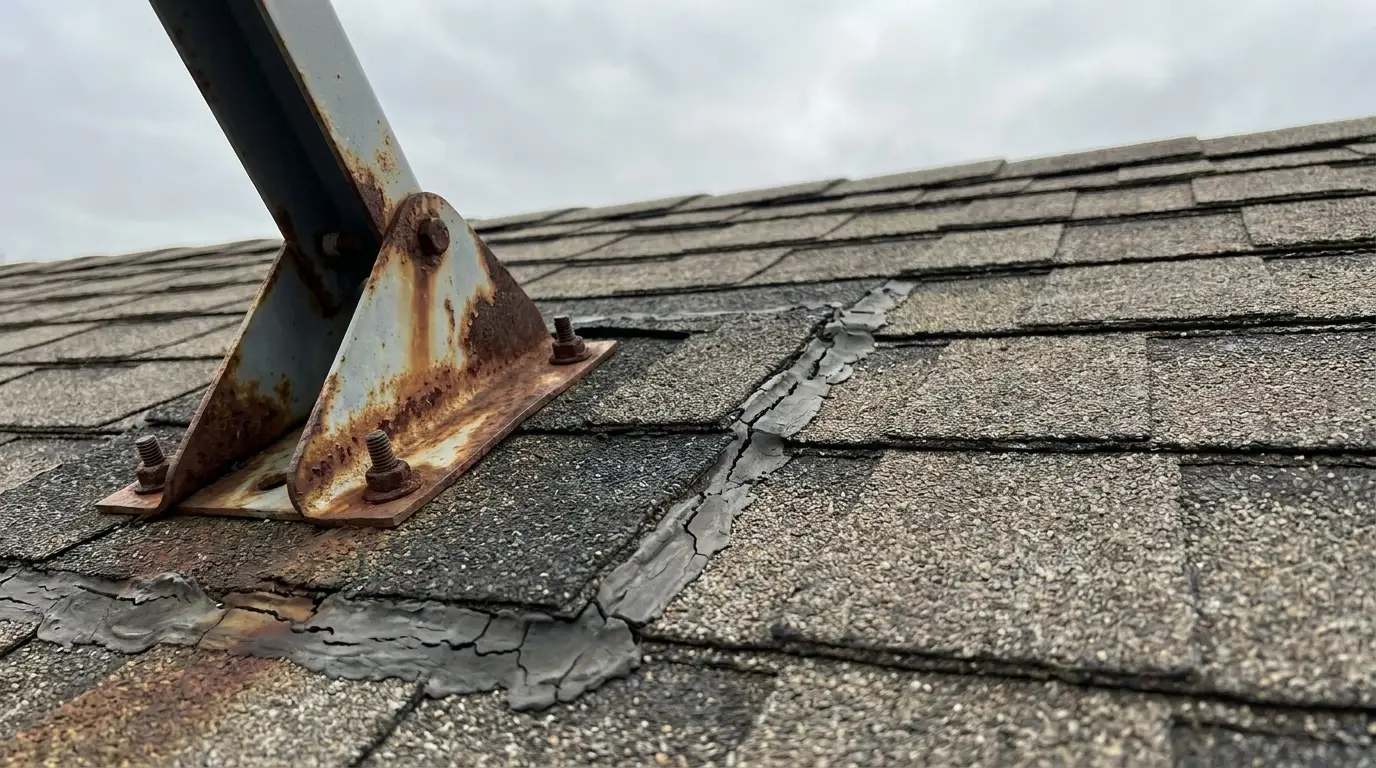
Finding an old satellite mounting location is not always straightforward, particularly when the equipment was removed years earlier.
A roof may contain patches, replacement shingles, or concealed fastener holes that are difficult to recognise from the ground.
Previous Mounting Locations Can Provide Clues
Contractors may examine unusual shingle patches, remaining mounting brackets, exposed fasteners, or sealant applied in isolated areas.
Old cable routes can sometimes provide additional clues about where rooftop equipment was previously installed.
During leak investigations, roofing contractors in Raleigh may examine these former attachment points alongside flashing, roof penetrations, and nearby materials to determine whether an abandoned mount is contributing to water intrusion.
A thorough assessment should consider several potential causes rather than assuming an old satellite dish is responsible for every nearby stain.
Interior Moisture Patterns May Help Narrow the Search
Water stains, damp insulation, and discoloured roof decking can provide evidence about where moisture has travelled.
However, the visible interior damage may not sit directly beneath the original opening.
Tracing the likely path of water can help identify the affected roof section, although concealed conditions may require further examination.
Why Is Applying Roof Sealant Over Old Holes Not Always Enough?
Applying a bead of sealant over a visible opening may seem like a straightforward repair.
The problem is that a roofing system relies on overlapping materials and suitable waterproofing details, not simply a surface coating.
Surface Patching May Leave Damaged Layers Untouched
If a mounting screw has torn a shingle or damaged the underlayment beneath it, covering the visible hole may leave those defects unresolved.
Sealant can also fail to bond properly to dirty, aged, or unsuitable surfaces.
A repair should account for the roof covering, penetration location, and condition of surrounding materials.
Depending on the roofing system, replacing affected shingles or restoring appropriate flashing and underlayment details may provide a more suitable solution.
What Should Be Checked Before Removing Rooftop Equipment?
Satellite dish removal should begin with understanding how the equipment is attached.
Homeowners should avoid pulling brackets or fasteners from roofing materials without knowing what penetrations will remain.
Mounting Hardware May Need Professional Removal
Some mounts are attached through several roofing layers, while others are secured to walls or other structural components.
The removal method should reflect the original installation.
If the hardware penetrates the roof, the affected area may require immediate weatherproofing to prevent exposure before permanent repairs are completed.
The condition of surrounding shingles also matters. Older or brittle materials may crack when disturbed, increasing the amount of repair work needed.
What Does a Proper Roof Repair Involve After Equipment Removal?
Repair methods depend on the type of roof, the mounting system, and the condition of the affected area.
There is no single patching method suitable for every abandoned satellite installation.
The Original Mounting Area Needs Attention
A contractor may need to remove damaged roofing materials to inspect the penetrations beneath them.
Any deteriorated underlayment, unsuitable fastening areas, or weakened decking should be assessed before the surface is restored.
A quality roofing company should be able to explain why a particular repair method is appropriate for the existing roofing system and how the completed work will manage water around the former mounting location.
Homeowners can ask for photographs of concealed damage and an explanation of the proposed repairs rather than relying solely on the finished appearance.
Repair Materials Must Suit the Existing Roof
Asphalt shingles, metal roofing, and other roof coverings require different repair details.
Materials should be compatible with the existing assembly and installed according to relevant manufacturer requirements.
A repair that looks neat from the ground may still be unsuitable if it interrupts the roof’s intended water-shedding arrangement.
Can Other Abandoned Rooftop Installations Create Similar Problems?
Satellite dishes are not the only rooftop accessories that leave fastening points behind.
Old television antennas, cable supports, temporary equipment brackets, and other attachments can create similar concerns when removed.
Some installations use mounting plates or fasteners that penetrate the roof covering. If these components are abandoned or removed without suitable repairs, they may become vulnerable to moisture intrusion.
Homeowners who purchase older properties may not know which equipment was previously installed.
Unusual roof patches or unused mounting hardware deserve attention during routine inspections, particularly when their installation history is unclear.
Conclusion
Removing an old satellite dish does not necessarily restore the roof to its original condition. Fastener holes, remaining brackets, damaged underlayment, and ageing sealants can leave openings that become troublesome long after the equipment disappears.
The delayed nature of these leaks makes careful investigation particularly important. Water may travel beneath roofing materials for extended periods before producing an obvious interior stain.
Checking former mounting locations, assessing concealed damage, and restoring suitable weatherproofing can prevent small attachment points from becoming persistent sources of moisture. A roof should remain properly protected after equipment removal, not merely look complete from the ground.