



A patio can have beautiful furniture, generous planting and carefully chosen lighting, yet still feel unfinished if the surface underneath everything was treated as an afterthought.
Standard concrete pavers are practical, but they are far from the only option. Terracotta can bring warmth to a courtyard. Stone can soften the transition into a garden. Patterned tile can give a compact entertaining area its own identity, while an unexpected layout can make even a restrained material feel more considered.
The practical requirements are different from choosing an indoor floor. Rain, temperature changes, drainage and slip resistance all need attention, and products should be explicitly suitable for the intended exterior application.
Once those fundamentals are covered, there is plenty of room to make the patio more interesting.
1. Start with terracotta for instant warmth
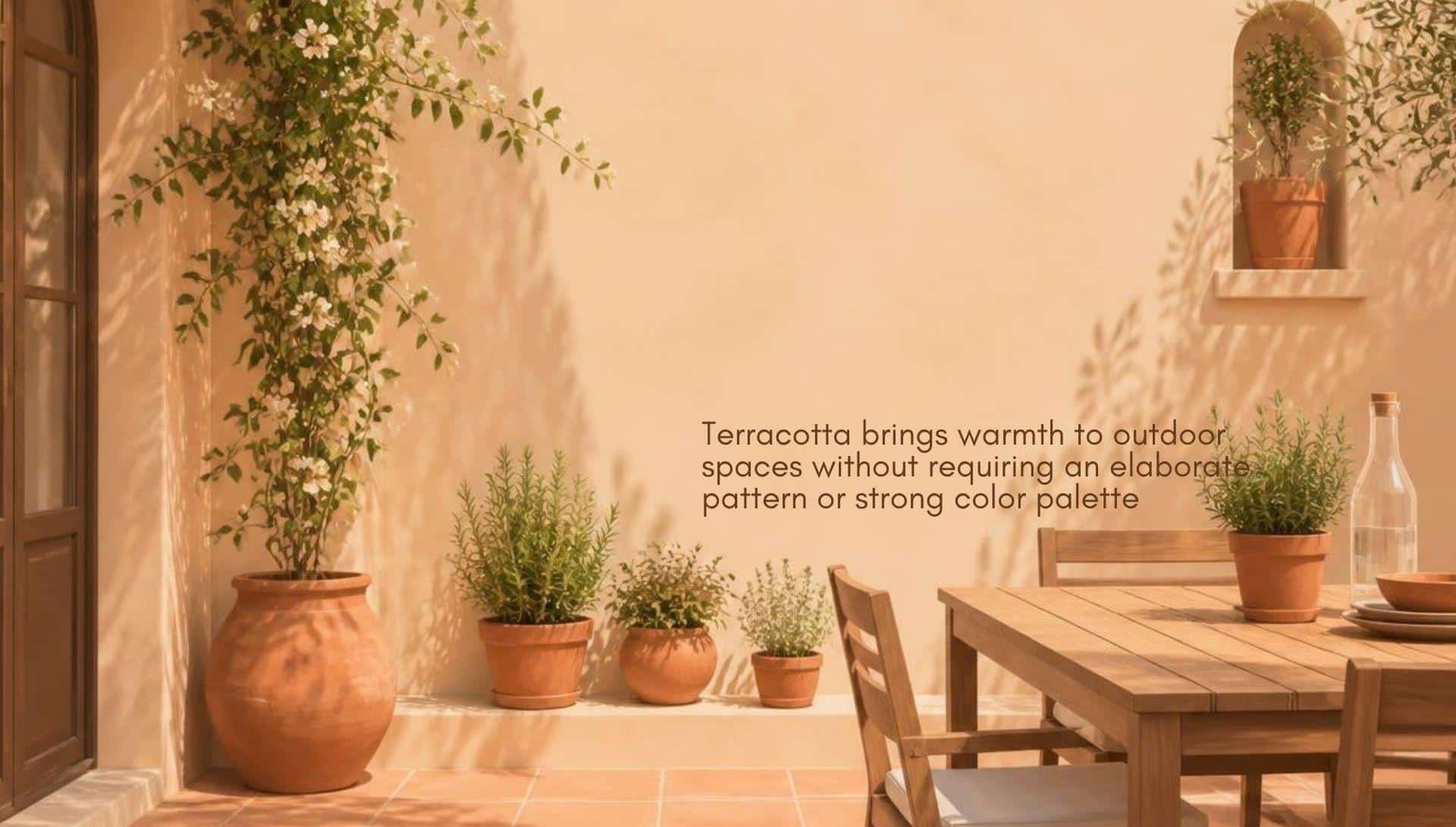
Terracotta has an ease about it that suits patios particularly well. Its earthy color sits naturally beside planting, timber, limewashed walls and weathered outdoor furniture.
It also avoids the overly pristine appearance some new patios can have. Handmade and traditionally produced terracotta often includes variations in tone and texture, allowing the floor to develop a more relaxed rhythm as individual pieces catch the light differently.
Square tiles create a simple courtyard feel, while rectangles laid in running bond or herringbone can introduce more movement.
The caveat is exposure. Terracotta is porous, so sealing requirements and freeze-thaw suitability need to be checked for the particular product and climate. A tile suitable for a covered patio in a mild region may not be appropriate for an exposed terrace through a freezing winter.
For homeowners drawn to surfaces with more character than conventional paving, outdoor patio tiles from OUTERclé include terracotta curated specifically around outdoor gathering spaces. The range shows how a patio floor can contribute to the wider design rather than simply provide a durable surface beneath the furniture.
For the right setting, though, few materials make a new outdoor area feel established quite as quickly.
2. Let natural stone connect the patio to the garden
Natural stone is a useful counterpoint to highly polished outdoor design.
Slate, limestone, travertine and other stones bring geological variation into the scheme, so even a simple layout contains differences in tone, veining and texture. Those variations can help a patio sit more comfortably within a garden.
Rather than automatically choosing large rectangular slabs, look at scale and shape. Smaller irregular pieces can create an informal garden character, while larger-format stone tends to feel calmer and more architectural.
OUTERclé’s Grangestone collection takes an interesting approach to this idea, translating flagstone into several sizes and forms intended for patios, paths and landscape applications.
Stone is not one universal specification, however. Porosity, sealing, surface texture and exterior suitability vary considerably between varieties.
3. Use terrazzo when you want pattern without a patterned tile
There is a useful middle ground between a completely plain floor and a strongly patterned one.
Terrazzo occupies it beautifully.
The aggregate creates movement across the surface, but the overall effect can remain restrained from a distance. It works particularly well under simple outdoor furniture because the floor already contains small changes in color and scale.
Traditional terrazzo can also introduce a craftsmanship story. OUTERclé’s Dolce Vita Terrazzo, for example, is handmade in Italy using stone through the cement body and is produced for exterior use.
Color selection deserves some restraint. If the surrounding architecture already contains several strong materials, a quieter aggregate mix can tie them together rather than introducing another competing feature.
4. Try patterned cement in a defined zone
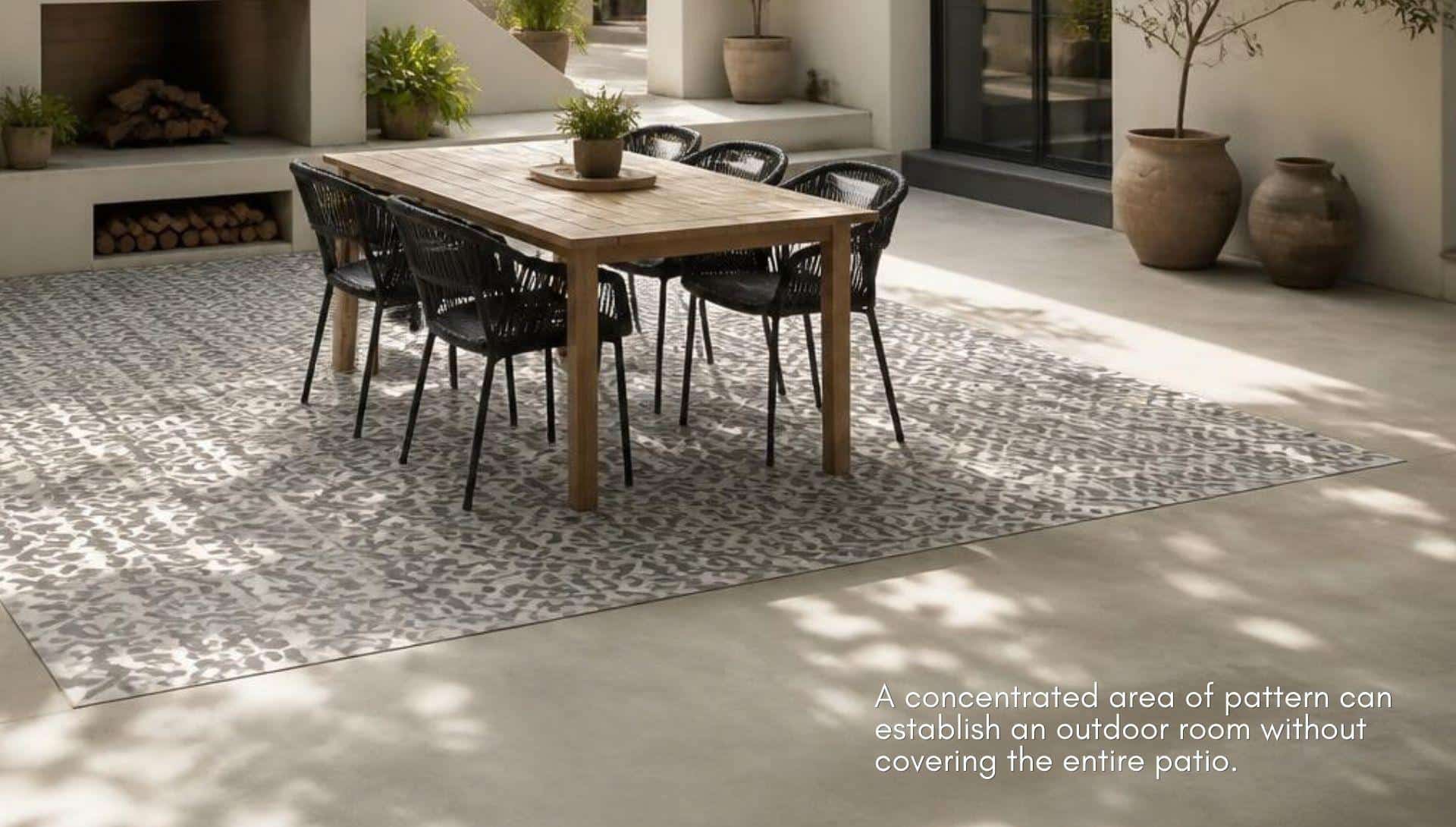
Pattern becomes more convincing outdoors when it has a reason to be there.
Instead of covering every inch of a large patio in a busy motif, consider using patterned cement tile to define one functional area: beneath a dining table, around an outdoor kitchen or inside a sheltered courtyard.
Think of it as an outdoor rug made from permanent material.
This approach also makes it easier to work with bold geometry. A design that could become visually exhausting across a large terrace can feel precise and intentional when confined to a smaller rectangle.
Cement needs appropriate exterior specification, sealing and maintenance. Exposure conditions should be considered before choosing the tile, particularly in climates with frost.
5. Give small-format ceramic a bigger role
Large-format slabs dominate many contemporary patios, but bigger is not automatically better.
Small tile creates more joints and a finer visual grain. On a compact terrace, balcony-style patio or courtyard, that detail can make the floor feel intentionally designed rather than simply paved.
There is also more opportunity to use color.
Deep green, ochre, chalky blue or warm off-white can create a completely different atmosphere from standard grey paving without requiring an elaborate motif.
This is one area where the range of outdoor patio tiles from OUTERclé becomes particularly useful. Its Gather collection currently brings together stone, cement, terracotta and numerous ceramic formats, including small mosaics and matte flooring finishes, specifically around patio and outdoor gathering applications.
For a walking surface, pay close attention to the finish. Outdoor flooring needs suitable slip resistance, especially where rain, irrigation or wet feet are likely.
6. Reconsider the checkerboard
Checkerboard floors have moved far beyond stark black and white.
Outside, the pattern can be softened with limestone and terracotta, two muted stone colors or even a pair of related ceramic tones. The geometry remains recognizable, but the result feels less formal.
This works particularly well on patios connected to traditional architecture because the pattern brings order without requiring the surface to look newly manufactured.
Scale changes the effect dramatically. Large squares make the checkerboard more architectural, while smaller units create a busier, more decorative floor.
Before ordering, mark out a few squares at full size. Patio dimensions rarely divide perfectly into a pattern, and planning the perimeter cuts early can prevent an awkward strip of tiny pieces along one edge.
7. Make the layout the feature
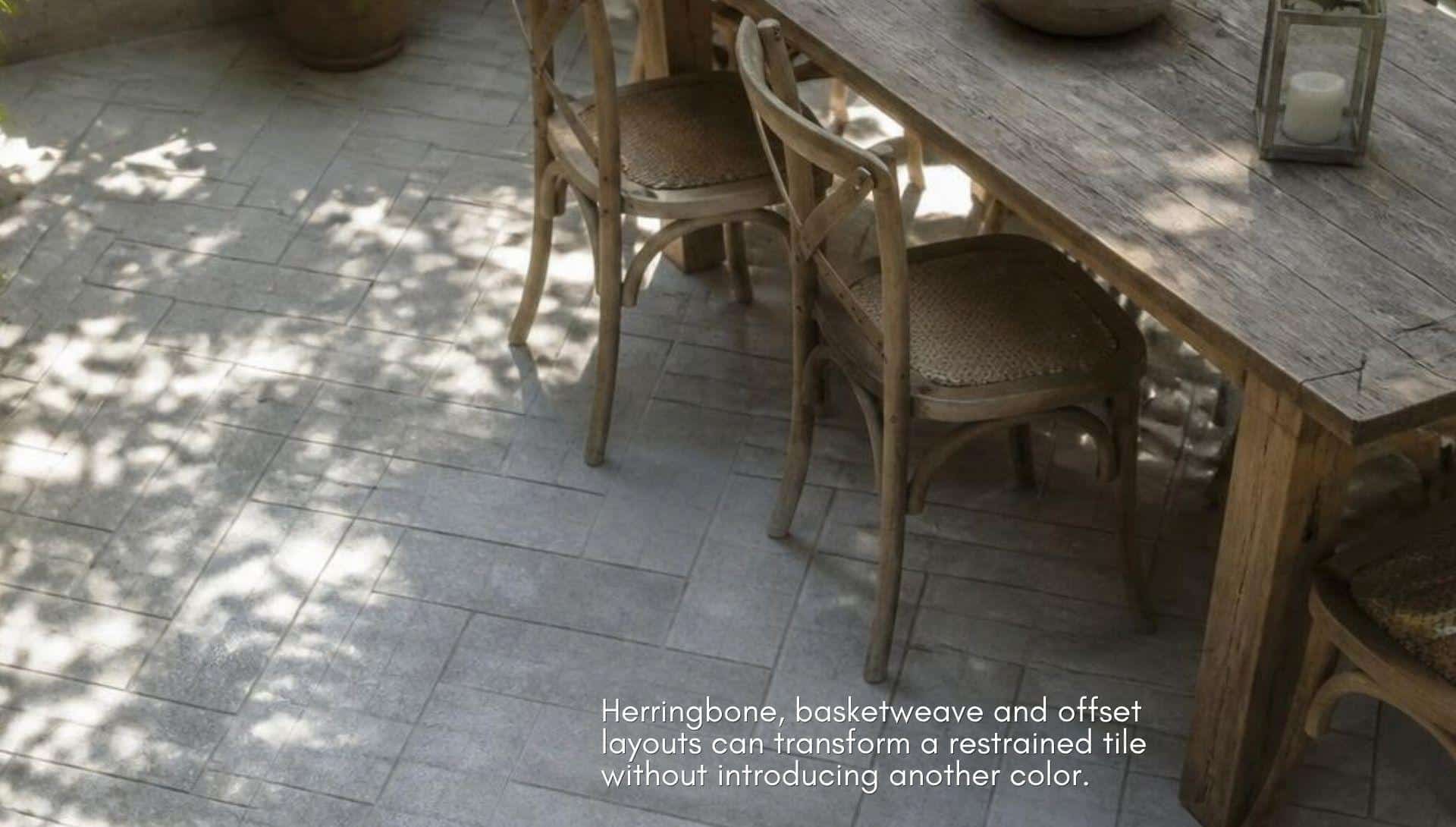
Sometimes the best way to make a patio more interesting is to leave the tile alone and change the layout.
Rectangular units can move from a straightforward running bond into herringbone. Two compatible formats can form a modular pattern. Square tiles can be rotated diagonally to change how the floor relates to the house.
This is particularly useful if the architecture already has plenty happening visually. A single-color surface arranged thoughtfully gives the eye something to follow without competing with furniture, planting or exterior walls.
Layout planning should happen before installation begins. Establishing the centerlines, borders and transitions in advance helps avoid narrow cuts at thresholds and conspicuous fragments around steps.
For patios adjoining the house, I also like looking at the direction of the interior floor. The outdoor layout does not need to copy it, but the two should feel as though they have been considered together.
8. Mix materials instead of covering everything in one tile
One material across an entire garden can make the space feel larger, but it can also flatten areas with very different purposes.
A mixed-material patio offers another route.
Stone might establish the main circulation path, while terracotta creates warmth around dining. Gravel can loosen the transition into planting. A small tiled section might mark an outdoor kitchen or fireplace.
The key is limiting the palette. Two principal hard surfaces plus planting are often enough. Once too many colors, formats and materials are introduced, the garden begins to feel fragmented.
Look for a relationship between them instead. A warm aggregate in terrazzo might pick up the color of adjacent brick. Grey-green stone can echo foliage. Terracotta can connect visually with timber or a warm exterior paint.
The materials do not need to match. They need a reason to sit together.
Before you fall for a patio tile, check the practical details
Outdoor flooring has one non-negotiable advantage over an indoor sample board: you can test it in the environment where it will actually live.
Put samples outside. Wet them. Look at them in the strong sun and shade. Consider whether a heavily textured finish will be comfortable under bare feet and whether a very pale surface will suit the way the patio is used.
Then move beyond appearance.
The substrate needs to be stable and properly prepared. Water needs somewhere to go rather than sitting beneath the finished surface. Adhesives, grout and installation systems should be intended for exterior conditions, and movement needs to be accommodated appropriately.
Climate is equally important. We advice checking the freeze-thaw rating even for covered patio applications where severe weather is possible, and its Gather guidance emphasizes weather resistance and suitable slip performance for exterior floors.
These details are less exciting than choosing color, but they protect the design decision you have spent time making.
A patio can have a point of view
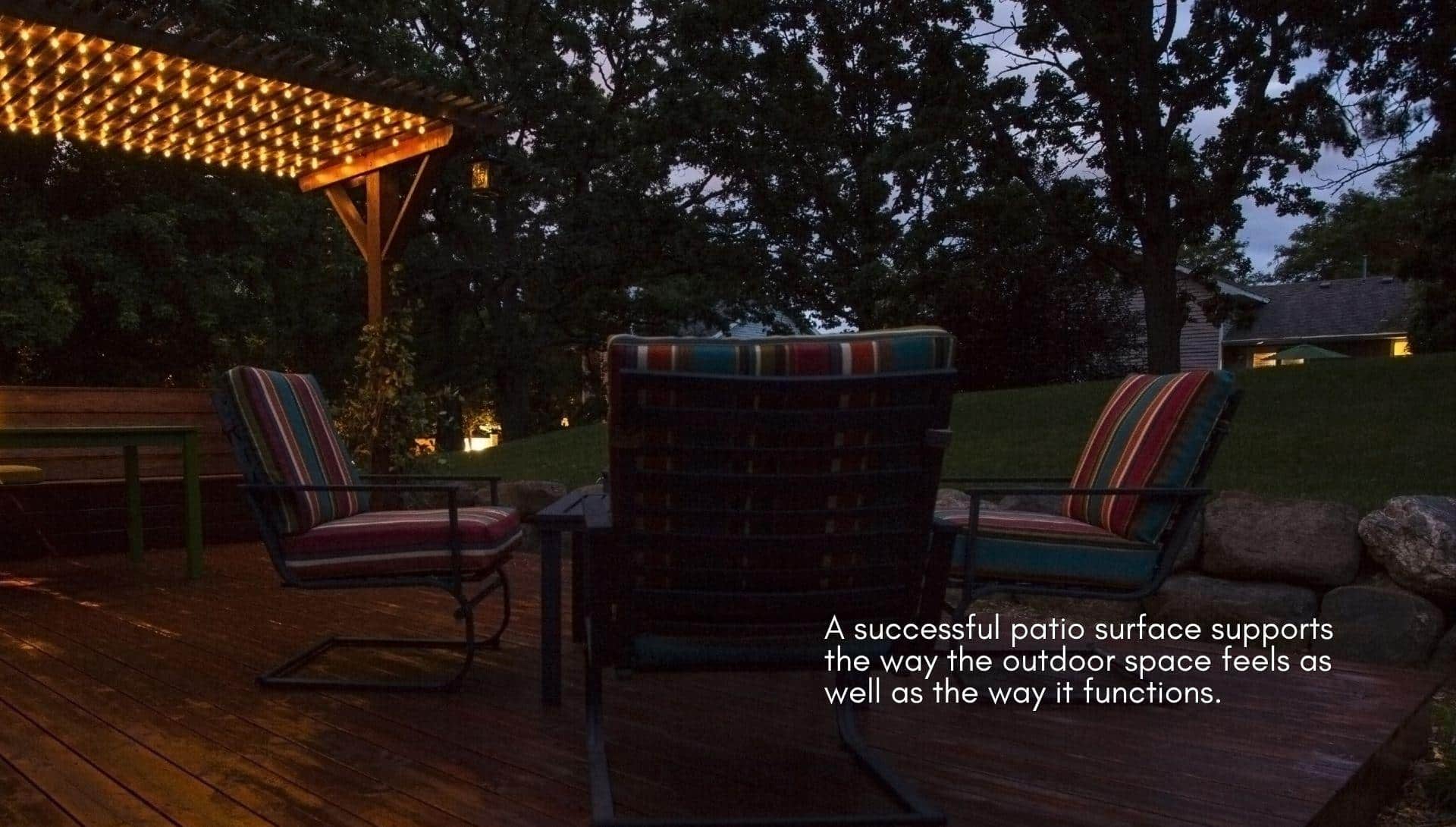
The most interesting patio does not necessarily have the most elaborate tile.
It might be a quiet limestone floor whose irregularities complement the garden. It could be terracotta slowly developing character, a restrained checkerboard beneath a dining table or terrazzo introducing just enough visual movement.
What changes the result is treating the floor as part of the design from the beginning.
Choose a material suited to the climate and exposure. Understand how it needs to be installed. Then consider color, scale, pattern and the way the surface meets everything around it.
Do those things in the right order and moving beyond basic pavers becomes less about making the patio louder, and more about giving it an identity.