





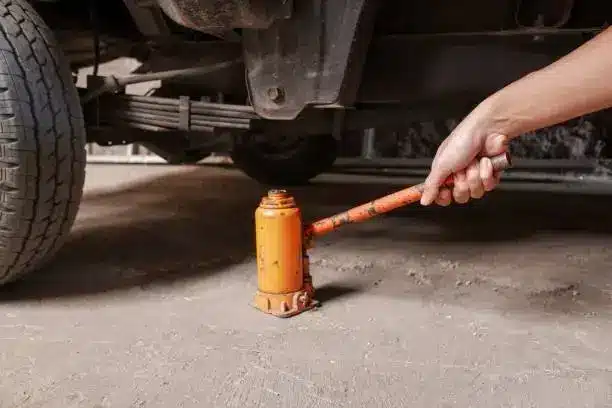
Choosing the right jack for a trailer is about more than finding one that fits the frame. The jack must support the trailer tongue properly, provide enough lift, and work well with the available mounting space. Your trailer design, loaded tongue weight, towing habits, and ground conditions all affect the right choice. A careful check of these factors can prevent fit and performance problems later.
The right trailer tongue jack should match your trailer’s tongue weight, mounting space, and required lift range. Some trailers work well with a simple manual design, while others benefit from an electric model that reduces the effort needed during hitching and parking. Ground clearance, foot style, and operating position also matter when choosing between different options. Looking at these details together makes it easier to find a jack that fits your trailer and your regular towing needs.
What Is a Trailer Jack Used For?
A trailer jack is mounted near the front of a trailer and controls the height of the tongue and coupler. It helps raise the coupler to hitch or unhitch the trailer and supports the front of the trailer when it is disconnected. It can also help with front to back positioning when setting up a trailer. However, it should not be confused with stabilizer or leveling jacks, which serve different purposes.
The jack works by extending an inner tube, leg, or screw mechanism against the ground. Depending on the design, this can be done with a hand crank, electric motor, or a combination of both. The important point is that the jack handles the tongue load rather than the entire loaded trailer. Knowing this difference makes it easier to select the correct capacity.
Main Types of Trailer Jacks

There are several designs, and the best option depends largely on the trailer tongue and available mounting area. A frame mounted jack is common on trailers with an A shaped tongue, while side mount and swivel designs are useful where the jack needs to move out of the way during towing. Drop leg models are also available when faster setup and greater extension are needed.
The operating method creates another major difference. Manual models use a crank and need no electrical connection, while powered versions use a motor to raise and lower the tongue. Some models also combine electric operation with a manual override, giving the user another way to operate the jack if power is unavailable.
A Frame Jacks
An A frame jack mounts around the front section of an A shaped trailer tongue. This style is widely used on travel trailers, enclosed trailers, and other bumper pull designs. Its position gives it a direct lifting path and keeps the jack close to the coupler.
Before selecting one, check the bolt pattern, tube size, available clearance, and required travel. A jack can have enough capacity but still be unsuitable if its mounting dimensions do not match the trailer.
Swivel and Side Mount Jacks
Side mount jacks attach to the side of a trailer frame and often pivot between working and storage positions. A swivel design can be useful when ground clearance is a concern because the jack can be moved upward before towing. Some models use a clamp, while others require a welded mounting tube.
This style is common on utility and boat trailers. It also works well when there is not enough room on top of the tongue for an A frame installation. The crank position matters too, since nearby rails, toolboxes, or other equipment can limit access.
Drop Leg Jacks
A drop leg adds a manually adjustable inner section below the main jack body. Instead of using the crank for the entire distance, the leg can be lowered closer to the ground and locked into position. This reduces the amount of cranking needed during setup.
Drop leg designs are often found on larger trailers and applications where quick positioning matters. They can also provide useful extension without requiring an unusually long screw travel. The mounting structure must still be strong enough for the intended load.
How to Match Jack Capacity to Tongue Weight
Capacity is one of the most important specifications to check. The jack needs to handle the trailer’s actual tongue weight in its loaded condition, not simply the empty trailer weight. Tongue weight is commonly a portion of the trailer’s total loaded weight, but the exact figure depends on how the trailer and cargo are distributed.
For example, a trailer with a total loaded weight of 6,000 pounds might have a tongue weight somewhere around 600 to 900 pounds if its loading falls within a typical range. That does not mean you should automatically choose the smallest jack above that figure. A suitable margin helps keep the jack from operating constantly near its rated limit.
Check Lift, Travel, and Retracted Height
Capacity is only one part of choosing a jack. You also need enough vertical travel to raise the coupler to the required hitch height and lower it when the trailer is parked. The retracted height matters because the jack must have enough ground clearance while the trailer is moving.
Measure the existing setup from the mounting point to the ground in both working and towing positions. Then compare those measurements with the jack’s extended and retracted dimensions. Competitor buying guides also highlight lift range, ground clearance, and mounting height as key selection factors because a strong jack can still be a poor fit if its dimensions are wrong.
Manual or Electric: Which Should You Choose?
A manual jack is straightforward and does not depend on a battery or electrical connection. It can be a practical choice for lighter trailers or owners who only hitch and unhitch occasionally. Manual designs also have fewer electrical components to troubleshoot.
An electric jack reduces physical effort and can make repeated hitching much easier. It is especially useful when the tongue load is substantial or the trailer is connected and disconnected often. The tradeoff is that powered models need an appropriate electrical supply and may include more components that require inspection.
Consider the Mounting Position
The location of the jack affects how easy it is to use. A top wind crank needs clear space above the jack, while a side wind design needs room around the side of the tube. If a toolbox, frame rail, spare tire, or other accessory sits nearby, the crank may become difficult to reach.
Mounting strength is just as important. A bolt on jack needs compatible mounting holes and hardware, while a weld on design requires a suitable mounting point and proper fabrication. Do not choose a mounting method simply because it looks convenient. It needs to match the trailer’s construction and the jack manufacturer’s requirements.
Choose the Right Foot or Wheel
The bottom of the jack affects how it behaves on different surfaces. A fixed foot spreads the load over a larger area than a narrow tube and can be useful on firm or moderately soft ground. A wheel can make it easier to move an unhitched trailer over suitable surfaces, but it is not a replacement for proper trailer support.
Think about where you normally park and load the trailer. If the surface is soft, a wider foot or suitable support pad can help reduce sinking. If maneuvering the trailer by hand is important, a wheel may be more convenient, provided its rating and construction match the application.
Ground Clearance Matters While Towing
A jack that works perfectly when parked can still cause trouble if it sits too low while the trailer is moving. Low components can contact ramps, uneven driveways, speed bumps, or other obstacles. Swivel designs address this issue by allowing the jack to move into a raised position for travel.
Check the lowest point of the jack after it is fully retracted or placed in its towing position. Compare that point with other parts under the trailer. The goal is to avoid creating a new low point that can strike the ground during normal towing.
When an Electric Trailer Tongue Jack Makes Sense
A powered trailer tongue jack can be a useful upgrade when manual cranking becomes inconvenient. The motor handles the raising and lowering process, which can save effort during frequent hitching, unhitching, and setup. Some powered designs also include a built in light or manual backup feature, depending on the model.
Before choosing an electric model, check its rated capacity, power requirements, mounting pattern, lift range, and overall dimensions. Also consider where the wiring will run and whether the trailer has a suitable electrical connection. A powered jack still needs correct installation and should not be selected based only on its advertised lifting number.
Installation and First Use
Start by parking the trailer on a firm, suitable surface and securing it against movement. Follow the jack manufacturer’s mounting instructions and use the correct hardware for the mounting design. After installation, check that the jack moves freely through its full range without contacting the frame, coupler, wiring, or other equipment.
Test the jack gradually before putting it into regular service. Watch the mounting area while raising and lowering the tongue and check that the jack remains stable. If anything shifts, binds, bends, or makes an unusual noise, stop and correct the issue before continued use.
Maintenance Tips for Longer Service
Regular inspection can catch problems before they affect towing or setup. Look for corrosion, bent components, damaged hardware, worn gears, loose fasteners, and signs of abnormal movement. Keep the moving parts clean and lubricated according to the manufacturer’s instructions.
Powered models deserve an additional electrical check. Inspect connections for corrosion or looseness and make sure the wiring is protected from abrasion. Maintenance requirements vary by design, so the owner’s instructions should take priority over a generic service schedule.
Common Mistakes to Avoid
One common mistake is choosing a jack based only on the trailer’s gross weight. The jack works primarily against the tongue load, so that figure is more useful when determining capacity. Another mistake is ignoring the fully loaded condition and selecting a jack using an empty trailer’s measurements.
Fit is another frequent problem. Buyers may check capacity but overlook mounting dimensions, crank clearance, lift range, or towing clearance. A good selection considers all of these details together rather than treating capacity as the only specification that matters.
A Simple Way to Choose the Right Jack
Start by identifying the trailer’s tongue style and the existing mounting method. Next, determine the loaded tongue weight and choose a suitable capacity with reasonable working margin. Then check lift, retracted height, mounting dimensions, crank position, foot or wheel design, and ground clearance.
Finally, decide whether manual operation is sufficient or whether powered operation would make regular use easier. This process narrows the choices without relying on a single specification. It also helps prevent buying a jack that is strong enough on paper but unsuitable for the actual trailer.
Frequently Asked Questions
What is a trailer tongue jack used for?
A trailer tongue jack raises and lowers the front of a trailer for hitching, unhitching, and supporting the tongue while disconnected.
How do I know what capacity jack I need?
Base the selection on the trailer’s loaded tongue weight and choose a jack with capacity above that working load.
Are electric jacks better than manual jacks?
Neither is always better. Manual jacks are simple and independent of electrical power, while electric models reduce the physical effort needed for repeated operation.
What is an A frame jack?
It is a jack designed to mount near the front of an A shaped trailer tongue, commonly used on bumper pull and travel trailers.
Why does jack retracted height matter?
The retracted height determines how much clearance the jack has from the ground while the trailer is being towed. Insufficient clearance can lead to contact with ramps or uneven surfaces.