





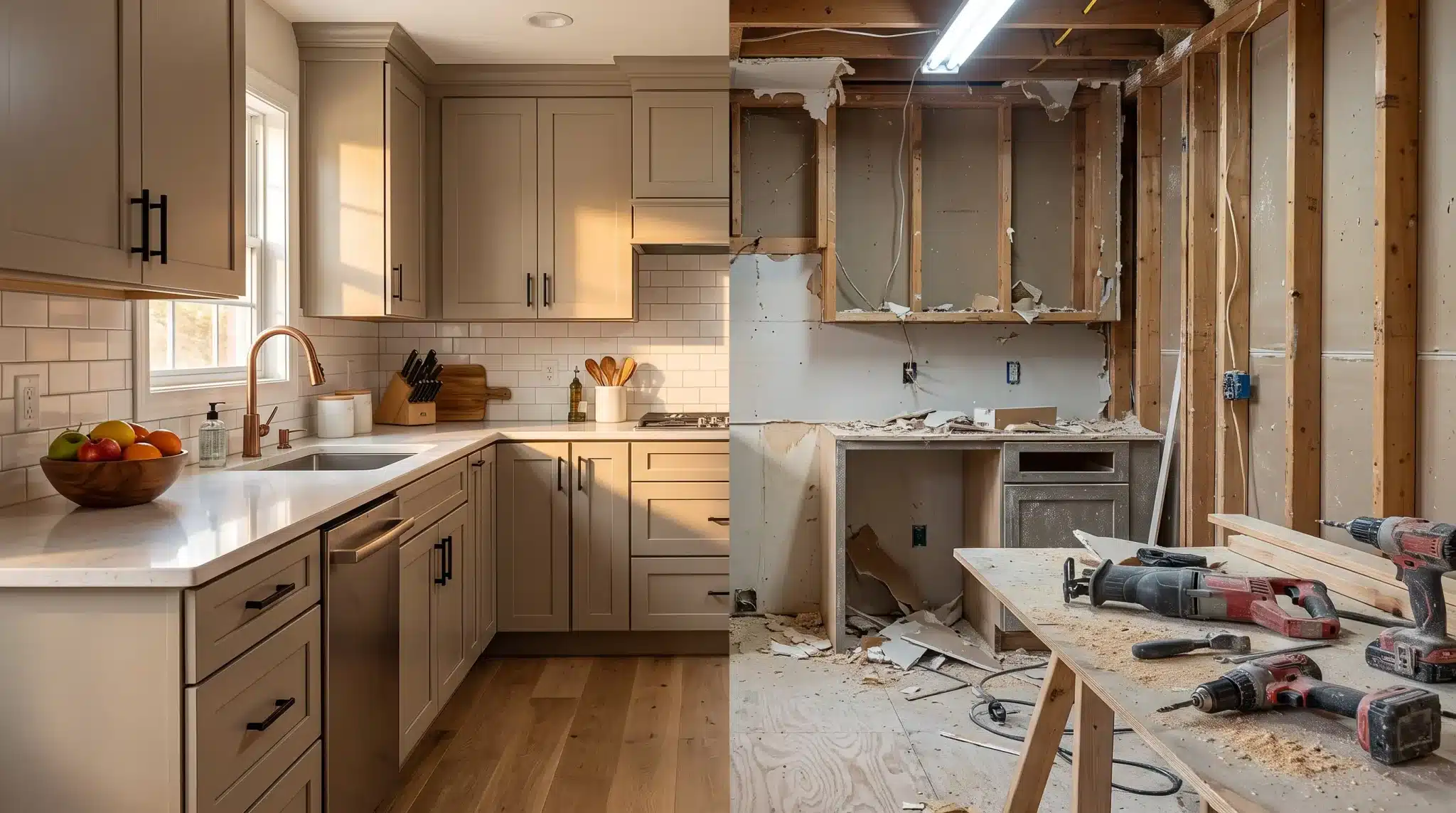
If you have ever spent a Sunday with paint in your hair and sawdust on your socks, you know how addictive the quick visual wins can be.
You clean up the dated honey-oak cabinets with two coats of warm greige on Saturday, screw in matte black hardware on Sunday, and step back on Monday morning feeling like you just saved ten grand. It feels like an absolute victory.
Then real life steps in. A cold snap hits, a hidden joint behind the drywall starts leaking, and you pull out a lower drawer only to realize the cabinet frame behind it is completely rotted out.
Almost every house hits that sudden wall where superficial cosmetic fixes stop doing the job. Maybe the kitchen layout traps two people against the fridge, the breaker box trips every time the toaster and microwave run at once, or the bathroom tile is actually floating on thirty years of spongy, water-damaged plywood. The moment you cross that line, your fun creative craft is officially over. You are staring down actual demolition, building permits, licensed trades, and real money.
Where Staged Renovation Plans Usually Blow Up
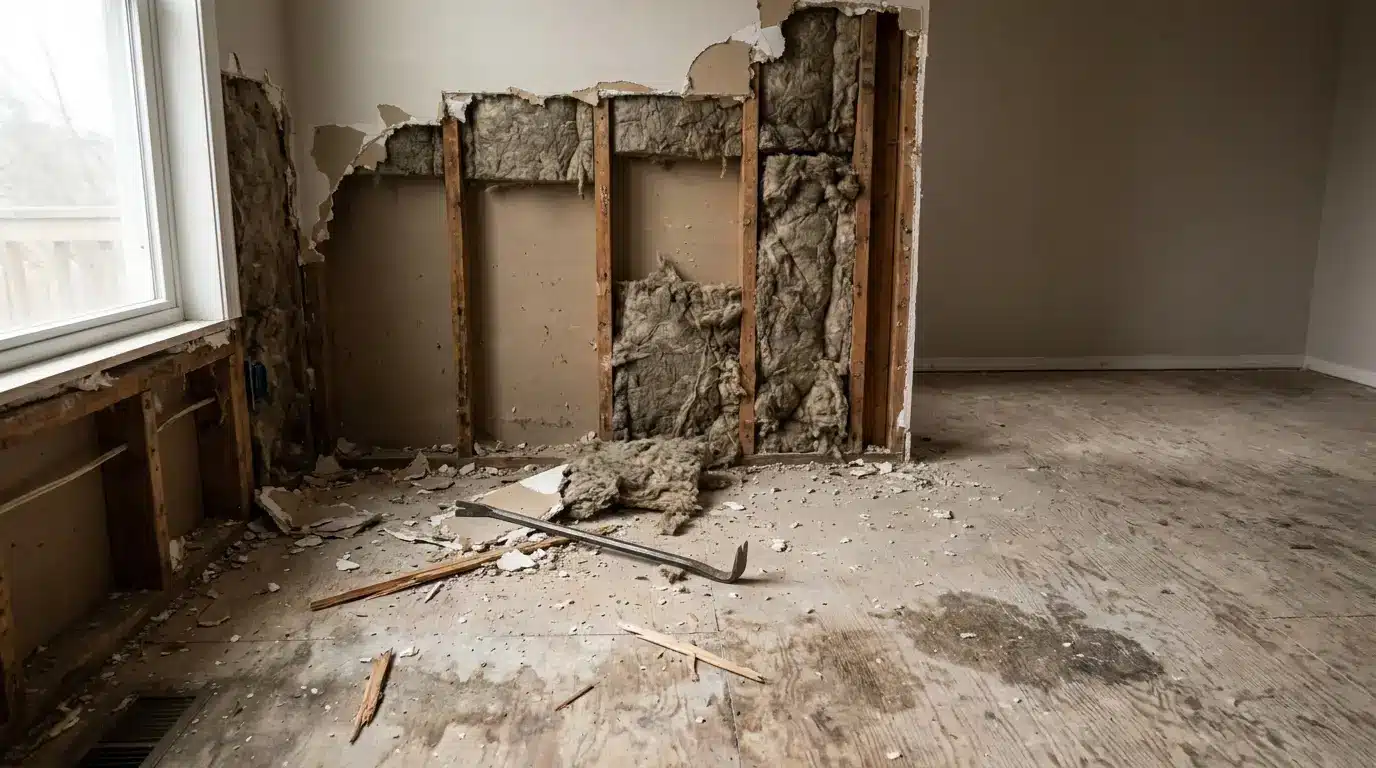
The natural impulse when facing a larger remodel is to play it safe and take things one paycheck at a time. You tell yourself you will buy the sledgehammer and rent the dumpster this month, buy the drywall next month, and worry about the tile when another bonus comes in.
On paper it sounds responsible. On an active job site, it almost never works.
You pull down the first section of drywall, and ancient ungrounded knob-and-tube wiring or sagging joists immediately swallow the entire emergency fund before you even order a sink.
Good subcontractors do not work in fits and starts either. A reliable plumber or tile setter wants to rough in the room, finish the job, and move on. If they have to pack up their tools and wait six weeks for your next savings deposit, getting them back on your schedule turns into a nightmare.
Before long, people start plugging the cash gaps with retail store financing at checkout counters. Swiping a hardware card for two thousand dollars of lumber or financing an oven at twenty-four percent interest turns an exciting kitchen overhaul into a chronic monthly debt headache, leaving families living with subfloors and temporary plywood countertops for nine months straight.
Unlocking Built-In Property Value on a Fixed Schedule
This exact financial stalemate is why homeowners who want to modernize their space are separating their home improvements from their primary mortgage entirely.
Instead of disturbing an ultra-low first mortgage, utilizing dedicated home equity loans gives owners access to a predictable lump sum based on the value already accumulated in their property, without touching their base interest rate.
Having that fixed pool of funds ready before work begins changes the entire tone of a remodel:
- You negotiate better vendor rates: Paying contractors and suppliers upfront in cash often unlocks substantial trade discounts on cabinetry, plumbing packages, and raw materials.
- The payment is completely predictable: Unlike floating lines or volatile cards, fixed terms mean the monthly payment never jumps around while you are trying to budget family life.
- The timeline stays intact: Work proceeds without pause because materials arrive on time and trades do not have to wait on personal savings cycles.
The Golden Handcuffs of a Three Percent Mortgage
A few years ago, the default response to a massive remodel was simple: call a broker and do a cash-out refinance. You pulled out the necessary cash, rolled it into a brand-new thirty-year mortgage, and kept your payments relatively stable.
Today, that math makes zero sense.
Millions of families are sitting on primary mortgages locked in at historically low three or four percent interest rates. Surrendering that loan just to get access to remodeling funds would permanently double their monthly housing payment for the next twenty-five years.
Putting fifty thousand dollars of kitchen cabinets on high-interest personal lines is equally reckless.
Conclusion
There is immense pride in hanging your own shelving, tiling a decorative laundry backsplash, or refinishing a flea-market dining table with your own hands.
Recognizing the boundary between weekend crafts and heavy structural repairs is what protects your sanity and your savings account. When the scope of work demands licensed framing, new plumbing stacks, or foundation reinforcement, securing the right underlying financing allows you to hire the right professionals, protect your home’s existing equity, and finish the space your family actually needs.