

By 8pm, most parents aren’t looking for another project. They’re looking for the couch and their phone. But scrolling for twenty minutes rarely leaves anyone feeling better, and a growing pile of research suggests something simpler works instead: making something with your hands.
You don’t need a studio, a weekend free of kids, or any real skill to get the benefit. A few quiet minutes with a small, low-stakes project can do more for your mood than another episode of whatever’s queued up. Here’s why crafting works as a wind-down habit, and how to fit it into a week that’s already full.
Why Crafting Is Such an Effective Stress Reliever

There’s real science behind the idea that making things calms us down. Drexel University researcher Dr. Girija Kaimal found that 75% of adults in a 39-person study showed lower cortisol, the body’s primary stress hormone, after just 45 minutes of art-making, regardless of skill level or prior experience. You didn’t need to be good at it. You just needed to do it.
A 2023 American Psychiatric Association Healthy Minds poll backs this up on a larger scale: 46% of Americans use creative activities to relieve stress or anxiety, and adults who rate their mental health as very good or excellent engage in creative activities far more often than those who rate it as fair or poor. Crafting isn’t a nice-to-have extra; it’s a habit tied to how people actually feel day to day.
For a tired parent, that means the bar for “doing something good for yourself” is lower than it feels. Grabbing a painting by numbers kit and filling in a few sections while the kids wind down for bed counts. There’s no blank page to stare at, no decision fatigue about what to paint. The lines are already there. You just show up and fill them in, one small section at a time, and that structure is exactly what makes it relaxing rather than one more task to figure out.
Setting Up a Low-Stress Craft Space at Home
You don’t need a dedicated room to make this work, though it helps to have a spot that’s ready to go. A corner of the kitchen counter, a shelf in the living room, or a small tray you can pull out and put away in under a minute is enough. The goal is removing friction. If you have to dig through three closets to find your supplies, you won’t do it after a long day.
Keep the setup small on purpose. A caddy with your current project, a few tools, and nothing else. If you’re working with limited square footage, our guide to setting up a dedicated craft corner walks through layouts that fit into even a tiny apartment. The point isn’t a Pinterest-worthy studio; it’s a spot you can sit down at for fifteen minutes without any setup tax.
Timing matters too. Most parents don’t have a free afternoon, but they often have a fifteen- to twenty-minute window after the kids are down and before they’re too tired to hold a paintbrush steady. Treat that window like an appointment rather than something that happens if everything else goes right, because it usually won’t.
Beginner-Friendly Projects That Fit Into a Busy Week
Not every craft rewards a short attention span, but plenty do. Hobbycraft’s 2025 “Power of Making” report found that 59% of respondents feel a real sense of achievement from crafting, 53% report improved mood, and 48% report reduced stress, numbers that hold up even for people who only craft in short bursts rather than long sessions.
Paint-by-numbers has grown well past a kids’ activity for exactly this reason. The global paint-by-numbers kit market reached USD 1.67 billion in 2025 and is projected to grow at a 7.1% CAGR through 2034, driven largely by adults using kits as a structured, low-effort way to unplug rather than children working on a rainy-day project.
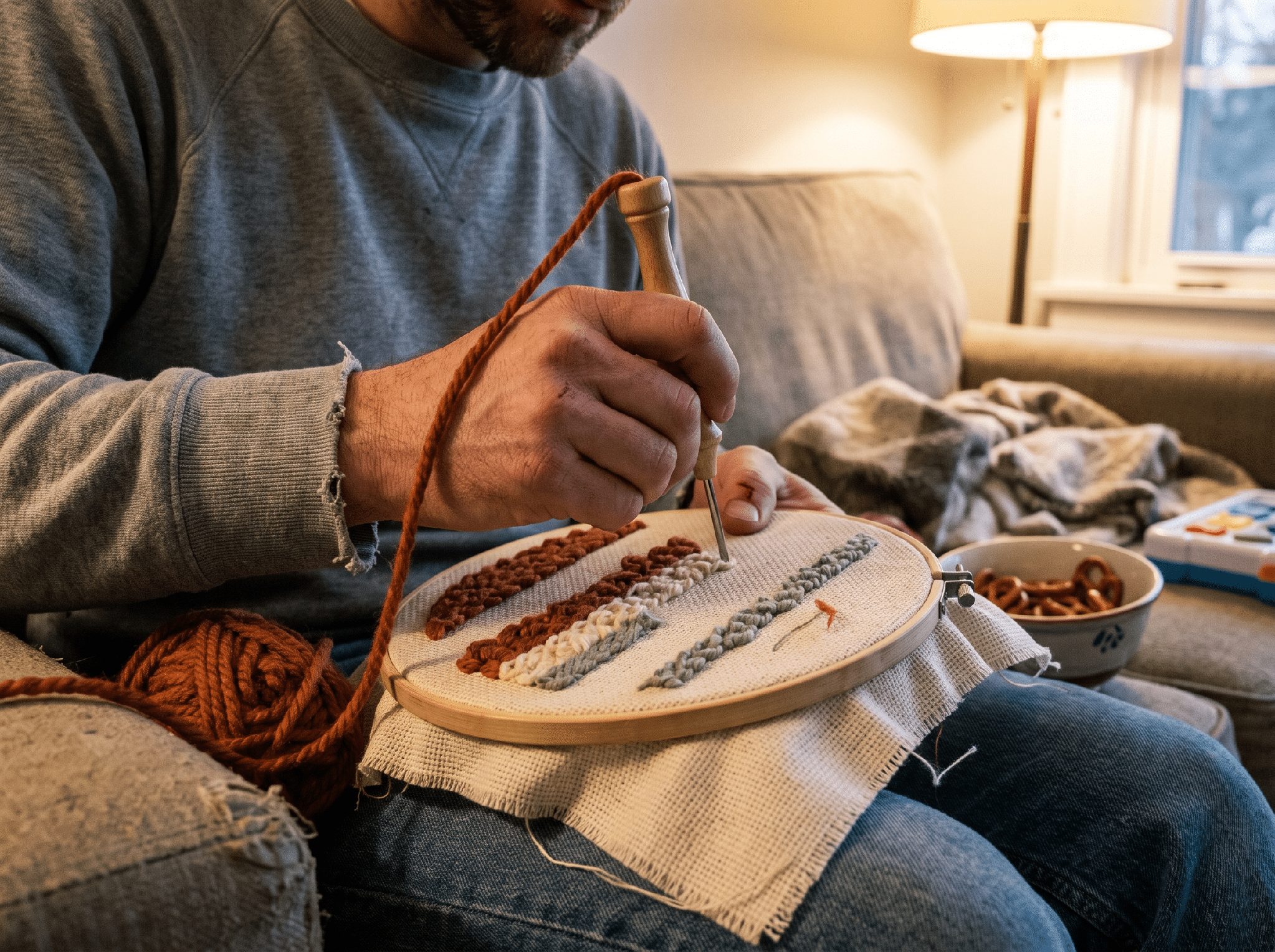
Punch needle is having its own moment for similar reasons. The punch needle kit market is projected to grow from USD 0.4 billion in 2025 to USD 0.424 billion in 2026, with North America holding 38.2% of the global market. It’s being called one of the defining crafts of the year, tied to warmth, tactility, and handmade home decor rather than anything technical or fussy.
What makes it a good fit for tired evenings is how forgiving it is. Beginner punch needle kits are just as approachable as paint-by-numbers: push, loop, repeat, and a design builds itself without much room to mess it up. There’s no pattern-reading learning curve and no expensive equipment. You can start and stop mid-row without losing your place, which matters when a kid inevitably needs something halfway through.
Turning Craft Time Into Family Time (Without Losing the Relaxation)
Crafting doesn’t have to be solo to still be restorative, though it does need some boundaries. The Craft Yarn Council’s survey of more than 3,100 knitters and crocheters found that 85% experienced reduced stress and 93% reported a genuine sense of accomplishment from their craft, and plenty of that group crafts alongside kids or a partner rather than in isolation.
The trick is giving kids their own version of the task instead of hovering over yours. A parent working on a punch needle coaster can hand a younger kid a simpler version of the same materials, and everyone gets to make something without one person’s project turning into a shared committee decision. If you want more ideas along these lines, we’ve put together a list of simple screen-free activities to do with your kids that pair well with a parent’s own quieter project happening at the same table.
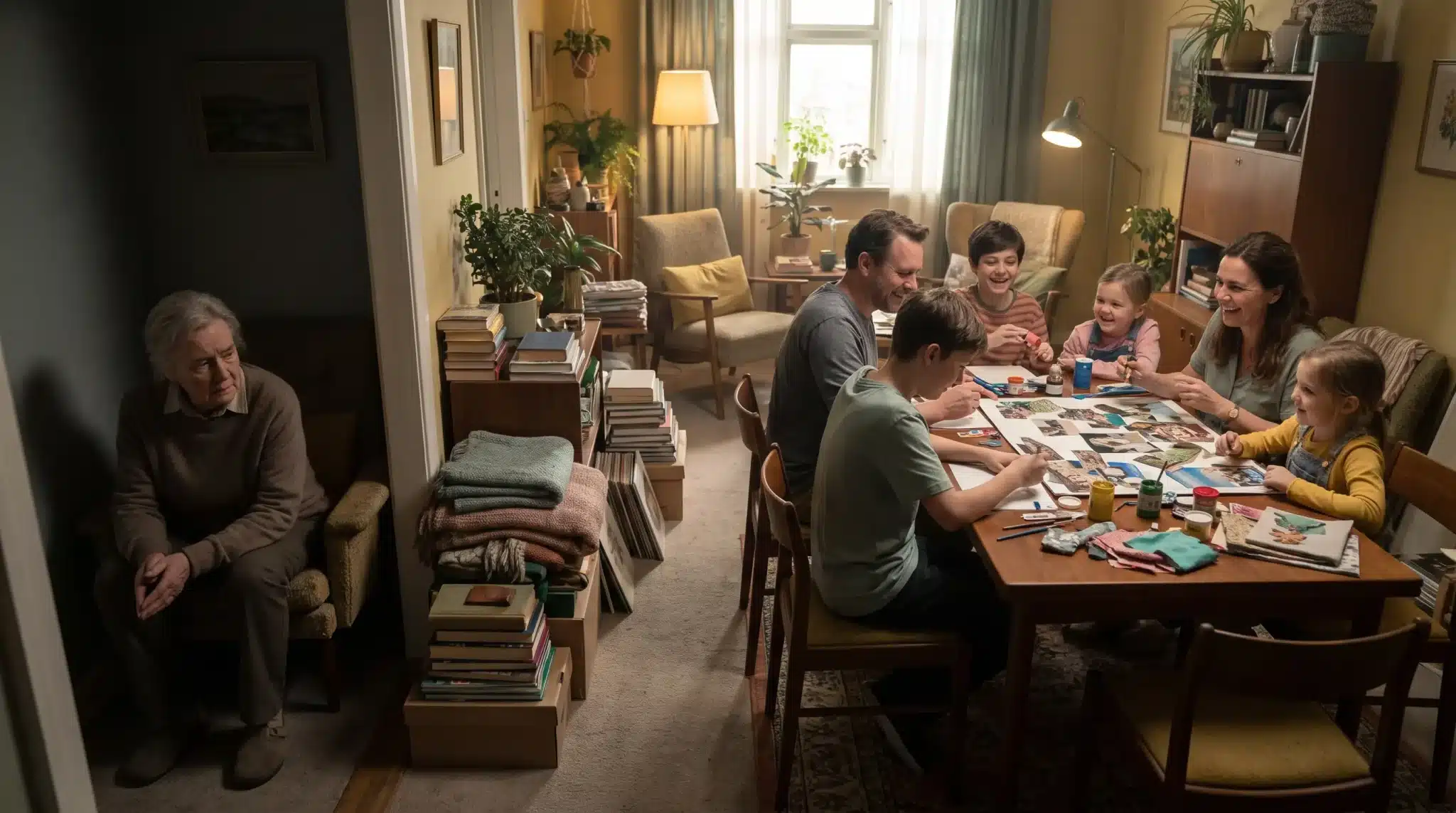
Research from UF/IFAS Extension echoes the same point: crafting’s mood benefits show up across age groups, not just for adults working alone. A shared table where everyone’s hands are busy, even on different projects, still delivers the calm.
Beyond Relaxation: Crafting as a Gift-Giving Habit
One underrated perk of small, frequent projects is that they pile up into something useful. A finished punch needle coaster or a small painted canvas doesn’t have to sit in a drawer. It becomes a birthday present, a teacher gift, or something to bring to a friend who just had a rough month.
That shift changes how the hobby feels, too. Instead of “one more thing to finish,” each project has a destination in mind, which makes the fifteen minutes here and there feel purposeful rather than indulgent. If you’re new to this approach, our roundup of putting together a thoughtful handmade gift has plenty of low-effort ideas that build on projects you might already be working through.
The Bottom Line
None of this requires a free weekend, a craft room, or any particular talent. A cortisol drop after 45 minutes of art-making, a mood boost reported by more than half of hobbyists, a stress reduction rate above 80% among fiber crafters: the research keeps pointing at the same small habit.
Start with one project this week. Pick something with a clear stopping point, keep it within reach, and give yourself fifteen quiet minutes before the day fully ends. It won’t fix everything, but it’s a better use of that couch time than another scroll through your phone.