
Starting solids is a big milestone, and it comes with plenty of questions about what to feed your little one first. Many parents look for something simple, gentle, and easy to prepare without a lot of fuss.
That’s exactly why one particular fruit puree has remained a trusted choice for generations in my family. If you’re new to this, and want a stress-free way to introduce your baby to their first bites.
This blog walks you through everything you need to know, step by step, to make mealtime a comfortable experience for both of you.
Why Banana Puree Works Well as a First Baby Food
Banana puree is often one of the first foods introduced when babies start solids. It has a naturally soft texture that becomes smooth very easily, which makes it gentle for babies who are just learning to eat.
The mild sweetness also makes it more acceptable without the need for any added ingredients. Another reason parents prefer it is how quickly it is to prepare.
A ripe banana is usually all that’s needed, and it can be ready in just a few minutes at home. There is no cooking involved, which makes it a simple choice for busy days.
It is also easy to adjust based on your baby’s comfort. The puree can be kept very thin for early spoon feeding or slightly thicker as they get used to new textures.
What You Need to Make Banana Puree
Before starting, it helps to keep everything ready so the process stays quick and smooth. Banana puree uses very few items, which is why it works so well for early baby feeding and busy days.
| Item | Purpose | Notes |
|---|---|---|
| Ripe banana | Main ingredient | Choose soft bananas with light brown spots for easy mashing |
|
Clean bowl |
Mixing base | Make sure it is washed and fully dry before use |
| Fork or spoon | Mashing tool | Helps break the banana into a smooth, lump-free texture |
| Breast milk or formula (optional) | Texture adjustment | Used to thin puree for early spoon feeding |
|
Baby spoon |
Feeding | A small, soft spoon works best for first tastes |
All these basic items are usually already available at home, which makes banana puree one of the simplest first foods to prepare without any extra planning.
Step-by-Step Banana Puree Recipe to Follow
Follow these simple steps to make a smooth banana puree at home. Each step is kept easy so it fits well for first baby foods and quick preparation.
Step 1: Choose a Fully Ripe Banana
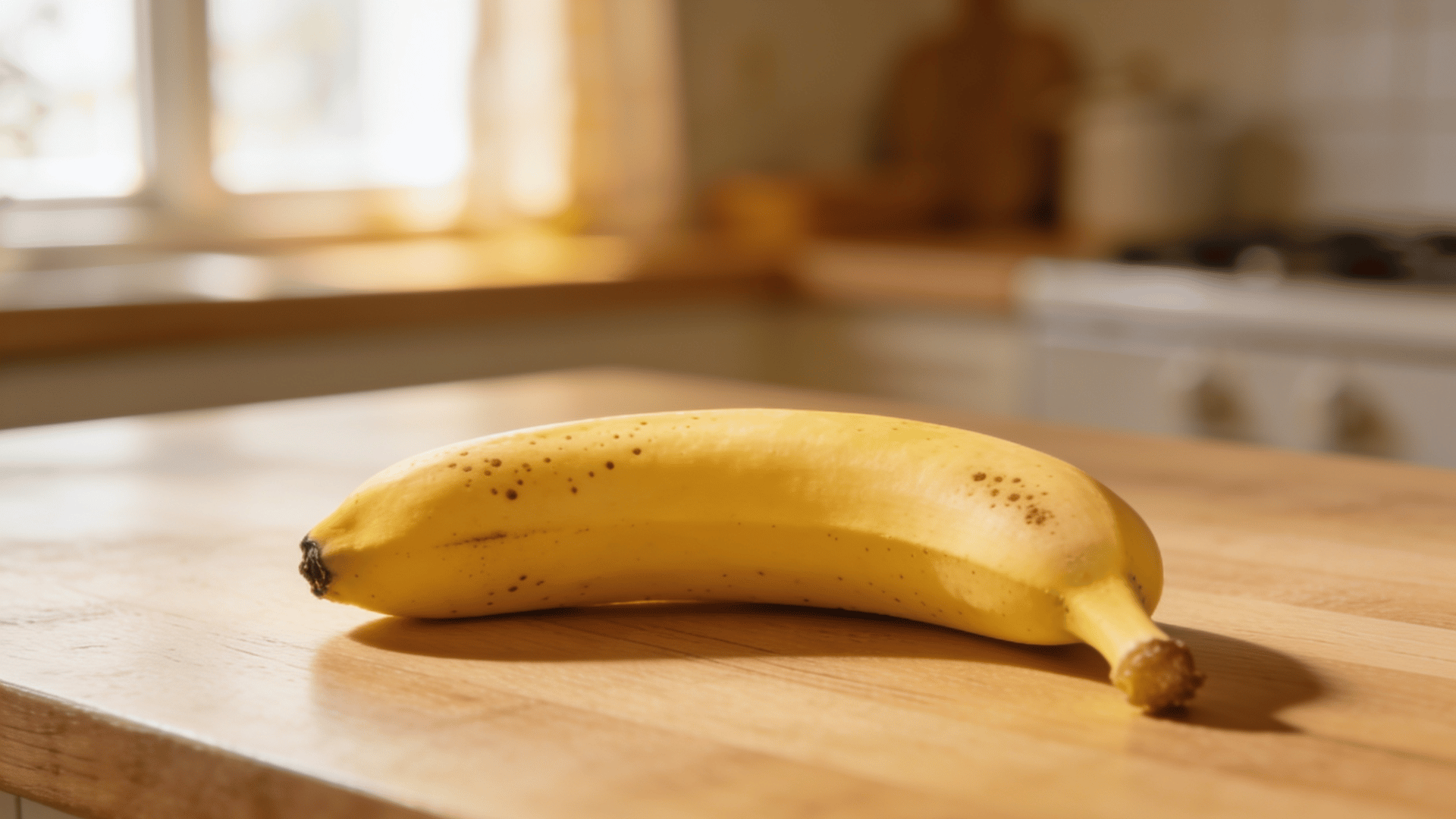
A banana that’s fully ripe and soft will break down effortlessly, saving you time and giving the puree its natural sweetness without needing sugar or other additives.
As your child grows, simple ideas like pancakes for kids can help make everyday meals feel less stressful.
- Pick bananas that yield gently to light pressure
- Ripeness brings out natural sweetness on its own
- Skip bananas that are still green or firm
Step 2: Peel and Break the Banana
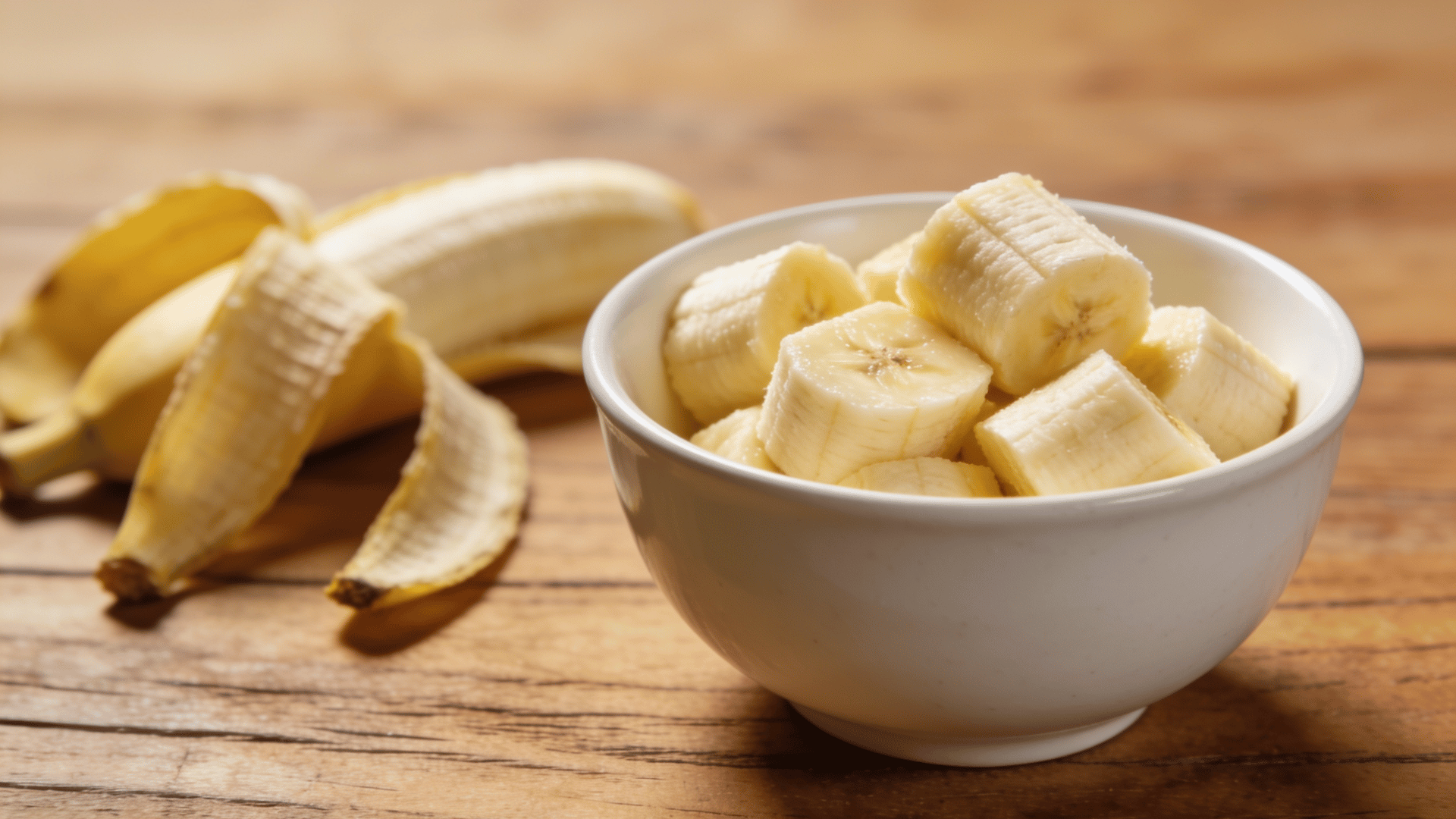
Properly preparing the banana sets you up for a faster, smoother mash. Once peeled, cutting or breaking it into smaller chunks requires less effort later, since large pieces take longer to soften evenly.
This small prep step often gets overlooked, but it plays a big role in how consistent and lump-free your final puree turns out.
- Remove the peel completely before starting
- Break the banana into small pieces for easier mashing
- Smaller pieces help create a smoother final texture
Step 3: Mash Until Smooth and Creamy
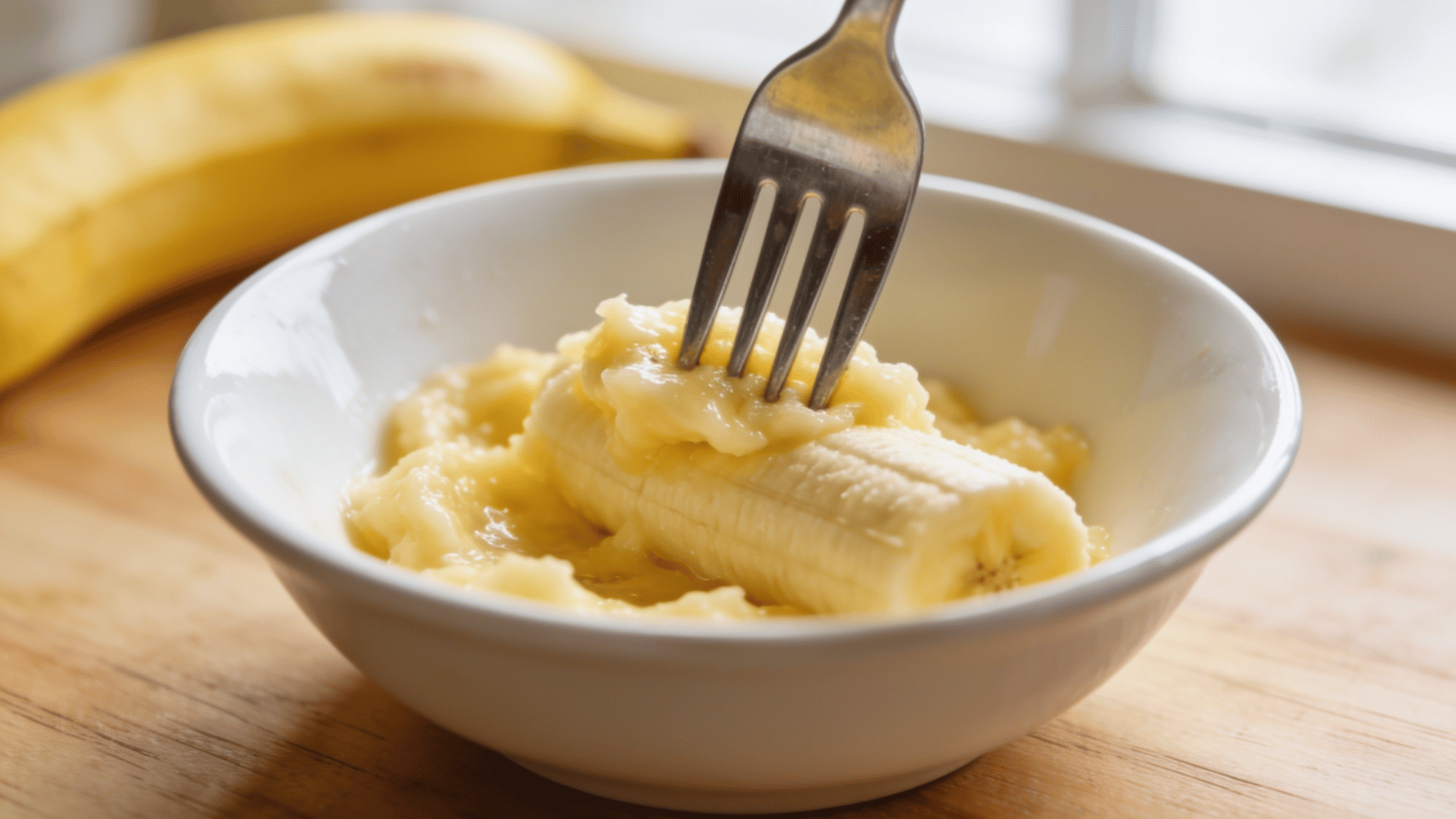
This is where the banana actually transforms into puree. Using a fork or spoon, work through the pieces steadily until every lump disappears and the mixture turns soft and creamy throughout.
Rushing this step can leave behind bits that are harder for a baby to manage, so it’s worth taking a little extra time to get the consistency just right.
- Mash steadily until the texture is fully even
- Continue until it feels soft and creamy
- Smoothness matters most for a baby’s first bites
Step 4: Adjust Texture if Needed
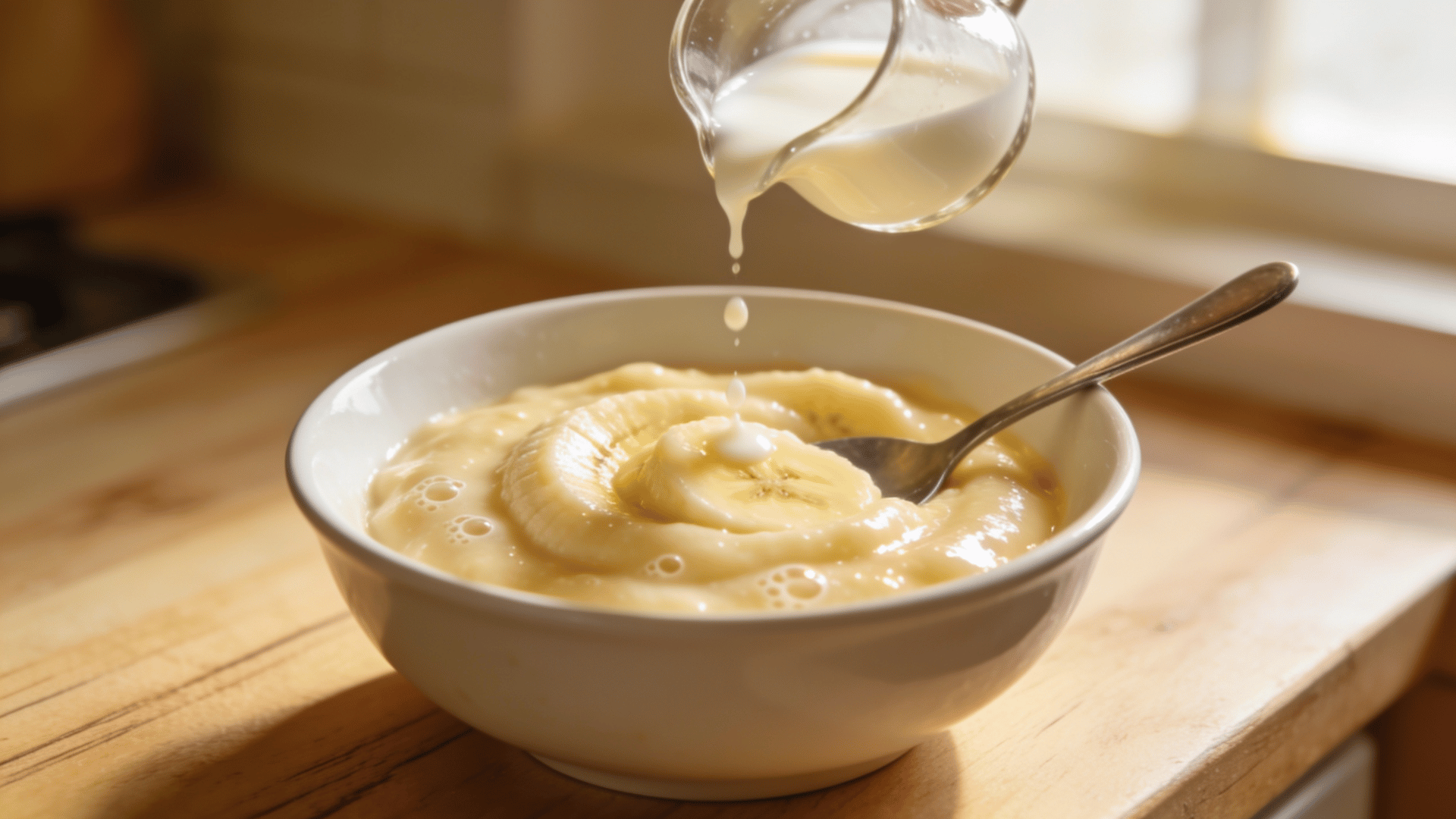
Not every baby takes to the same thickness right away, so this step is about fine-tuning. A small splash of breast milk or formula can loosen the puree if it feels too dense, making it easier to feed with a spoon.
The goal is a balance – thin enough to feed smoothly, yet thick enough that it doesn’t run off the spoon before it reaches your baby.
- Loosen the thickness with a little breast milk or formula
- Stir gently until it feels easy to spoon
- Aim for a texture that holds without dripping
Step 5: Serve Fresh in Small Portions
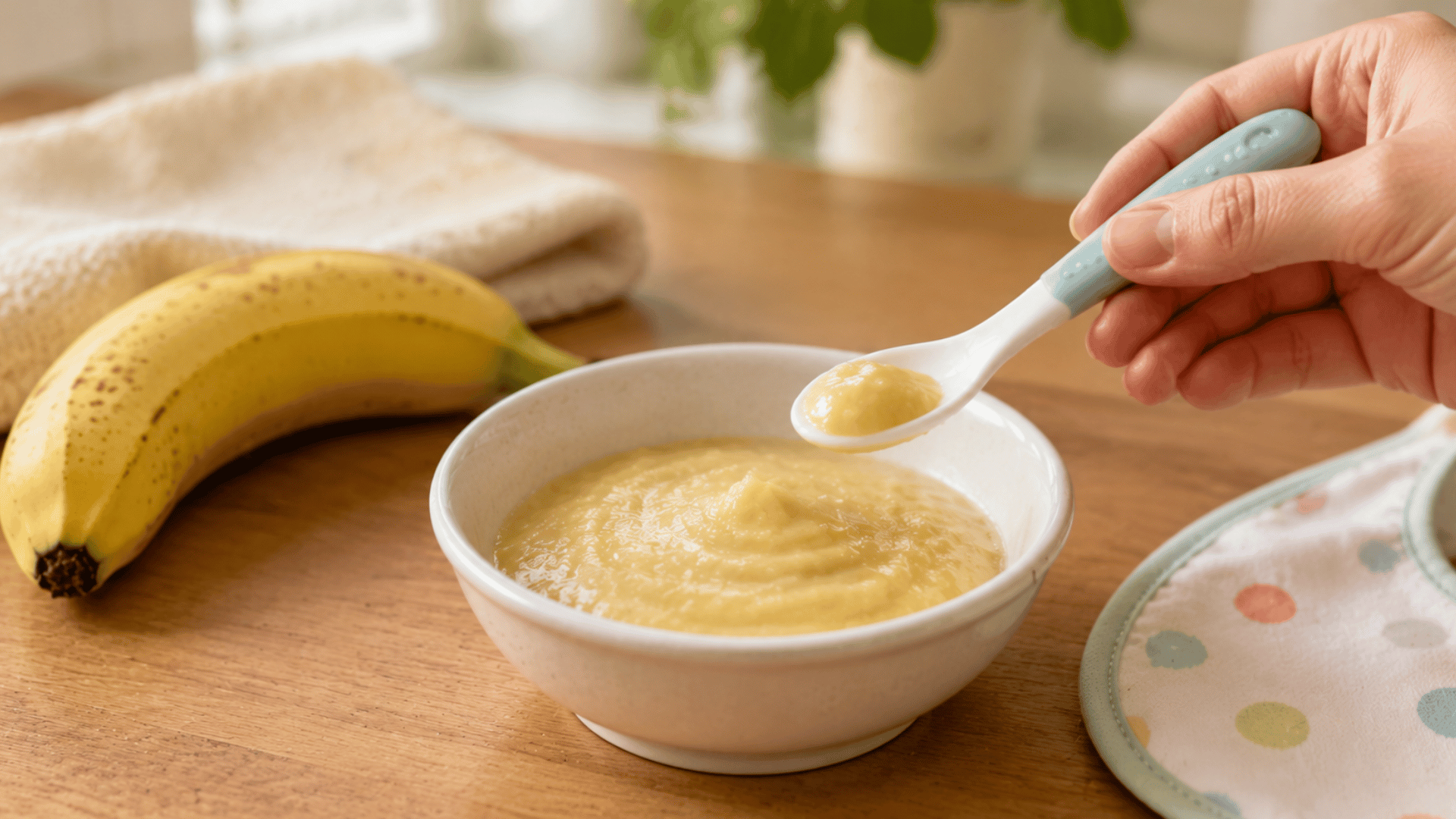
Once mashed to the right consistency, the puree is ready to feed. Offering it fresh in small amounts lets you gauge how your baby reacts without wasting a large batch.
Fresh servings also mean better taste and texture, since bananas can change quickly once mashed and exposed to air.
- Feed with a soft, baby-safe spoon
- Begin with just a small spoonful or two
- Skip saving extra puree in the feeding bowl
Storing Banana Puree and Keeping It Fresh for Babies
Banana puree is best served fresh, but sometimes parents may want to prepare it in advance or save a small portion for later use. In such cases, proper storage is important to maintain both taste and the baby’s safety.
If you need to store it for a short time, keep the puree in an airtight container in the refrigerator. This helps slow down browning and keeps the texture more stable.
However, banana naturally changes color and texture over time, so it is always better to use them as soon as possible.
Avoid keeping leftover puree in the feeding bowl after the baby has eaten, as saliva can affect freshness. If stored properly, it should still be used within a short period and always checked before serving.
Suggestion: Always prepare banana puree fresh whenever possible, since it gives the best texture and is easier for babies to eat.
Banana Puree Texture and Feeding Tips for Babies
Banana puree may be simple, but the right texture and feeding approach help make early eating more comfortable for babies. Keeping things smooth and gentle is key during the first stage of food.
- Start with a very smooth consistency for early feeding
- Make sure there are no lumps for easier swallowing
- Gradually make it slightly thicker as the baby adjusts
- Offer small spoonfuls instead of large portions
- Feed slowly and watch the baby’s response
- Use a clean spoon every time for safety
- Serve fresh in small amounts rather than storing leftovers in a bowl
Simple Safety Checks Before Feeding Banana Puree
Banana puree is simple to make, but a few small safety steps matter before feeding it to a baby.
Use ripe fruit, serve it fresh, and keep the texture smooth so it is easier to swallow.
| Tip | What to Do | Why It Matters |
|---|---|---|
| Use only fully ripe bananas | Choose a soft banana with light brown spots. | Ripe bananas are easier to mash, smoother in texture, and gentler to digest. |
| Check puree consistency | Make sure the puree is soft, smooth, and lump-free. | A smooth texture makes swallowing easier and more comfortable for the baby. |
| Serve fresh whenever possible | Prepare and feed the puree soon after mashing. | Fresh puree tastes better and is less likely to change in color or texture. |
| Avoid room-temperature storage | Do not leave banana puree sitting out for long. | Long exposure can affect freshness and safety. |
| Keep feeding tools clean | Wash and sanitize the bowl and spoon before feeding. | Clean tools help maintain hygiene and reduce contamination risk. |
| Start with a small portion | Offer a few spoonfuls first. | A small amount helps you see how the baby responds before increasing quantity. |
Tip: Always taste and check the texture yourself before feeding to ensure it feels smooth, mild, and baby-friendly.
Final Thoughts
Banana puree is a simple way to start early feeding, as it keeps preparation easy and the texture gentle for little ones. What helps most is keeping the consistency smooth and adjusting it slowly as your baby becomes more comfortable with spoon feeding.
Freshly made puree usually gives the best taste and texture, and even small changes in preparation can make feeding feel easier for both baby and parent.
Each baby takes their own time to get used to new foods, so starting with small portions and a calm feeding routine works well.
With basic ingredients and a few careful steps, banana puree can fit smoothly into early meals without any stress around preparation or serving.
Frequently Asked Questions
Can Banana Puree be Given to Babies Daily?
Yes, it can be offered in small portions as part of a varied early feeding routine.
Do I Need Special Tools to Prepare It?
No, a simple bowl and a fork are enough to make it at home.
Can Banana Puree Be Combined with Other Foods Later?
Yes, it can be mixed with other mild foods once the baby adjusts to solids.