





Do you also have the question: When should I stop swaddling my baby? It is one of those questions that hits you out of nowhere, usually around the time your little one starts squirming out of the wrap at 2 a.m.
The answer is not just about picking an age. It is about reading your baby’s cues, understanding what their body is telling you, and acting before safety becomes a concern.
Every stage of those first few months comes with new signals, and knowing what to look for makes all the difference. Keep reading to find out exactly when it is time to make the switch.
Why Swaddling Matters for Your Baby?
As a new parent, you want your baby to feel safe and comfortable, and swaddling can help with exactly that. Wrapping your newborn in a soft, snug blanket recreates the warm, tight feeling of the womb they just left behind.
This simple technique calms their nervous system, reduces crying, and helps them sleep without being startled awake by their own sudden movements. Better sleep for your baby means better sleep for you, too.
According to the American Academy of Pediatrics, swaddling is a proven way to soothe and settle newborns in those tough early weeks.
Note: Always lay your swaddled baby on their back and avoid wrapping the hips too tightly,and leave enough room around the hips for natural movement to support healthy development.
When Should I Stop Swaddling My Baby?
Swaddling helps newborns sleep better and feel secure, but it isn’t meant to last forever. As your baby grows, their need for swaddling changes naturally.
| Age Range | Daily Swaddling Time | What to Expect |
|---|---|---|
| 0–2 Weeks | 12–20 hours per day | Mostly sleep time; baby stays calm and secure |
| 2–8 Weeks | 10–16 hours per day | Slight movement increases; still safe to swaddle |
| 2–3 Months | 8–12 hours (mainly sleep) | Baby becomes more active; start observing rolling signs |
| 3–4 Months | Gradually reduce | Transition phase; arms-out or partial swaddling |
| 4+ Months | Stop swaddling | Baby may start rolling; switch to sleep sack |
What Your Baby’s Development Tells You, Stage by Stage
Your baby changes rapidly in the first few months, and each stage brings new physical milestones that affect how safe swaddling still is. Understanding what is happening at each stage helps you act at the right time.
1. Birth to 6 Weeks

This is the peak stage for swaddling. Your baby sleeps for most of the day, has very little muscle control, and the Moro reflex is at its strongest. The AAP supports swaddling during all sleep periods at this stage, provided basic safety steps are followed.
- Always place your swaddled baby flat on their back
- Leave enough room at the hips for legs to bend naturally
- Unswaddle during all awake time to allow free movement
- No rolling risk yet, making swaddling safe and highly effective
2. 6 Weeks to 2 Months

Your baby is becoming stronger and more alert. They spend more time awake, and their bodies are starting to show the first signs of physical growth. This is the time to start watching closely for early developmental cues.
- Upper body strength is growing, and the baby may push against the swaddle
- A loose or unraveled swaddle in the crib becomes a suffocation hazard
- Watch for early rolling cues like rocking side to side or shifting onto a shoulder
- Unswaddled awake time becomes more important for muscle development
3. 2 to 3 Months
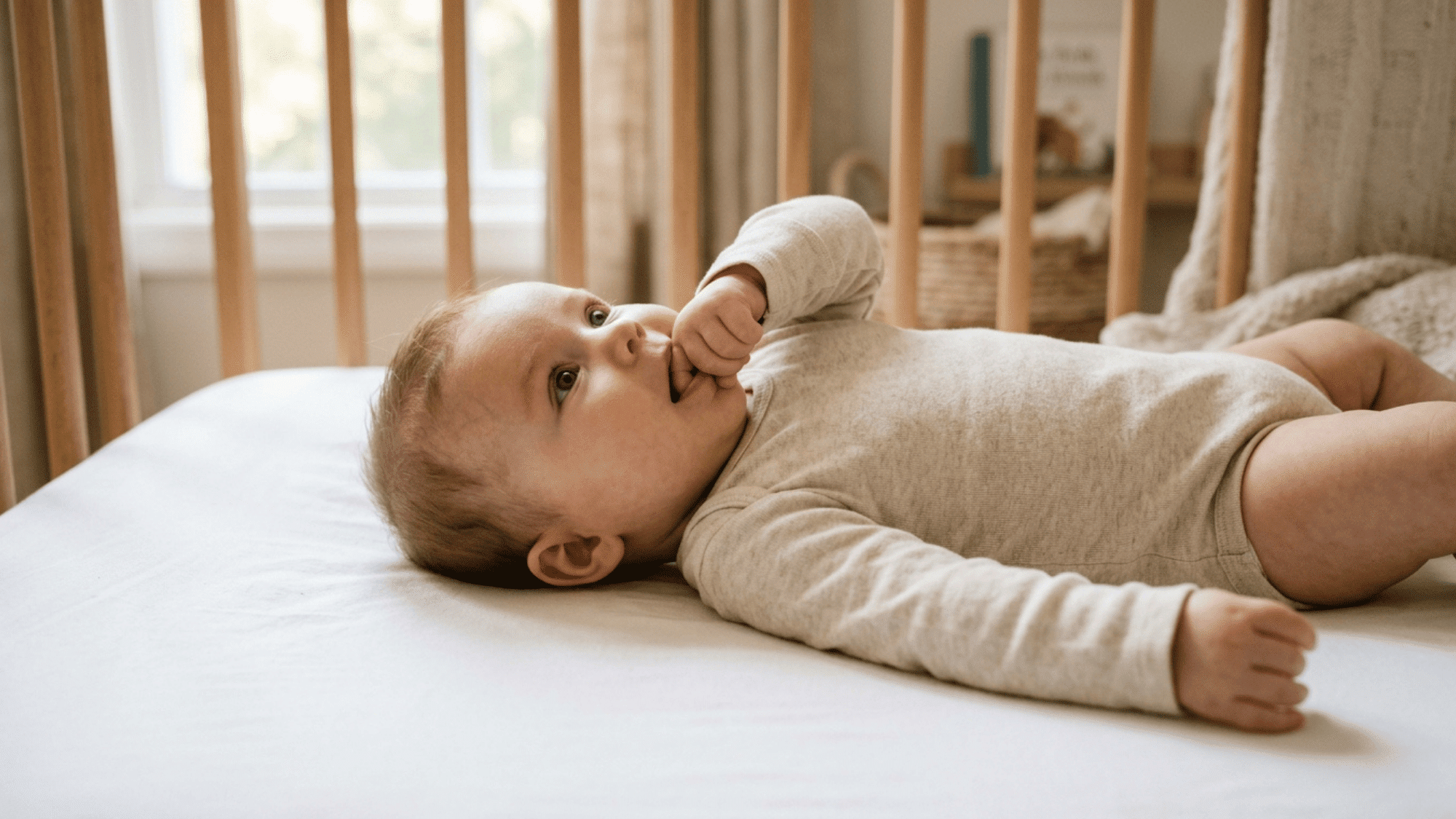
Motor development speeds up fast at this stage, and rolling can appear earlier than most parents expect.
According to a systematic review published in Pediatrics, restricting movement in older infants can affect healthy motor development and organization.
- Baby’s arms are now an active self-soothing tool
- Restricting arm movement at this stage can disrupt natural development
- Watch for rocking side to side or weight shifting onto one shoulder
- Have a sleep sack ready as your immediate next step
4. 3 to 4 Months
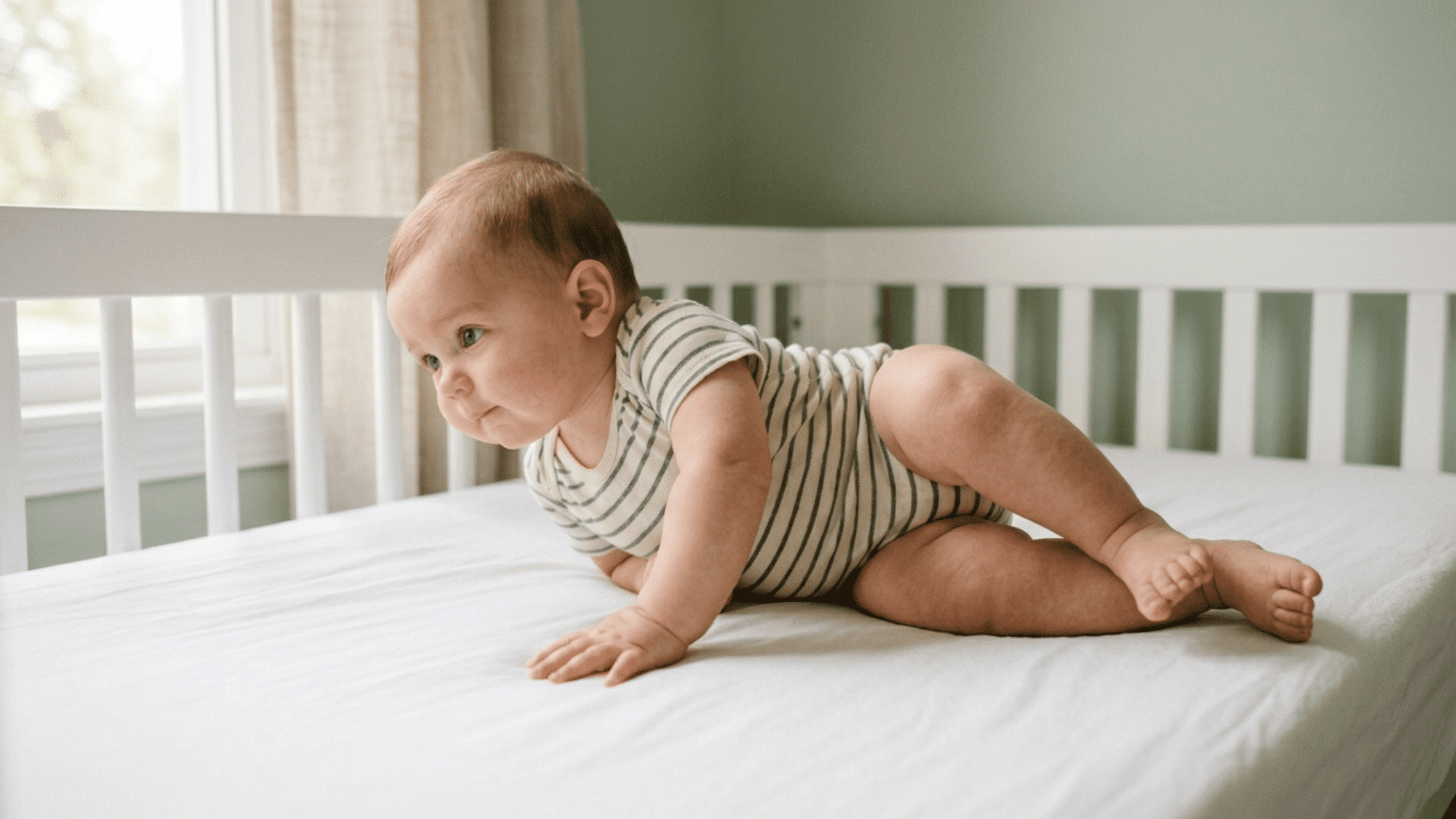
This is the most critical stage for stopping swaddling. The AAP 2022 Safe Sleep Guidelines are clear that when a baby shows any sign of trying to roll, swaddling must stop right away.
- Stop swaddling completely the moment any rolling attempt is seen
- Do not wait for a full roll; any attempt is your signal
- A swaddled baby who rolls face down cannot lift or turn their head safely
- Stop for all sleep periods, both naps and nighttime, at the same time
5. 4 Months and Beyond

By 4 months, most babies have outgrown swaddling entirely. Free movement is now essential for physical growth and motor skill development. The AAP recommends a wearable sleep sack as the safe replacement for this stage.
- A well-fitted sleep sack gives warmth without any rolling risk
- Free arms allow the baby to push up, reposition, and protect their own airway
- Motor milestones like rolling and pre-crawling all need unrestricted movement
- Adjustment to a sleep sack typically takes 3 to 7 days
When to Transition out of a Swaddle?
Swaddling is not meant to last forever, and knowing when to move on is just as important as knowing how to swaddle in the first place. Your baby’s body will give you clear signals when the time is right.
- Stop swaddling the moment your baby shows any sign of rolling
- Rocking side to side, shifting onto a shoulder, or lifting hips all count as rolling signs
- Any rolling attempt is your signal; do not wait for a full roll
- Breaking free from the swaddle means your baby needs more freedom
- Fussing or fighting the wrap is a clear sign the swaddle has run its course
- A fading startle reflex is a natural sign your baby is ready to move on
- Start by freeing one arm for a few nights, then free both arms
- Once both arms are out, move to a well-fitted sleep sack
- Never go back to full swaddling once rolling signs have appeared
- Most babies adjust to no swaddle within one to two weeks
- White noise and a consistent bedtime routine help ease the transition
Learn from Parents Who Shared Their Swaddle Transition Stories
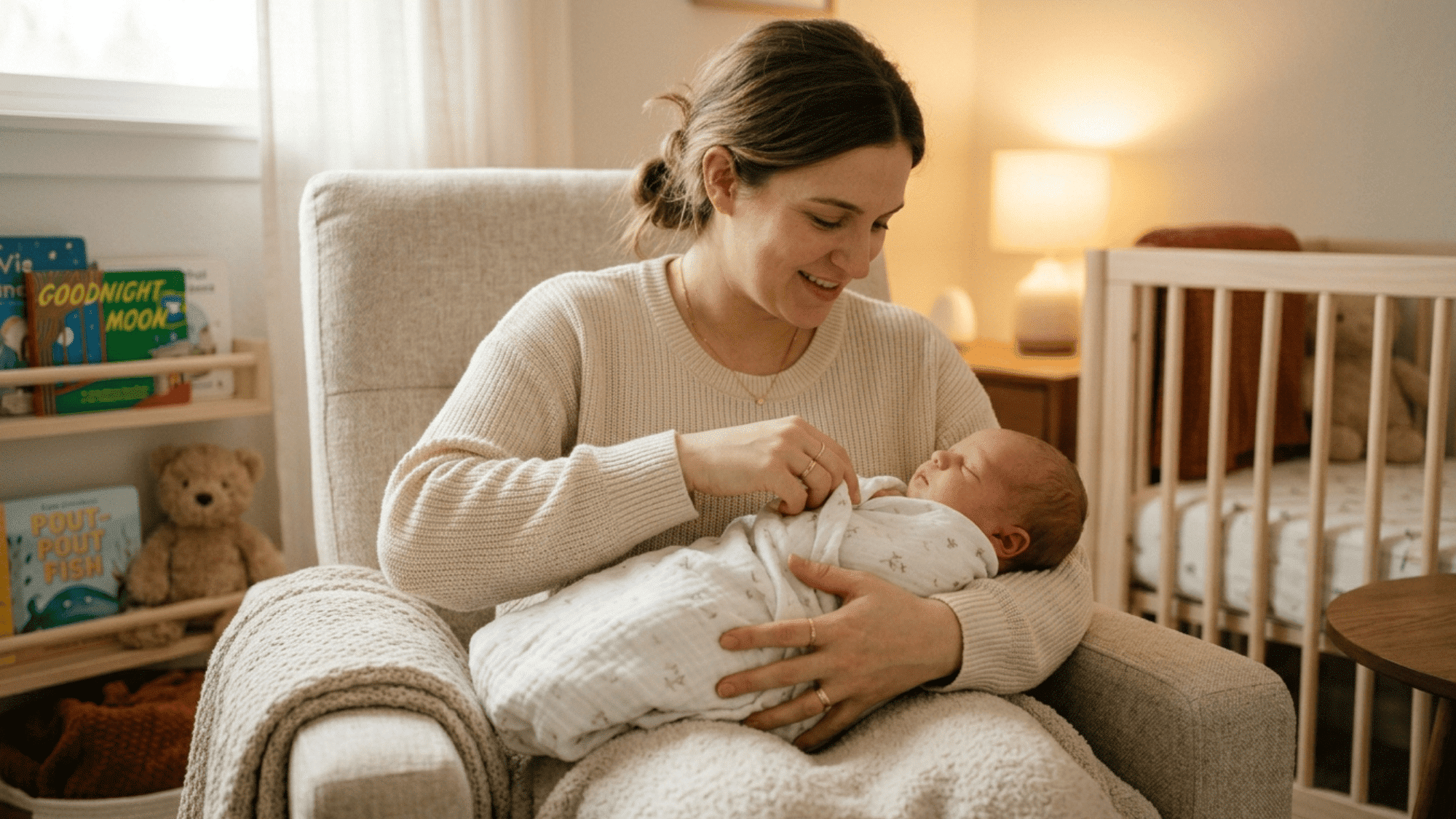
Every parent dreads the night they have to take the swaddle away. But parents who have been through it say the transition is almost always less scary than it looks.
Here is what they shared on public forums, in their own words:
“It maybe was slightly worse for about two days then absolutely fine , he adjusted a lot better than I thought he would.”- Mumsnet
This parent was convinced the swaddle was the only thing keeping their baby asleep. What they found was that babies adapt quickly, and the fear of the transition is often worse than the transition itself.
“We did one arm out for two weeks, then just swaddled under his armpits for a week , eventually his startle reflex got a lot better.”- The Bump
Going slowly made all the difference here. Freeing one arm at a time gave the baby time to adjust without losing the comfort of the wrap entirely.
“Wait until the Moro reflex disappears before you wean your baby , unless rolling starts and safety becomes a concern earlier.”- Quora
This parent found that timing the transition to their baby’s development, rather than a set age, made the process feel natural and stress-free.
“We stopped at three months , it became clear we had reached the end because they would immediately try to break out once wrapped.”- The Bump
When a baby starts fighting the swaddle, that resistance is not just frustrating; it is a clear developmental signal that they are ready for more freedom.
Wrapping It Up
Swaddling is one of the earliest ways you learn to read your baby, and knowing the answer to: when should I stop swaddling my baby, is one of the first big calls you make as a parent. That is not a small thing.
From those first snug wraps in the hospital to the night you finally make the switch to a sleep sack, every step has been about keeping your baby safe, warm, and loved.
The fact that you are here, reading this, figuring it all out, that says everything. So keep trusting yourself, you are doing better than you think.
Frequently Asked Questions
Is It Safe to Swaddle During Naps and Nighttime?
Yes, swaddling is safe for both naps and nighttime sleep in the early months. You should stop swaddling once your baby shows signs of rolling over.
Can Swaddling Delay My Baby’s Development?
No, swaddling does not delay development when used correctly. Just make sure your baby has enough free movement during awake time and stop at the right stage.
What if My Baby Wakes Up More After Stopping the Swaddle?
It is normal for your baby to wake up more for a few days after stopping swaddling. Most babies adjust quickly, and their sleep usually improves again within a short time.